
Every state has an official flower, and many of them are growing in backyards and along roadsides near you. Here is each state's flower, alphabetically by state. Several states share one: the violet is the flower of four states, and the apple blossom, magnolia, mountain laurel, dogwood and rose belong to two each.
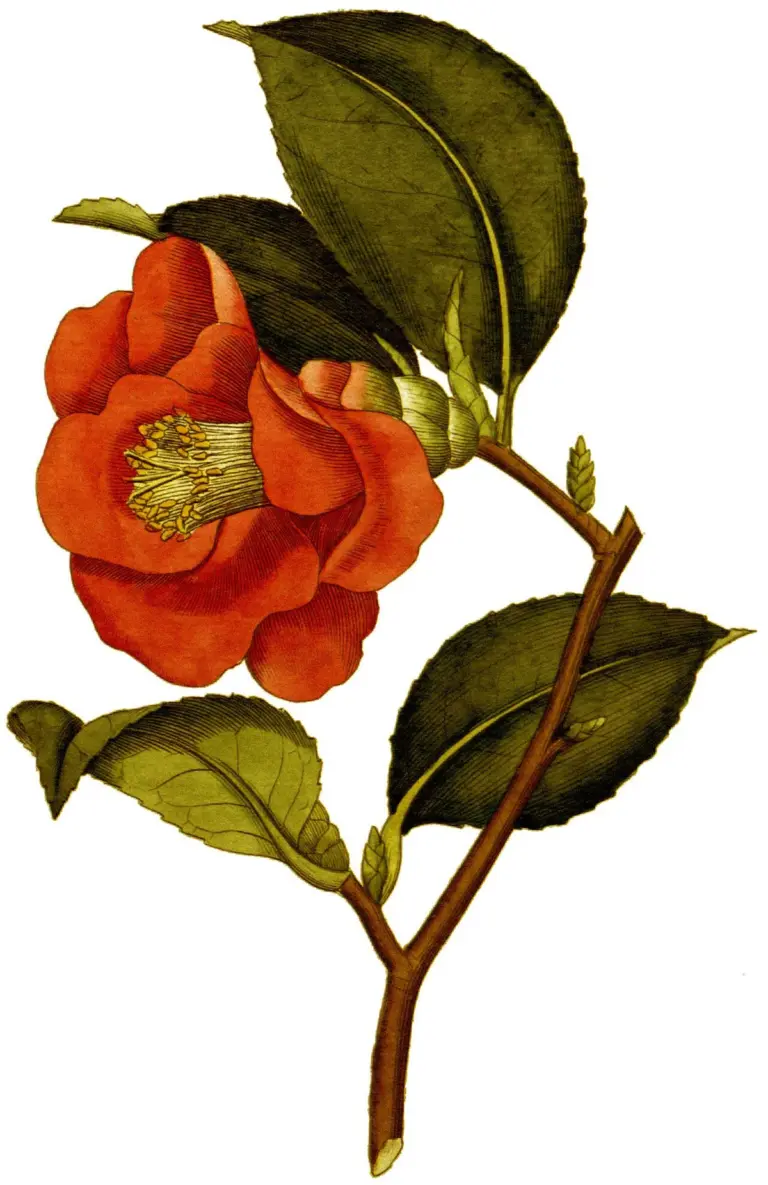
Alabama · Camellia
Camellia japonica, known as common camellia, or Japanese camellia, is a species of flowering plant from the genus Camellia in the tea family Theaceae. It is native to China and Japan, and grows naturally in forests at altitudes of around 300–1,100 metres (980–3,600 ft).
An evergreen shrub from Asia that blooms in late winter and early spring in red, pink or white. (Picture: a vintage botanical plate.)
State flower of Alabama since 1959.
From Wikipedia: Camellia japonica (CC BY-SA 4.0)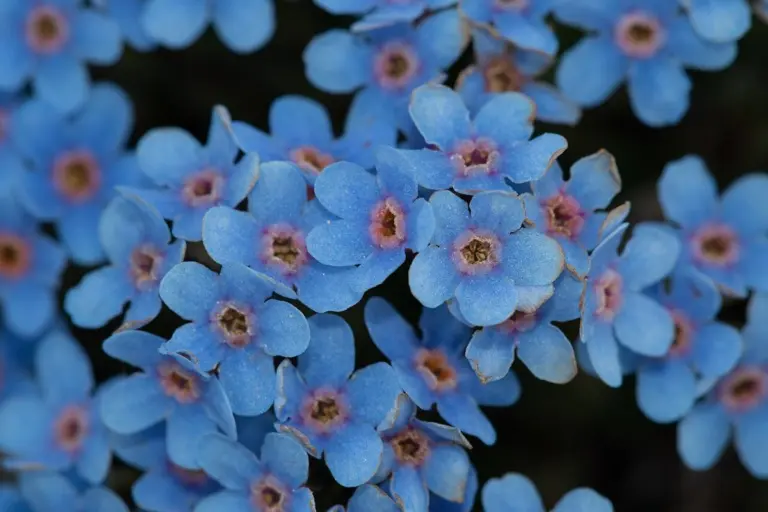
Alaska · Forget-me-not
Myosotis alpestris, the alpine forget-me-not, is a herbaceous perennial plant in the flowering plant family Boraginaceae. The alpine forget-me-not is the county flower of Westmorland in the United Kingdom.
Tiny sky-blue flowers with a yellow eye that bloom in alpine meadows in midsummer.
State flower of Alaska since 1917.
From Wikipedia: Myosotis alpestris (CC BY-SA 4.0)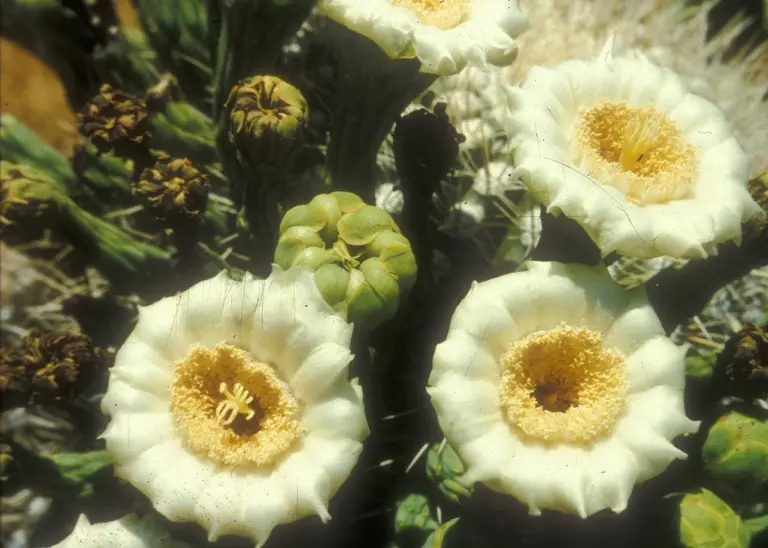
Arizona · Saguaro cactus blossom
The saguaro is a tree-like cactus species in the monotypic genus Carnegiea that can grow to be over 12 meters tall. It is native to the Sonoran Desert in Arizona, the Mexican state of Sonora, and the Whipple Mountains and Imperial County areas of California. Saguaro typically grow at elevations ranging from sea level to 4,500 feet (1,400 m), although they may be found at up to 5,000 feet (1,500 m). The saguaro blossom is the state wildflower of Arizona. Its scientific name is given in honor of Andrew Carnegie.
The saguaro, which grows only in the Sonoran Desert, opens waxy white flowers at the tips of its arms in May and June. They open at night and feed bats, birds and bees.
State flower of Arizona since 1931.
From Wikipedia: Saguaro (CC BY-SA 4.0)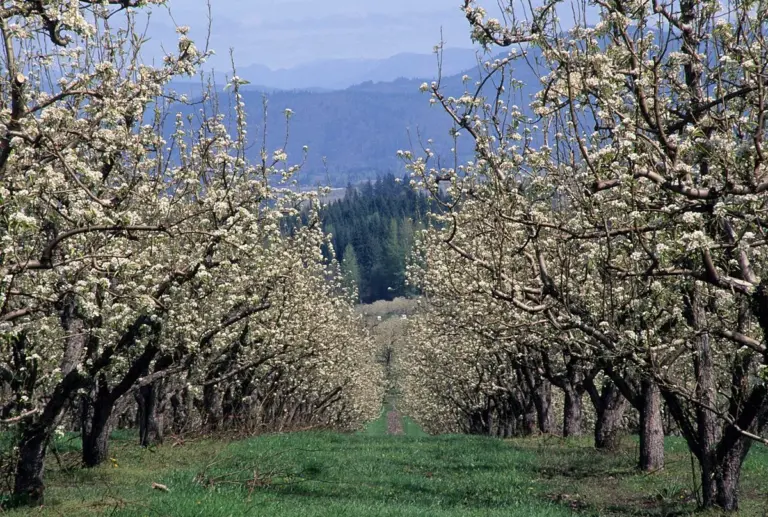
Arkansas · Apple blossom
An apple is the round, edible fruit of an apple tree. Fruit trees of the orchard or domestic apple, the most widely grown in the genus, are cultivated worldwide. The tree originated in Central Asia, where its wild ancestor, Malus sieversii, is still found. Apples have been grown for thousands of years in Eurasia before they were introduced to the American continent by European colonists. Apples have cultural significance in many mythologies and religions.
Clouds of pink-and-white blossoms cover apple trees in spring and promise the fall harvest. Arkansas was once a major apple-growing state.
State flower of Arkansas since 1901.
From Wikipedia: Apple (CC BY-SA 4.0)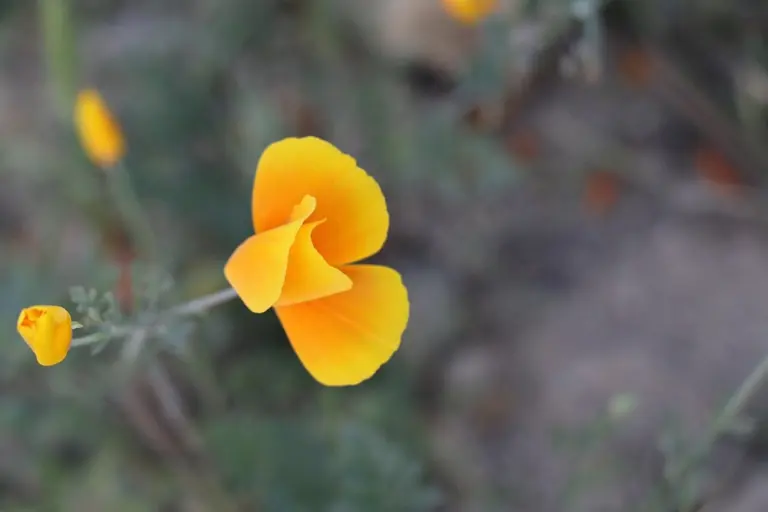
California · California poppy
Eschscholzia californica, the California poppy, golden poppy, Mexican poppy, California sunlight or cup of gold, is a species of flowering plant in the family Papaveraceae, native to the United States and Mexico. It is cultivated as an ornamental plant flowering in summer, with showy flowers in brilliant shades of red, orange and yellow. It is also used as food or a garnish. It had various uses in indigenous herbalism. It became the official state flower of California in 1903.
A bright orange wildflower that carpets hillsides in spring. Its petals close at night and on cloudy days.
State flower of California since 1903.
From Wikipedia: Eschscholzia californica (CC BY-SA 4.0)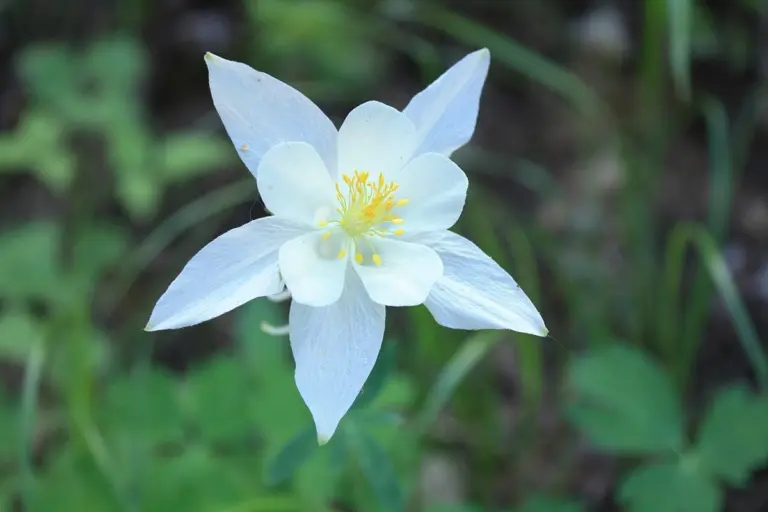
Colorado · Rocky Mountain columbine
Aquilegia coerulea, commonly called the Colorado columbine, Rocky Mountain columbine, or blue columbine, is a species of flowering plant in the buttercup family, native to the Rocky Mountains in the western United States. It is a moderate sized wildflower that grows in mountainous areas from the foothills to above timberline. The flowers are mainly pollinated by bumblebees and several species of hawkmoths. The species has been the state flower of Colorado since 1899 and with its large, showy flowers is a frequent garden plant and used in the breeding of columbine hybrids. The botanical name coerulea means 'sky blue'.
A blue-and-white flower with long spurs that grows in mountain meadows and aspen groves. Colorado limits how much of it may be picked on public land.
State flower of Colorado since 1899.
From Wikipedia: Aquilegia coerulea (CC BY-SA 4.0)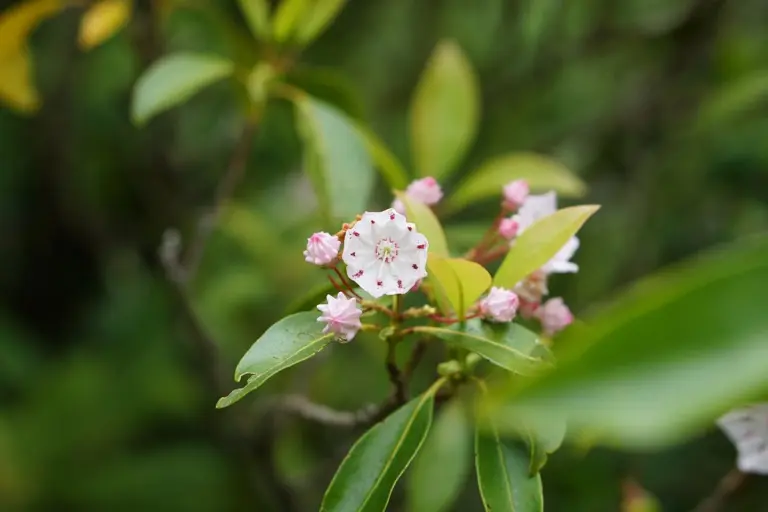
Connecticut · Mountain laurel
Kalmia latifolia, the mountain laurel, calico-bush, or spoonwood, is a flowering plant and one of the 10 species in the genus of Kalmia belonging to the heath(er) family Ericaceae. It is native to the eastern United States. Its range stretches from southern Maine to northern Florida, and west to Indiana and Louisiana. Mountain laurel is the state flower of Connecticut and Pennsylvania. It is the namesake of Laurel County in Kentucky, the city of Laurel, Mississippi, Mount Laurel, New Jersey, and the Laurel Highlands in southwestern Pennsylvania.
An evergreen shrub of eastern woods whose cup-shaped pink and white flowers open in late spring. Its leaves are poisonous to people and livestock.
State flower of Connecticut since 1907.
From Wikipedia: Kalmia latifolia (CC BY-SA 4.0)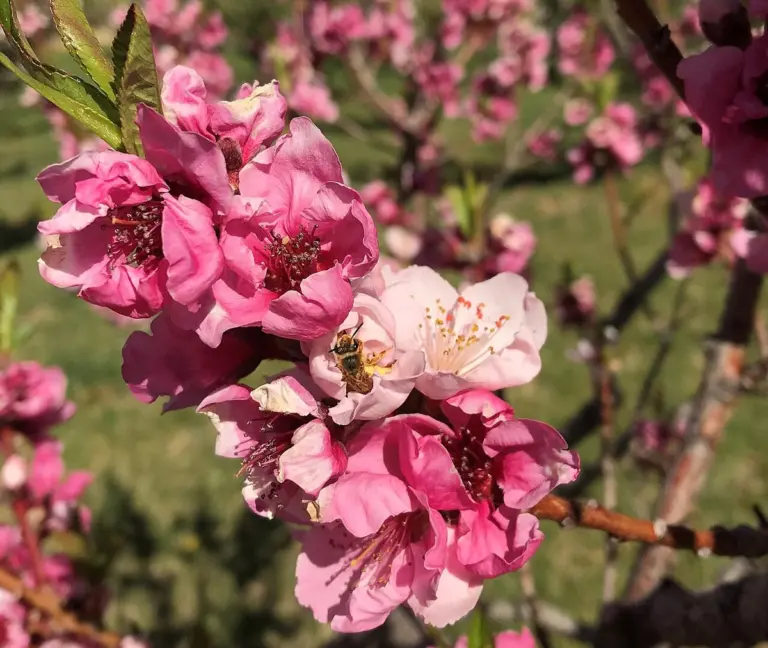
Delaware · Peach blossom
The peach is a deciduous tree that bears edible juicy fruits with various characteristics. Most are simply called peaches, while the glossy-skinned, non-fuzzy varieties are called nectarines. Though from the same species, they are regarded commercially as different fruits.
Delaware was once famous for its peach orchards, and the pink blossoms honor that history.
State flower of Delaware since 1895.
From Wikipedia: Peach (CC BY-SA 4.0)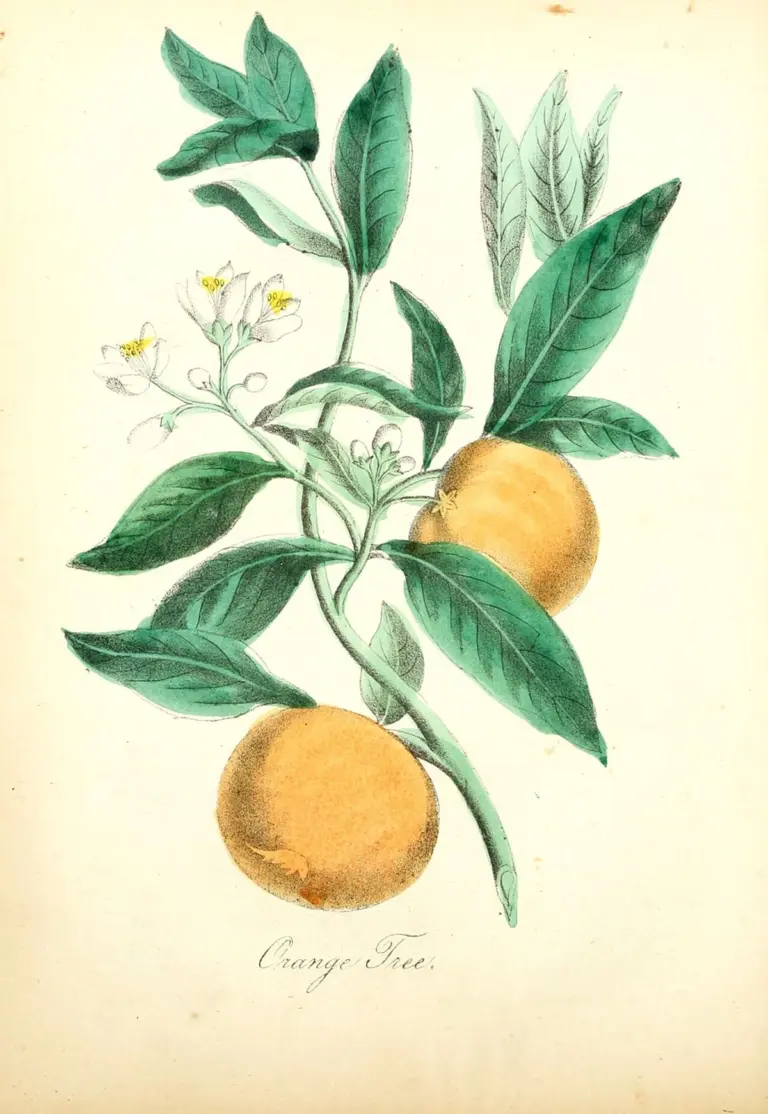
Florida · Orange blossom
The orange blossom is the fragrant flower of the Citrus sinensis. It is used in perfume making and has been written about as an aphrodisiac. Orange blossom essence is an important component in the making of perfume. The petals of orange blossom can also be made into orange flower water, a common part of both French cuisine and Middle Eastern cuisine. It's also present in Hispanic culinary traditions, with notable examples being Mexican pan de muerto and Spanish Roscón de Reyes.
The sweet-smelling white flowers of the orange tree, one of Florida's most important crops. (Picture: a vintage botanical plate.)
State flower of Florida since 1909.
From Wikipedia: Orange blossom (CC BY-SA 4.0)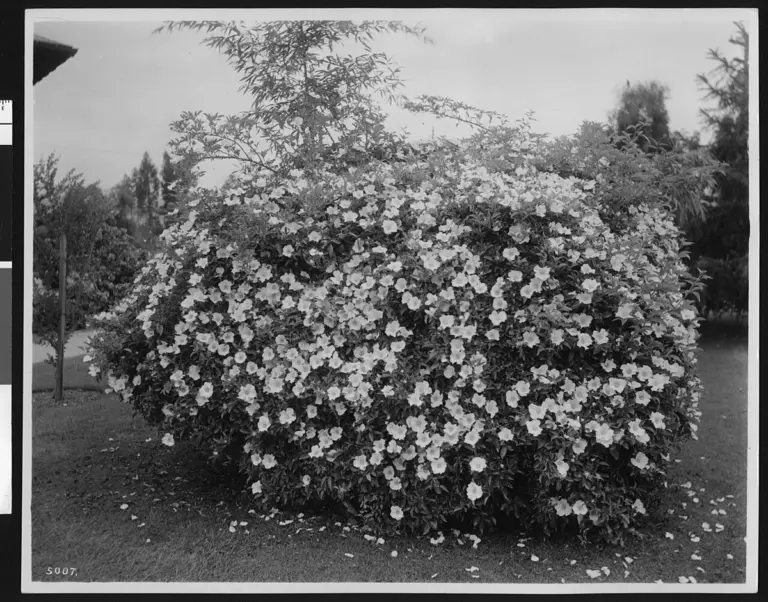
Georgia · Cherokee rose
Rosa laevigata, or the Cherokee rose, is a white, fragrant rose native to southern China, Taiwan and Vietnam. It is an invasive species in countries including Australia, Japan and the United States.
A climbing white rose with a golden center that grows wild across the South. (Picture: an old photograph of a Cherokee rose hedge.)
State flower of Georgia since 1916.
From Wikipedia: Rosa laevigata (CC BY-SA 4.0)
Hawaii · Yellow hibiscus (ma'o hau hele)
Hibiscus brackenridgei is a species of flowering plant in the family Malvaceae. It is an upright shrub or small tree native to the Hawaiian Islands. It grows up to five meters tall and has bright yellow flowers. It is native to lowland Hawaiian dry forest and shrubland up to 350 meters elevation on the islands of Hawaii, Lanai, Maui, Molokai, and Oahu. The species is threatened by habitat loss and degradation from invasive non-native plant species, and predation and habitat degradation by non-native animals including pigs, deer, and goats.
Ma'o hau hele is a native Hawaiian hibiscus with large yellow flowers. It is endangered in the wild.
State flower of Hawaii since 1988.
From Wikipedia: Hibiscus brackenridgei (CC BY-SA 4.0)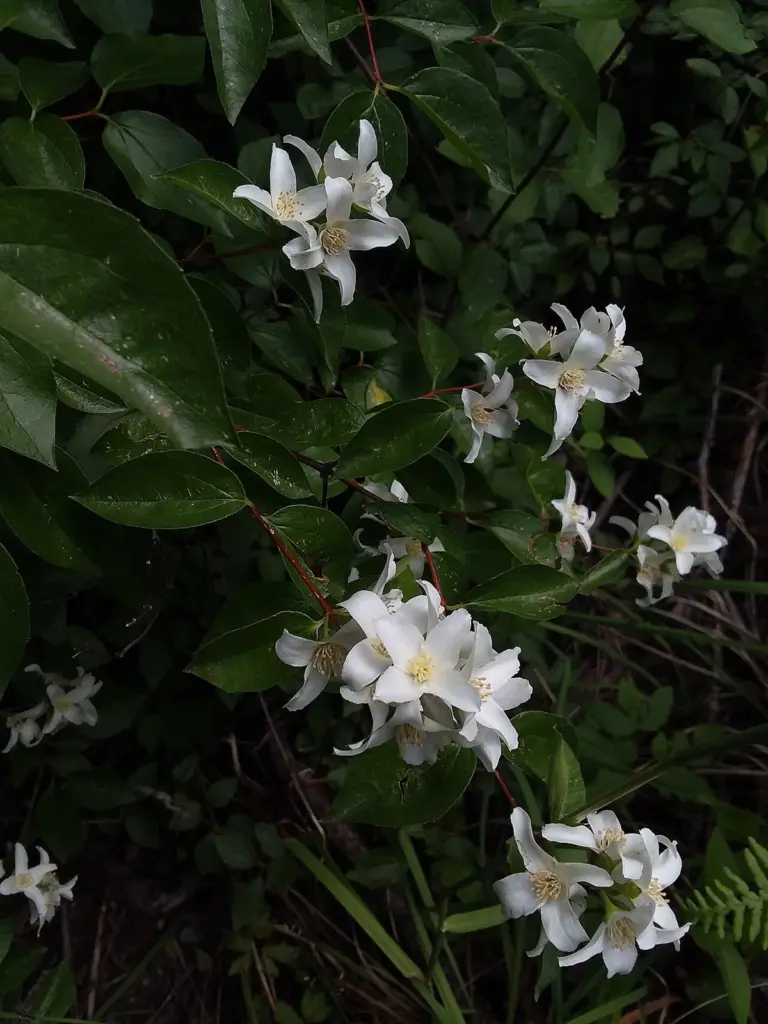
Idaho · Syringa
Philadelphus lewisii, the Lewis' mock-orange, mock-orange, Gordon's mockorange, wild mockorange, Indian arrowwood, or syringa, is a deciduous shrub native to western North America, and is the state flower of Idaho.
A shrub with fragrant, four-petaled white flowers in early summer, also called Lewis's mock orange after Meriwether Lewis, who collected it in 1806.
State flower of Idaho since 1931.
From Wikipedia: Philadelphus lewisii (CC BY-SA 4.0)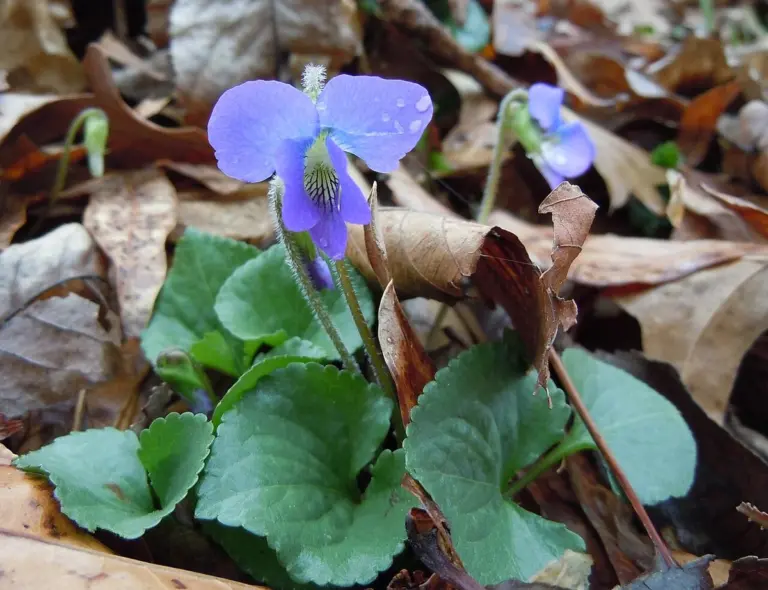
Illinois · Violet
Viola sororia, known commonly as the common blue violet, is a short-stemmed herbaceous perennial plant native to eastern North America. It is known by a number of common names, including common meadow violet, purple violet, woolly blue violet, hooded violet, and wood violet.
The common blue violet blooms in lawns and woods in spring, with heart-shaped leaves. The flowers are edible and pretty in salads.
State flower of Illinois since 1907.
From Wikipedia: Viola sororia (CC BY-SA 4.0)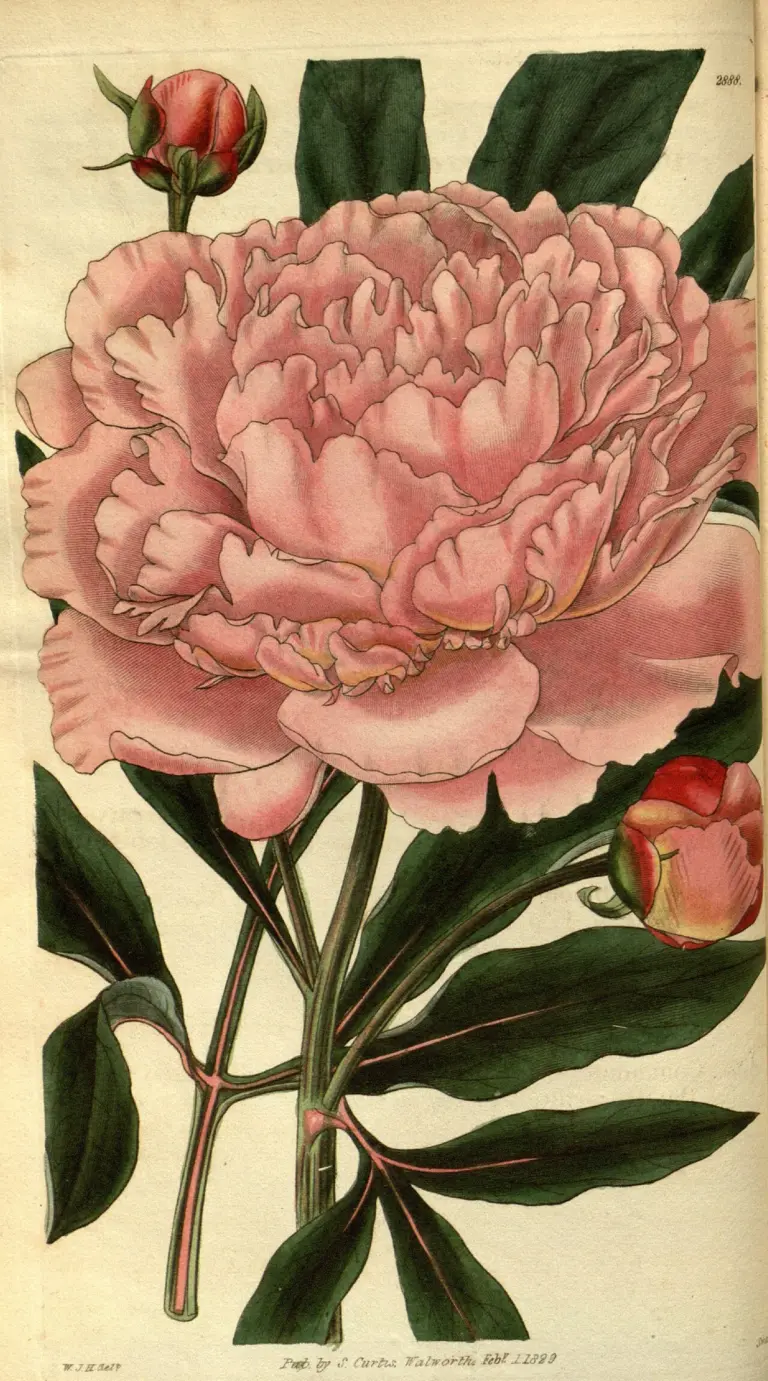
Indiana · Peony
The peony or paeony is any flowering plant in the genus Paeonia, the only genus in the family Paeoniaceae. Peonies are native to Asia, Europe, and Western North America. Scientists differ on the number of species that can be distinguished, ranging from 25 to 40, although the current consensus describes 33 known species. The relationships between the species need to be further clarified.
A garden favorite with huge, fragrant blooms in late spring. A peony can live for decades. (Picture: a vintage botanical plate.)
State flower of Indiana since 1957.
From Wikipedia: Peony (CC BY-SA 4.0)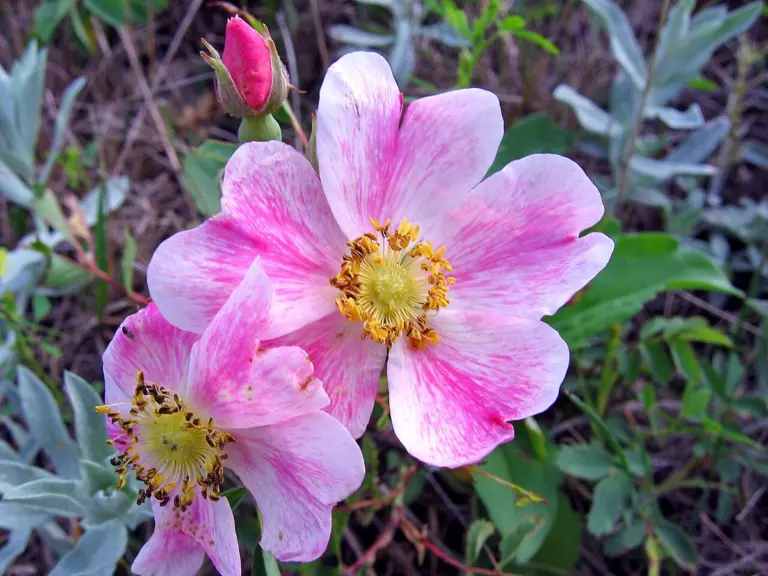
Iowa · Wild prairie rose
Rosa arkansana, the prairie rose or wild prairie rose, is a species of rose native to a large area of central North America, between the Appalachian and Rocky Mountains from Alberta, Manitoba, and Saskatchewan south to New Mexico, Texas and Indiana. There are two varieties:Rosa arkansana var. arkansana Rosa arkansana var. suffulta (Greene) Cockerell
A low native rose with pink, five-petaled flowers and red hips that birds eat in winter. It grows in prairies and along roadsides.
State flower of Iowa since 1897.
From Wikipedia: Rosa arkansana (CC BY-SA 4.0)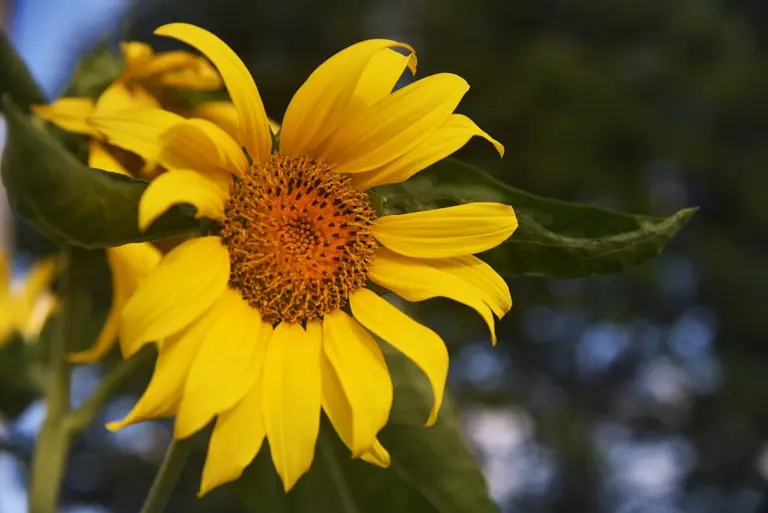
Kansas · Sunflower
The common sunflower is a large annual forb in the daisy family Asteraceae. The domesticated form of common sunflower is harvested for its edible seeds, which come in two types: oil and confectionary seeds. Oilseed sunflowers are widely grown globally and represent the fourth most used vegetable oil in the world. They also are used widely as bird food or as food for livestock. In contrast, confectionary sunflower seeds are often eaten as a snack food or in baking.
The native wild sunflower grows along Kansas roads and fields; young flower heads follow the sun across the sky.
State flower of Kansas since 1903.
From Wikipedia: Common sunflower (CC BY-SA 4.0)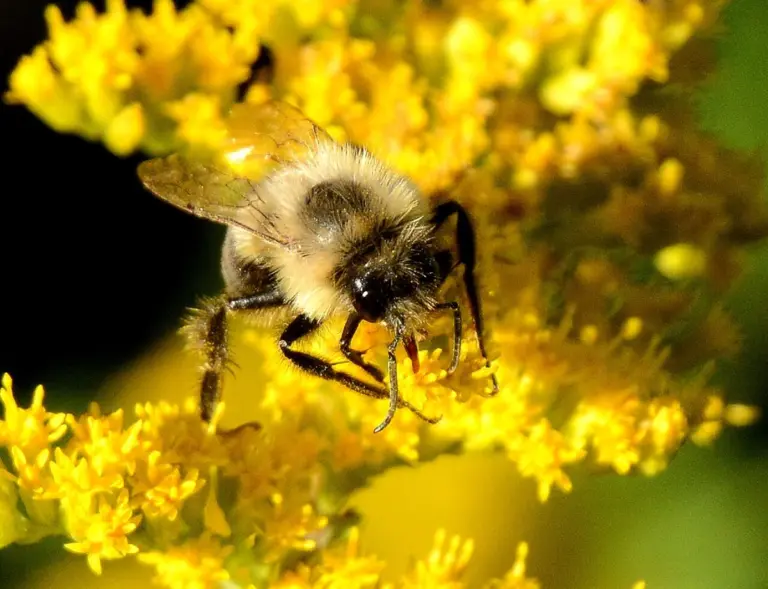
Kentucky · Goldenrod
Solidago, commonly called goldenrod, is a genus of about 100 to 120 species of flowering plants in the family Asteraceae. Most are herbaceous perennial species found in open areas such as meadows, prairies, and savannas. They are mostly native to North America, including Mexico; a few species are native to South America and Eurasia. Some American species have also been introduced into Europe and other parts of the world.
Plumes of golden flowers in late summer and fall. Goldenrod is often blamed for hay fever, but its pollen is heavy and carried by insects, not wind.
State flower of Kentucky since 1926.
From Wikipedia: Solidago (CC BY-SA 4.0)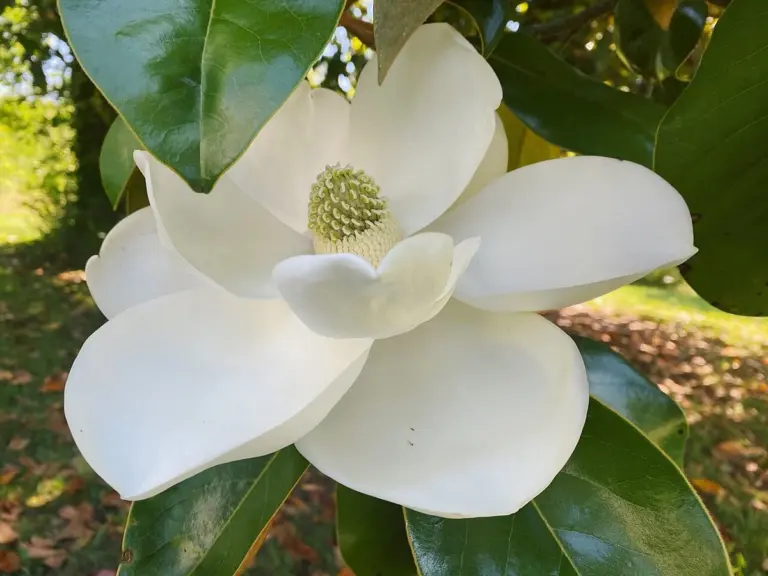
Louisiana · Magnolia
Magnolia grandiflora, commonly known as the southern magnolia or bull bay, is a flowering tree in the family Magnoliaceae native to the Southeastern United States coastal plain, from Virginia to central Florida, and west to East Texas. Reaching 27.5 m (90 ft) in height, it is a large, striking evergreen tree, with large, dark-green leaves up to 20 cm long and 12 cm wide, and large, white, fragrant flowers up to 30 cm (12 in) in diameter.
The southern magnolia has huge, lemon-scented white flowers and glossy evergreen leaves.
State flower of Louisiana since 1900.
From Wikipedia: Magnolia grandiflora (CC BY-SA 4.0)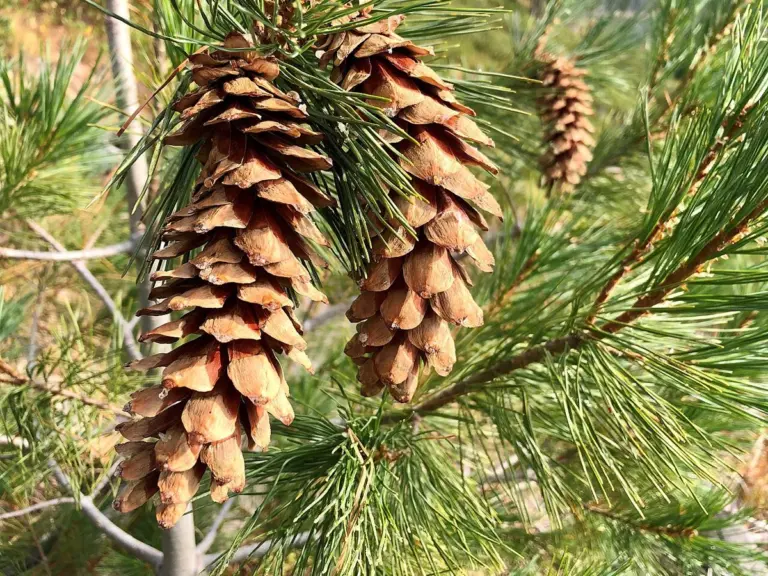
Maine · White pine cone and tassel
Pinus strobus, commonly called the eastern white pine, northern white pine, white pine, Weymouth pine (British), and soft pine is a large pine native to eastern North America. It occurs from Newfoundland, Canada, west through the Great Lakes region to southeastern Manitoba and Minnesota, United States, and south along the Appalachian Mountains and upper Piedmont to northernmost Georgia and, very rarely, in some of the higher elevations in northeastern Alabama. It is listed as rare or vulnerable (S3) in Iowa, Illinois, Indiana, and Kentucky., and as imperiled in Manitoba.
Maine's 'flower' is the cone and needle tassel of the eastern white pine, honoring its name as the Pine Tree State.
State flower of Maine since 1895.
From Wikipedia: Pinus strobus (CC BY-SA 4.0)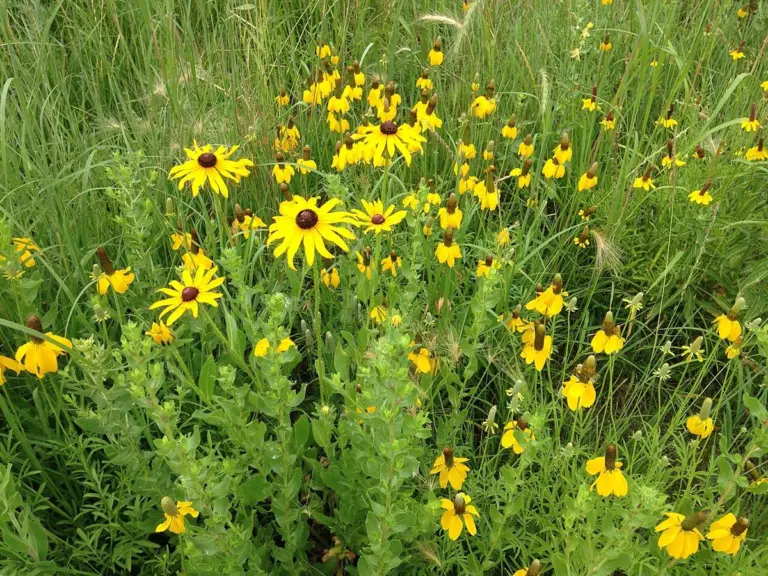
Maryland · Black-eyed Susan
Rudbeckia hirta, commonly called black-eyed Susan and yellow coneflower, is a North American flowering plant in the family Asteraceae. It grows to 1 metre tall with daisy-like yellow flower heads. There are numerous cultivars. It was used medicinally by Native Americans and is the state flower of Maryland.
A cheerful yellow daisy with a dark center that blooms in summer meadows. The Preakness Stakes in Baltimore is nicknamed the Run for the Black-Eyed Susans.
State flower of Maryland since 1918.
From Wikipedia: Rudbeckia hirta (CC BY-SA 4.0)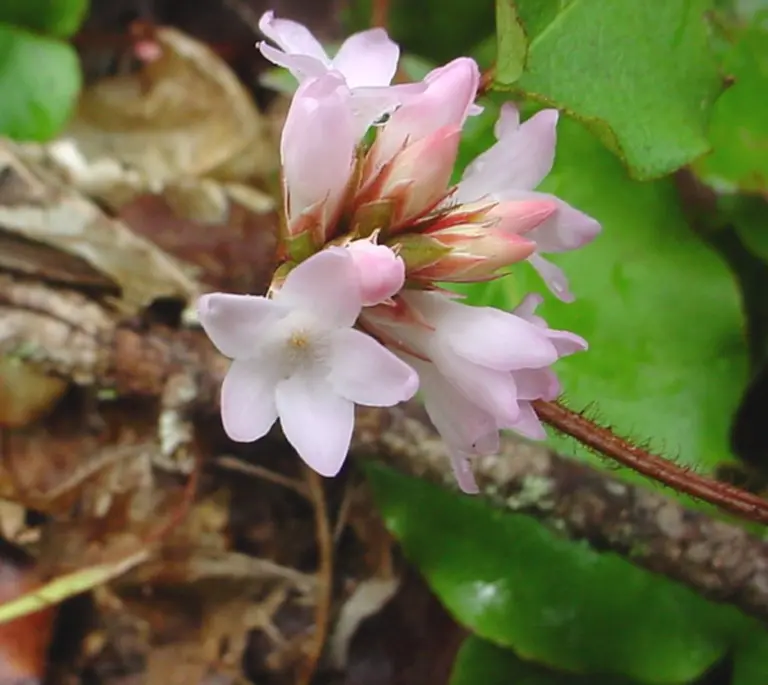
Massachusetts · Mayflower (trailing arbutus)
Epigaea repens, the mayflower, trailing arbutus, or ground laurel, is a perennial, spreading shrub in the family Ericaceae. It is found from Newfoundland to Florida, west to Kentucky and into the Northwest Territories. It is the provincial flower of Nova Scotia.
Trailing arbutus is a low creeping plant with fragrant pink-white flowers in early spring, said to be the first flower the Pilgrims saw after their first winter.
State flower of Massachusetts since 1918.
From Wikipedia: Epigaea repens (CC BY-SA 4.0)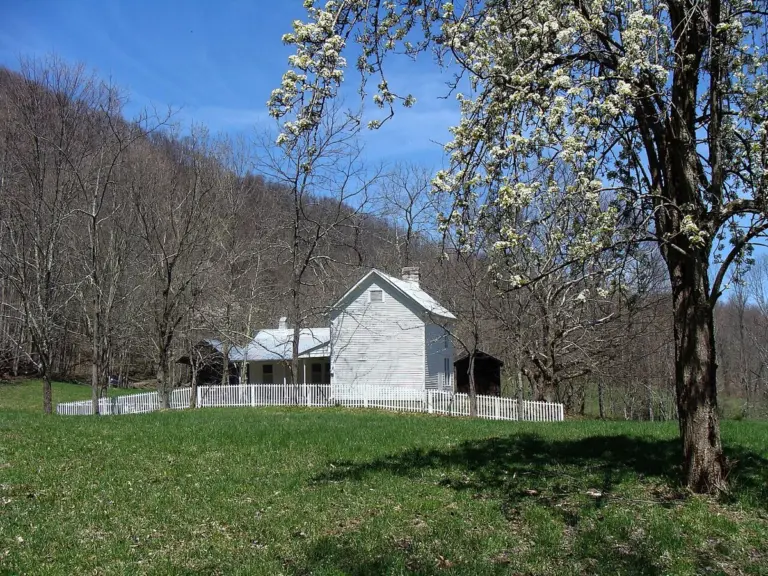
Michigan · Apple blossom
An apple is the round, edible fruit of an apple tree. Fruit trees of the orchard or domestic apple, the most widely grown in the genus, are cultivated worldwide. The tree originated in Central Asia, where its wild ancestor, Malus sieversii, is still found. Apples have been grown for thousands of years in Eurasia before they were introduced to the American continent by European colonists. Apples have cultural significance in many mythologies and religions.
Clouds of pink-and-white blossoms cover apple trees in spring and promise the fall harvest. Michigan is still one of the country's top apple growers.
State flower of Michigan since 1897.
From Wikipedia: Apple (CC BY-SA 4.0)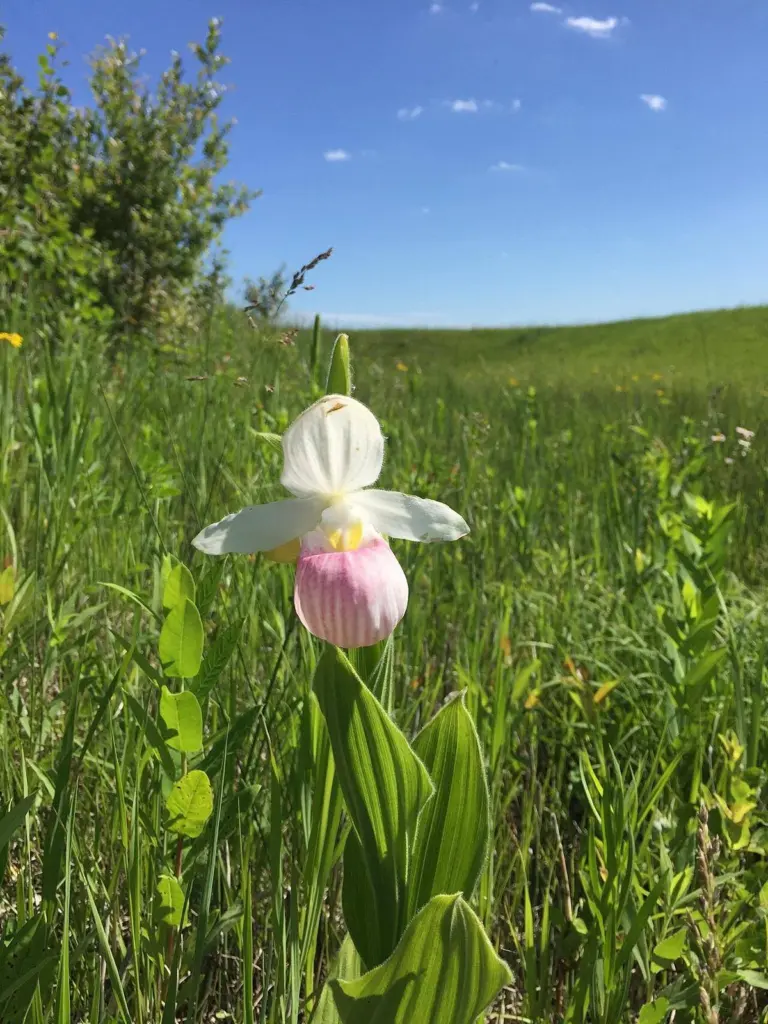
Minnesota · Pink and white lady's slipper
Cypripedium reginae, known as the showy lady's slipper, pink lady's-slipper, or the queen's lady's-slipper, is a rare lady's-slipper orchid native to northern North America. Although never common, this plant has vanished from much of its historical range due to habitat loss. It is the state flower of Minnesota.
A rare orchid with a pink-and-white pouch that grows in bogs and wet woods. It can take many years to bloom, and Minnesota protects it by law.
State flower of Minnesota since 1902.
From Wikipedia: Cypripedium reginae (CC BY-SA 4.0)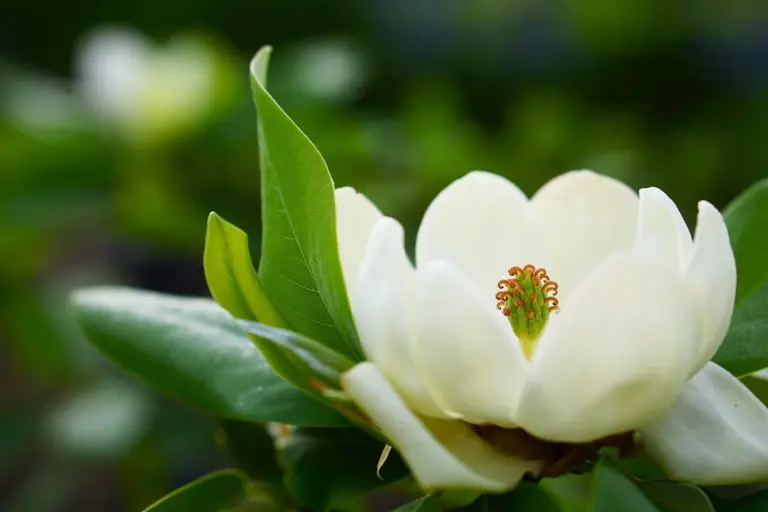
Mississippi · Magnolia
Magnolia grandiflora, commonly known as the southern magnolia or bull bay, is a flowering tree in the family Magnoliaceae native to the Southeastern United States coastal plain, from Virginia to central Florida, and west to East Texas. Reaching 27.5 m (90 ft) in height, it is a large, striking evergreen tree, with large, dark-green leaves up to 20 cm long and 12 cm wide, and large, white, fragrant flowers up to 30 cm (12 in) in diameter.
The southern magnolia has huge, lemon-scented white flowers and glossy evergreen leaves.
State flower of Mississippi since 1900.
From Wikipedia: Magnolia grandiflora (CC BY-SA 4.0)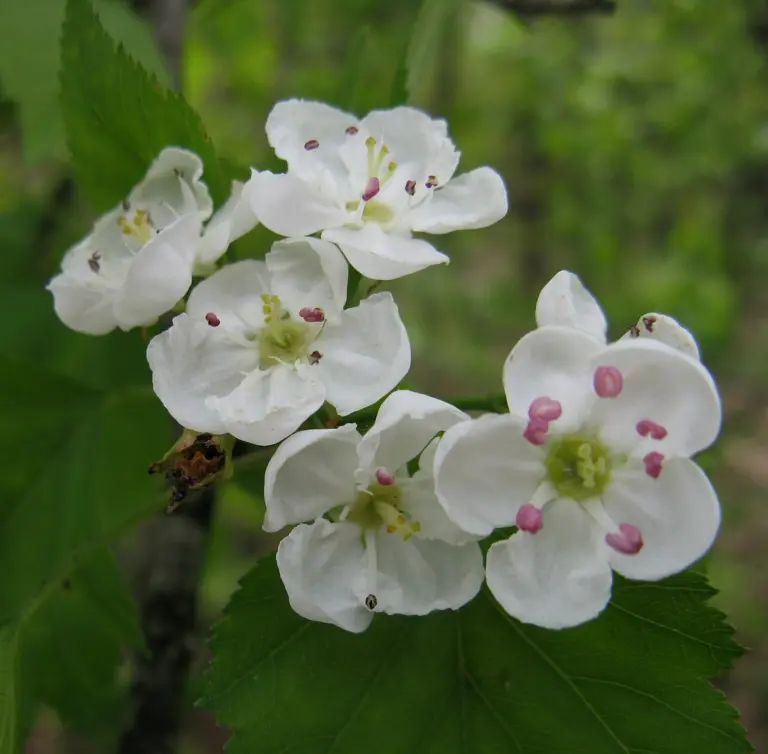
Missouri · Hawthorn
Crataegus, commonly called hawthorn, quickthorn, thornapple, May-tree, whitethorn, Mayflower or hawberry, is a genus of several hundred species of shrubs and trees in the family Rosaceae, native to temperate regions of the Northern Hemisphere in Europe, Asia, North Africa and North America. The name "hawthorn" was originally applied to the species native to northern Europe, especially the common hawthorn C. monogyna, and the unmodified name is often so used in Britain and Ireland. The name is now also applied to the entire genus and to the related Asian genus Rhaphiolepis.
Small trees covered in white blossoms in spring, followed by red fruit called haws that feed birds.
State flower of Missouri since 1923.
From Wikipedia: Crataegus (CC BY-SA 4.0)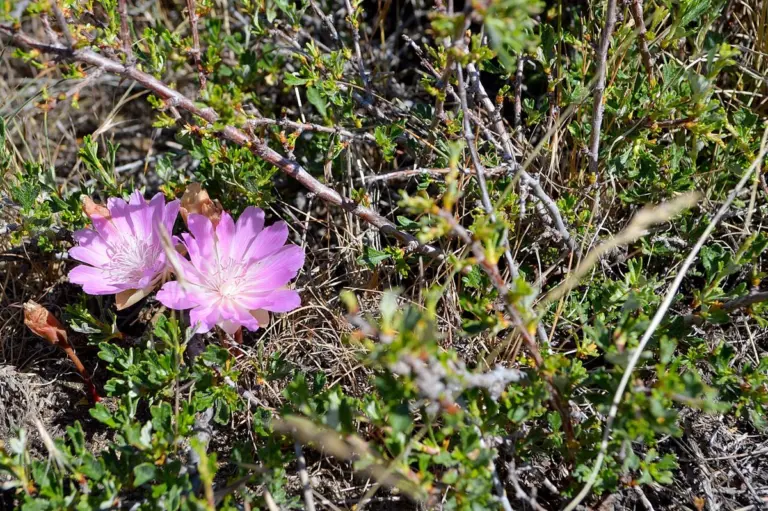
Montana · Bitterroot
Bitterroot is a small perennial herb in the family Montiaceae. Its specific epithet rediviva refers to its ability to regenerate from dry and seemingly dead roots.
A low plant whose pink flowers open on rocky ground in late spring. Its root was an important food for Native peoples, and the Bitterroot River and Valley are named for it.
State flower of Montana since 1894.
From Wikipedia: Bitterroot (CC BY-SA 4.0)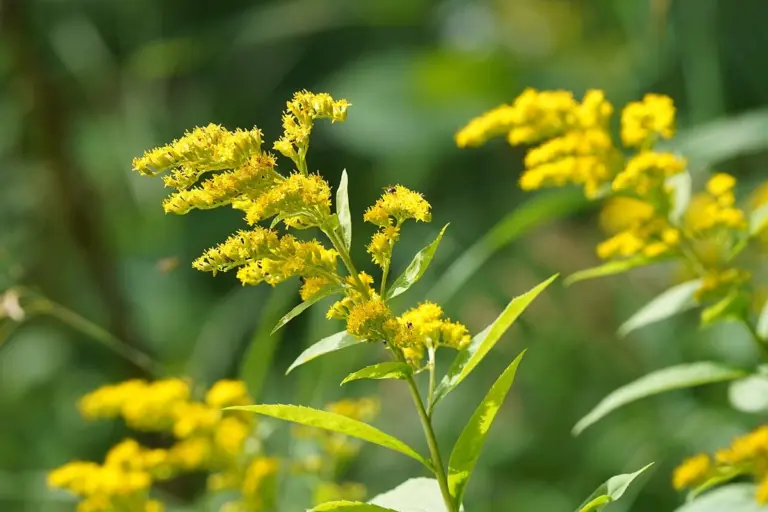
Nebraska · Goldenrod
Solidago gigantea is a North American plant species in the family Asteraceae. Its common names include tall goldenrod and giant goldenrod, among others.
Plumes of golden flowers in late summer and fall. Goldenrod is often blamed for hay fever, but its pollen is heavy and carried by insects, not wind.
State flower of Nebraska since 1895.
From Wikipedia: Solidago gigantea (CC BY-SA 4.0)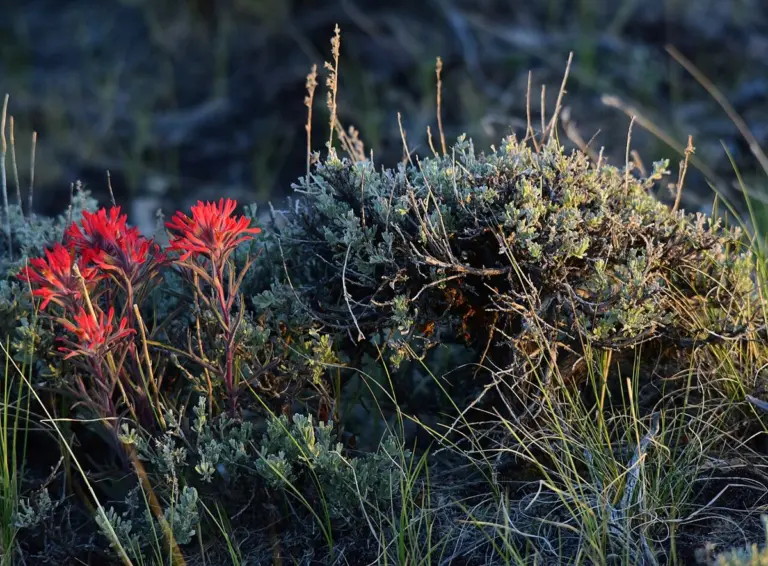
Nevada · Sagebrush
Artemisia tridentata, commonly called big sagebrush, Great Basin sagebrush or simply sagebrush, is an aromatic shrub from the family Asteraceae.
The silvery-gray shrub that covers much of Nevada's high desert, with a strong smell after rain. Its tiny yellow flowers bloom in fall.
State flower of Nevada since 1967.
From Wikipedia: Artemisia tridentata (CC BY-SA 4.0)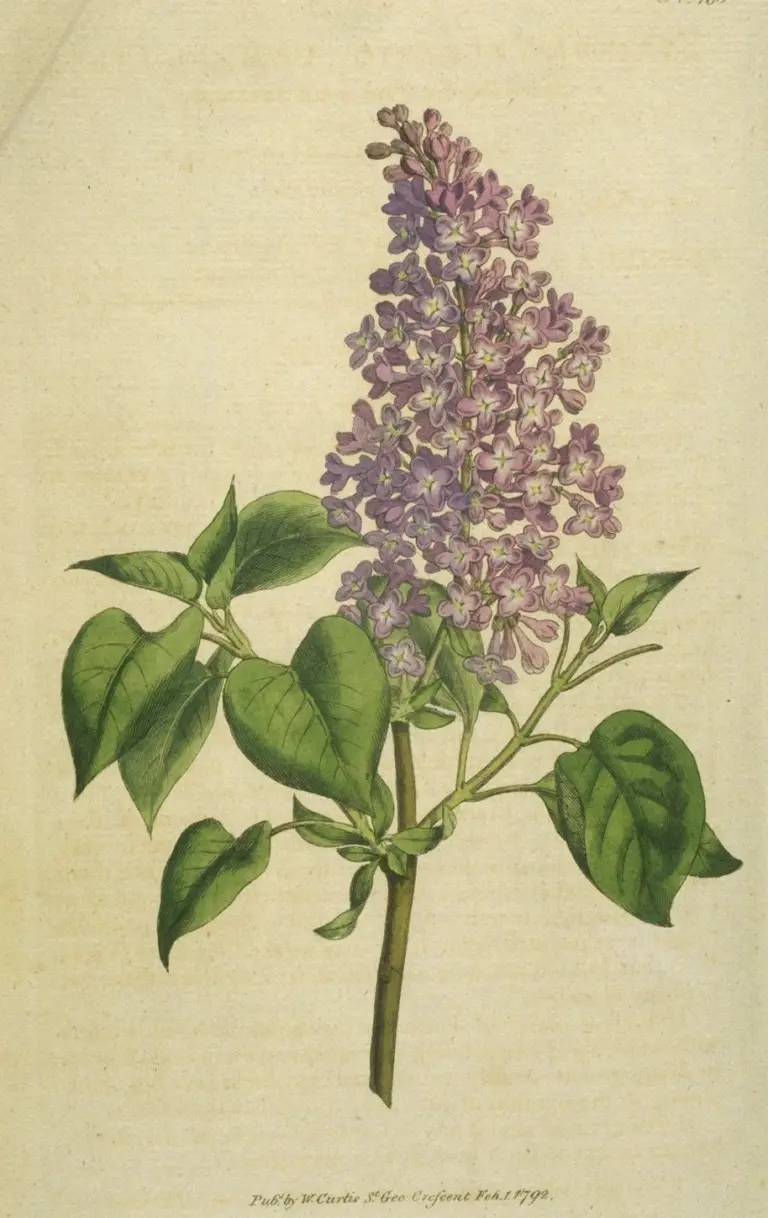
New Hampshire · Purple lilac
Syringa vulgaris, the lilac or common lilac, is a species of flowering plant in the olive family, Oleaceae. Native to the Balkan Peninsula, it is widely cultivated for its scented flowers in Europe and North America.
A shrub with fragrant purple clusters in May, brought by early settlers; some of the oldest lilacs in America grow in New Hampshire. (Picture: a vintage botanical plate.)
State flower of New Hampshire since 1919.
From Wikipedia: Syringa vulgaris (CC BY-SA 4.0)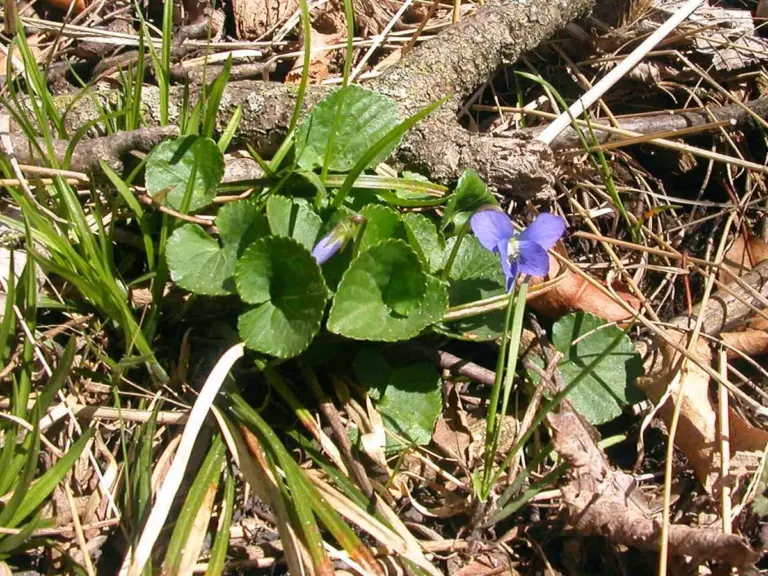
New Jersey · Violet
Viola sororia, known commonly as the common blue violet, is a short-stemmed herbaceous perennial plant native to eastern North America. It is known by a number of common names, including common meadow violet, purple violet, woolly blue violet, hooded violet, and wood violet.
The common blue violet blooms in lawns and woods in spring, with heart-shaped leaves. The flowers are edible and pretty in salads.
State flower of New Jersey since 1971.
From Wikipedia: Viola sororia (CC BY-SA 4.0)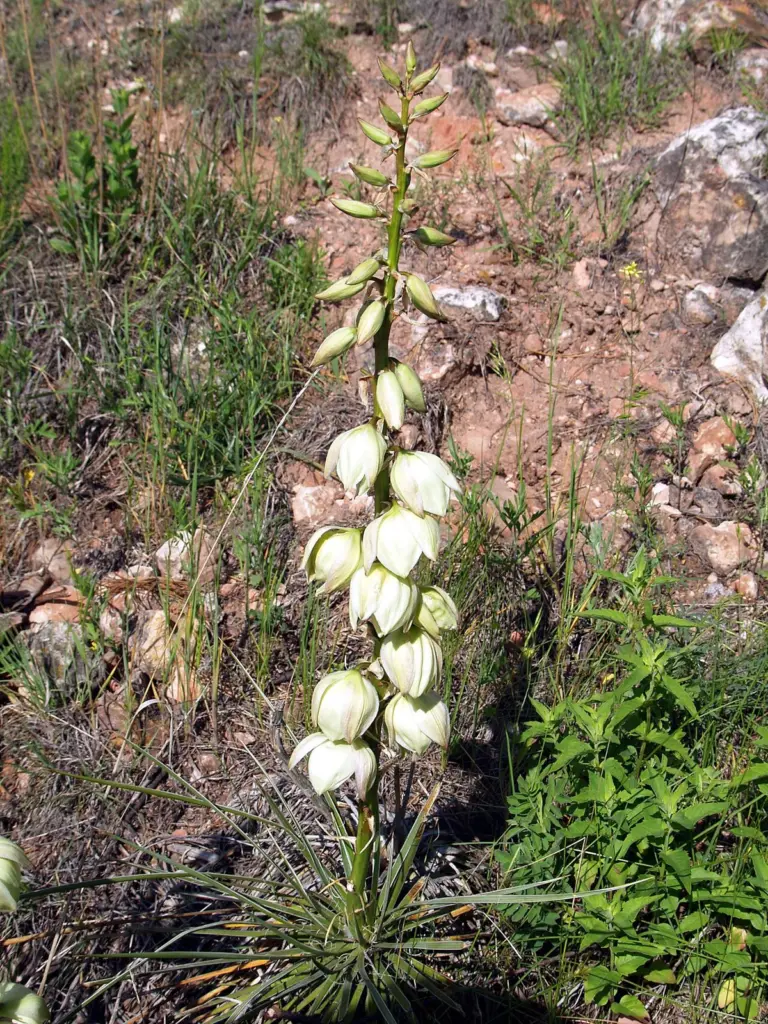
New Mexico · Yucca flower
Yucca is both the scientific name and common name for a genus native to North America from Panama to southern Canada. It contains 50 accepted species. In addition to yucca, they are also known as Adam's needle or Spanish-bayonet. The genus is generally classified in the asparagus family in a subfamily with the Agave, though historically it was part of the lily family. The species range from small shrubby plants to tree-like giants, such as the Joshua tree.
Tall stalks of creamy white bells rise from the spiky yucca in late spring and summer. Yuccas depend on a tiny yucca moth to pollinate them.
State flower of New Mexico since 1927.
From Wikipedia: Yucca (CC BY-SA 4.0)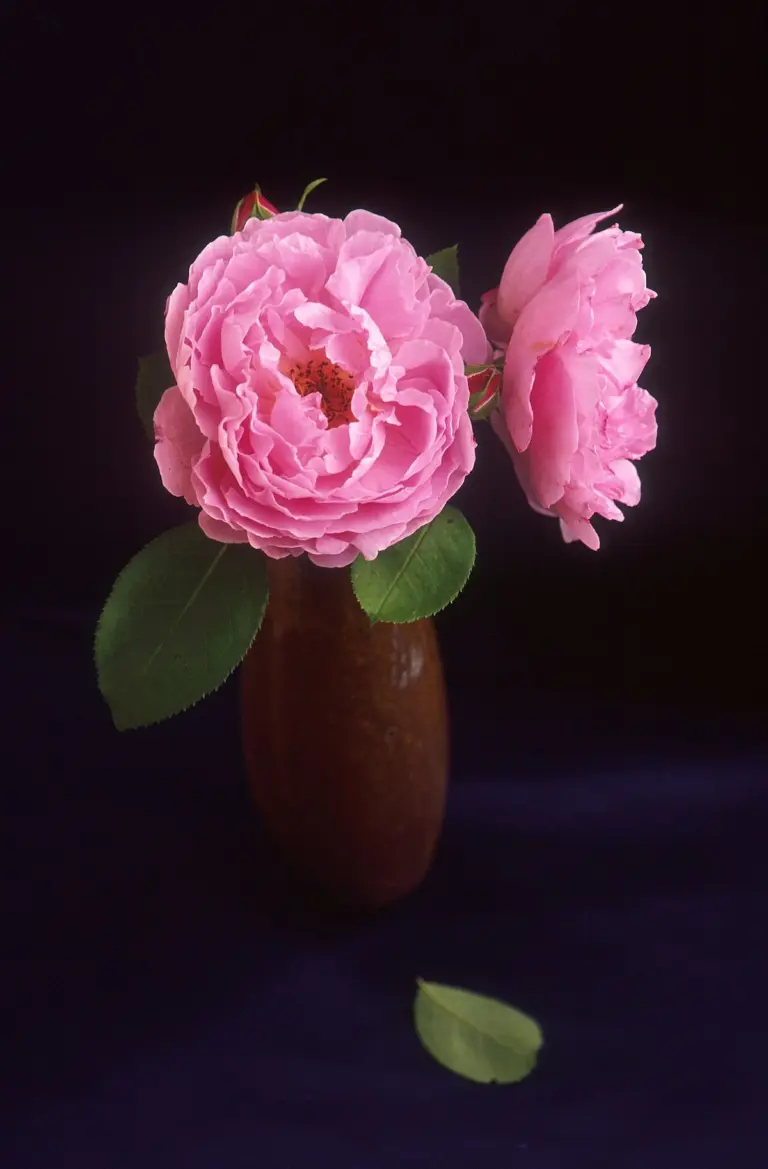
New York · Rose
A rose is either a woody perennial flowering plant of the genus Rosa, in the family Rosaceae, or the flower it bears. There are over three hundred species and tens of thousands of cultivars. The plants range in size and form, from trailing and erect shrubs to climbers up to 7 metres (23 ft) in height. Sharp prickles appear on the stems of many species. Their flowers vary in size and shape and are usually large and showy, in colours ranging from white through pinks, reds, oranges and yellows.
New York chose the rose in all its colors and varieties.
State flower of New York since 1955.
From Wikipedia: Rose (CC BY-SA 4.0)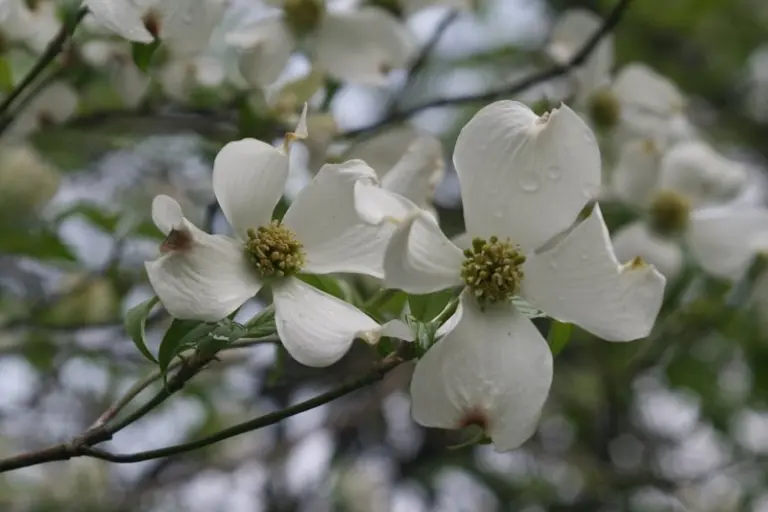
North Carolina · Flowering dogwood
Cornus florida, the flowering dogwood or American dogwood, is a species of flowering tree in the family Cornaceae native to eastern North America and northern Mexico. An endemic population once spanned from southernmost coastal Maine south to northern Florida and west to the Mississippi River. The tree is commonly planted as an ornamental in residential and public areas because of its showy bracts and interesting bark structure.
In spring the flowering dogwood is covered in white 'petals' that are really leaves around a cluster of tiny flowers. Red berries follow in fall for the birds.
State flower of North Carolina since 1941.
From Wikipedia: Cornus florida (CC BY-SA 4.0)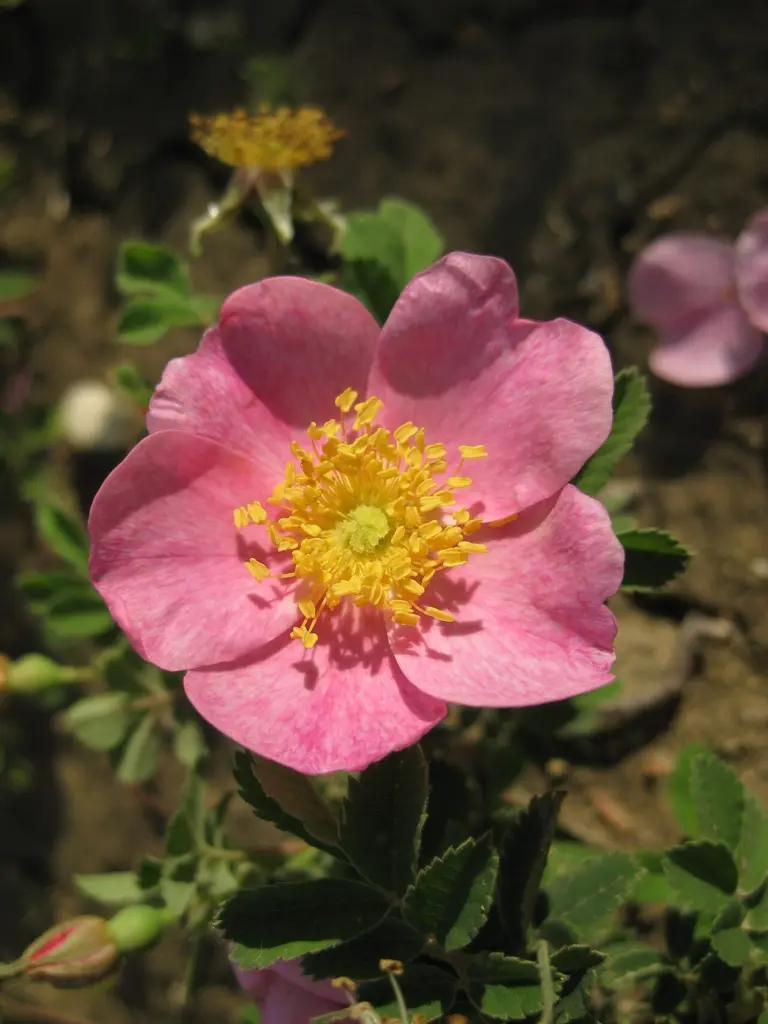
North Dakota · Wild prairie rose
Rosa blanda, called the smooth rose, meadow/wild rose, or prairie rose, is a species of rose native to North America. Among roses, it is closest to a "thornless" rose, with just a few thorns at the base. The meadow rose occurs as a colony-forming shrub growing to 1 m (3 ft) high, naturally in prairies and meadows. The roses are quite variable, the characteristics such as leaf tip number of prickles and glandular hairs usually do not always remain constant, thus it is often confused with Rosa arkansana or Rosa carolina, the two other prairie rose species.
A low native rose with pink, five-petaled flowers and red hips that birds eat in winter. It grows in prairies and along roadsides.
State flower of North Dakota since 1907.
From Wikipedia: Rosa blanda (CC BY-SA 4.0)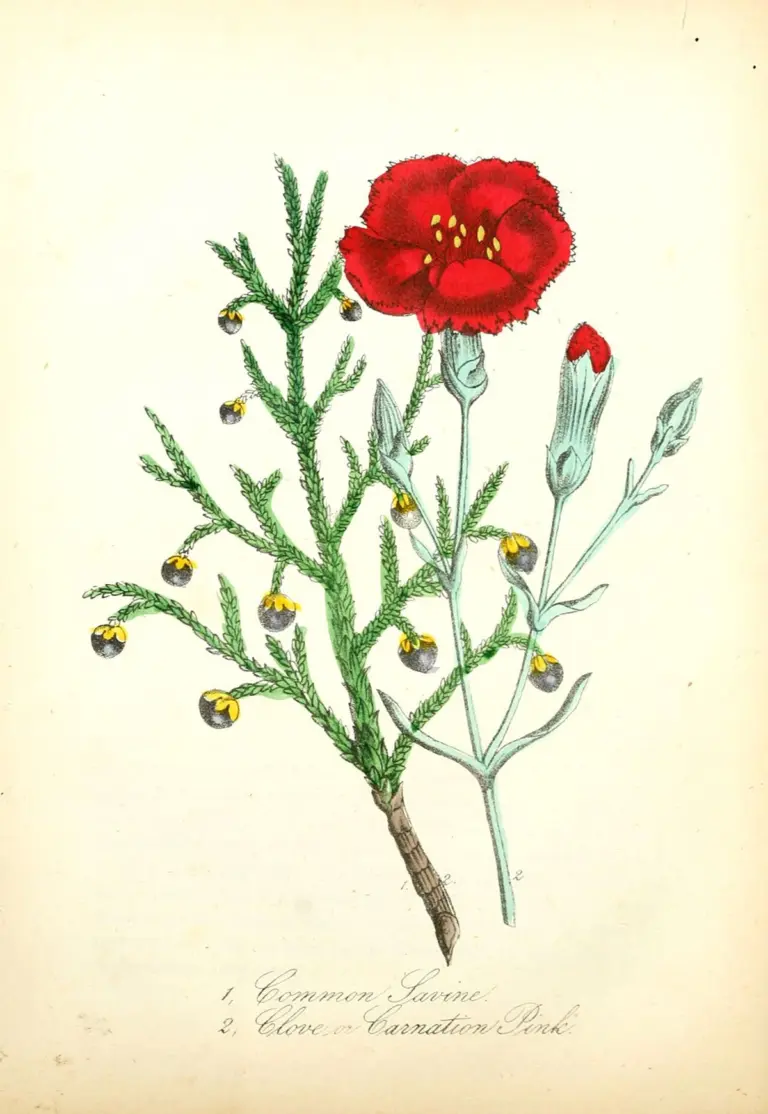
Ohio · Red carnation
Dianthus caryophyllus, commonly known as carnation or clove pink, is a species of Dianthus native to the Mediterranean region. While its exact natural range is uncertain due to extensive cultivation over the last 2,000 years, wild carnations are most common in the Mediterranean region. Carnations are prized for their wide variety of colors, delicate fringed petals, and fragrance, often described as spicy, clove-like, or reminiscent of a combination of cinnamon and nutmeg, hence the common name "clove pink". This aroma has made carnations a popular choice for use in perfumes, potpourri, and scented products. Culturally, carnations are associated with affection, distinction, and maternal love, with variations depending on color and area within its wide geographical range.
The scarlet carnation honors President William McKinley of Ohio, who wore one in his lapel for good luck. (Picture: a vintage botanical plate.)
State flower of Ohio since 1904.
From Wikipedia: Dianthus caryophyllus (CC BY-SA 4.0)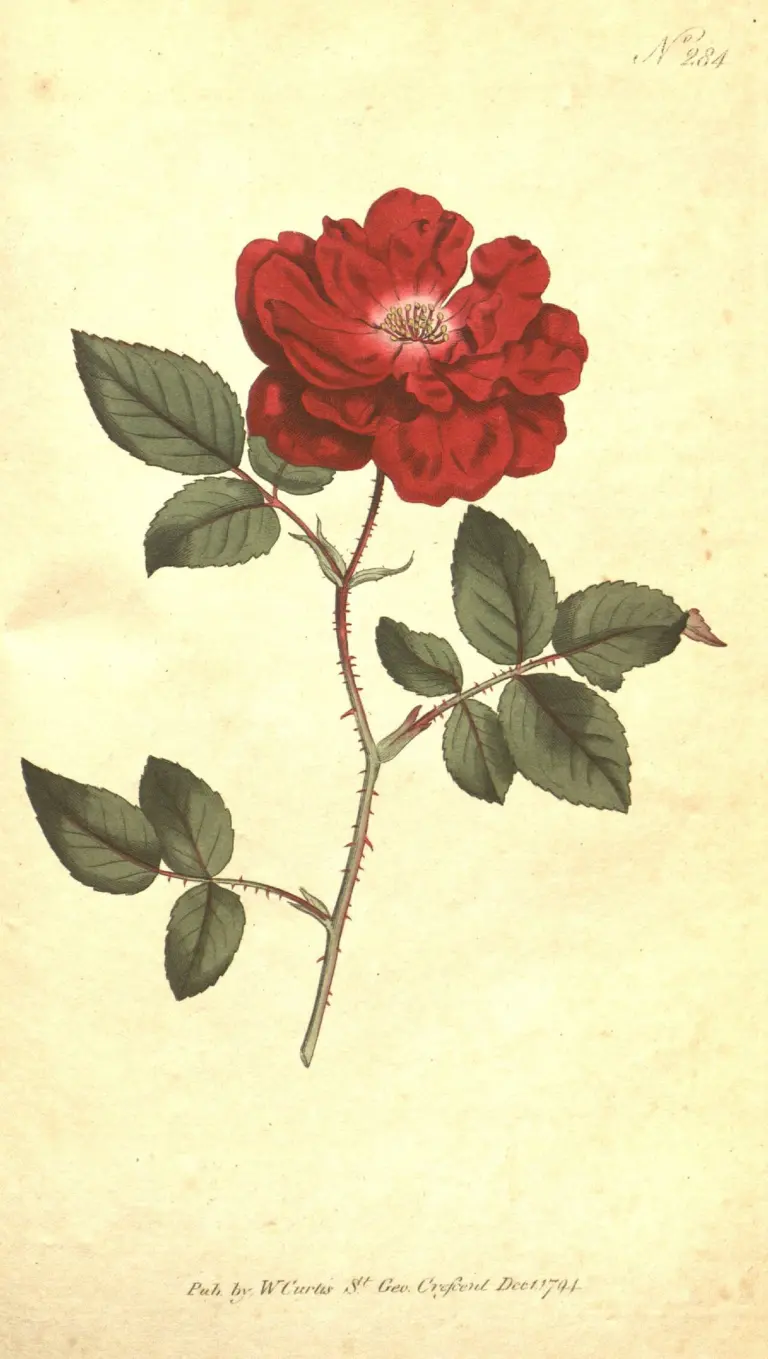
Oklahoma · Oklahoma rose
A rose is either a woody perennial flowering plant of the genus Rosa, in the family Rosaceae, or the flower it bears. There are over three hundred species and tens of thousands of cultivars. The plants range in size and form, from trailing and erect shrubs to climbers up to 7 metres (23 ft) in height. Sharp prickles appear on the stems of many species. Their flowers vary in size and shape and are usually large and showy, in colours ranging from white through pinks, reds, oranges and yellows.
The Oklahoma rose is a deep red garden rose bred at Oklahoma State University. (Picture: a vintage plate of a red China rose.)
State flower of Oklahoma since 2004.
From Wikipedia: Rose (CC BY-SA 4.0)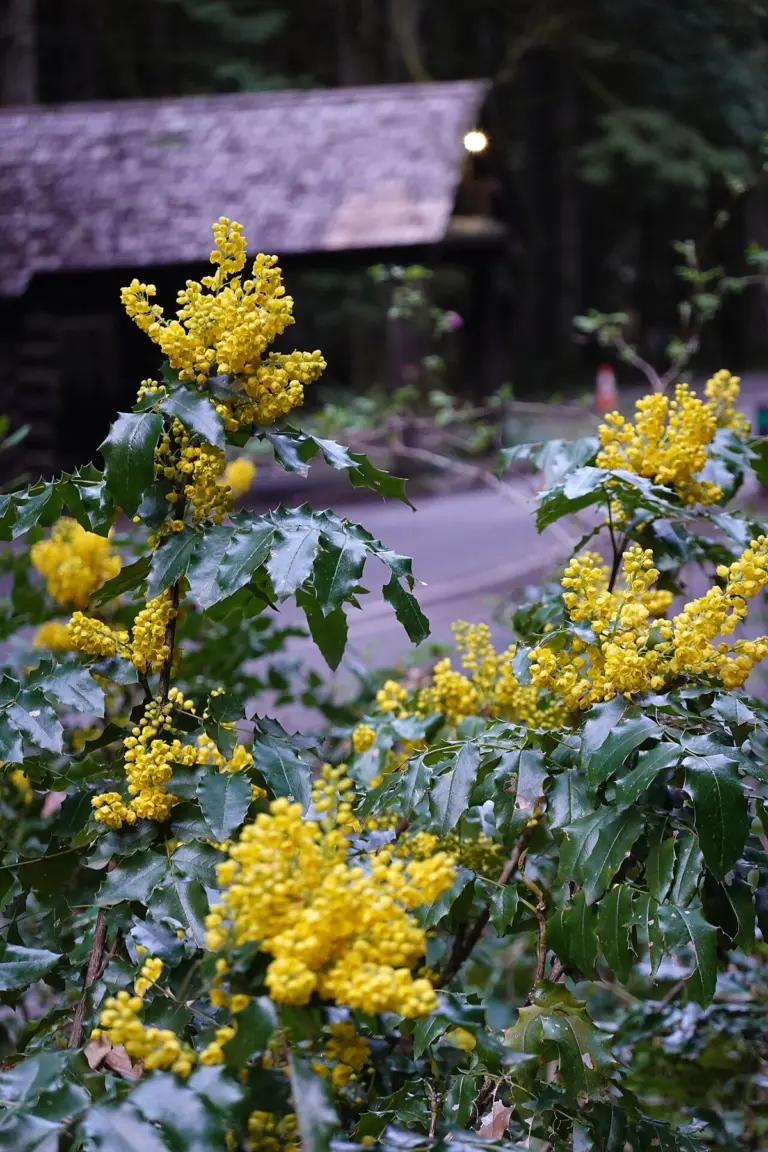
Oregon · Oregon grape
Berberis aquifolium, the Oregon grape, holly-leaved barberry, or Mahonia, is a North American species of flowering plant in the family Berberidaceae. It is an evergreen shrub growing up to 3 metres (10 ft) tall and 1.5 m (5 ft) wide. It has pinnate leaves consisting of spiny leaflets, exhibiting dense clusters of yellow flowers in early spring, followed by dark bluish-black berries.
An evergreen shrub with holly-like leaves, bright yellow flower clusters in spring and dusty blue berries in summer.
State flower of Oregon since 1899.
From Wikipedia: Berberis aquifolium (CC BY-SA 4.0)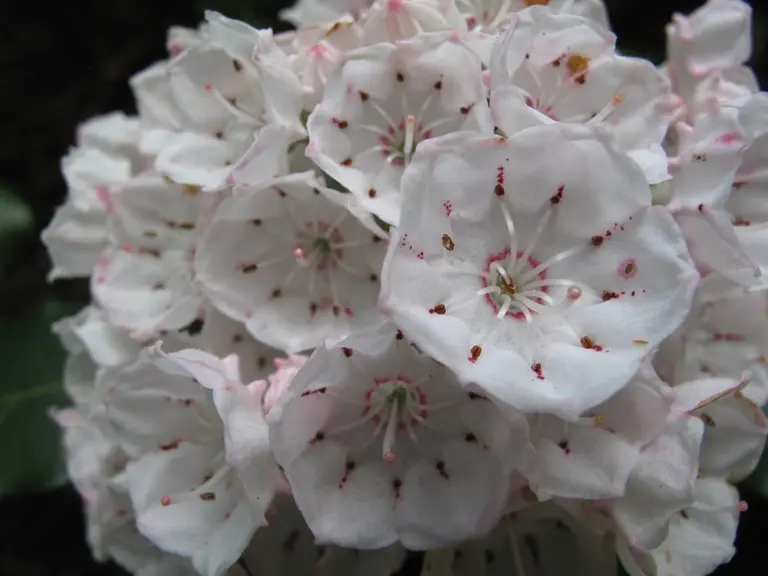
Pennsylvania · Mountain laurel
Kalmia latifolia, the mountain laurel, calico-bush, or spoonwood, is a flowering plant and one of the 10 species in the genus of Kalmia belonging to the heath(er) family Ericaceae. It is native to the eastern United States. Its range stretches from southern Maine to northern Florida, and west to Indiana and Louisiana. Mountain laurel is the state flower of Connecticut and Pennsylvania. It is the namesake of Laurel County in Kentucky, the city of Laurel, Mississippi, Mount Laurel, New Jersey, and the Laurel Highlands in southwestern Pennsylvania.
An evergreen shrub of eastern woods whose cup-shaped pink and white flowers open in late spring. Its leaves are poisonous to people and livestock.
State flower of Pennsylvania since 1933.
From Wikipedia: Kalmia latifolia (CC BY-SA 4.0)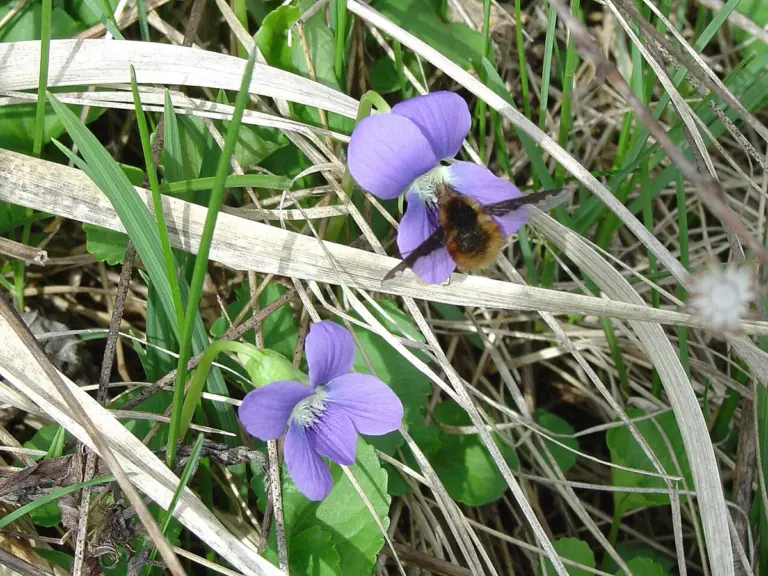
Rhode Island · Violet
Viola sororia, known commonly as the common blue violet, is a short-stemmed herbaceous perennial plant native to eastern North America. It is known by a number of common names, including common meadow violet, purple violet, woolly blue violet, hooded violet, and wood violet.
The common blue violet blooms in lawns and woods in spring, with heart-shaped leaves. The flowers are edible and pretty in salads.
State flower of Rhode Island since 1968.
From Wikipedia: Viola sororia (CC BY-SA 4.0)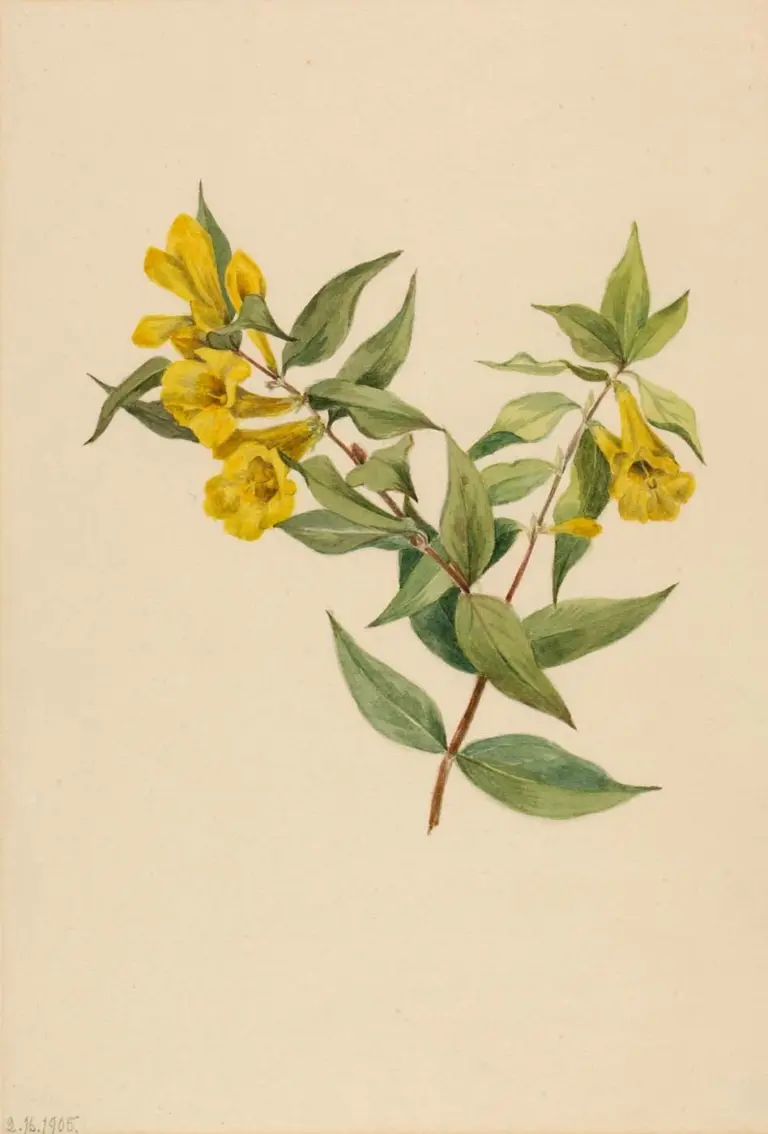
South Carolina · Yellow jessamine
Gelsemium sempervirens is a twining vine in the family Gelsemiaceae, native to subtropical and tropical America: Honduras, Guatemala, Belize, Mexico, and southeastern and south-central United States. It has a number of common names including yellow jessamine or confederate jessamine or jasmine, Carolina jasmine or jessamine, evening trumpetflower, gelsemium and woodbine.
A climbing vine whose fragrant yellow trumpets bloom in late winter and early spring across the South. All parts are poisonous. (Picture: a vintage painting.)
State flower of South Carolina since 1924.
From Wikipedia: Gelsemium sempervirens (CC BY-SA 4.0)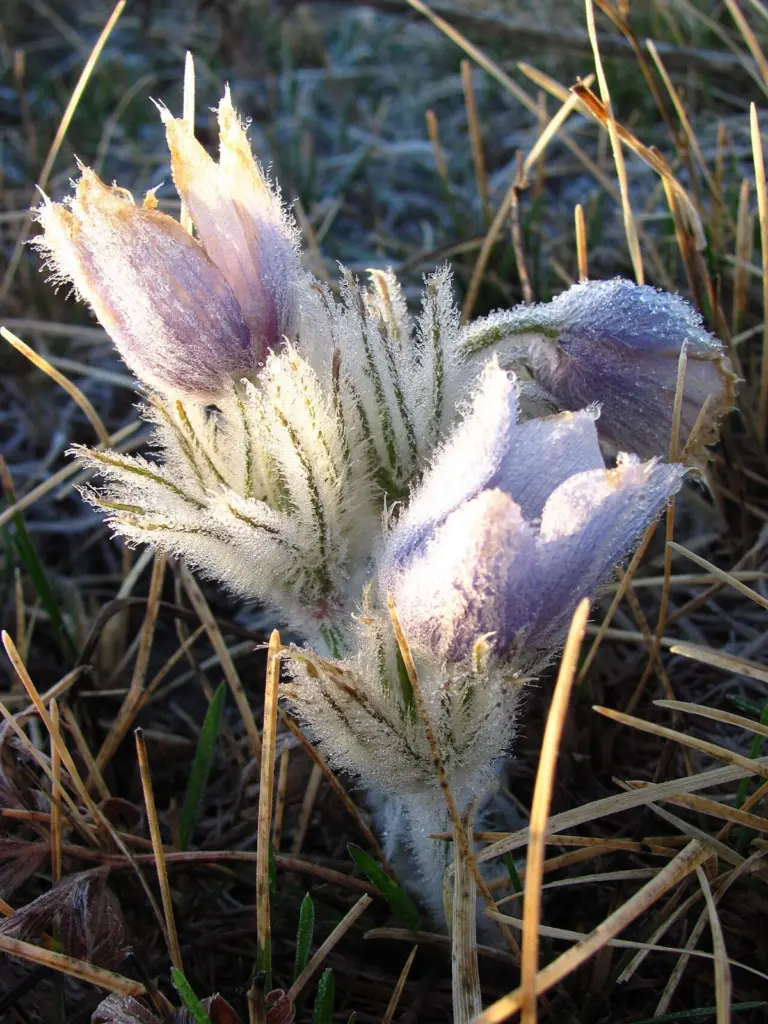
South Dakota · American pasque flower
Pulsatilla patens is a species of flowering plant in the family Ranunculaceae, native to Europe, Russia, Mongolia, and China. Common names include Eastern pasqueflower and cutleaf anemone.
Fuzzy lavender flowers that open on the prairie as soon as the snow melts, often around Easter, which gave the pasque flower its name.
State flower of South Dakota since 1903.
From Wikipedia: Pulsatilla patens (CC BY-SA 4.0)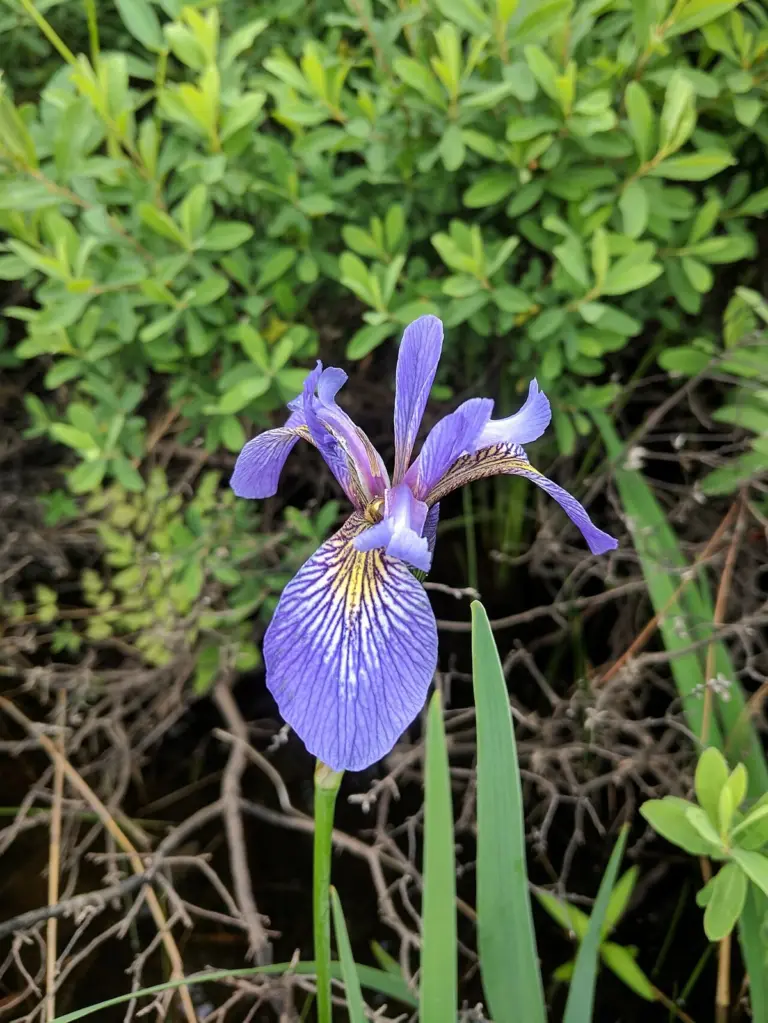
Tennessee · Iris
Iris is a flowering plant genus of 320 accepted species with showy flowers. As well as being the scientific name, iris is also widely used as a common name for all Iris species, as well as some belonging to other closely related genera. A common name for some species is flags, while the plants of the subgenus Scorpiris are widely known as junos, particularly in horticulture. It is a popular garden flower.
Tennessee chose the iris, often shown in purple. Irises are easy, hardy garden flowers that bloom in late spring.
State flower of Tennessee since 1933.
From Wikipedia: Iris (plant) (CC BY-SA 4.0)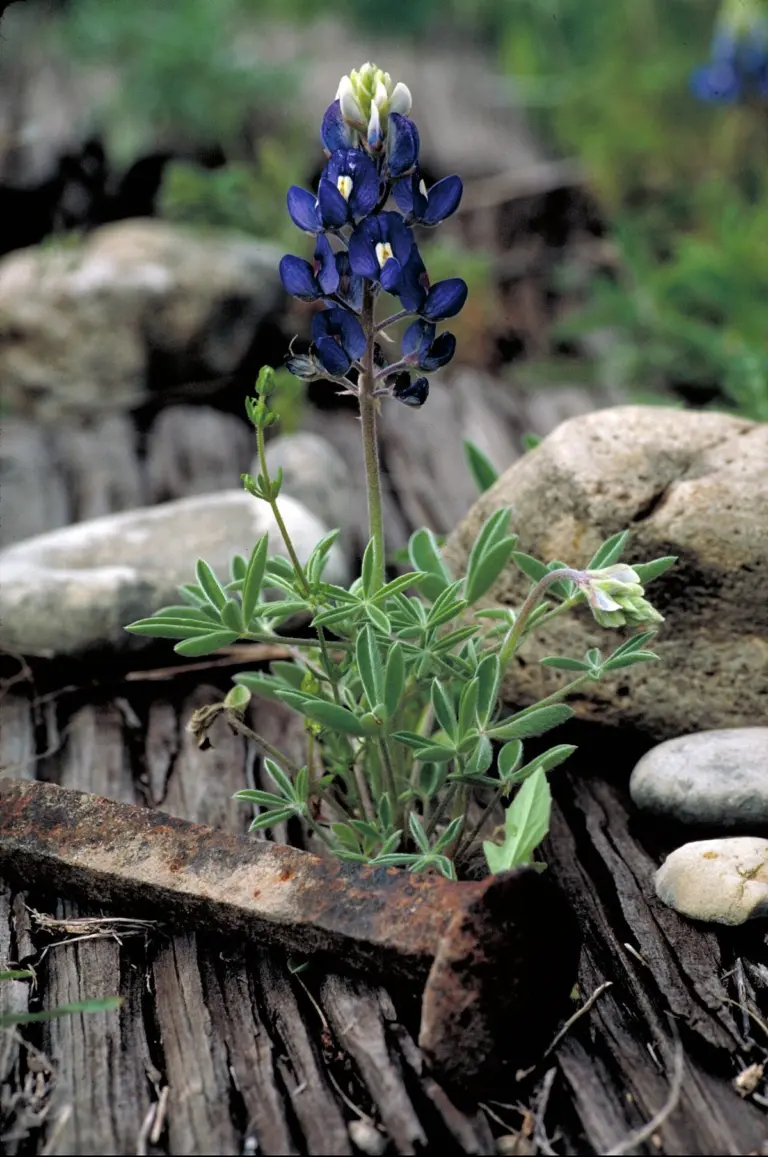
Texas · Bluebonnet
Lupinus texensis, the Texas bluebonnet or Texas lupine is a species of lupine found in Texas, Louisiana, Arkansas and the Mexican states of Coahuila, Nuevo León, and Tamaulipas. With other related species of lupines also called bluebonnets, it is the state flower of Texas.
Fields of blue lupines turn Texas roadsides blue every spring. The law covers all native bluebonnets.
State flower of Texas since 1901.
From Wikipedia: Lupinus texensis (CC BY-SA 4.0)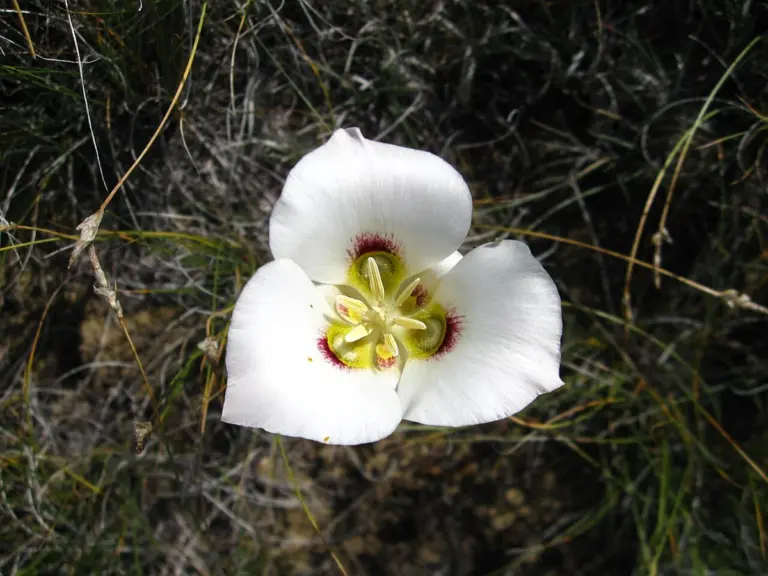
Utah · Sego lily
Calochortus nuttallii, also known as the sego lily, is a bulbous perennial plant that is endemic to the Western United States. The common name of sego comes from a similar Shoshone word. It is the state flower of Utah.
A lily with three white petals and a purple-and-yellow center. Its bulb was an important food for Native peoples and for pioneers in hard times.
State flower of Utah since 1911.
From Wikipedia: Calochortus nuttallii (CC BY-SA 4.0)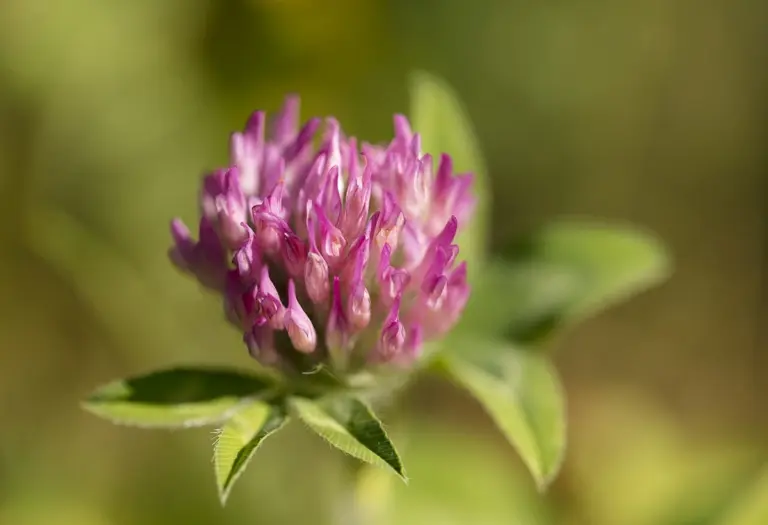
Vermont · Red clover
Trifolium pratense, red clover, is a herbaceous species of flowering plant in the bean family, Fabaceae. It is native to the Old World, but planted and naturalised in many other regions.
Pink-purple clover heads that dot pastures and hay fields all summer; bees love them.
State flower of Vermont since 1894.
From Wikipedia: Trifolium pratense (CC BY-SA 4.0)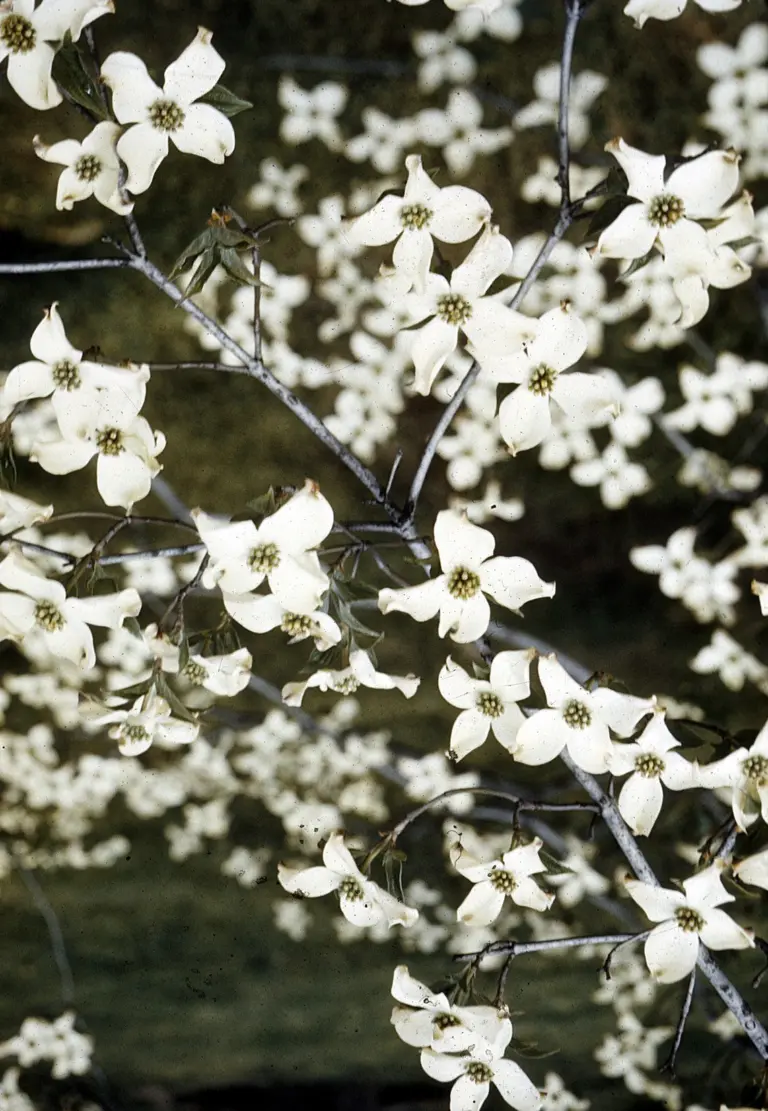
Virginia · American dogwood
Cornus florida, the flowering dogwood or American dogwood, is a species of flowering tree in the family Cornaceae native to eastern North America and northern Mexico. An endemic population once spanned from southernmost coastal Maine south to northern Florida and west to the Mississippi River. The tree is commonly planted as an ornamental in residential and public areas because of its showy bracts and interesting bark structure.
In spring the flowering dogwood is covered in white 'petals' that are really leaves around a cluster of tiny flowers. Red berries follow in fall for the birds.
State flower of Virginia since 1918.
From Wikipedia: Cornus florida (CC BY-SA 4.0)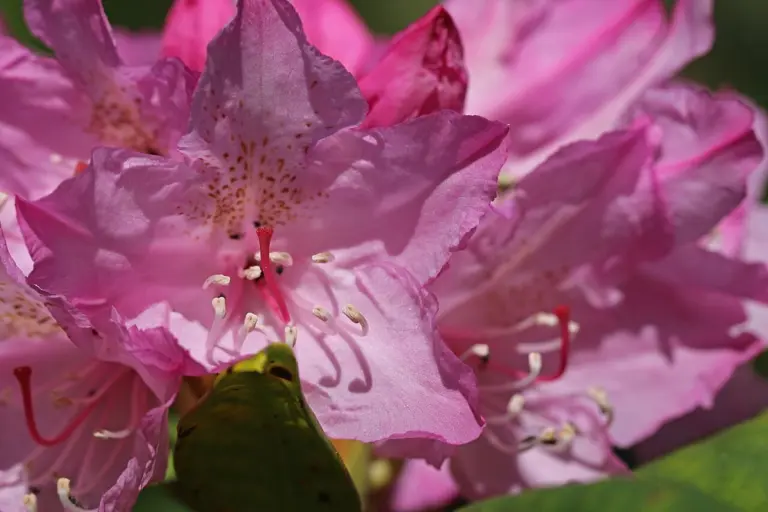
Washington · Coast rhododendron
Rhododendron macrophyllum, also known as the Pacific rhododendron, California rose bay, California rhododendron, coast rhododendron or big leaf rhododendron, is a large-leaved species of Rhododendron native to the Pacific Coast of North America. It is the state flower of Washington.
An evergreen shrub with big clusters of pink to purple flowers in late spring, found in forests west of the Cascades.
State flower of Washington since 1892.
From Wikipedia: Rhododendron macrophyllum (CC BY-SA 4.0)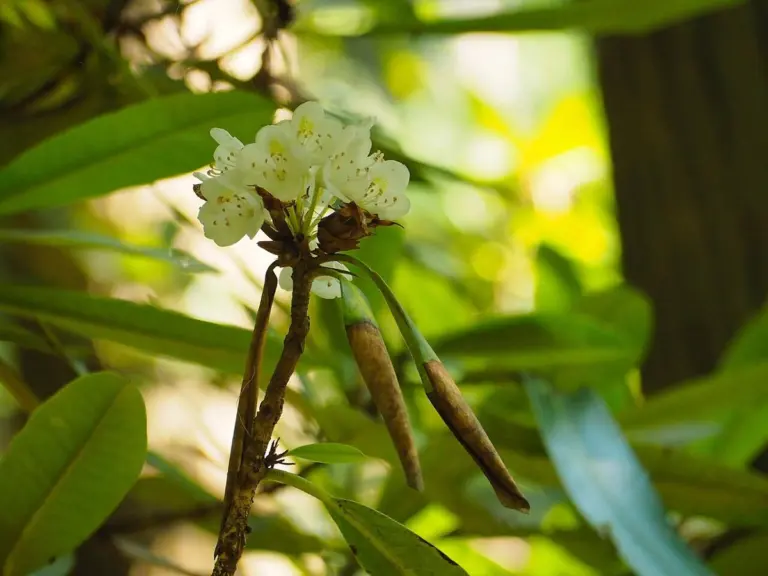
West Virginia · Rhododendron
Rhododendron maximum is a species of Rhododendron native to the Appalachians of eastern North America, from Alabama north to coastal Nova Scotia. Its common names include great laurel, great rhododendron, rosebay rhododendron, American rhododendron and big rhododendron.
The great rhododendron lights up Appalachian forests and streambanks with pale pink and white flowers in early summer.
State flower of West Virginia since 1903.
From Wikipedia: Rhododendron maximum (CC BY-SA 4.0)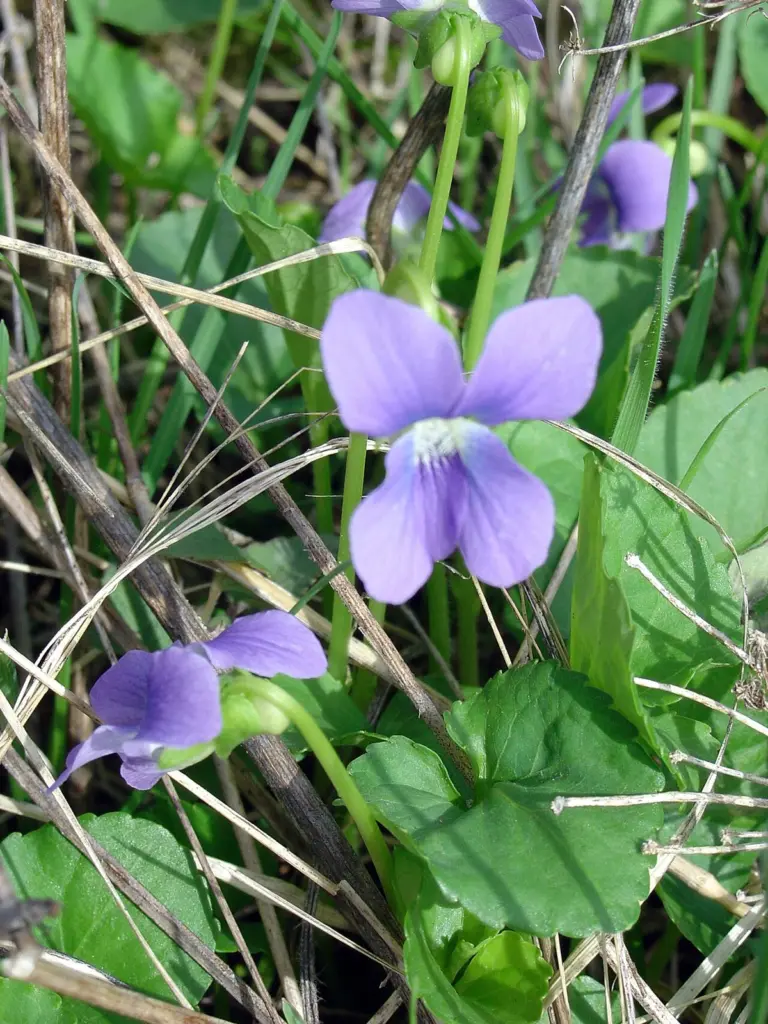
Wisconsin · Wood violet
Viola sororia, known commonly as the common blue violet, is a short-stemmed herbaceous perennial plant native to eastern North America. It is known by a number of common names, including common meadow violet, purple violet, woolly blue violet, hooded violet, and wood violet.
The common blue violet blooms in lawns and woods in spring, with heart-shaped leaves. The flowers are edible and pretty in salads.
State flower of Wisconsin since 1909.
From Wikipedia: Viola sororia (CC BY-SA 4.0)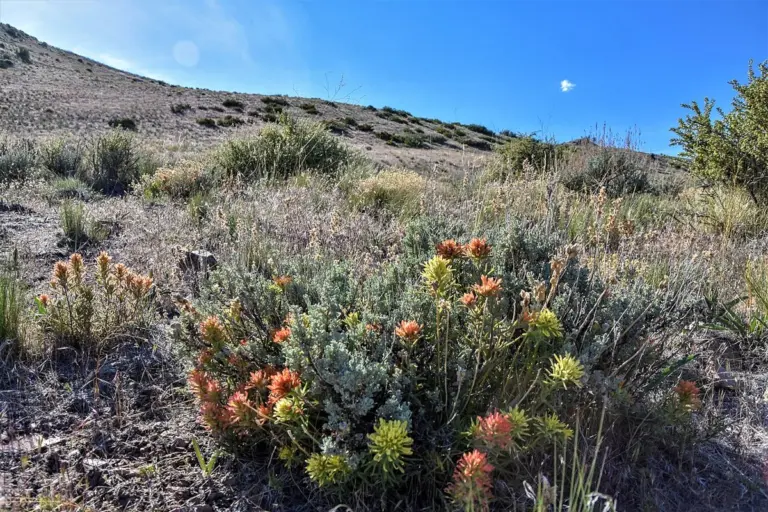
Wyoming · Indian paintbrush
Castilleja linariifolia is a perennial plant, native to the United States and is the state flower of Wyoming. It has a number of common names including Wyoming paintbrush and Wyoming paintedcup.
Red-orange flower spikes that look dipped in paint, scattered through Wyoming's sagebrush in summer.
State flower of Wyoming since 1917.
From Wikipedia: Castilleja linariifolia (CC BY-SA 4.0)
Hawaii's yellow hibiscus (ma'o hau hele) is endangered, and we could not find a public-domain picture of it yet. If you have a photo you would like to share, we would love to see it.
Picture credits
All pictures are in the public domain: photos by U.S. federal agencies (such as the U.S. Fish & Wildlife Service, National Park Service and USDA) and vintage illustrations whose copyright has expired. Click a card to see the picture larger and read more. The short descriptions under each picture are from Wikipedia (CC BY-SA 4.0), linked on each card. Years are when each state adopted its symbol, from Wikipedia’s cited lists of state birds and state flowers; some states chose a symbol earlier and made it law later.
- Alabama (Camellia): Vintage illustration, public domain · source
- Alaska (Forget-me-not): U.S. government photo, public domain · source
- Arizona (Saguaro cactus blossom): U.S. government photo, public domain · source
- Arkansas (Apple blossom): U.S. government photo, public domain · source
- California (California poppy): U.S. government photo, public domain · source
- Colorado (Rocky Mountain columbine): U.S. government photo, public domain · source
- Connecticut (Mountain laurel): U.S. government photo, public domain · source
- Delaware (Peach blossom): U.S. government photo, public domain · source
- Florida (Orange blossom): Vintage illustration, public domain · source
- Georgia (Cherokee rose): Vintage illustration, public domain · source
- Idaho (Syringa): U.S. government photo, public domain · source
- Illinois (Violet): U.S. government photo, public domain · source
- Indiana (Peony): Vintage illustration, public domain · source
- Iowa (Wild prairie rose): U.S. government photo, public domain · source
- Kansas (Sunflower): U.S. government photo, public domain · source
- Kentucky (Goldenrod): U.S. government photo, public domain · source
- Louisiana (Magnolia): U.S. government photo, public domain · source
- Maine (White pine cone and tassel): U.S. government photo, public domain · source
- Maryland (Black-eyed Susan): U.S. government photo, public domain · source
- Massachusetts (Mayflower (trailing arbutus)): U.S. government photo, public domain · source
- Michigan (Apple blossom): U.S. government photo, public domain · source
- Minnesota (Pink and white lady's slipper): U.S. government photo, public domain · source
- Mississippi (Magnolia): U.S. government photo, public domain · source
- Missouri (Hawthorn): U.S. government photo, public domain · source
- Montana (Bitterroot): U.S. government photo, public domain · source
- Nebraska (Goldenrod): U.S. government photo, public domain · source
- Nevada (Sagebrush): U.S. government photo, public domain · source
- New Hampshire (Purple lilac): Vintage illustration, public domain · source
- New Jersey (Violet): U.S. government photo, public domain · source
- New Mexico (Yucca flower): U.S. government photo, public domain · source
- New York (Rose): U.S. government photo, public domain · source
- North Carolina (Flowering dogwood): U.S. government photo, public domain · source
- North Dakota (Wild prairie rose): U.S. government photo, public domain · source
- Ohio (Red carnation): Vintage illustration, public domain · source
- Oklahoma (Oklahoma rose): Vintage illustration, public domain · source
- Oregon (Oregon grape): U.S. government photo, public domain · source
- Pennsylvania (Mountain laurel): U.S. government photo, public domain · source
- Rhode Island (Violet): U.S. government photo, public domain · source
- South Carolina (Yellow jessamine): Vintage illustration, public domain · source
- South Dakota (American pasque flower): U.S. government photo, public domain · source
- Tennessee (Iris): U.S. government photo, public domain · source
- Texas (Bluebonnet): U.S. government photo, public domain · source
- Utah (Sego lily): U.S. government photo, public domain · source
- Vermont (Red clover): U.S. government photo, public domain · source
- Virginia (American dogwood): U.S. government photo, public domain · source
- Washington (Coast rhododendron): U.S. government photo, public domain · source
- West Virginia (Rhododendron): U.S. government photo, public domain · source
- Wisconsin (Wood violet): U.S. government photo, public domain · source
- Wyoming (Indian paintbrush): U.S. government photo, public domain · source


