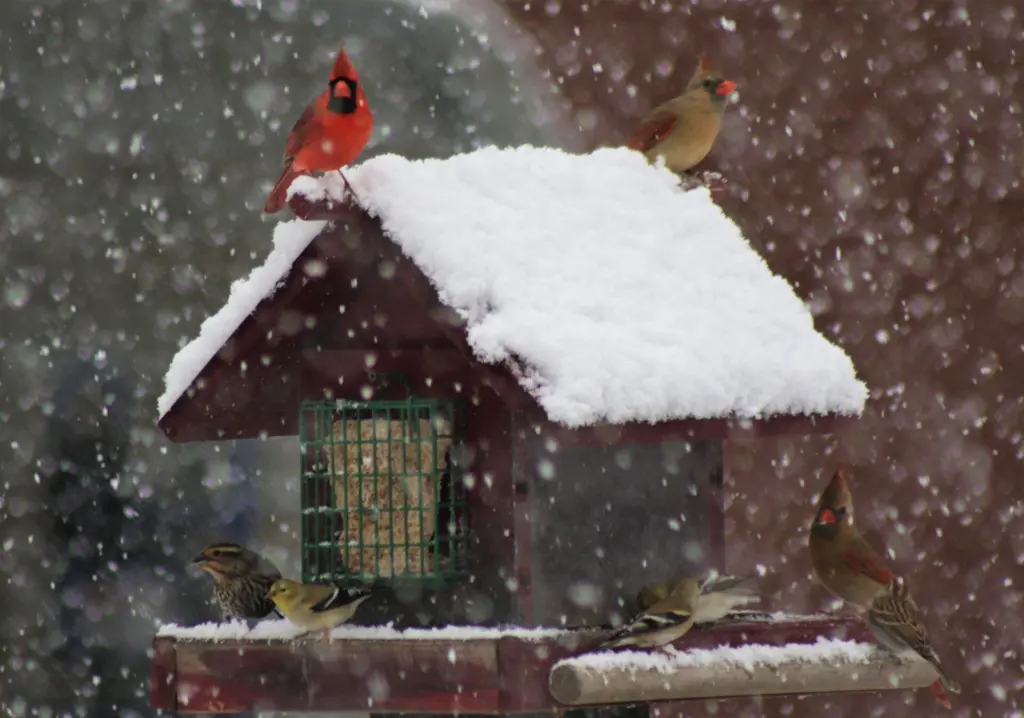
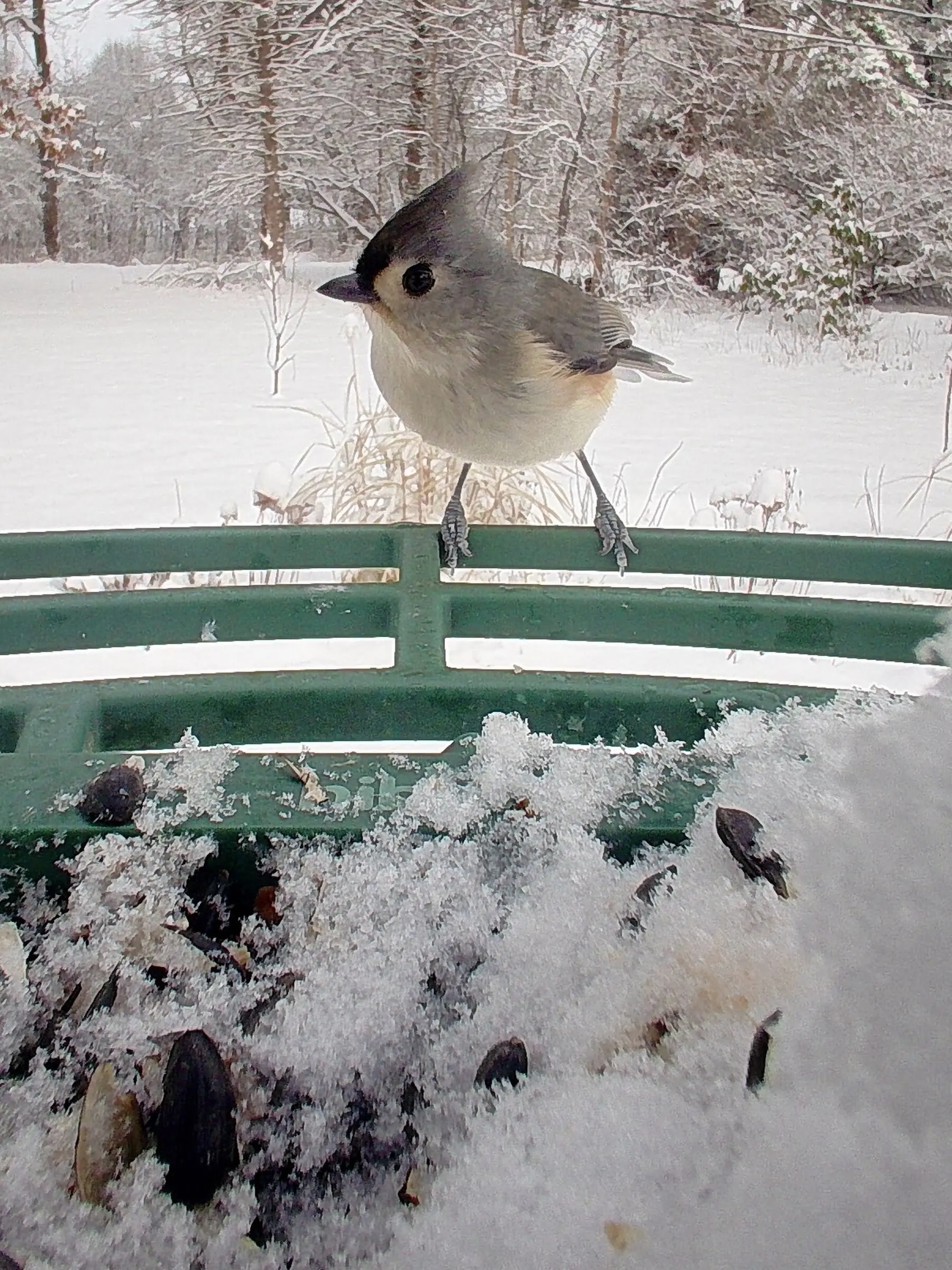
After a snowstorm, seed in an open tray can sit under a cap of snow, then turn soggy as it melts, especially in a tray with no way to drain. Rain soaks it even faster. Knowing how to keep birdseed dry saves seed and keeps your feeders healthier for the birds that count on them all winter.
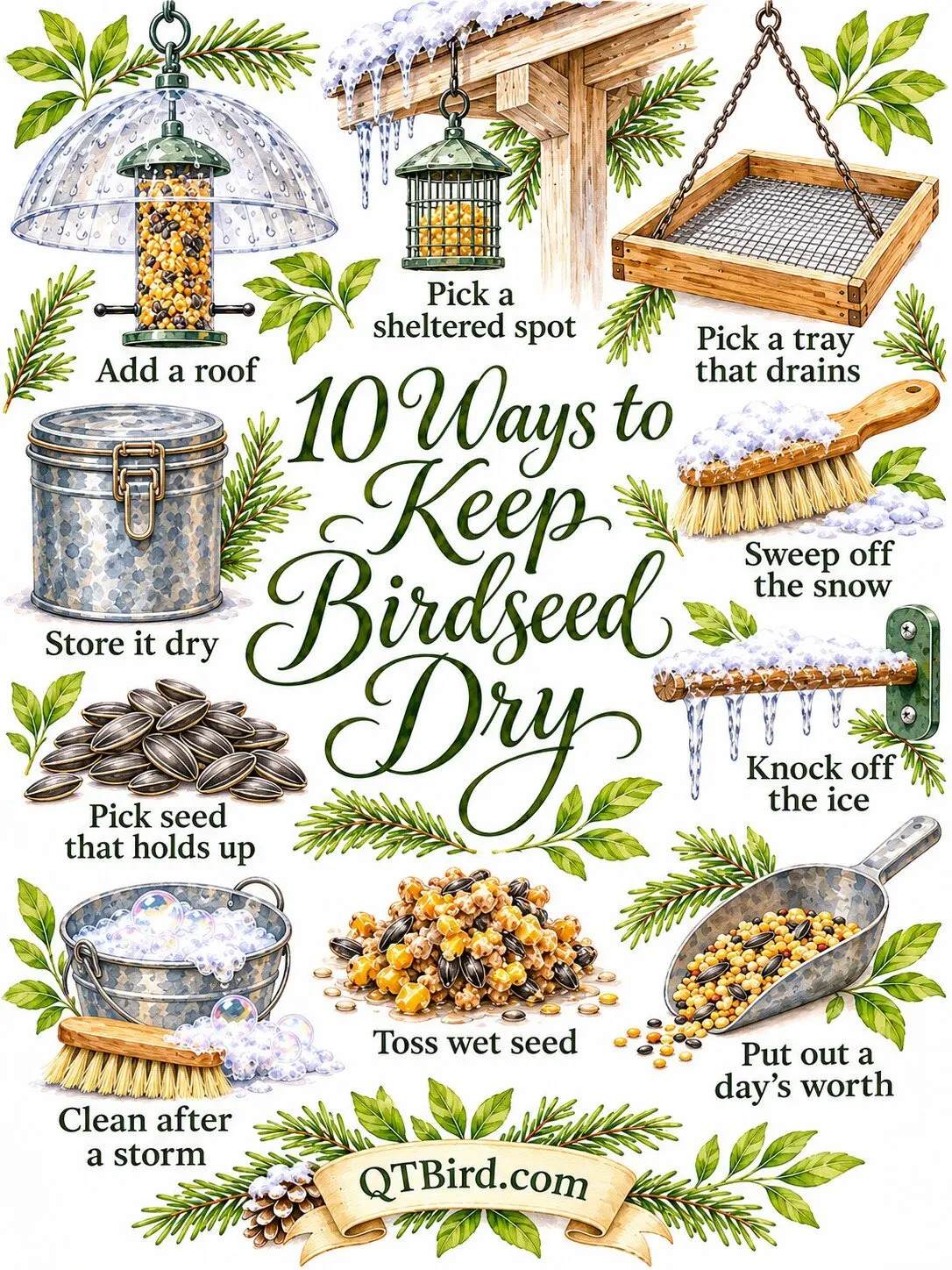
Here’s what helps, from the feeder you pick to the container you store seed in.
Why wet seed is a problem
Wet seed doesn’t just clump. It can grow mold, both in the feeder and on the ground below it, and mold can make birds sick.
That’s why the steps below come down to three things.
- Keep seed as dry as you can.
- Don’t leave more out than the birds will eat.
- Throw out seed that stays wet.
Even with your best effort, some seed is going to get wet from the weather at some point.
Give the seed a roof
Hopper feeders, the ones shaped like little houses, have a roof built in that sheds snow and rain. Tube feeders keep most of their seed dry too, but check the very bottom, below the lowest port. Mississippi State University Extension warns that rainwater can collect there and turn the seed moldy.
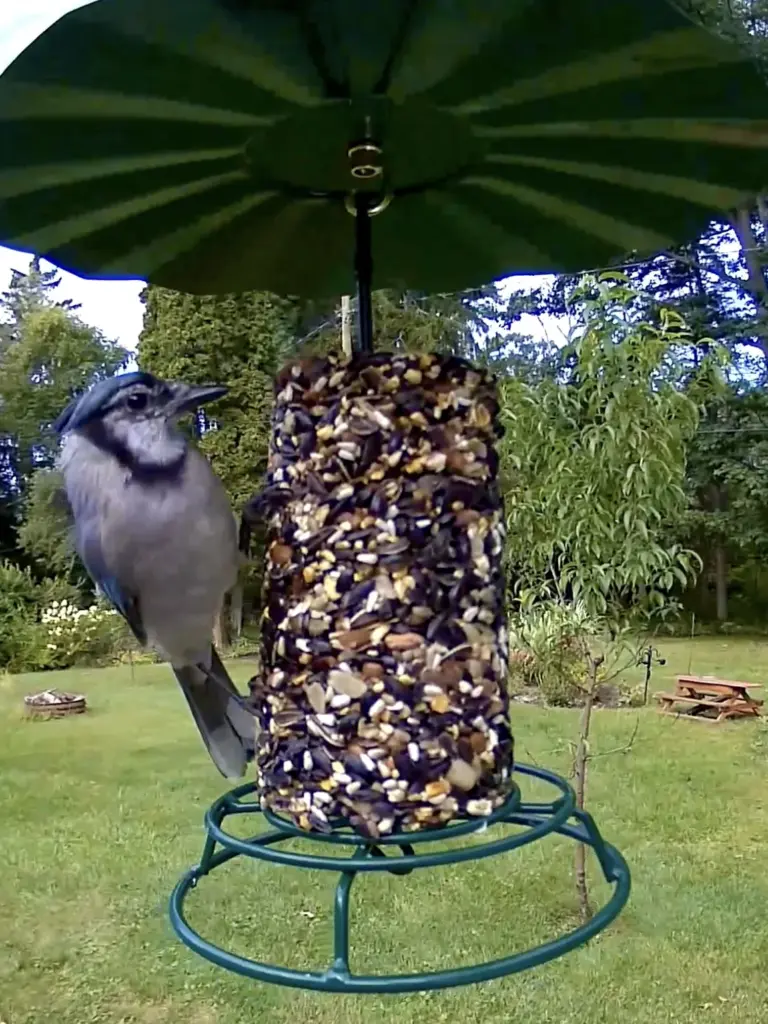
For tube feeders and open trays, add a dome or a baffle on top. It works like a small umbrella over the seed. No cover keeps out blowing snow or sideways rain, so it still pays to check the seed after a storm.
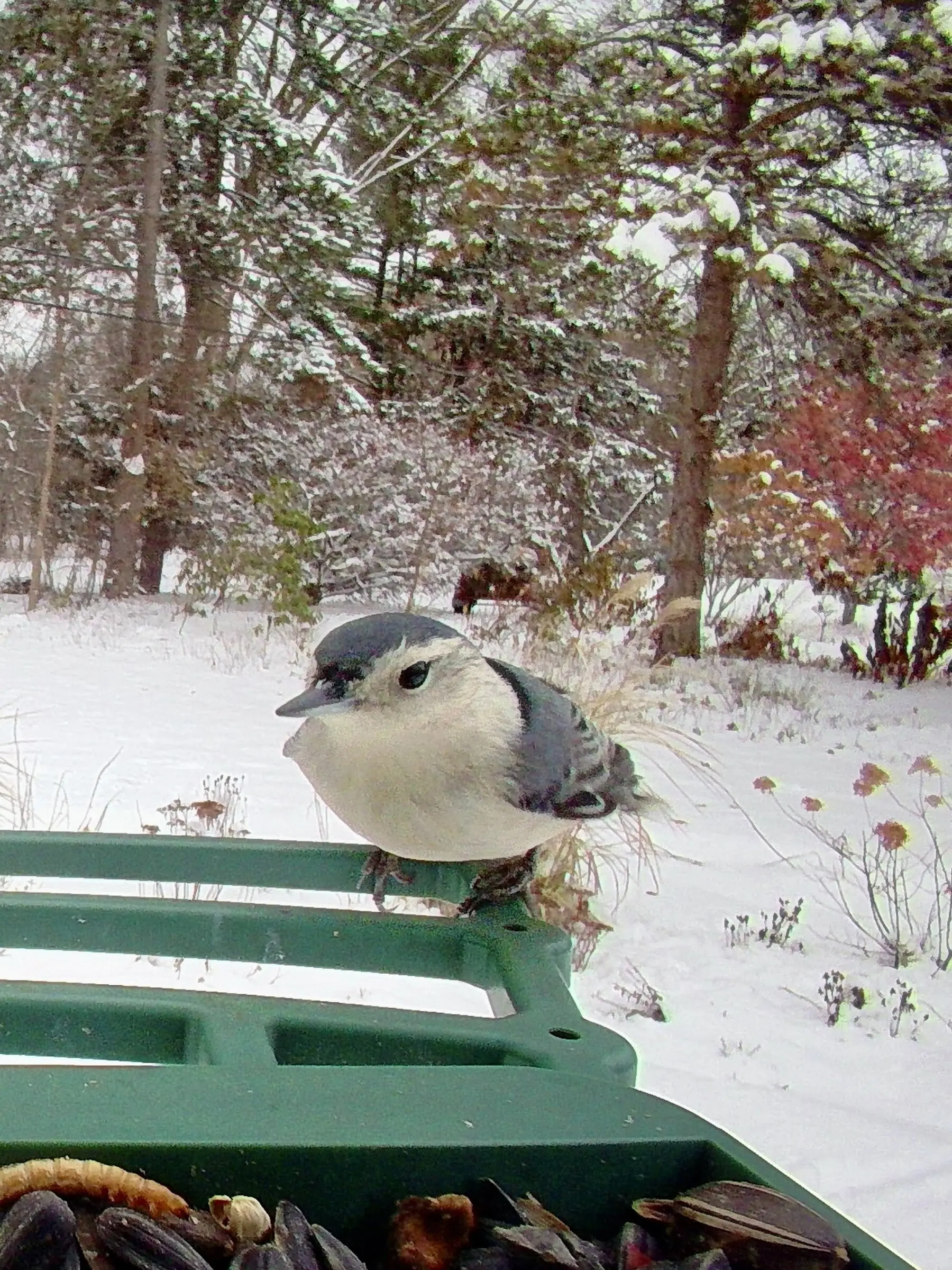
Pick a sheltered spot
A feeder under a porch roof, an awning, or the eaves of the house stays drier than one out in the open. When rain or snow is on the way, you can also move a hanging feeder under cover until the storm passes. Keep it near the edge of the cover so the birds can still find it.
Trees help less than you might think. Snow and rain still come through the branches in a heavy storm. Thick shrubs right next to a feeder can also hide cats, so the Missouri Department of Conservation suggests hanging feeders about 10 feet away from them.
Pick a tray that drains
Tray and platform feeders leave the most seed out in the open, so drainage matters. A screened bottom you can lift out lets water run through, keeps seed drier, and makes cleaning easier. On a solid tray with drainage holes, clear the holes when you clean, since wet seed can clog them and leave water standing in the tray.
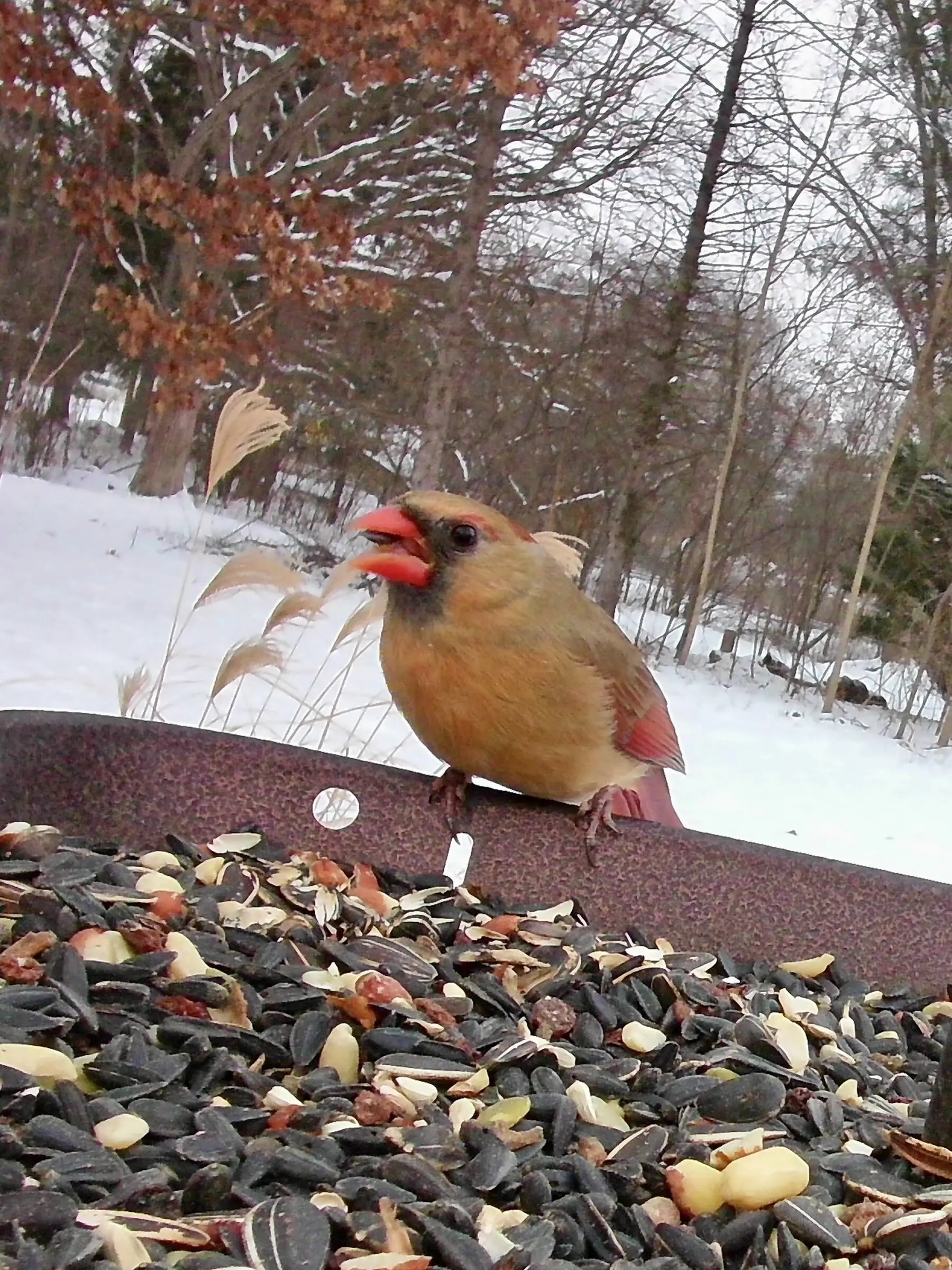
Keep feeders clear of snow
After each snowfall, brush the snow off feeder roofs, trays, and ports so it doesn’t sit on the seed. A soft brush or a gloved hand works fine.
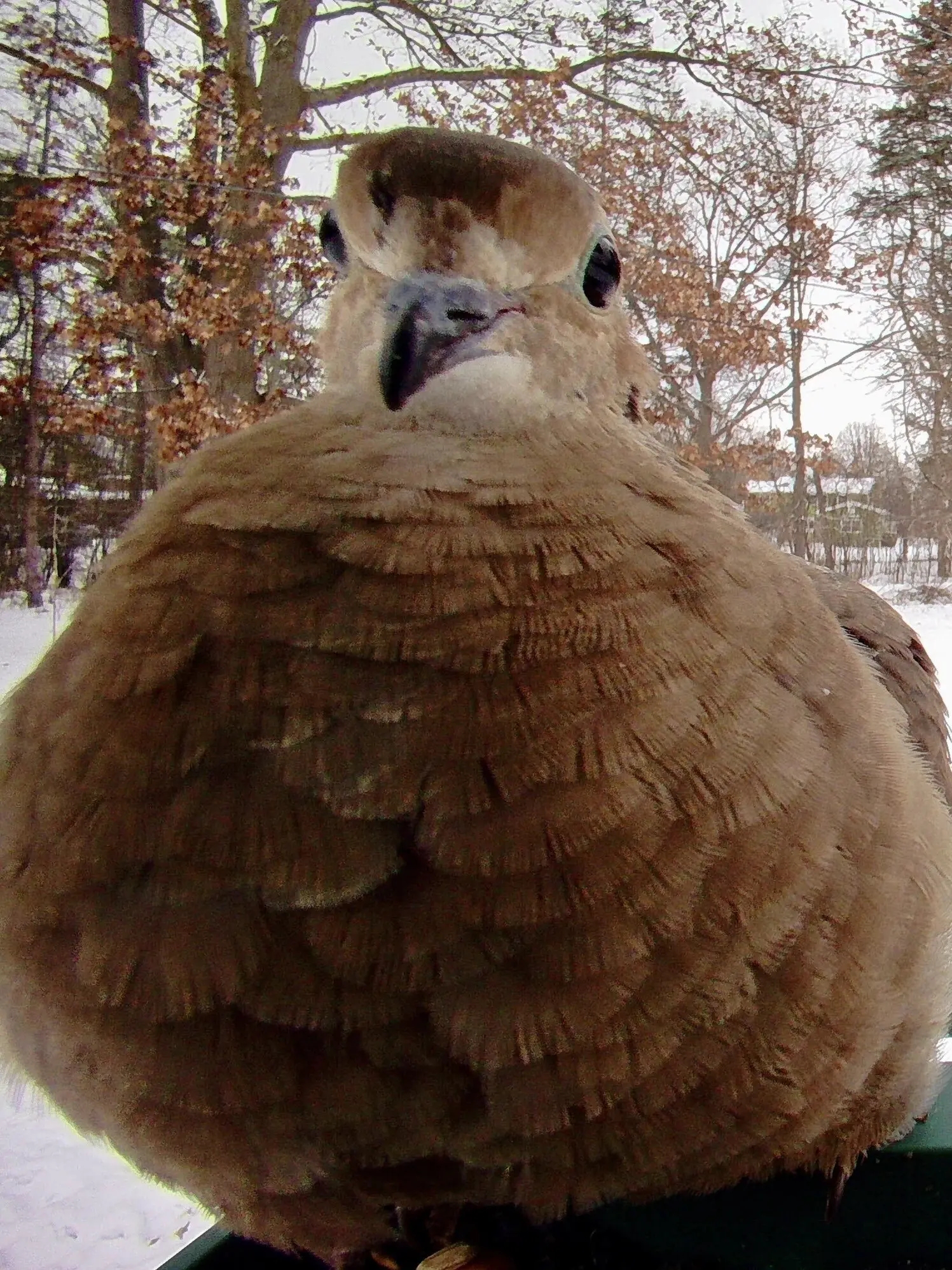
Sparrows, towhees, juncos, and doves feed on the ground. Clear a spot under the feeder, or nearby, and scatter some seed there so they don’t have to dig through deep snow to find it.
When ice coats the feeder
An ice storm can seal birds’ natural food under ice, and that’s when your feeders matter most. Oklahoma’s state forestry agency advises keeping bird feeders “full and ice-free” during and after a storm. Knock ice off perches, ports, and trays so birds can reach the seed. If a feeder hangs from a tree branch, move it to a pole or hook until the ice melts. NC State Extension says to take feeders down from trees during an ice storm so they don’t add to the weight on the branches.
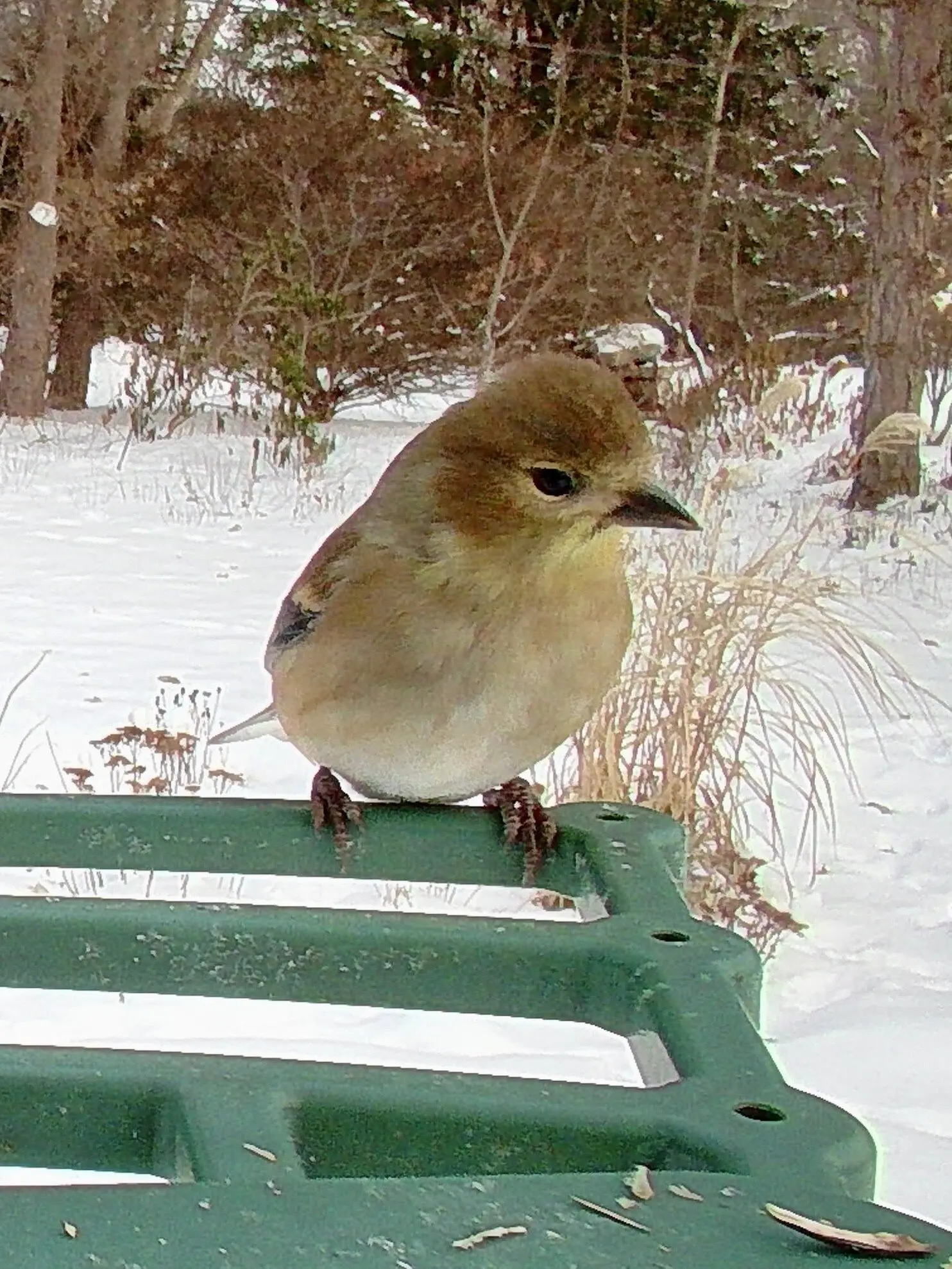
Put out a day’s worth
The longer seed sits out on an open platform, the more weather it sees. If you use a platform feeder or scatter seed on a deck, offer only as much as the birds will eat in a day, Penn State Extension advises. Refilling more often keeps fresh, dry seed in front of the birds and wastes less.
Choose seed that handles wet weather
In my experience, sunflower hearts and millet don’t hold up well in wet weather. Hearts are an easy meal for birds, but Project FeederWatch says to keep them dry because they spoil more quickly than sunflower seed in the shell. In a wet spell, put sunflower in the shell on open trays and save hearts for a feeder with a roof.
Clean more often after a storm
Wet weather is hard on feeders. Sunny Kellner, a wildlife rehabilitation and outreach specialist at the Sharon Audubon Center, advises cleaning feeders at least every other week, and more often in especially wet weather like snowstorms.
Let a feeder dry completely before you refill it. Seed poured into a damp feeder starts out wet.
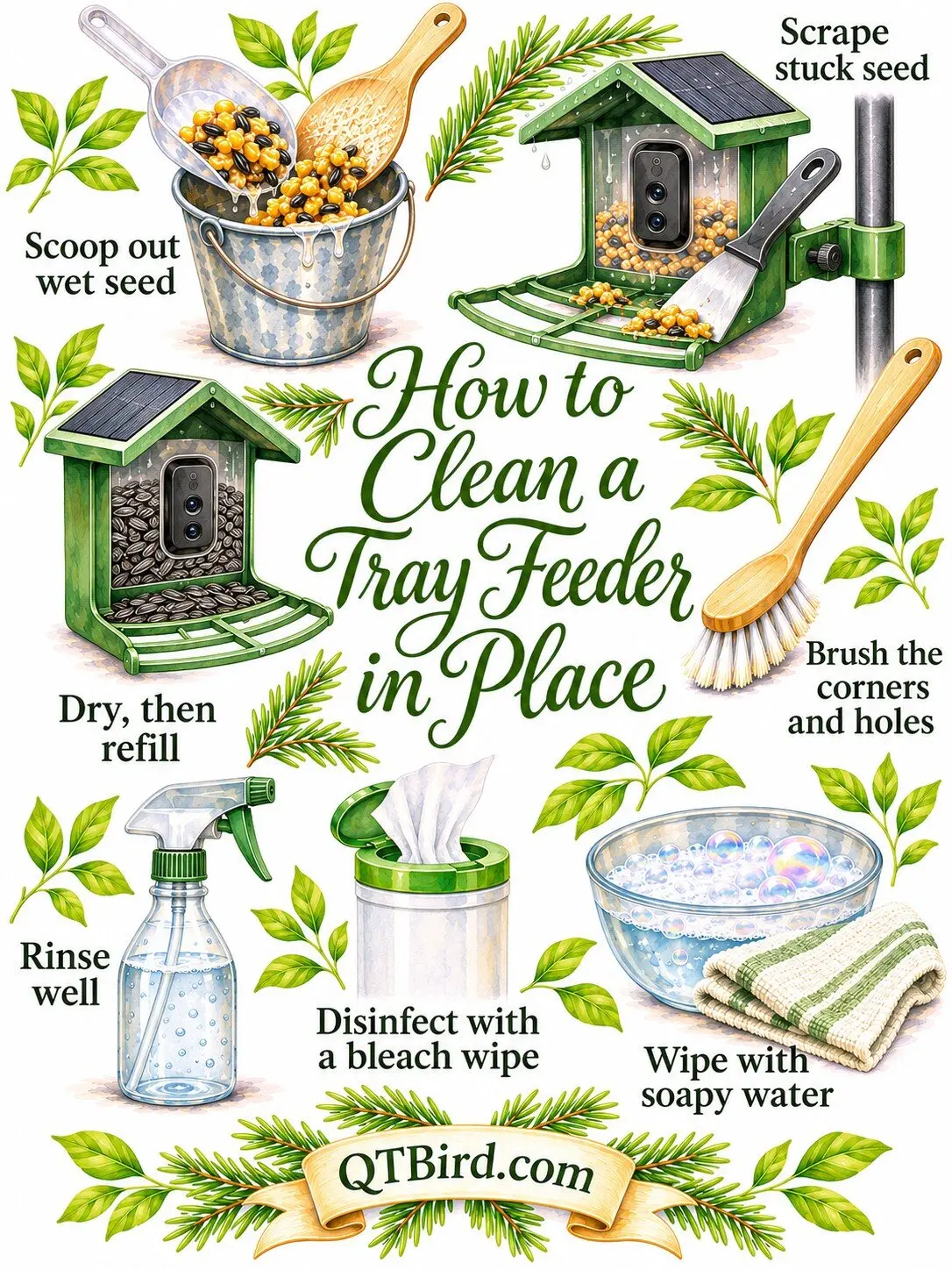
Cleaning a tray in place
- Scoop out wet seed using a large plastic spoon or rice paddle, collecting it in a bucket, plastic container, or plastic bag.
- Scrape away stuck-on seed with a plastic scraper, firm plastic spatula, or a plastic putty knife.
- Brush out remaining debris with a stiff-bristled nylon brush, such as a long-handled dish brush, paying attention to corners and drainage holes.
- Wipe down the tray with a cloth dampened with warm, soapy water.
- Disinfect the tray with a bleach-based disinfectant wipe.
- Rinse thoroughly with clean water, using a spray bottle or a damp cloth.
- Dry completely with an absorbent microfiber towel before adding fresh seed.
Toss wet seed
Wet seed that stays wet is the problem. Seeds can spoil if they get wet and stay wet without regular cleaning or changing, the Cornell Lab of Ornithology says. The wet seed that’s easiest to miss is seed that builds up and sits, packed in the bottom of a tube or caught where drainage holes have clogged. Regular cleaning keeps seed from sitting that long.
| Situation | What to do | Source |
|---|---|---|
| Seed gets wet and stays wet | Change it before it spoils | Cornell Lab of Ornithology |
| Seed is wet and packed together | Throw it out, then clean the feeder | Oregon State University Extension |
| Seed smells musty or looks moldy | Throw it out | South Carolina Department of Natural Resources |
| Rain is on the way | Put out only enough seed to last several hours | South Carolina Department of Natural Resources |
| Your feeder gets wet often | Fill it with a one- to two-day supply | Oregon State University Extension |
| Old seed packed in the bottom of a tube | Empty it and scrub the inside | Penn State Extension |
| Seed in an open tray | Pick a screened or perforated bottom, which helps seed air dry after rain | University of Nebraska-Lincoln Extension |
| Old seed in a tray | Shake it out and hose down the bottom when you clean | Cornell Lab of Ornithology |
| Mesh nyjer sock gets soaked | Swap in a fresh filled sock | Cornell Lab of Ornithology |
| Wet seed with droppings in the tray | Clean the feeder, since salmonella can grow there | New Hampshire Audubon |
| Seed scattered on the ground | Put out a small amount at a time | New Hampshire Audubon |
Cold weather doesn’t make wet seed safe. Project FeederWatch reports that one bird disease, trichomonosis, likely carries very little risk in cool weather, but that research didn’t test mold. And seed that freezes wet is still wet when it thaws. That’s why putting out only a day’s worth of seed, or using a hopper feeder with a roof, makes such a difference.
To check a feeder after a storm, pour a little seed into a container. Dry seed flows, and wet seed clumps.
Don’t trust your eyes alone. Grain with toxin-producing molds may not look moldy at all, according to the U.S. Geological Survey, so when in doubt, toss it.
Before you refill a hanging feeder, give it a shake to break up packed seed, and dump out any old seed stuck in the bottom. Wet seed that spills on the ground can also sprout in your lawn and garden beds, and there’s more on that in how to keep birdseed from sprouting.
Store it dry
Don’t leave seed in the bag it came in. Move it to a container with a tight lid that keeps out water and rodents, and keep it somewhere cool and dry. A metal can with a locking lid works well if your seed lives outside in a shed or on a porch.
Frequently asked questions
Can you dry out wet birdseed?
It’s safer to throw it out. Wet seed may already be growing mold you can’t see, and moldy seed shouldn’t be used, according to Penn State Extension.
How often should you clean bird feeders in winter?
Project FeederWatch suggests cleaning seed and suet feeders regularly, such as every week or two, and more often when they’re busy or the weather is wet. That’s harder in states with harsh winters, and some feeders are easier to take down and clean than others. Mine are clamped on, so taking them down is a bit of a production. Winter gets very cold here. When it’s too cold for a soak, I clean my feeders with disinfectant wipes, wipe them down with a wet paper towel, and dry them with another paper towel. I do one feeder a day because it’s so cold out.
Which feeders keep seed the driest?
Hopper and tube feeders do the best job, since the seed sits inside under a roof. Open trays get wet the fastest, so a tray that drains, with a screened bottom or drainage holes, is the better pick. With nyjer feeders, the long, skinny tubes for finches, rain is more of a concern with the fine-mesh kind than the solid kind, Mississippi State University Extension notes.
Should you keep feeding birds when it snows?
Yes. Nebraska Extension points out that birds rely on feeders most during winter extremes, especially when snow or ice covers their natural food.
How long does birdseed last in storage?
Kept cool and dry, seed can last for months, particularly seed mixes and sunflower seeds, according to the National Wildlife Federation.