
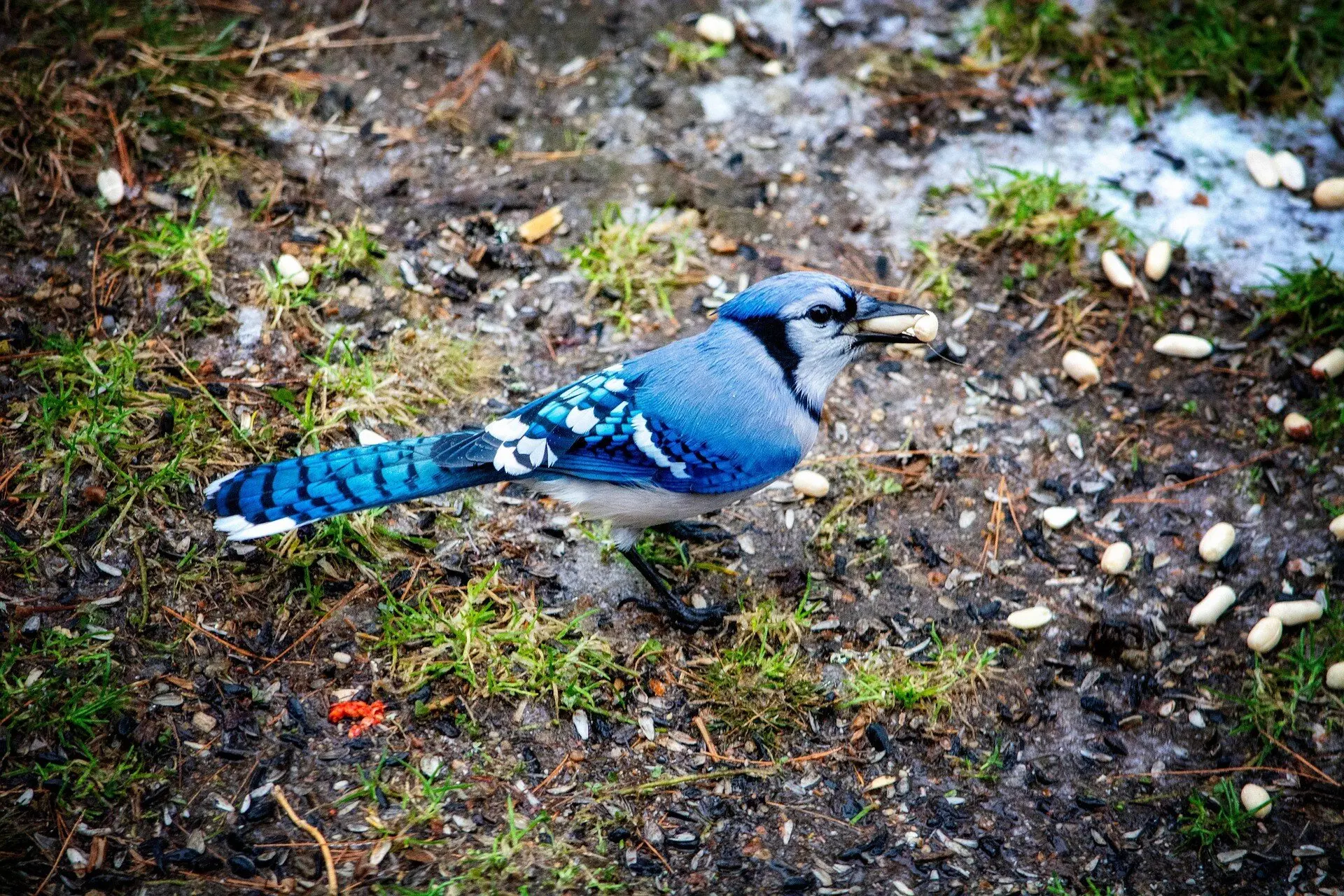
Every bird feeder has a second, messier life on the ground below it. Chickadees grab a seed and fly off. Finches crack theirs on the perch and let the hulls rain down. Jays and grackles dig through the mix and fling out whatever they don’t want. Juncos, doves, and squirrels clean up some of it, but nobody eats the hulls, and plenty of birdseed is left lying in the grass.
Give it a few warm weeks, and that spilled seed turns into a crop you never planted. A volunteer sunflower or two is a nice surprise. But what about tufts of millet grass or random weeds that rode in with the bag of birdseed? The hulls do their own damage, too. Let them pile up, and when you finally rake them away, you’ll find bare dirt where the grass used to be.
None of this means taking down the feeders. Most of the mess comes down to two things, what’s in the bag and what’s under the feeder, and both are easy to change. Here’s why birdseed sprouts, how to tell what’s growing, and 10 ways to keep birdseed from sprouting in your garden and lawn.
Why birdseed sprouts under feeders
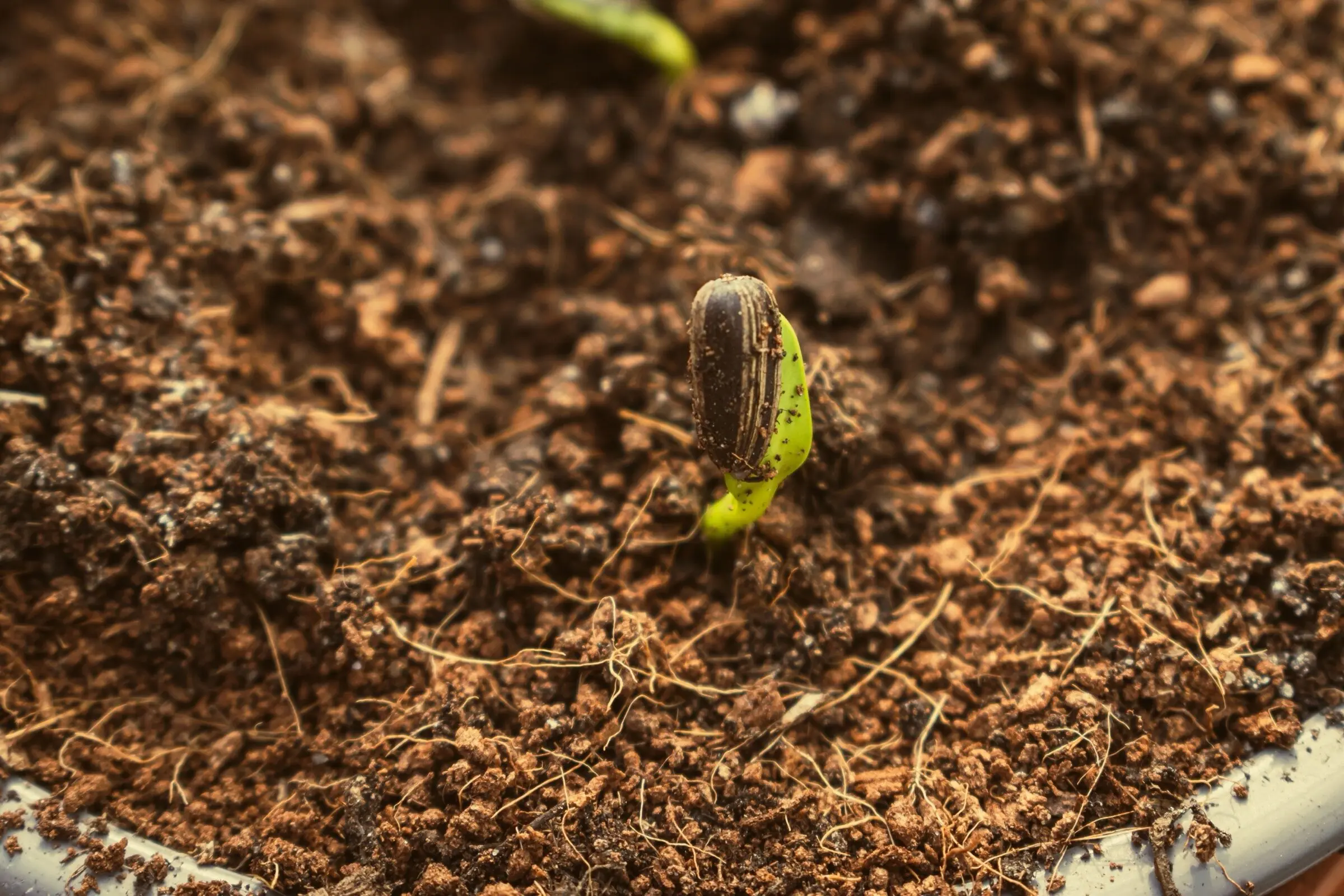
Birdseed sprouts because most of it is alive. Every seed a bird drops, kicks out, or tosses aside lands on soil that’s ready to grow it. Millet, milo, and whole sunflower seeds sprout most easily. Some of what comes up isn’t birdseed at all, but weeds that rode along in the bag.
That second part surprises people. Researchers at Oregon State University tested 10 store brands of wild bird feed and found seeds from more than 50 weed species, according to the Weed Science Society of America. About 30 of those species sprouted within four weeks.
The problem hasn’t gone away. A two-year University of Missouri study of 98 bird feed mixes, published in 2020, found pigweed seeds in 96% of them. Common ragweed, kochia, foxtail, and wild buckwheat turned up often, too.
So the fix comes in two parts: feed seed that can’t grow, and keep whatever falls from reaching soil.
What’s growing under your feeder?
Most surprise seedlings fall into two groups.
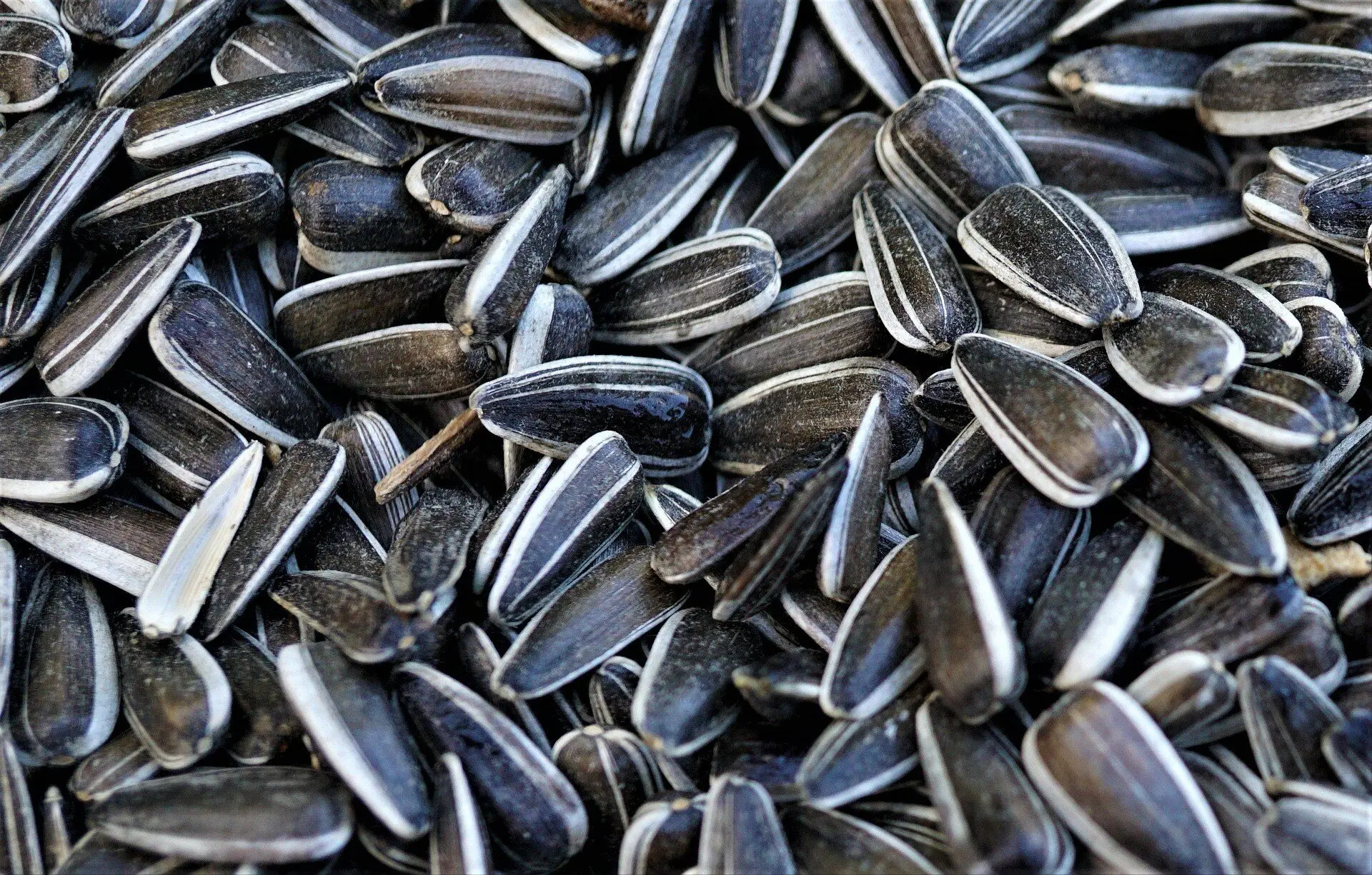
Plants from the seed itself: Most common birdseed comes from a plant that can grow in your yard.
| Birdseed | What it grows into |
|---|---|
| Sunflower seed | Sunflowers, from short to towering |
| White proso millet | A grassy plant that looks like a clump of lawn weeds |
| Milo | Grain sorghum, a tall, corn-like grass |
| Cracked corn | Rarely anything, since cracking breaks the seed |
| Safflower | A spiny, thistle-like annual grown for cooking oil |
| Nyjer | A daisy-like annual, but U.S. nyjer is heat-treated |
Weeds that came in the bag: These are the bigger worry. The Oregon State study found Canada thistle, field bindweed, common ragweed, puncturevine, and velvetleaf, all noxious weeds that are hard to get rid of once they settle in.
If a seedling has grass-like blades, it’s most likely millet. If you can’t identify one, pull it before it flowers. Your county extension office can identify it from a photo.
10 ways to keep birdseed from sprouting
1. Switch to sunflower hearts
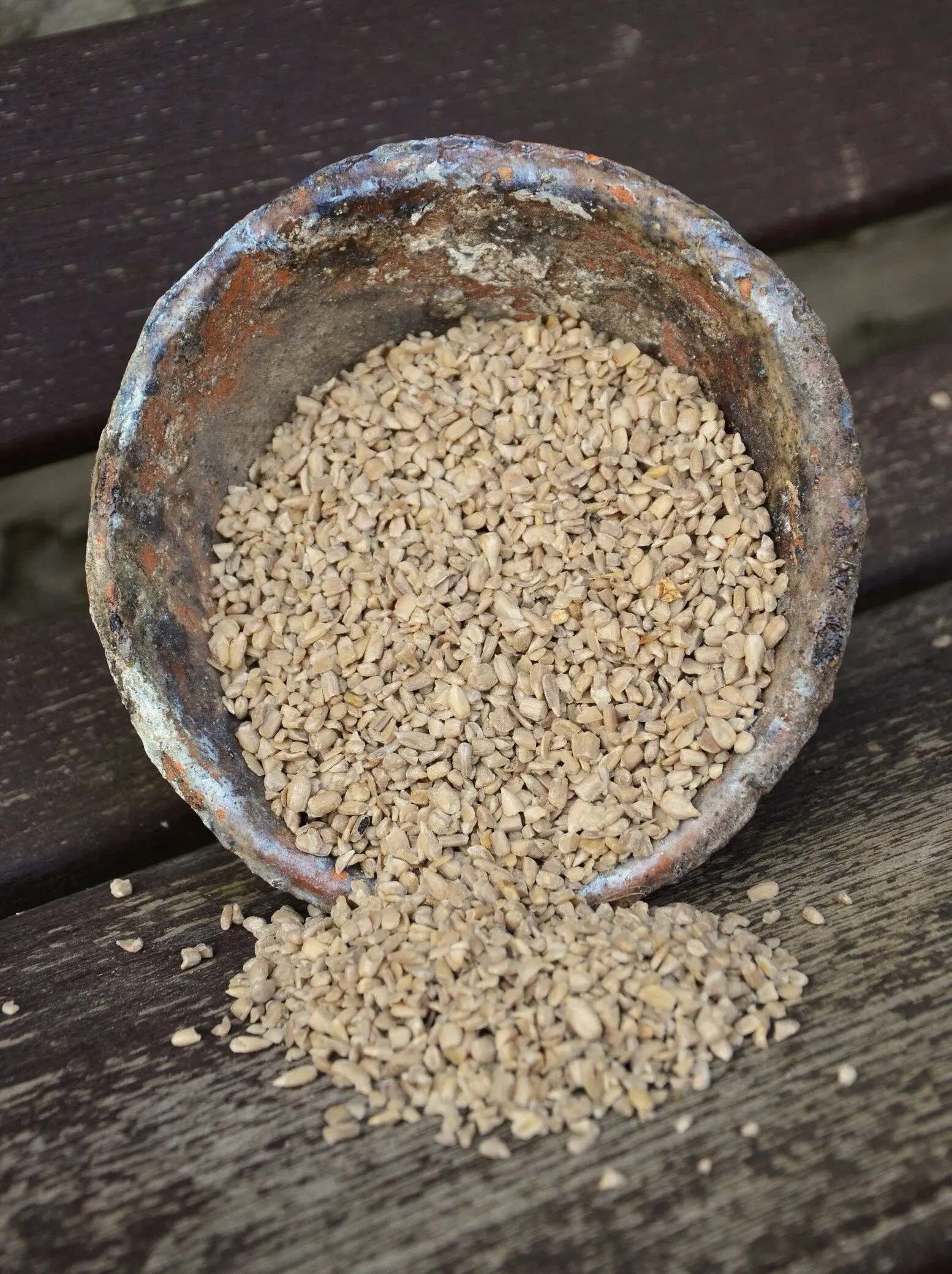
If you make one change, make it this one. Sunflower hearts, also sold as sunflower chips, are sunflower seeds with the shells already removed. The kernel inside rarely sprouts once it’s out of the shell, and chips are broken into pieces that can’t grow.
There are no hulls to pile up under the feeder either, which means less raking and no hull mulch smothering your plants. Any bird that eats sunflower seed will eat hearts: chickadees, titmice, nuthatches, cardinals, finches, and woodpeckers.
The catch: Without a shell, hearts spoil faster in wet weather, according to the Cornell Lab of Ornithology’s Project FeederWatch. Fill the feeder with what the birds will eat in two or three days, and use a feeder with a roof or a dome.
2. Offer foods that can’t grow
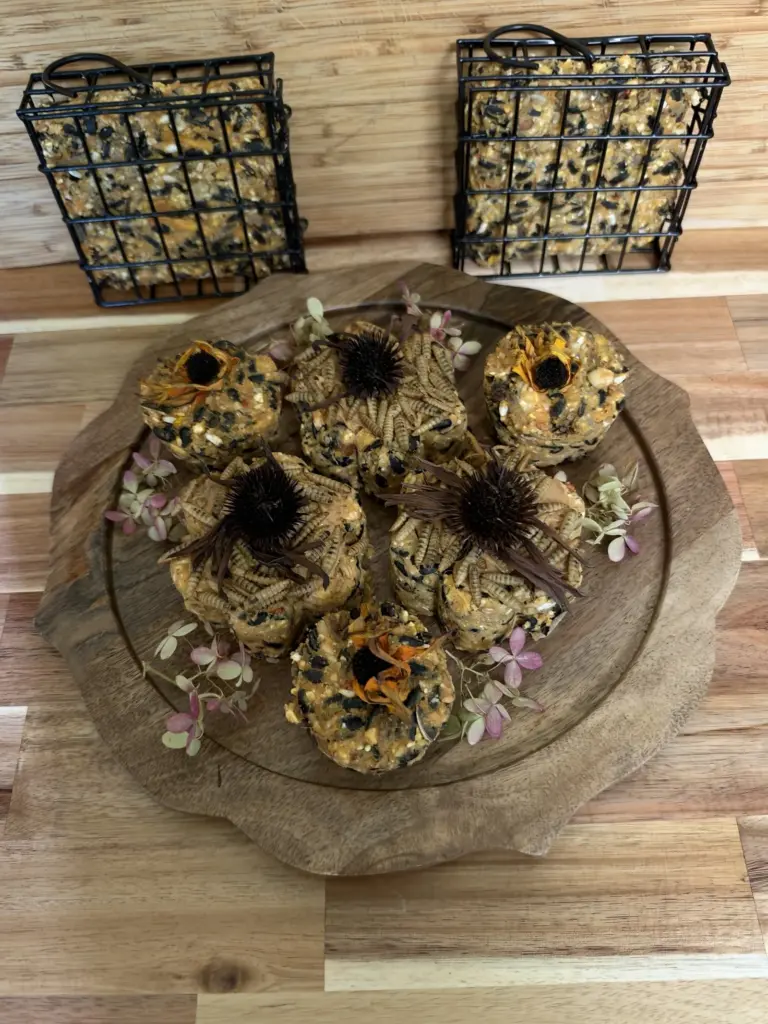
Several favorite feeder foods have no living seed in them at all. Plain suet cakes, mealworms, and peanut butter can’t sprout. Neither can raisins or the orange halves and grape jelly that orioles love in spring.
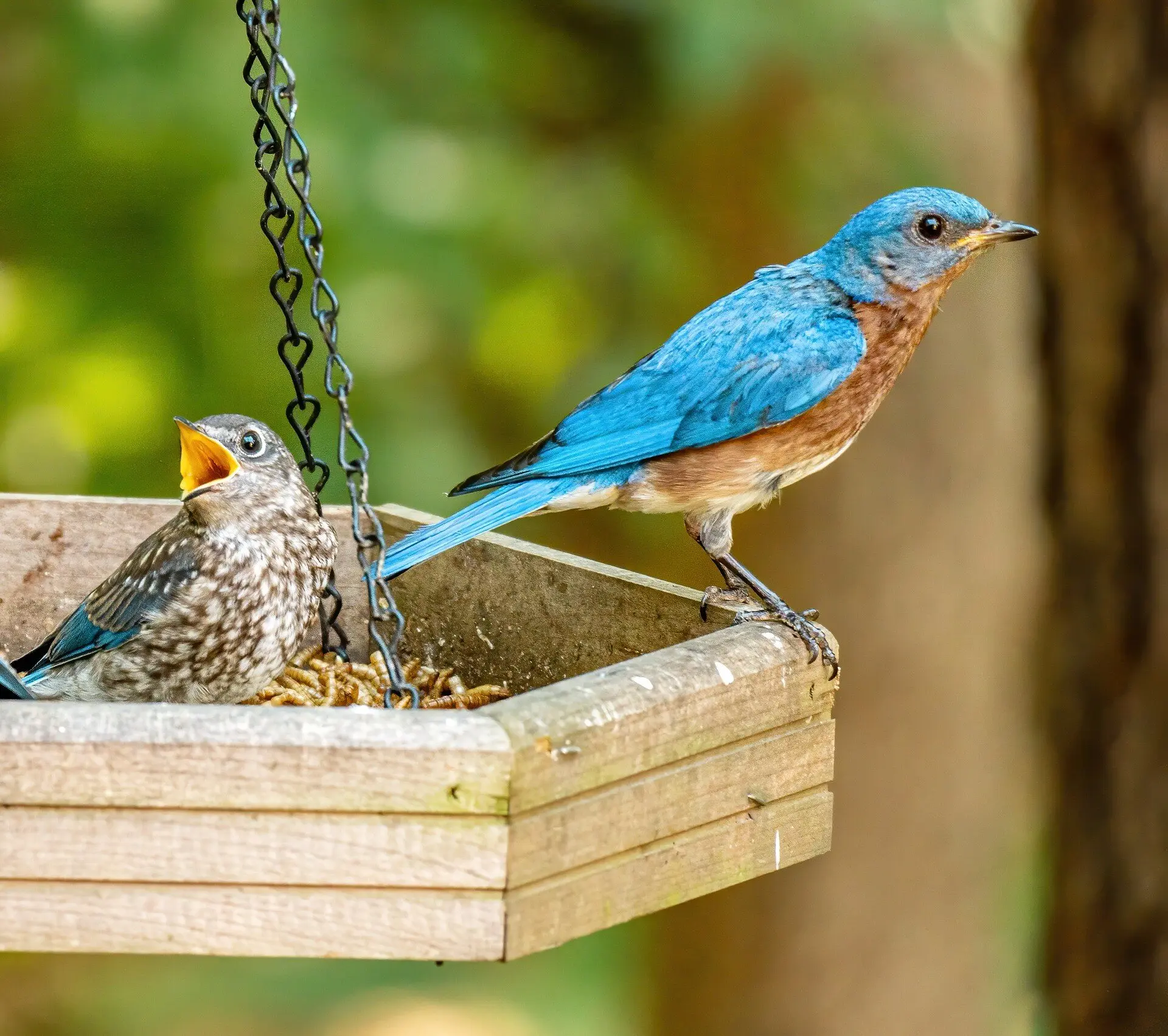
Nyjer is another safe choice. It’s the tiny black seed goldfinches and pine siskins love, and it’s heat-treated before it’s imported so it won’t sprout. The U.S. Department of Agriculture requires that treatment because nyjer can carry seeds of dodder, a parasitic weed, Audubon reports.
Nyjer is not thistle, by the way, even though bags often call it “thistle seed.” It won’t plant thistles in your yard.
Want more goldfinches at your nyjer feeder? My guide to attracting goldfinches covers what they eat through the year.
3. Skip mixes padded with millet and milo
Cheap mixes are bulked up with filler seed, and filler is what ends up on the ground. Look at the ingredient list before you buy.
- Milo: The round, reddish seed. Most birds pass it over and toss it aside, according to Project FeederWatch. Western birds eat more of it than eastern birds do.
- White proso millet: Juncos, sparrows, and doves love it, but they eat it on the ground, and millet is the seed behind most of the grass under feeders. The University of Missouri study also linked millet in mixes to pigweed seeds.
- Red millet and wheat: Usually filler that most feeder birds ignore.
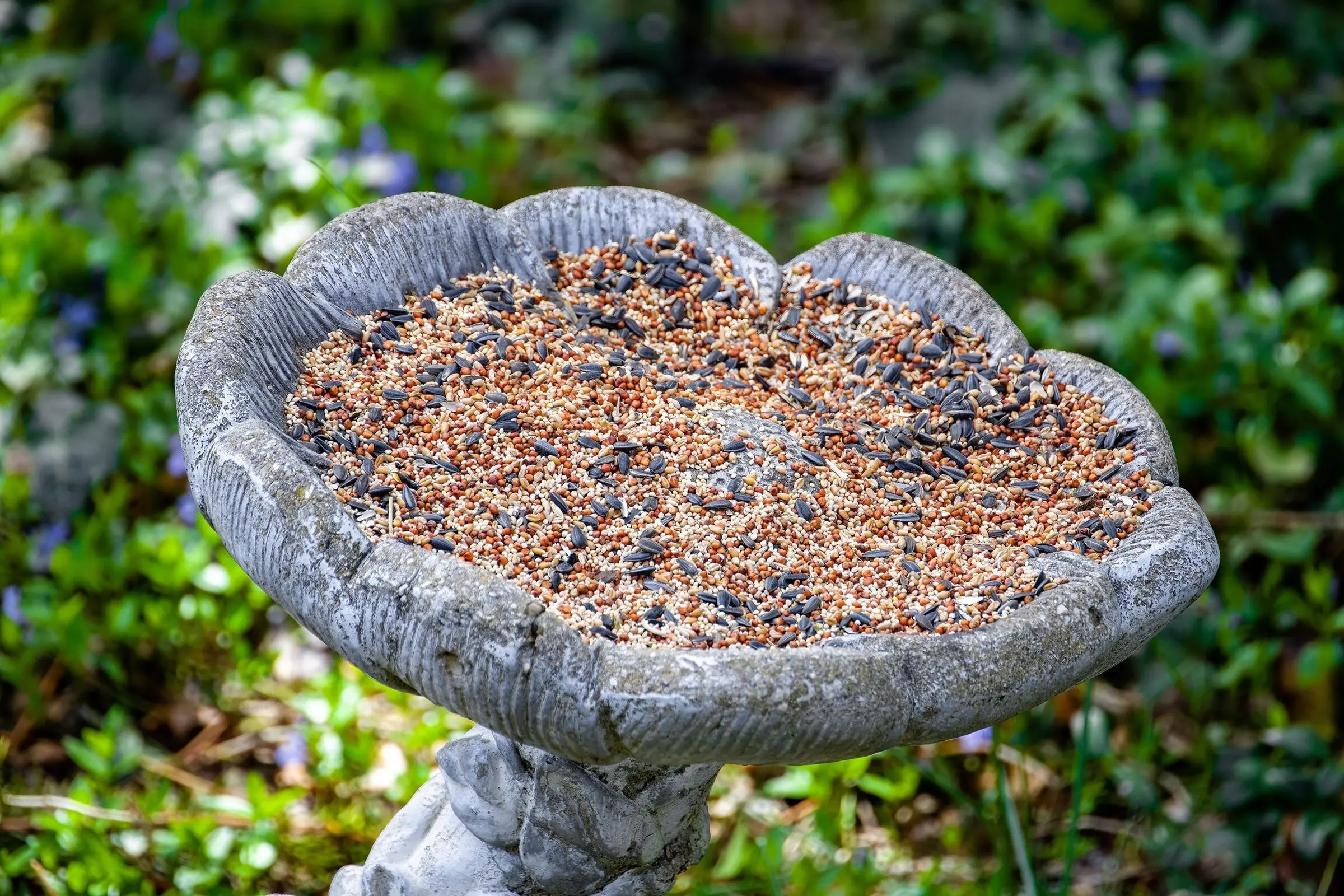
If you want to feed millet to your juncos, put it on a platform feeder or a tray, not on the bare ground. Then sweep up what’s left before it can root.
4. Read the label for no-mess or baked seed
“No-mess,” “no-waste,” and “no-grow” blends are made from hulled seed and chips, so there’s little left to sprout. They cost more per bag, but you’re not paying for shells and filler that the birds throw away.
Some makers also bake their seed to kill weed seeds, following USDA guidelines. If the bag doesn’t say how the seed was treated, ask the store or the company. A good supplier should be able to tell you what they do to keep weed seeds out.
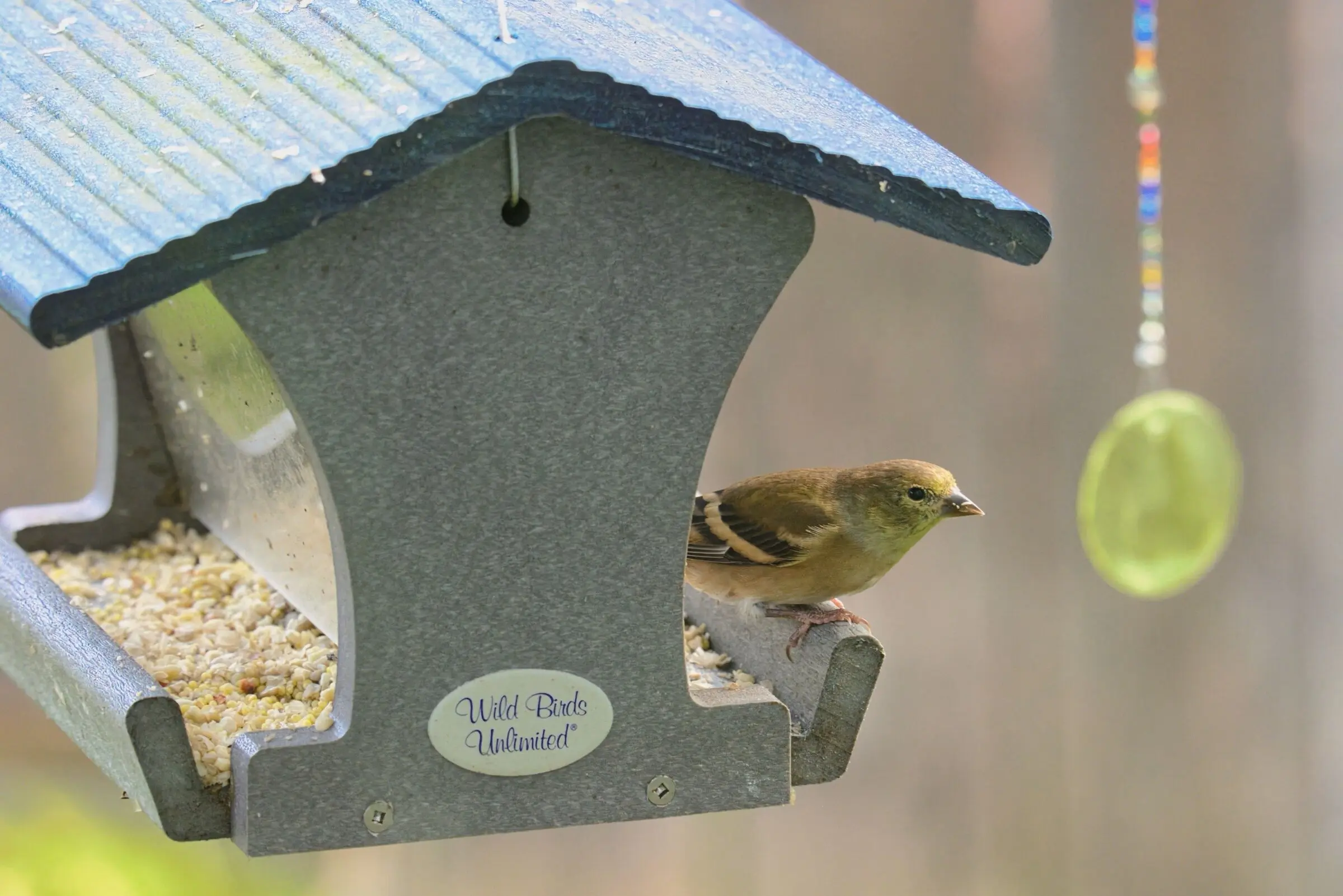
Read past the front of the bag: Some “no-mess” blends still contain whole millet. The ingredient list tells you more than the label on the front.
5. Bake your own seed
If you love a particular mix, you can sterilize it at home. Birding experts Kenn and Kimberly Kaufman suggest baking it.
- Spread the seed on a rimmed baking sheet, less than 1 inch deep.
- Bake at 300°F for 20 to 30 minutes.
- Let it cool completely, then fill your feeders.
Don’t let it scorch: burned seed is no good to birds. Bake small batches and store the baked seed in a sealed bin so it stays dry.
6. Keep seed dry
Seed needs water to sprout, and wet seed in a feeder is already halfway there. Damp seed that falls on wet soil gets a head start.
- Add a roof: A baffle or dome over a tube feeder keeps rain and snow off the ports.
- Don’t overfill: Put out what the birds will eat in a few days, so seed doesn’t sit and get soggy.
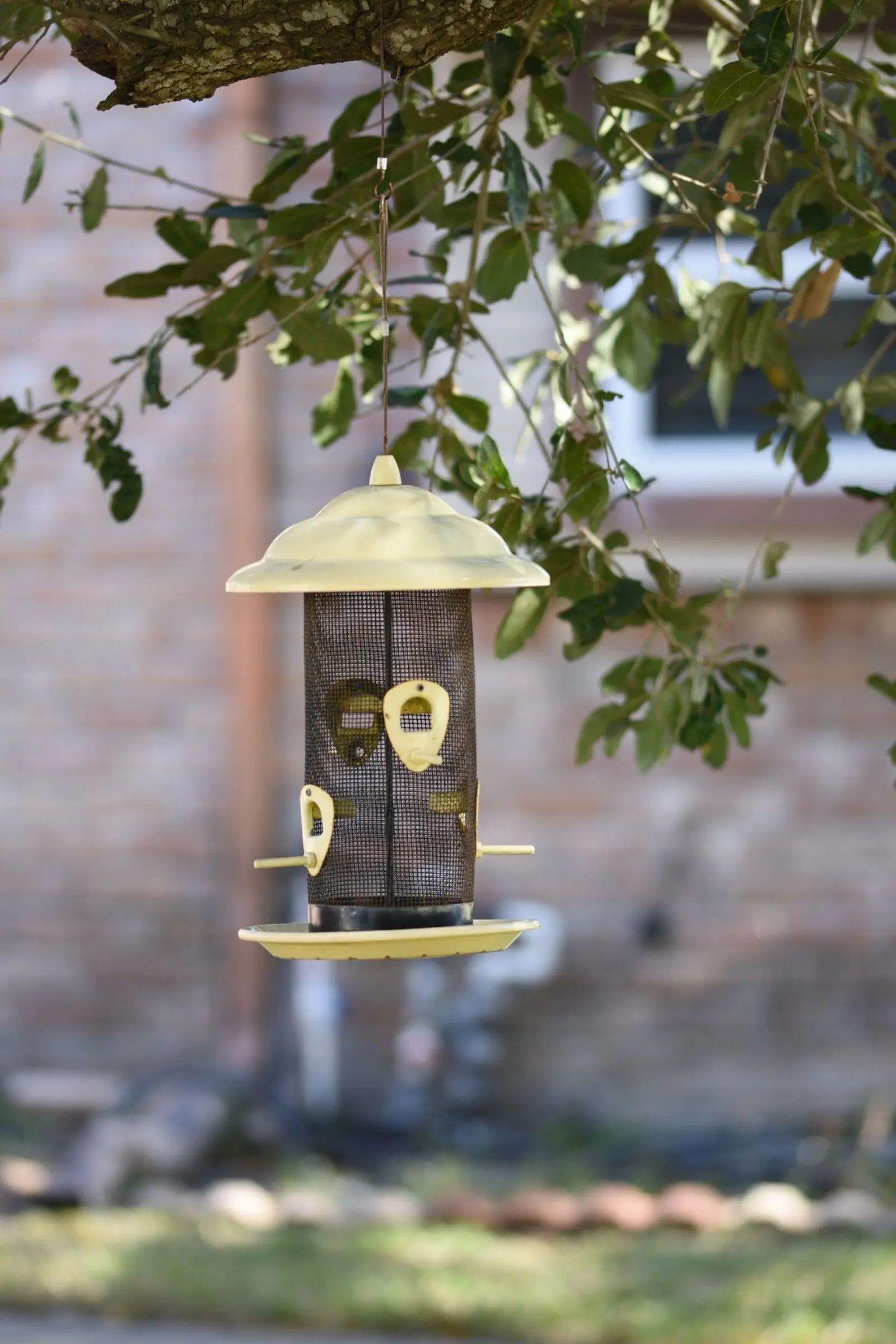
- Store it tight: Keep bags in a metal can or a bin with a lid. It keeps out moisture, mice, and squirrels.
7. Use one seed per feeder
Birds pick through a mix and fling out what they don’t want to reach what they do. Give each food its own feeder and there’s far less to fling.
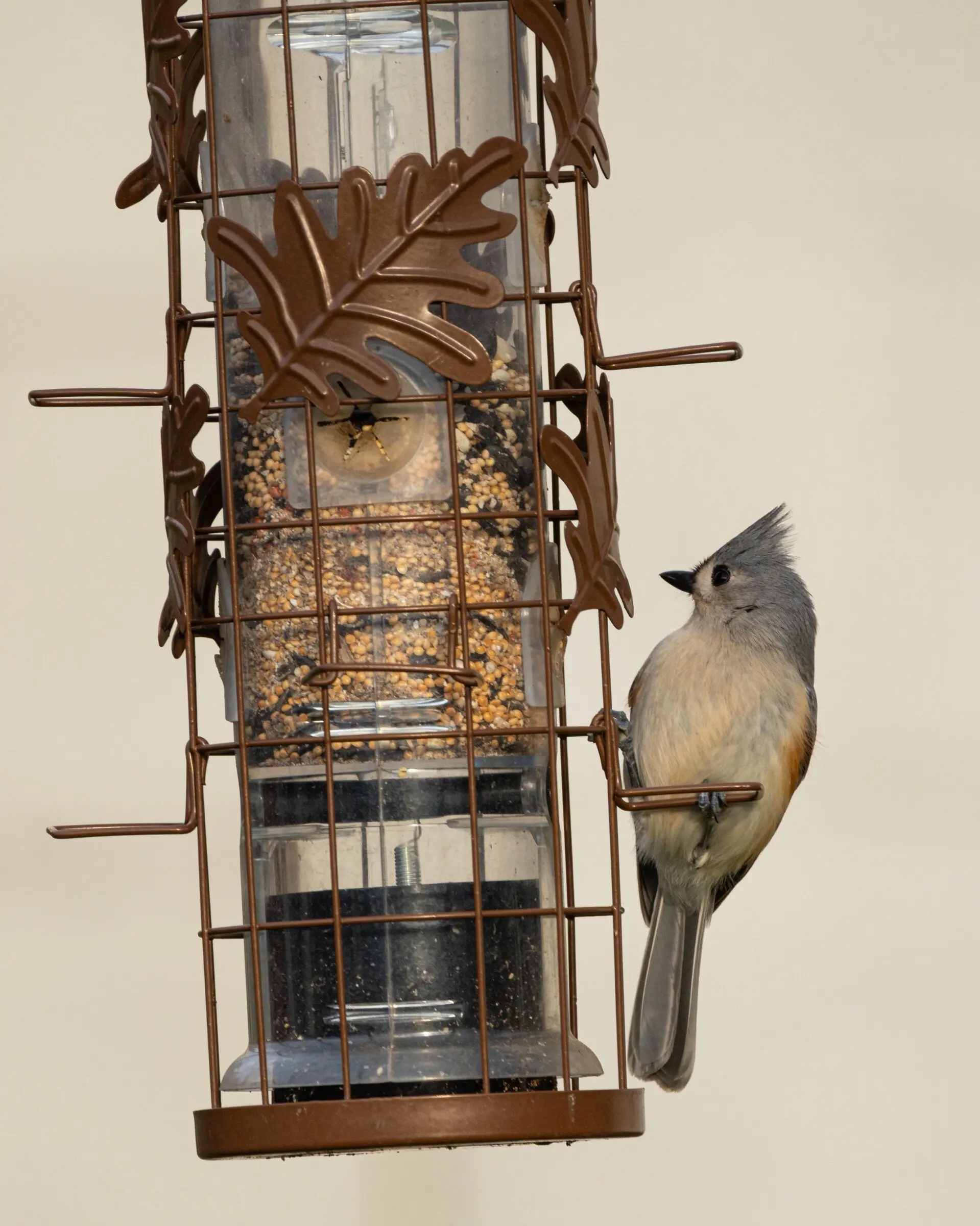
Match the feeder to the seed, too. Nyjer belongs in a tube feeder with tiny ports, so birds take one seed at a time. Steady a feeder that swings in the wind by shortening its hanger or moving it to a pole. My guide to the best bird feeders for songbirds compares tube, hopper, and platform feeders.
8. Add a seed catcher
A seed catcher hangs or mounts under the feeder and stops dropped seed before it reaches the ground. There are a few kinds:
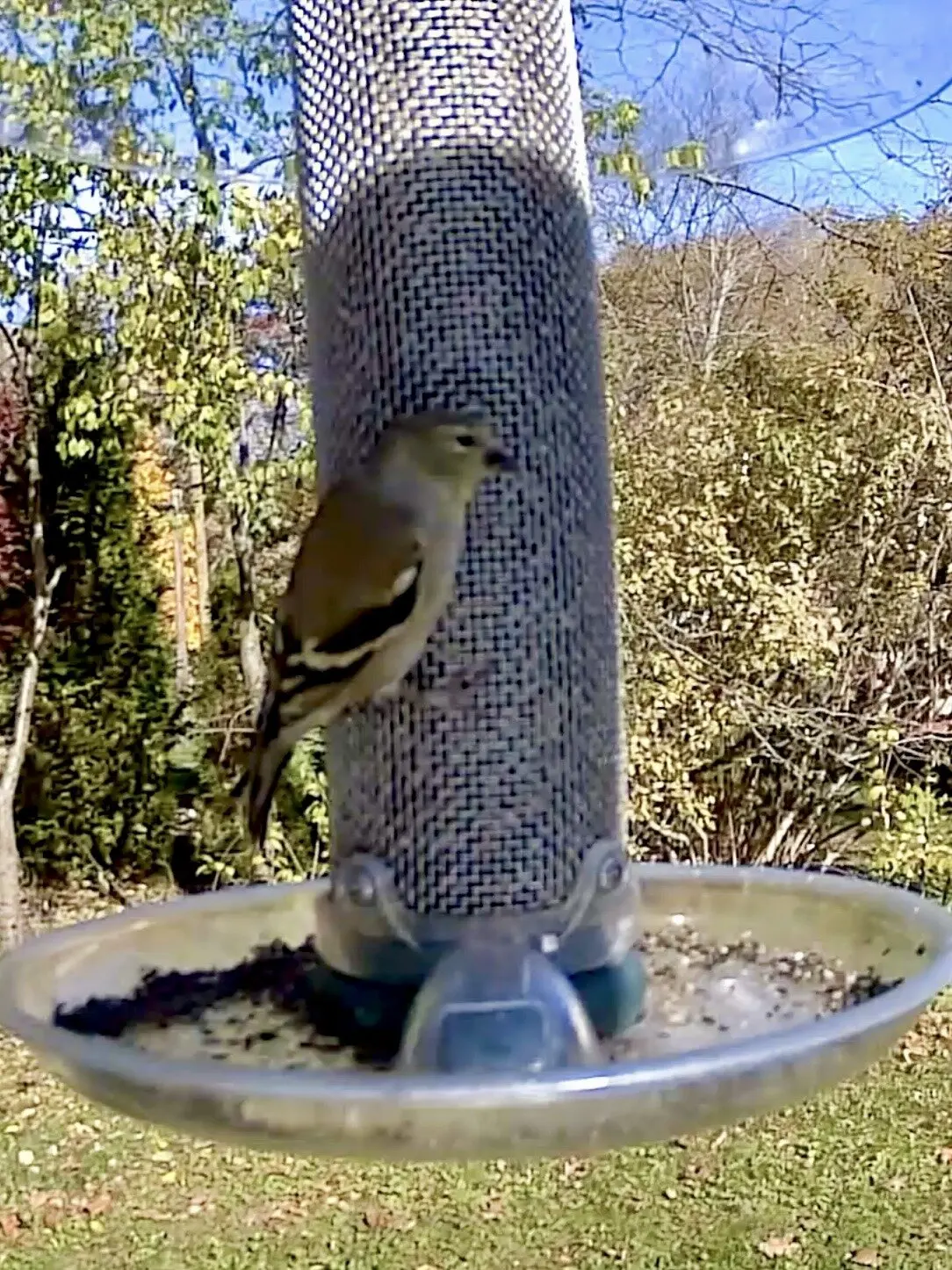
- Hanging mesh hoop: A wide, round mesh catcher that hangs from cords under the feeder, usually 16 to 30 inches across. Mesh lets rain drain through, so the seed dries out instead of rotting. Many birds will perch on it and clean it up for you.
- Pole-mounted catcher: A tray that clamps onto the feeder pole below the feeder. It sways less than a hanging hoop in the wind, and a big one can catch seed from more than one feeder.
- Clip-on tray: Many tube and hopper feeders take a tray that clips or screws onto the bottom. Look for one with drain holes, so rain runs out and the seed stays dry.
- Make your own: Stretch window screen across a large embroidery hoop and hang it under the feeder with three cords.
Pick a catcher wider than the feeder, since birds fling seed out to the sides. Empty it every few days so wet seed and hulls don’t mold.
9. Change what’s under the feeder
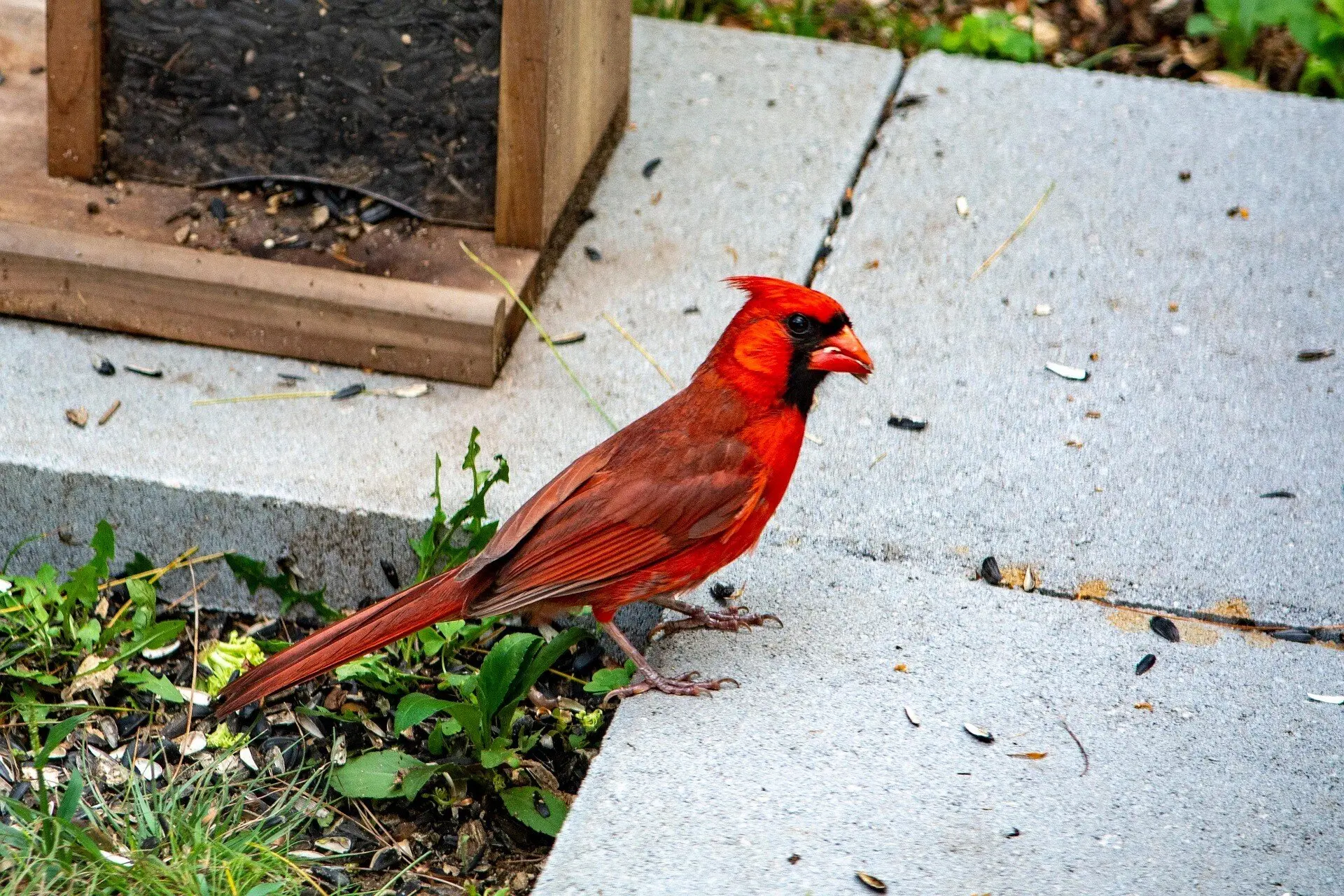
Where you hang the feeder matters as much as what you put in it. Keep feeders away from flower beds and vegetable gardens, where a few stray sprouts can take over. Then give fallen seed nowhere to grow.
| Under the feeder | Pros | Cons |
|---|---|---|
| Pavers or flat stones | Easy to sweep, rake, or vacuum | More work to put in |
| Patio or deck | Already there; quick cleanup | Seed and droppings need regular sweeping |
| Gravel | Quick and inexpensive | Seed slips between stones and sprouts there |
| Landscape fabric with mulch | Blocks sprouts from rooting | Seed sprouts on top of thick mulch over time |
| Dense ground cover | Looks natural; shades out sprouts | A few seedlings still slip through |
A ring of pavers under a pole feeder gives you one spot to sweep, and a wet-dry shop vacuum makes quick work of it.
10. Clean up and pull sprouts early
Rake or sweep under your feeders every week or two, and always after a stretch of rain. Old seed and hulls turn moldy when wet, and moldy seed under a feeder can make birds sick.
Put the sweepings in the trash, not the compost. Weed seeds can survive a cool compost pile and end up back in your garden.
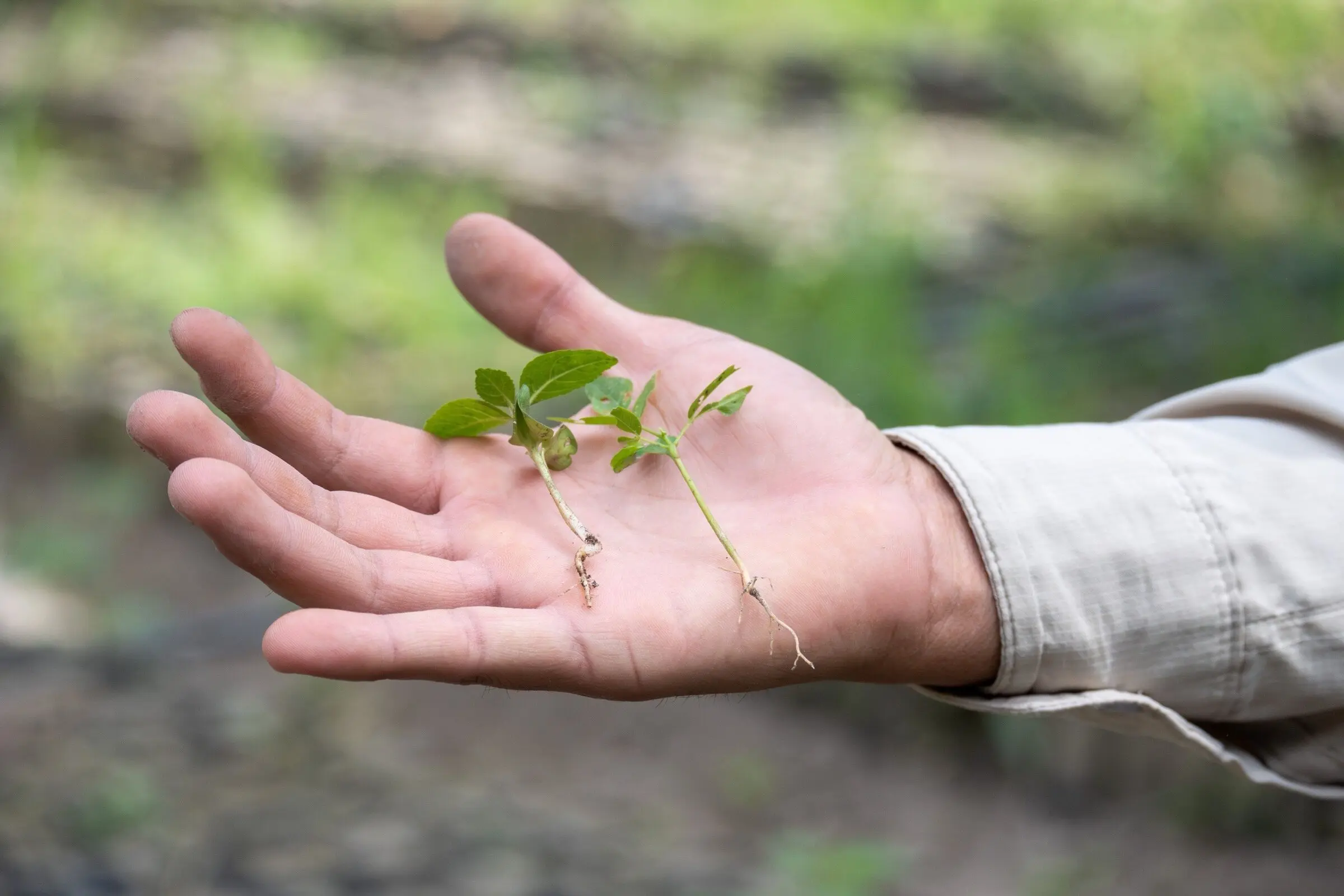
During the growing season, check the ground under your feeders every week or two. Pull seedlings while they’re small and the roots come up easily. Pull any weeds before they flower. Once a weed sets seed, you’ll be pulling its offspring for years.
Good to know
Sunflower hulls are more than a mess. A thick layer smothers grass, and the hulls contain natural chemicals that can hinder or kill other plants, according to University of Maryland Extension. Rake them up every week or two so they don’t build up under the feeder. They make a free weed-blocking mulch for garden paths, as long as you keep them away from plants you want to grow.
What about safflower?
Cardinals, chickadees, and finches eat safflower, according to UF/IFAS Extension, and blackbirds, grackles, and squirrels tend to leave it alone because of its bitter taste.
Safflower is a whole, living seed, though. Treat it like sunflower seed in the shell: offer it with a tray underneath or on a feeder away from your garden beds.
Frequently asked questions
Why is birdseed growing under my feeder? Most birdseed is alive, so seed that birds drop or toss out sprouts in the soil below. Millet and whole sunflower seeds sprout most often, and many mixes also carry weed seeds.
What birdseed doesn’t sprout? Sunflower hearts, sunflower chips, and nyjer rarely sprout. Plain suet, mealworms, peanut butter, and fruit can’t sprout at all, since they hold no living seed.
Does no-mess birdseed sprout? Very little. No-mess blends are made from hulled seed and chips, which rarely grow. Check the ingredient list, though, since some still contain whole millet.
Can you bake birdseed so it won’t sprout? Yes. Spread it less than 1 inch deep on a baking sheet and bake at 300°F for 20 to 30 minutes, without letting it burn. Cool it completely before filling the feeders.
Does nyjer seed grow thistles? No. Nyjer is not a thistle, and nyjer sold in the U.S. is heat-treated before import so it won’t sprout.
How do I stop birdseed from growing in my lawn? Switch to sunflower hearts or no-mess seed, add a tray under the feeder, and rake up spills every week or two. Pull any seedlings while they’re small, before they flower.
A few small swaps add up to a feeder that only grows birds. Start with sunflower hearts and a tray this week, then watch the ground under the feeder. You’ll see more juncos sweeping up crumbs than sprouts pushing through.
From the QT Bird Community
Join the conversation
Comments on QT Bird articles live in our community. Joining is free: share your tips, ask questions and get replies.
Sign up to PostLog in