
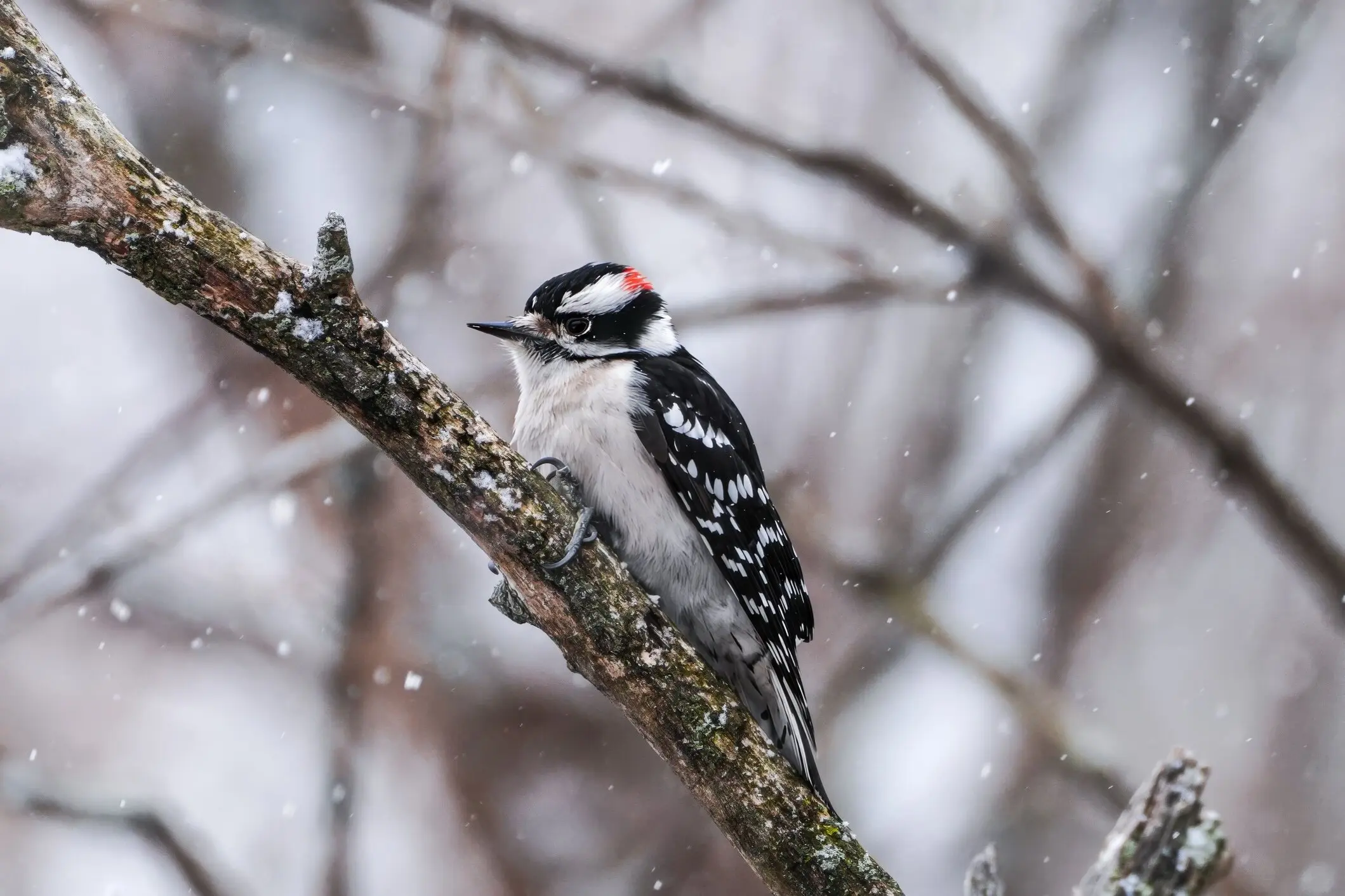
The majority of common North American woodpeckers are non-migratory. During winter, they stay right where they are, snow and all. They need three things to get through the cold: high-fat food, water, and a safe place to sleep.
This guide covers:
- Which woodpeckers stay for winter and how to tell them apart
- What to feed them, and what to skip
- The right feeder and where to hang it
- Water and shelter in freezing weather
- Why a woodpecker might drill your house in the fall
The few woodpeckers that head south
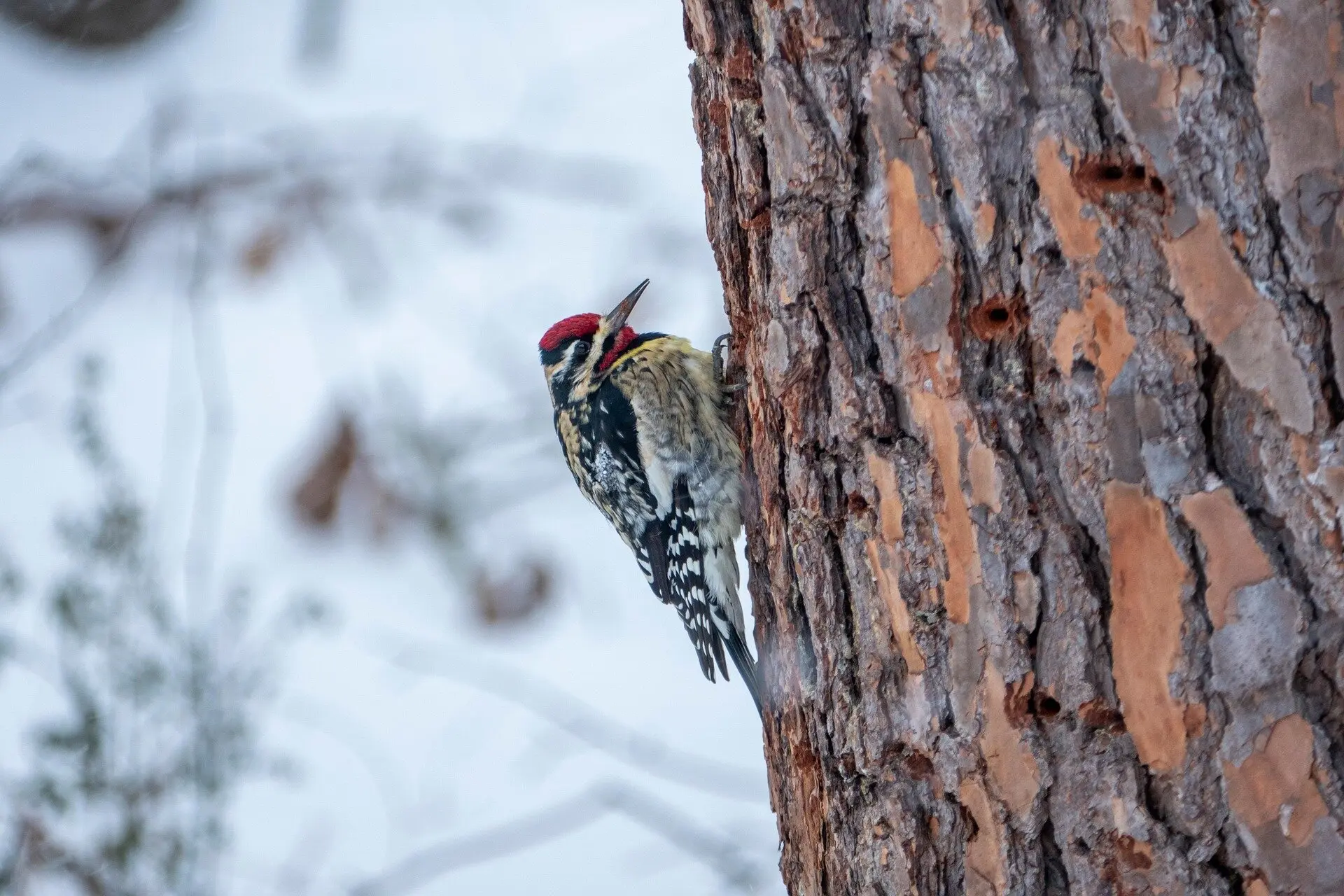
Two kinds of woodpeckers do leave for winter. The yellow-bellied sapsucker spends the winter in the southeastern United States and as far south as Central America and the West Indies, according to the National Audubon Society. Northern flickers that nest in Canada and Alaska head south too, though plenty of flickers stay put across much of the U.S.
Woodpeckers you’ll see at the feeder in winter
| Woodpecker | Size | How to spot it | Favorite winter foods |
|---|---|---|---|
| Downy woodpecker (Dryobates pubescens) | 5 to 7 inches | Black and white, with a short, stubby bill | Suet, peanuts, sunflower hearts |
| Hairy woodpecker (Dryobates villosus) | 7 to 10 inches | Looks like a downy, with a bill nearly as long as its head | Suet, peanuts |
| Red-bellied woodpecker (Melanerpes carolinus) | About 9 1/2 inches | Black-and-white barred back, red on the head | Suet, peanuts, sunflower seed, fruit |
| Northern flicker (Colaptes auratus) | 11 to 12 inches | Brown with black spots and a black bib, yellow or red under the wings in flight | Ants, berries, suet |
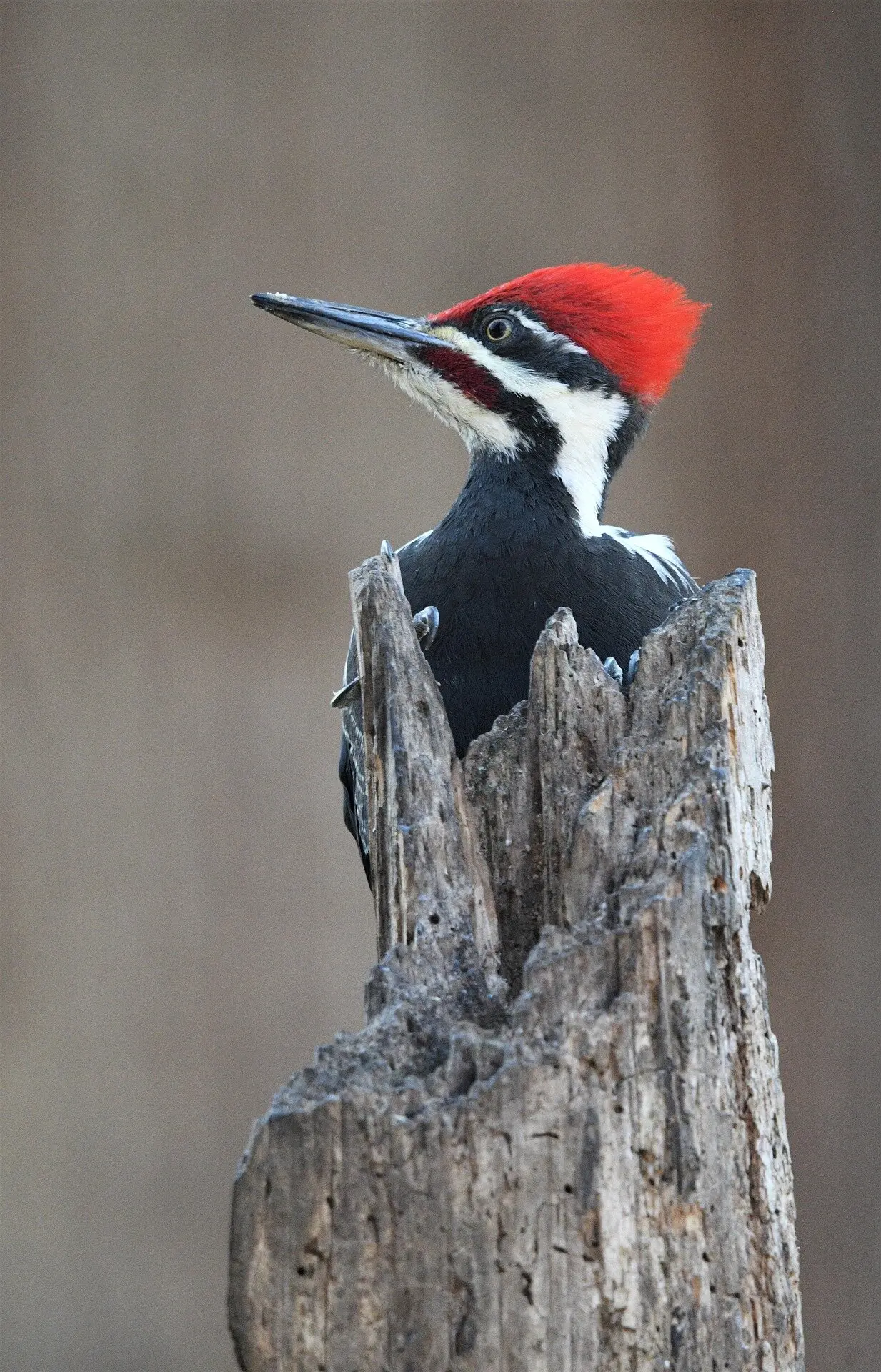
| Pileated woodpecker (Dryocopus pileatus) | 16 to 19 inches | Crow-sized and black, with a flaming red crest | Carpenter ants, suet |
Source: National Audubon Society Guide to North American Birds.
Downy and hairy woodpeckers look like one bird in two sizes. The downy is the one you’ll see most. It’s at home in suburbs and city parks, and it comes to suet readily. The hairy wants big trees, so it’s less common in town. It spends its days scaling bark off dead wood to reach the beetle larvae underneath, and it visits suet too.
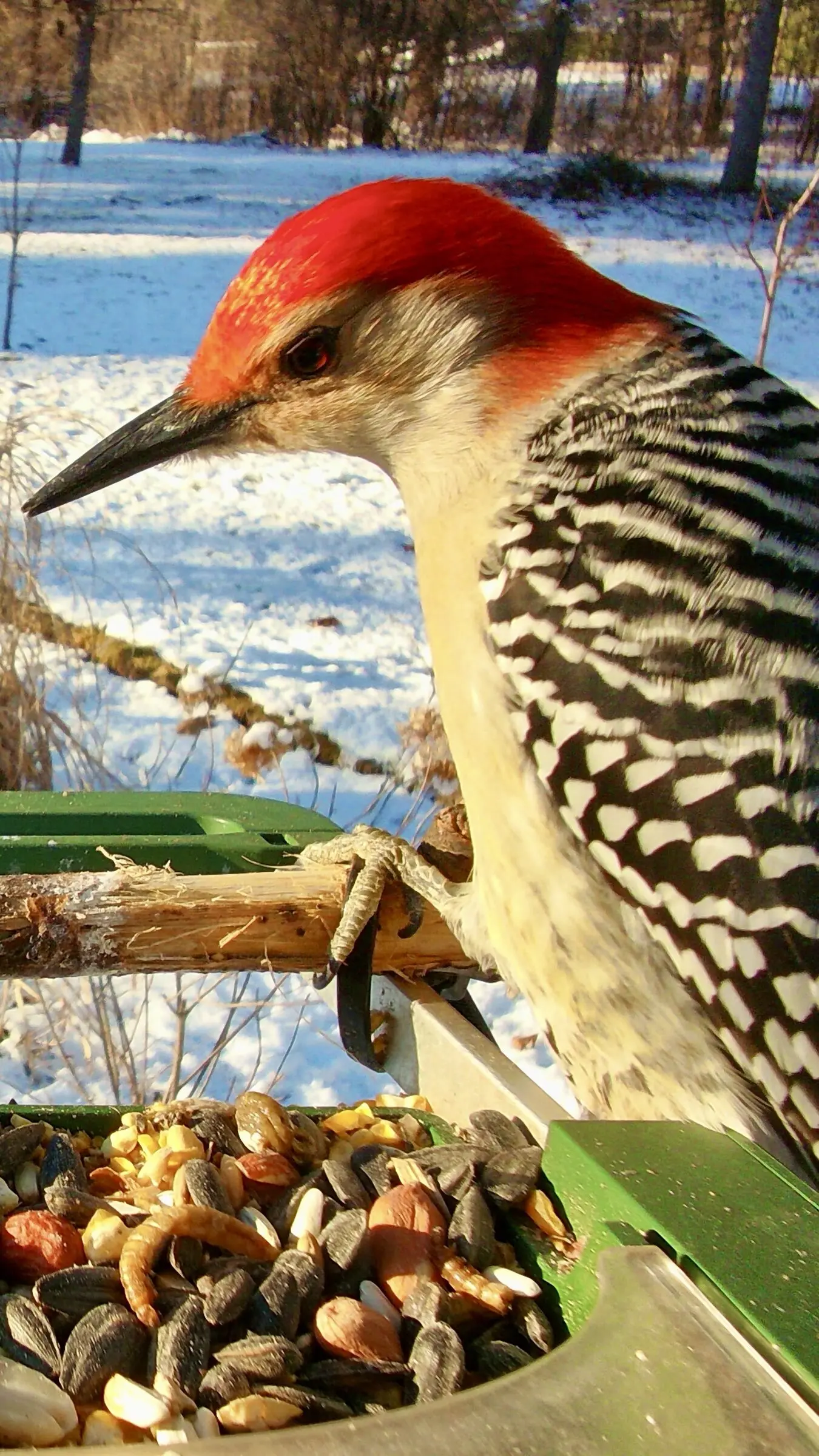
Red-bellied woodpeckers plan ahead. In fall, they wedge nuts and seeds into bark crevices, then come back for them when the snow flies. Don’t bother looking for the red belly, though. It’s a faint blush you’ll rarely see. Look at the head instead: Males are red from the bill all the way down the back of the neck, and females wear red only on the nape.
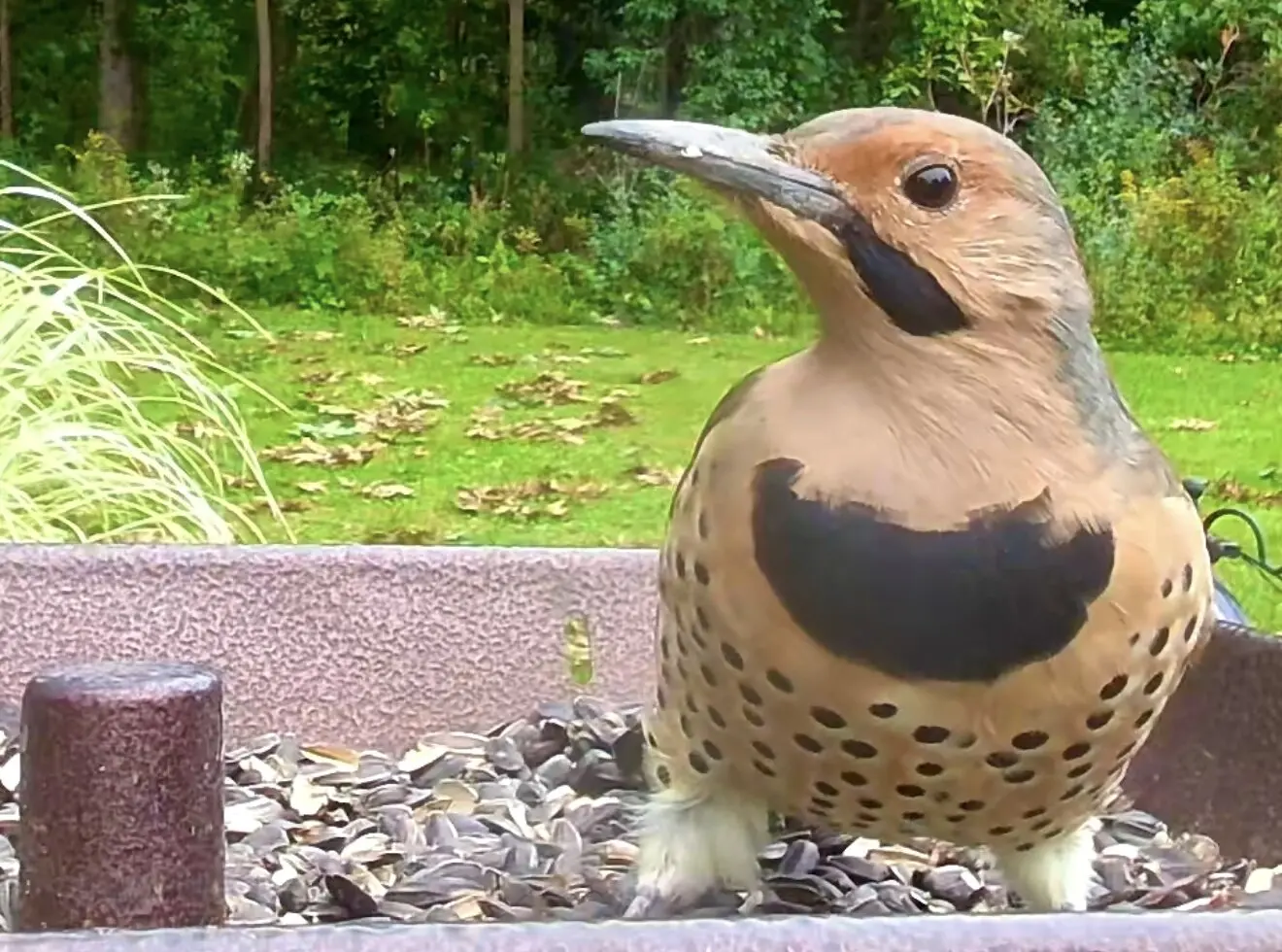
Flickers are ant specialists. They probably eat ants more often than any other North American bird, the National Audubon Society says, and you’ll often catch one feeding on the ground. When winter puts the ants out of reach, they switch to fruits and berries.
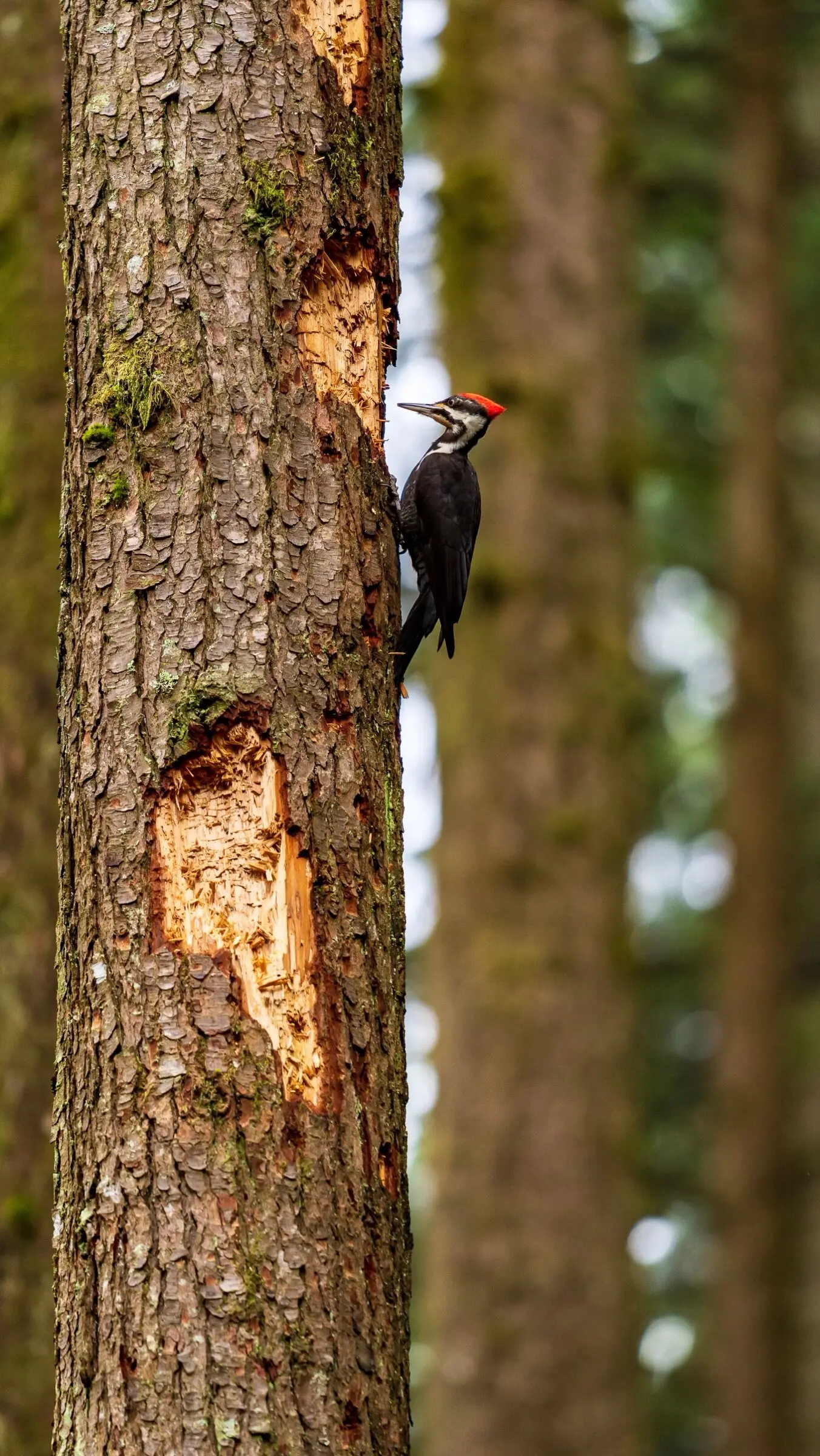
The pileated woodpecker is the showstopper. It leaves long, rectangular holes in dead trees as it digs out carpenter ants, which can make up as much as 60% of its diet.
Good to know
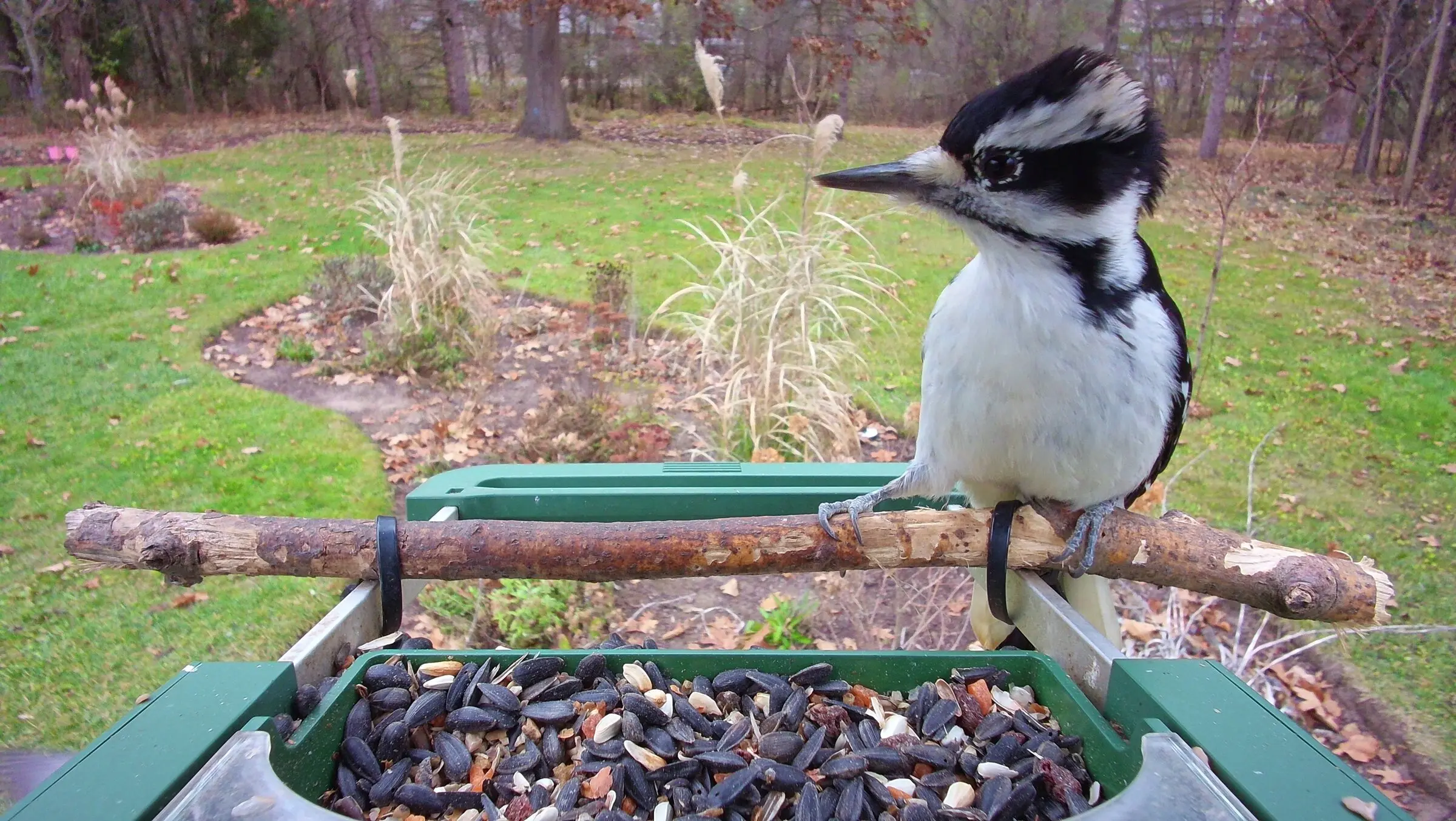
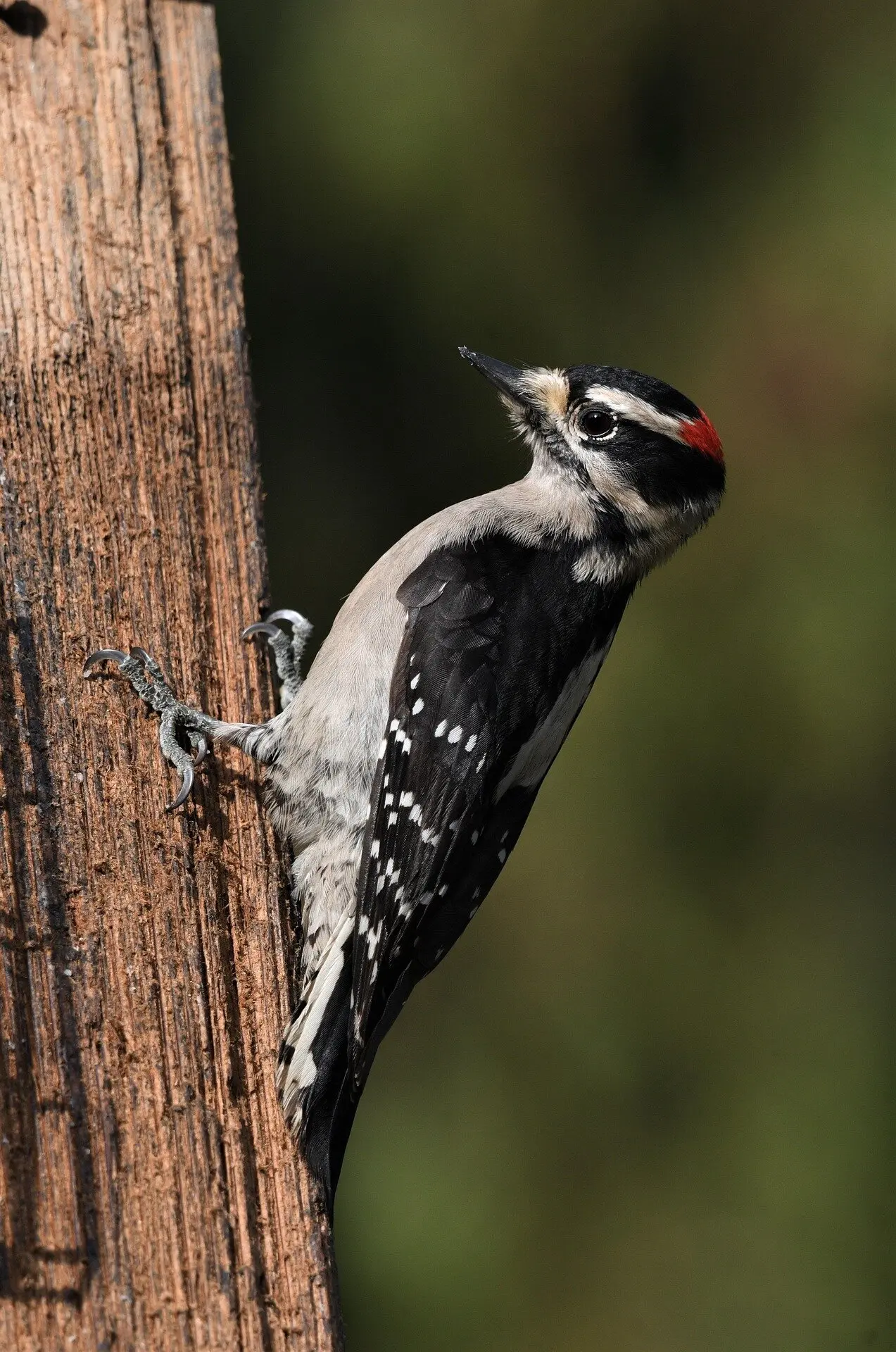
Downy or hairy? Look at the bill first. Jonathan Schechter, nature education writer for Oakland County, Michigan, puts it simply: A downy’s “almost thorn-like” bill is “shorter than the length of its head,” while a hairy’s is “the same length as its head.” Then check the outer tail feathers when the bird braces against the suet. A downy’s are white with black bars, and a hairy’s are plain white. Size helps too, but it’s hard to judge on a bird alone at the feeder. In both, only the male has a red patch on the back of the head.
Woodpeckers by region
Which woodpeckers you’ll see depends on where you live.
- Northeast and Midwest. Downy, hairy, red-bellied, and pileated woodpeckers stay all winter, and red-bellies keep spreading farther north. Many red-headed woodpeckers, the only kind with an all-red head, leave the northern edge for winter. In the North Woods, watch for black-backed woodpeckers in burned or flooded forests with lots of dead trees. Some winters, they wander south.
- South. Winter brings visitors from the north: yellow-bellied sapsuckers, red-headed woodpeckers, and flickers. Look for the sapsuckers’ neat rows of tiny holes in tree bark.
- Rocky Mountains and Southwest. Downy and hairy woodpeckers stay, and flickers here are the red-shafted kind, with salmon-red under the wings. Many slip down from the mountains to lowlands for winter. Lewis’s woodpeckers gather in oak groves and nut orchards. In the desert Southwest, the small ladder-backed woodpecker lives year-round in mesquite and desert washes.
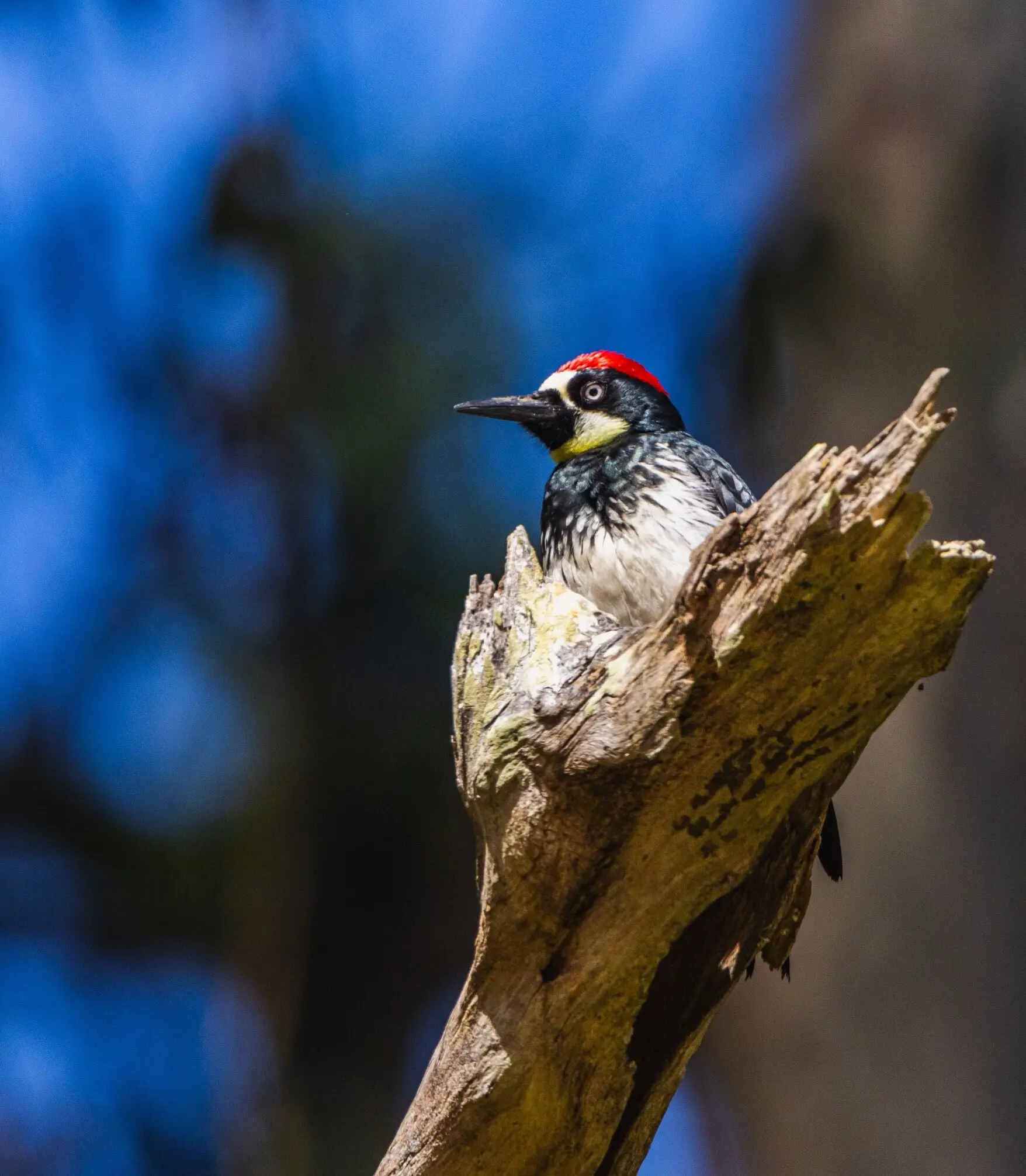
- West Coast. Acorn woodpeckers stash acorns in “granary” trees and live on them all winter. One granary tree can hold up to 50,000 holes, according to the National Audubon Society. Red-breasted sapsuckers, the least migratory sapsucker, often stay year-round near the coast. Pileated woodpeckers live in the big forests of the Pacific Northwest.
Where to look
Winter is the best time of year to watch woodpeckers. With the leaves down, there’s nowhere to hide. Look for a bird hitching up the side of a trunk instead of perching on a branch, and listen for tapping. Fresh wood chips on the snow under a dead tree usually mean a pileated has been working there. Most woodpeckers stay close to home all winter, so once you find one, you’ll likely find it again.
If the downy at your suet disappears for a few days, don’t assume it left. Downies often travel with roving winter flocks of chickadees and nuthatches. When the chickadees come back, look for a downy tagging along.
How woodpeckers survive cold nights
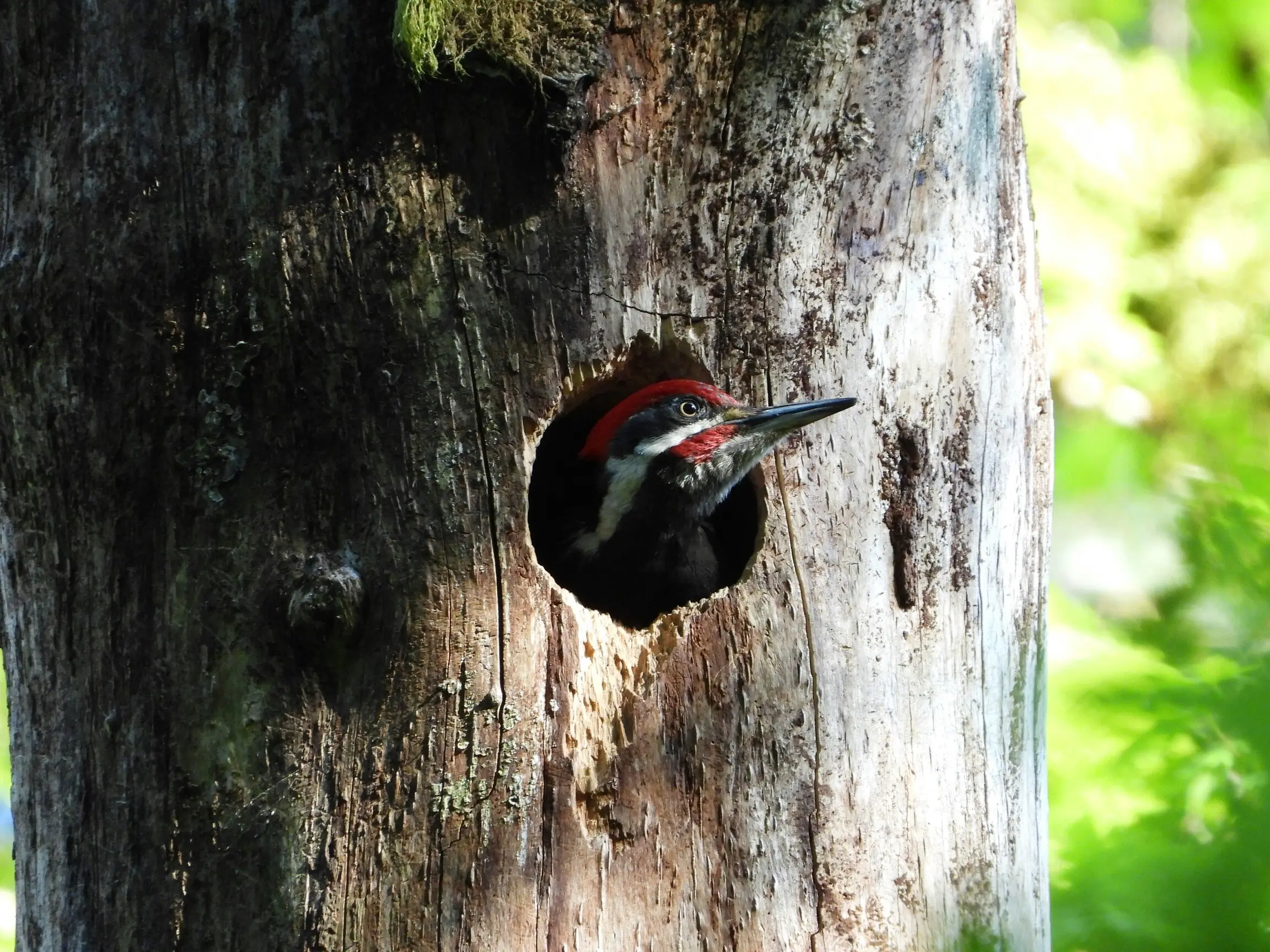
A woodpecker doesn’t spend a winter night on an open branch. It tucks itself inside a tree cavity, alone, out of the wind and snow, and fluffs its feathers to trap warm air. Many carve a fresh roost hole in the fall just for this, according to the National Audubon Society. If you hear digging in October and November, that’s likely what’s going on.
Daytime is for eating, and short winter days don’t leave much of it. Woodpeckers spend those hours chipping into bark and dead wood for beetle larvae, insect eggs, and hibernating ants. Downy woodpeckers actually tap and dig more in winter than in summer, when food sits out in the open.
Good to know
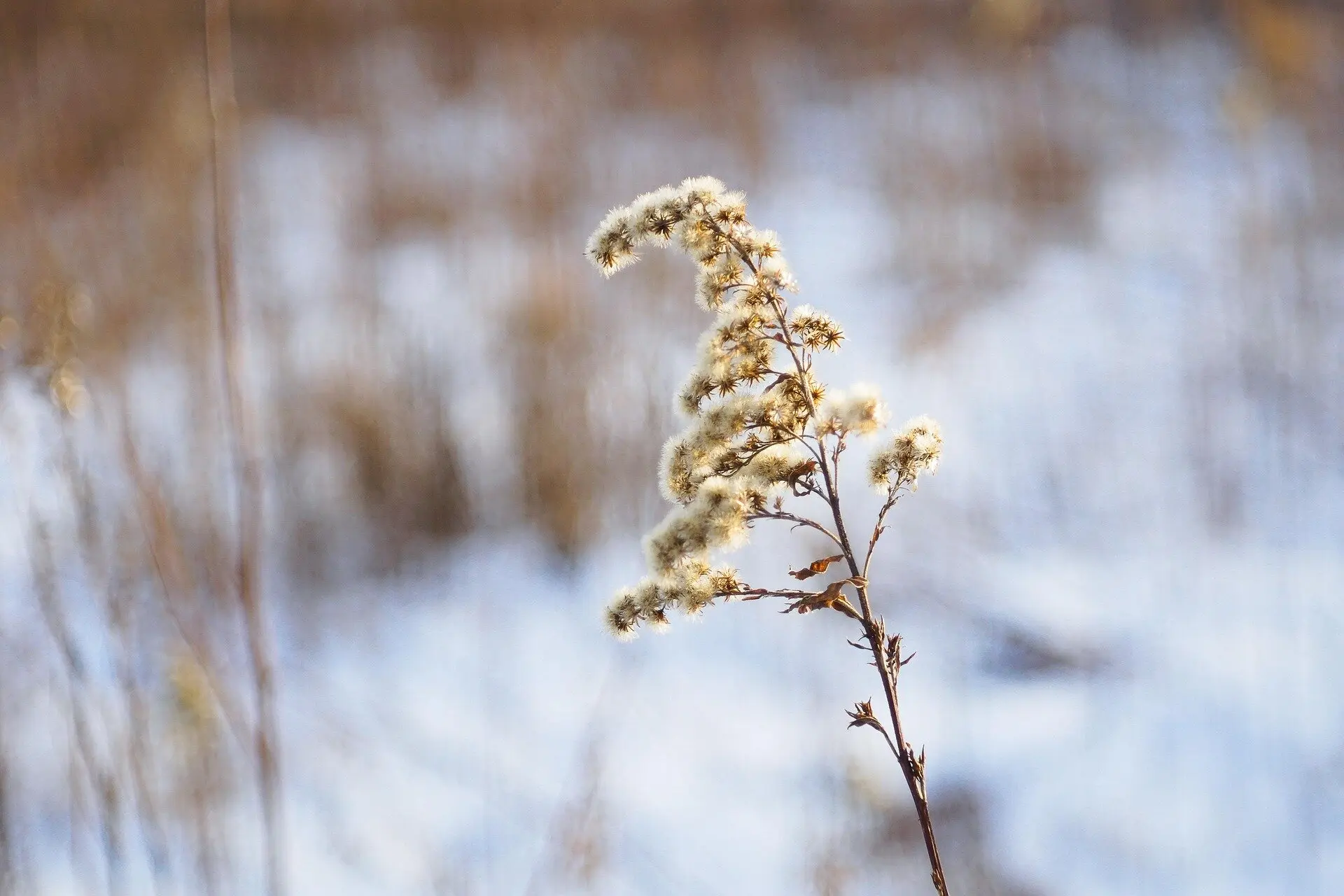
Those round swellings on dead goldenrod stems are galls, and each one holds a fat grub all winter. Downy woodpeckers know it and peck them open, the Georgia Department of Natural Resources says. Leave a patch of goldenrod standing until spring, and you’ve set out a free feeder.
Their bodies are made for the job. Stiff tail feathers prop them against the trunk. Two toes point forward and two back for a firm grip on bark. A long, barbed tongue reaches into tunnels and pulls the grubs out. All that digging helps your trees, too, because tree-boring insects like the emerald ash borer are on the menu.
What to feed woodpeckers in winter
Fat is what gets a small bird through a long, cold night, so make it the center of your winter menu.
- Start with suet. Store-bought suet cakes are the easiest choice. Raw beef fat from the butcher counter works too, but put it out only in freezing weather, and take it down once days stay above freezing, before it turns rancid. Dripping fat can also ruin the waterproofing on feathers, the National Audubon Society warns. For mild spells, try No-Melt Suet Dough, which holds up better.
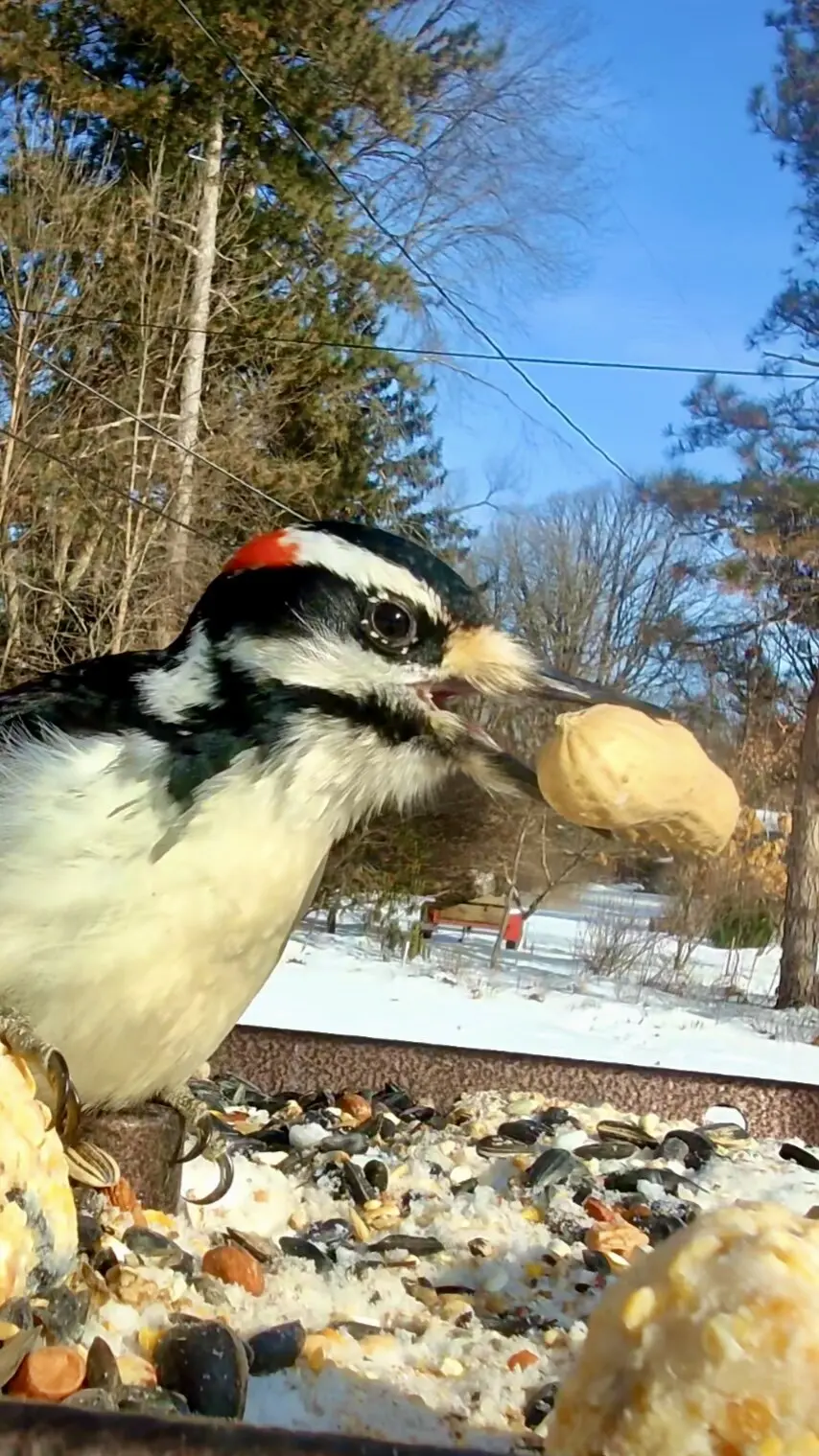
- Add peanuts. Offer them unsalted and shelled, chopped for downies and other small birds. Keep them dry, because damp peanuts can grow mold.
- Offer sunflower. Black oil sunflower seed or hulled sunflower hearts draw red-bellied woodpeckers, and hearts leave no shells under the feeder.
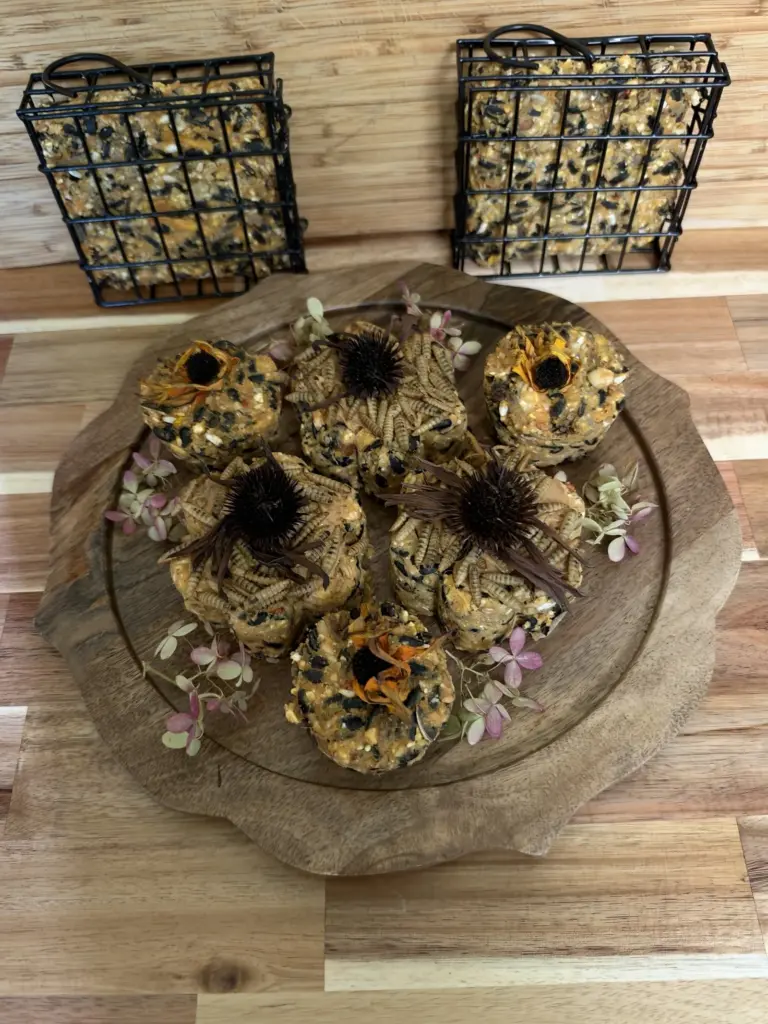
- Spread a little peanut butter. Natural, unsalted peanut butter pressed into bark cracks, a pinecone, or a log feeder is a fast calorie boost on a frosty day. I roll suet into bite-size “donut holes” with unsalted peanut butter, and the recipe is in my guide to the best foods to feed birds in winter. For more on choosing a jar, see Is Peanut Butter Safe for Birds to Eat?
- Put out fruit for flickers and red-bellies. Orange halves, apple chunks, and fresh cranberries cut in half are all good. More ideas are in Attract Backyard Birds With Fruit.
- Mix in mealworms. Dried mealworms stand in for the insects that are hard to find in winter. Stir them into homemade suet or set a few in a dish.
- Keep it steady. In a cold snap, a busy suet feeder can empty in a day or two. Check it daily, and refill it late in the afternoon so birds can fuel up before dark.
What not to feed woodpeckers
- Skip bacon grease and pan drippings. They stay soft, can coat feathers, and carry salt.
- Skip salted or seasoned nuts. Plain is the only kind birds should get.
- Skip anything with added sugar. That includes sweetened dried cranberries and candy-coated nuts.
- Skip bread. It fills birds up without the fat they need in the cold, and it spoils fast. Bread and table scraps can grow bacteria and mold that harm or even kill songbirds, the Maryland Department of Natural Resources warns.
My guide to holiday leftovers for birds covers what’s safe from your own kitchen.
Choose the right feeder and spot
- Use a wire suet cage. It’s cheap, it holds a standard suet cake, and woodpeckers can cling to it from any side.
- Add a tail prop for big woodpeckers. A suet feeder with a long board below the cage lets pileated woodpeckers and flickers brace their stiff tails the way they do on a tree trunk.
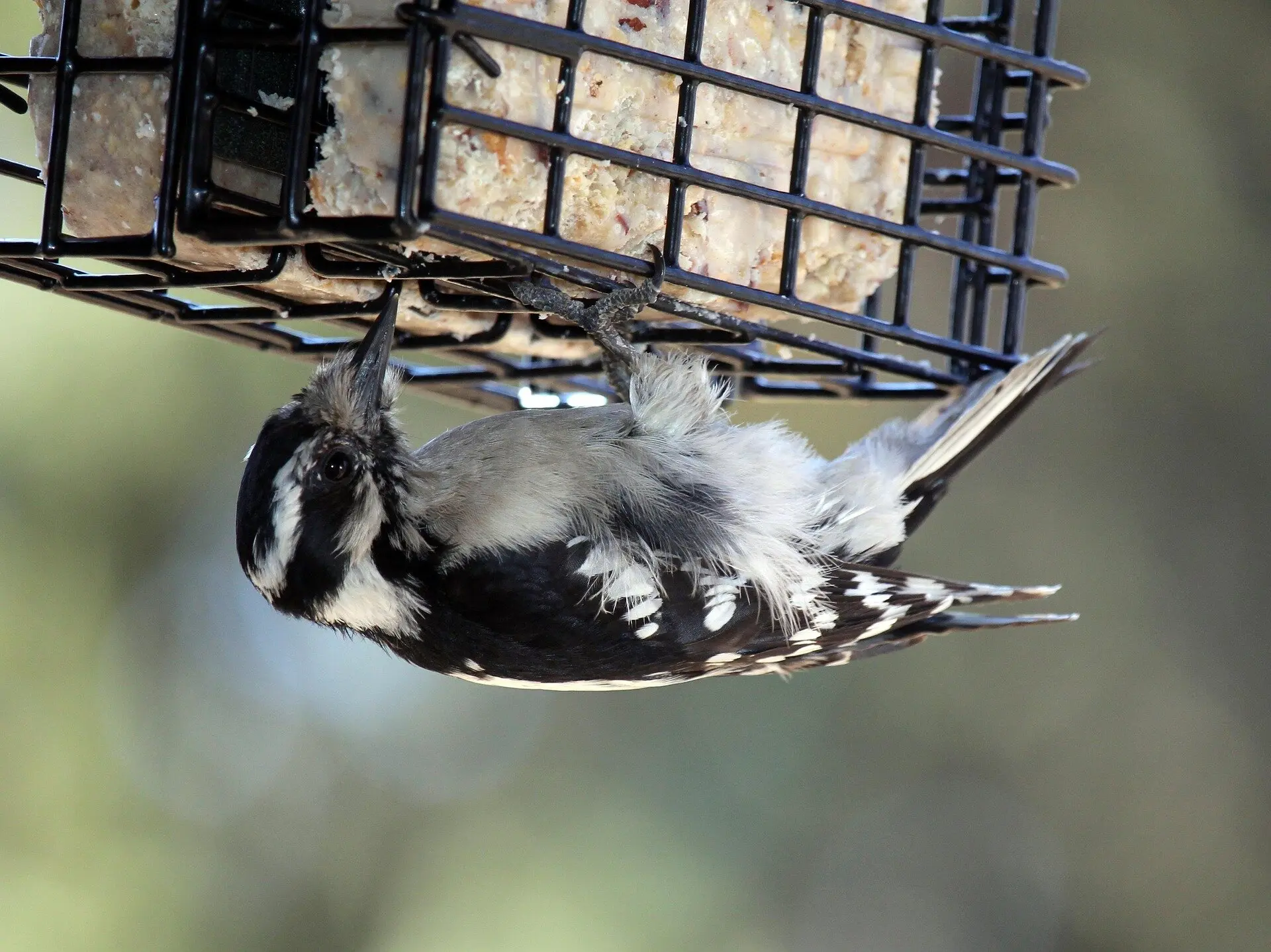
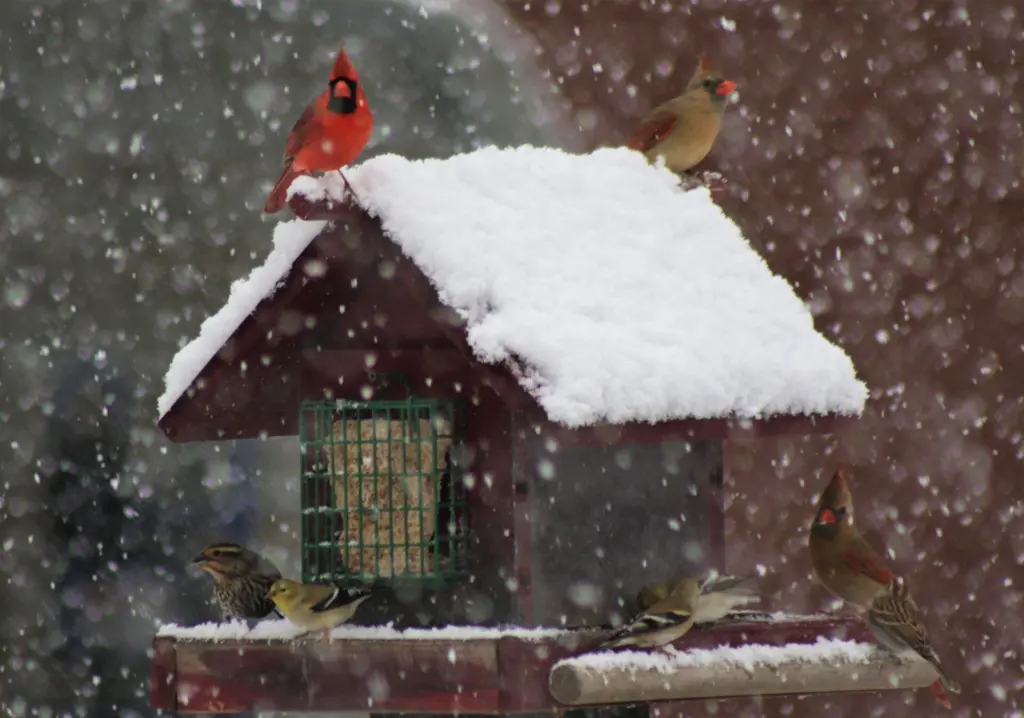
- Try an upside-down feeder. Starlings love suet as much as woodpeckers do. A cage that opens only at the bottom fixes that: Woodpeckers hang upside down to feed with no trouble, and starlings struggle to, according to the Cornell Lab of Ornithology’s Project FeederWatch.
- Hang it near a trunk. Woodpeckers feel safer close to trees, so a feeder on or near a trunk tends to get visits sooner. Pick a spot out of strong wind that you can see from a window, and keep it a few feet from thick shrubs where a cat could hide. My guide on where to put a bird feeder has more on placement.
- Outsmart squirrels. Hot pepper suet keeps many squirrels away, and birds don’t seem to mind the heat. For more fixes, see How to Keep Squirrels and Unwanted Birds Off Your Feeder.
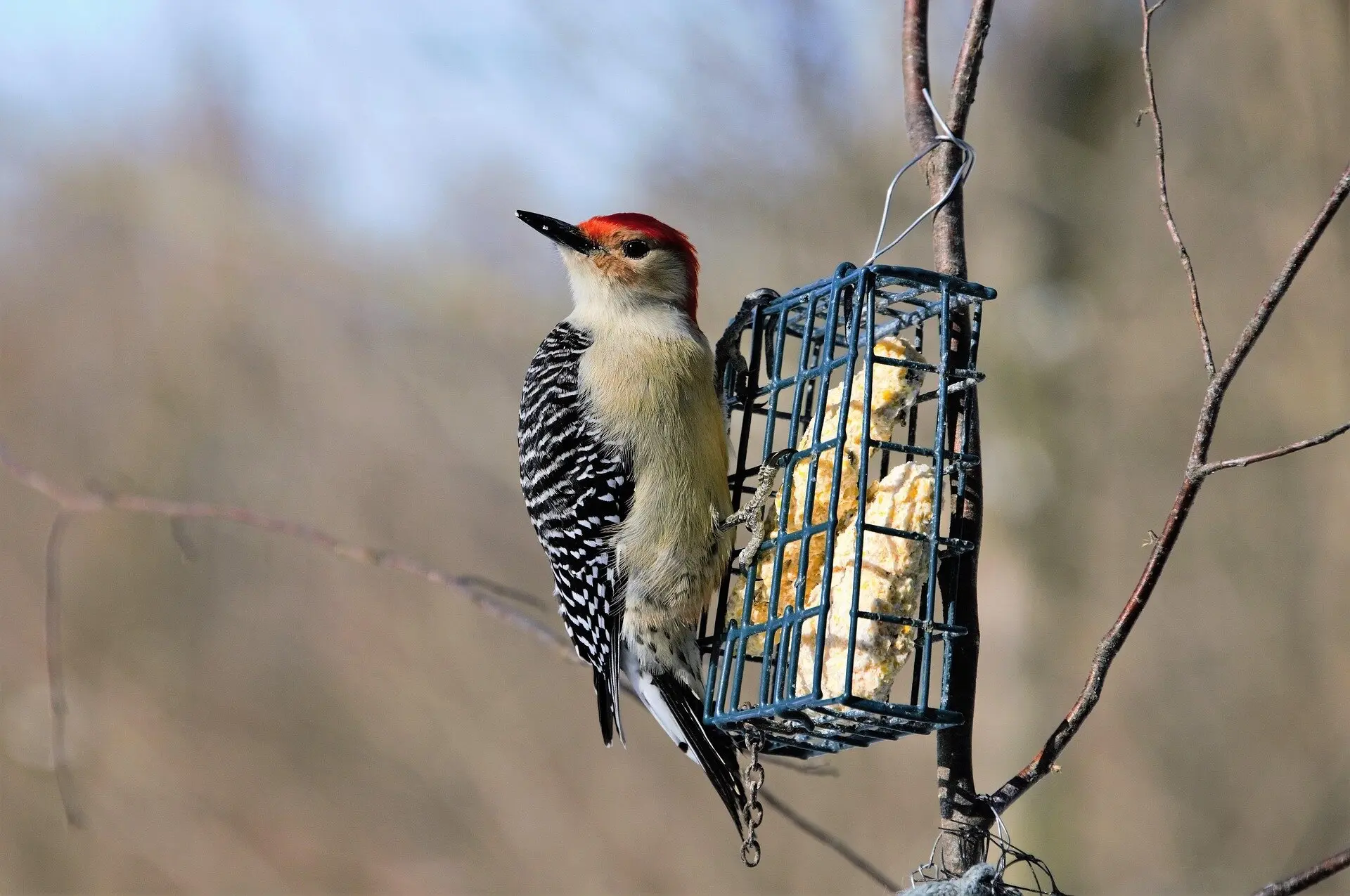
Skip this old tip: suet in a mesh onion bag
Hanging suet in a mesh bag is an old habit, and some guides still suggest it. Britain’s Royal Society for the Protection of Birds says never to put out food in mesh bags: They can trap birds’ feet, and birds with barbed tongues, like woodpeckers, can get caught by the beak. Use the wire cage.
Keep water open
Once ponds and puddles freeze, water can be harder to find than food. A heated birdbath, or a heater made for the bath you already have, keeps the water open. Choose one with a thermostat, and plug it into an outdoor-rated cord. Don’t expect your downies there often, because they seldom use a birdbath. Nearly every other bird in your yard will.
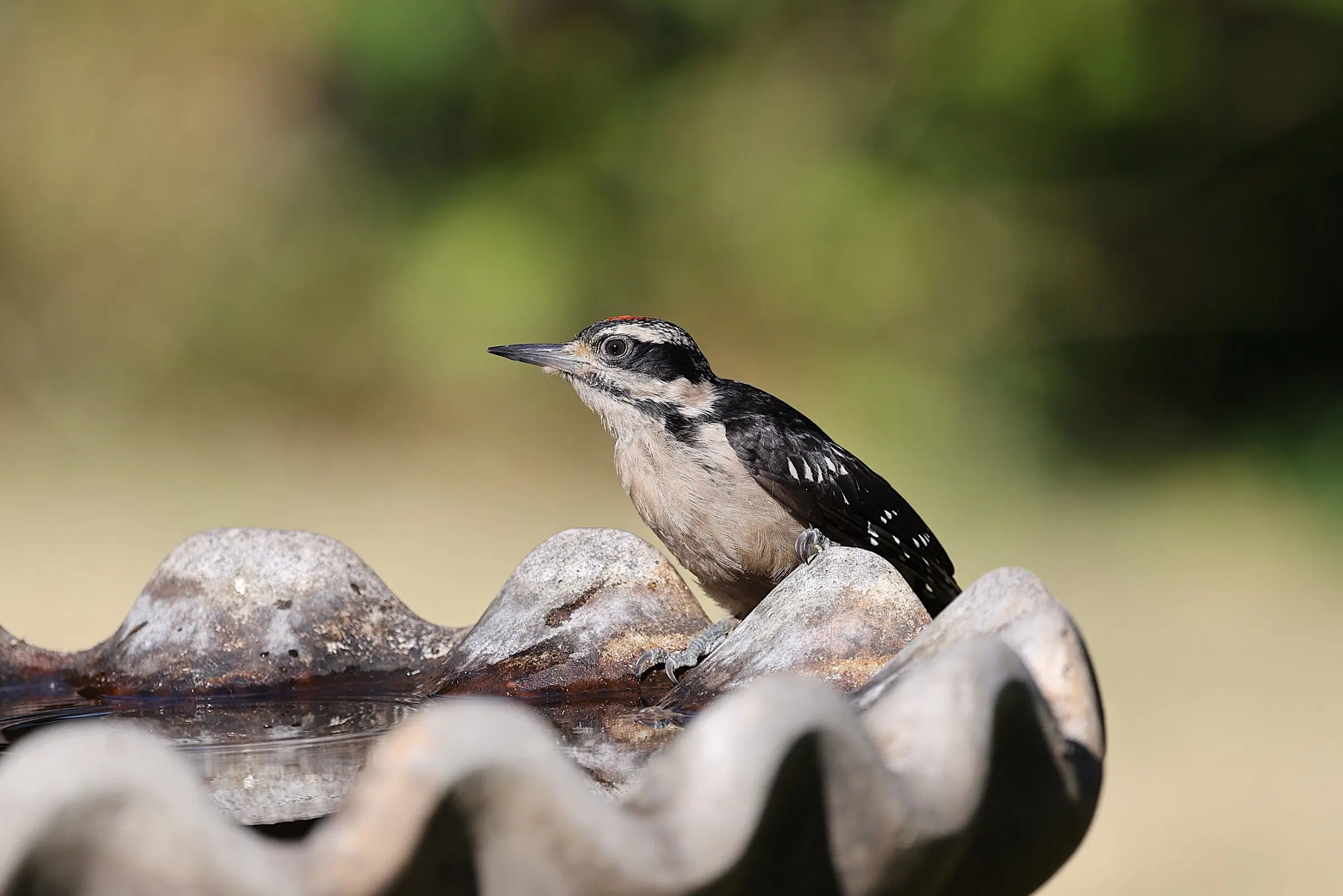
Change the water every day or two. Lay a few branches or a flat stone across the bath so birds can drink without soaking their feathers on a bitter day.
Safety first
Never add antifreeze to a birdbath. It’s poisonous to all animals, birds included. Skip glycerin, too: It can mat feathers so they no longer hold in heat, the National Wildlife Federation warns.
Frugal tip
No heater? Set out a shallow dish of warm water each morning, and bring it in before dark.
Keep feeders and suet clean
Clean seed and suet feeders every week or two, and more often in wet weather or when they’re busy, Project FeederWatch advises. Scrub off old food, soak the parts for 10 minutes in a solution of 1 part bleach to 9 parts water, rinse well, and let everything dry completely.
Toss suet that smells sour, looks moldy, or sits untouched for days. Rake up shells and dropped food under the feeder before it piles up.
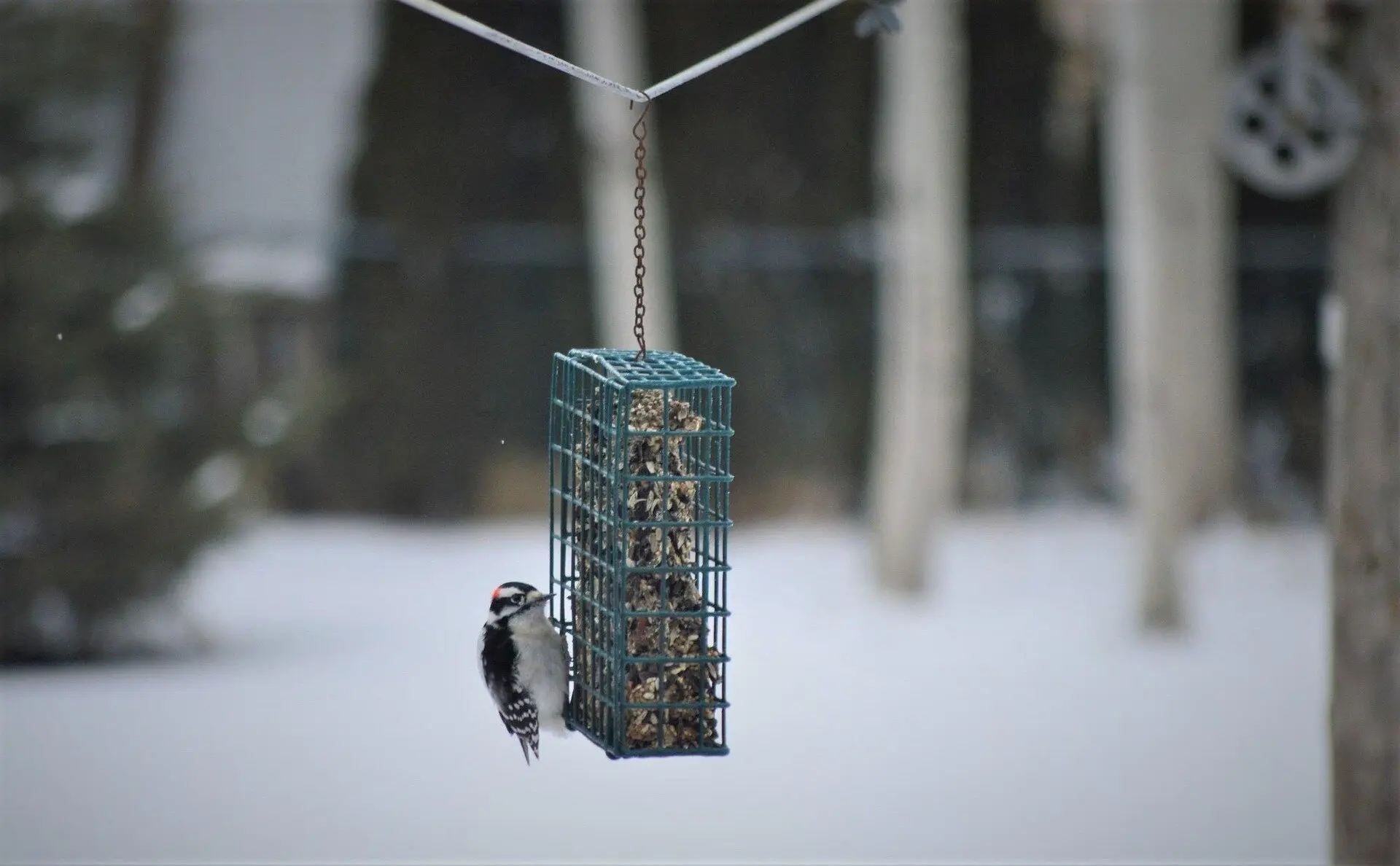
Once your woodpeckers settle in, they can count for science, too. Project FeederWatch runs Nov. 1 to April 30, and every downy at your suet counts.
Give them shelter
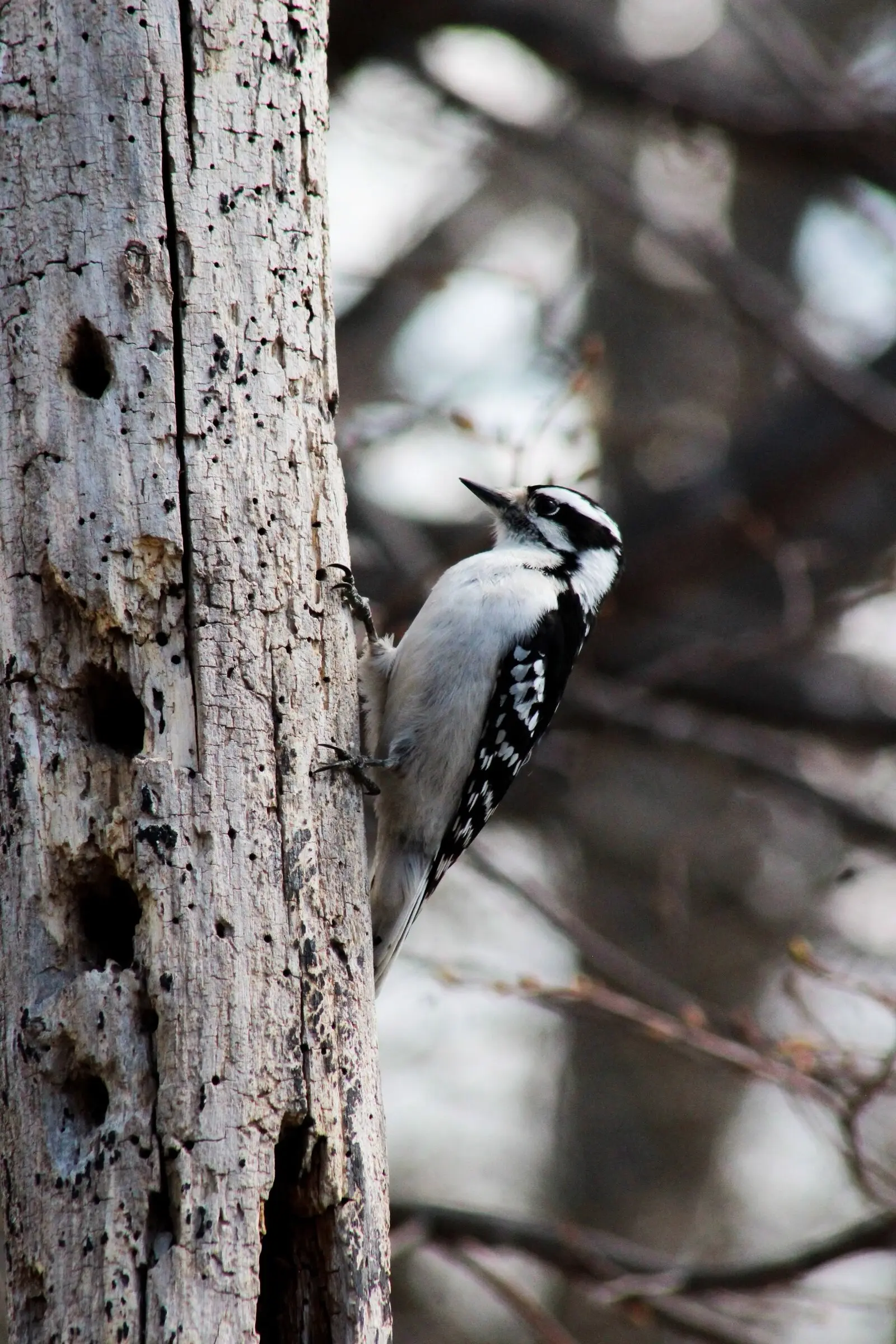
- Leave dead trees standing when it’s safe. A dead tree, or snag, is a woodpecker’s pantry and bedroom in one. Take down only what could fall on your house, your car, or a path. Dead limbs left in place help, too. My list of fall yard cleanup mistakes that harm wildlife has more on what to leave.
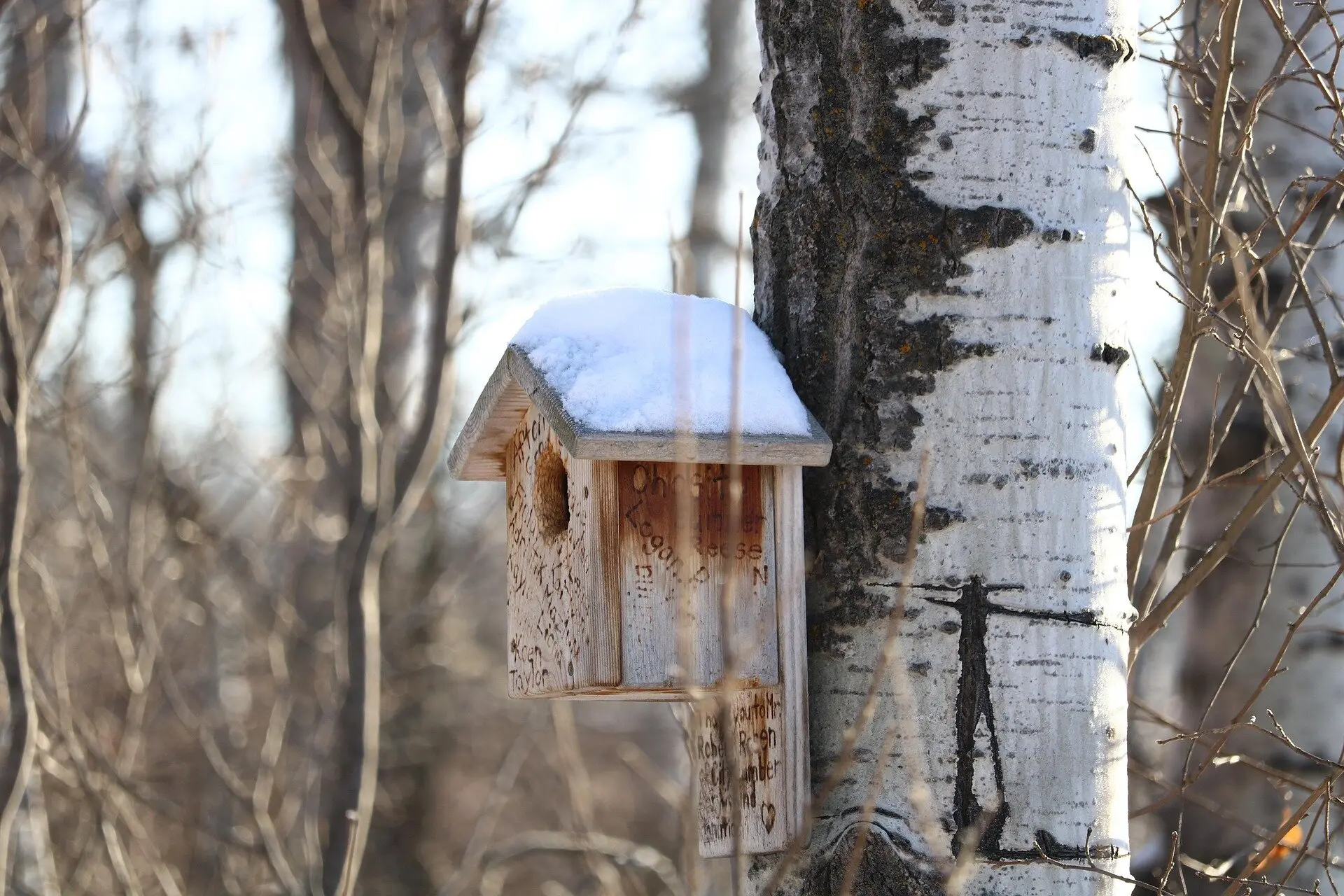
- Leave birdhouses up. Don’t take nest boxes down in fall. Downy woodpeckers and chickadees use them for shelter from the wind, according to Penn State Extension. A bluebird box with a 1 1/2-inch entrance fits a downy.
- Hang a roost box. A roost box is built for winter nights. The entrance sits near the bottom so warm air stays trapped inside, and perches inside give birds a place to settle. Mount it 10 feet up or higher. No roost box? Clean out an old birdhouse and turn the front panel around so the hole sits near the bottom. Woodpeckers prefer to carve their own holes, so think of a box as a bonus rather than a sure thing.
- Build a brush pile. A heap of branches and old logs in an out-of-the-way corner gives birds cover and, as it breaks down, insects to dig for.
- Go easy on pesticides. The insects woodpeckers hunt in bark are their natural winter food supply.
- Plant for next winter. Oaks and hickories drop nuts that red-bellied and red-headed woodpeckers store and eat. Native plants with fall berries, like dogwood, sumac, and Virginia creeper, feed flickers and downies. Pines and other evergreens give every bird a windbreak.
Why is a woodpecker drilling my house in the fall?
There’s a difference between noise and a hole. The rat-a-tat on your gutter in spring is a male announcing his territory, and it’s loud on purpose. A neat round hole in your siding in October is something else. That woodpecker is house hunting, and your wall looks like a dead tree with a view. This kind of damage picks up in fall, the Connecticut Department of Energy and Environmental Protection says, because birds are carving out a place to sleep for the winter. Flickers are the usual suspects, and cedar and other wood siding take the worst of it.
What helps:
- Put up a suet feeder away from the house. A full feeder may draw the bird away from your siding.
- Hang bird netting. Attach it to the eaves and angle it back to the siding below the damaged area so the bird can’t reach the wood.
- Check for insects. A woodpecker that keeps working one spot may be after carpenter bee larvae or other insects in the wood.
- Try something shiny, early. Reflective tape, pinwheels, or other moving, flashy objects hung near the spot sometimes work if they go up right away, before the bird settles in. Results are mixed.
- Patch the hole once it’s empty. Fill it with wood putty during the day, when the bird is out.
Be gentle about it. Woodpeckers are protected by federal law, and it’s illegal to harm one without a federal permit.
Start small. Hang one suet cage near the nearest trunk, keep a little water open, and leave that old dead limb where it is. Before long, the woodpeckers in your yard will be regulars at your window, and on a gray January morning, that flash of black, white, and red is worth every suet cake.
Frequently asked questions
Do woodpeckers migrate in winter? Mostly no. Downy, hairy, red-bellied, and pileated woodpeckers stay year-round. Yellow-bellied sapsuckers and flickers from the far north head south.
What do woodpeckers eat in winter? Insect larvae, eggs, and ants hidden in bark and dead wood, plus acorns, nuts, and berries. At feeders, they go for suet, peanuts, and sunflower seed.
Where do woodpeckers sleep in winter? In tree cavities, one bird to a hole. Some will use a roost box.
Do woodpeckers use birdhouses in winter? Sometimes. Downies will shelter in one on cold nights, so leave boxes up.
Do woodpeckers peck in winter? Yes. They chip into bark and dead wood all winter to find food. Drumming to claim territory picks up again in late winter and spring.
Can I leave suet out all winter? Yes, as long as it stays cold. Switch to no-melt dough during warm spells.
Will woodpeckers depend on my feeder? No. They find most of their food on their own. Even chickadees, steady feeder birds, got only about 21% of their daily energy from feeders in a Wisconsin study published in the Journal of Wildlife Management. Still, keep suet out through snowstorms and the hardest cold, when natural food is hardest to reach.
From the QT Bird Community
Join the conversation
Comments on QT Bird articles live in our community. Joining is free: share your tips, ask questions and get replies.
Sign up to PostLog in