

That plain bottle of witch hazel in your medicine cabinet is one of the hardest-working bargains in the drugstore. It costs just a few dollars, and you can use it on everything from an itchy mosquito bite to a smudged bathroom mirror.
People have relied on witch hazel for well over a century, and today it does far more than the old ads ever promised. Here’s what witch hazel actually is, which bottle to buy, 20 practical ways to put it to work on your skin and around your house, and how to make your own.
I’ve been searching for a shrub to plant, and while I was looking, I realized I had photographed witch hazel on one of my nature walks.
What is witch hazel?
This native shrub or small tree has spidery yellow flowers that look like little crinkled ribbons. Common witch hazel (Hamamelis virginiana) grows wild across the eastern half of the U.S., from Minnesota to Maine and as far as Florida and Texas, according to Penn State Extension. It is one of the last plants to bloom each year, flowering from late October into November.

The clear liquid you buy at the store doesn’t come from the flowers. Makers distill it from the plant’s leaves, bark and twigs. Native Americans used the plant to ease swelling and skin irritation long before it was sold in bottles, and early settlers picked up the remedy from them.
The name has nothing to do with witches, either. It comes from an Old English word, “wiche,” meaning bendable, a nod to the shrub’s flexible branches, according to the Farmers’ Almanac.

A century-old remedy
I first wrote about witch hazel back in 2010, and it felt like a good time to take a fresh look.
Witch hazel has been a medicine-cabinet staple for well over 100 years, and old ads show how big the claims used to be. One Humphreys’ trade card promised its witch hazel oil would cure piles, burns, boils, chapped hands, corns, mosquito bites and sunburn, with relief that was “immediate.”
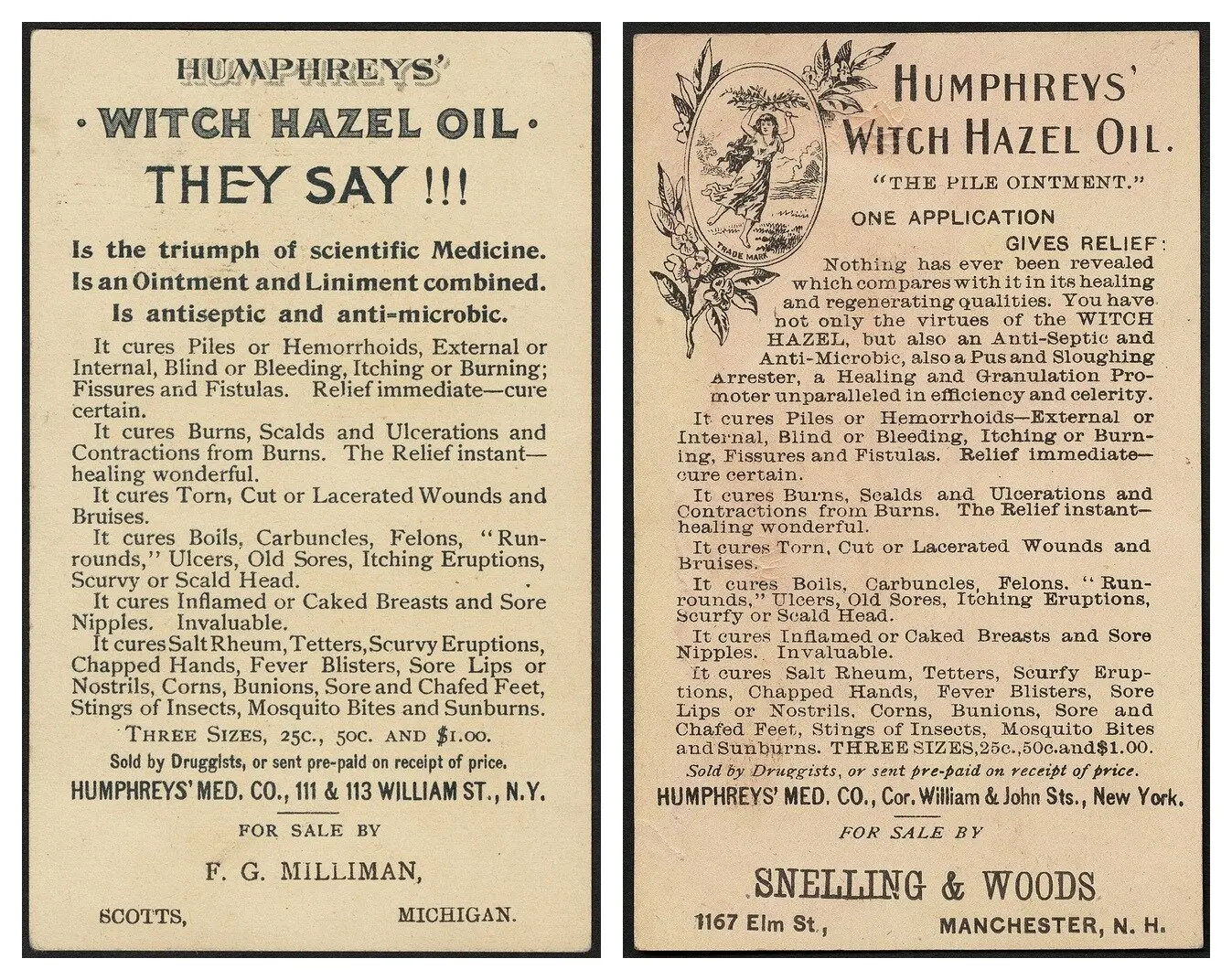
Today’s bottles are far more modest. The label promises only temporary relief of small skin irritations, which is a good reminder to take the old “cure-all” claims with a grain of salt.
Some brands had fun with the name, too, even though it has nothing to do with witches.

Why it works
Witch hazel is an astringent, which simply means it tightens and draws skin tissue together. The plant contains tannins and other compounds that appear to calm inflammation and slow minor bleeding, according to WebMD. That’s why it shows up in toners, aftershaves and hemorrhoid pads.
Which witch hazel should you buy?
Not every bottle is the same, so read the label before you buy.
- Classic witch hazel: The familiar drugstore bottle is usually about 86% witch hazel and 14% alcohol. It’s the cheapest option and works well for bug bites, cleaning and oily skin. The alcohol can sting and dry out skin, though.
- Alcohol-free witch hazel: These versions skip the added alcohol. They are gentler on dry or sensitive skin and won’t burn on a fresh scrape or razor burn.
- Witch hazel toners: These are skin care products with extras such as aloe, rosewater or fragrance. They cost more, and you don’t need them for cleaning.
Frugal tip
Keep one big bottle of classic witch hazel for cleaning and a smaller alcohol-free bottle for your face. You get the best of both without paying toner prices for mopping water.
Witch hazel for everyday skin care
The Drug Facts label on most drugstore bottles names the same three jobs: easing small skin irritations caused by bug bites, little cuts and scrapes. Start there, and you’re on solid ground.

1. Calm itchy bug bites
Wet a cotton round and dab it on mosquito bites, chigger bites or other minor insect bites. The astringent helps cool the itch and redness for a while.
2. Soothe minor cuts and scrapes
Wash a small cut or scrape with soap and water first. Once it’s clean, pat on a little witch hazel with a fresh cotton round to calm the sting.
3. Cool razor burn and waxing redness
Witch hazel is a classic, budget-friendly aftershave. Pat a little on your legs, underarms or face after shaving, or on your brows after a waxing, to calm redness. Michigan Medicine’s health library lists razor burn among its common uses. Because it’s an astringent, it may also help a tiny shaving nick stop bleeding. Want to make your own? Try the aftershave recipe farther down.
4. Take the heat out of a mild sunburn
A cool, alcohol-free witch hazel compress may ease the sting of a mild sunburn. WebMD notes the plant’s antioxidants may offer some protection, but the research is limited. Witch hazel is not a sunscreen, and it won’t heal a bad burn. For a sunburn that covers a lot of skin, soak in a cool bath first. You can toss in a couple of tea bags, 2 cups Epsom salt or a little lavender or peppermint oil. Afterward, dab witch hazel on the sorest spots, or stir a little into aloe vera gel for extra cooling. See a doctor for blistering or widespread burns. Skip witch hazel on eczema or very dry skin, where it can make things worse.
5. Relieve hemorrhoid discomfort
Witch hazel is the active ingredient in medicated cooling pads like Tucks and Preparation H wipes. Cleveland Clinic says these pads can relieve the itching, burning and irritation of hemorrhoids. Product labels say to use them on the outside only, up to six times a day or after bowel movements. Stop and call your doctor if you notice bleeding or if things don’t improve in a week. New moms are often sent home from the hospital with pads made with witch hazel to ease postpartum soreness, too.
6. Ease achy varicose veins
Soak a couple of washcloths in witch hazel and drape them over your legs. Some people find this eases the ache and swelling of varicose veins for a little while. WebMD lists varicose veins among the problems people treat with witch hazel, though the research is thin. Talk to your doctor about veins that are painful, red or warm.
Safety first
Witch hazel is for the outside of your body only. Don’t drink it, keep it out of your eyes, and stop using it if your skin gets red or irritated. Labels say to call a doctor if a problem gets worse or lasts longer than seven days. If you’re pregnant or breastfeeding, check with your doctor first, since studies are limited. This article is for general information and isn’t medical advice.
Witch hazel for your face and hair
Long before fancy toners, witch hazel was sold for “toilet uses,” an old-fashioned term for washing and grooming.

7. Use it as a toner
Witch hazel has been a go-to facial toner for generations. After you wash your face, sweep a dampened cotton pad over your skin to remove leftover oil and grime. It may help most with oily or acne-prone skin. Follow with a moisturizer, since witch hazel can be drying. If your skin is dry or sensitive, choose alcohol-free witch hazel or skip it.
8. Take off makeup
Add witch hazel to your nighttime routine to wipe away the last traces of makeup and oil after cleansing. Keep it away from your eyes, and use a gentle eye makeup remover for mascara and liner.
9. Freshen an oily, itchy scalp
When your hair feels greasy or your scalp itches, witch hazel may help. Mix 1 part witch hazel with 2 parts water. Stir in a little essential oil if you like. Massage it into your scalp and hair, then rinse. Diluting it is kinder to a sensitive scalp.
10. Wipe away hair-dye stains
Dyeing your hair at home? If color ends up on your forehead, ears or neck, rub the spot gently with a cotton pad dampened with witch hazel. It works best when the dye is still fresh.
11. Mix up a simple deodorant spray
Witch hazel shows up in many natural deodorants. The easiest way to try it is to swipe a witch hazel–soaked cotton ball under your arms. For a spray version, use the deodorant recipe below. Just know that it won’t keep you dry. Only an antiperspirant does that.
Witch hazel for cleaning around the house

Witch hazel is a handy cleaner because the alcohol in the classic bottle evaporates fast. That means fewer streaks and no rinsing.
One important note: Witch hazel cleans, but it does not disinfect. The cleaning company Merry Maids points out that it is not an EPA-approved disinfectant. For germs, stick with a registered disinfectant, bleach, hydrogen peroxide or rubbing alcohol.
12. Shine mirrors, glass and chrome
Spray undiluted witch hazel on mirrors, windows, glass shower doors and chrome faucets. Buff with a dry microfiber cloth for a streak-free finish.
13. Dust and degrease window blinds
In a spray bottle, mix 1 cup witch hazel, 1 cup water and one drop of dish soap. Spritz the solution onto a microfiber cloth, not directly on the blinds, and wipe each slat from the top down. It cuts the dust and kitchen grease that build up on blinds.
14. Mop vinyl, linoleum or tile floors
Stir about 1/2 cup of witch hazel into a bucket holding 1 gallon of warm water, then mop the way you normally do. Merry Maids recommends this mix for vinyl floors, linoleum and tile. Skip unsealed wood and natural stone, since the alcohol can dry out porous surfaces over time.
15. Lift sticker residue
Price tags and labels can leave a gummy mess. Press a cotton ball soaked in witch hazel onto the sticky spot for about two minutes, then scrape gently with the dull side of a butter knife.
16. Brighten everyday jewelry
Rings and necklaces pick up lotion and skin oils. Wipe them with a cotton ball dampened with witch hazel to bring back the shine. To be safe, skip pearls, opals and other soft or porous stones.
17. Freshen rooms, counters and gym gear
Witch hazel helps essential oils blend with water, so it makes a simple air freshener. In a spray bottle, combine 1 cup water, 1/2 cup witch hazel and roughly 15 drops of an essential oil. Try cedar, eucalyptus, grapefruit or lavender. Shake before each use. The same spray can wipe down sealed countertops. A lighter version without strong oils works on yoga mats and smelly sneakers. Test fabric sprays on a hidden spot first.
18. Treat set-in blood stains
Don’t toss that stained shirt yet. Merry Maids suggests soaking just the stained area in witch hazel for about 30 minutes, then rinsing it in cool water and washing as usual. Always use cool water on blood, because hot water can set the stain.
19. Spot-clean carpet and upholstery
Spilled coffee on the rug or couch? Mix witch hazel with water and a few drops of mild dish soap, then blot the stain with a microfiber cloth. Don’t rub. The cleaning experts quoted in Tom’s Guide recommend this mix and say to test a hidden spot first.
20. Wipe stainless steel
Fingerprints on the fridge? A mix of witch hazel and water wiped on with a microfiber cloth dries quickly and leaves stainless steel appliances streak-free. Wipe in the direction of the grain.
What not to clean with witch hazel
Keep it off electronic screens, unsealed wood and porous stone like marble or granite that hasn’t been sealed. For heavy grease, reach for dish soap or a degreaser instead.
How to make your own witch hazel
Making your own isn’t new. Several Native American tribes, including the Potawatomi, Chippewa and Oneida, boiled witch hazel stems in water to treat cuts, bruises and swelling, according to a University of Vermont library exhibit. If you have a common witch hazel shrub in your yard, you can make a simple homemade version. The two methods below follow the steps published by the Old Farmer’s Almanac, which suggests using homemade witch hazel on bug bites, minor scrapes, bruises, itchy spots, swelling and tired muscles. It also works in the cleaning spray below. Fall is a good time to gather twigs, since the shrub is in bloom or just finishing.

A few tips before you start:
- Know your plant. Use the native common witch hazel (Hamamelis virginiana), not an ornamental nursery hybrid, the Old Farmer’s Almanac advises. Only harvest a shrub you can identify for sure.
- Prune gently. Snip a few handfuls of small twigs with sharp pruners, cutting just outside the slight bump where a branch meets a larger stem. That helps the shrub heal.
- Ask first. Only cut from your own yard or with the owner’s permission.
Young twigs have always been the starting point, even for the big makers.
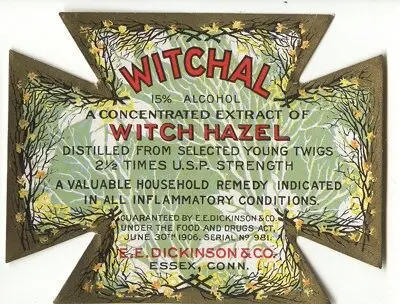
Before you make your own
Homemade witch hazel is a simmered or soaked extract, not the steam-distilled product sold in stores. No one has tested its strength or purity, and it can be stronger or weaker from batch to batch. Be sure you’ve identified the shrub correctly before you cut it. Test a small patch of skin first, and stop if you see redness or itching. Use it on the outside of your body only, keep it away from your eyes and never drink it. Skip it on deep cuts, blistering burns or skin that looks infected, and see a doctor instead. If you’re pregnant, breastfeeding or treating a child, check with your doctor first.
The simmered kind has no alcohol or preservatives, so it can grow mold or bacteria within days. The FDA warns that germs growing in homemade personal care products can be a health hazard. Make small batches, use clean jars and utensils, label the jar clearly, keep it out of children’s reach and toss anything that looks cloudy, smells off or grows mold.
Simmered homemade witch hazel
- 1/4 cup chopped witch hazel twigs with the bark on
- 1 cup water, enough to cover the twigs
- 1 small handful fresh witch hazel leaves
- Chop the twigs into small pieces. If you’re using larger branches, scrape off some of the bark and add it too.
- Put the chopped twigs and bark in a stainless steel pot and cover them with water.
- Bring to a boil, then cover and simmer gently for 20 to 30 minutes.
- Take the pot off the heat, add the leaves, cover and let it steep 10 to 20 minutes more.
- Let it cool, then strain it into a clean glass jar.
- Keep it in the refrigerator and use it within a few days.
Longer-lasting witch hazel tincture
- 1 pint jar loosely filled with chopped witch hazel twigs, bark and fresh leaves
- 2 cups 80-proof or higher vodka, or enough to cover
- Chop the twigs, leaving the bark on. If you’re using larger branches, scrape off some of the bark and add it too.
- Place the twigs, bark and leaves loosely in a clean glass jar.
- Pour in enough vodka to cover the plant material completely.
- Seal the jar and store it in a cool, dark place for about six weeks, shaking it now and then.
- Strain the tincture into a clean glass bottle or jar.
- To use it, mix about 2 tablespoons of tincture with 1/2 cup water. Dab it on using a cotton round or a clean washcloth, or pour it into a spray bottle.
Castile soap and witch hazel cleaning spray
This simple spray works on glass, windows, mirrors, countertops, sealed wood furniture and stainless steel.
- 1 1/2 cups distilled water
- 1/4 cup homemade or store-bought witch hazel
- 2 tablespoons Dr. Bronner’s liquid castile soap
- Pour the water and witch hazel into a spray bottle.
- Add the castile soap.
- Shake gently before each use.
Tip: Glass needs much less soap, or it can streak. Dr. Bronner’s suggests about 1 tablespoon of castile soap per quart of water for windows, so use about 1 teaspoon in this recipe when you clean glass. Don’t add vinegar to the bottle. The company recommends keeping castile soap and vinegar as separate steps. If you use the simmered homemade witch hazel, keep the spray in the fridge and mix a fresh batch every few days.
Witch hazel deodorant spray
Use store-bought witch hazel for this one.
- 1/4 cup store-bought witch hazel
- 1/4 cup aloe vera gel
- 1/4 cup water
- 1 teaspoon vegetable glycerin
- 5 to 10 drops essential oil (optional)
- Pour all the ingredients into a spray bottle.
- Shake well to blend.
- Spritz the mixture onto a soft cloth and wipe it under your arms.
Tip: This spray has no preservatives, so make small batches and keep it in the fridge.
Homemade witch hazel aftershave
This aftershave is homemade, but the witch hazel in it should come from the store.
- 1/2 cup distilled water
- 1/4 cup store-bought witch hazel
- 1/2 cup dried rosemary, lavender or sage, or a few strips of citrus peel or a cinnamon stick
- 1 tablespoon olive oil
- 3 drops benzoin oil
- Put everything in a glass jar and screw on the lid.
- Let it steep in the refrigerator for two weeks, giving the jar a shake every day.
- Strain out the herbs through a fine strainer or cheesecloth.
- Keep it in the refrigerator, and shake before you splash it on after shaving.
Tip: If you’d rather skip the herbs, add your favorite essential oil to the water and witch hazel instead. Just a few drops will do.
Frequently asked questions
What is witch hazel good for? Witch hazel calms minor skin irritation from bug bites, small cuts and scrapes, razor burn and hemorrhoids. Around the house, it also works as a facial toner and a quick, streak-free cleaner for glass, chrome and floors.
Can I use witch hazel on my face every day? Many people with oily skin use it daily as a toner. If your skin is dry or sensitive, choose an alcohol-free version, use it only a few times a week and always follow with moisturizer.
Is witch hazel a disinfectant? No. It’s a good everyday cleaner, but it is not an EPA-approved disinfectant. Use a registered disinfectant, bleach, hydrogen peroxide or rubbing alcohol when you need to kill germs.
Can you make hand sanitizer with witch hazel? Not one you can count on. The CDC recommends hand sanitizer with at least 60% alcohol, and classic drugstore witch hazel has only about 14%. Wash with soap and water, or buy a sanitizer that meets the CDC guideline.
Is it safe to drink witch hazel? No. Witch hazel is for external use only. Taking it by mouth can upset your stomach, and large amounts may harm the liver or kidneys, according to WebMD. If someone swallows it, call Poison Control at 1-800-222-1222.
Does witch hazel expire? Yes. Check the expiration date on store-bought bottles, and replace witch hazel that looks cloudy or smells off. Homemade simmered witch hazel lasts only a few days in the fridge, while a vodka tincture keeps much longer.



From the QT Bird Community
Join the conversation
Comments on QT Bird articles live in our community. Joining is free: share your tips, ask questions and get replies.
Sign up to PostLog in