
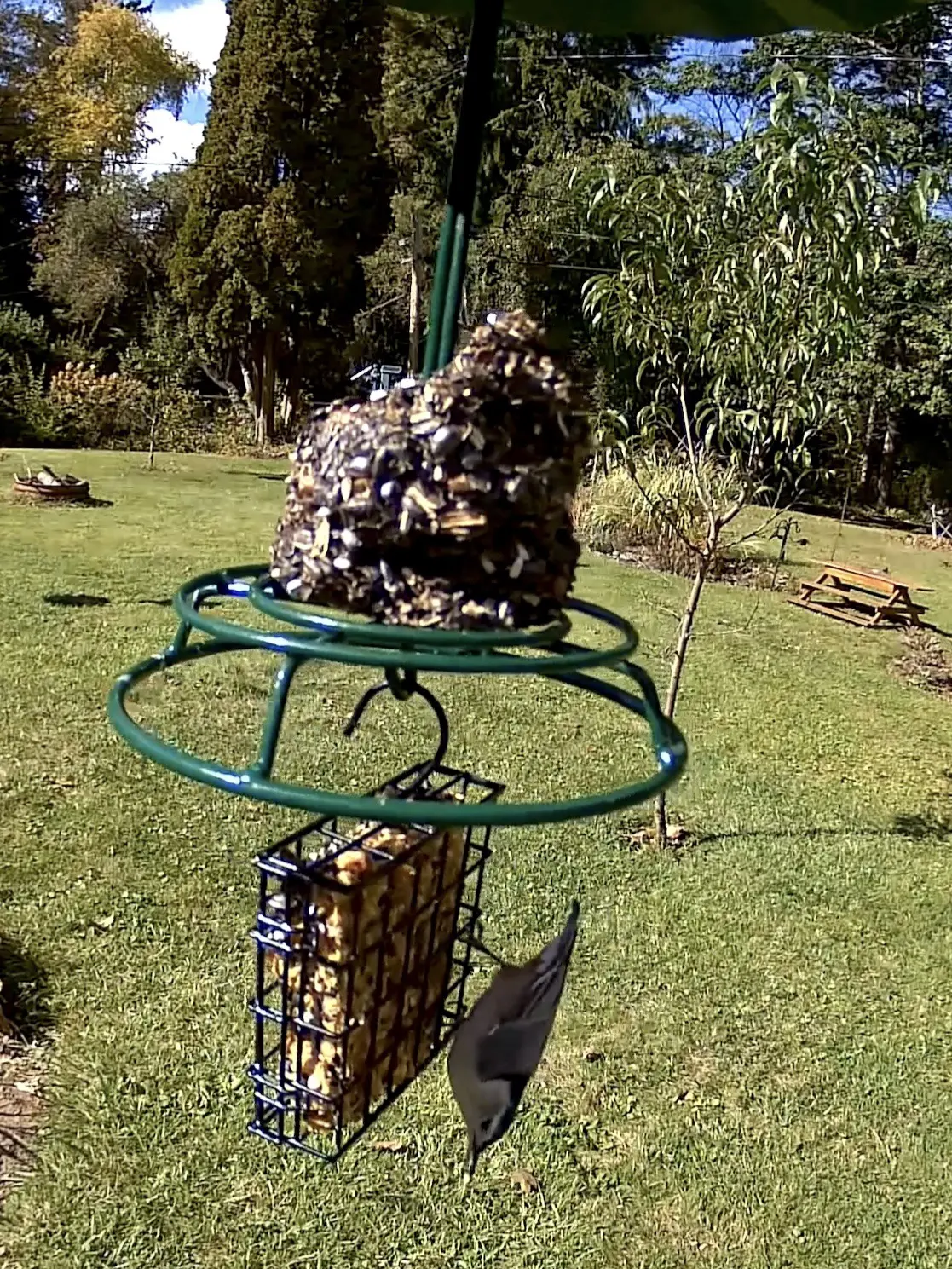
Peanut butter is a safe, high-energy snack for backyard birds on cooler days, as long as you pick the right type and serve it properly. Packed with fat and protein, it helps birds fuel up during spring and fall migration and get through winter. But not every type of peanut butter is a safe choice, and some ingredients can do real harm.
What type is best?
Before you put any out, read the label. Natural peanut butter is the best choice, ideally with peanuts as the only ingredient. Choose unsalted, since salt can harm small birds. Creamy and crunchy both work. Steer clear of:
- Sweetened or flavored varieties, such as honey roasted or chocolate swirl.
- Anything containing xylitol, a sweetener that can be fatal to birds. It sometimes shows up on labels as “birch sugar.”
Stick with a reputable brand, and don’t leave it sitting out for days, since it can go rancid.
Keep it thin and keep it cool
A little goes a long way. A thick glob can be hard for small birds to manage, so spread it thinly or mix it with cornmeal. Winter and early spring, when natural foods are scarce, are the best times to serve it. Spring and fall migrants welcome a high-energy boost, too, even though fall brings plenty of seeds and berries. In summer heat, peanut butter can turn runny, go rancid and smear on feathers. If you offer it then, put out a small amount in the shade and replace it daily.
Easy ways to serve it
You don’t need special equipment.
- Press a thin layer into the crevices of tree bark.
- Roll a pine cone in peanut butter, then in birdseed, and hang it from a branch.
- Fill holes drilled into a log.
- Spread a thin layer on a tray feeder.
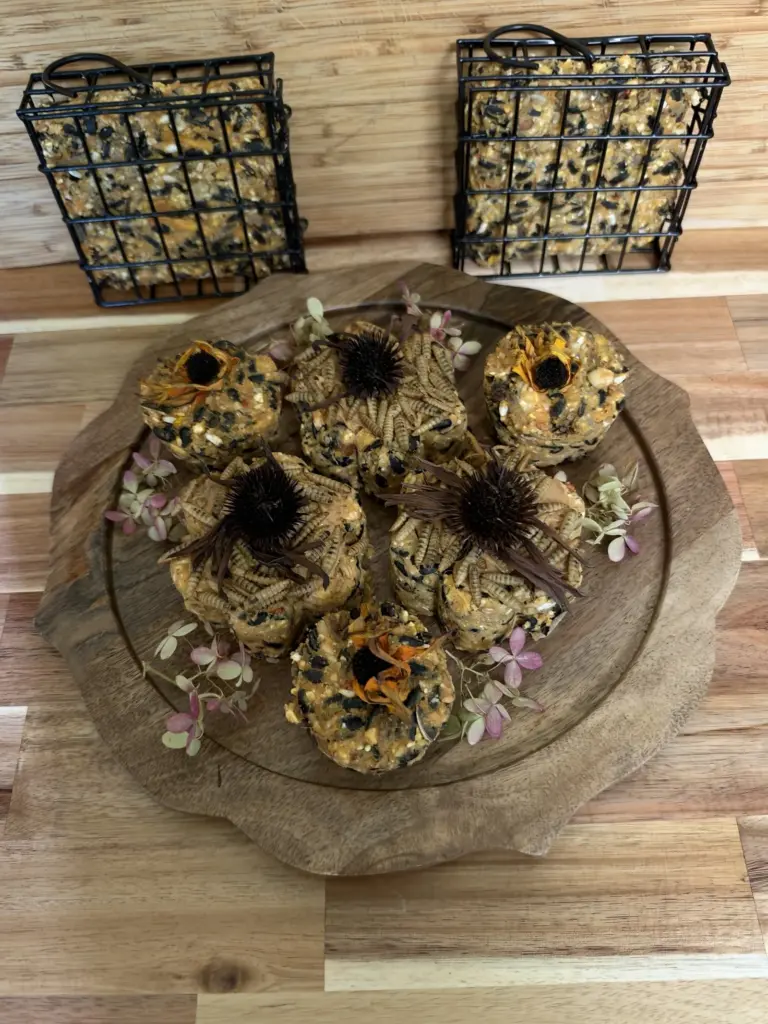
- Set a sweet potato beak treat (recipe below) on a tray feeder, or pack the mix into a cage-style suet feeder.
Sweet Potato Beak Treats
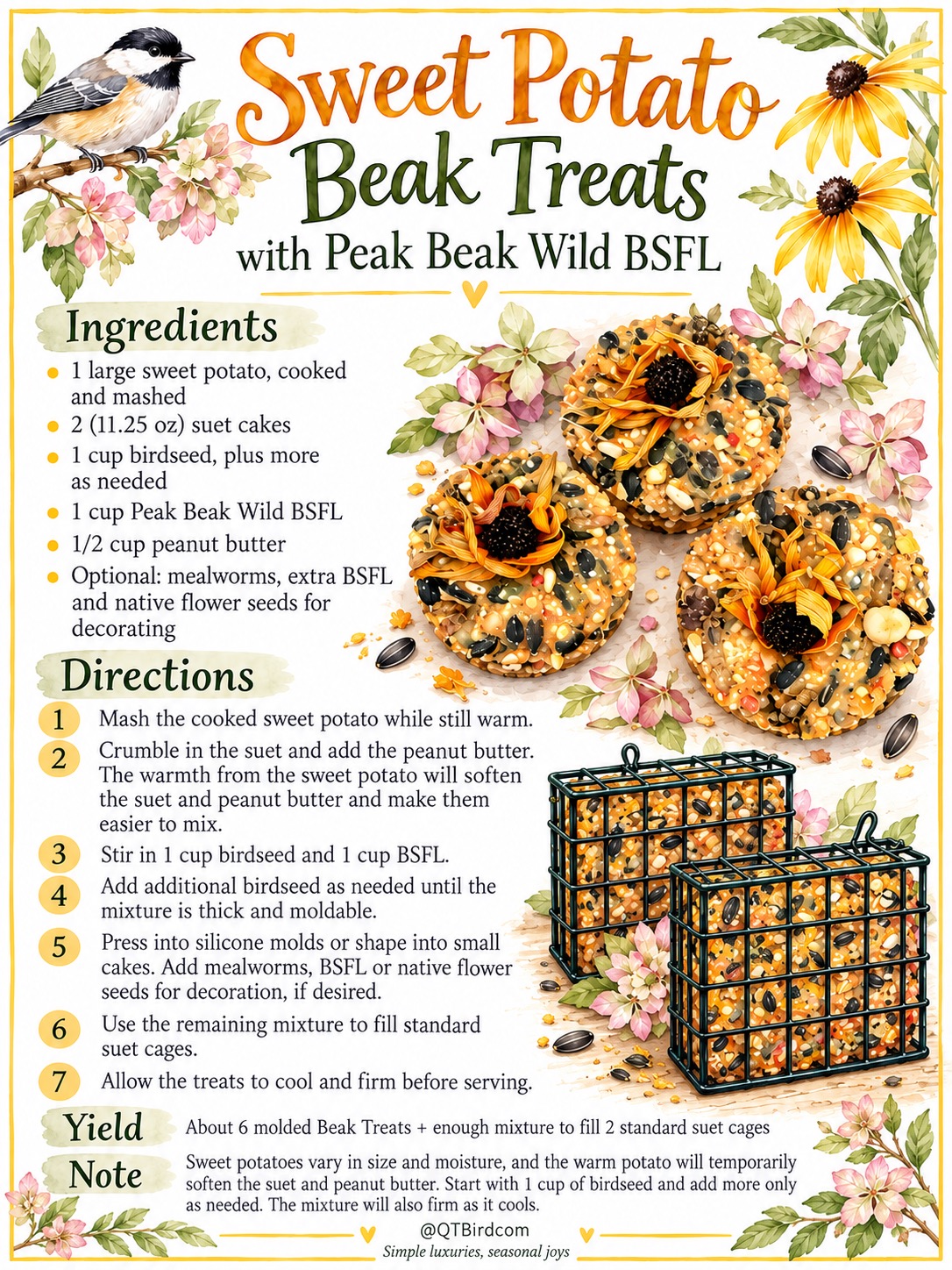
Ingredients
- 1 large sweet potato, cooked and mashed
- 2 (11.25 oz) suet cakes
- 1 cup birdseed, plus more as needed
- 1 cup BSFL (black soldier fly larvae)
- 1/2 cup peanut butter
- Optional: mealworms, extra BSFL and native flower seeds for decorating
Directions
- Mash the cooked sweet potato while still warm.
- Crumble in the suet and add the peanut butter. The warmth from the sweet potato will soften the suet and peanut butter and make them easier to mix.
- Stir in 1 cup birdseed and 1 cup BSFL.
- Add additional birdseed as needed until the mixture is thick and moldable.
- Press into silicone molds or shape into small cakes. Add mealworms, BSFL or native flower seeds for decoration, if desired.
- Use the remaining mixture to fill standard suet cages.
- Allow the treats to cool and firm before serving.
Yield: About 6 molded Beak Treats + enough mixture to fill 2 standard suet cages
Note: Sweet potatoes vary in size and moisture, and the warm potato will temporarily soften the suet and peanut butter. Start with 1 cup of birdseed and add more only as needed. The mixture will also firm as it cools.
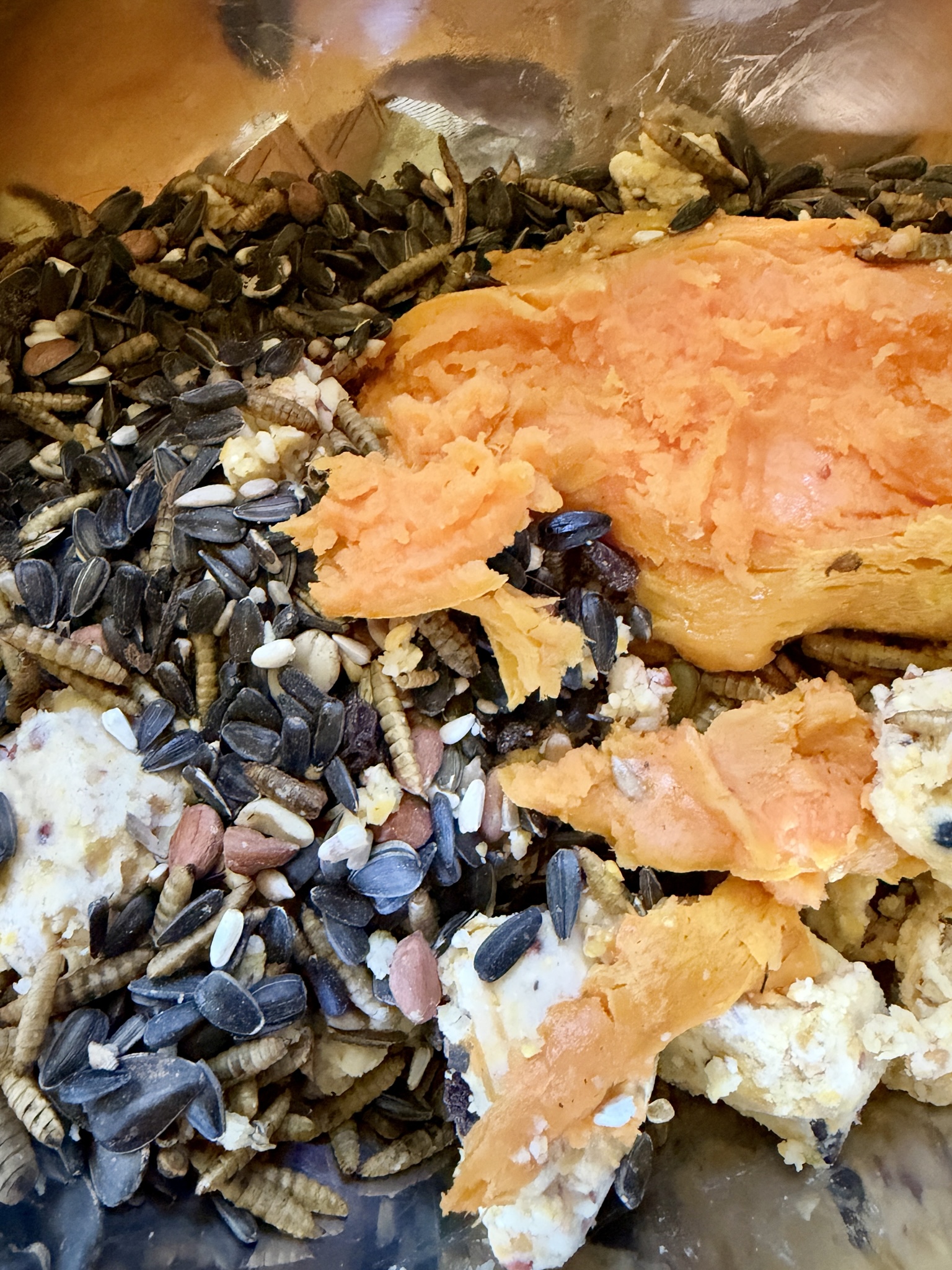
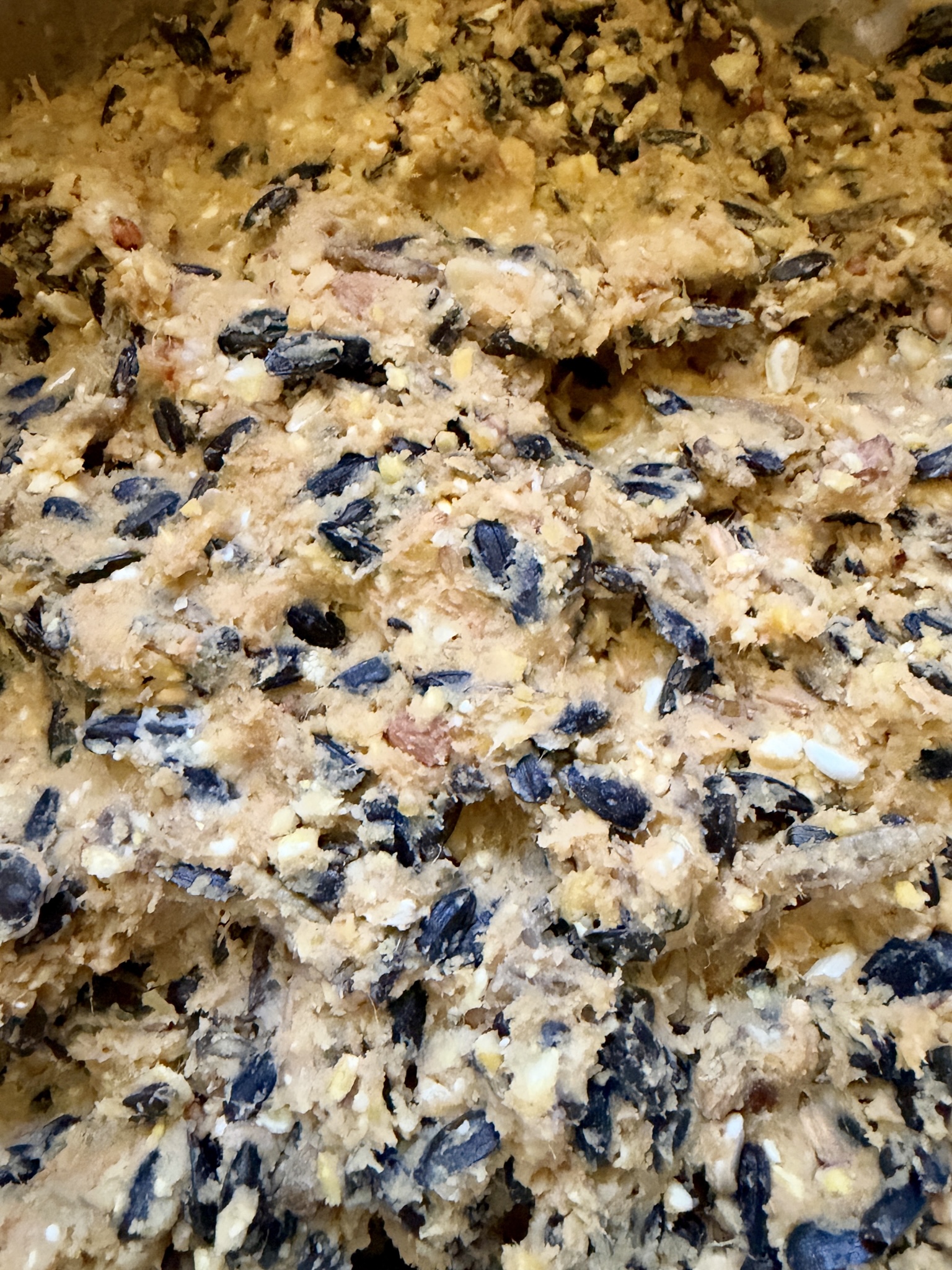
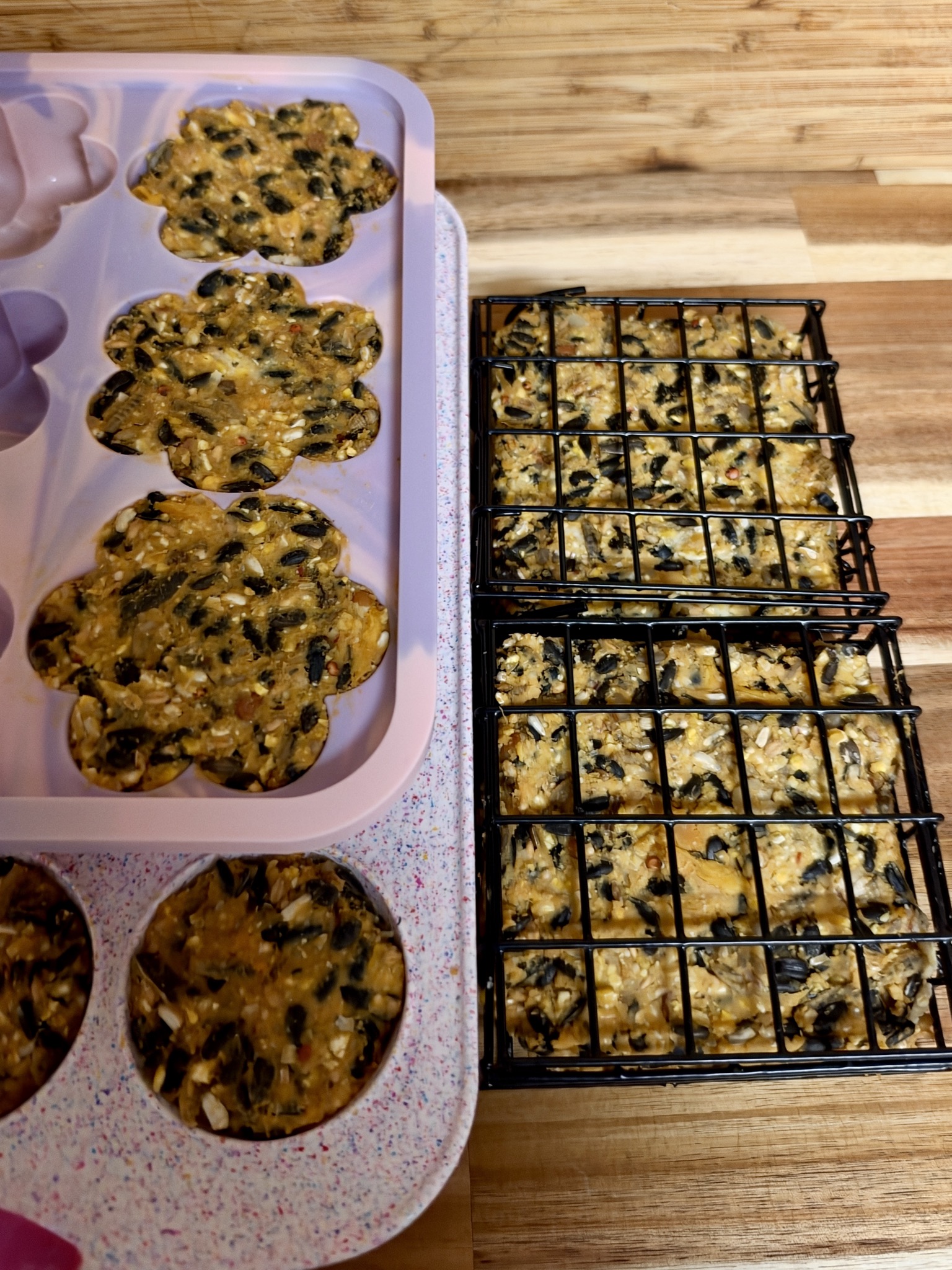
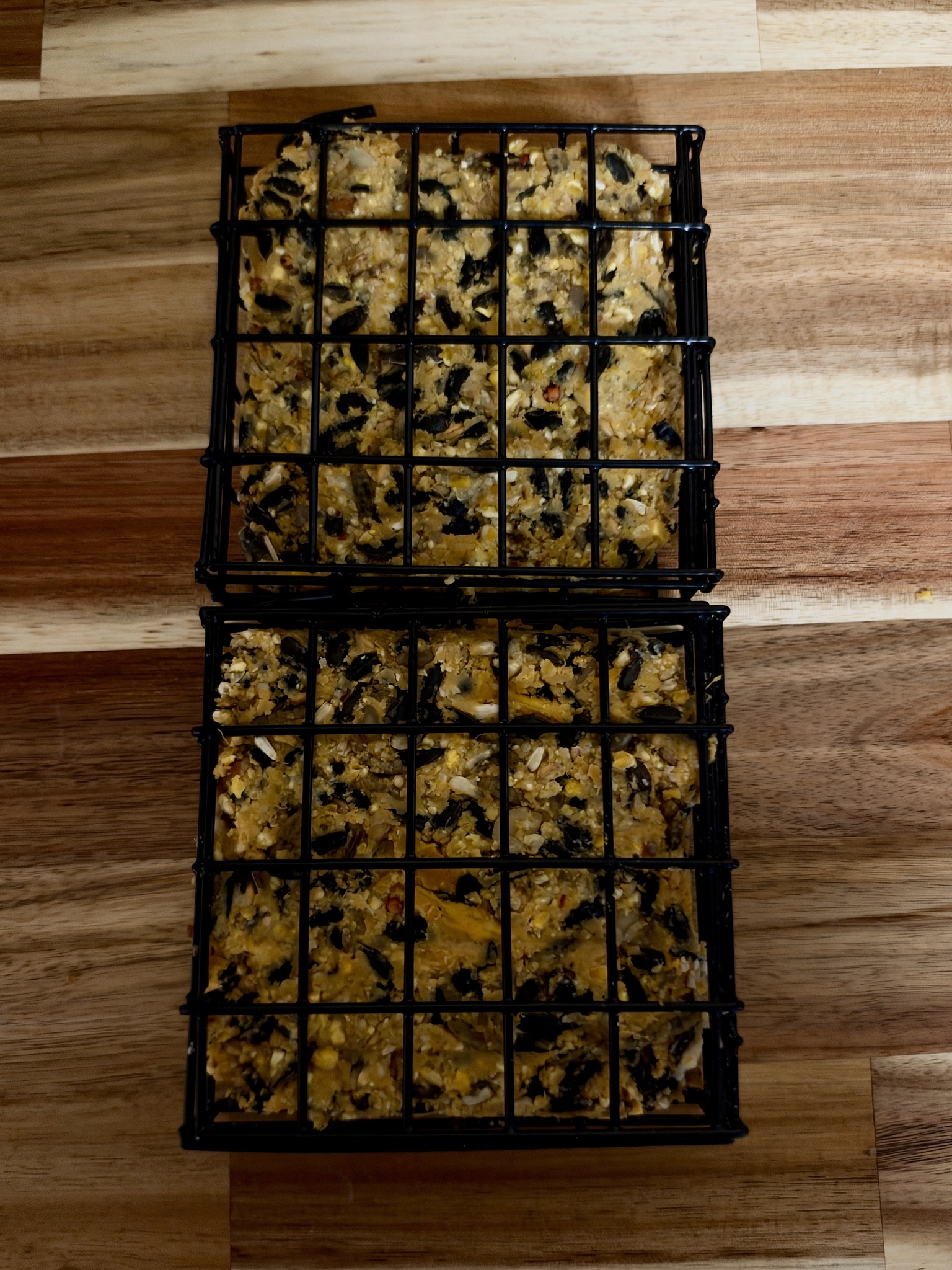
These treats are rich, so offer them only in cool or cold weather, when they stay firm. In my yard, I serve them during spring and fall migration as well, and the birds clear them out quickly. Use plain sweet potato, with no salt, butter or seasonings. Homemade suet can turn rancid when temperatures climb above 70°F. Skip these treats in late spring and summer, when natural foods are plentiful. Because the mix contains cooked sweet potato, keep extras in the freezer and toss anything that looks or smells spoiled.
Who flies in for some peanut butter goodness?
Peanut butter draws birds that cling to tree trunks and feeders. Expect visits from:
- Chickadees
- Tufted titmice
- Nuthatches
- Woodpeckers
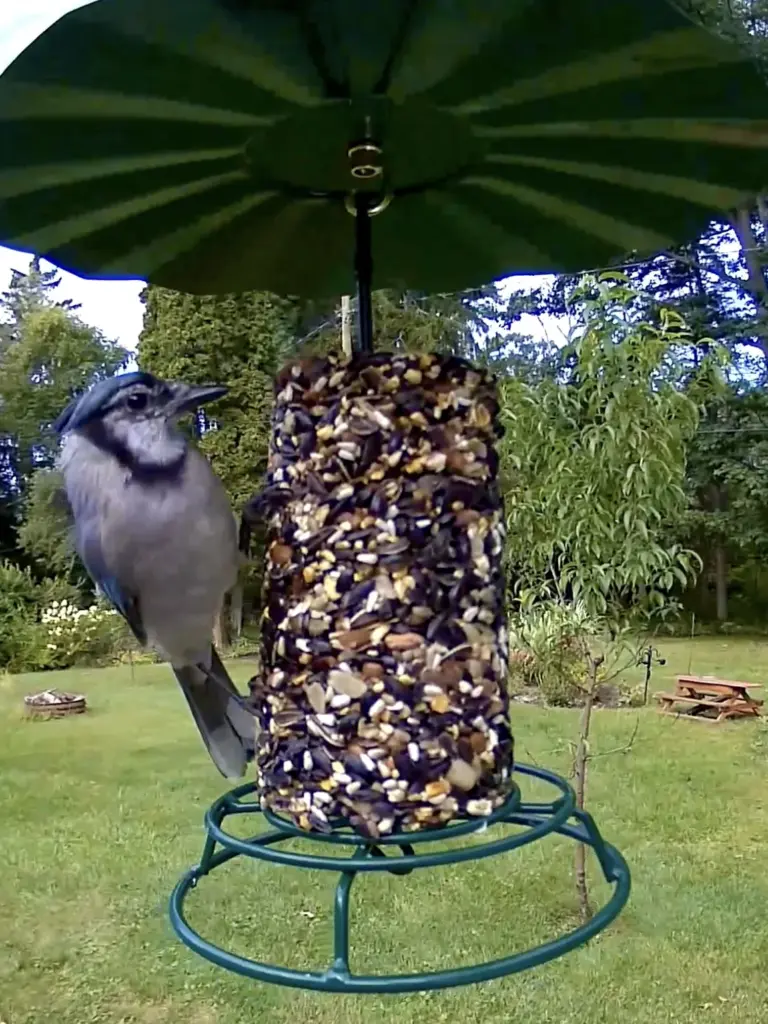
- Blue jays
Others may stop by, too:
- Bluebirds
- Wrens
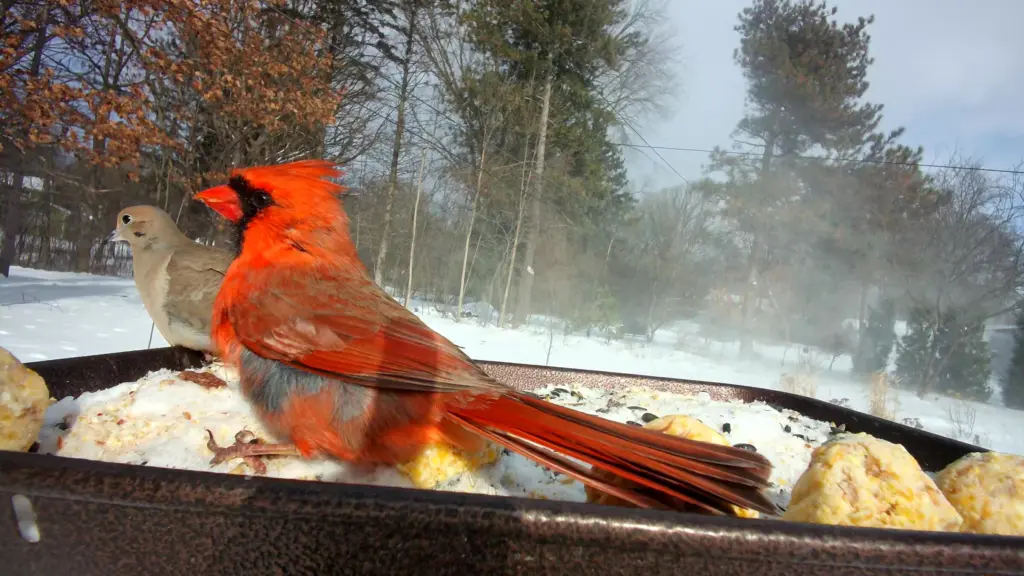
- Cardinals
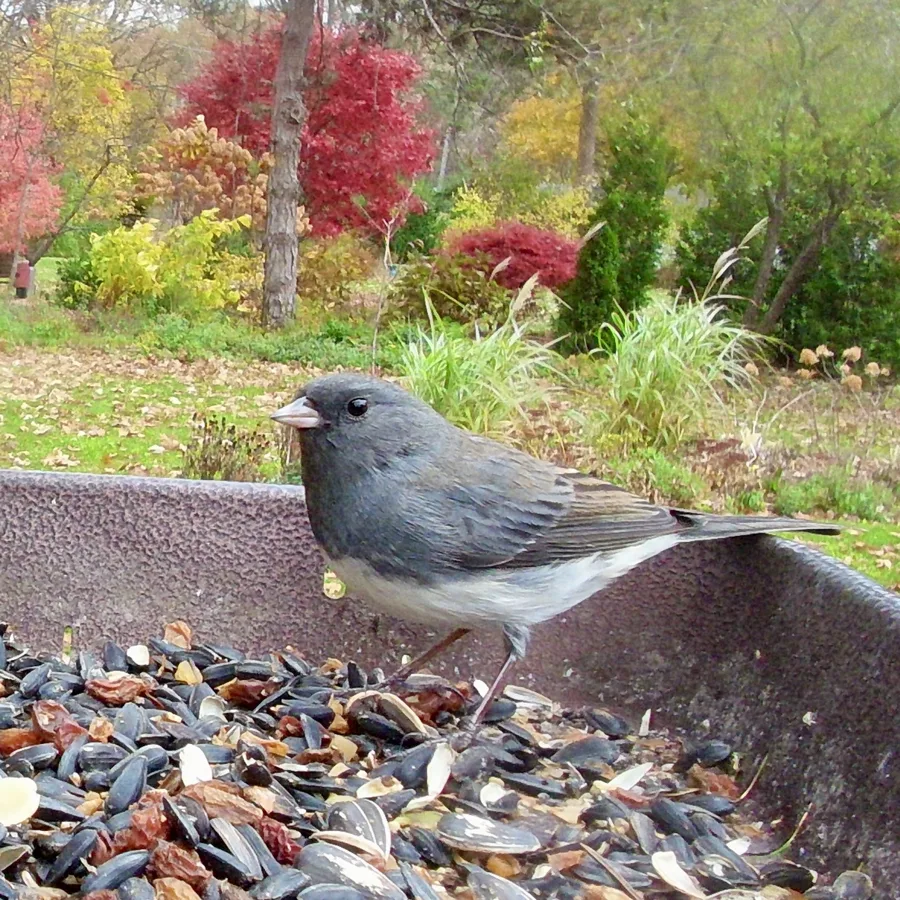
- Sparrows and juncos, which often gather beneath feeders to eat what falls
Starlings love the stuff as well. An upside-down suet feeder helps, because starlings struggle to eat while hanging upside down and woodpeckers and nuthatches don’t mind.
Start with a small amount and see who shows up. Birds find a good thing fast, and you’ll likely have regulars within days. Keep your binoculars handy.
From the QT Bird Community
Join the conversation
Comments on QT Bird articles live in our community. Joining is free: share your tips, ask questions and get replies.
Sign up to PostLog in