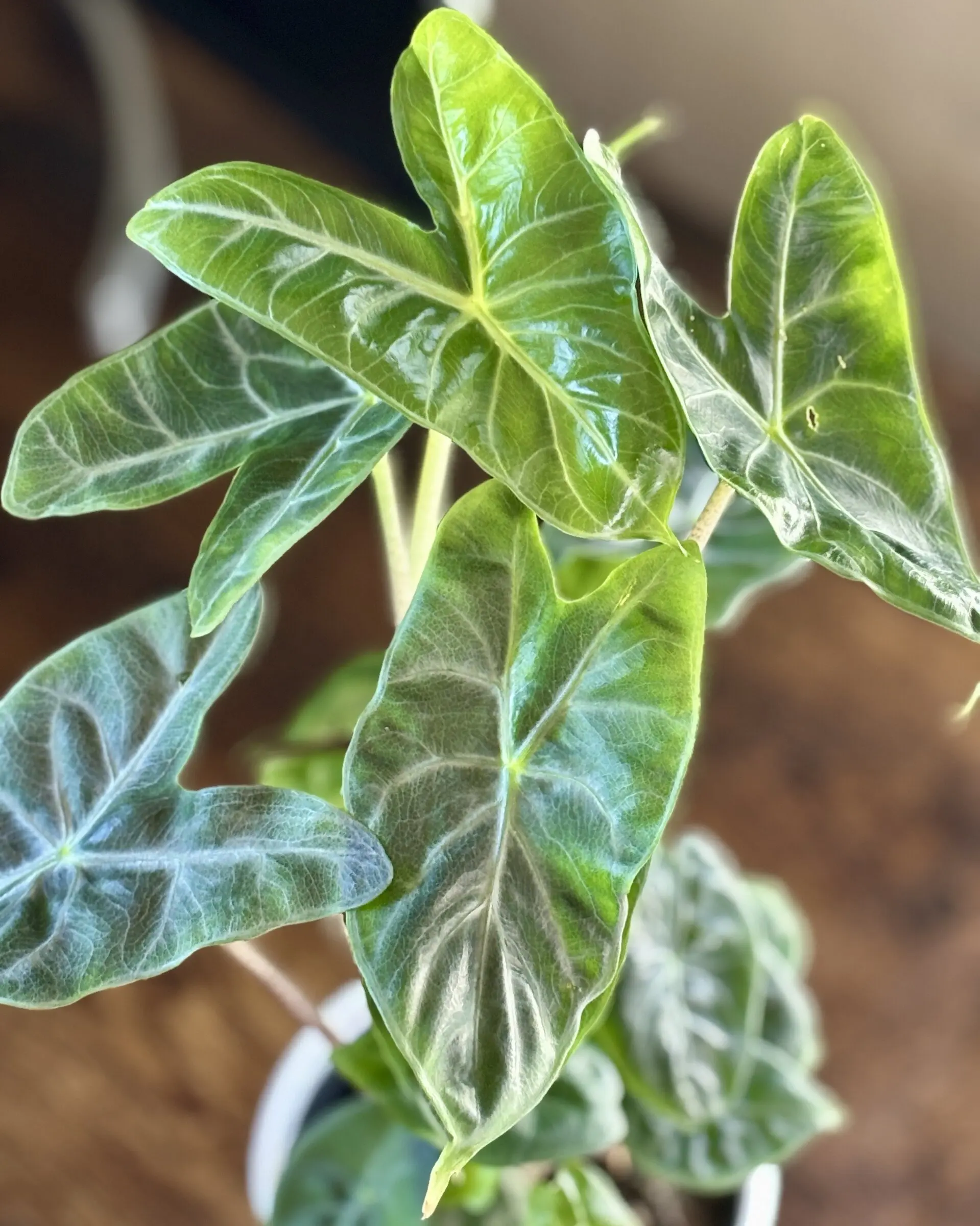
Alocasia Ivory Coast, also known as Ivory Coast Elephant Ear, is a hybrid alocasia with big, glossy, arrow-shaped leaves. They’re a rich green with a silvery sheen and light green veins, and they sit on tall, pale stems streaked with pink and brown. It grows in a dense, upright clump and can reach 3-4 feet tall indoors. Alocasias are in the Araceae family, the same family as philodendrons, pothos, and peace lilies, and they’re native to tropical Asia and Australia. Ivory Coast is hardy in zones 9-11, so for most of us it’s a houseplant, or a summer patio plant that comes inside before the first frost.
Alocasias have a reputation for being dramatic, but Ivory Coast is one of the easier ones. It grows quickly, putting out a new leaf every few weeks in spring and summer. Don’t be surprised if an older leaf yellows and drops when a new one comes in. That’s normal for alocasias.
It wants bright, indirect light. An east-facing window, or a spot a few feet back from a south or west window, is ideal. It can handle some gentle morning sun, but hot afternoon sun will scorch the leaves. In low light, the stems stretch and lean, and the plant grows slowly. Turn it a quarter turn every week or so to keep it growing straight.
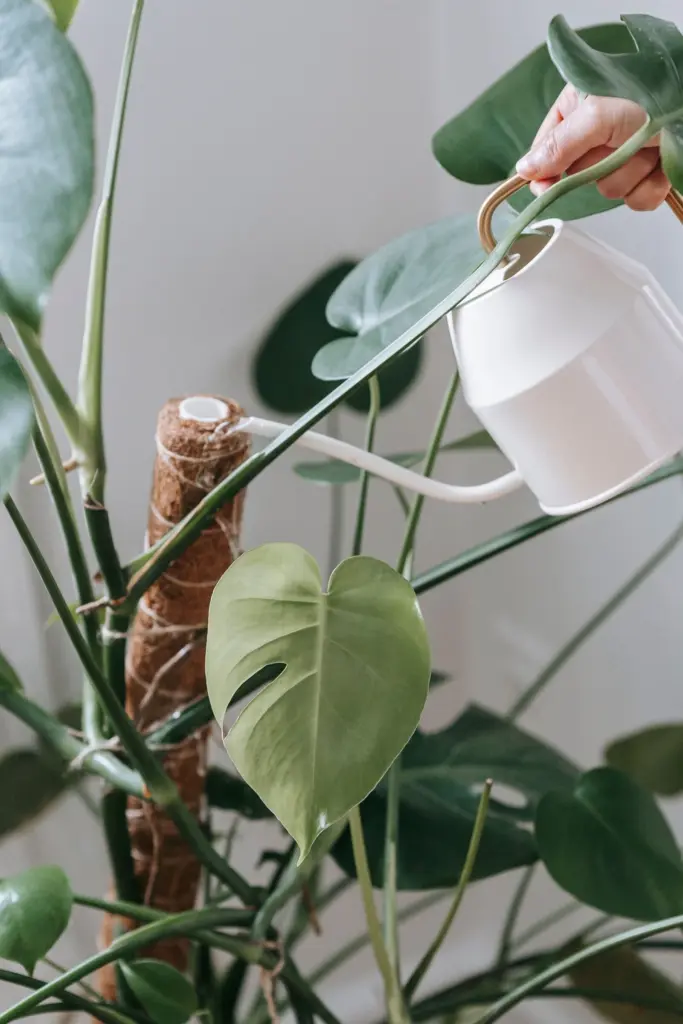
Keep the soil lightly moist, but never soggy. Water when the top inch or two of soil feels dry, then water thoroughly and let it drain. Empty the saucer so it isn’t sitting in water. Alocasias grow from thick, underground stems called corms, and those corms rot easily in wet soil. In winter, when growth slows, water less often.
It’s happiest at 65°F to 85°F and doesn’t like the cold. Keep it away from cold drafts, cold windows, and heating and air conditioning vents. Below 60°F, it slows down, and a cold snap can send it into dormancy. It likes humidity, ideally 50% or higher. A humidifier, a pebble tray, or grouping it with other plants helps, especially in winter when the heat is running.
Use a chunky, well-draining mix, like potting soil with orchid bark and perlite mixed in, in a pot with drainage holes. Feed a balanced water-soluble fertilizer monthly in spring and summer while it’s actively growing, and skip it in fall and winter.
Here’s something that surprises a lot of alocasia owners: in fall or winter, it may drop most or all of its leaves and seem to die. Usually it’s just going dormant. Cut back on water, keep it warm, and leave the corm in the pot. New leaves usually return in spring once the days get longer and warmer. Before you toss a bare pot, check the corm. If it’s firm, the plant is alive.
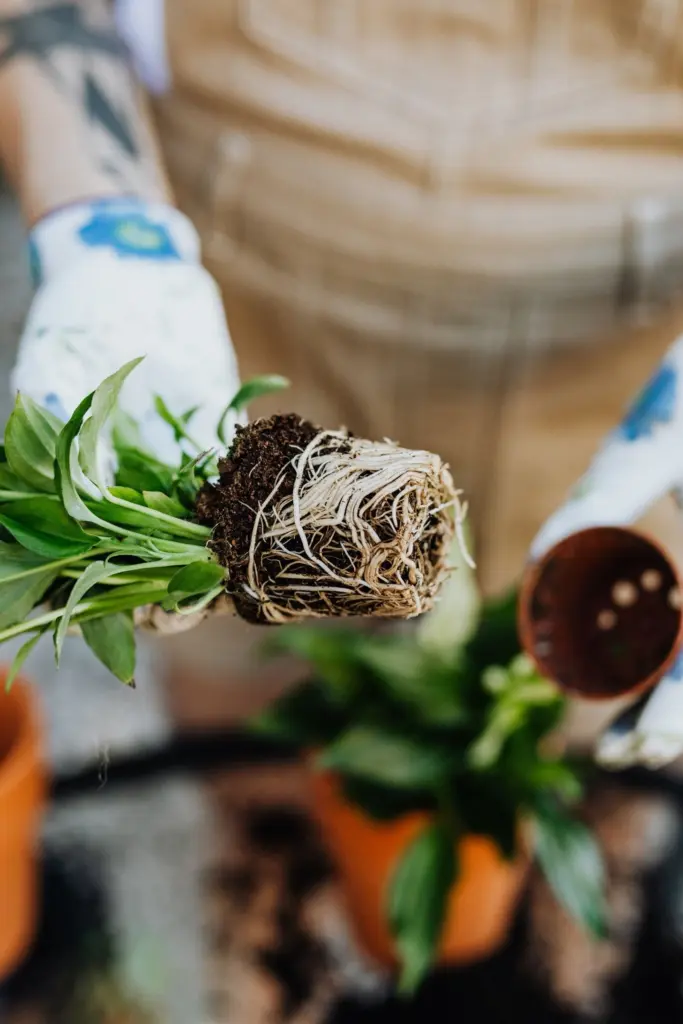
Propagate by division or by corms. When you repot in spring, look for offsets, the baby plants growing around the base, and gently separate them with their roots. You may also find small, round corms in the soil. Set them in moist sphagnum moss or a damp mix in a warm, bright spot, and they’ll sprout new plants. Repot every year or two, going up just one pot size.
The leaves are big and collect dust, so wipe them gently with a damp cloth every few weeks. It keeps them shiny and helps you check for pests.
Common problems:
- Yellow leaves, especially the oldest one, are normal when a new leaf comes in. Several yellow leaves at once usually mean too much water.
- Drooping stems can mean it’s thirsty, it’s waterlogged, or it needs more light. Check the soil first.
- Brown, crispy edges usually mean dry air.
- Dropping all its leaves in fall or winter is usually dormancy, not death.
- Spider mites are the most common pest. They love the dry air of our homes. Look for fine webbing and speckling under the leaves. Wipe the leaves, raise the humidity, and treat with neem oil or insecticidal soap.
Alocasias are toxic to cats, dogs, and people if chewed. They contain calcium oxalate crystals, which irritate the mouth and throat and can cause drooling and vomiting. The sap can also irritate skin, so wear gloves when dividing or trimming.
Bold, glossy, and quicker growing than most alocasias. I’d put it in the moderate care category. Give it bright light, steady warmth, and don’t panic if it takes a winter nap.
| Common Name | Alocasia Ivory Coast, Ivory Coast Elephant Ear |
|---|---|
| Botanical Name | Alocasia ‘Ivory Coast’ (Alocasia ‘ALO1’) |
| Family | Araceae |
| Mature Size | 3-4 ft. tall, 2-3 ft. wide |
| Sun | Bright, Indirect |
| Soil | Moist, chunky, well-drained |
| Native Area | Hybrid; alocasias are native to tropical Asia and Australia |
| Toxicity | Toxic to humans and pets |