
Are wild violets weeds? Or much wanted and loved wildflowers? Wild violets are plentiful in my yard. I always considered them weeds. But lately? I think they’re pretty and I let them grow.
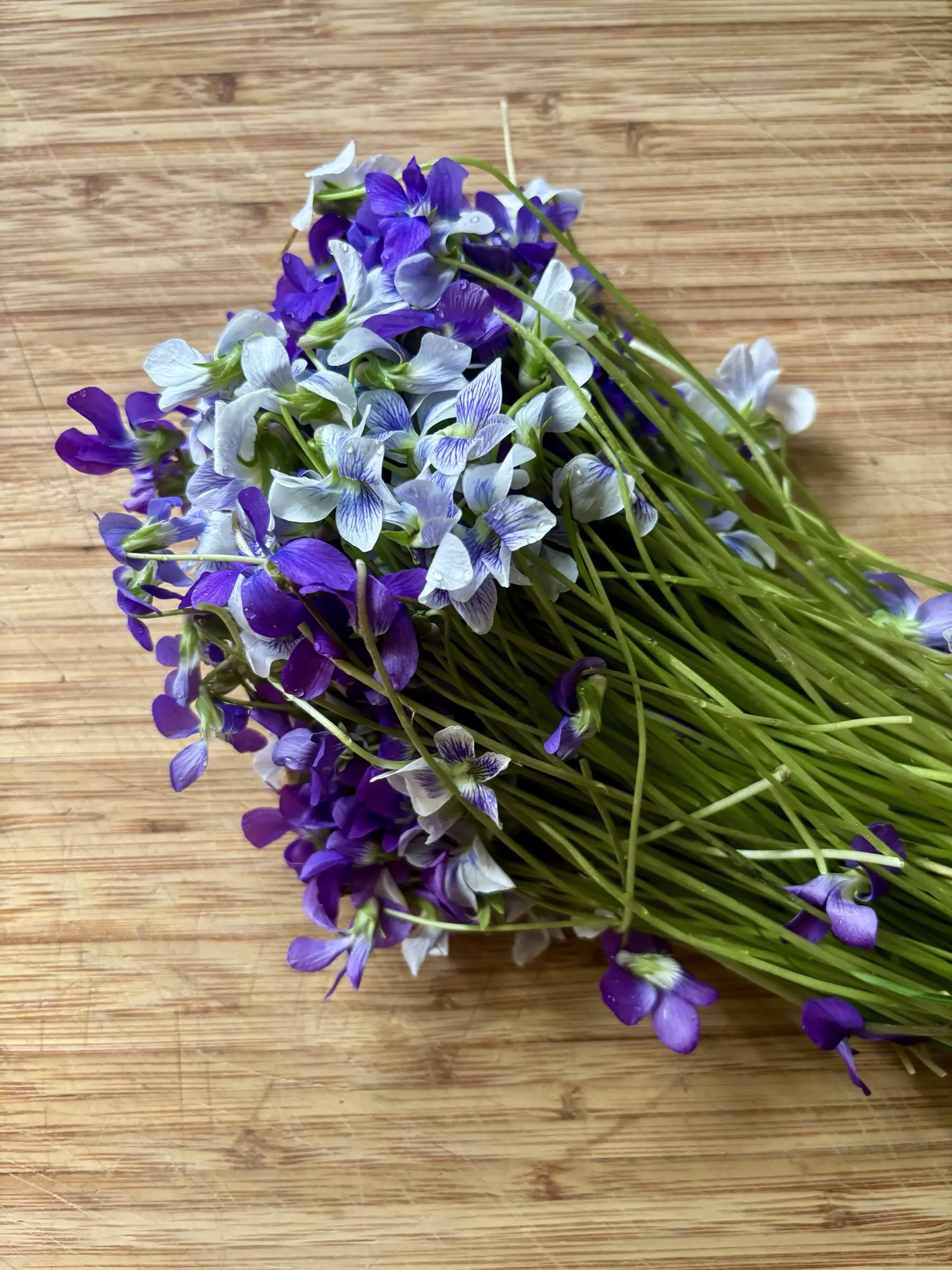
In my yard, they’re mostly in bordering areas. They’re native, pollinator-friendly, and much like the clover in my yard, the bunnies love them. Some birds will eat violet seeds. The flowers also host caterpillars and small insects that many birds rely on to feed babies. They’re edible for humans too.
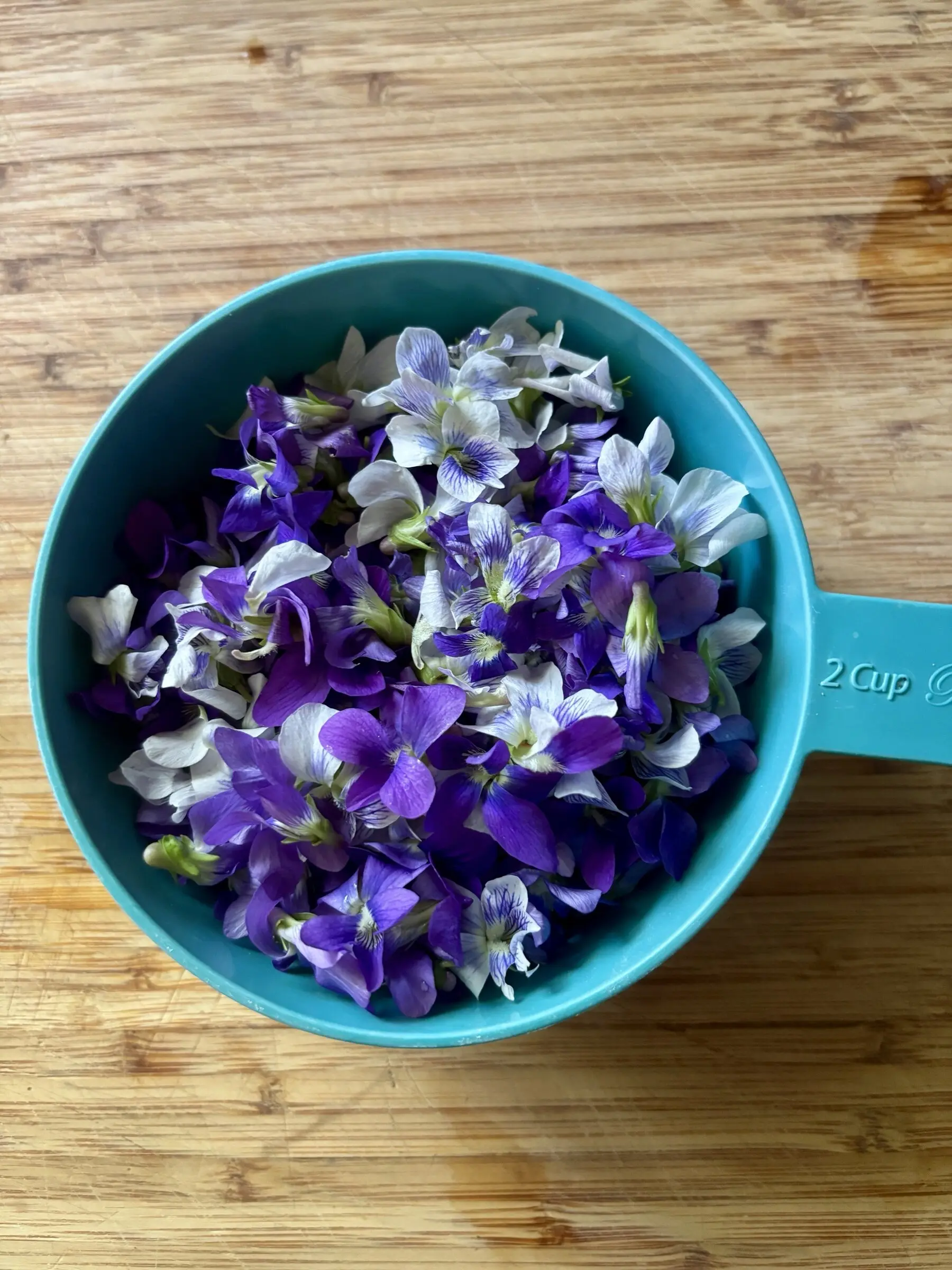
I decided to make my backyard birds some wild violet jelly. Basically I made this for home use, but decided to share a little! The violets bloom just as the orioles return in spring, so I set some out for them.
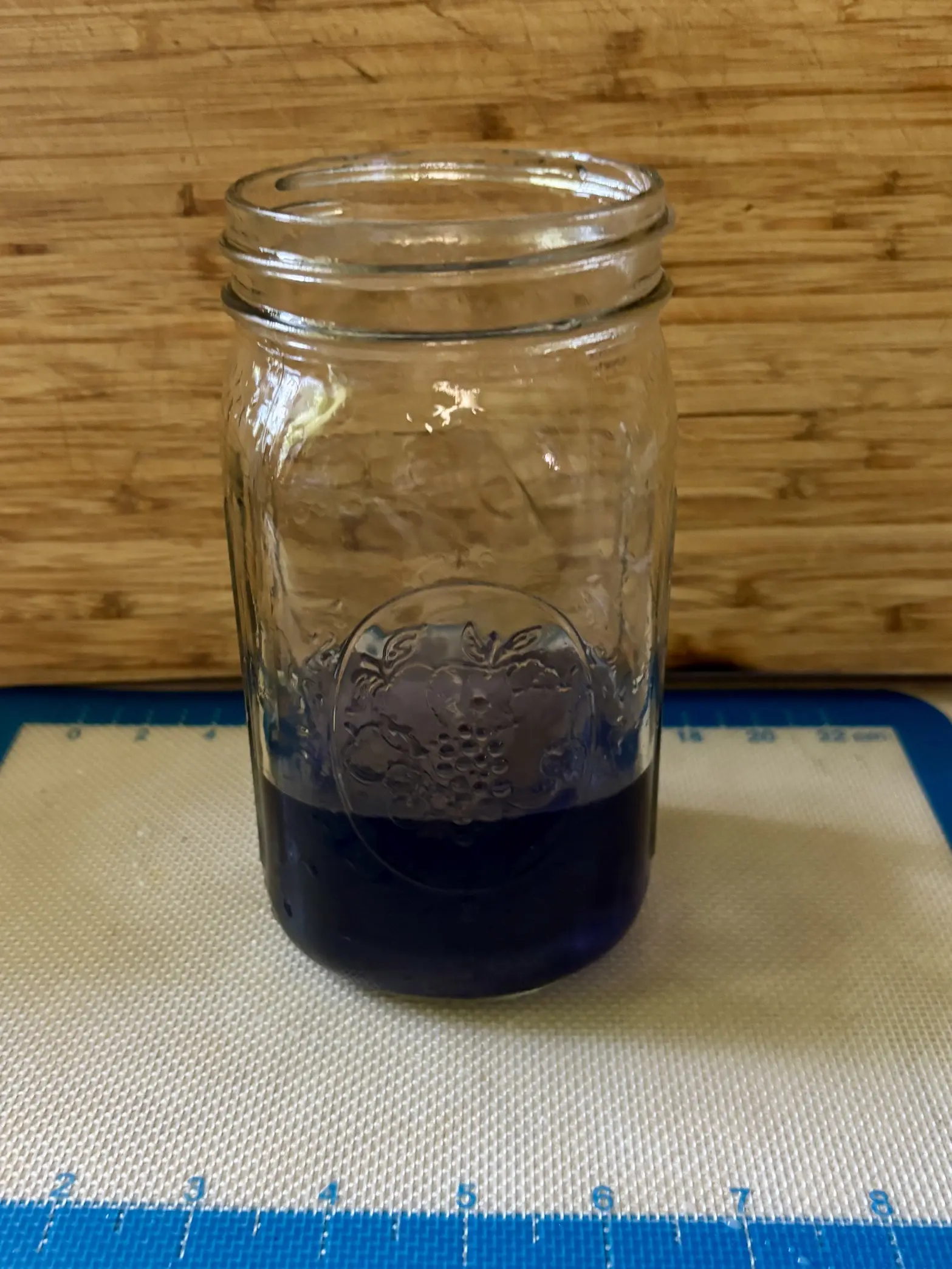
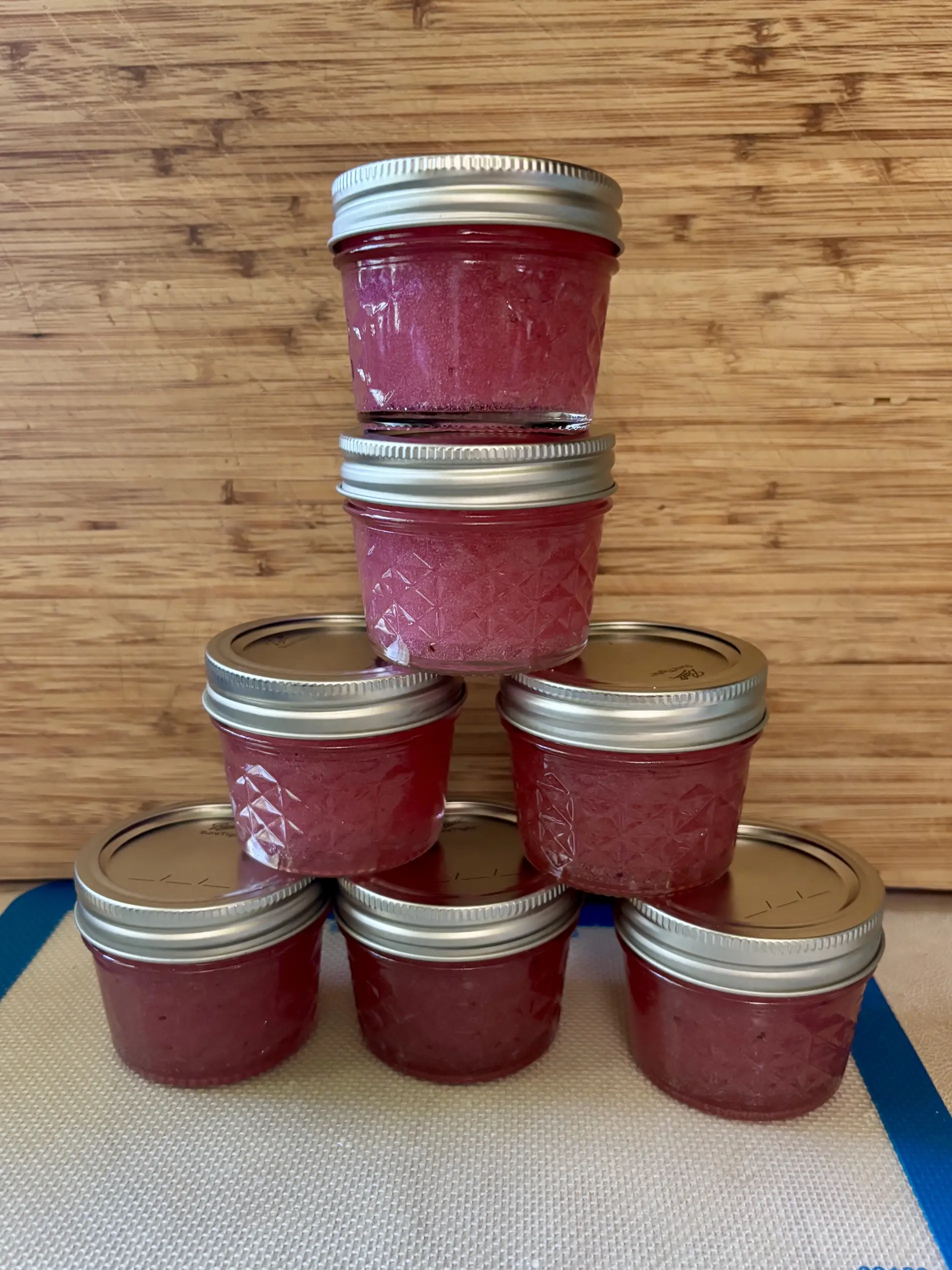
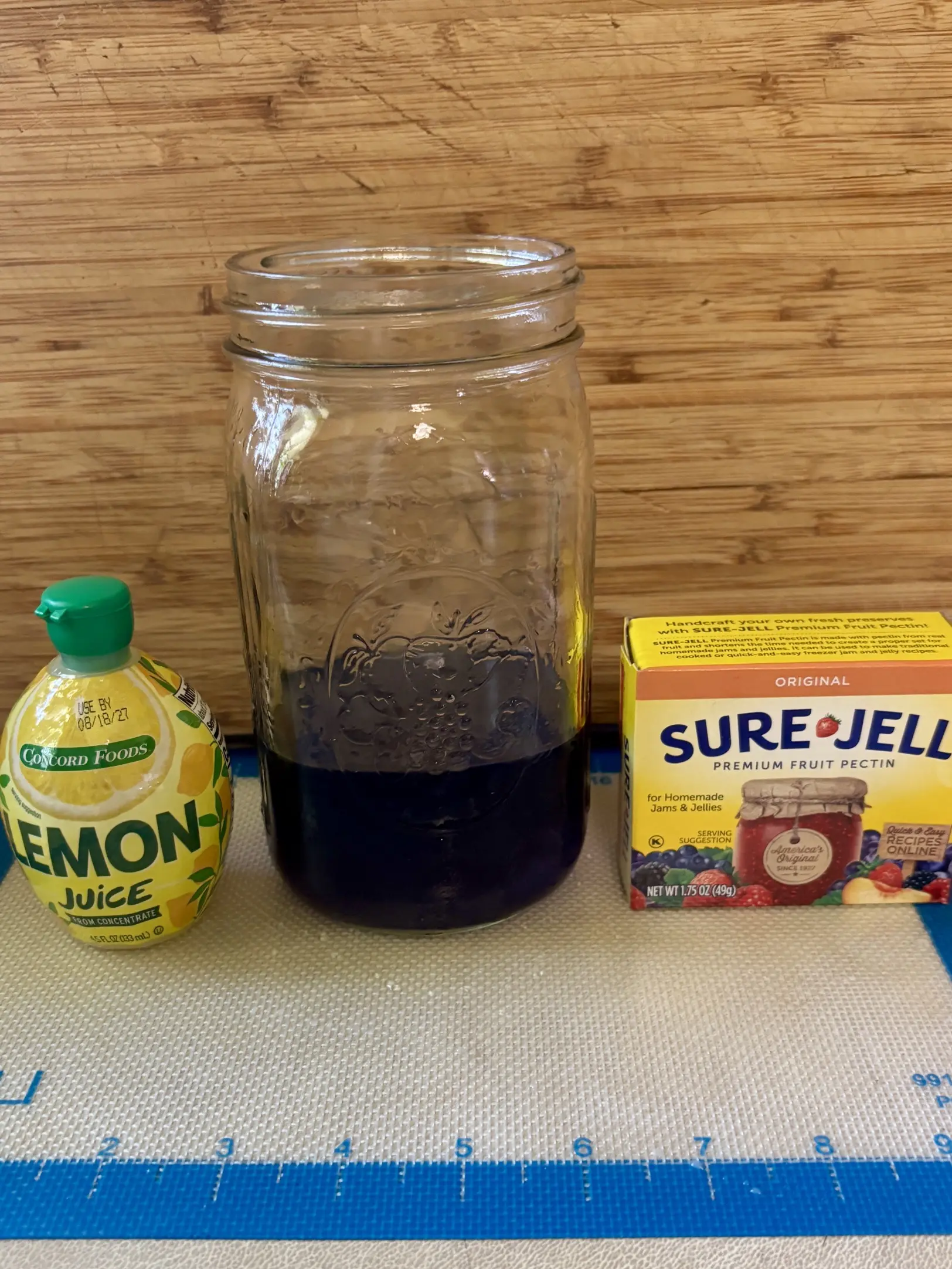
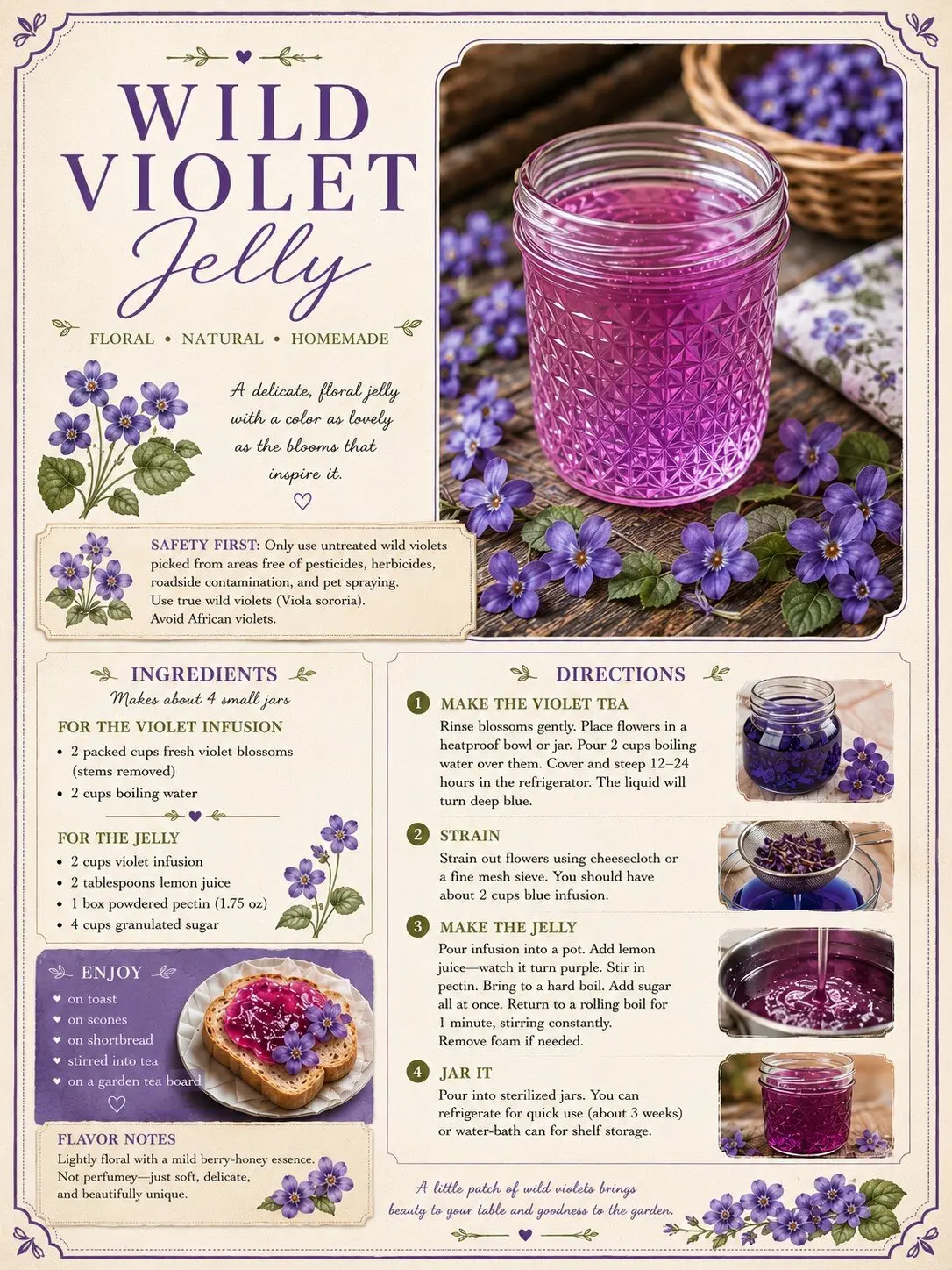
It is quick and easy to make! The acid from the lemon juice makes the liquid change colors from blue to pink. Your shade may vary slightly.
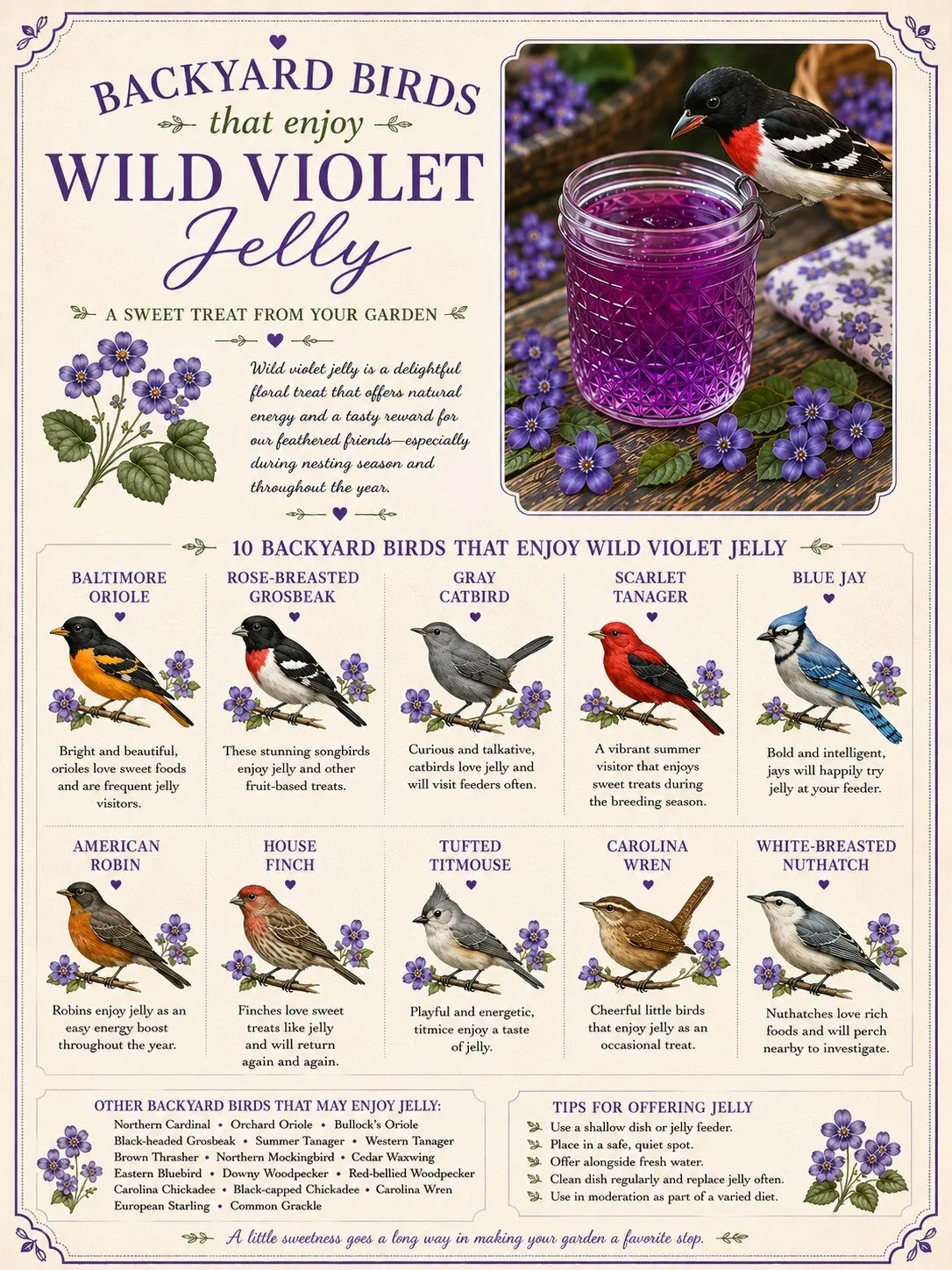
Orioles, catbirds, and sometimes warblers come to jelly, according to the Cornell Lab of Ornithology. It’s very sticky, though, and small birds can get stuck in it, so put out only a little at a time. It’s also much sweeter than their natural foods, so offer it sparingly.
Tiny servings: Just a spoonful at a time, in a shallow, washable jelly feeder.
Nothing artificial: No artificial sweeteners, including sugar-free jelly, and no artificial coloring or unnecessary additives.
Fresh only: Remove leftovers before they spoil or attract insects.
Now and then: Offer it occasionally, not as a daily food source.
Safety first
Use only untreated wild violets (Viola sororia) picked away from roads and from anywhere sprayed with pesticides or herbicides. African violets are a different plant. Don’t use them.
Wild Violet Jelly
Ingredients
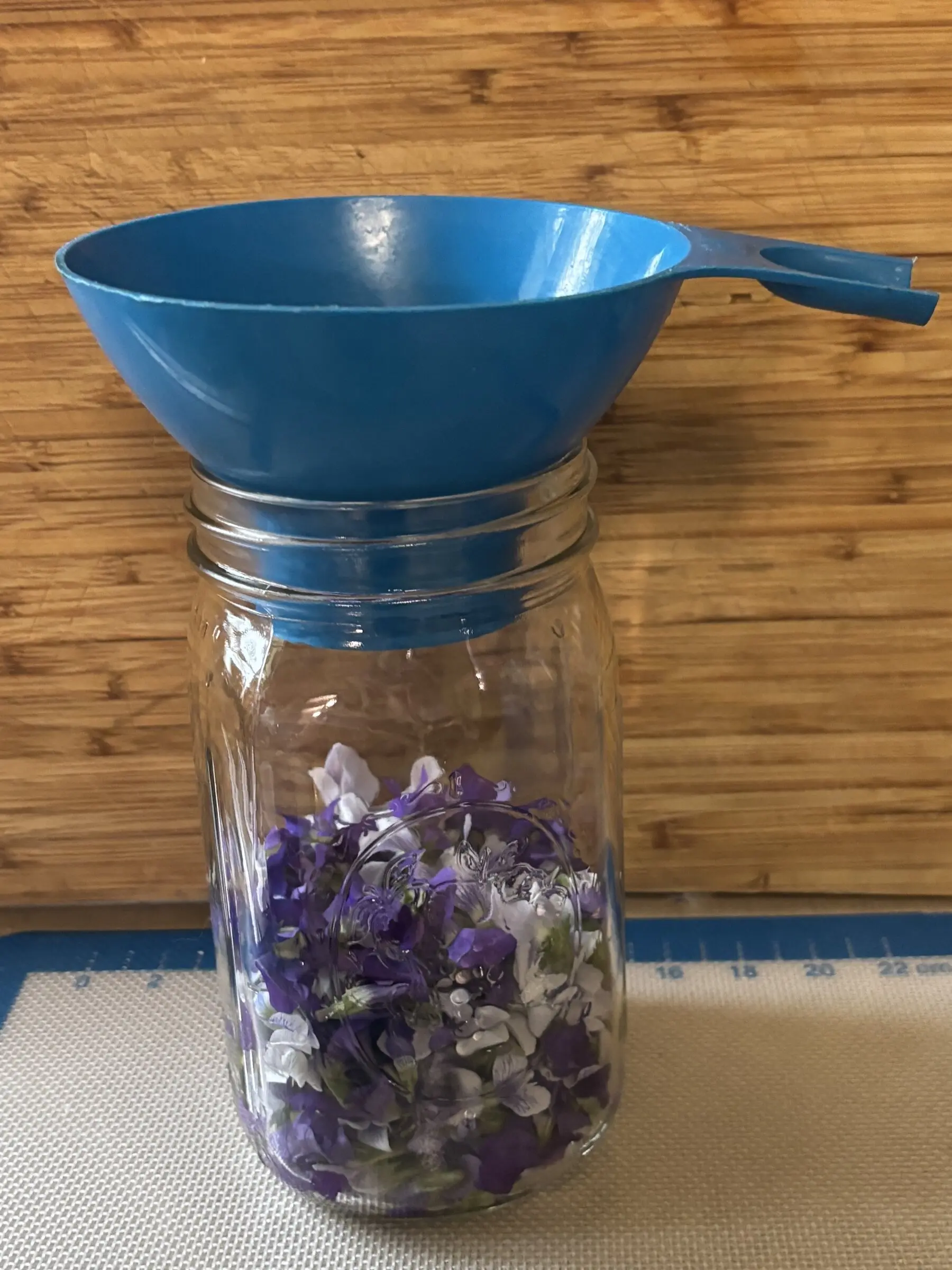
- 2 packed cups fresh violet blossoms stems removed
- 2 cups boiling water
- 2 cups violet infusion
- 2 tablespoons lemon juice
- 1 box (1.75 ounces) powdered pectin
- 4 cups granulated sugar
Directions
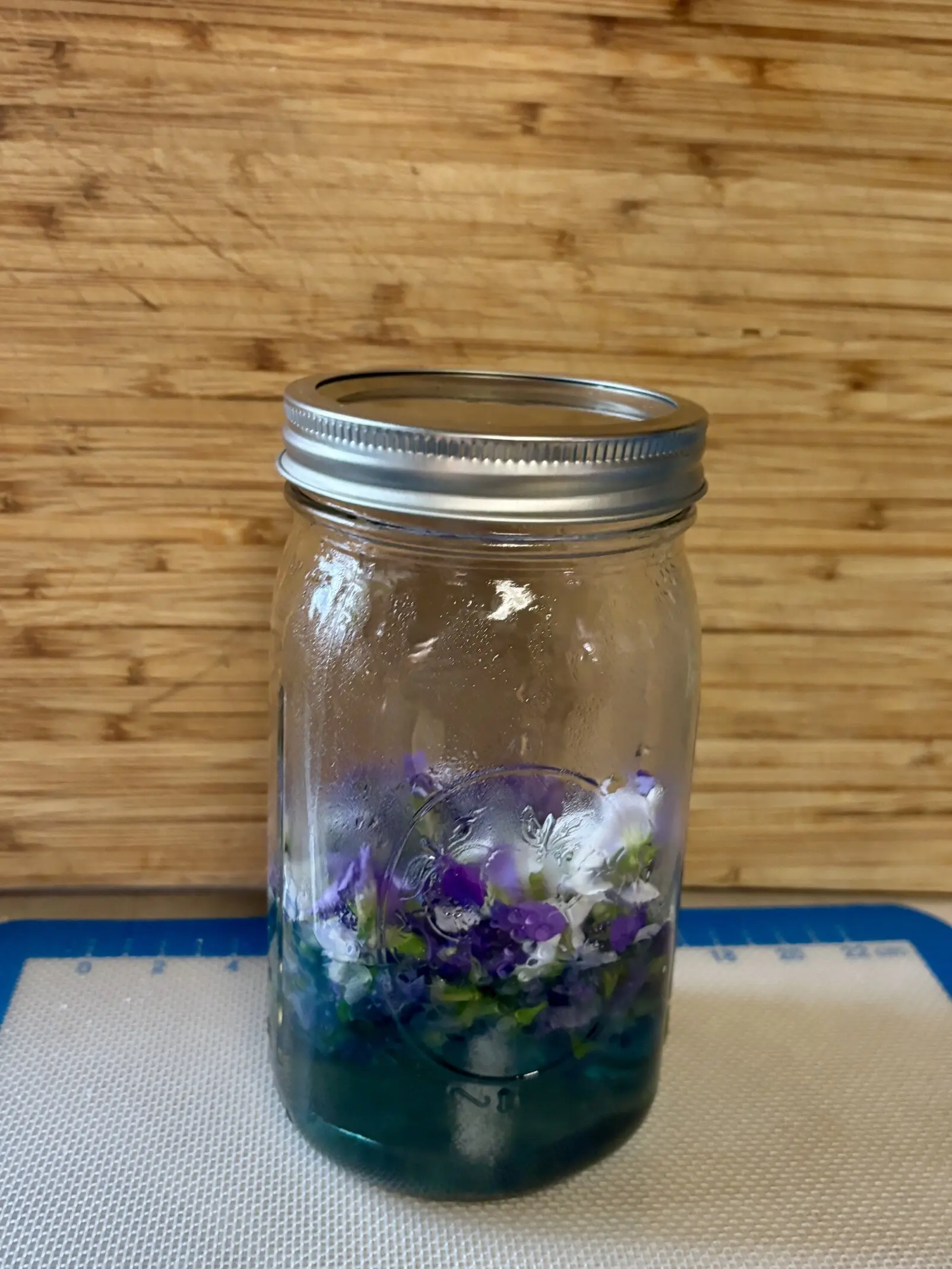
- Rinse the blossoms gently and put them in a heatproof bowl or jar. Pour the boiling water over them, cover, and steep in the refrigerator for 12 to 24 hours. The liquid turns deep blue.
- Strain out the flowers through cheesecloth or a fine-mesh sieve. You should have about 2 cups of blue infusion.
- Pour the infusion into a pot and add the lemon juice. Watch it turn purple. Stir in the pectin and bring to a hard boil. Add the sugar all at once, return to a rolling boil, and boil for 1 minute, stirring constantly. Skim off any foam.
- Ladle the hot jelly into clean jars and cap them.
Notes
From the QT Bird Community
Join the conversation
Comments on QT Bird articles live in our community. Joining is free: share your tips, ask questions and get replies.
Sign up to PostLog in