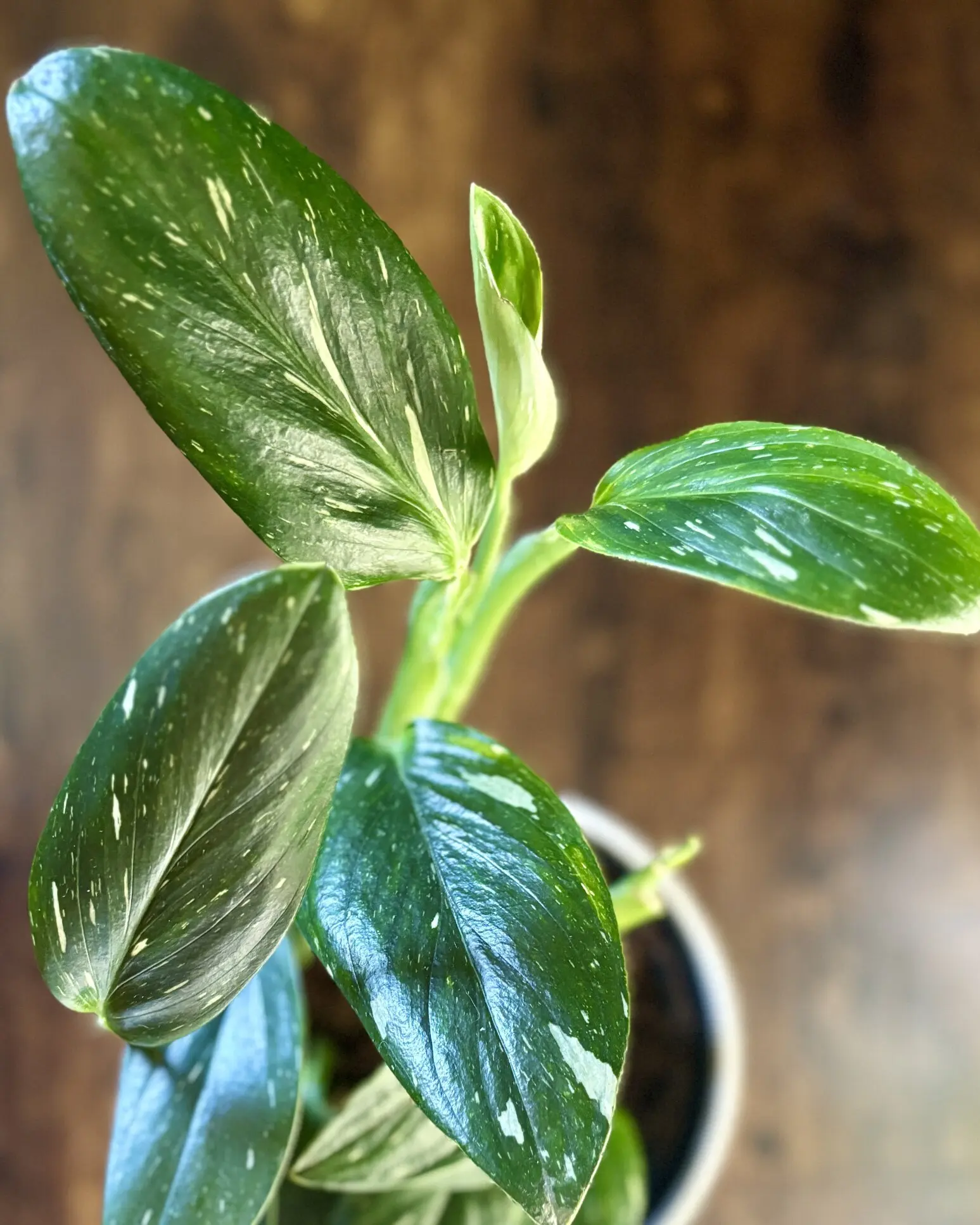
Monstera Standleyana Albo Variegata is in the Araceae family, the same family as Monstera deliciosa, pothos, and philodendrons. You’ll sometimes see it sold as Philodendron ‘Cobra,’ but it’s a true Monstera. Its long, glossy, dark green leaves are flecked and streaked with cream-white variegation, and every leaf is different. Some are lightly dusted with speckles, while others have bold splashes. Unlike its famous cousin, this one doesn’t develop holes or splits in its leaves. It’s a tropical vining plant native to Central America, hardy only in zones 10-12, so for most of us it’s an indoor plant.
Mine is just a little one. I’m enjoying watching the leaves unfurl. It’s starting to show more variegation. I love the speckles.
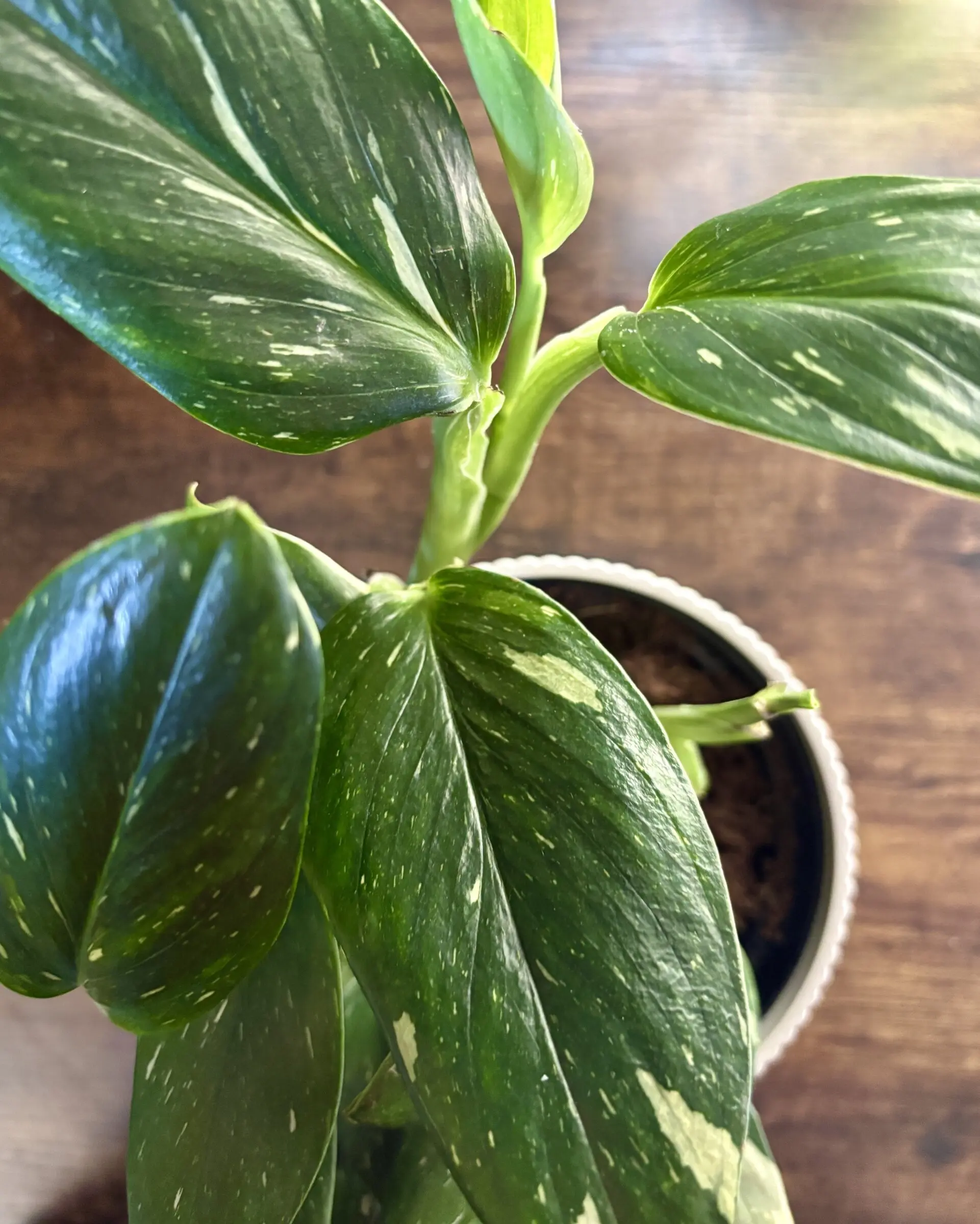
It grows best in a warm place with high humidity and bright, indirect light. However, it can tolerate low light conditions. No direct sunlight. The white parts of the leaves have no chlorophyll, so they scorch easily and can turn brown or crispy in direct sun. Good bright, indirect light also helps the plant hold on to its variegation. If new leaves come in mostly green, try moving it somewhere brighter.
It’s a natural climber, so use a moss pole to encourage upward growth. It can also grow in a hanging planter, where the vines will trail over the sides. It grows 2-5 feet. Because the variegated areas can’t make food for the plant, it tends to grow a little slower than an all-green Monstera.
Its temperature range is 50°F to 95°F, but it’s happiest in the 65 to 80 range. Keep it away from vents and drafts.
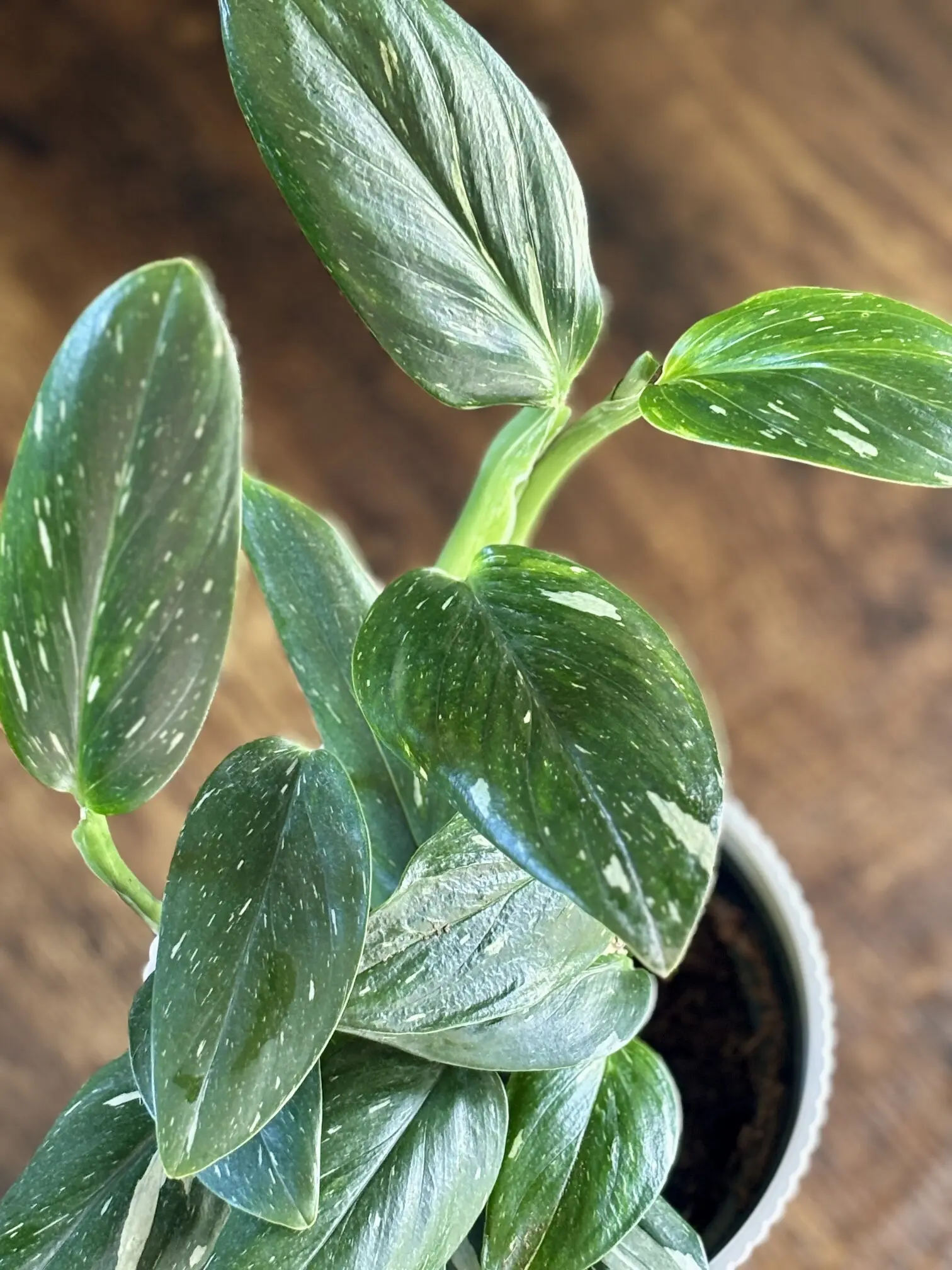
It needs moist but well-drained, acidic soil. It prefers an aroid mix of peat moss, orchid bark, and perlite. The bark and perlite keep the mix airy so the roots get oxygen. A pot with drainage holes is a must. It likes a humidifier or pebble tray, with 60-70% humidity being ideal. Our homes tend to get dry in winter when the heat is running, so this matters most in the colder months.
Feed with water-soluble fertilizer during spring and summer. Hold off in fall and winter when growth slows down.
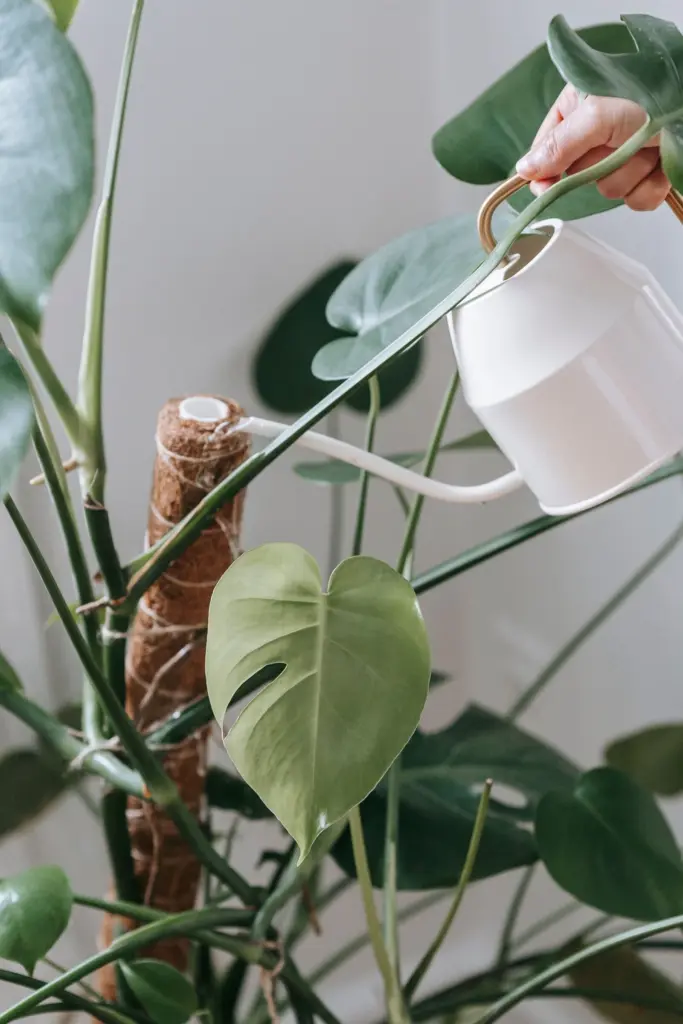
Water when the top two inches of soil are dry to the touch. Water thoroughly until it runs out of the drainage holes, then let it drain. Don’t let it sit in a saucer of water, since soggy soil leads to root rot. Keep leaves clean by gently wiping them with a damp cloth. Dusty leaves can’t take in as much light. Trim any leggy stems to keep it full and tidy.
When you add a moss pole, gently tie the stems to it with soft plant ties or twine. The plant grows aerial roots, the little brown roots that sprout from the stem, and they’ll grab onto the pole over time. Keep the moss slightly damp and the roots will attach faster. A plant that climbs usually rewards you with bigger leaves.
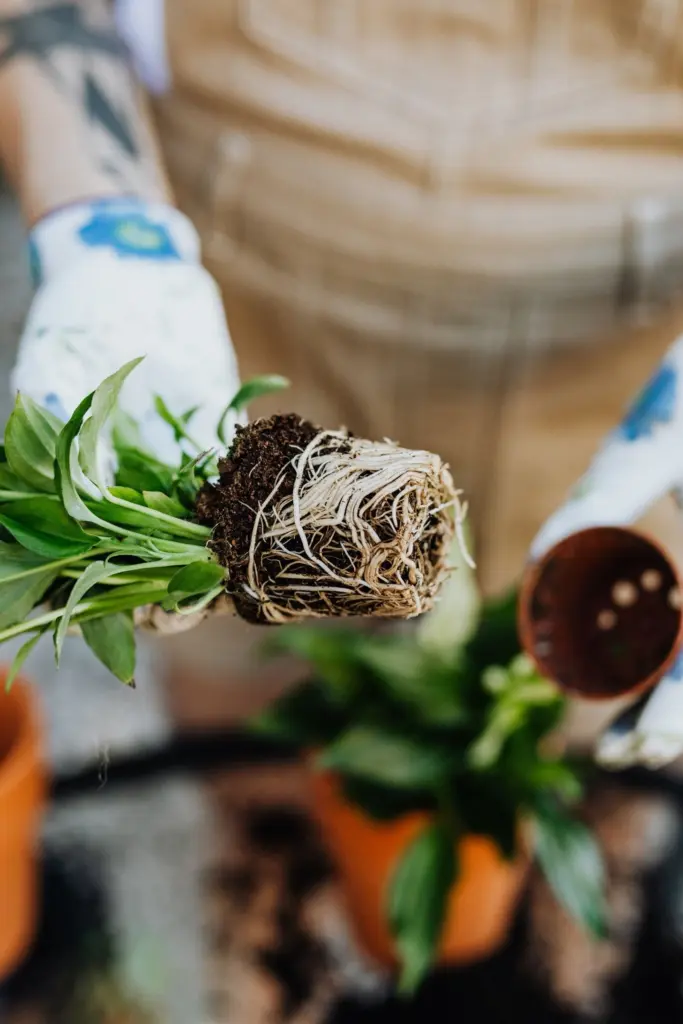
Repot every year or two in spring, or once roots start circling the pot or poking out of the drainage holes. Go up just one pot size, about 1-2 inches wider. A pot that’s too big holds extra wet soil and can lead to root rot.
Variegation can be unpredictable. Sometimes a stem reverts and starts putting out all-green leaves. If that happens, cut that stem back to just above a node with a variegated leaf, and the new growth should come in speckled again. On the flip side, a leaf that’s mostly white looks stunning, but it can’t make much food for the plant. It’s also more likely to brown, so don’t be surprised if those leaves don’t last as long.
Most other problems come back to water, light, or humidity. Yellow leaves usually mean too much water, so let the top two inches dry out before watering again. Drooping or curling leaves mean it’s thirsty. Brown, crispy spots on the white areas are common, since the white tissue is more delicate. Dry air or direct sun makes it worse. Long, bare stretches of stem between the leaves mean it wants more light. Watch for spider mites (fine webbing on the undersides of the leaves), mealybugs (white cottony bits), and thrips (silvery streaks). Neem oil or insecticidal soap treats all three. Check the undersides of the leaves when you water so you catch pests early.
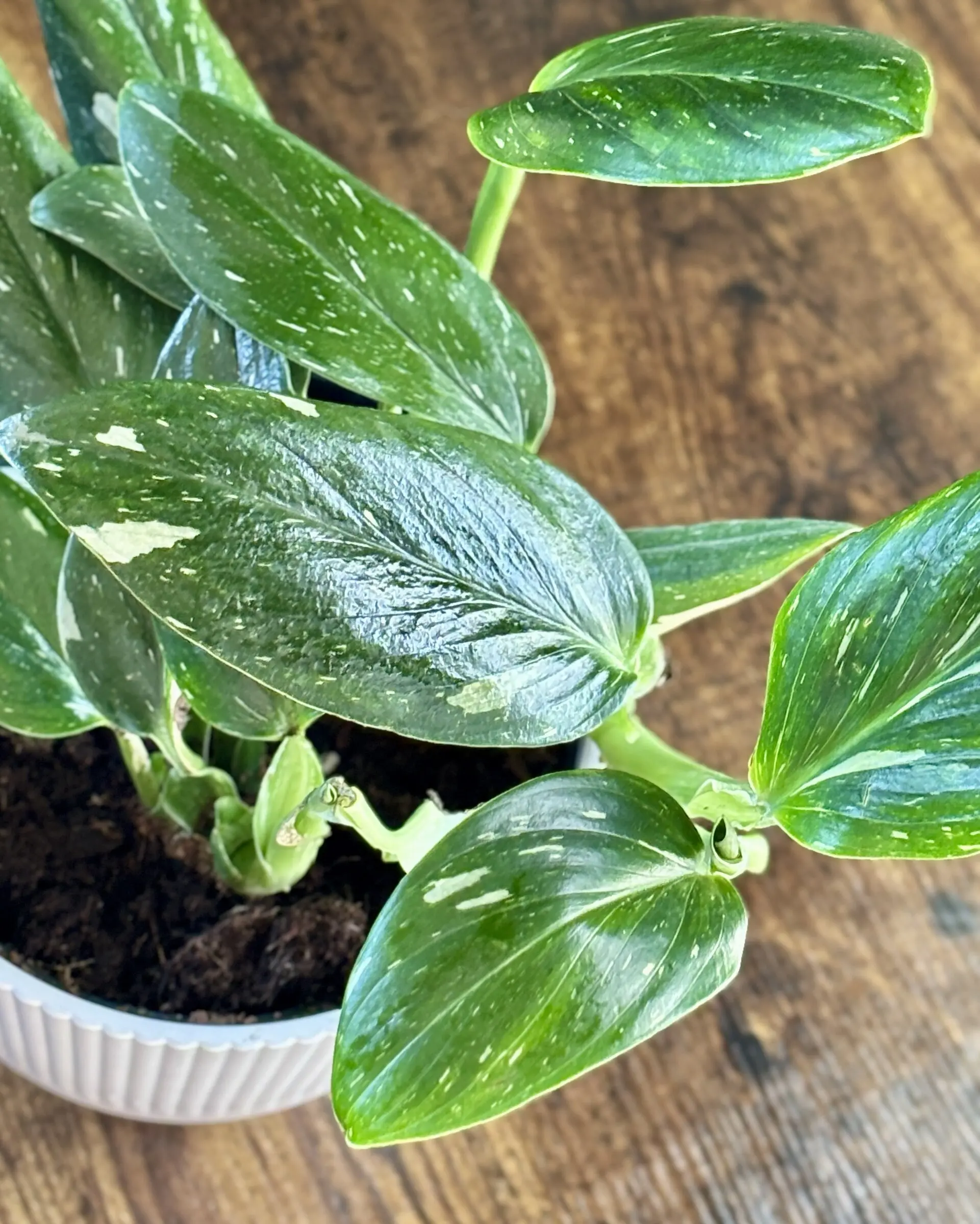
Propagate via stem cuttings with a node in water. The node is the bump on the stem where a leaf grows. Choose a cutting with a variegated leaf so the new plant carries the speckles. Change the water every few days and pot it up once the roots are a couple of inches long. Trimming leggy stems gives you the perfect cuttings.
It’s toxic to pets and people, so keep it out of reach.
With its forgiving nature and stunning speckles, I’d put it in the beginner-friendly to moderate category. Give it humidity and bright, indirect light and it will reward you with new speckled leaves to admire.
| Common Name | Monstera Standleyana Albo Variegata, Philodendron ‘Cobra’ |
|---|---|
| Botanical Name | Monstera standleyana ‘Albo Variegata’ |
| Family | Araceae |
| Mature Size | 2-5 ft. |
| Sun | Bright, Indirect |
| Soil | Moist, well-drained, Acidic |
| Native Area | Central America |
| Toxicity | Toxic to humans and pets |