

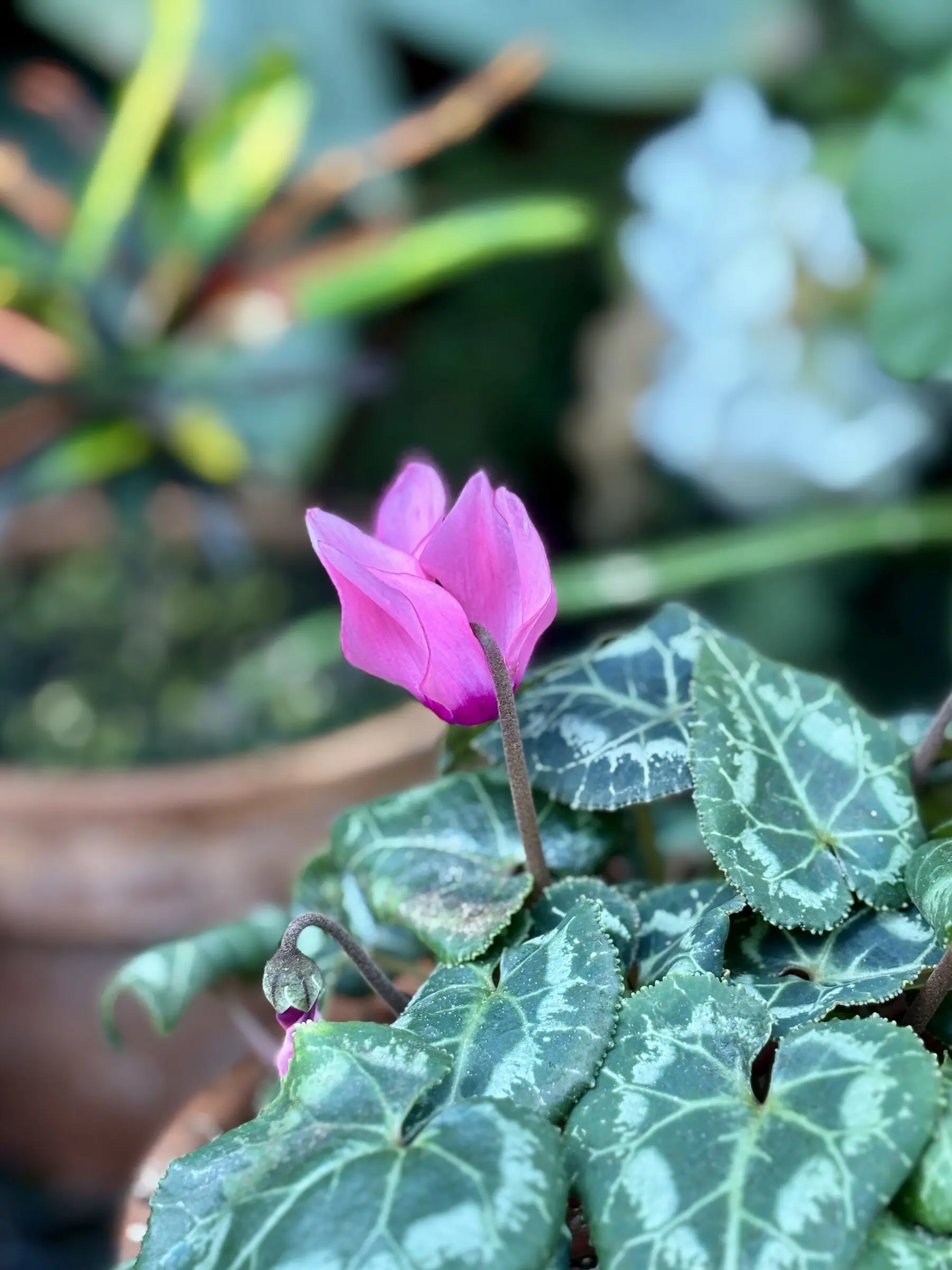
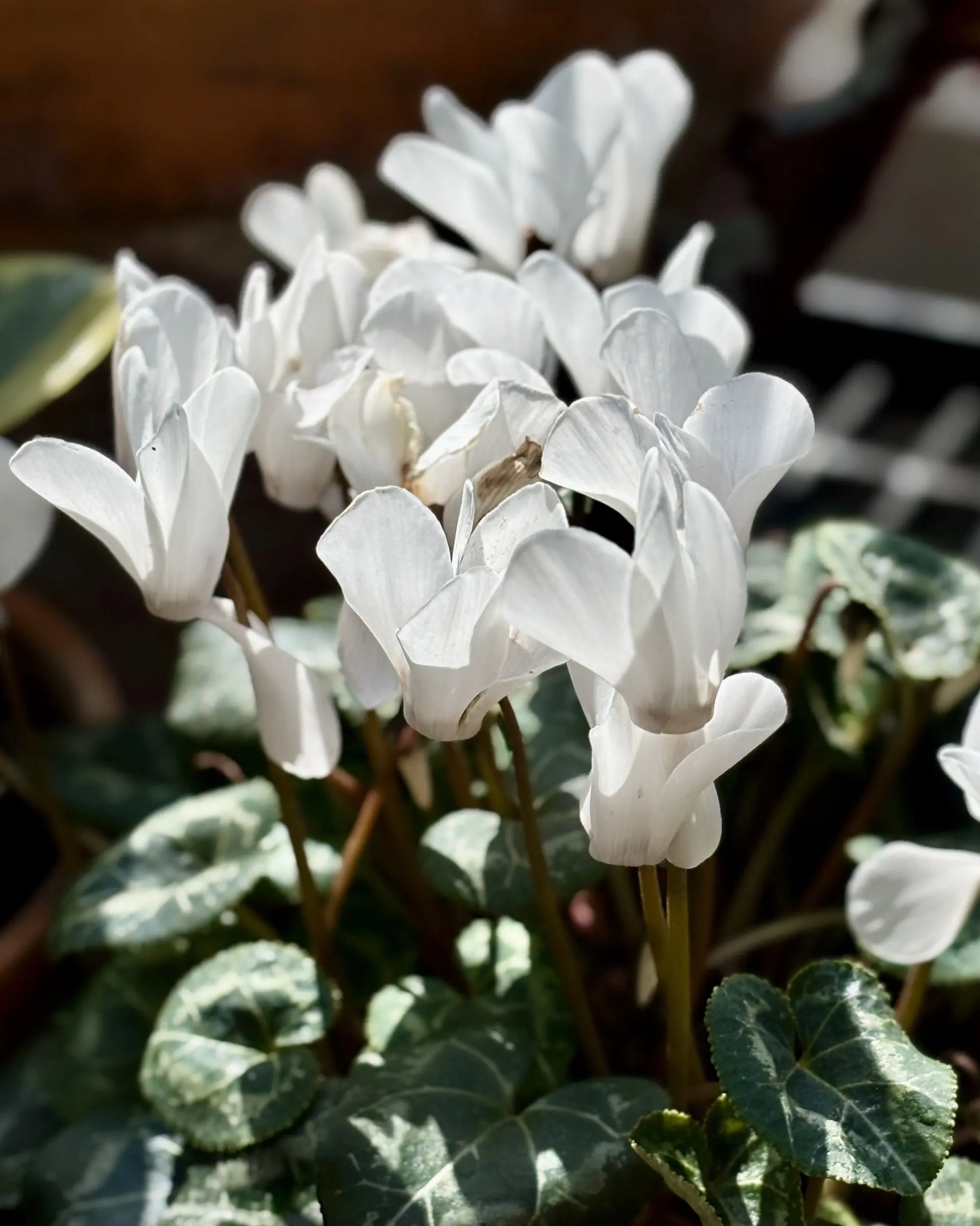
Cyclamen is the winter plant with flowers that look like they’re about to take off. Each bloom sits on a slender stem above the leaves, its petals swept straight back like the wings of a tiny bird or butterfly. The leaves are just as pretty: heart-shaped, and marbled with silver. The one sold in grocery stores and garden centers from fall through Valentine’s Day is florist’s cyclamen (Cyclamen persicum), in white, pink, red, purple, salmon, and two-tone blooms. It grows from a round tuber, and in the wild it comes from the eastern Mediterranean, from Turkey and Cyprus to Israel, where it blooms through the cool, rainy winters and rests through the hot, dry summers.
That’s the secret to keeping a cyclamen happy: it likes it cool. Most houseplants want the same temperatures we do, but a cyclamen in a warm living room will droop, yellow, and stop blooming within weeks. Kept cool, a healthy plant keeps sending up new buds for two to three months.
The best temperatures are about 60°F to 65°F during the day and around 50°F at night. A bright, cool windowsill, an unheated sunroom, or a spot away from the furnace is perfect. Keep it away from heating vents, radiators, fireplaces, and the top of the refrigerator. Below about 40°F, it suffers from the cold.
Give it bright, indirect light, like an east-facing window or a few feet back from a sunny one. Too little light means fewer flowers and long, floppy stems.
Water from the bottom. When the top of the soil feels dry, set the pot in a saucer or bowl of water for 15 to 20 minutes so the soil can soak it up, then let it drain. Never let water sit on the tuber or in the center of the plant, where the stems come up, because it causes rot. A cyclamen that wilts from thirst usually perks back up after a good bottom soak, but don’t let it happen often.
Feed every two to four weeks while it’s blooming, with a balanced houseplant fertilizer at half strength.
To keep the flowers coming, remove spent blooms and yellow leaves as soon as you see them. Don’t cut them. Follow the stem down to the tuber, then twist and pull gently so the whole stem comes away. A leftover stub can rot.
In spring, the leaves start to yellow and the plant goes dormant. That’s normal, not a sign that you killed it. Water less and less, then stop once the leaves have died back, and set the pot in a cool, shady spot to rest for the summer. In late summer or early fall, repot the tuber in fresh potting mix with the top of the tuber at or just above the soil, water lightly, and move it back to a bright, cool spot. New leaves usually appear within a few weeks. Reblooming takes patience, and many people simply enjoy a cyclamen for the season, like a long-lasting bouquet.
Common problems:
- Yellow leaves usually mean the room is too warm or the soil stays too wet. In spring, they’re the normal start of dormancy.
- A plant that suddenly collapses usually has rot from water sitting on the tuber, or from soggy soil.
- Few flowers usually mean too much warmth or too little light.
- Twisted, stunted, or curled new leaves can mean cyclamen mites, which are too small to see. Isolate the plant, since they spread to other houseplants.
- Gray fuzz on old flowers or leaves is gray mold. Pick off dead leaves and blooms, and keep air moving around the plant.
Cyclamen is toxic to cats, dogs, and horses, according to the ASPCA. Nibbling can cause drooling, vomiting, and diarrhea, and the tuber is the most dangerous part. Eating a large amount of tuber can cause heart rhythm problems and seizures. Keep it where pets can’t reach it, and never leave a dormant tuber where a dog might dig it up.
Hardy cyclamen are different plants. Species like Cyclamen hederifolium and Cyclamen coum are small woodland flowers that grow outdoors in many cold-winter gardens. Florist’s cyclamen is not frost-hardy, so for most of us it’s an indoor plant.
Cool, bright, and watered from the bottom, a cyclamen is easy to please once you know what it wants. Give it a chilly windowsill, and it will bloom all winter.
| Common Name | Cyclamen, Florist’s cyclamen, Sowbread |
|---|---|
| Botanical Name | Cyclamen persicum and hybrids |
| Family | Primulaceae |
| Mature Size | 6-12 in. tall and wide |
| Sun | Bright, indirect |
| Soil | Well-draining potting mix |
| Flower Color | White, pink, red, purple, salmon, two-tone |
| Native Area | Eastern Mediterranean |
| Toxicity | Toxic to cats, dogs, and horses |
Frequently asked questions
Why is my cyclamen drooping? It’s usually too warm or too dry. Move it to a cooler spot and give it a bottom soak. If the stems are mushy at the base, it’s rot from too much water.
How do you water a cyclamen? From the bottom. Set the pot in water for 15 to 20 minutes when the top of the soil is dry, then let it drain, and keep water off the tuber and the center of the plant.
Why are my cyclamen leaves turning yellow? In winter, it usually means the room is too warm or the soil is too wet. In spring, yellow leaves mean the plant is going dormant for the summer.
Will my cyclamen bloom again next year? It can. Let it rest, dry and cool, through the summer, then repot and water it again in late summer or early fall.
Is cyclamen poisonous to cats and dogs? Yes. The ASPCA lists cyclamen as toxic to cats, dogs, and horses, and the tuber is the most dangerous part.
Comments are not currently available for this post.