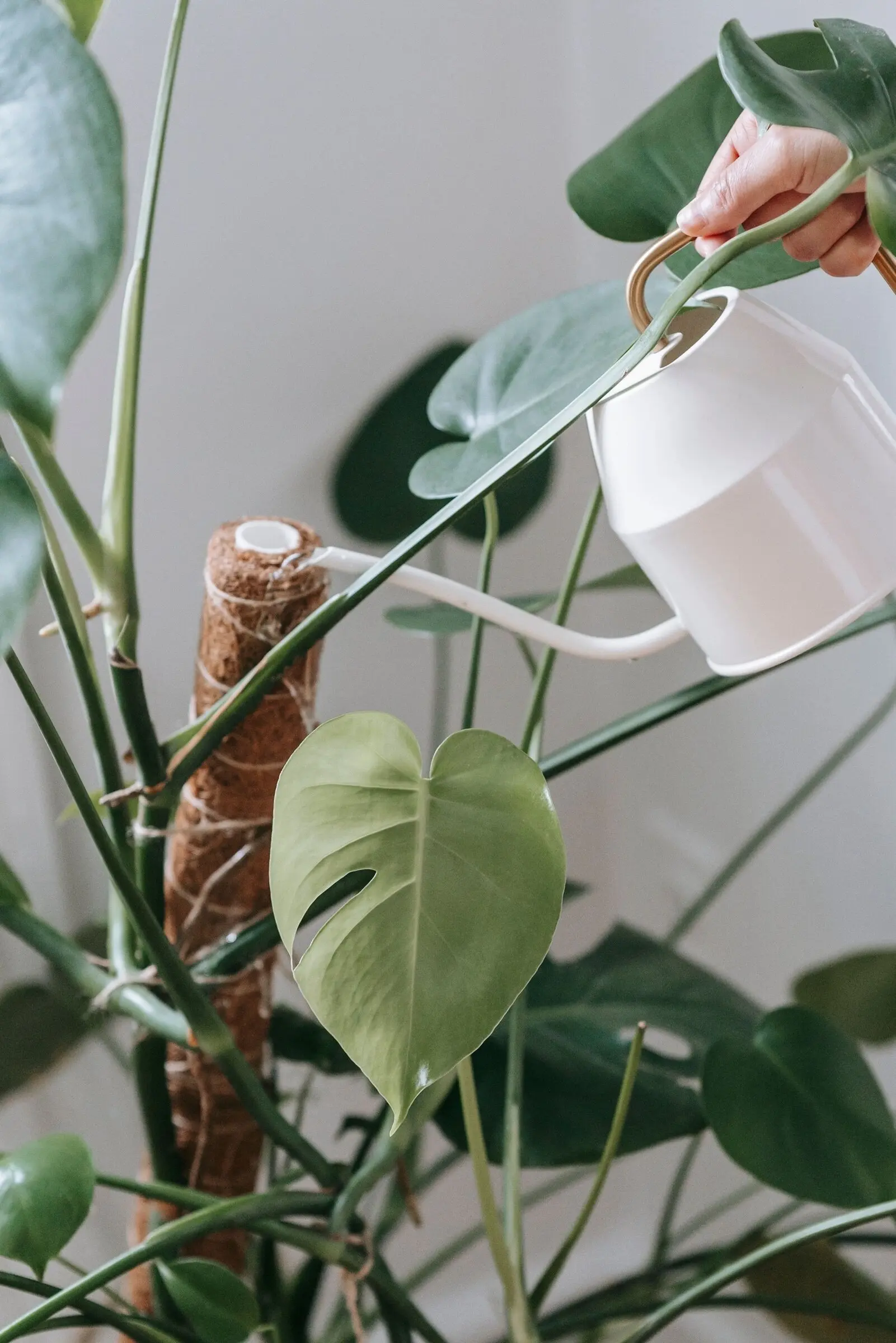
More houseplants die from watering mistakes than from anything else, and most of the time it’s too much water, not too little. The good news is that watering isn’t complicated once you stop watching the calendar and start watching the plant and its soil. This guide covers how to water houseplants: how to tell when a plant needs water, how to water the right way, and how to read the signs when something’s off.
How often should you water houseplants?
You’ll see watering schedules everywhere, including in my plant articles, like “about once a week” or “every two weeks in winter.” Those are rough guides to give you an idea, not rules. I go by touch or a moisture meter rather than the number of days. How fast a pot dries out depends on the plant, the pot, the soil, the light, the temperature, and the season, so the same plant might need water every five days in July and every three weeks in January. Plants should be watered when they need it, not on a schedule, according to the University of Maryland Extension.
The easiest test is your finger. Push it into the soil up to the first or second knuckle:
- Dry at that depth: most plants are ready for water.
- Still damp: wait a few days and check again.
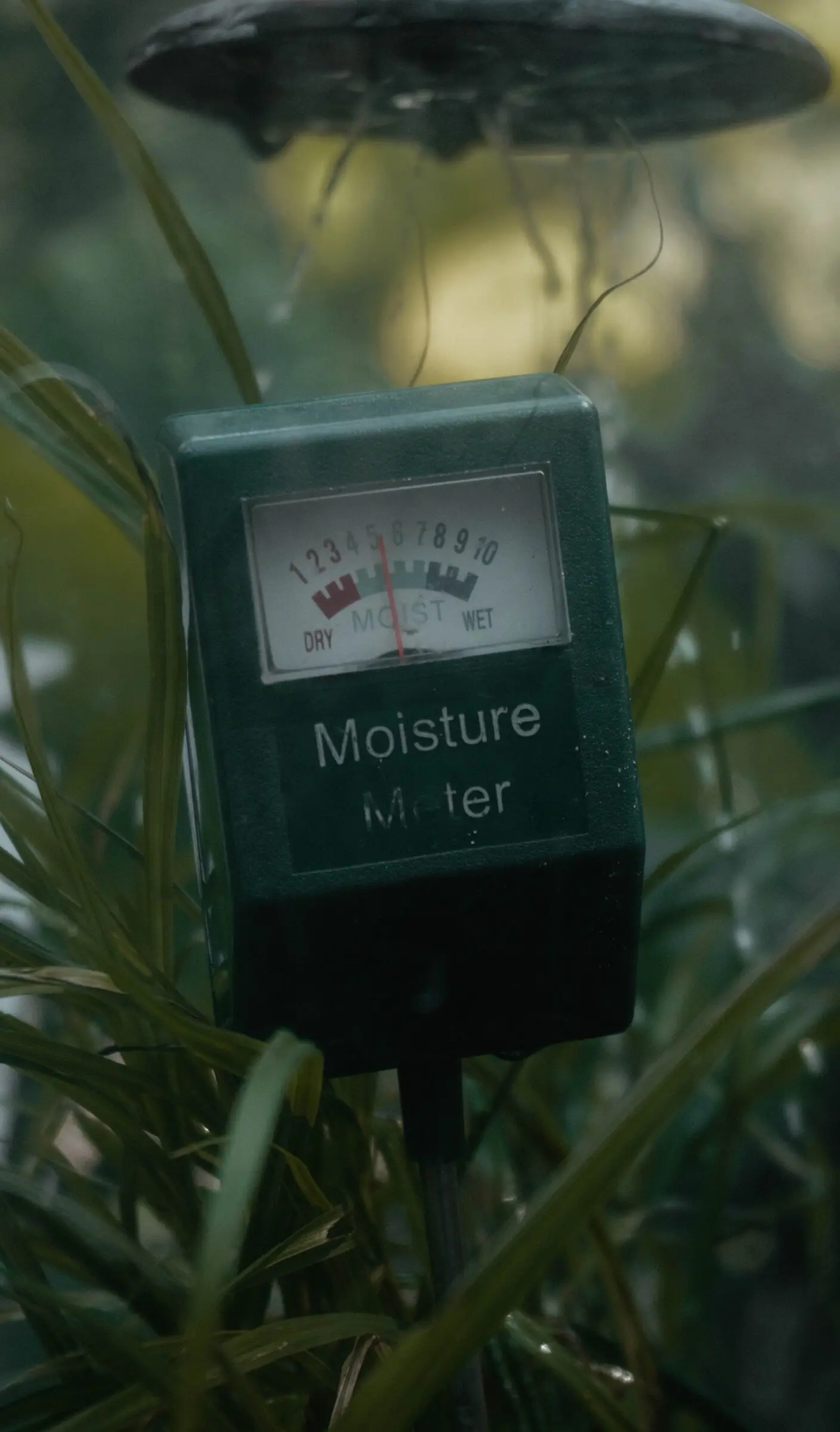
A moisture meter takes the guesswork out, especially for big pots where your finger can’t reach far enough. Push it down into the root zone, not just the top inch. You can also lift the pot. A freshly watered pot feels heavy, and a dry one feels noticeably lighter. After a while, you’ll be able to tell just by picking it up.
The plant drops hints, too. Many glossy-leaved plants look a little dull or soft when they’re getting thirsty, before they ever wilt. Peace lilies and nerve plants simply flop over.
How much water does your plant need?
Houseplants fall roughly into three groups:
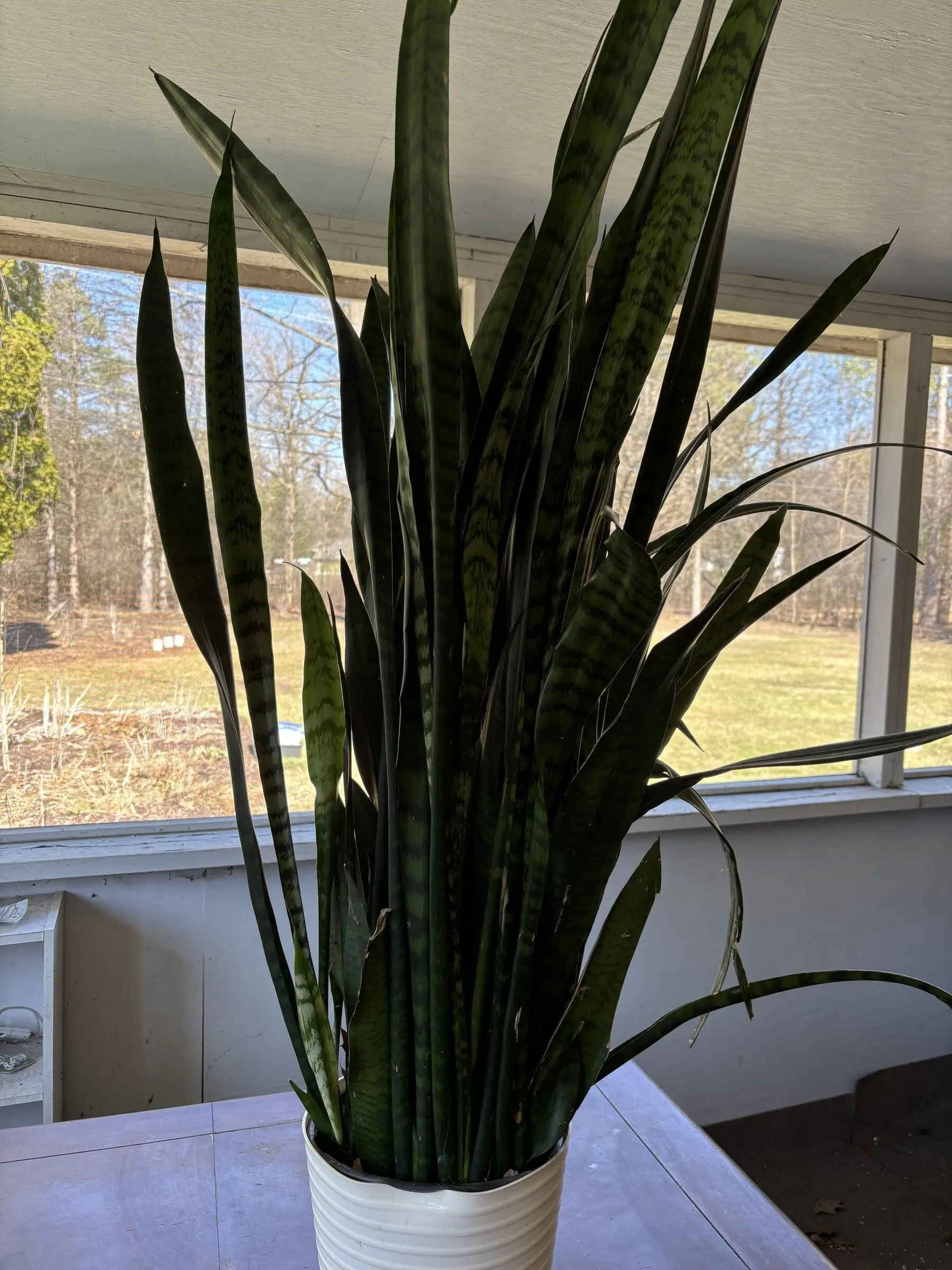
Let it dry out completely. Succulents, cacti, snake plants, jade, and ZZ plants store water in their thick leaves, stems, or roots. Water thoroughly, then wait until the soil is dry all the way through. These are the plants most likely to rot from kindness.
Let the top 1 to 2 inches dry. Most tropical foliage plants fall here, including pothos, philodendrons, monsteras, rubber plants, Chinese evergreens, and peperomias. Water when the top 1 to 2 inches of soil feel dry.
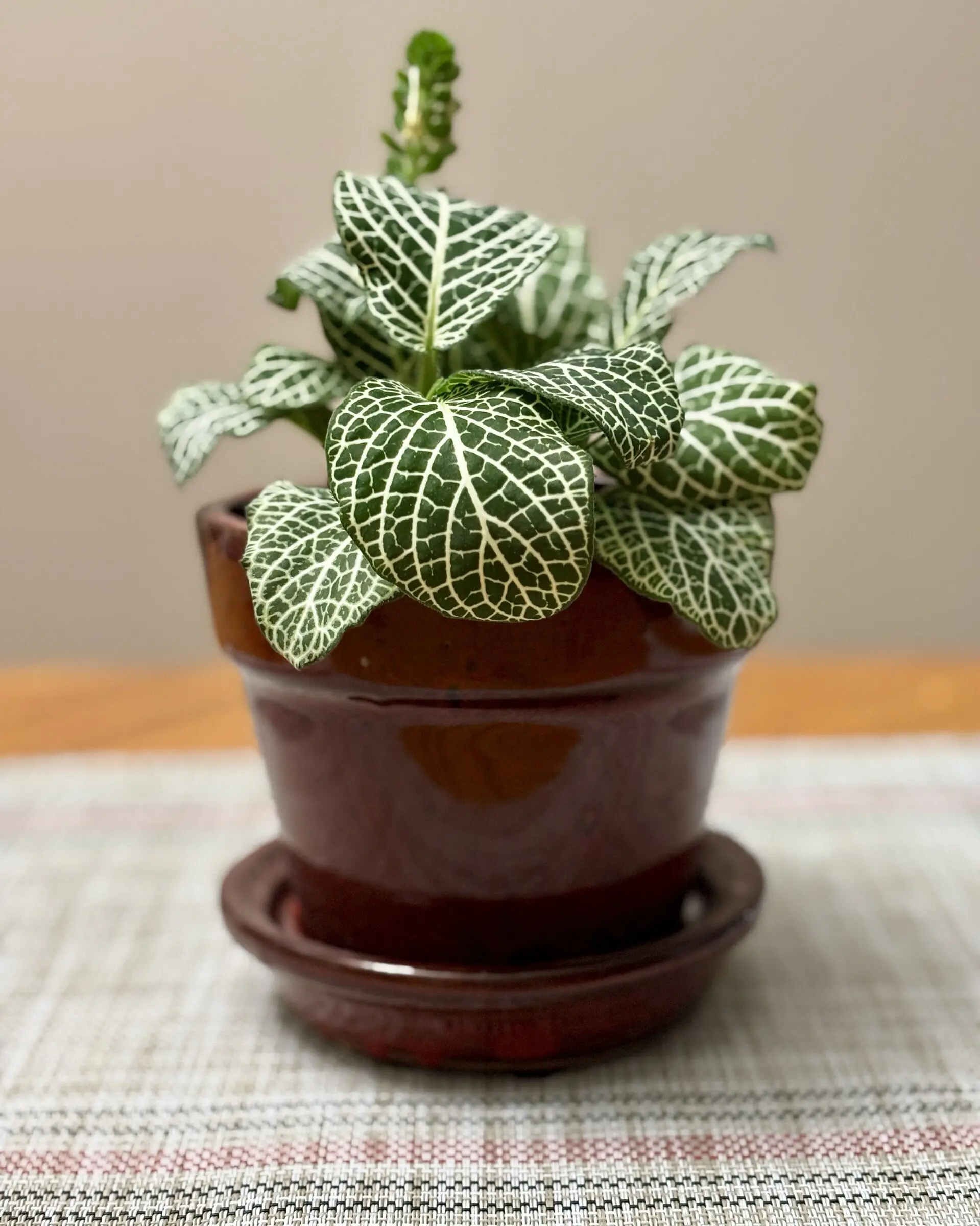
Keep evenly moist, but never soggy. Ferns, nerve plants, calatheas like the rattlesnake plant, polka dot plants, and peace lilies don’t like to dry out much. Water when the surface just starts to feel dry. These are the plants that wilt dramatically when they’re thirsty.
Here’s a quick reference for the plants in my care articles:
| Watering style | Water when | Plants |
|---|---|---|
| Let it dry out | Soil is dry all the way through | Snake plant, jade plant, Tanzanian zipper plant, succulents, cacti |
| Let the top dry | Top 1 to 2 inches are dry | Monstera Peru, Monstera adansonii, Thai Constellation monstera, satin pothos, Philodendron Birkin, Golden Crocodile and Ring of Fire philodendrons, Ruby rubber plant, fiddle leaf fig, Chinese evergreen, baby rubber plant, aluminum plant, spider plant |
| Keep evenly moist | Surface just starts to dry | Nerve plant, rattlesnake plant, polka dot plant, peace lily, Petra croton, Rex begonia, Alocasia Ivory Coast |
Each of my plant care articles has more detail on that plant’s needs.
How to water the right way
Water thoroughly. When you water, soak the soil until water runs out of the drainage holes. Little sips only wet the top of the soil, so roots stay shallow and the bottom of the pot stays dry. A thorough soak reaches all the roots and flushes out built-up minerals from fertilizer and tap water.
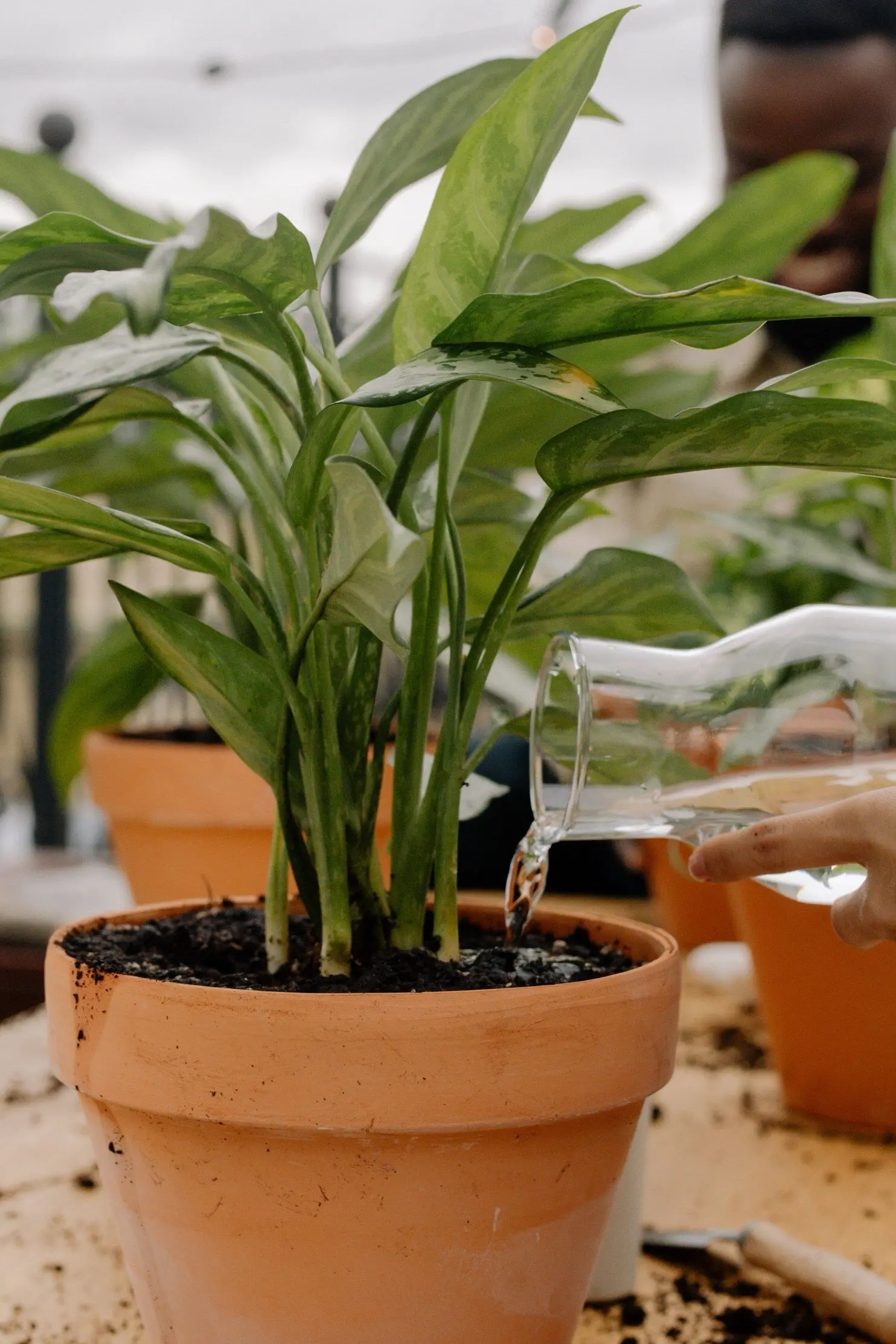
Then empty the saucer. Don’t let the pot sit in water. Roots sitting in standing water can’t get oxygen, and that’s how root rot starts. Dump the saucer about 15-30 minutes after watering.
Use a pot with drainage holes. This is the single most important thing you can do. If you love a decorative pot without a hole, keep the plant in a plastic nursery pot with drainage and set it inside, then lift it out to water.
Skip the gravel layer. Putting gravel or rocks in the bottom of a pot doesn’t help drainage. According to the University of Missouri’s Integrated Pest Management program, it actually makes drainage worse. Water doesn’t move easily from soil into a gravel layer, so the wettest soil actually sits higher up, right where the roots are. A well-draining potting mix and a drainage hole do the job instead.
Use room-temperature water. An icy blast from the tap is a shock to a plant that came from the tropics. Filling your watering can and letting it sit out overnight brings it to room temperature, and lets some of the chlorine evaporate, too.
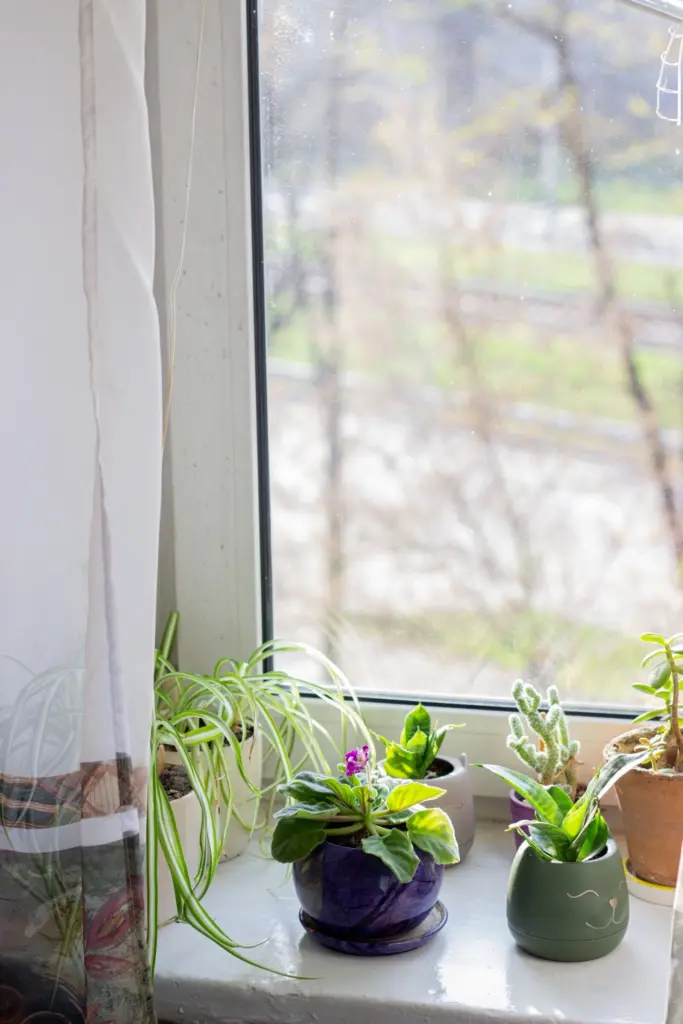
Water the soil, not the leaves. Some plants, like Rex begonias, African violets, and ripple peperomias, can get spots, mildew, or rot when water sits on their leaves. Aim the spout at the soil.
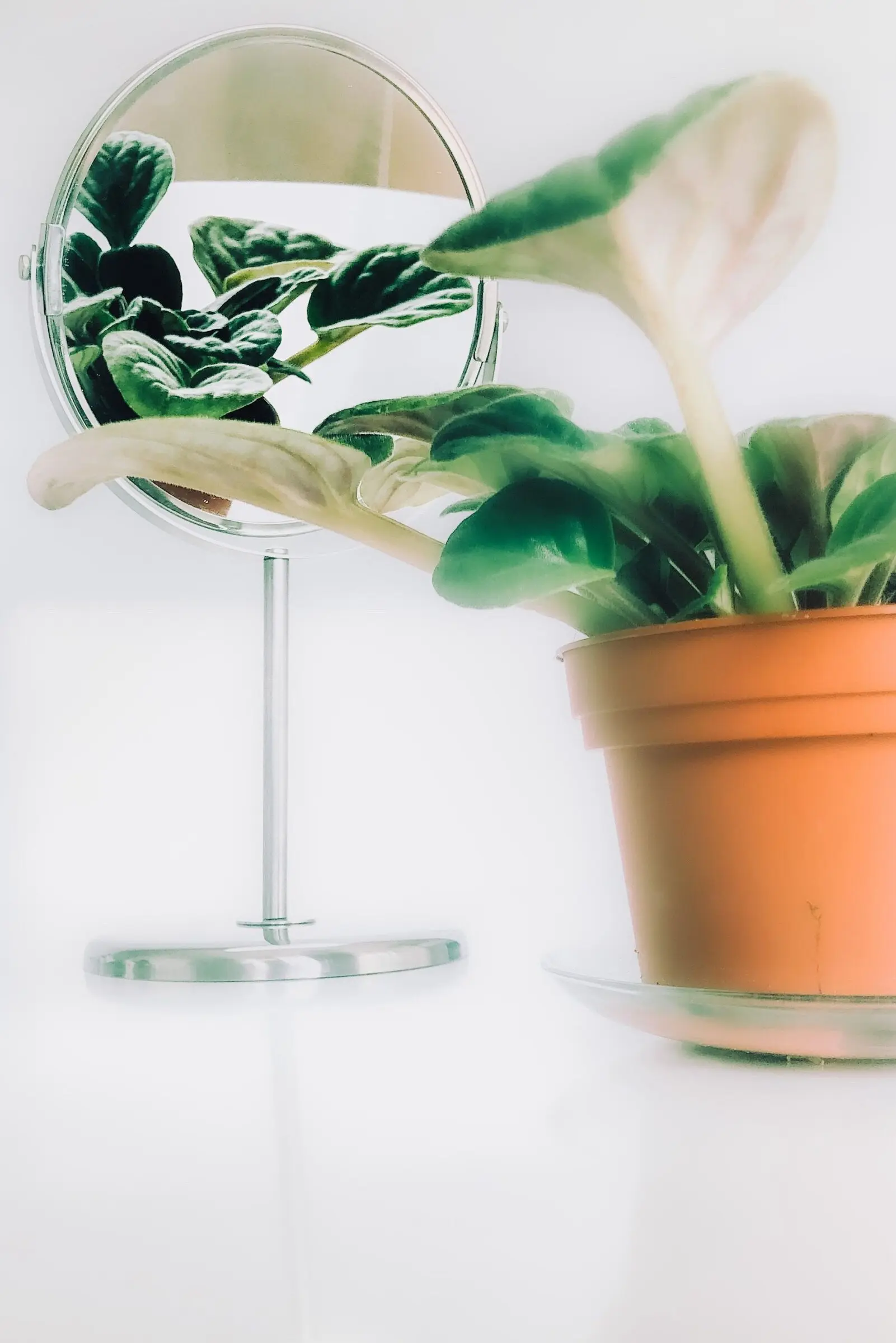
Water in the morning when you can. Any water that splashes on the leaves dries during the day instead of sitting overnight.
Group plants with similar needs. Keeping your thirsty plants together and your dry-loving plants together makes it easier to water each group the right way, instead of giving everything the same drink.
Bottom watering
Bottom watering is a great option for plants that hate wet leaves, or for soil that has dried out so much that water runs right off the top. Set the pot in a dish or sink filled with 1 to 2 inches of water and let it soak up through the drainage holes for 15-30 minutes, until the top of the soil feels damp. Then let it drain well. Every so often, water from the top too, to flush out mineral buildup.
If you’re short on time, try watering twice. Water slowly, wait about 10 minutes, then water again. The first pass softens bone-dry soil so the second one soaks in instead of running down the sides of the pot.
Special cases
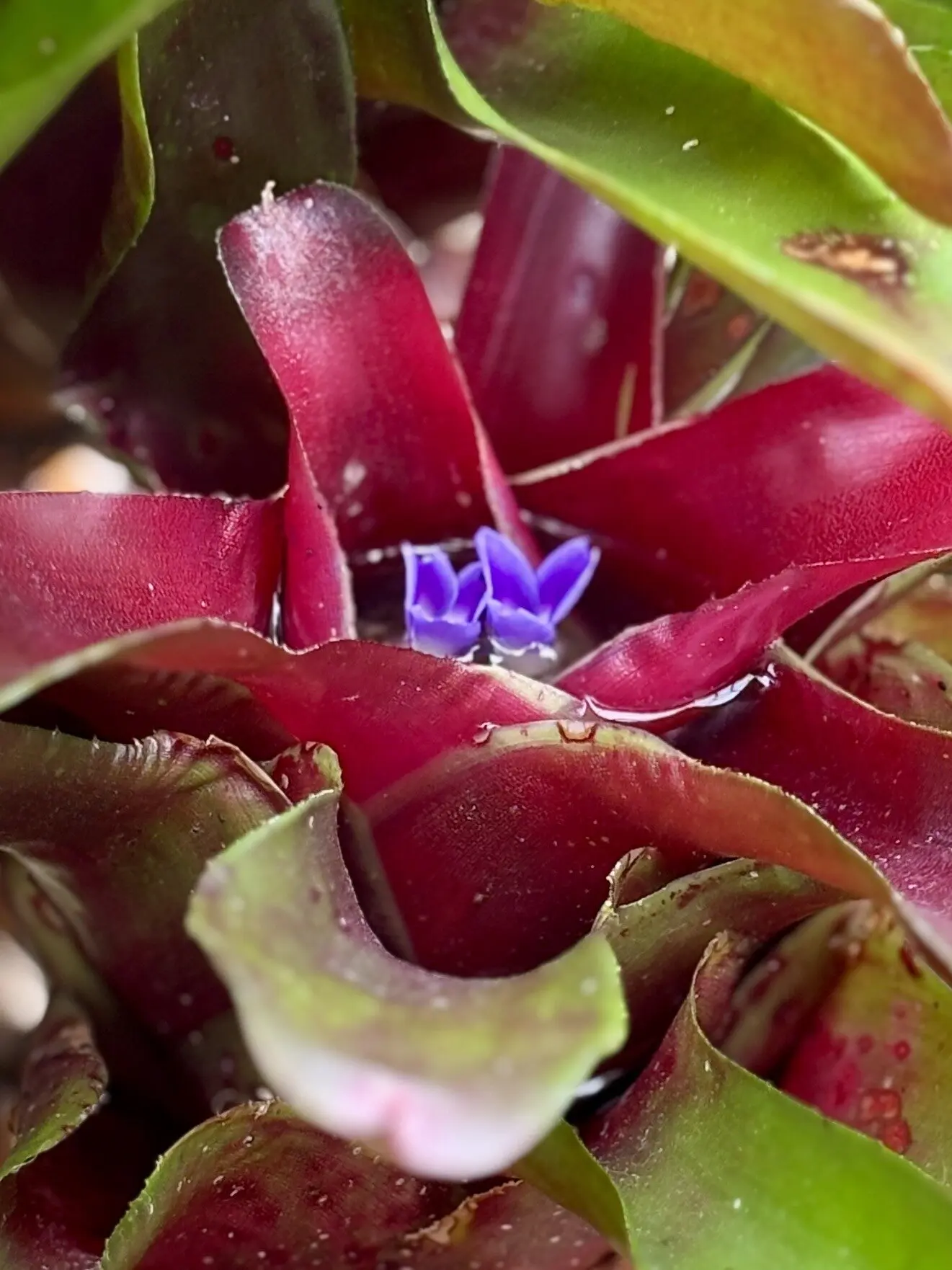
Bromeliads are different from most houseplants. Many have a center cup formed by their leaves. Keep the cup a quarter to half full and flush it with fresh water every week or two, and keep the soil only lightly moist.
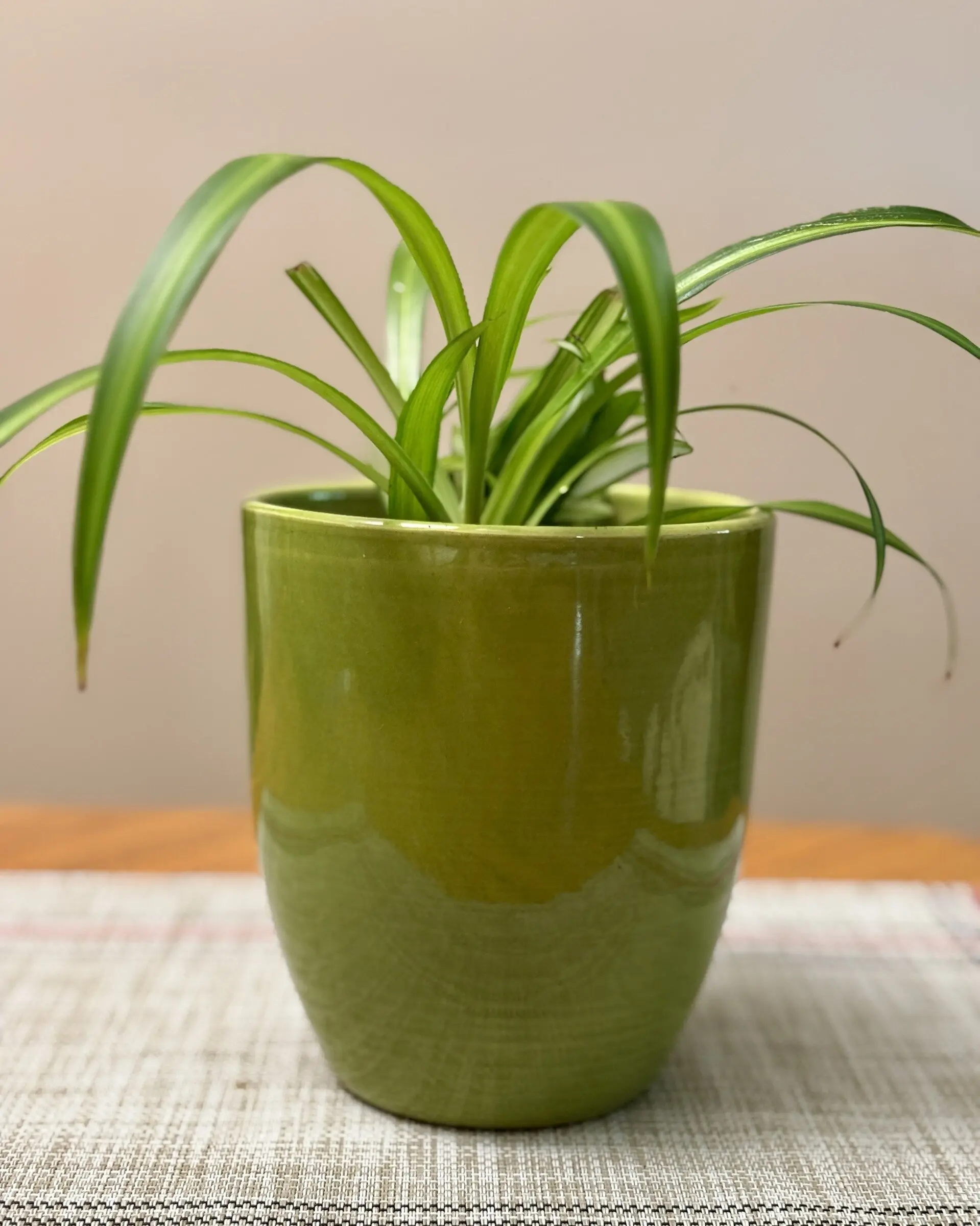
Calatheas, prayer plants, spider plants, and dracaenas are sensitive to the fluoride, chlorine, and minerals in tap water, which can cause brown, crispy leaf tips, according to Iowa State University Extension and Outreach. Rainwater, distilled water, or filtered water helps. Letting tap water sit out overnight helps a little, too. Skip water from a water softener, which adds salts that build up in the soil.
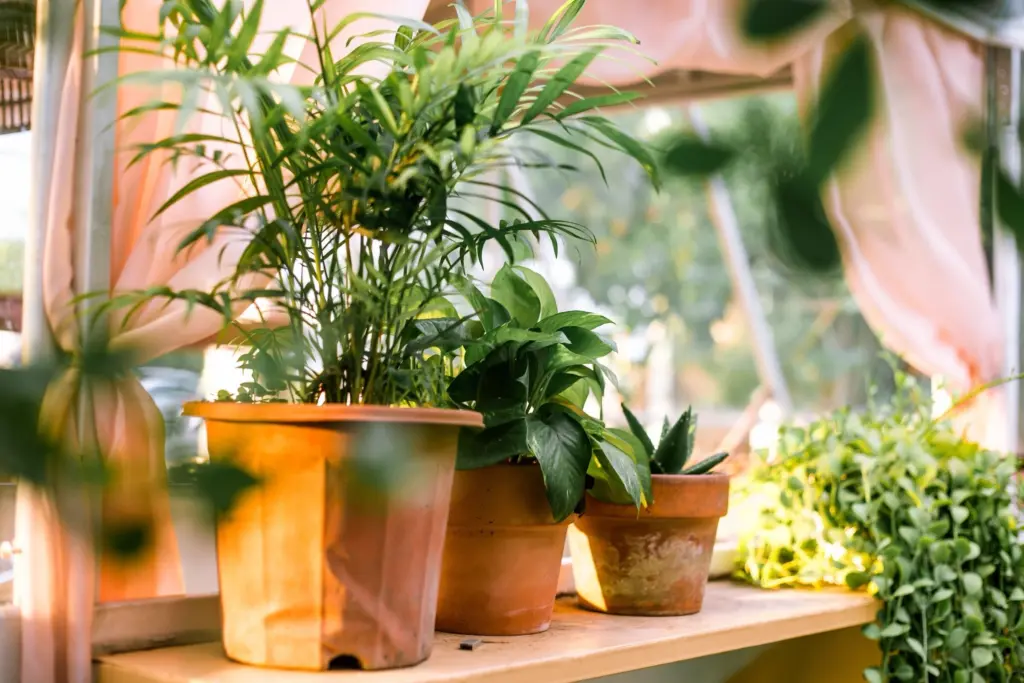
Plants in terra cotta dry out faster than plants in plastic or glazed ceramic, because clay breathes. That’s great for succulents and plants prone to rot, but you’ll check moisture-lovers more often.
Watering houseplants in winter
Most houseplants slow down in fall and winter, when days are shorter and light is weaker. They use much less water, so the soil stays wet longer. Keep checking the soil, but expect to water less often. This is the time of year when overwatering problems sneak up on people. Indoor heat does dry out the air, though, so plants that love humidity may appreciate a pebble tray or humidifier even while you’re watering less.
Signs of overwatering and underwatering
According to University of Illinois Extension, overwatering is the most common way people kill houseplants. The tricky part is that overwatering and underwatering can look alike. Both can cause drooping and yellow leaves. The soil tells you which one it is.
Too much water:
- Soil stays wet for days
- Yellow leaves, often starting at the bottom
- Soft, mushy stems or a mushy base
- Drooping even though the soil is wet
- A sour or musty smell from the soil
- Fungus gnats flying around the pot
Too little water:
- Soil is bone dry and may pull away from the sides of the pot
- Wilting or drooping that perks up after watering
- Crispy, brown leaf edges or tips
- Curling or wrinkled leaves (especially on succulents and peperomias)
- Leaves dropping
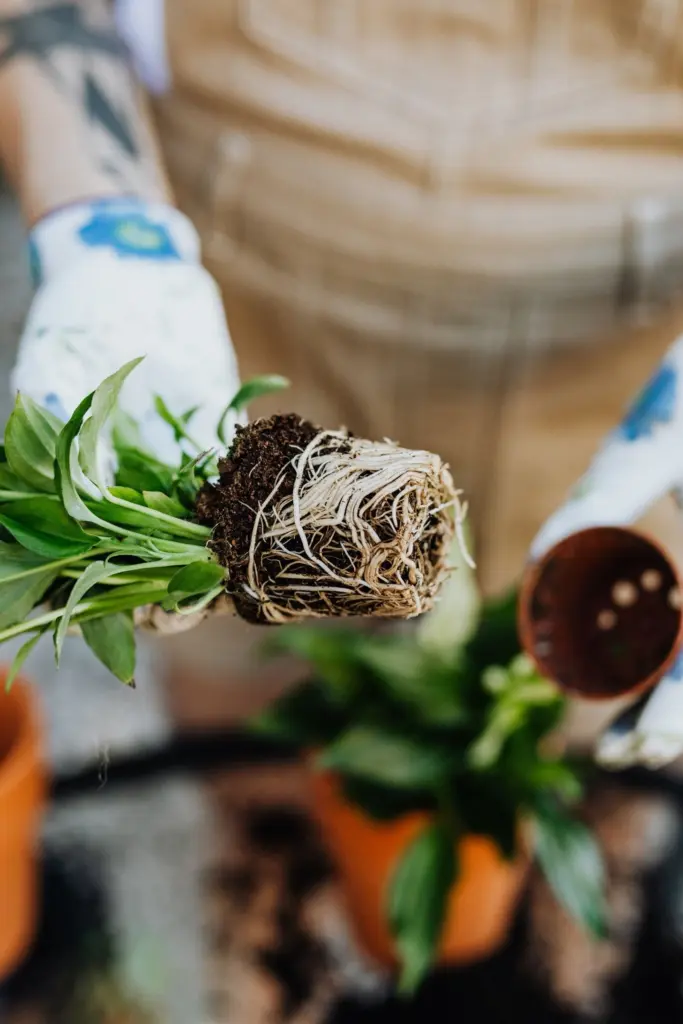
If you suspect overwatering, stop watering and let the soil dry out. If the plant doesn’t recover, slide it out of the pot and check the roots. Healthy roots are firm and white or tan. Rotted roots are brown or black, mushy, and smell bad. Trim off the rotted roots with clean scissors and repot in fresh, dry, well-draining mix.
If the soil has dried out so much that water runs straight through, bottom water it, letting it soak until the soil is evenly moist again.
Not every droopy or yellow leaf is a watering problem, though. Low light, cold drafts, pests, and the stress of a recent move or repotting can cause similar symptoms. Check the soil first, then take a look at the plant’s spot.
Watering houseplants when you’re away
A long weekend usually isn’t a problem. For a week or more, a little planning keeps plants from drying out:
- Water everything thoroughly right before you leave.
- Move plants back from sunny windows. Less light means they use less water.
- Group plants together in a cooler room, where they’ll hold moisture longer.
- For moisture lovers, set pots on a tray of damp pebbles, or try a self-watering pot or a wicking setup.
- Don’t worry about succulents and snake plants. They can go a couple of weeks without water.
- For longer trips, ask a friend to check the soil, and show them which plants like to dry out.
Quick watering checklist
- Check the soil before every watering.
- Water thoroughly until it drains out the bottom.
- Empty the saucer.
- Use pots with drainage holes.
- Water less in fall and winter.
- When in doubt, wait a day or two.
Once you get in the habit of checking first, watering gets a lot easier, and your plants will thank you for it.
Frequently asked questions
How often should I water my houseplants? There’s no single schedule. Check the soil first and water when the top 1 to 2 inches feel dry for most tropical plants. Succulents and snake plants should dry out completely between waterings.
Is it better to water from the top or the bottom? Both work. Top watering until water drains out the bottom flushes out built-up minerals. Bottom watering is handy for plants that don’t like wet leaves, like African violets. Mix in a top watering now and then.
How do I know if I’m overwatering? Soil that stays wet for days, yellow lower leaves, mushy stems, and a musty smell are common signs. Wilting can mean too much water, too, so always check the soil before you water a droopy plant.
Should I use tap water on my houseplants? Tap water is fine for most plants. Spider plants, dracaenas, and calatheas can get brown tips from chemicals in tap water, so rainwater or filtered water helps them. Avoid water from a water softener.
Do houseplants need less water in winter? Yes. Most houseplants grow more slowly in winter, so the soil stays wet longer. Keep checking the soil and expect to water less often.