
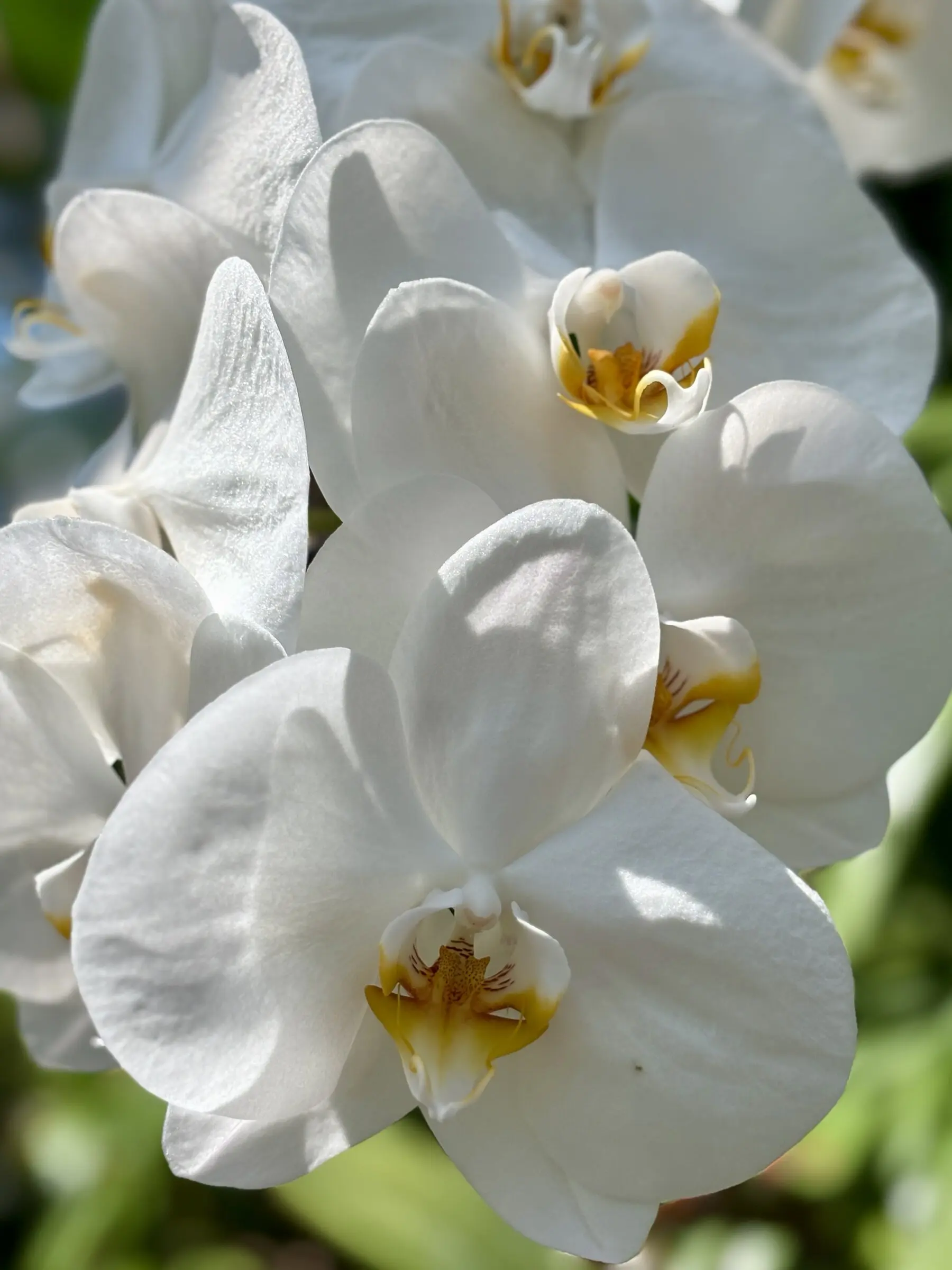
The moth orchid is the orchid most people picture: a long, arching stem lined with flat, rounded blooms that seem to hover in the air. It’s the orchid you’ll find at the grocery store, the garden center, and the florist, and it’s by far the easiest orchid to grow at home. The name comes from those wide, flat flowers, which reminded early botanists of moths in flight. There are around 70 species of Phalaenopsis, native to tropical Asia, from India and southern China through the Philippines and Indonesia to northern Australia. In the wild, most of them grow on trees, clinging to the bark with their thick roots instead of growing in soil. The ones sold as houseplants are hybrids, bred for big blooms in white, pink, purple, yellow, and spotted or striped patterns.
What makes the moth orchid such a good houseplant is how long it blooms. A single flower spike can stay in bloom for two to three months, and a healthy plant will flower again every year. That long-lasting show, right in the middle of winter, is why it’s such a popular holiday gift.
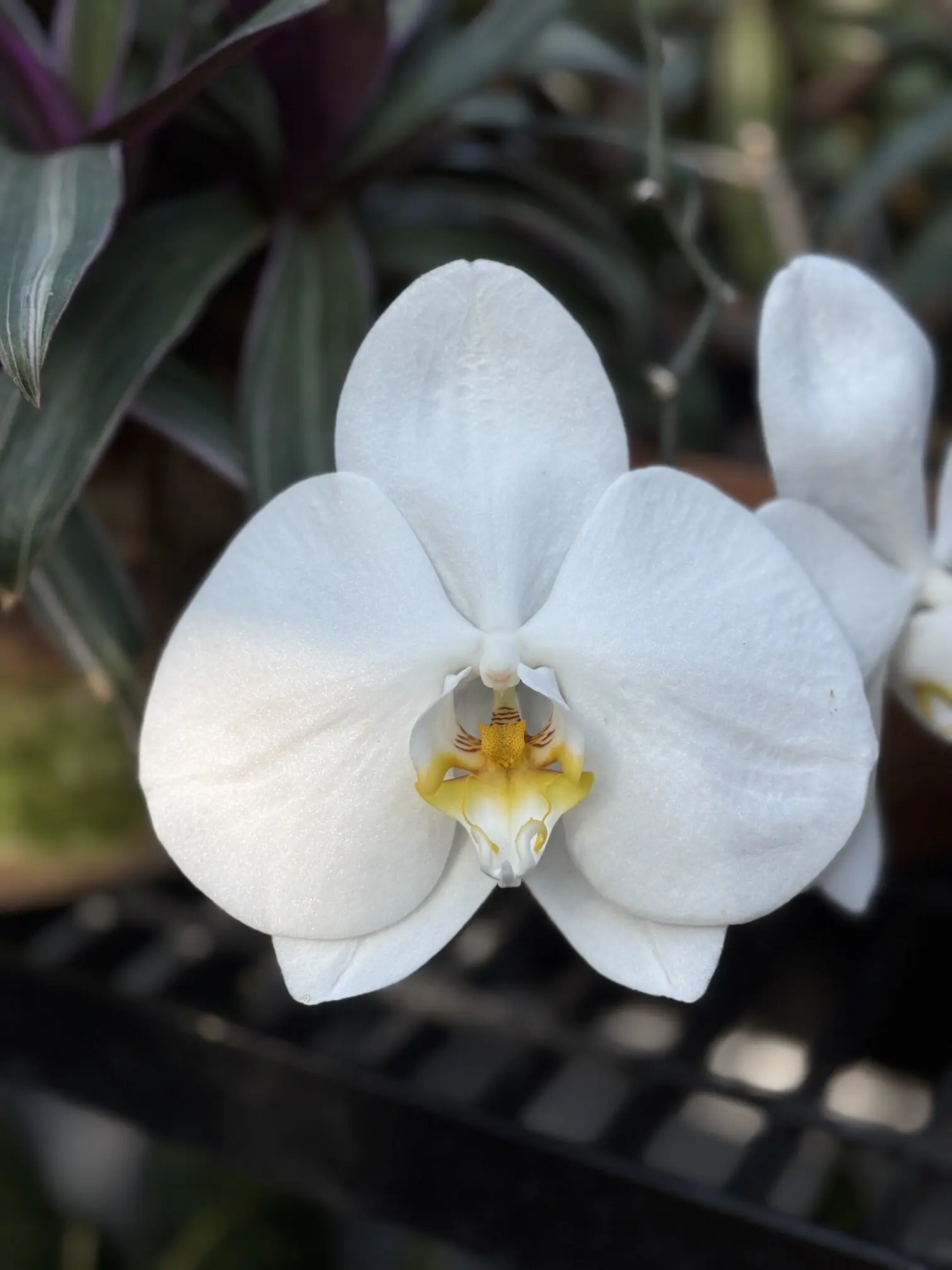
Moth orchids like the same kind of light we do: bright, but not harsh. An east-facing window is ideal, or a few feet back from a south- or west-facing one. Direct afternoon sun can burn the leaves, leaving pale or brown patches. Healthy leaves are a medium olive green. Very dark green leaves usually mean the plant wants more light, and yellowish leaves can mean too much.
Watering is where most moth orchids go wrong, and too much water does far more harm than too little. Water about once a week, when the bark or moss in the pot is nearly dry. The roots tell you when: silvery roots are dry and ready for water, and green roots are still wet. Water in the morning, let it drain completely, and never leave the pot sitting in water. Keep water out of the crown, where the leaves meet, because water that sits there can cause crown rot. Use room-temperature water. Moth orchids come from warm tropical forests, where they cling to tree branches and the rain soaks their roots and drains away within minutes. Cold water is nothing they would ever meet in the wild, and neither is a pot that stays soggy.
Moth orchids are happy in the same temperatures as people: 65°F to 85°F during the day, and a little cooler at night. They like humidity around 50 percent or higher, which can be hard to find in a heated house in winter. A pebble tray, a humidifier, or a spot in a bright kitchen or bathroom helps. Keep them away from heating vents, radiators, and cold drafts from doors and windows, since a sudden change in temperature can make the buds drop.
Feed lightly while the plant is growing, with a balanced orchid fertilizer at a quarter strength every other watering. Growers call it “weakly, weekly.” Too much fertilizer burns the roots and can keep the plant from blooming.
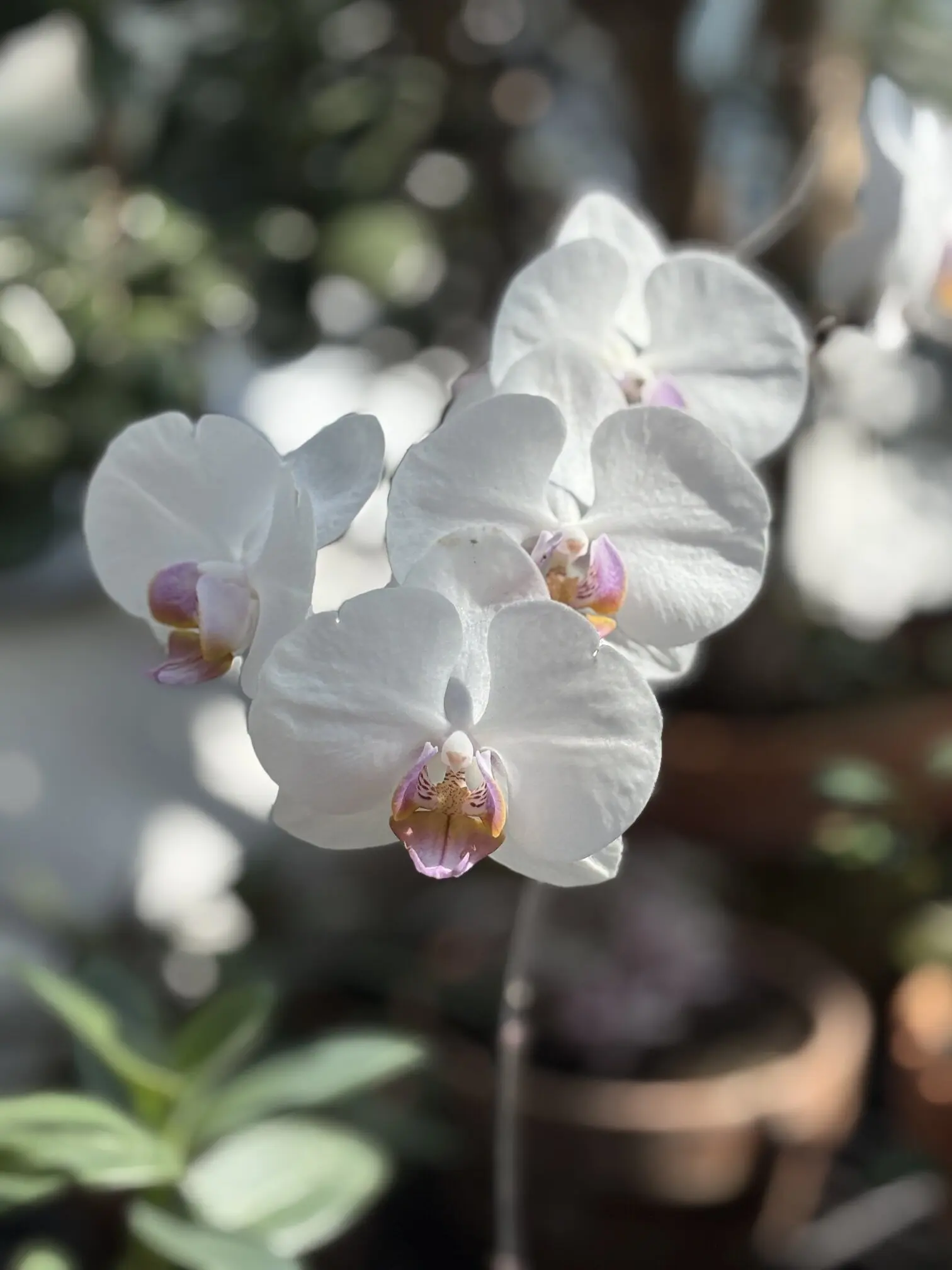
When the last flower drops, you have a choice. If the stem is still green, cut it just above the second node below where the first flower was (the nodes are the small bumps along the stem). It will often send out a new side branch and bloom again in a few months. If the stem turns brown and dry, cut it off at the base. The plant will rest, grow a new leaf or two, and send up a new spike, usually the next fall or winter.
To get a moth orchid to rebloom, give it a cool spell. Nights of about 55°F to 60°F for three to four weeks in the fall tell the plant it’s time to make a flower spike. A spot near a cool window is often enough. Once the spike is growing, move it back to its usual spot, and don’t turn the pot, so the buds open facing the light.
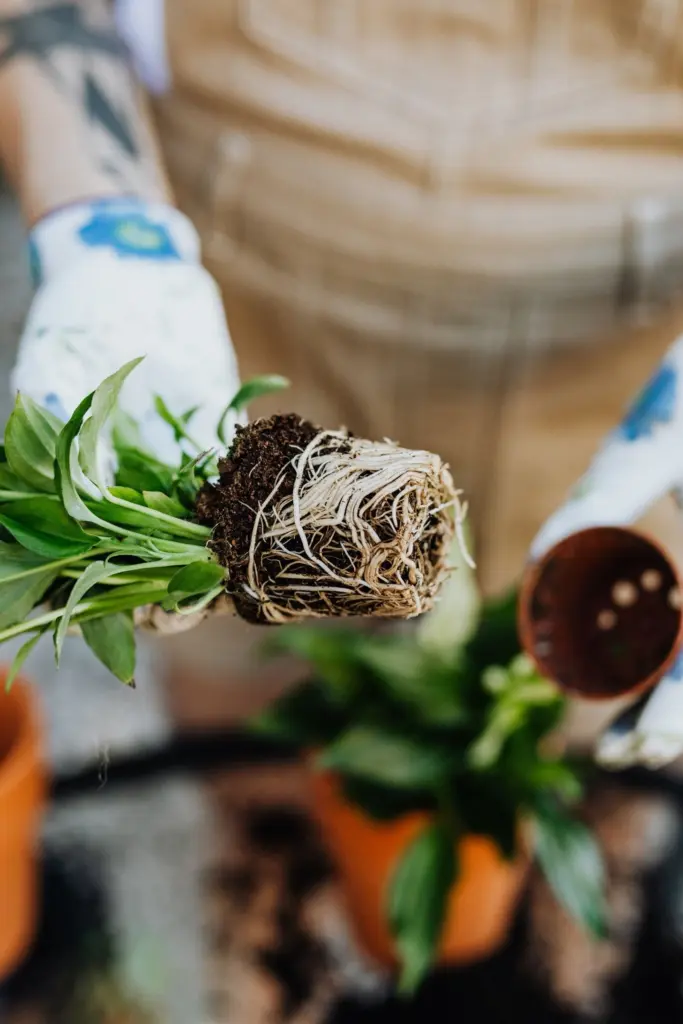
Repot every year or two, after the plant finishes blooming, or when the bark starts to break down and stay soggy. Use a loose orchid mix, never regular potting soil, which holds too much water and smothers the roots. Our [homemade Phalaenopsis orchid potting mix](/back-to-basics/homemade-mixes/garden-mixes/phalaenopsis-orchid-potting-mix/) is easy to make. A clear plastic pot with drainage holes makes it easy to check the roots, and the roots like a little light.
Common problems:
- Soft, mushy, brown roots mean rot from too much water. Trim the bad roots with clean scissors and repot in fresh bark.
- Wrinkled, leathery leaves usually mean the roots can’t take up water, either because they’re dry or because they’ve rotted. Check the roots to see which.
- Buds that turn yellow and drop before they open are usually a reaction to a draft, a sudden temperature change, or a move to a new spot.
- Roots growing up and out of the pot are aerial roots. They’re normal, so leave them alone.
- Watch for mealybugs and scale on the undersides of the leaves and along the stem. Wipe them off with a cotton swab dipped in rubbing alcohol, or use insecticidal soap.
Moth orchids are non-toxic to cats, dogs, and horses, according to the ASPCA.
Long-blooming, forgiving, and happy in an ordinary house, the moth orchid belongs in the beginner-friendly category. It’s an easy plant to love, and a good first orchid.
| Common Name | Moth orchid, Moon orchid |
|---|---|
| Botanical Name | Phalaenopsis spp. and hybrids |
| Family | Orchidaceae |
| Mature Size | Leaves 4-12 in. long; flower spikes 1-3 ft. |
| Sun | Bright, indirect |
| Soil | Loose orchid mix (bark or sphagnum moss) |
| Flower Color | White, pink, purple, yellow, spotted or striped |
| Native Area | Tropical Asia to northern Australia |
| Toxicity | Non-toxic to pets |
Frequently asked questions
How long do moth orchid blooms last? A flower spike usually stays in bloom for two to three months, and a healthy plant blooms once or twice a year.
Should you cut the stem after a moth orchid blooms? If the stem is still green, cut it above the second node below the first flower, and it may bloom again. If it has turned brown, cut it off at the base.
Why won’t my moth orchid bloom again? It usually needs more light, or a cool spell of about 55°F to 60°F at night for three to four weeks in the fall to set a new flower spike.
Are moth orchids safe for cats and dogs? Yes. The ASPCA lists moth orchids as non-toxic to cats, dogs, and horses.
From the QT Bird Community
Join the conversation
Comments on QT Bird articles live in our community. Joining is free: share your tips, ask questions and get replies.
Sign up to PostLog in