
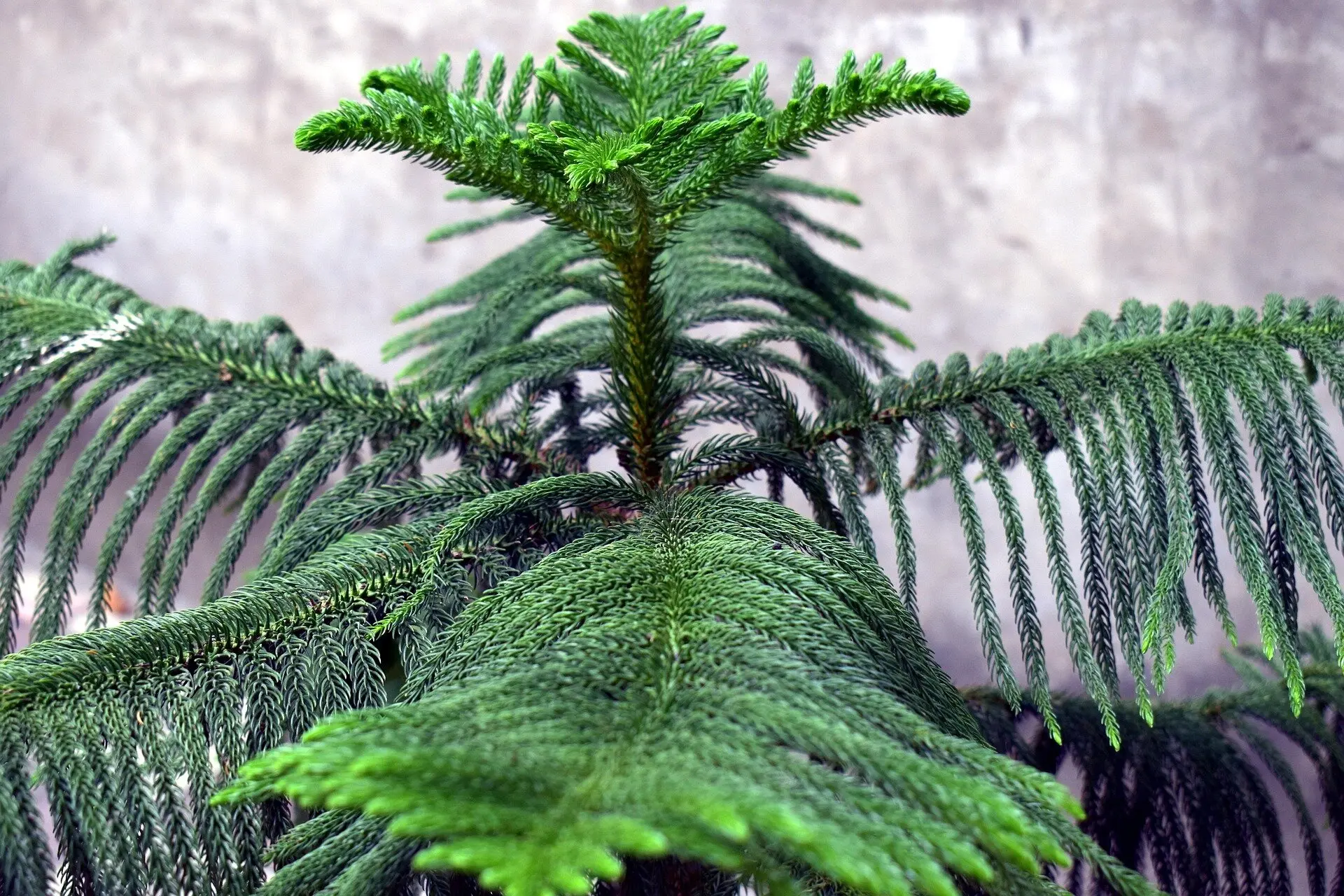
The Norfolk Island pine is the little potted tree you see by the grocery store checkout every December, often with a bow or a few tiny ornaments. Its soft, layered branches grow in neat tiers around a single straight trunk, so it looks like a perfect miniature Christmas tree. Unlike a cut tree, it’s alive, and with the right care it can stay in your home for years, growing a little taller every year.
Despite the name, it isn’t a true pine at all. It’s an Araucaria, a cousin of the monkey puzzle tree, and it comes from Norfolk Island, a small island in the South Pacific between New Zealand and New Caledonia. In the wild it grows into a towering tree up to 200 feet tall. Indoors it grows slowly, usually a few inches a year, and tops out at about 5 to 8 feet after many years. It’s hardy only in zones 10-11, so for most of us it’s a houseplant.
The soft needles are what make it so pleasant to have around. They bend instead of poking, so it’s easy to decorate and easy to live with.
Give it the brightest spot you have, with bright, indirect light, like a spot near an east- or west-facing window. It tolerates lower light for a while, but over time it grows thin and sparse and its lower branches drop. Turn the pot a quarter turn every week, because it leans toward the light and can grow lopsided.
Water when the top inch of soil feels dry, and water thoroughly until it runs out the bottom of the pot. Let it drain, and never leave it sitting in water. Soggy soil leads to root rot, but letting it dry out completely makes the branches turn brown and drop. It likes evenly moist soil, not wet and not bone dry.
Humidity is the hard part in winter. Norfolk Island pines like around 50 percent humidity, and a heated house is often much drier. Set it on a pebble tray, run a humidifier nearby, or group it with other houseplants. Keep it away from heating vents, radiators, fireplaces, and cold drafts from doors. It’s happiest between about 60°F and 75°F.
Feed it once a month in spring and summer with a balanced houseplant fertilizer at half strength. Skip fertilizer in fall and winter, when it’s growing slowly.
Repot only every three or four years, in spring, into a pot just one size bigger with fresh, well-draining potting mix. Norfolk Island pines don’t like having their roots disturbed. Many are sold as several small seedlings growing together in one pot, so it looks fuller. Leave them together; pulling them apart can damage the roots.
Never cut off the top. A Norfolk Island pine grows from the tip of its trunk, and if the top is cut, it won’t grow a new one. It also doesn’t fill in where branches are trimmed. The only pruning it needs is snipping off dead brown branches at the trunk.
Decorating it for the holidays is part of the fun. Keep the ornaments small and light so they don’t weigh the soft branches down, and use cool LED lights instead of old-fashioned bulbs that get hot. Some trees are sold sprayed with glitter or paint on their tips. It washes off over time, and the new growth will come in green.
After the holidays, keep it as a houseplant. It can spend the summer outdoors in a shady, sheltered spot, but bring it back inside before nights drop below 50°F.
Common problems:
- Brown, crispy branches usually mean the air is too dry or the soil dried out completely.
- Yellow, drooping branches usually mean too much water or soggy soil.
- Lower branches drop as the tree gets older. A few is normal, but many at once usually means it needs more light.
- A tree that leans or grows lopsided needs to be turned every week.
- Watch for mealybugs and spider mites, especially in dry winter air. Rinse the branches in the shower or use insecticidal soap.
Norfolk Island pine isn’t known to be seriously poisonous, but chewing on it can upset a pet’s stomach, so keep it out of reach of cats and dogs that like to nibble.
Soft, slow-growing, and happy in a bright corner, the Norfolk Island pine is a Christmas tree that doesn’t end up on the curb in January. Give it light, steady water, and a little humidity, and it can be part of your holidays for years.
| Common Name | Norfolk Island pine, Norfolk pine, Star pine |
|---|---|
| Botanical Name | Araucaria heterophylla |
| Family | Araucariaceae |
| Mature Size | Indoors 5-8 ft. tall; in the wild up to 200 ft. |
| Sun | Bright, indirect |
| Soil | Well-draining potting mix |
| Flower Color | None (cones only on mature trees outdoors) |
| Native Area | Norfolk Island, South Pacific |
| Toxicity | Can upset a pet’s stomach if chewed |
Frequently asked questions
Is a Norfolk Island pine a real pine? No. It’s an Araucaria, related to the monkey puzzle tree, not a true pine.
How do you keep a Norfolk Island pine alive after Christmas? Keep it in bright, indirect light, water when the top inch of soil is dry, add humidity in winter, and turn it every week. It can live for years as a houseplant.
Why is my Norfolk Island pine turning brown? Usually the air is too dry or the soil dried out completely. Raise the humidity and keep the soil evenly moist.
Can you cut the top off a Norfolk Island pine? No. It grows from the tip of its trunk, and if the top is cut, it won’t grow a new one.
How big does a Norfolk Island pine get indoors? It grows slowly, a few inches a year, and usually reaches 5 to 8 feet after many years.
From the QT Bird Community
Join the conversation
Comments on QT Bird articles live in our community. Joining is free: share your tips, ask questions and get replies.
Sign up to PostLog in