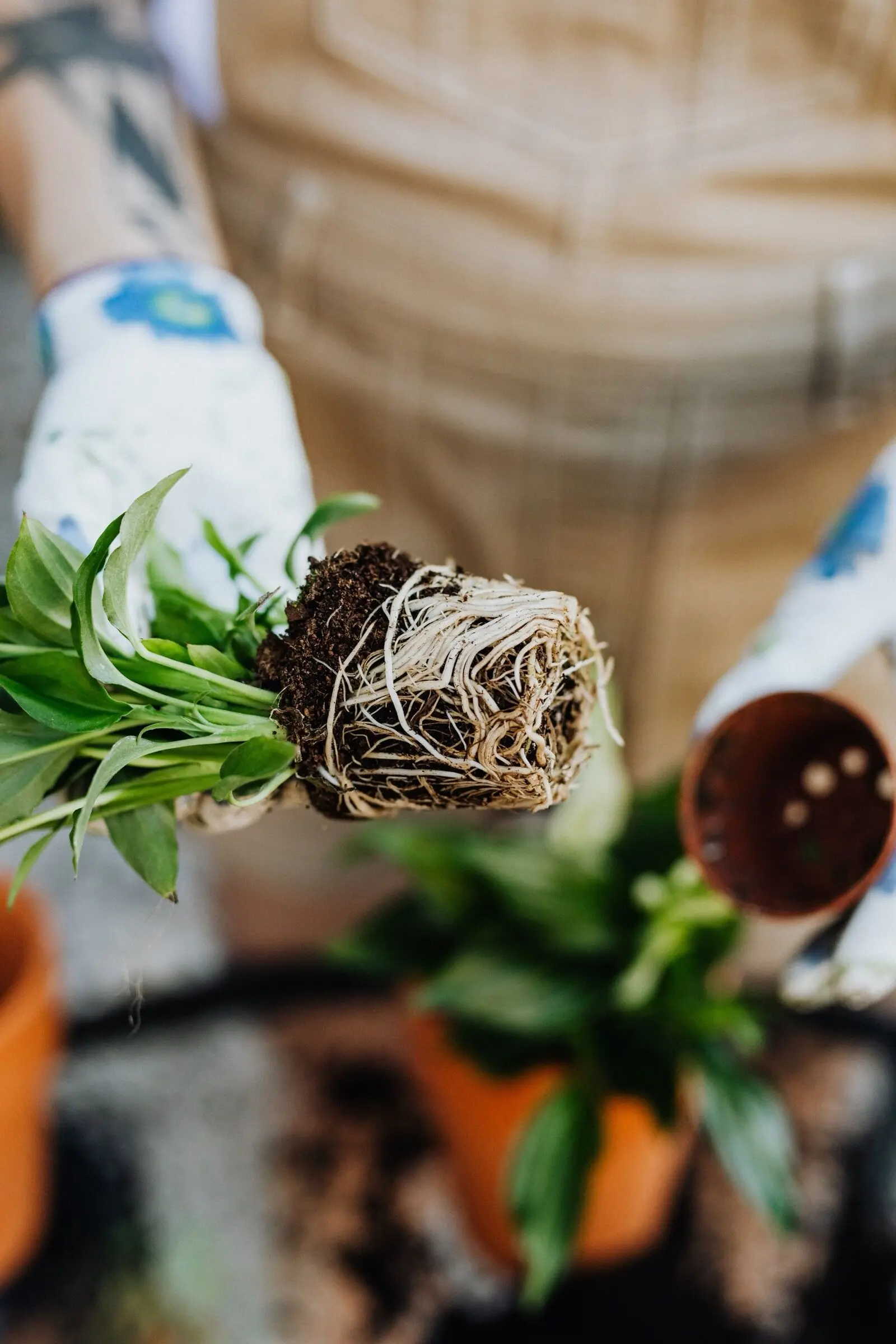
Sooner or later, every houseplant outgrows its pot. The roots fill every inch of space, the soil dries out faster than you can keep up with, and the plant just stops growing. A new pot and fresh soil can fix all of that in about 20 minutes.
Repotting houseplants can feel a little scary the first time, especially with a plant you love. But it’s one of the best things you can do for a plant that’s ready for it. This guide covers how to tell when a plant needs a new pot, the best time to do it, a step-by-step walkthrough, tips for specific plants, and what to expect in the weeks after.
How do I know my plant needs repotting?
Don’t repot on a schedule. Repot when the plant tells you it’s ready. According to University of Illinois Extension, these are the signs to watch for:
- Roots growing out of the drainage holes
- Roots showing on top of the soil
- A pot so full of roots that there’s barely any soil left
- New leaves coming in smaller than usual
- Wilting between your normal waterings
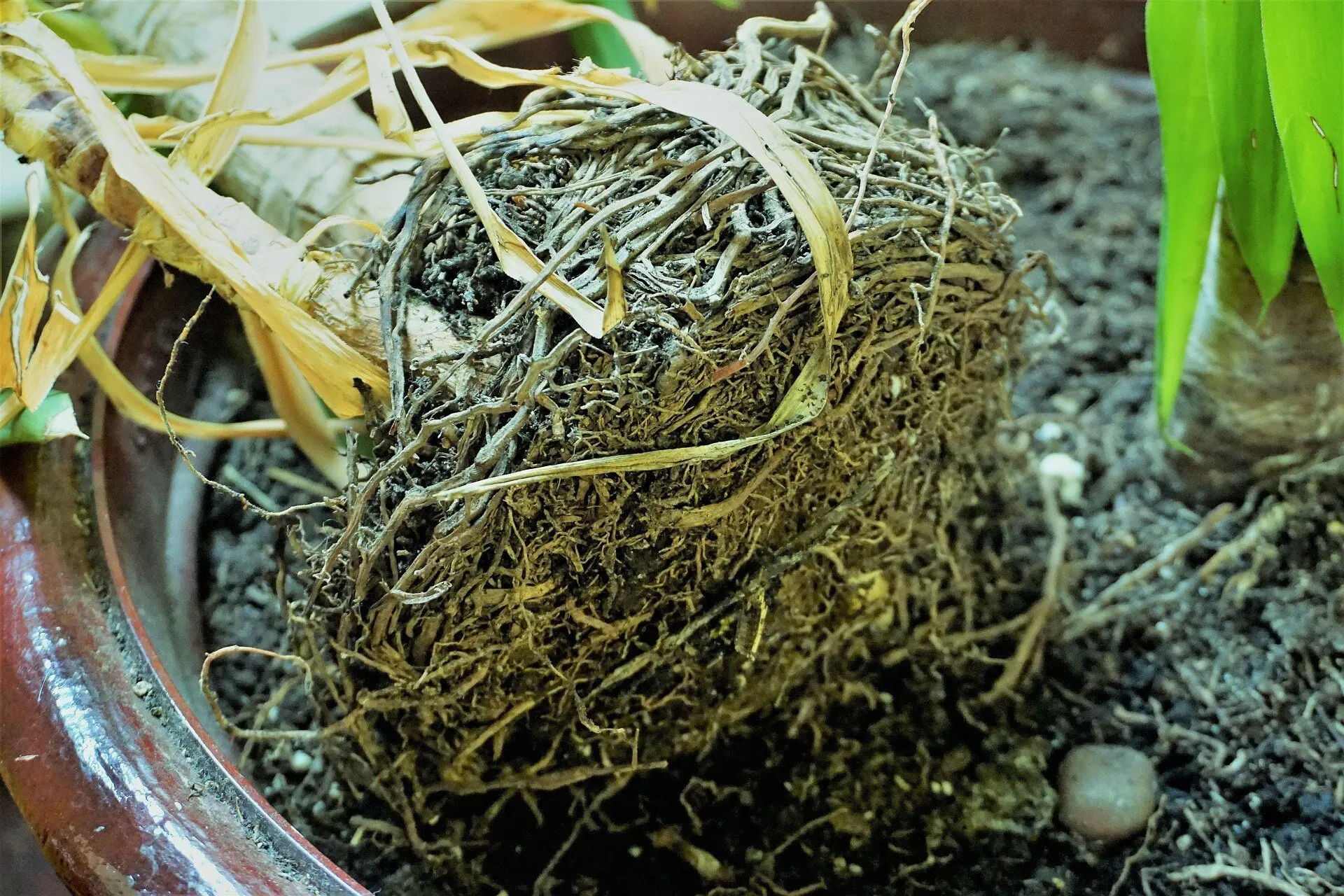
The easiest way to know for sure is to slide the plant out of its pot and look. If the roots are wrapped around the outside of the root ball and you can hardly see soil, it’s time. If you see mostly soil with some roots running through it, slide it back in. It’s happy where it is.
Not every plant needs a new pot every year. Fast growers like pothos, spider plants, and monsteras may need one every year or two. Slow growers like snake plants, ZZ plants, and cacti can go several years in the same pot, and some, like snake plants and peace lilies, actually bloom or grow better when they’re a little snug.
When is the best time to repot?
Spring and early summer are best. That’s when houseplants are actively growing, so they recover quickly and send new roots out into the fresh soil.
“Spring is ideal for repotting, but only if your plant truly needs more space,” says Robin Trott, an Extension educator in Douglas County with University of Minnesota Extension.
In fall and winter, most houseplants slow down. A plant repotted then sits in a bigger pot of wet soil it can’t use yet, which raises the risk of root rot.
There are a few times when you shouldn’t wait for spring:
- Root rot. If the soil smells sour and the roots are brown and mushy, repot right away, whatever the season.
- Pests in the soil. Fungus gnats or root mealybugs are good reasons to replace the soil now.
- A plant that keeps tipping over. Move a top-heavy plant into a heavier pot when it starts to topple.
And a few times when you should hold off:
- A plant you just brought home. Give it 2 to 3 weeks to settle into your home first. Moving to a new spot is stressful enough.
- A plant in bloom. Wait until it’s done flowering.
- A plant that’s struggling for another reason. If it’s dropping leaves from cold drafts or low light, fix that first. A new pot won’t help, and the extra stress can make things worse.
What you need to repot a houseplant
Gather everything before you start, so the plant isn’t sitting out of its pot while you look for things.
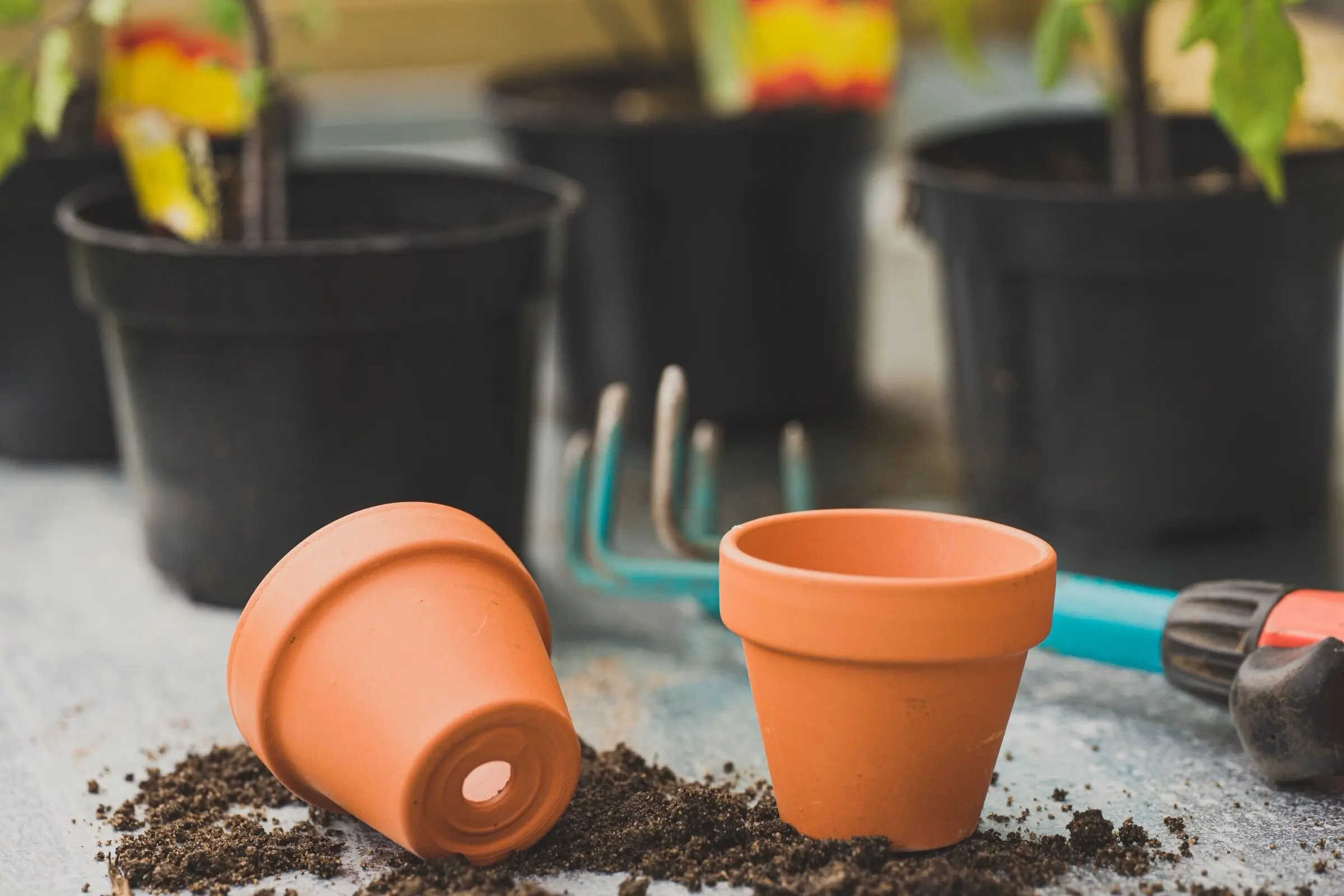
- A new pot with a drainage hole, 1 to 2 inches wider than the old one. My guide to choosing the right pot for your houseplant covers sizes and materials.
- Fresh potting mix that suits the plant: regular indoor potting mix for most tropicals, a chunky aroid mix with bark and perlite for monsteras and philodendrons, cactus mix for succulents, and bark mix for orchids.
- A trowel or old spoon for scooping soil.
- Clean scissors or pruners for trimming roots.
- A butter knife for loosening a plant stuck in its pot.
- A chopstick or pencil for working soil into gaps.
- Newspaper, a tarp, or a tray to catch the mess. Repotting in the bathtub or outside works too.
- Gloves, especially for plants with irritating sap, like philodendrons, pothos, and euphorbias, or spines, like cacti.
How to repot a houseplant, step by step
1. Water the plant first. Water it about an hour before you repot, as Penn State Extension recommends. A damp root ball slides out of the pot more easily and holds together better, and the roots are less stressed than they would be if they were bone dry.
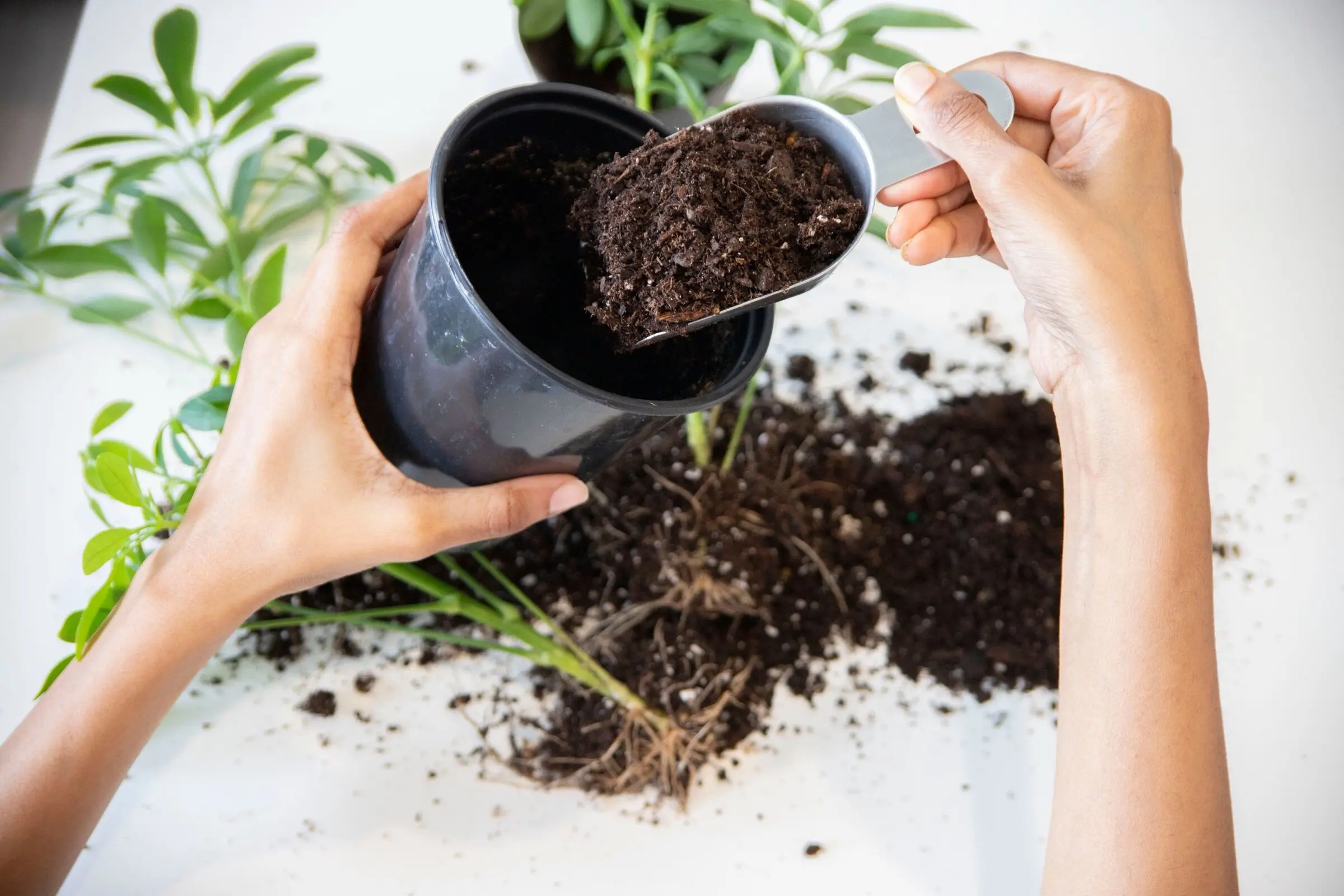
2. Get the new pot ready. Cover the drainage hole with a piece of mesh, a coffee filter, or a scrap of paper towel, so soil doesn’t wash out the bottom. Skip the gravel. It doesn’t help drainage. Add enough fresh potting mix to the bottom so the plant will sit at the right height.
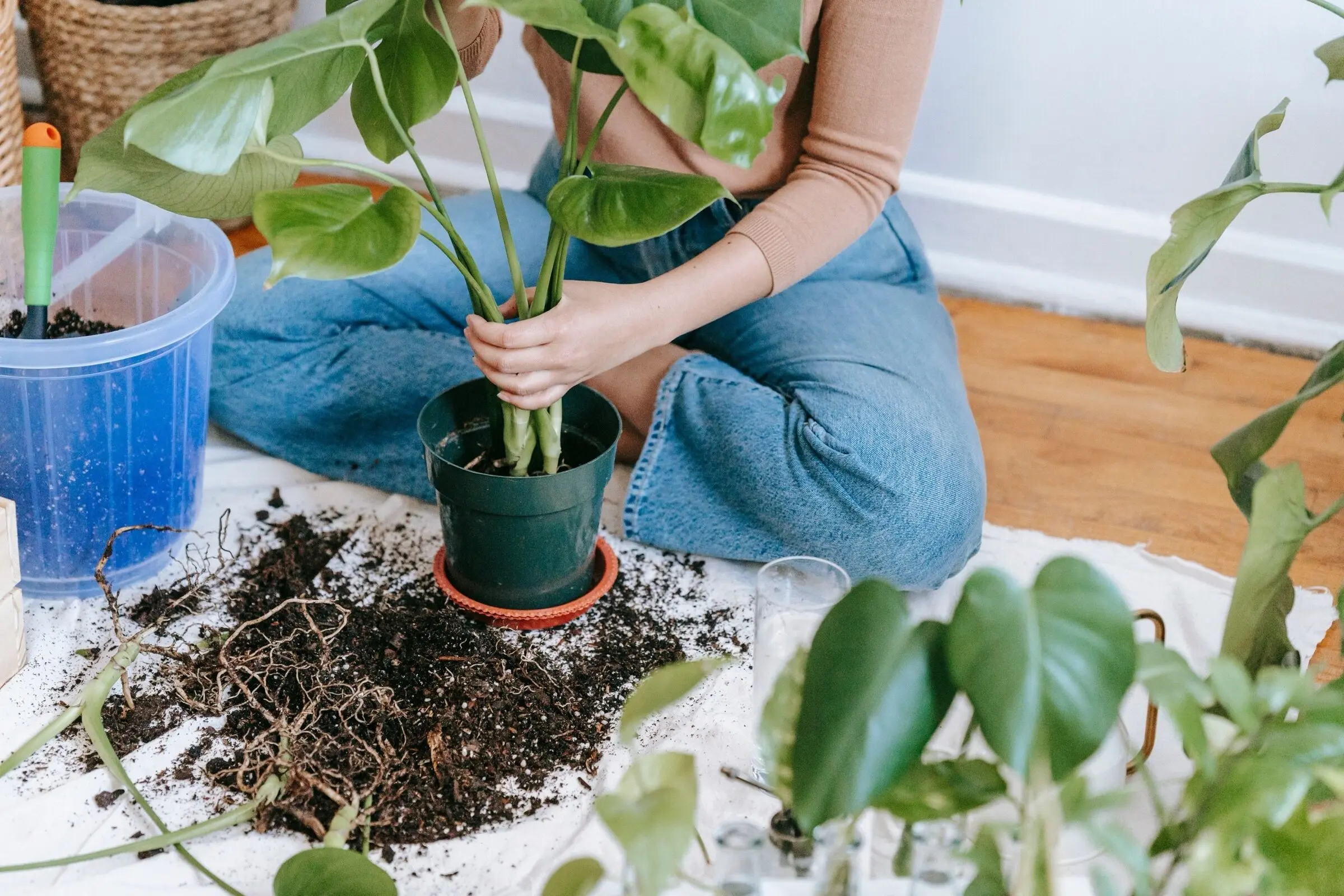
3. Take the plant out. Turn the pot on its side, hold the plant at the base of its stems, and gently ease it out. Squeeze the sides of a plastic pot to loosen it. For a clay or ceramic pot, run a butter knife around the inside edge. Don’t pull the plant out by its stems or leaves. If it’s really stuck, it’s better to cut or break the old pot than tear the roots.
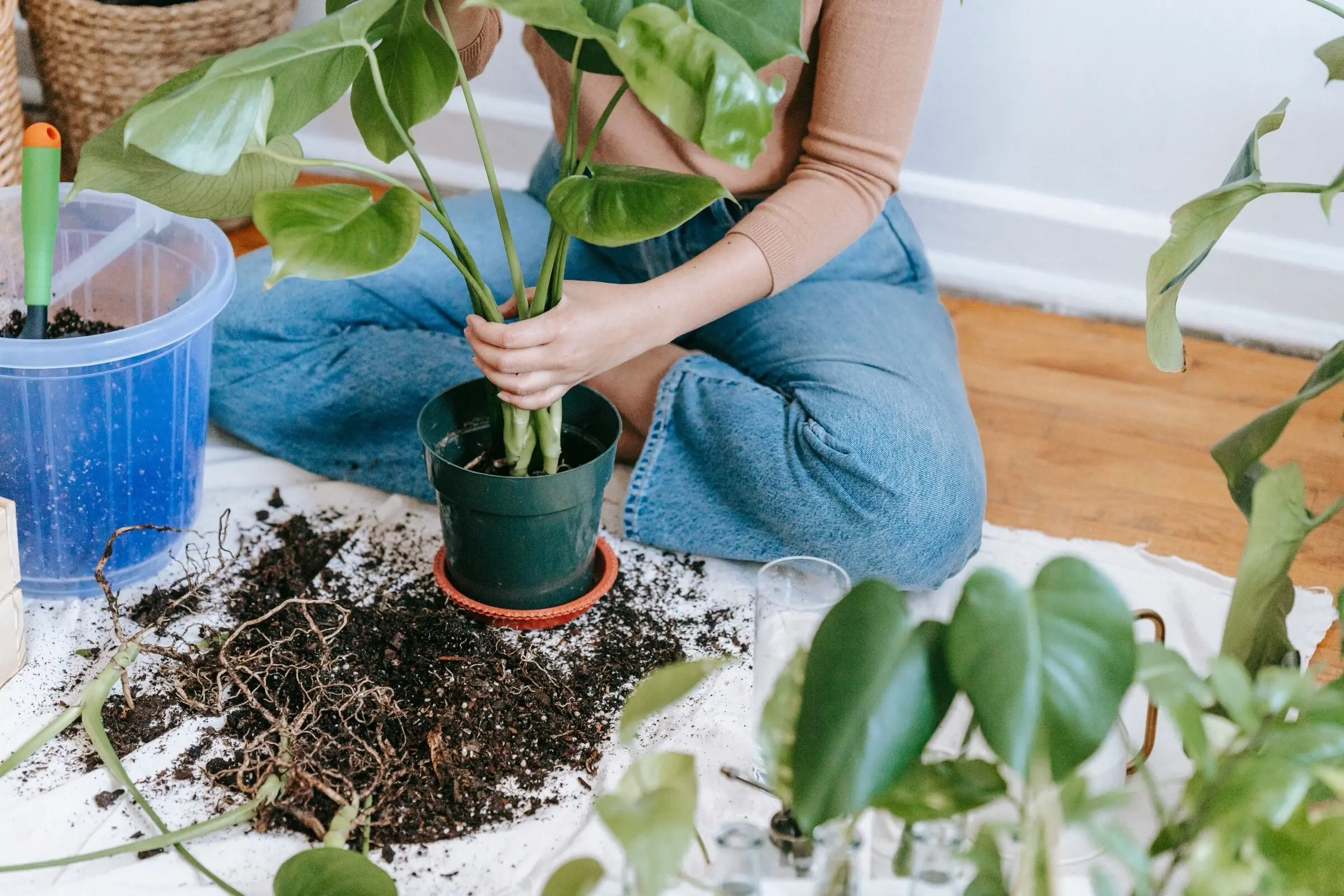
4. Check the roots. Healthy roots are firm and white, tan, or light orange, depending on the plant. Brown, black, or mushy roots that pull apart easily are rotted. Trim those off with clean scissors.
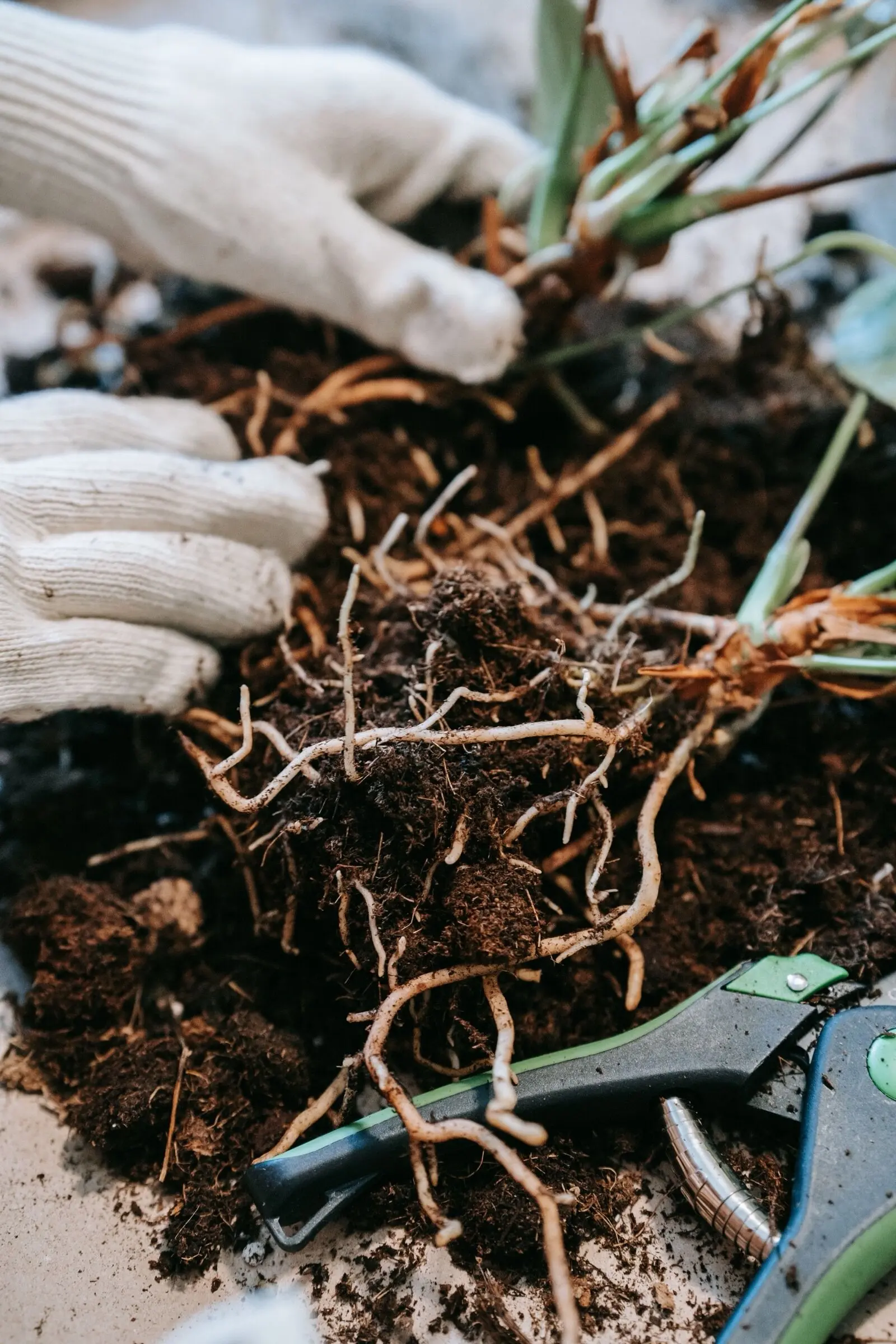
5. Loosen the roots. If the roots are circling around the outside of the root ball, gently tease them apart with your fingers so they’ll grow out into the new soil instead of continuing to circle. If they’re packed into a tight mat, make 3 or 4 shallow cuts down the sides of the root ball with a clean knife. It looks harsh, but it encourages new roots to branch out.
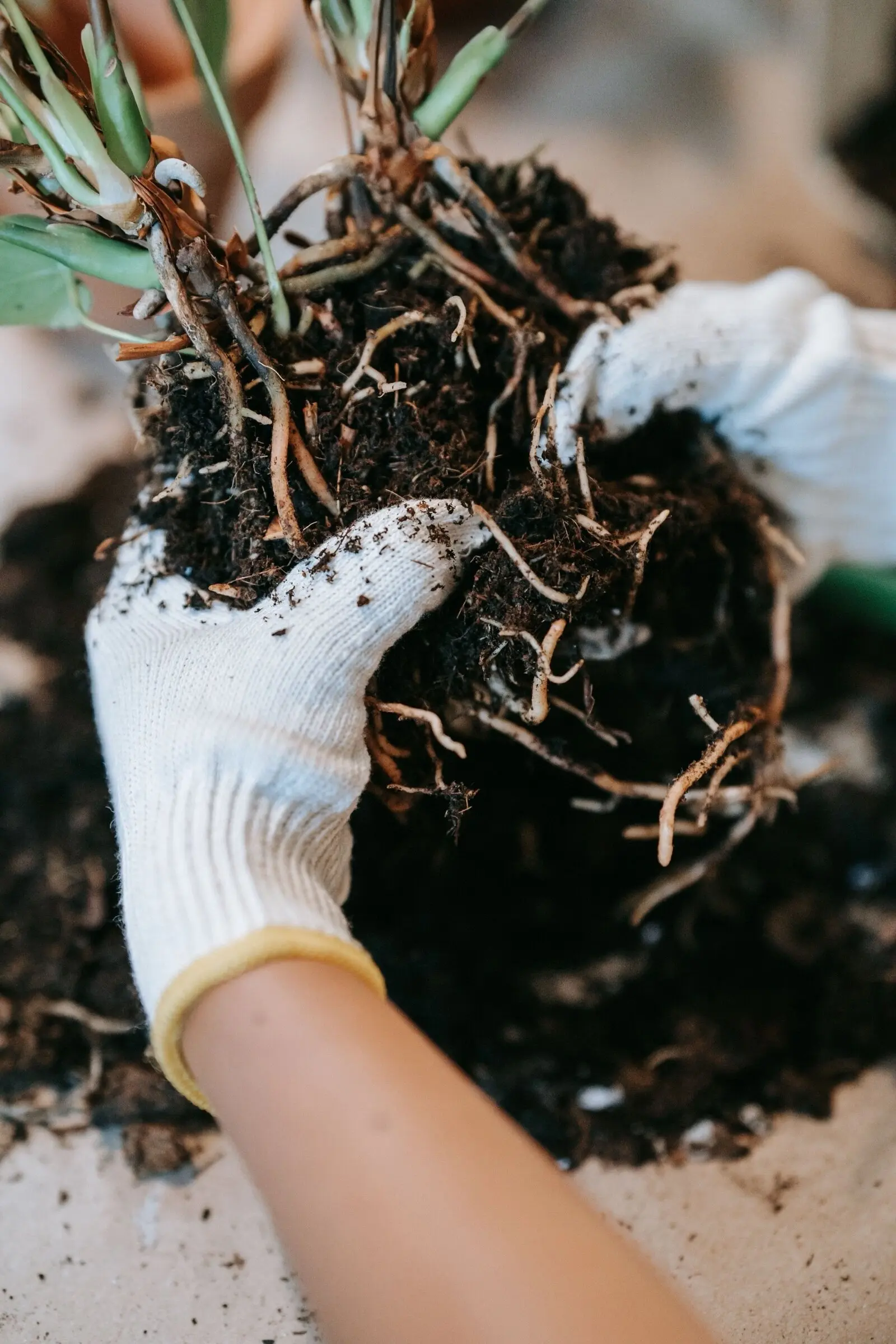
6. Set the plant at the right height. The plant should sit at the same depth it did in its old pot. Don’t bury the stems deeper. The top of the root ball should sit about an inch below the rim, according to Penn State Extension, which leaves room for water to soak in instead of running over the edge.
7. Fill in around the sides. Add fresh potting mix around the root ball. Tap the pot on the table a few times to settle it, and use a chopstick to work soil into any air pockets. Press gently with your fingers, but don’t pack it down hard. Roots need air.
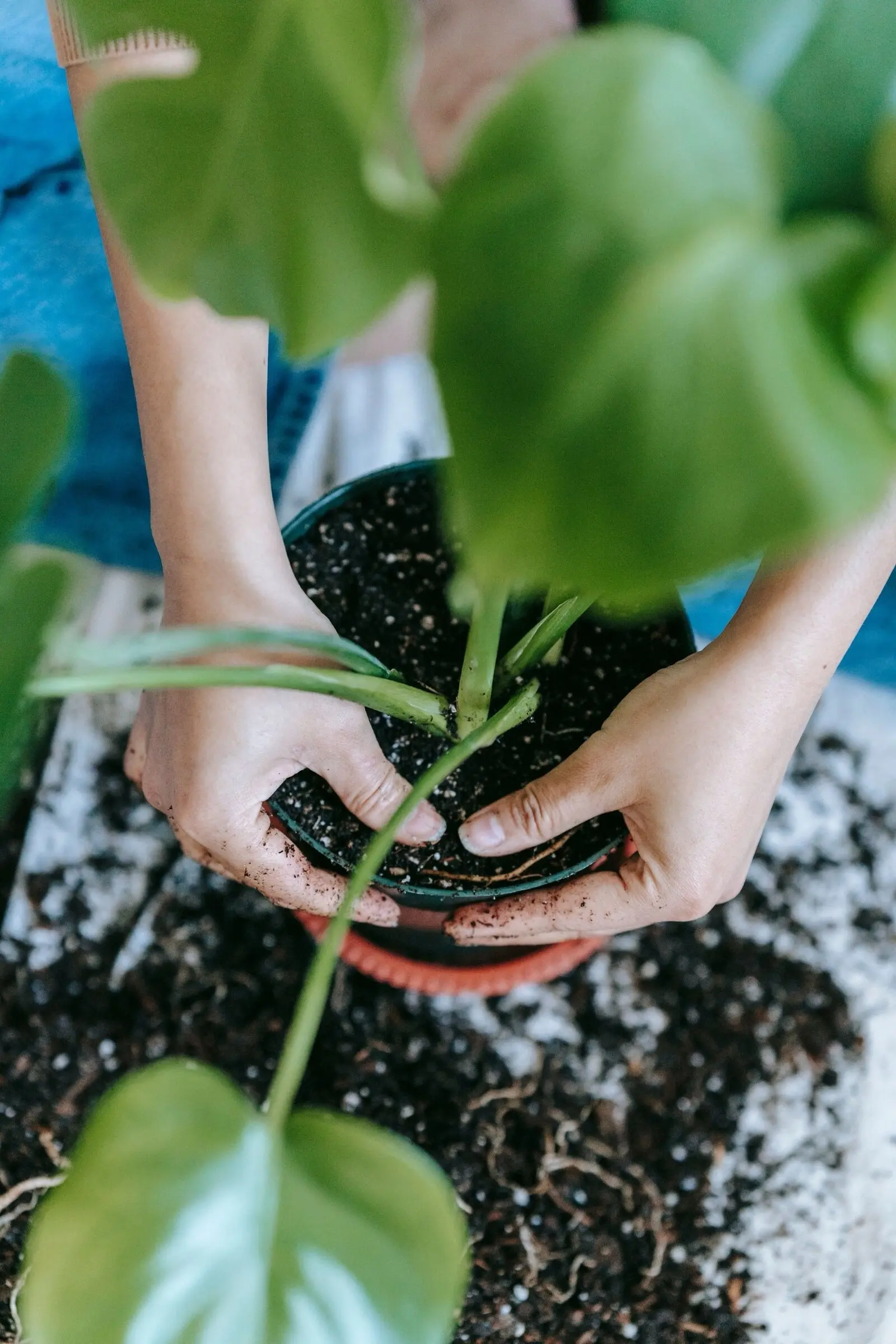
8. Water thoroughly. Water slowly until it runs out the drainage holes. The soil will settle a bit, so top it off with a little more mix if you need to. Let it drain, and empty the saucer.
How to repot specific plants
Most houseplants follow the steps above, but a few need some extra care.
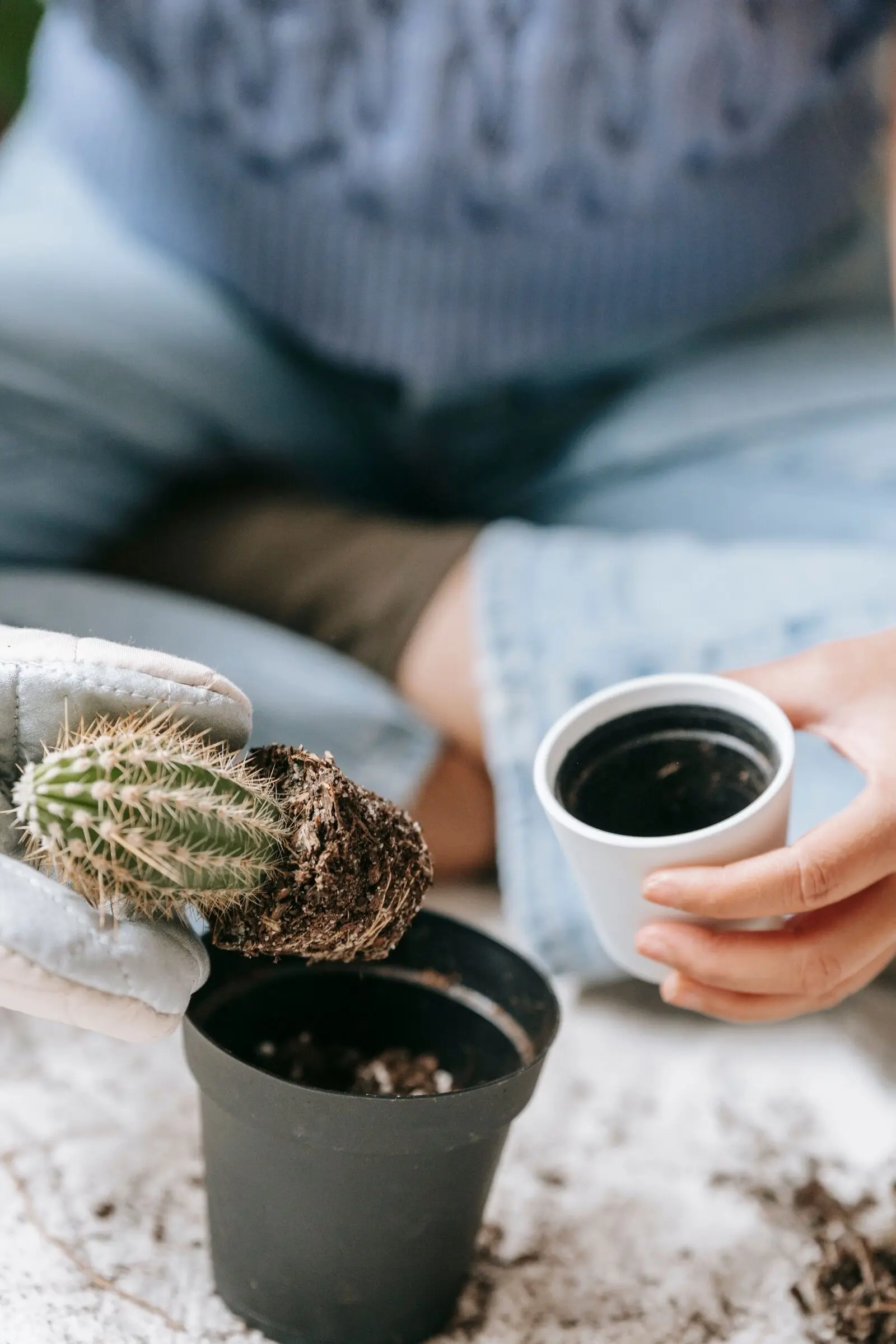
Succulents and cacti. Use a gritty cactus mix and a pot that isn’t much bigger than the root ball. Let the soil be dry when you repot, and wait about a week before watering, so any broken roots can heal over first. For spiny cacti, wrap the plant in folded newspaper or use kitchen tongs to hold it.
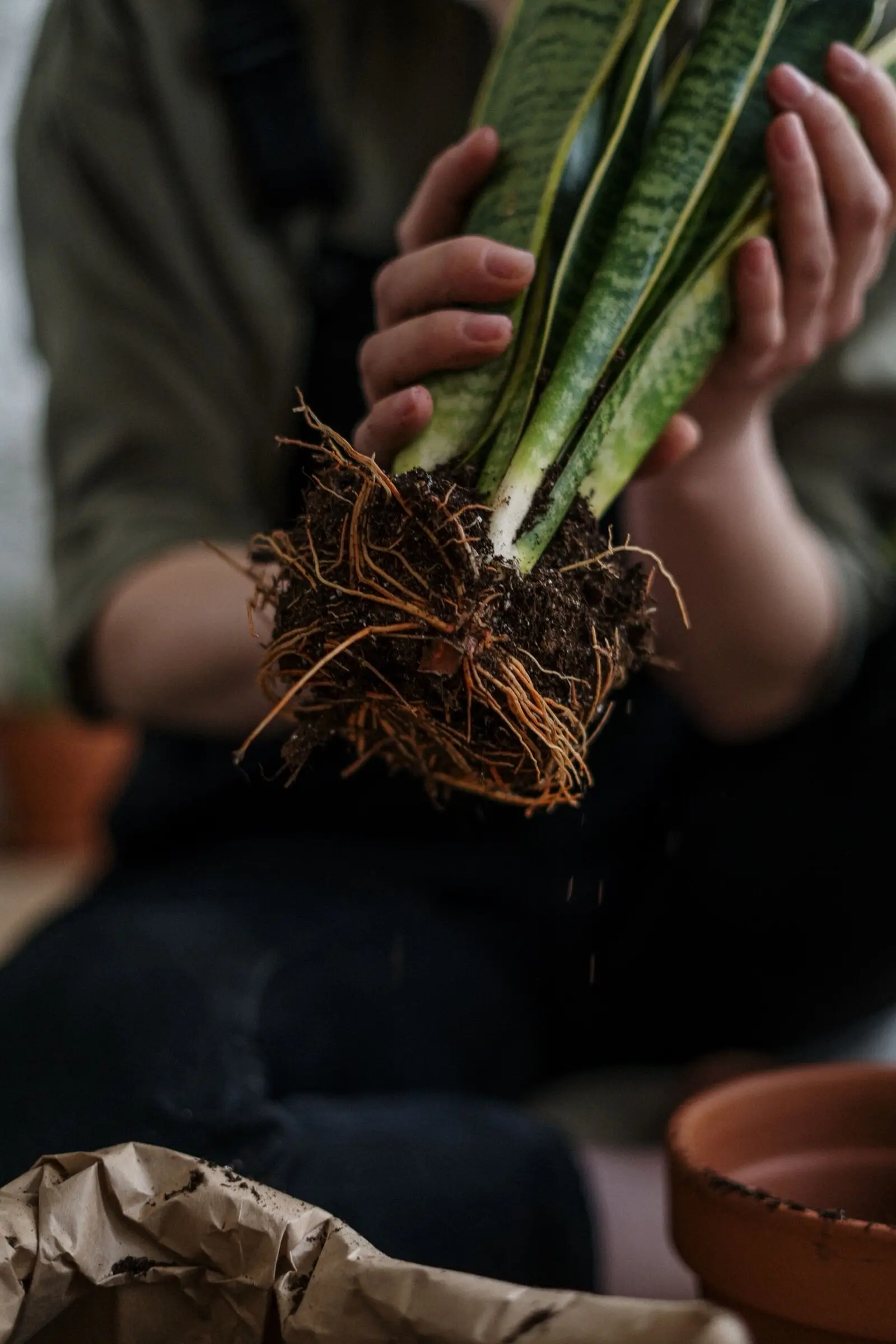
Snake plants. Snake plants like to be snug, so only repot when the roots are pushing on the pot or cracking it. A heavy terra cotta pot keeps a tall snake plant from tipping. This is also a good time to divide a crowded plant into two or three smaller ones.
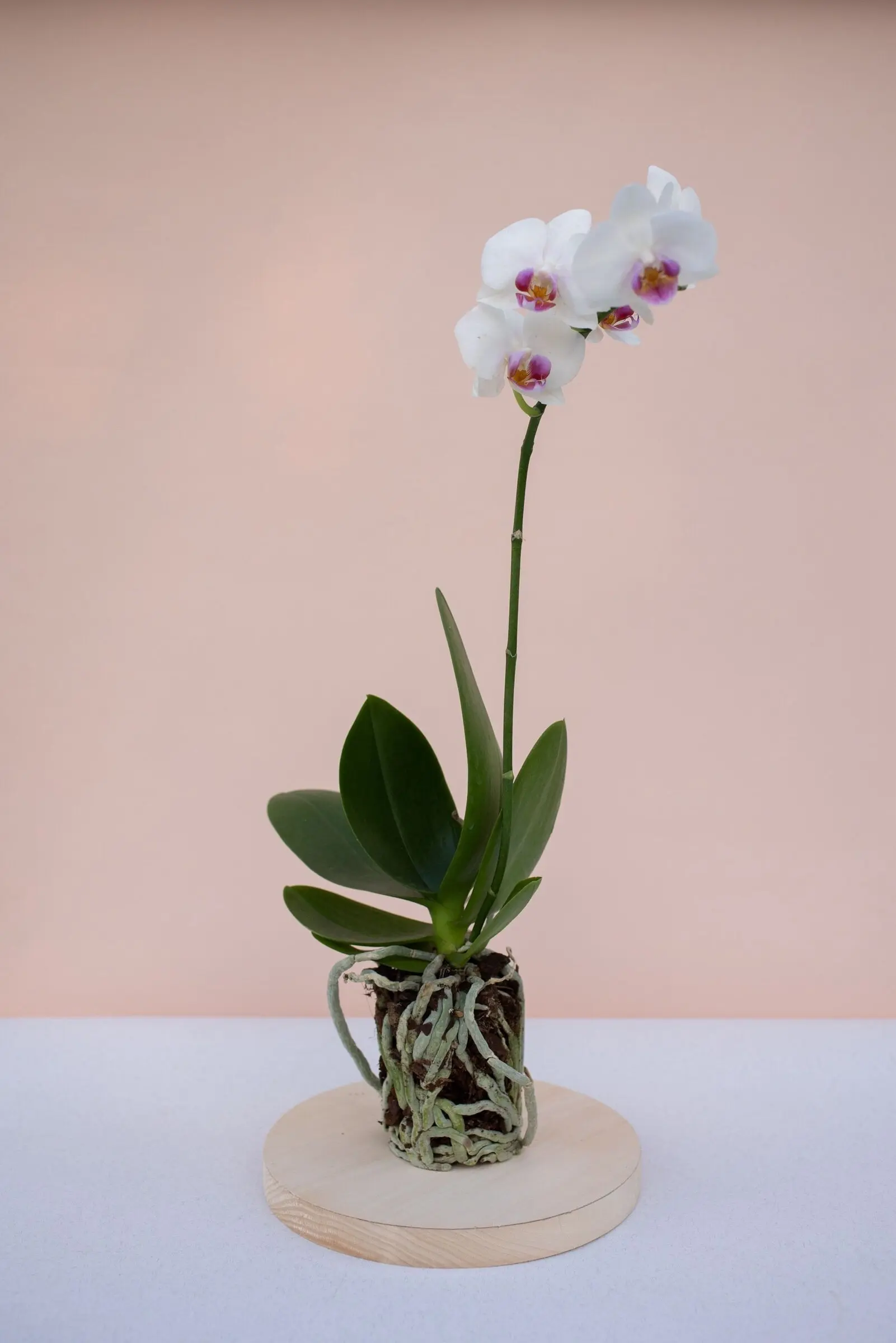
Orchids. Repot moth orchids after they finish blooming, every year or two, when the bark mix starts to break down. Use fresh orchid bark, not potting soil, and trim off any hollow or mushy roots.
Bromeliads. Bromeliads have small root systems and rarely need a bigger pot. If one is top-heavy, move it into a heavier pot of the same size. When the mother plant fades, you can separate the pups and pot them on their own.
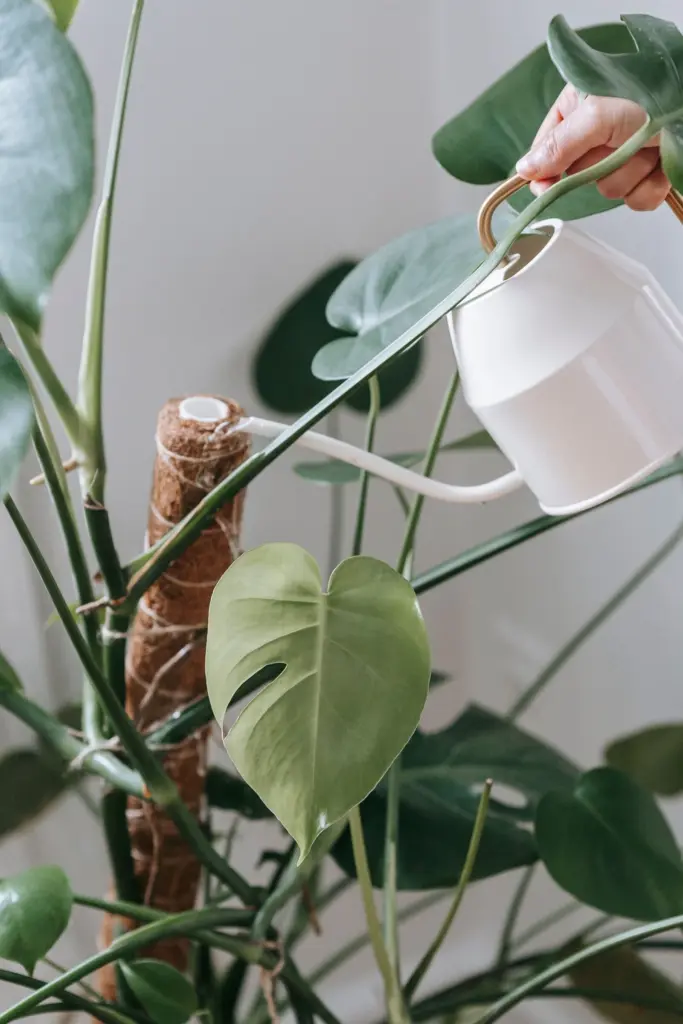
Monsteras, philodendrons, and other climbers. If your plant grows on a moss pole, repot the pole with it, and set it in the new pot before you fill in the soil. A chunky aroid mix keeps their thick roots from staying soggy.
Big floor plants. Once a plant gets too big to repot easily, you can top-dress it instead. Scrape off the top 1 to 2 inches of old soil and replace it with fresh potting mix. It gives the plant fresh nutrients without the heavy lifting.
Here’s a quick guide for the plants in my care articles:
| Plant | How often | Best mix | Tip |
|---|---|---|---|
| Pothos, philodendrons, monsteras | Every 1 to 2 years | Chunky aroid mix | Repot a moss pole along with the plant |
| Spider plants | Every 1 to 2 years | Regular potting mix | Pot up the babies while you’re at it |
| Peace lilies | Every 2 years or so | Regular potting mix | Blooms better a little snug |
| Snake plants, ZZ plants | Every 3 to 5 years | Cactus or gritty mix | Heavy pot to prevent tipping |
| Succulents, cacti, jade plants | Every 2 to 4 years | Cactus mix | Wait a week to water |
| Calatheas, ferns, nerve plants | Every 1 to 2 years | Regular potting mix | Keep them moist after repotting |
| Orchids | Every 1 to 2 years | Orchid bark | Repot after blooming |
| Bromeliads | Rarely | Orchid or bromeliad mix | Small pot; separate pups instead |
Dividing plants while you repot
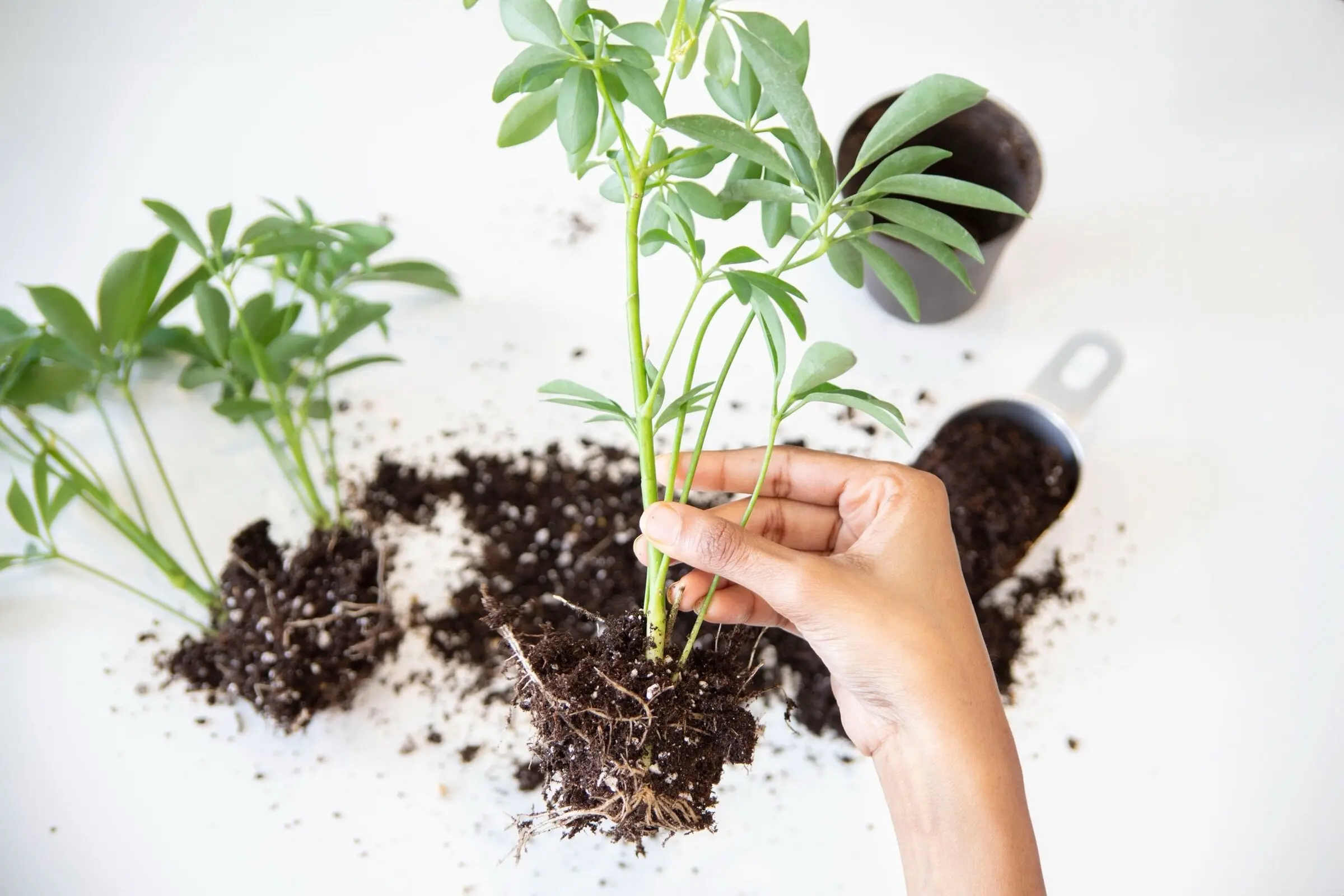
Repotting is the perfect time to divide plants that grow in clumps. Snake plants, spider plants, peace lilies, Chinese evergreens, calatheas, and ferns can all be divided.
Once the plant is out of its pot, look for natural sections, each with its own leaves and roots. Gently pull them apart with your hands, or cut through the root ball with a clean knife if it’s tight. Pot each section in its own container, sized to its root ball, and water well. You get a fresh start for the original plant and a few new plants to keep or share.
What to expect after repotting
Don’t panic if your plant looks a little sad for a week or two. A plant that droops, drops a leaf or two, or stops growing for a bit after repotting is going through transplant shock. It’s normal, and most plants bounce back on their own.
The fix is mostly patience. Give plants enough time, the right amount of water, and the right light, Christopher Enroth of University of Illinois Extension says.
A few things help:
- Keep it out of hot, direct sun for about a week while the roots settle in. Bright, indirect light is perfect.
- Water carefully. Fresh potting mix holds water differently than old, compacted soil, and the bigger pot holds more of it. Check the soil before watering instead of sticking to your old routine.
- Skip the fertilizer for a while. Most bagged potting mixes already have some fertilizer in them, and new roots are tender. I wait about a month before I start feeding again.
- Leave it alone. Don’t move it around the house or repot it again. Let it settle.
If the plant is still wilting after 2 or 3 weeks, check the soil. Soil that’s still soaking wet means it’s getting too much water for its new, bigger pot.
Common repotting mistakes
- Going too big. A pot that’s way too big holds wet soil the roots can’t reach, which leads to root rot.
- Using garden soil. Soil from the yard is too heavy for pots and can bring in pests. Use a bagged potting mix.
- Burying the stem. Planting deeper than before can rot the stem.
- Packing the soil hard. Roots need air pockets. Press gently.
- Repotting at the wrong time. Winter repotting and repotting a stressed plant slow recovery.
- Repotting when it isn’t needed. If the roots still have room, leave the plant alone.
- Using a pot without a drainage hole. If you love a pot without one, use it as a decorative outer pot instead.
Quick repotting checklist
- Check for roots circling the pot or growing out the bottom.
- Wait for spring or early summer, unless there’s root rot or pests.
- Choose a pot 1 to 2 inches wider, with a drainage hole.
- Water an hour before you start.
- Loosen circling roots and trim any rotted ones.
- Keep the plant at the same depth.
- Water well, then go easy on water and fertilizer for a few weeks.
Repotting gets easier every time you do it. Once you’ve seen what healthy roots look like, you’ll know exactly when your plants are ready for more room.
Frequently asked questions
How often should I repot my houseplants? It depends on the plant. Fast growers like pothos and spider plants may need a new pot every year or two. Slow growers like snake plants and cacti can go 3 to 5 years. Repot when roots fill the pot or grow out the bottom.
What time of year is best for repotting houseplants? Spring and early summer, when plants are actively growing. Repot right away at any time of year if a plant has root rot or pests in the soil.
Should I water my plant before or after repotting? Both. Water about an hour before repotting so the root ball slides out easily, and water thoroughly after. The exception is succulents and cacti, which you repot dry and water about a week later.
Why is my plant drooping after repotting? That’s usually transplant shock, and it’s normal. Keep the plant out of hot sun, don’t overwater, and give it a week or two to recover.
Should I break up the roots when repotting? If the roots are circling the root ball, yes. Gently tease them apart so they grow out into the new soil. Trim any brown, mushy roots.
Can I reuse old potting soil? It’s best not to. Old soil is compacted, low in nutrients, and can carry pests or disease. Use fresh potting mix.