
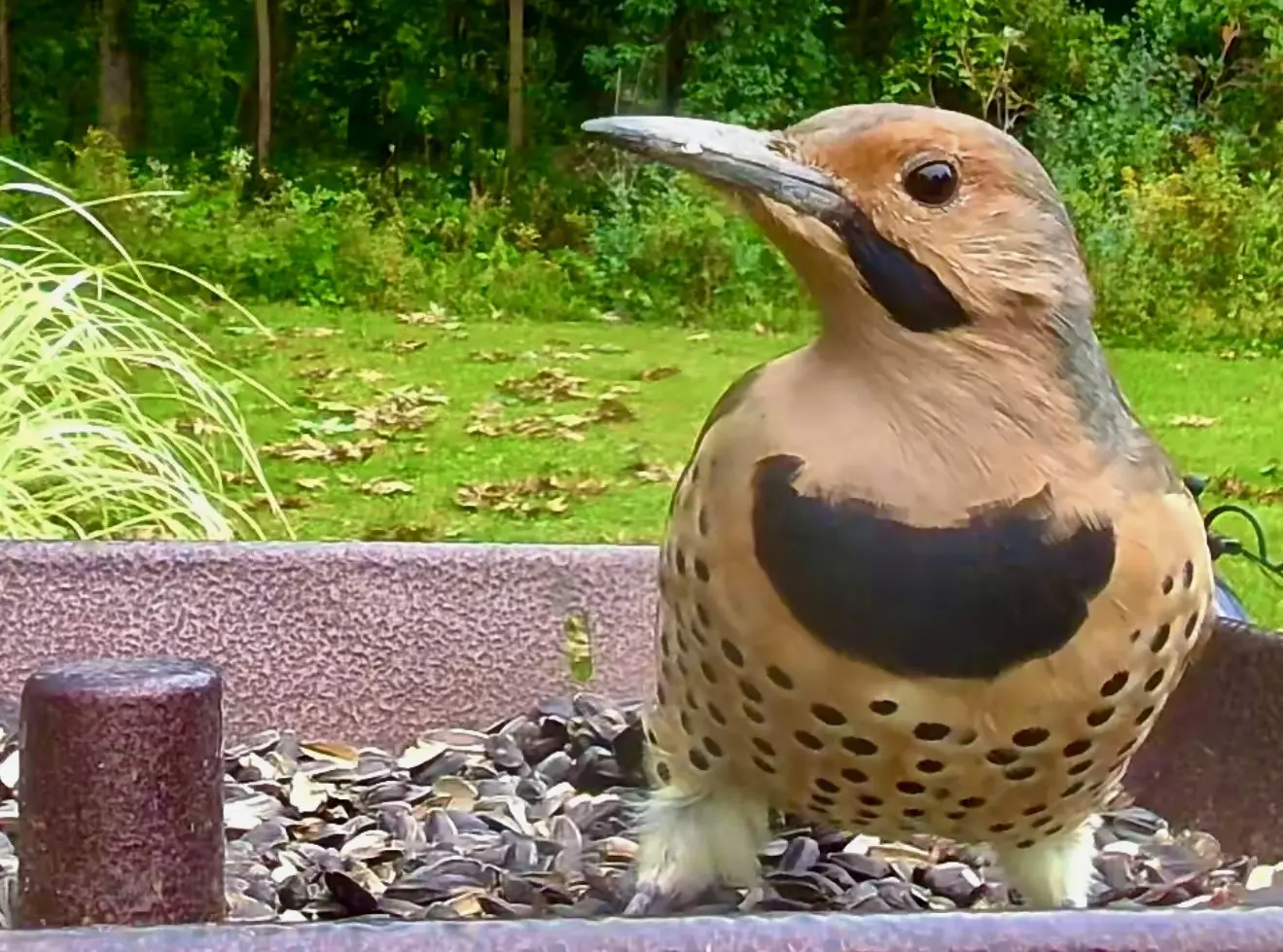
A good bird field guide turns a mystery visitor at the feeder into a name you can say out loud. The best ones do more than list species. They teach you what to look for, from the shape of a bill to the pattern on a wing, so the next sighting comes easier. This list gathers 18 books and 7 apps that birding sites recommend, from timeless classics to newer favorites, with a pick for every skill level and budget.
Entries appear alphabetically within each group. They aren’t ranked.
Field guides for the whole continent
Kaufman Field Guide to Birds of North America (Kenn Kaufman)
Many beginner lists recommend this as a first guide. Kaufman uses edited photographs, color-coded tabs for each bird group and a layout that puts range maps and text opposite the pictures. It’s compact enough to toss in a daypack. The edition is from 2005, so some bird names have since changed.
National Geographic Field Guide to the Birds of the United States and Canada, 8th edition (Ted Floyd)
The 2025 edition covers 1,150 species and includes Hawaii for the first time. It adds 240 new illustrations, thumb tabs, a visual index inside the covers and notes that point out key field marks. The previous edition (7th, by Jon Dunn and Jonathan Alderfer, 2017) covers 1,023 species if you want a cheaper used copy.
Peterson Field Guide to Birds of North America, 2nd edition (Roger Tory Peterson)
Peterson’s 1934 guide launched the modern field guide, and this edition carries on that legacy. The 2020 update adds 25 new plates covering Hawaii, plus refreshed text and range maps. The lively artwork makes it a joy to browse.
The Sibley Guide to Birds, 2nd edition (David Allen Sibley)
Audubon magazine singles this out as a top overall pick. Sibley painted nearly 7,000 illustrations showing different plumages, and every species gets habitat and voice notes. The second edition added more than 600 new paintings and 111 rare species. It’s hefty, so it works well as a home reference.
The Stokes Field Guide to the Birds of North America (Donald and Lillian Stokes)
This photo guide packs in 853 species and more than 3,400 photographs, covering males, females, juveniles and birds in flight. It’s heftier than Kaufman but shows more pictures of each bird. Detailed song descriptions and range maps round out each entry.
Regional and state guides
All About Birds Regional Field Guides (Cornell Lab of Ornithology)
This series of seven regional books draws on the Cornell Lab’s popular website. Each bird gets four photos covering males, females, breeding and nonbreeding plumage and immatures. A 58-page section at the back covers feeding birds, building nest boxes, photography and gardening for birds.
The Crossley ID Guide: Eastern Birds (Richard Crossley)
Audubon recommends this for visitors to the U.S. Instead of one bird per picture, Crossley arranges photographs into scenes that show birds in their natural habitat at different distances. Reviewers say it works better for studying at home than for carrying on a hike.
National Geographic Field Guide to the Birds of the United States and Canada, East (2nd edition)
This 2025 regional edition by Ted Floyd covers more than 800 species east of the Rockies. It has annotated illustrations and data-driven range maps. It’s a smaller book than the full national guide, so you flip through fewer pages.
National Geographic Field Guide to the Birds of the United States and Canada, West (2nd edition)
The western companion covers nearly 1,000 species from the Rockies west, including Hawaii. It features all-new text, updated art and data-derived range maps. It suits both backyard beginners and dedicated life-listers.
Peterson Field Guide to Birds of Eastern and Central North America, 7th edition
Peterson’s classic identification system works especially well in a smaller regional book. Arrows point to the field marks that separate look-alike birds, which makes it a good learning tool as well as a reference.
Peterson Field Guide to Birds of Western North America, 5th edition
The 2020 western edition includes 25 new plates covering Hawaii, plus updated text and range maps. It lets birders west of the Rockies use the same trusted system.
The Sibley Field Guide to Birds of Eastern and Western North America, 2nd editions
You get Sibley’s artwork in a lighter, carry-along size, split into two books at the Rocky Mountains. The 2016 Eastern guide covers 650 species with more than 4,600 illustrations. The Western guide covers about 715 species. Most Texas birders do well with the Eastern book.
Birds of [Your State] Field Guides (Stan Tekiela)
Tekiela’s state guides include only the birds you’ll find in one state, about 115 to 134 species per book. The photos are organized by color, so you flip to the yellow section when you see a yellow bird. Range maps and short naturalist notes round out each entry. The series covers many states but not all 50, so check for yours.
Guides for beginners and families
Birding 101: A Folding Pocket Guide for Beginning Birders (Cornell Lab of Ornithology)
This laminated, 12-panel foldout slips into a pocket and explains how to sort birds into categories for easier identification. It also covers basic equipment, feeders and keeping a sightings record. A portion of the proceeds supports the Cornell Lab’s educational work.
National Geographic Kids Bird Guide of North America, 2nd edition (Jonathan Alderfer)
Written for young birders, this 2018 guide profiles 50 popular birds in detail and 100 more in mini-profiles, for 150 species in all. Range maps, fun facts and hands-on activities keep kids engaged. It makes a good gift for a budding birder.
Books that teach you to think like a birder
Peterson Field Guide to North American Bird Nests (Casey McFarland, Matthew Monjello and David Moskowitz)
This 2021 guide teaches you to identify nests by their design, materials and location. It also covers breeding behavior and habitat preferences. It’s a natural fit for anyone who hangs a nest box or finds a surprise in the shrubs each spring.
Sibley’s Birding Basics (David Allen Sibley)
Sixteen short essays and about 200 paintings explain how to identify birds using clues in feathers, habitats, behavior and sounds. It also covers getting started, from equipment to when and where to go. It teaches the skills that make every other guide more useful.
What It’s Like to Be a Bird (David Allen Sibley)
Sibley answers the questions people ask most, like whether birds can smell and whether it’s the same cardinal back at the feeder. It focuses on familiar backyard birds, and most species get life-sized illustrations. The text is nontechnical, so it makes a lovely gift to share with children.
Birding apps
Audubon Bird Guide
This free app covers more than 800 North American species with over 3,000 photos and eight hours of songs and calls. Kenn Kaufman wrote the text. It also shows nearby hotspots and recent sightings from eBird.
BirdNET
This free sound-ID app from the Cornell Lab recognizes more than 3,000 bird species by song and call. It works on iOS and Android. Each recording you make also helps researchers track birds.
eBird (Cornell Lab of Ornithology)
Use eBird to log what you see, keep life and year lists and find nearby hotspots. It works offline, and your reports feed a worldwide citizen-science database. It doesn’t show bird photos or descriptions, so many birders pair it with Merlin.
iBird Pro
This app works offline and shows both illustrations and photographs for each species. It covers North America, the United Kingdom, Hawaii and Palau. It now runs on a subscription with a 7-day trial, and earlier buyers get a free year.
Larkwire
Larkwire teaches bird songs and plumage through games that group similar-sounding birds and quiz you repeatedly. The download is free, and the East and West courses are in-app purchases. Each bird has multiple recordings, so you learn the pattern, not one clip.
Merlin Bird ID (Cornell Lab of Ornithology)
This free app is among the most widely recommended. You can answer a few questions, upload a photo or let Sound ID listen to a singing bird. Cornell says it covers more than 6,000 species with photos, sounds and ID tips, and downloadable bird packs make it handy for travel.
Sibley Birds, 2nd edition
You get the Sibley artwork, range maps and species text from the book on your phone. It covers more than 930 North American species and includes thousands of recorded calls. It replaces Sibley’s older eGuide, so earlier buyers need to purchase it again. It covers only birds north of Mexico.
Frequently asked questions
Do I still need a book if I use an app?
Many birders use both. Books don’t need batteries or cell service and make comparing similar birds easy. Apps give you songs, photo and sound ID and real-time sightings.
Are photos or illustrations better?
Photos show a bird as it looks in real life. Paintings can emphasize the field marks that matter and show every plumage side by side. If you can’t decide, try one of each.
What’s the best guide for a first-timer?
Start with a regional or state book, such as a Tekiela guide, Kaufman or a Sibley regional guide, and add Merlin on your phone. Then branch out as your skills grow.
Whichever you choose, the best field guide is the one you actually carry. Slip one in your coat pocket, keep another by the window and bring your phone along for the songs. Before long you’ll know your neighbors by name, and your whole yard will feel like a better place.

From the QT Bird Community
Join the conversation
Comments on QT Bird articles live in our community. Joining is free: share your tips, ask questions and get replies.
Sign up to PostLog in