
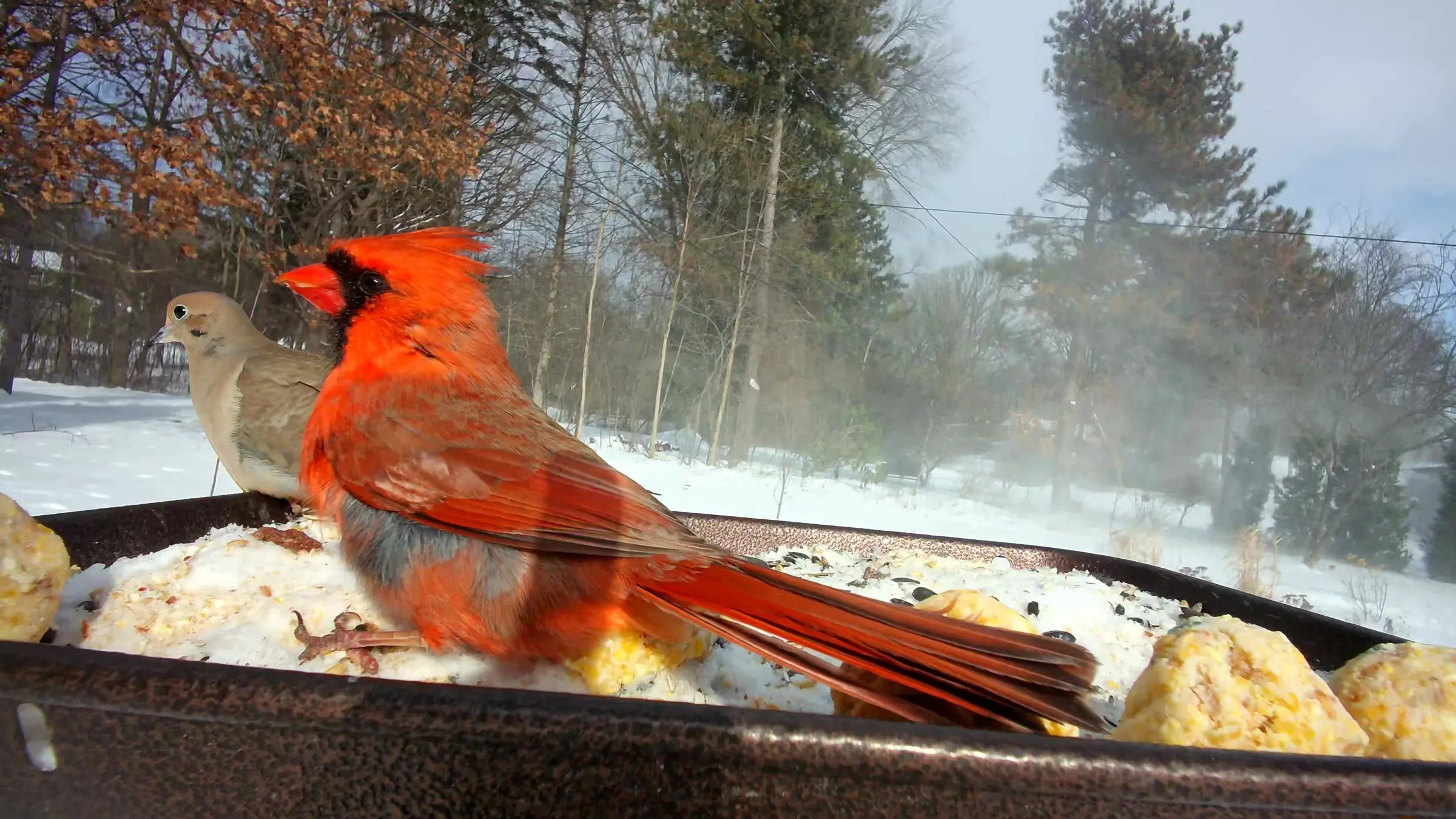
When the ground freezes and the bugs disappear, backyard birds have one top priority: staying warm. The days grow short and the nights stretch long, so small birds burn through energy just to make it to morning. That takes fuel, and a well-stocked feeder can make a real difference on the coldest days. Even a simple setup turns your yard into a dependable stop for hungry visitors.
Here is how to feed birds in winter, including five foods that fuel them and three to skip.
Why winter feeding is different
Cold weather changes the math for small birds. Fat is their best fuel, packing about 9 calories per gram compared with 4 for protein or carbohydrates, according to the National Wildlife Federation. That is why high-fat foods such as black oil sunflower seed and suet are the winter go-tos. Birds eat heavily by day, then fluff up their feathers and settle into sheltered spots overnight, and some, including chickadees and kinglets, even lower their body temperature to save energy, Cornell Lab of Ornithology says. Snow adds another problem, because it covers natural food, which is already dwindling by winter. That makes feeders matter most, so keep them stocked through storms.
If this is your first winter with a bird feeder, the everyday seeds you already know still have a place on the menu. Look for a blend built on black oil sunflower seed and white millet, with shelled peanuts as a bonus, and skip mixes packed with filler such as red millet, golden millet, flax and rapeseed. Think of those everyday seeds as the base layer and the high-fat foods below as the winter boost.
High-energy foods for winter birds
Winter foods are all about calories, and each bird has its own preferences, so offer a few of these and see who shows up.
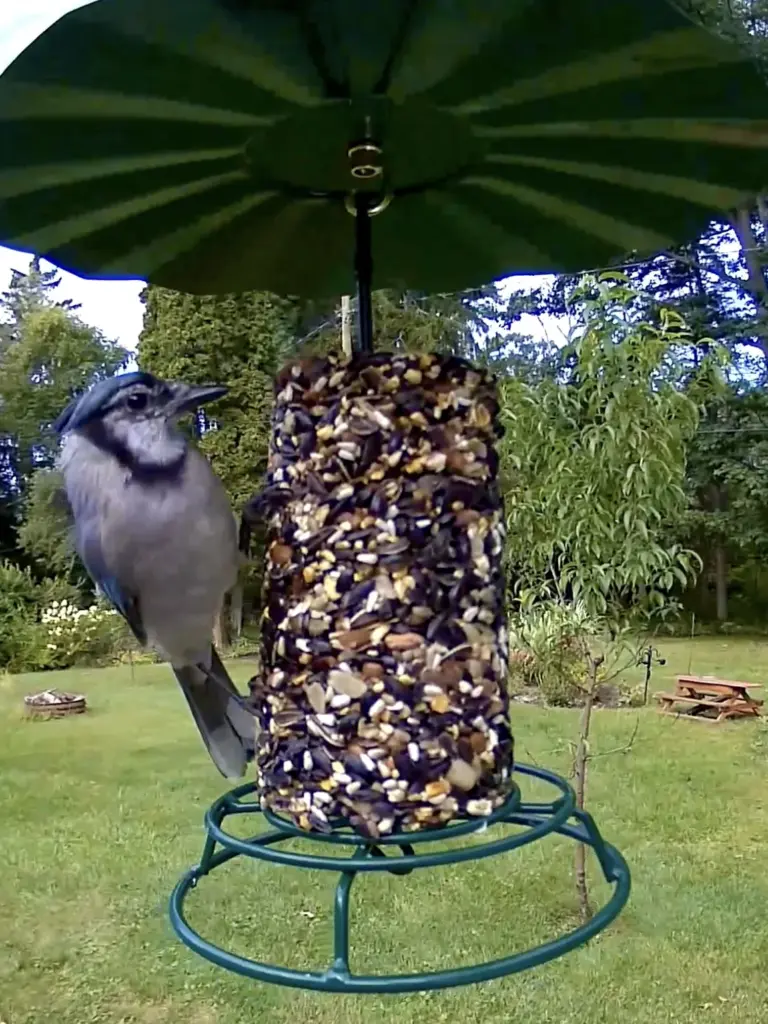
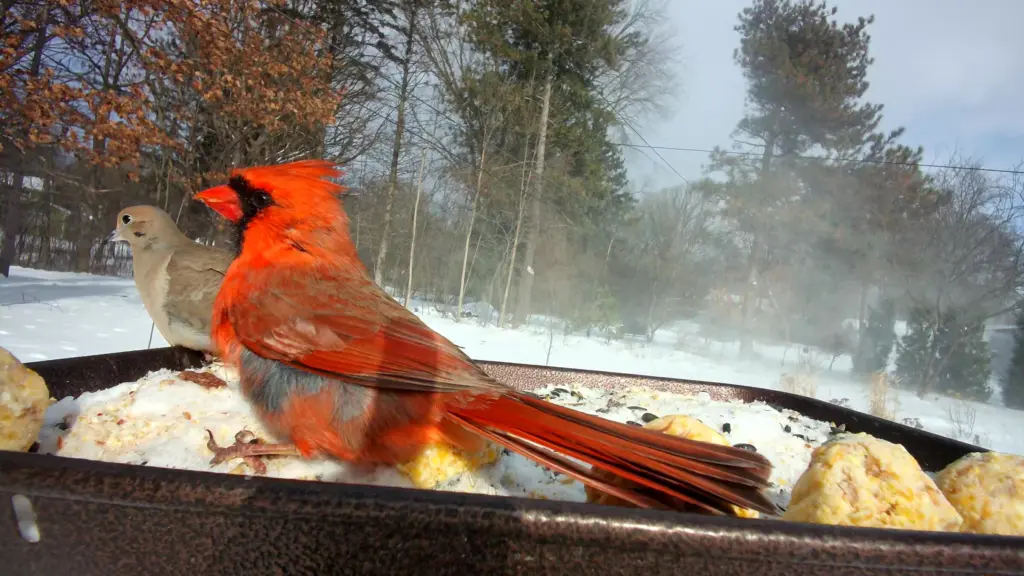
- Black oil sunflower seed (Helianthus annuus). If you offer only one food, make it this one. The thin shell is easy for small beaks to crack and the oil inside is pure fuel, Oklahoma State University Extension notes. Chickadees, nuthatches, cardinals, finches, blue jays and sparrows all show up for it.
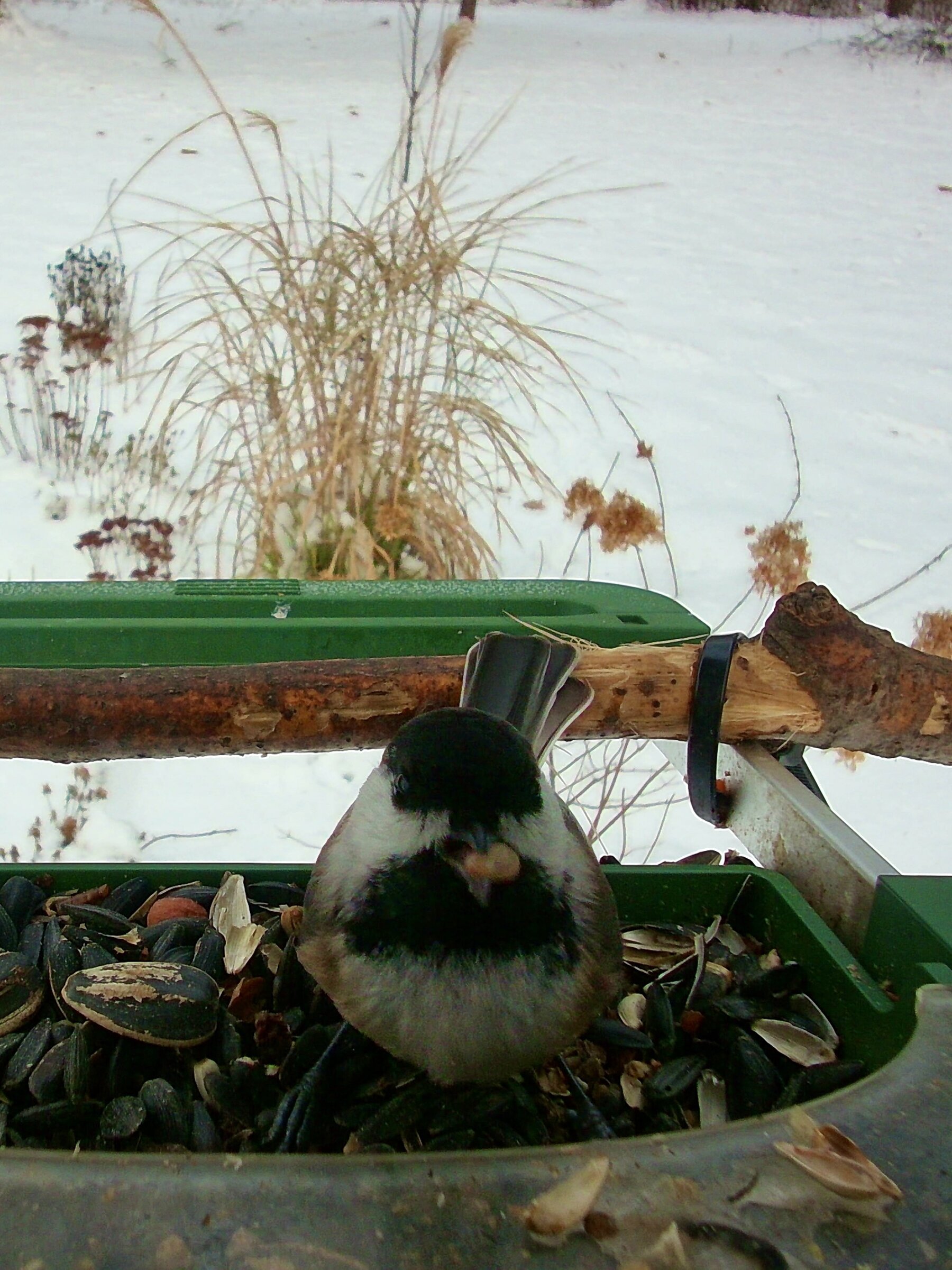
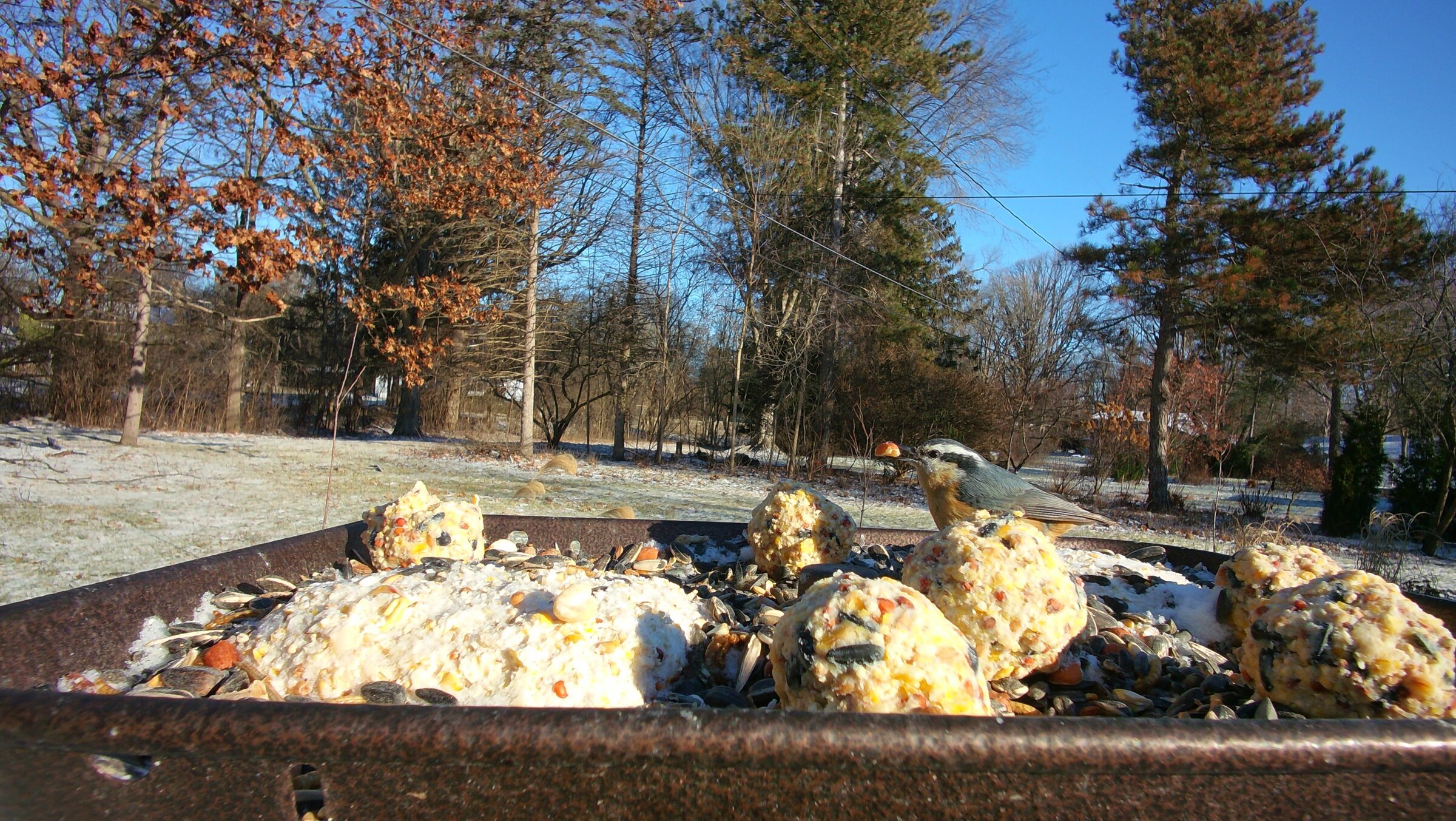
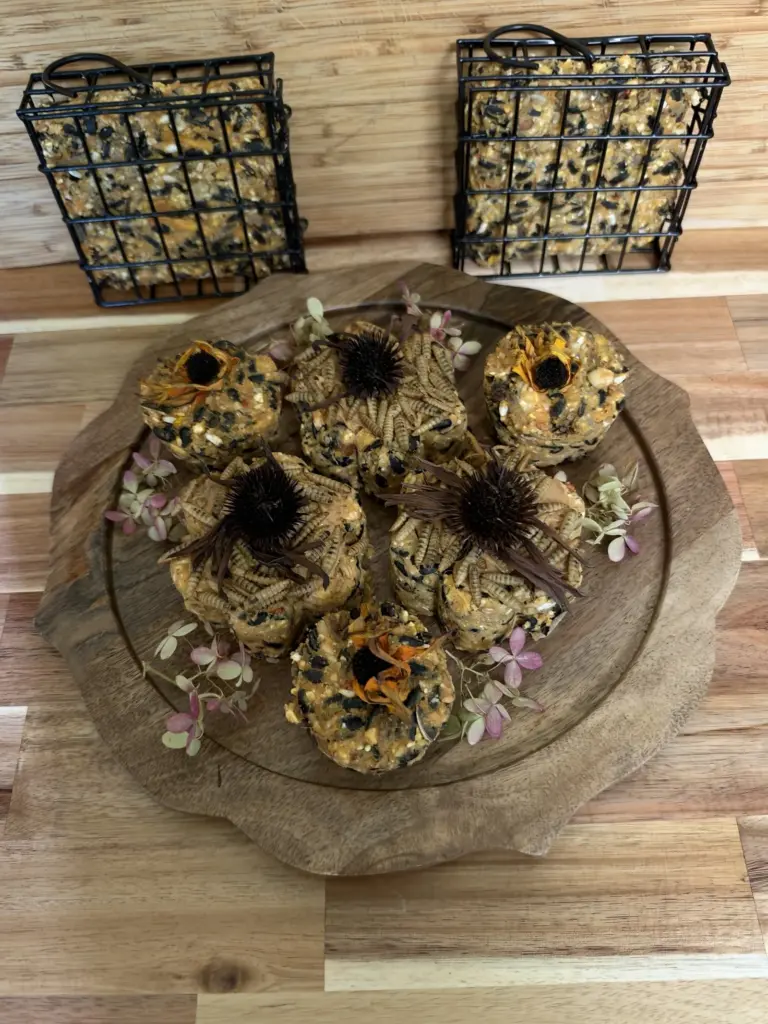
- Suet. This cake of animal fat is the ultimate cold-weather fuel, and woodpeckers and nuthatches are especially fond of it. Suet spoils in warm weather, so save it for fall and winter and take it down when temperatures climb. In my own yard, I roll suet into bite-size “donut holes” with unsalted peanut butter and black soldier fly larvae mixed in, and I offer them only in cooler weather.
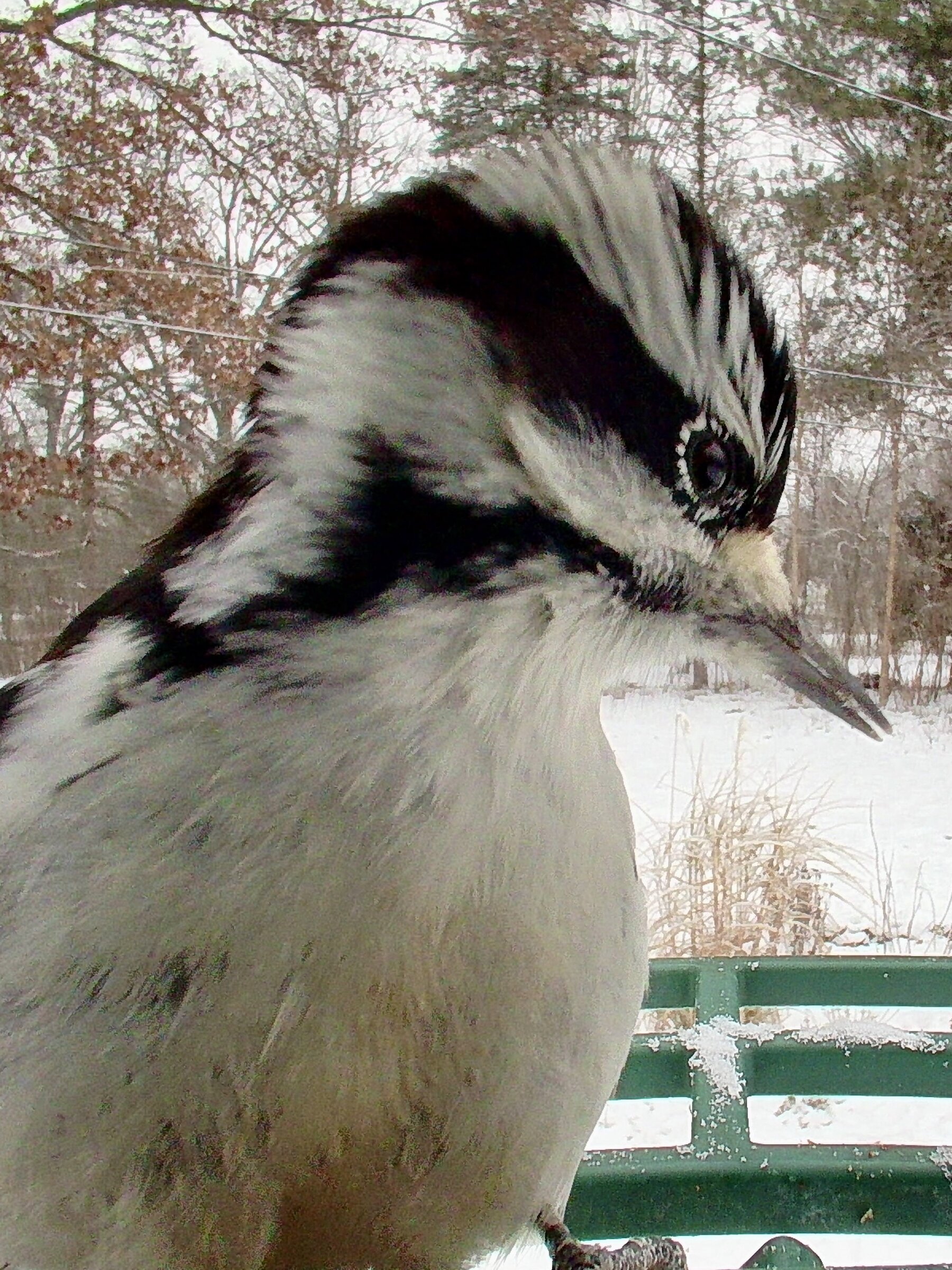
- Peanut butter. A spoonful of peanut butter is an easy calorie boost on a frosty day, and University of Minnesota Extension counts it alongside suet as high-energy food that is perfect for cold days. Choose plain, unsalted peanut butter only, and put it out just in cold weather. It also goes into the suet balls in the recipe below.
- Shelled peanuts (Arachis hypogaea). Peanuts pack protein and fat into a small package, and cardinals, blue jays and finches are among their fans. Choose shelled, unsalted peanuts.
- Black soldier fly larvae and mealworms. Dried insects add protein and fat to the menu. Black soldier fly larvae naturally contain more calcium and protein than mealworms, which are low in calcium, so many bird lovers use both. Bluebirds, chickadees, titmice, wrens and nuthatches are among the fans of mealworms. Serve either in a shallow dish.
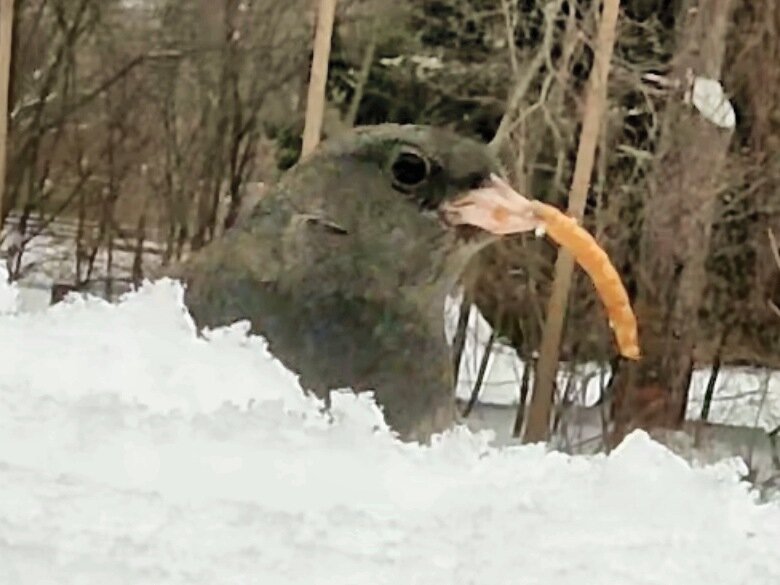
How to make firm suet balls for birds
Ingredients:
Melt ¾ cup lard + 2 tbsp peanut butter. Stir in 2-3 cups bird seed + 1cup dry cornmeal while warm. Roll into balls, chill 1 hour.
Quick rule:
If it crumbles → add fat
If it’s greasy/runny → add seeds or a little bit more of cornmeal
Hang feeders 5–6 ft high, 8–10 ft from trees to avoid squirrels.
Always use unsalted peanut butter. For a shortcut, start with store-bought suet instead of lard and add the same ingredients.
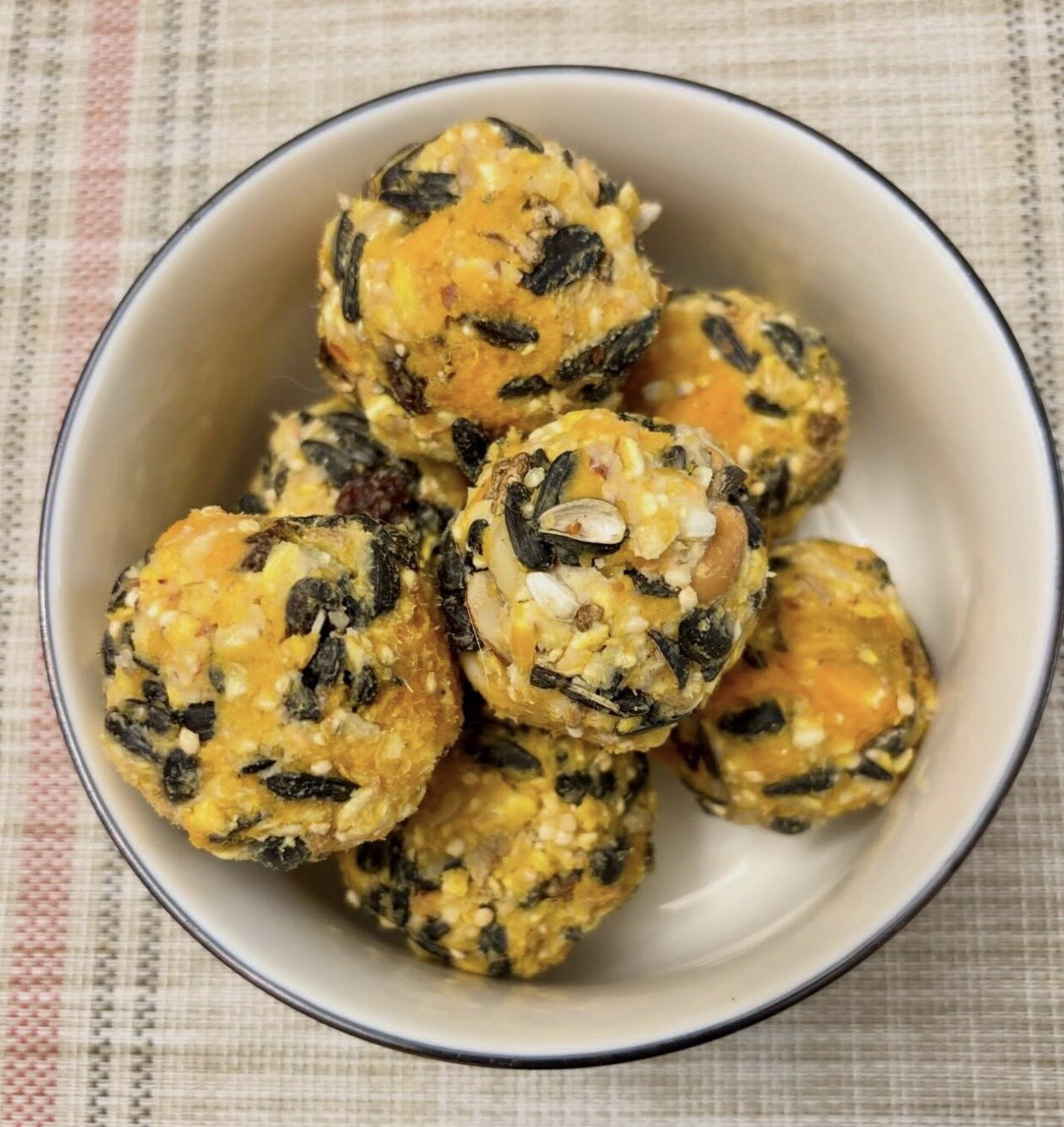
For another homemade treat, try my Sweet Potato Beak Treats. Bird-feeding expert Isabelle Manseau says sweet potatoes are higher in vitamin A than white potatoes. Their carbohydrates also give birds quick energy in cold weather.
When a cold snap or storm hits
- Lead with fat. On very cold days, offer suet and peanut butter first.
- Add more feeders. The National Wildlife Federation suggests roomy or multiple feeders during snow and ice storms so every bird gets a turn.
- Keep seed dry. Sheltered spots keep seed dry and protect food from snow and weather.
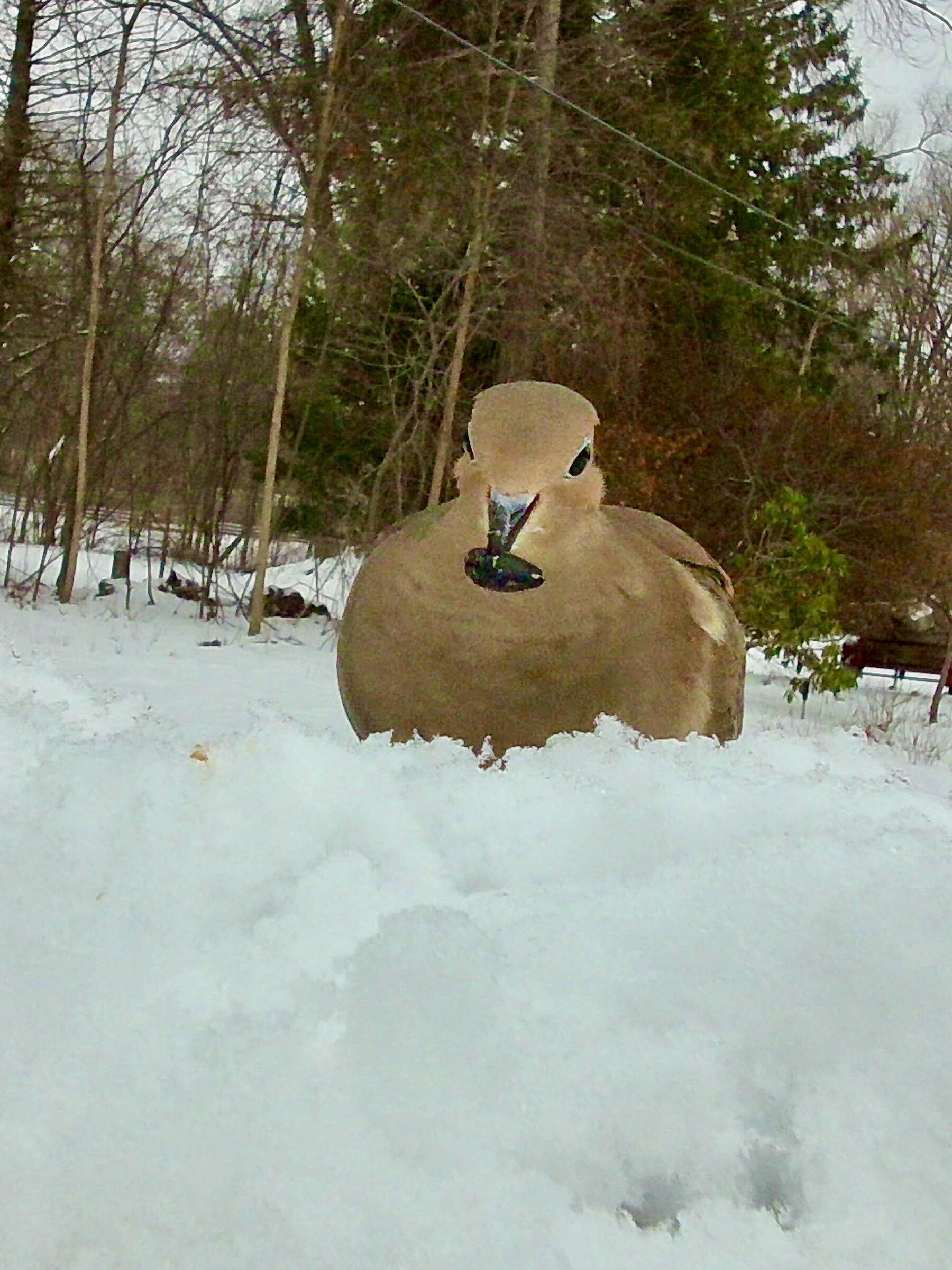
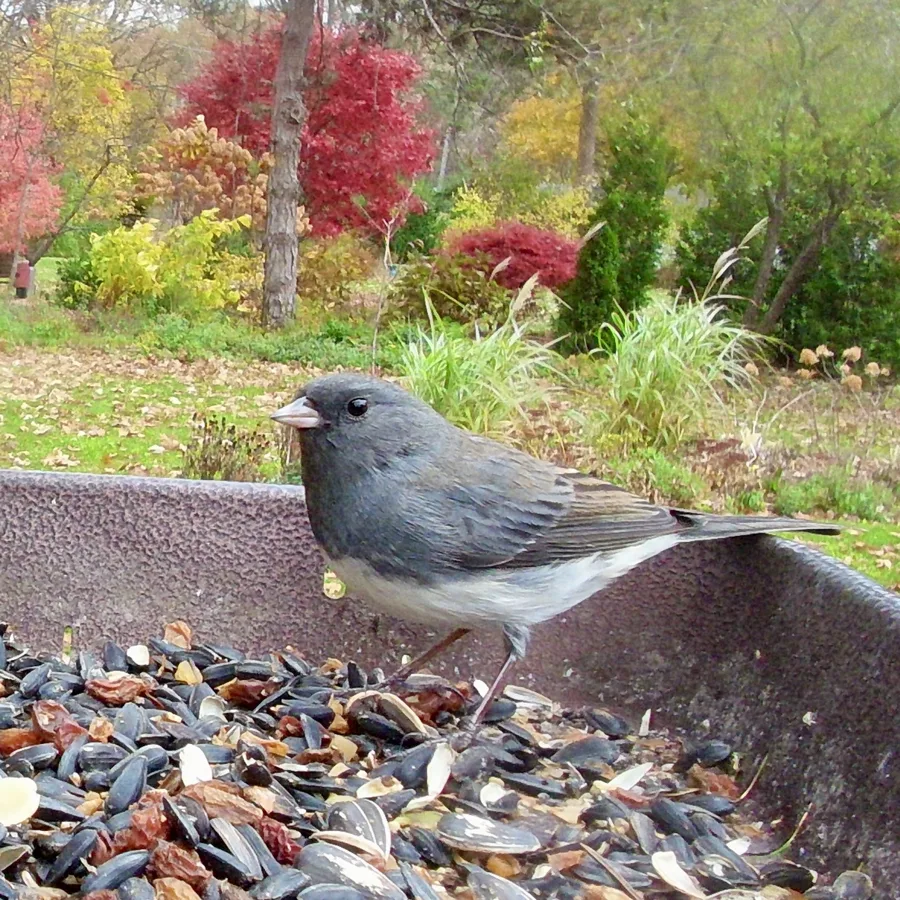
- Clear snow for ground feeders. Juncos, doves and many sparrows eat fallen seed, so sweep or pack down the snow beneath feeders.
- Keep water open. Birds can dehydrate even with snow all around, so a birdbath heater is worth it. Without one, swap frozen water for fresh as often as you can.
- Don’t let feeders run empty. Birds come to rely on your feeders, which can be critical during severe weather.
3 foods to skip
- Bread and crackers. Bread fills birds up fast, so they may skip foods with real nutrition.
- Salted nuts and snacks. Snack nuts and seeds often carry a lot of salt, which birdseed leaves out.
- Bargain seed mixes. Birds mostly leave behind mixes full of red millet, golden millet, flax and rapeseed, so a bag of black oil sunflower seed goes further.
Winter bird feeding FAQ
What is the best food to feed birds in winter?
High-fat foods. Black oil sunflower seed and suet top the list, and peanut butter is a boost on the coldest days.
Do I have to keep feeding once I start?
Yes, through the rest of winter and into early spring. Birds come to depend on a steady supply on cold nights.
How do I keep birdbath water from freezing?
Use a birdbath heater. Without one, swap frozen water for fresh as often as you can.
How often should I clean my bird feeders?
About every two weeks, and more often in wet weather or when many birds visit, Cornell advises. Clean sooner if a feeder looks soiled. Take feeders apart, soak them for 10 minutes in a solution of 1 part bleach to 9 parts water, then rinse well and let them dry before refilling. For a quick clean of feeder perches, or when it is too cold to take feeders down, I wear rubber gloves and use bleach wipes. A Pennsylvania study found that bleach wipes cut bacteria on feeders when debris was scrubbed off first, so brush off droppings before you wipe, and treat wipes as a stopgap between full cleanings.
Winter feeding does not have to be fancy. A feeder of sunflower seed, a suet cake for the coldest days and a dish of unfrozen water cover much of what birds need from you. Keep everything fresh, and you will have a front-row seat to the season’s most cheerful visitors.
From the QT Bird Community
Join the conversation
Comments on QT Bird articles live in our community. Joining is free: share your tips, ask questions and get replies.
Sign up to PostLog in