A faint musky smell at dusk. Small, cone-shaped holes peppering the lawn. A dog that comes inside pawing at its face. These are the calling cards of a skunk, one of the most common wildlife visitors in U.S. yards.
Skunks are not aggressive, and they eat plenty of grubs, beetles and mice. But a skunk denning under a porch, deck or shed is too close for comfort. Their spray lingers for weeks, and rabies is widespread among skunks, according to University of California experts.
Much online advice leans on mothballs, sprays and sonic gadgets, which university wildlife specialists say rarely work. This guide follows the research-based approach instead: take away what the skunk wants, get it out safely and seal the door behind it.
How to tell you have a skunk
Skunks are mostly active at dawn, dusk and night, so many homeowners never see one. Look for these signs instead.
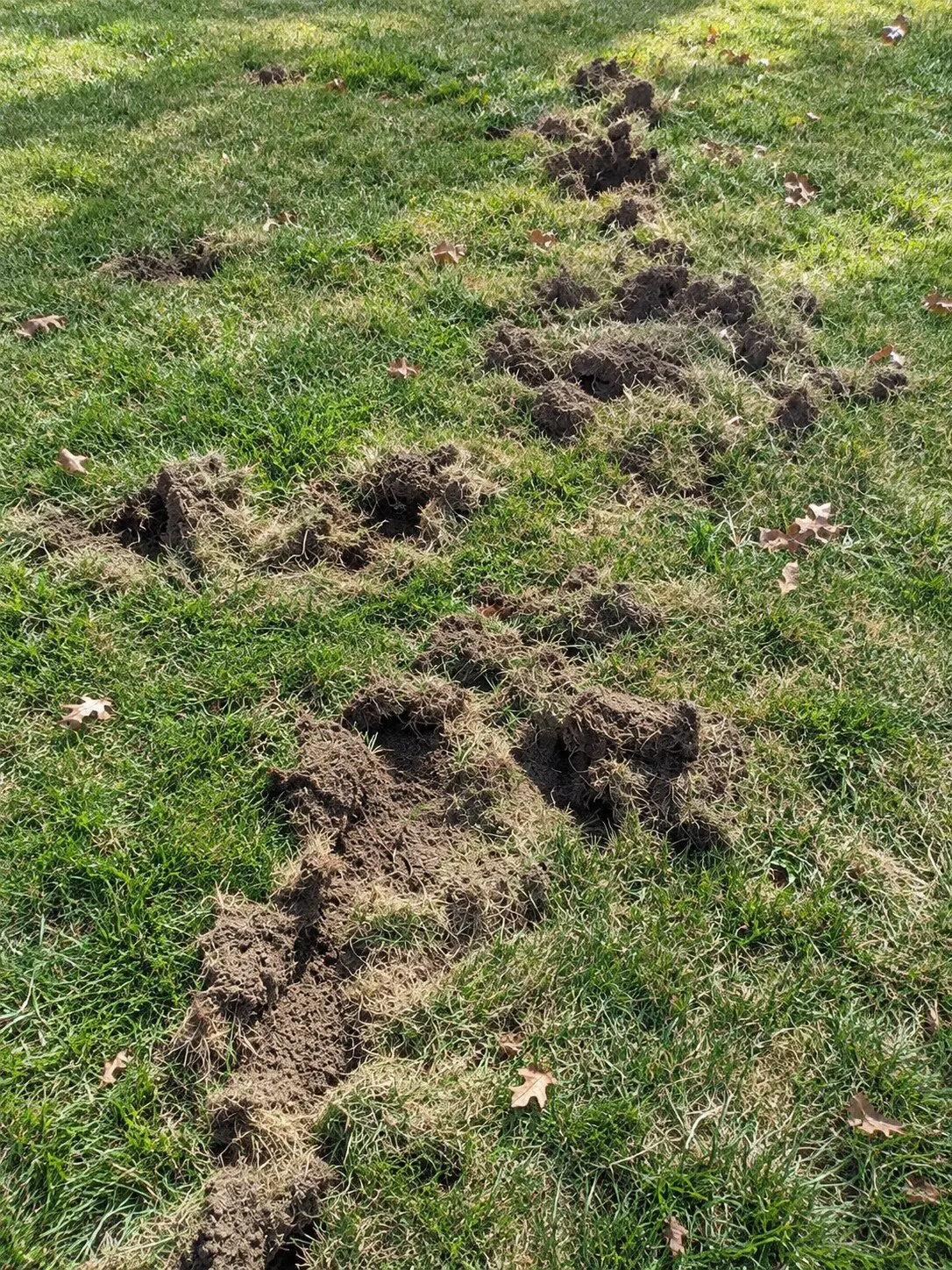
- Lawn digging. Skunks dig small pits or cone-shaped holes about 3 to 5 inches across while hunting grubs, according to the University of California Statewide Integrated Pest Management Program. Like raccoons, they may also roll back strips of sod.
- A faint, lingering odor. A skunk that travels through a yard regularly leaves a light musky smell even if it never sprays.
- Barking dogs at night. Often the first sign, followed by an unmistakable smell if the dog gets too close.
- Activity under structures. Fresh digging along the edge of a deck, porch, shed or foundation.
- Late-winter odor spikes. Males often spray while fighting over females during breeding season. Strong smells in February or March are a warning that a pregnant female may be looking for a nest nearby.
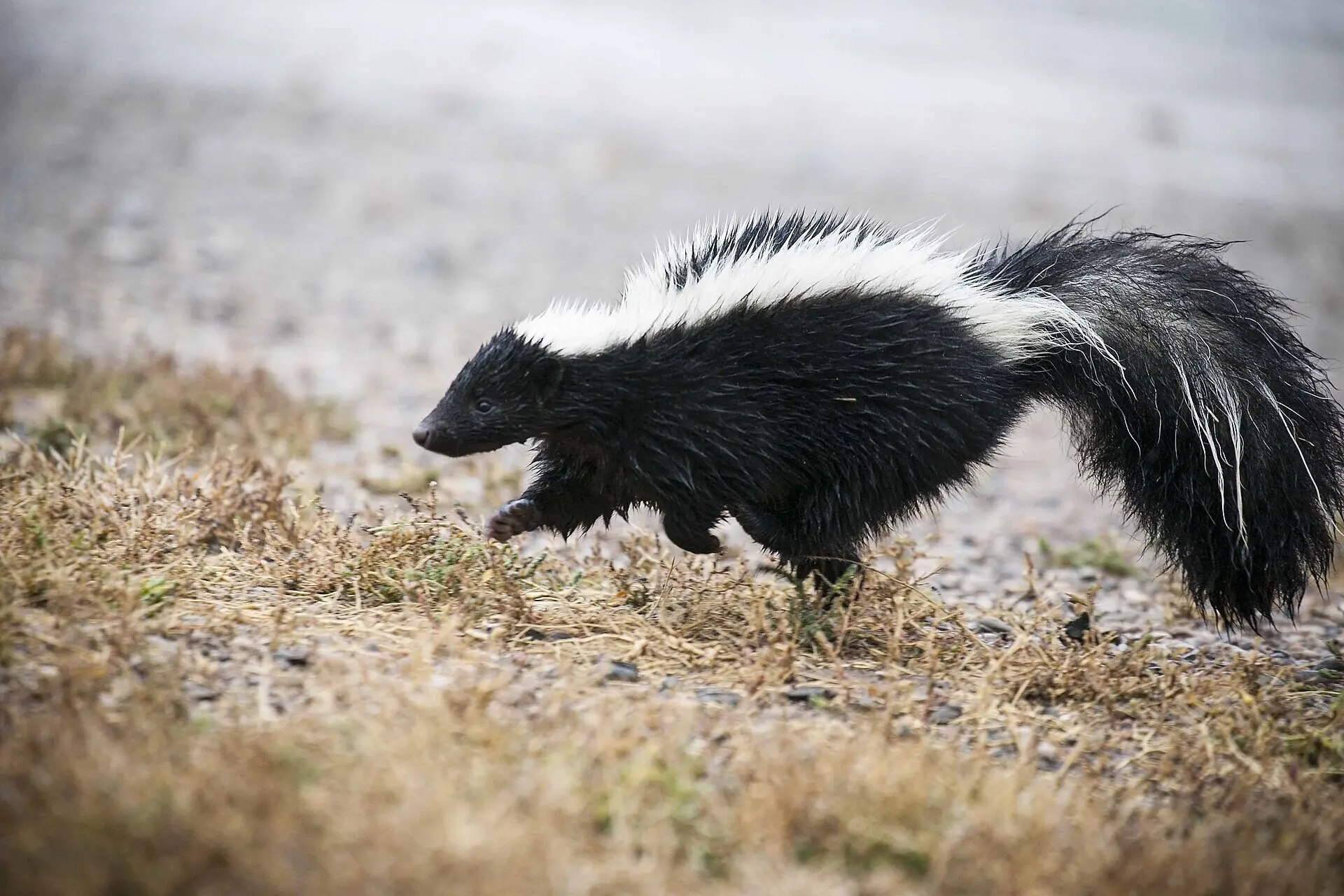
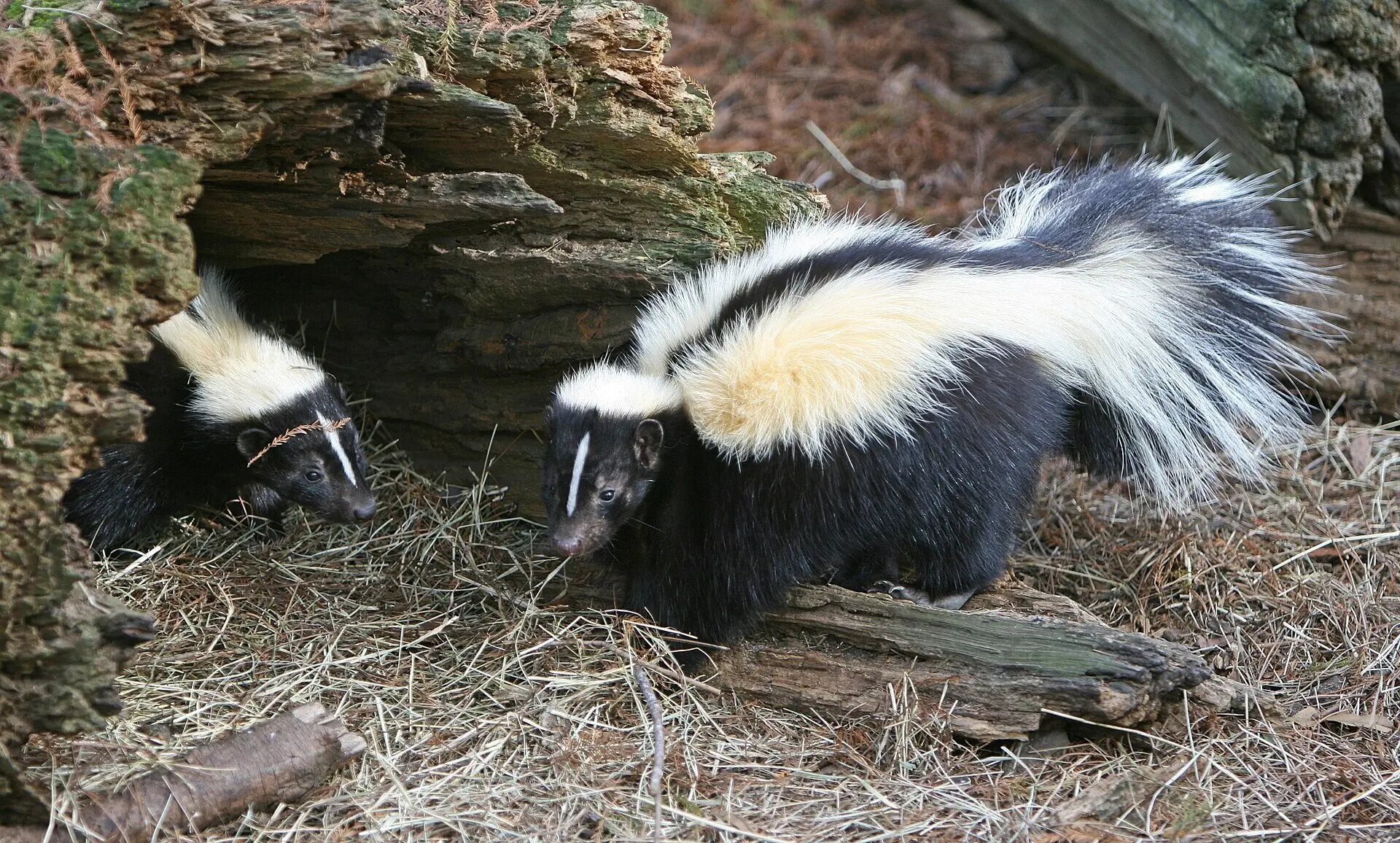
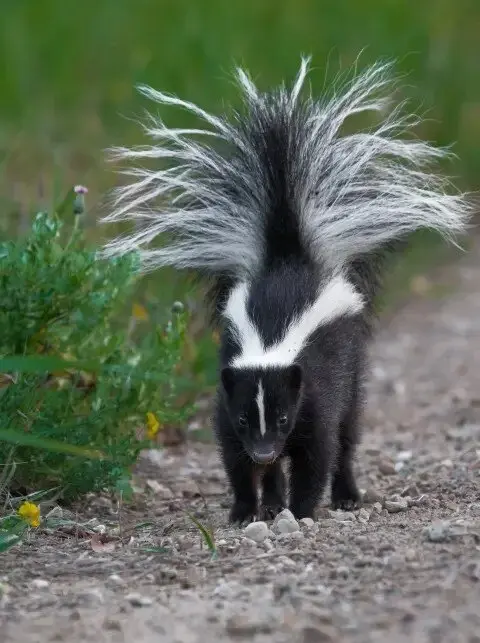
Around homes, the culprit is usually the striped skunk: cat-sized and black, with a white stripe that splits into two down the back.
Why skunks move in
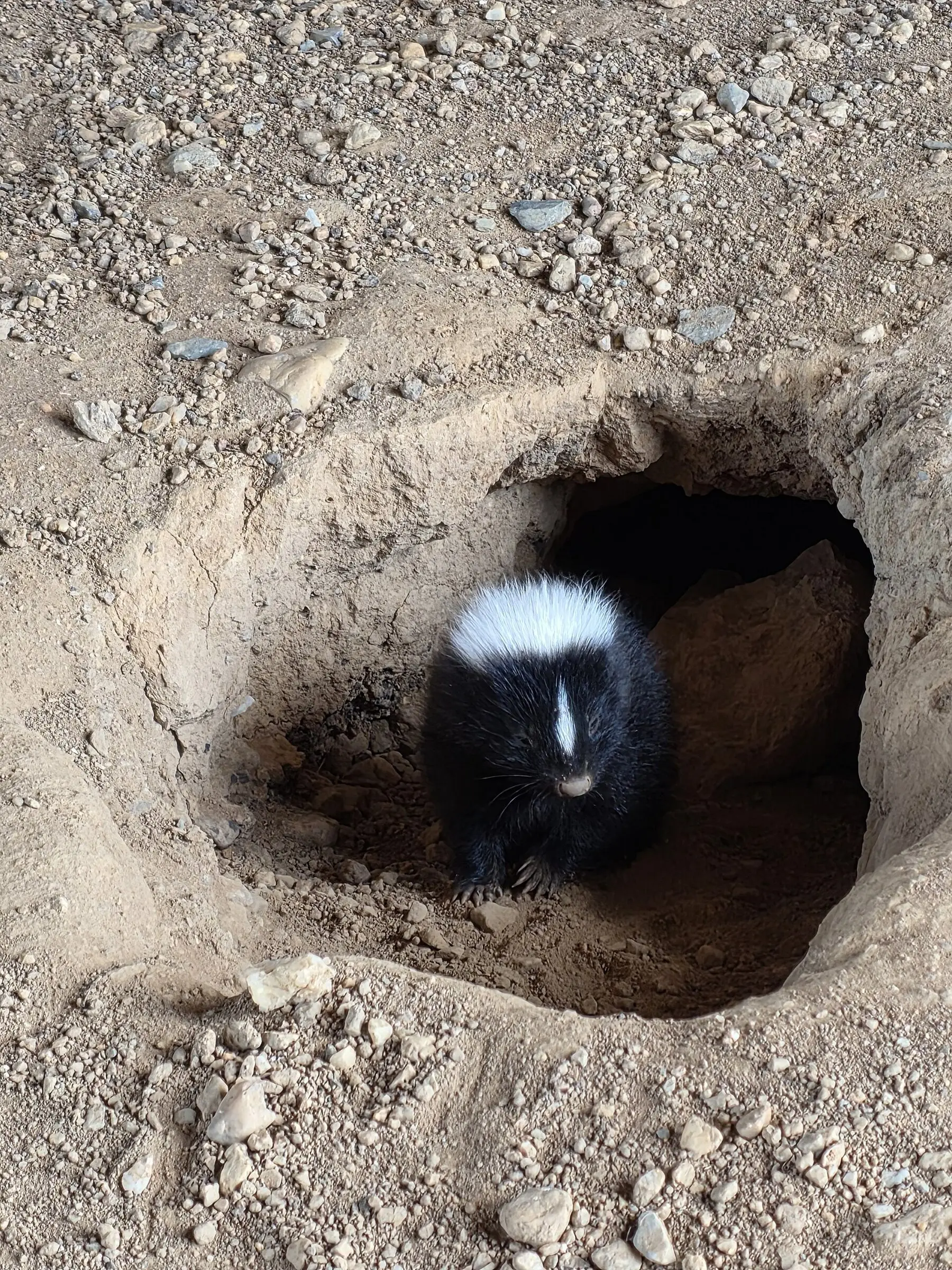
Skunks stay where food and shelter are easy. They eat insects, grubs, earthworms, small rodents, fallen fruit, pet food and garbage, and in towns they den under decks, porches and buildings, according to University of California experts. Make your yard less rewarding than the next one, and a skunk has plenty of other options.
Step 1: Remove food sources
Start here. Removing a skunk without fixing what attracted it simply opens the spot for the next one.
- Bring pet food in by nightfall. Never leave bowls out overnight.
- Use tight-fitting garbage can lids.
- Pick up fallen fruit, nuts and spilled birdseed often. Consider pausing bird feeding if skunks are a problem.
- Keep food scraps out of open compost piles. University of California experts recommend “hot” composting, which breaks food down faster.
- Control rodents. Mice and rats under sheds, barns and garages are a favorite skunk meal.
- Address lawn grubs. Treating a grub problem may reduce skunk digging, though results vary.
- Never feed skunks. Fed skunks lose their fear of people.

Step 2: Remove shelter
Skunks look for dry, secluded spots with good drainage. Take those away.
- Cut back overgrown shrubs.
- Stack firewood tightly, preferably at least 18 inches off the ground, as University of California experts advise.
- Remove loose boards, rock piles, junk piles and lumber stacks.
- Cover window wells. The Internet Center for Wildlife Damage Management recommends securing any pit deeper than 3 inches so young skunks don’t fall in and get trapped.
- Close crawl-space doors, cellar doors and garage doors at night.

Step 3: Get a skunk out from under a deck, porch or shed
This is the step most guides rush. Seal an opening at the wrong time and you can trap a mother skunk or her babies underneath, which means more digging, more spraying or a dead animal and a far worse smell.
Check the calendar first
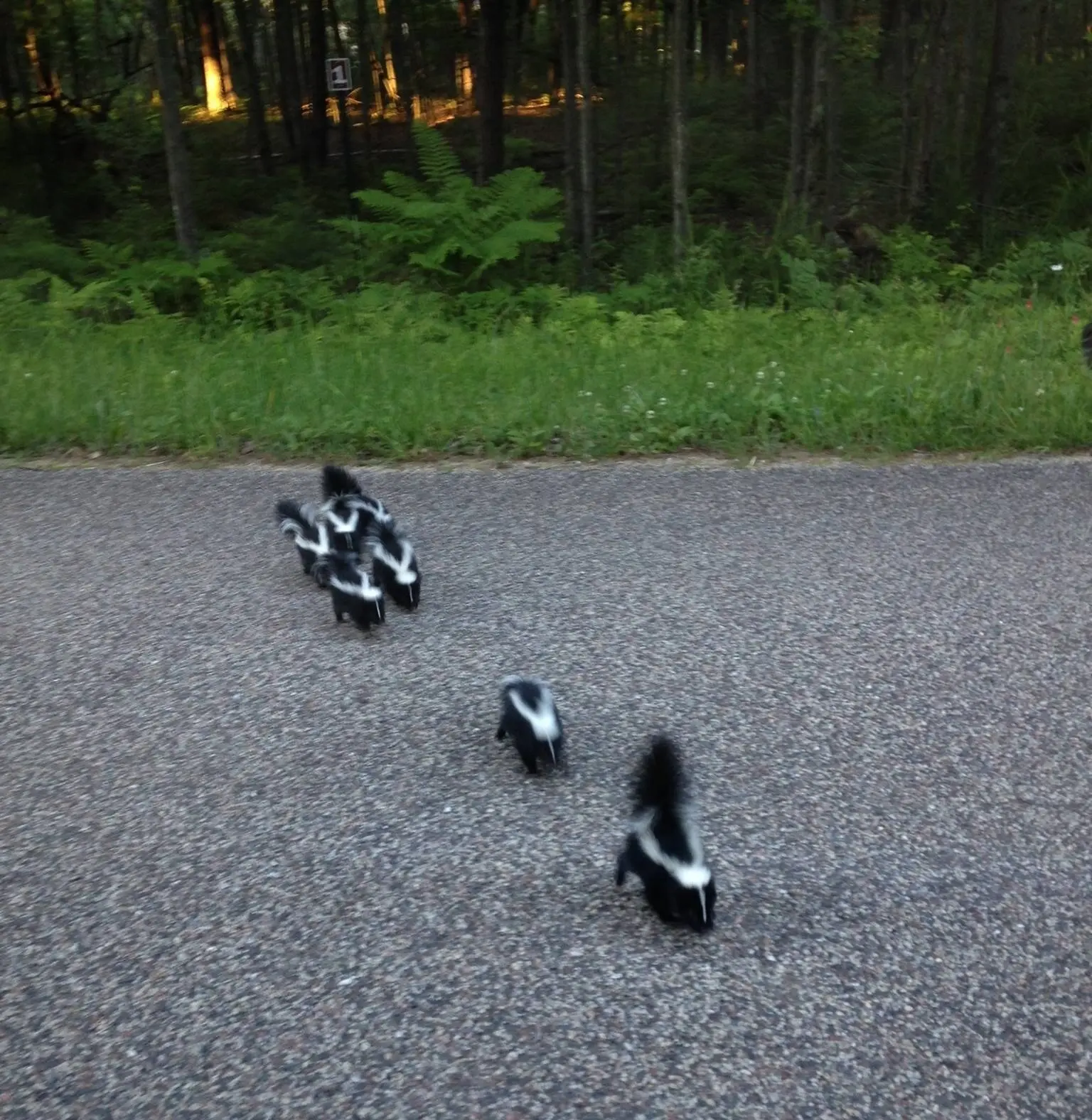
Skunks breed in late winter. Older females give birth in early May, and first-year females give birth in early June, according to the Internet Center for Wildlife Damage Management. The babies, called kits, can’t follow their mother until they are about 2 to 3 months old.
That means late spring through midsummer is the riskiest time to seal a den. If you suspect young are inside, wait until you see the family leaving together at night.
| Season | What skunks are doing | What you should do |
|---|---|---|
| Late winter (February to March) | Breeding; pregnant females search for den sites | Seal empty openings now, before nests are made |
| Spring to early summer (April to July) | Kits born and raised in the den | Don’t seal dens; wait for the family to leave |
| Late summer to fall (August to November) | Young leave their mothers; skunks look for winter dens | Best time to evict and seal for good |
| Winter (December to January) | Skunks sleep through the coldest weeks, sometimes in groups | Watch for activity; seal once dens are confirmed empty |
Source: University of California Statewide Integrated Pest Management Program and the Internet Center for Wildlife Damage Management.
Find out if the den is occupied
Use one of these simple tests.
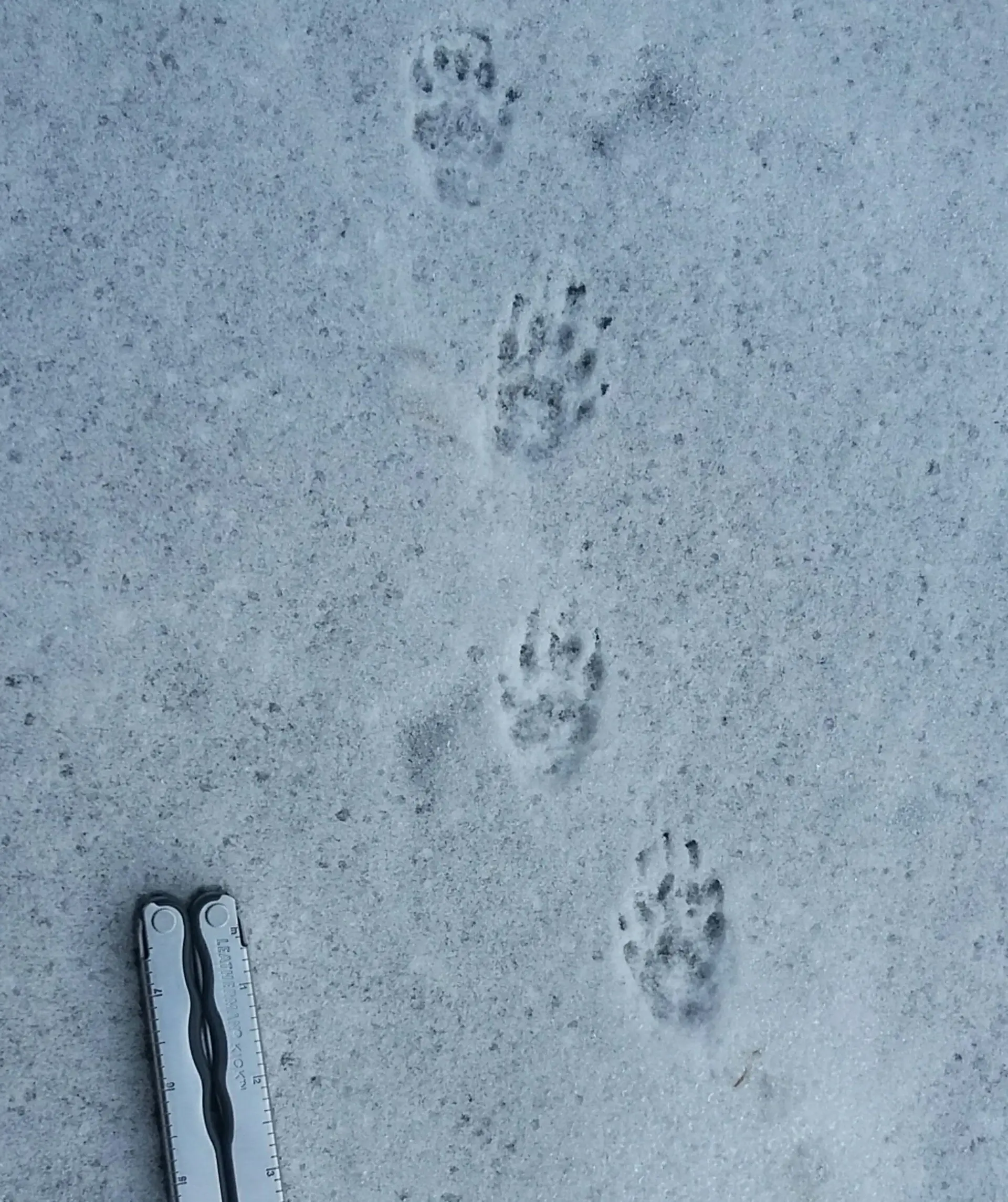
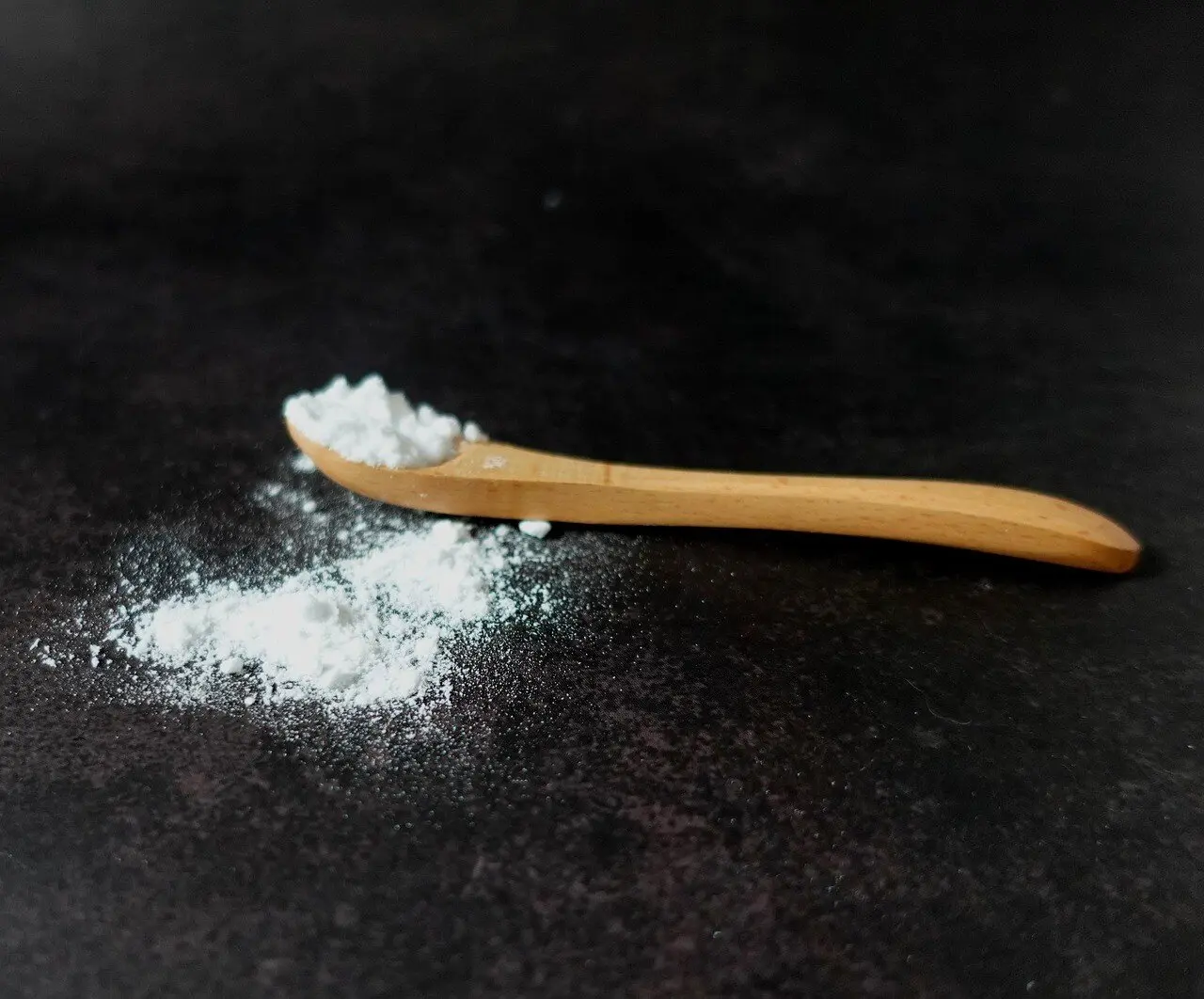
- The flour test. Sprinkle a smooth, one-eighth-inch layer of flour just outside the entrance. Check it soon after dark. Tracks leading out mean the skunk has left for the night.
- The stick test. Push a few thin sticks loosely into the ground across the opening. If they stay standing for 2 to 3 days, the den is likely empty, according to the Internet Center for Wildlife Damage Management.
Install a one-way door
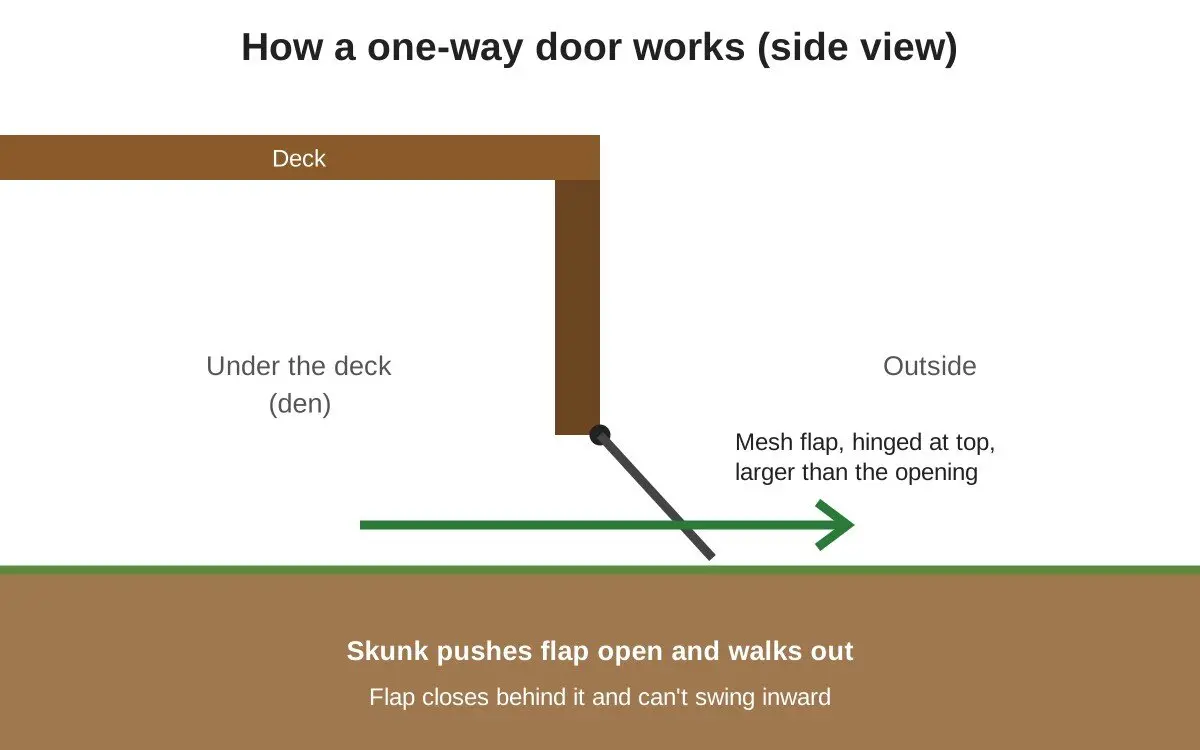
University of California experts describe a simple homemade version: a piece of half-inch hardware cloth, cut larger than the opening, hinged at the top and left loose on the other three sides. The skunk pushes it open to leave, and it can’t push it inward to return. The Internet Center for Wildlife Damage Management recommends a door at least 4 by 4 inches.
- Seal every other opening first, leaving only the main entrance.
- Mount the one-way door over that entrance.
- Wait several nights of good weather.
- Confirm the den is empty with the flour or stick test.
- Remove the door and permanently seal the opening.
A floodlight placed under the structure and aimed out through the entrance can also encourage a skunk to leave, University of California experts say.
Step 4: Skunk-proof your yard for good
Skunks are strong diggers but poor climbers. A buried barrier is the long-term fix.
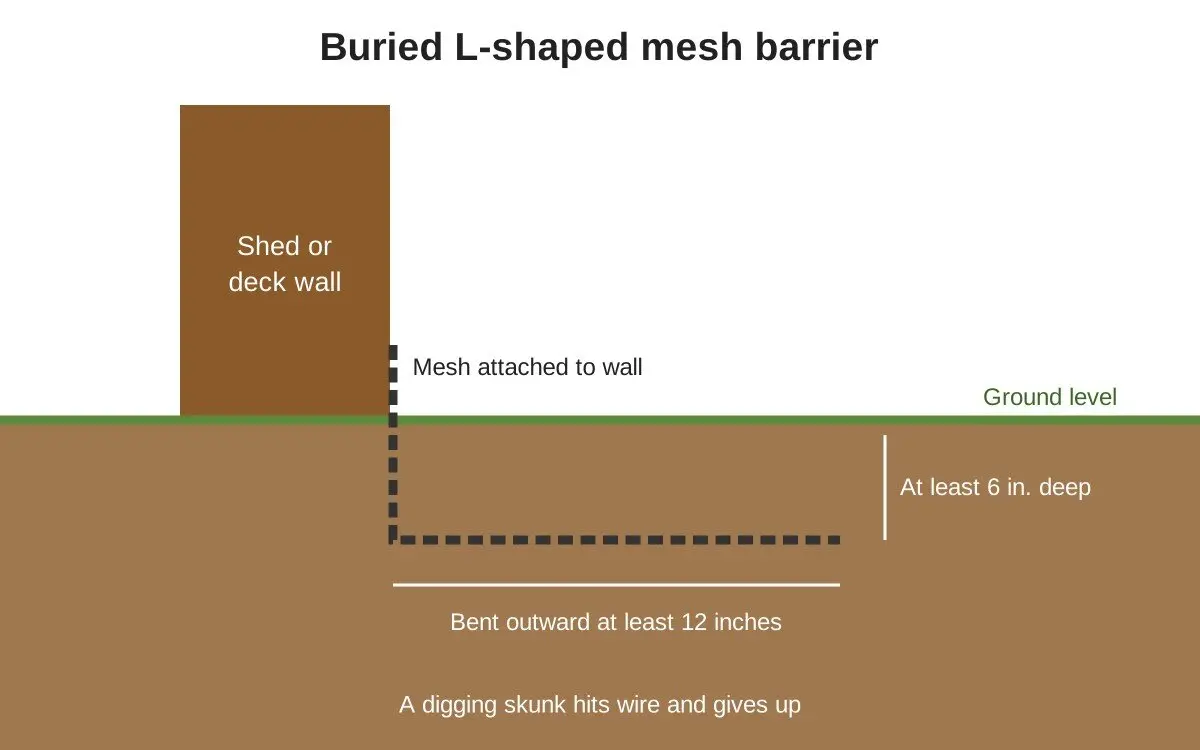
University of California experts recommend closing all openings under decks, porches, sheds and mobile homes with quarter-inch hardware cloth. That mesh size keeps out rats and mice too. Bury it at least 6 inches deep where there’s soil.
For a stronger barrier, build an L-shaped footer. Dig a shallow trench along the base of the structure. Attach the mesh to the structure, run it down into the trench, then bend it outward at least 12 inches, as the Internet Center for Wildlife Damage Management recommends. Go deeper and wider in sandy soil.
Keeping chickens? Fence the run with 3-foot wire mesh buried the same way, and close the coop at night.
What doesn’t work (and why)
Here’s what university researchers say about the most popular shortcuts.
- Commercial repellents. No repellents are registered for skunk control, according to the Internet Center for Wildlife Damage Management. University of California experts say the few products sold are not very effective.
- Ultrasonic and scare devices. The Internet Center for Wildlife Damage Management says no frightening devices are effective for skunks.
- Mothballs. Mothballs are pesticides and legally must be used only as the label directs. Wildlife specialists don’t recommend them for skunks. The fumes needed to bother an animal can drive people out of the house too, and the chemicals raise health concerns.
- Ammonia-soaked rags. Some people report success, but University of California experts warn never to place ammonia or other strong-smelling repellents under an occupied building. Fumes can be drawn indoors by a furnace or air system.
- Poison. No toxicants are registered for skunks. Using rodent bait on them is illegal pesticide misuse and often kills pets.
Should you trap a skunk?
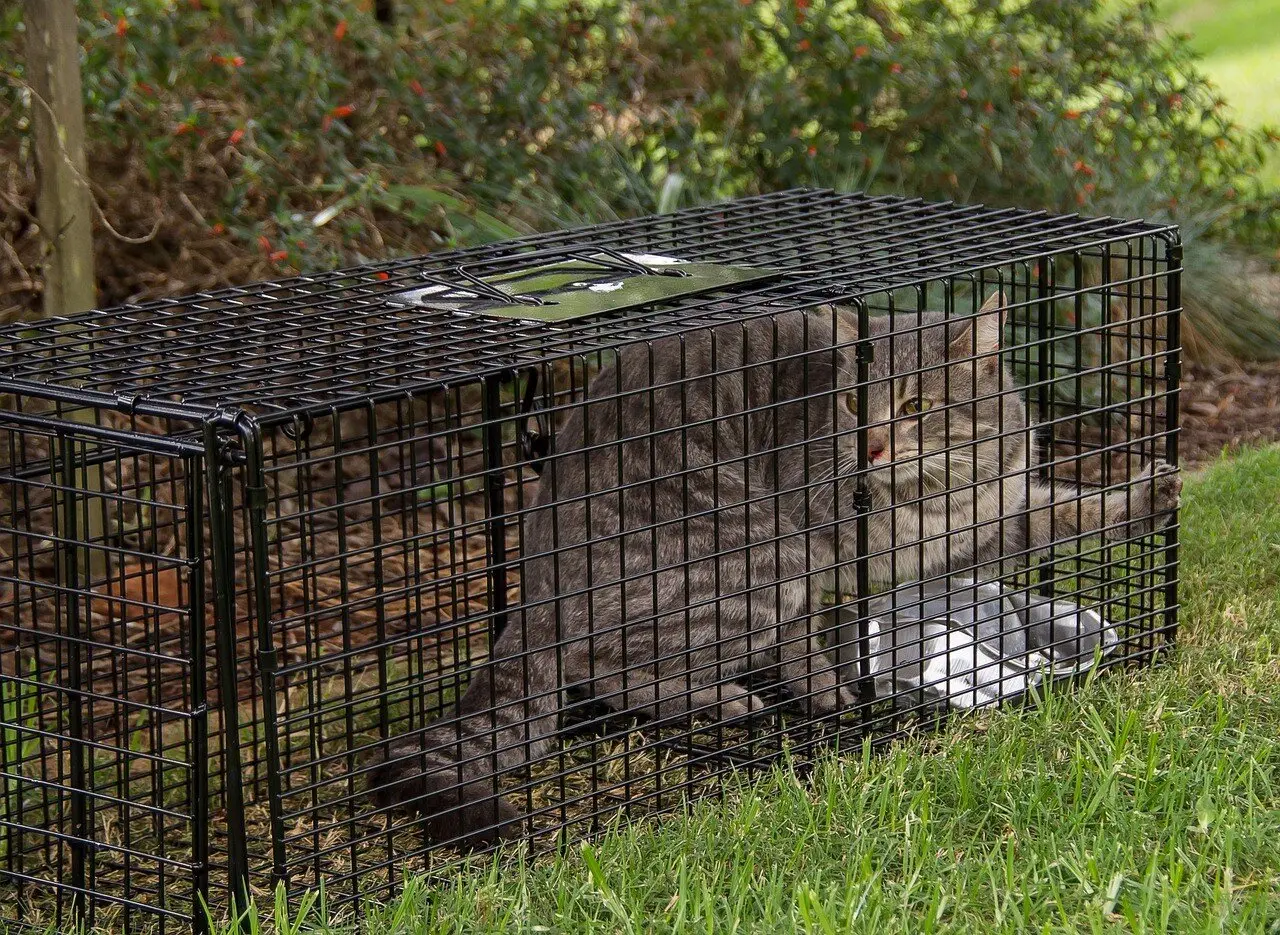
Trapping is a last resort, and laws vary widely by state. Some states ban relocating skunks without a permit because of rabies risk. California, for example, prohibits relocation without written permission from its wildlife agency. Check with your state wildlife agency or county extension office before setting a trap.
University of California experts recommend that anyone without skunk-trapping experience hire a licensed wildlife control professional. Some city or county health departments also help remove skunks.
If trapping is legal and you go ahead:
- Use an enclosed plastic box trap, or cover a wire cage trap with an old blanket. Darkness calms skunks and lowers the chance of spraying.
- Bait with sardines, canned cat food or tuna. Sweeter baits such as peanut butter or marshmallows may be less likely to catch a neighbor’s cat.
- Approach a trapped skunk slowly and quietly, holding a blanket or tarp in front of you. Stop if the skunk stamps its feet or raises its tail.
How to avoid getting sprayed
Healthy skunks would rather flee than fight. They have poor eyesight and usually warn first by stamping their front feet, hissing and arching the tail over the back, according to University of California experts.
If you see those signs, back away slowly and quietly. Skunks can spray accurately up to 15 feet, according to University of Nebraska-Lincoln Extension.
Rabies and safety
Rabies is common in skunks, and University of California experts list them among the most frequent carriers. Use extra caution if a skunk:
- Seems tame, wobbly or listless
- Wanders aimlessly in daylight
- Shows no fear of people or pets, or acts aggressive
Striped skunks are sometimes active by day in busy areas, so daytime activity alone isn’t proof of illness. But if a skunk acts strangely, keep children and pets away and call animal control.
A doctor should see any skunk bite, no matter how minor, and the local health department should be told, University of California experts say. Keep dogs and cats current on their rabies vaccinations. The good news: rabies is not spread through skunk spray, according to University of Nebraska-Lincoln Extension.

How to get rid of skunk smell
Skunk spray is an oily mix of sulfur compounds called thiols. It needs soap to lift it and an oxidizer to break it down.
The peroxide formula
Developed by chemist Paul Krebaum and recommended by University of Nebraska-Lincoln Extension:
- 1 quart of fresh 3% hydrogen peroxide
- 1/4 cup of baking soda
- 1 to 2 teaspoons of liquid dish soap
How to use it: Mix in an open bowl or bucket and use it right away. Never store it in a closed bottle. The mixture releases oxygen and the container can burst. Work it into the fur or hair, leave it for about five minutes, then rinse well. Repeat as needed. Keep it away from eyes and mouth. It can discolor fabric, so don’t pour it directly on clothes.
For pets, call your veterinarian for current bathing advice, as University of California experts suggest.
Clothes, surfaces and the house
- Laundry: Wash with regular detergent, then wash again. Hang to dry outdoors. Skip the clothes dryer, as University of Nebraska-Lincoln Extension advises.
- Wood or concrete: Scrub the sprayed spot with 1 cup of bleach per gallon of water. Bleach may stain, so use it only where the skunk sprayed.
- Indoors: Open windows and run fans. If a faint smell lingers, replace the furnace or air conditioner filter.

Why tomato juice fails
Tomato juice doesn’t neutralize skunk spray, University of Nebraska-Lincoln Extension says. After a while, your nose simply stops noticing skunk odor. When a new smell like tomato arrives, it seems to cover the skunk, but the spray is still there.
When the smell won’t fade
Skunk odor normally fades over a few weeks and may flare up on humid days. If it doesn’t weaken in a week or two, or gets stronger, a skunk may still be living nearby or may have died under a structure, University of Nebraska-Lincoln Extension says. Wear gloves and eye protection to remove a carcass, and double bag it.
The bottom line
The research-backed way to get rid of skunks is simple, though it takes patience. Remove food and shelter, use a one-way door at the right time of year, then seal openings with buried hardware cloth. Skip the gimmicks, keep your distance and keep a bottle of fresh hydrogen peroxide on hand just in case.
Frequently asked questions
What is the fastest way to get rid of a skunk under my deck?
Seal every opening except the main entrance, then install a one-way door over it. Check back after several nights of good weather. Confirm the den is empty with a flour or stick test before sealing the last hole. Avoid this from April to July, when babies may be inside.
What smell do skunks hate?
Skunks dislike strong odors such as ammonia, but no repellent is registered for skunk control, and university researchers say smell-based products rarely work for long. Removing food and blocking den sites is far more effective.
Do mothballs keep skunks away?
No. Mothballs are pesticides that may be used only as their label directs, and wildlife experts don’t recommend them for skunks. The fumes strong enough to bother a skunk can also make people sick.
Is it legal to trap and relocate a skunk?
It depends on your state. Some states, including California, prohibit relocating skunks without a permit because of rabies concerns. Check with your state wildlife agency before trapping, or hire a licensed wildlife control professional.
Does tomato juice get rid of skunk smell?
No. Tomato juice only seems to work because your nose tires of the skunk odor. A fresh mix of 1 quart of 3% hydrogen peroxide, 1/4 cup of baking soda and 1 to 2 teaspoons of dish soap chemically breaks down the spray.
When is the best time to skunk-proof a yard?
Fall and late winter. In fall, young skunks leave their mothers and look for winter dens. In late winter, pregnant females hunt for nest sites. Sealing empty openings before either happens prevents the problem.
What is hot composting, and why does it matter for skunks?
Hot composting is a pile built to heat up and break food scraps down quickly. University of California Master Gardeners recommend a pile at least 3 feet wide, deep and tall, with equal amounts of green material, such as food scraps and grass clippings, and brown material, such as dry leaves. Keep it as moist as a wrung-out sponge and turn it every three to six days so the center reaches at least 130°F. A cold pile left alone can take about a year to break down, giving skunks plenty of time to find the scraps.