
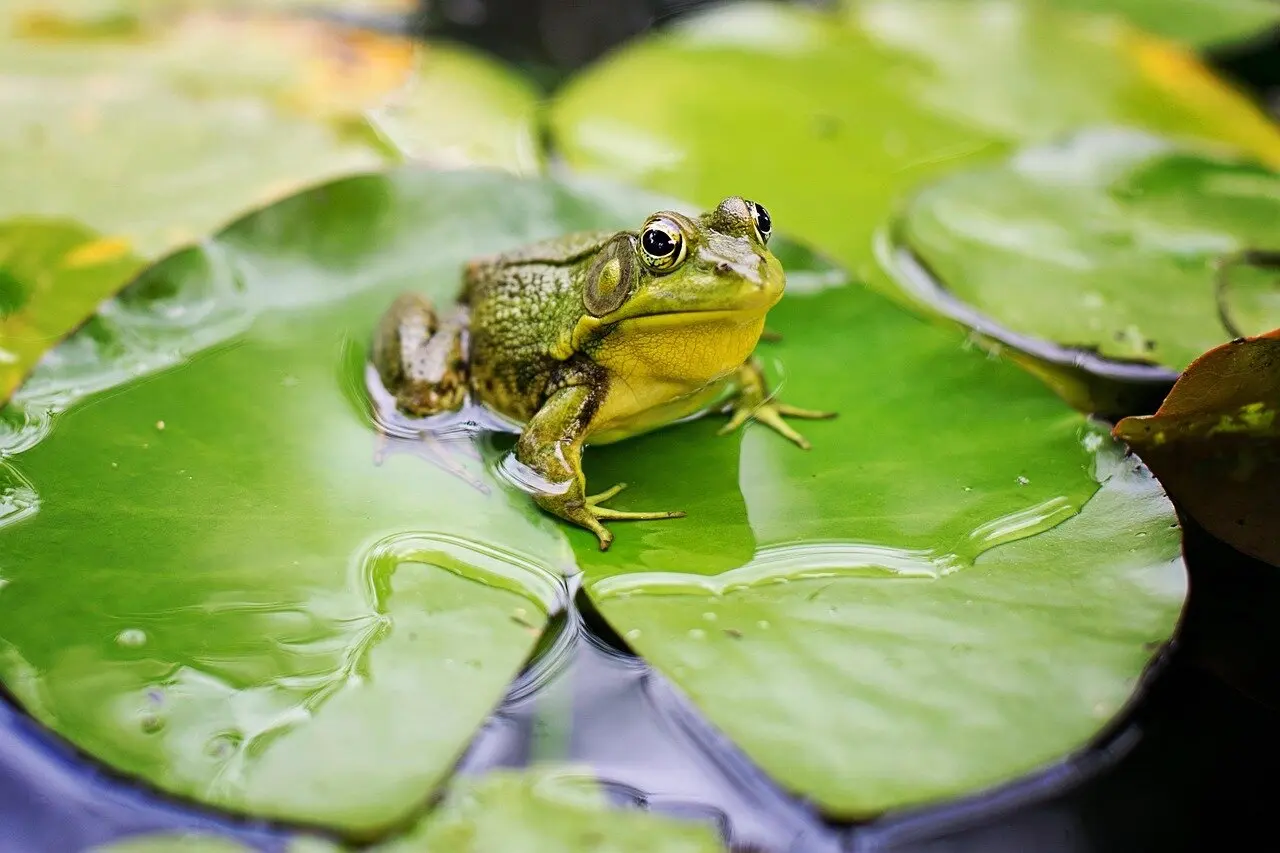
A summer night with a frog chorus is one of the best signs of a healthy yard. Frogs and toads eat insects, slugs, and other small garden pests, and they in turn feed larger wildlife. They could also use a hand, since frog numbers are falling across the U.S.
The good news is that frogs respond fast to the right habitat. Give them water, cover, food, and a safe place to spend the winter, and they will often find you on their own.
Quick checklist: How to attract frogs
- Add a shallow, fishless pond with gently sloped sides.
- Fill it with water plants and let it sit a few days before frogs arrive.
- Leave logs, rocks, leaf litter, and dense plants nearby for cover.
- Add a clay pot toad house or a PVC pipe frog house.
- Plant native flowers and shrubs to draw the insects frogs eat.
- Cut back on pesticides, herbicides, and chemical fertilizers.
- Turn off outdoor lights near the pond at night.
- Leave fallen leaves in garden beds this fall.
- Check the lawn before you mow.
- Never bring in frogs, tadpoles, or eggs from somewhere else.
Why frogs belong in your yard (and one myth to drop)
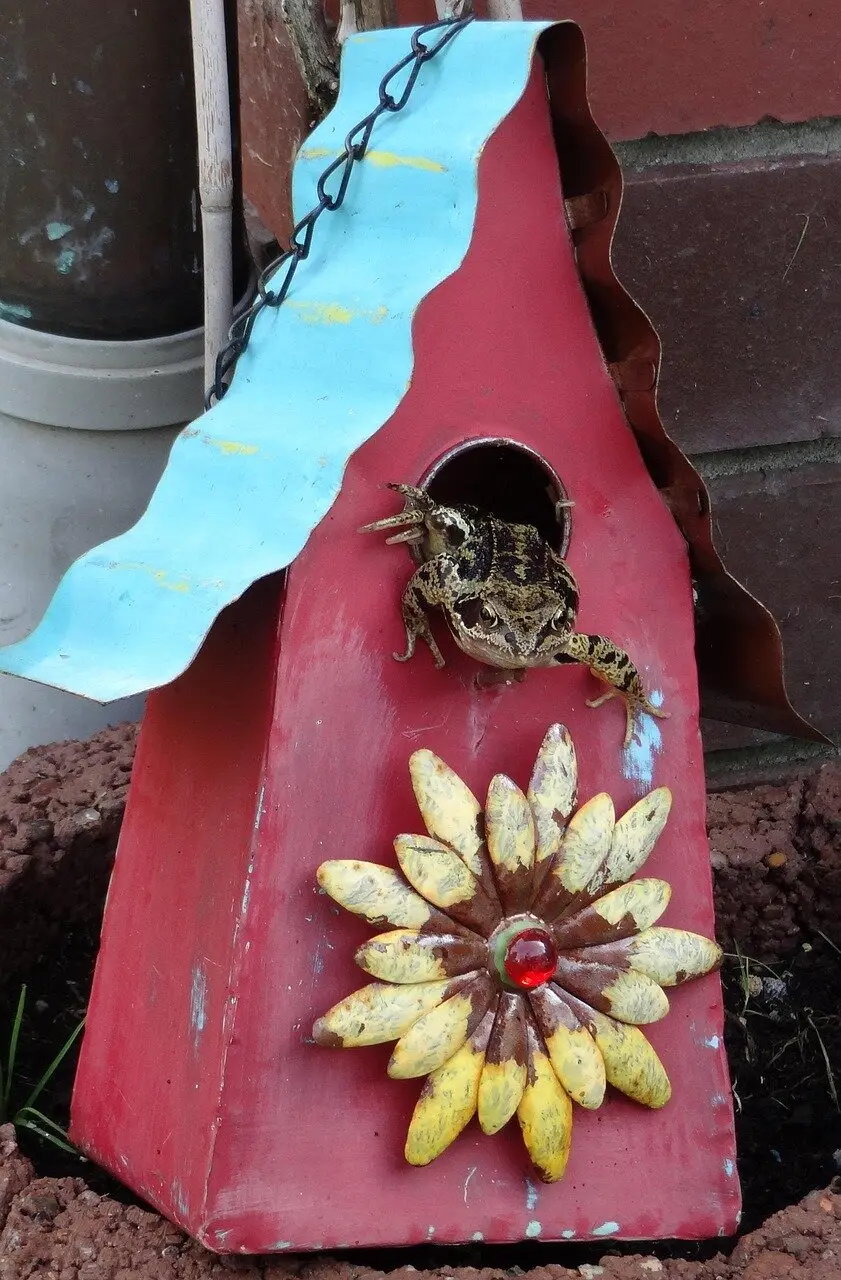
Frogs are more than good company on a summer night. They eat insects and other small animals, and when they show up, it’s a good sign your yard is healthy. Their skin is porous and absorbs what it touches, which makes them sensitive to yard chemicals and quick to disappear when something is off.
They also need help. Frogs and toads are quietly vanishing from ponds and wetlands where they once thrived, and even common species are slipping. A 2013 U.S. Geological Survey study found amphibians disappearing from the places they lived at an average rate of 3.7% a year. A frog-friendly yard is one small way to push back.
One popular claim needs correcting. Many articles say frogs will wipe out your mosquitoes, but they won’t. Adult frogs eat plenty of insects, just not many mosquitoes, and most tadpoles graze on algae and plant matter instead of mosquito larvae. Invite frogs for the many other insects and invertebrates they do eat, and handle mosquitoes another way (more on that below).
1. Add water: the single biggest draw
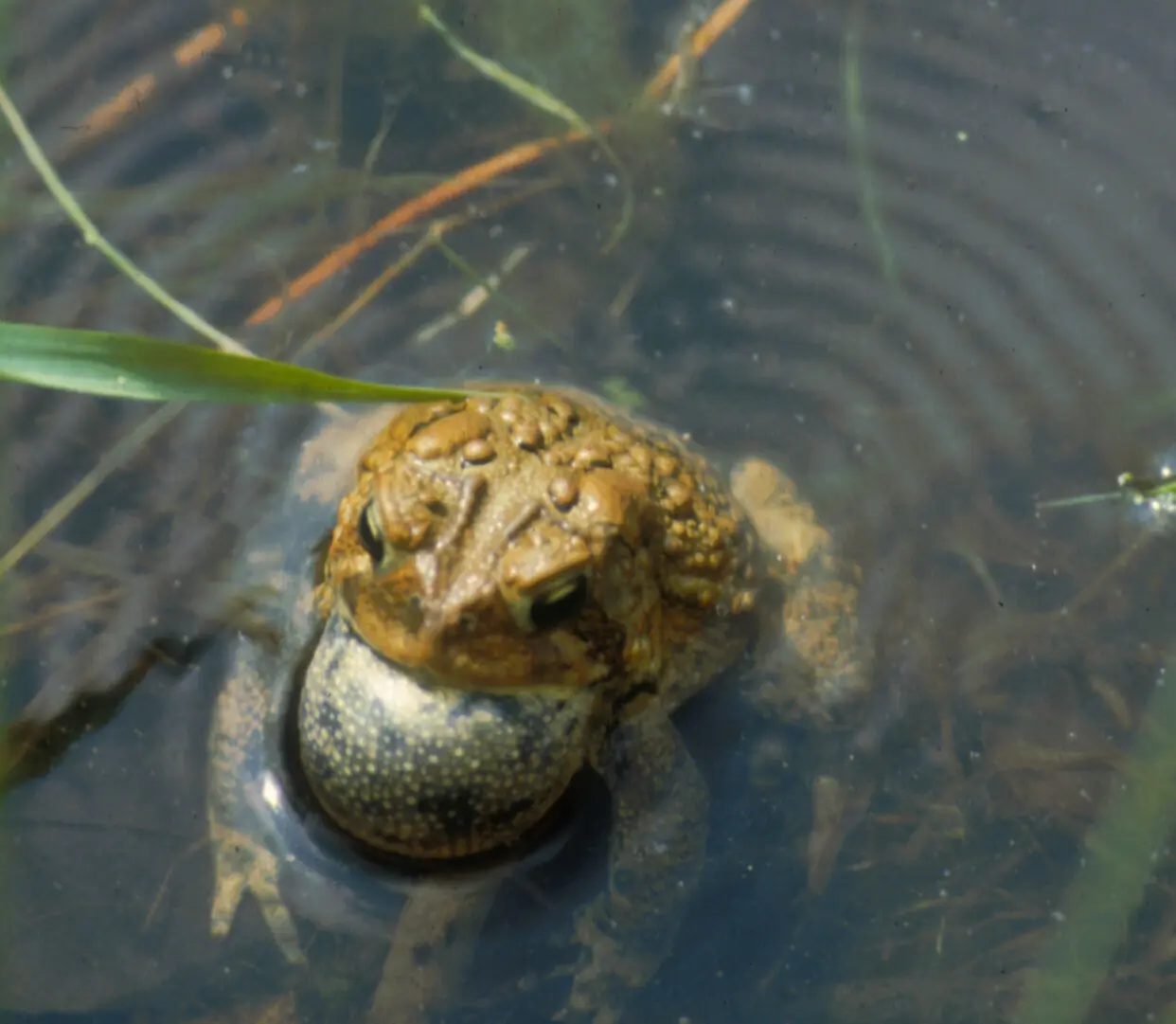
Most frogs and toads need water to breed, so a pond is the most reliable way to bring them in. It doesn’t have to be big or fancy, but it will need some care, so think about upkeep before you dig.
How to build a frog-friendly pond
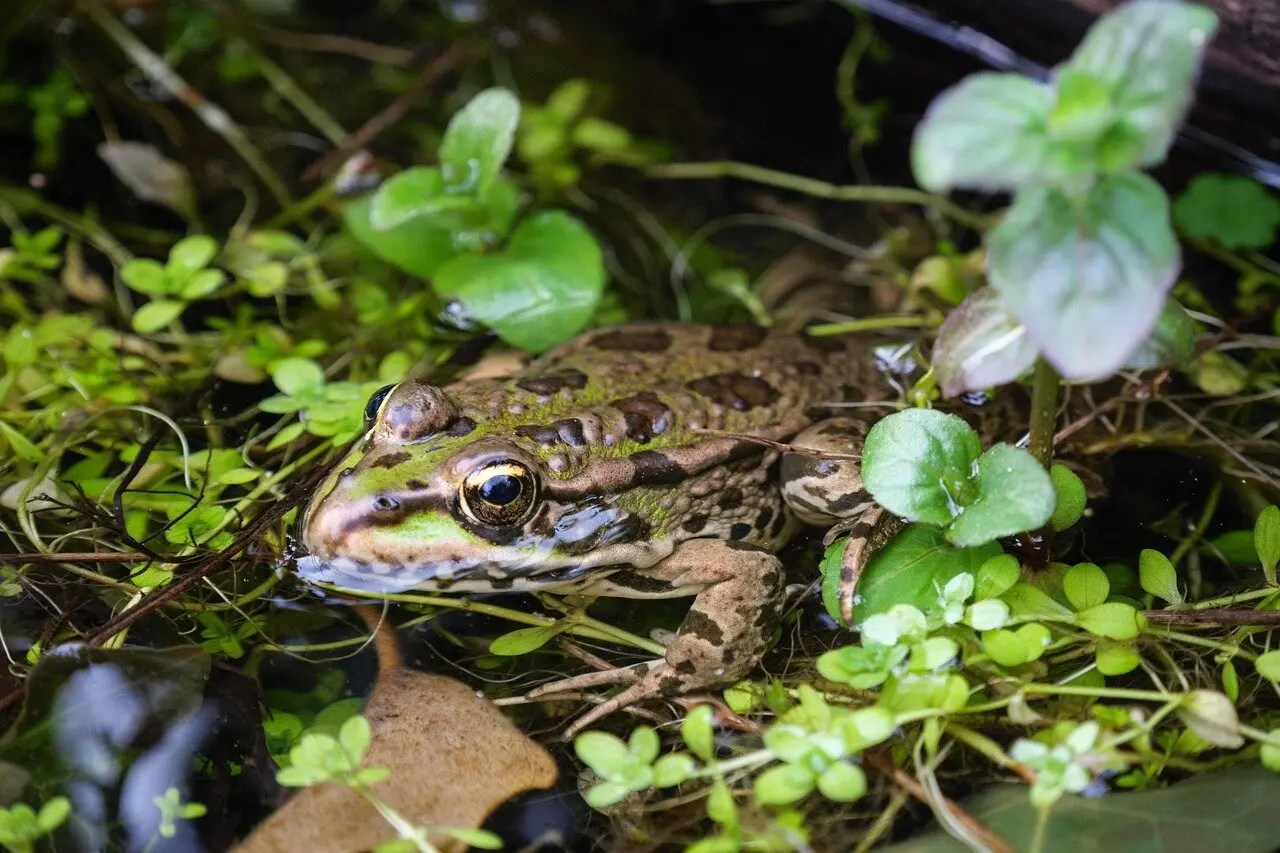
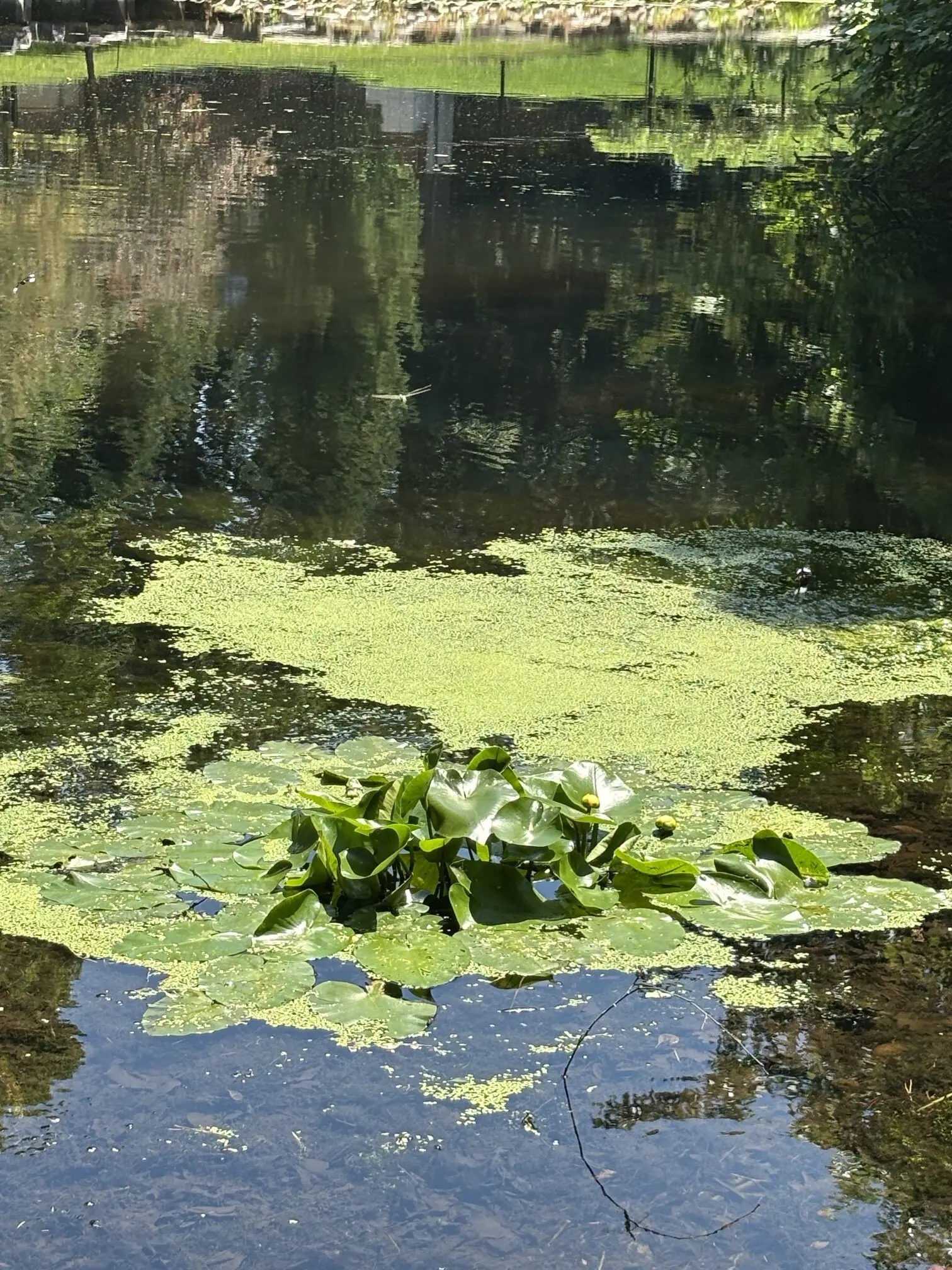
You don’t need a contractor for this. A pond about the size of a large rug is plenty, and Master Gardeners with UC Cooperative Extension in El Dorado County, California, lay out a simple plan:
- Size and site: About 4 by 5 feet works well. Choose a spot with partial shade.
- Three zones: Dig a deep center (theirs is about 3 feet, where frogs can spend the winter), side shelves about 1 foot wide and 9 inches under the water for potted plants, and one gently sloped side so frogs can climb out easily.
- Liner: Buy a liner at least 1 foot larger than the hole. Lay 2 inches of wet sand underneath to prevent punctures.
- Natural bottom: Add a few inches of mud, some rocks, and dead leaves so the bottom looks like a natural pond.
- Let tap water rest: If you fill with a hose, let the pond stand 3 days so chlorine can evaporate before frogs use it.
- Plants: Aim to cover about 60% of the surface with plants for shade and shelter. An early algae bloom is normal and fades as plants take hold.
Check local rules on pond depth and fencing before you dig, especially if young children live nearby or visit.
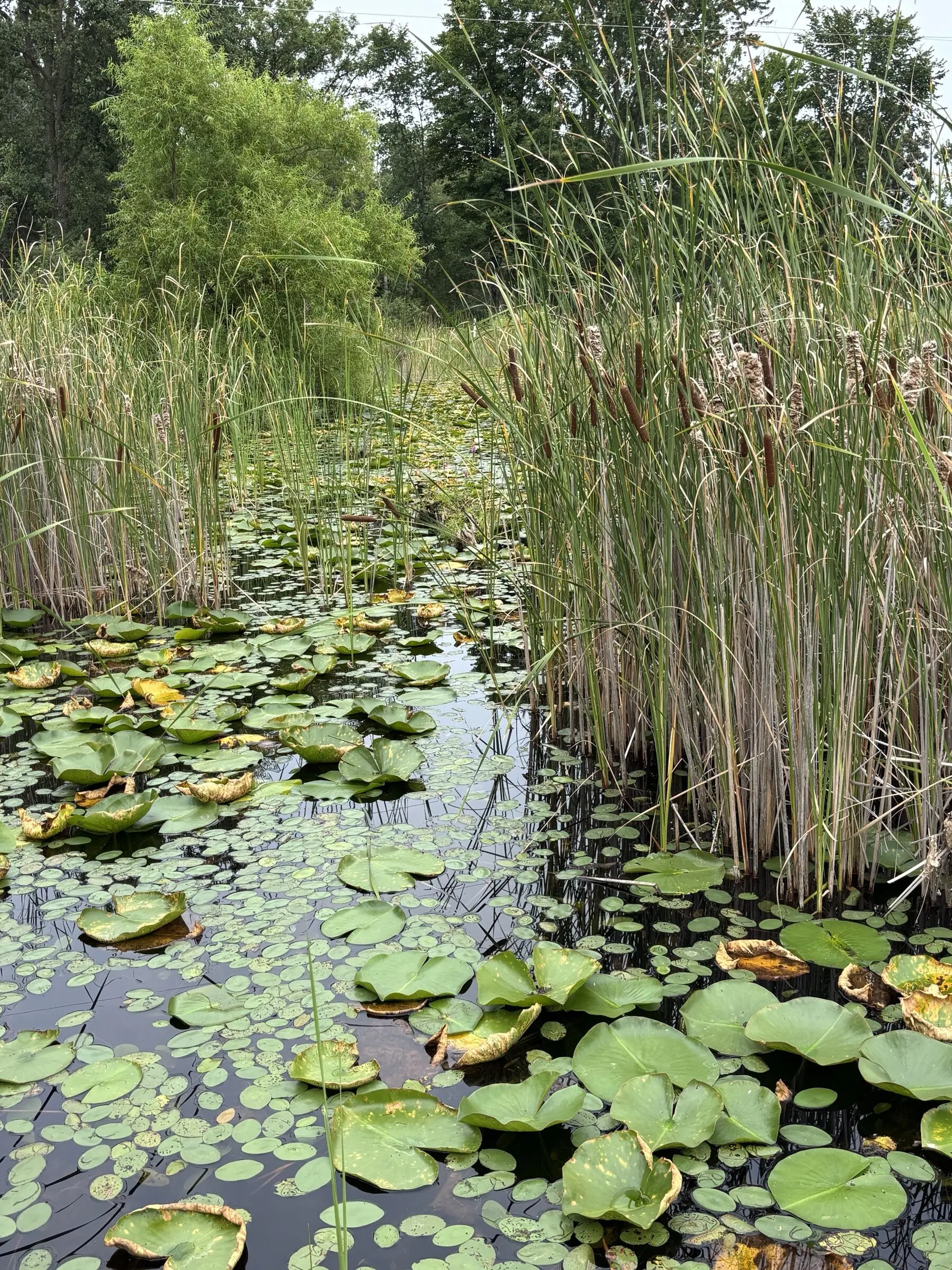
Skip the fish and fancy pumps
Goldfish and koi may be tempting, but fish and frogs rarely mix, because fish eat eggs and tadpoles. A few tough species, such as bullfrogs and green frogs, can hold their own, but most treefrogs, chorus frogs, and salamanders can’t, according to the Georgia Department of Natural Resources. To attract the widest variety, keep the pond fishless. Go easy on gadgets, too, since some pumps and filters can pull in and injure tadpoles.
| Frog or toad | Tolerates fish? |
|---|---|
| American toad | Yes |
| Fowler’s toad | Yes |
| Bullfrog | Yes |
| Green frog | Yes |
| Southern leopard frog | Yes |
| Cricket frog | Only with abundant water plants |
| Gray treefrog | No |
| Spring peeper | No |
| Wood frog | No |
| Chorus frogs | No |
Source: Georgia Department of Natural Resources, Wildlife Resources Division. Ranges vary by region; check your state wildlife agency for local species.
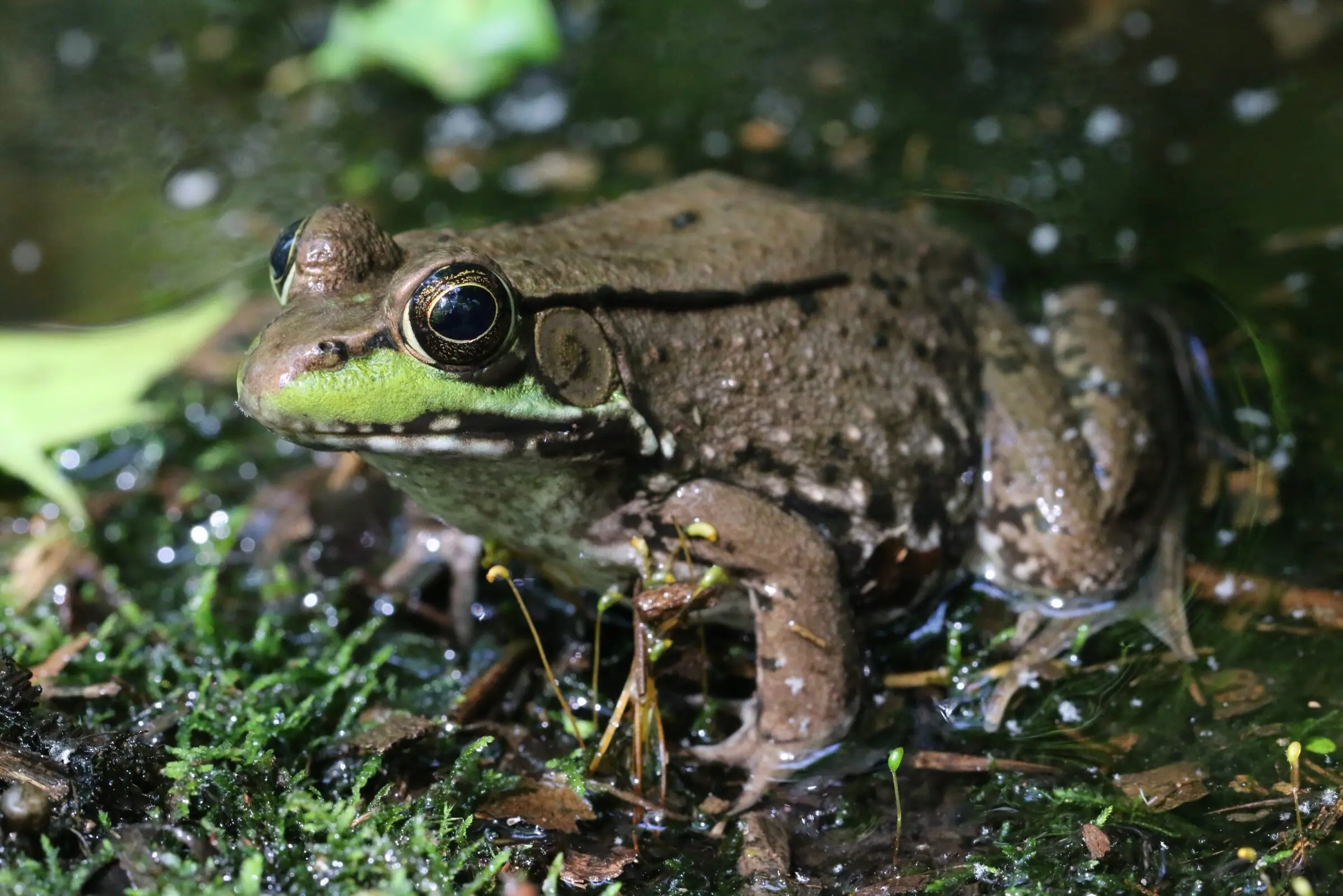
Choose plants that hold eggs and hide tadpoles
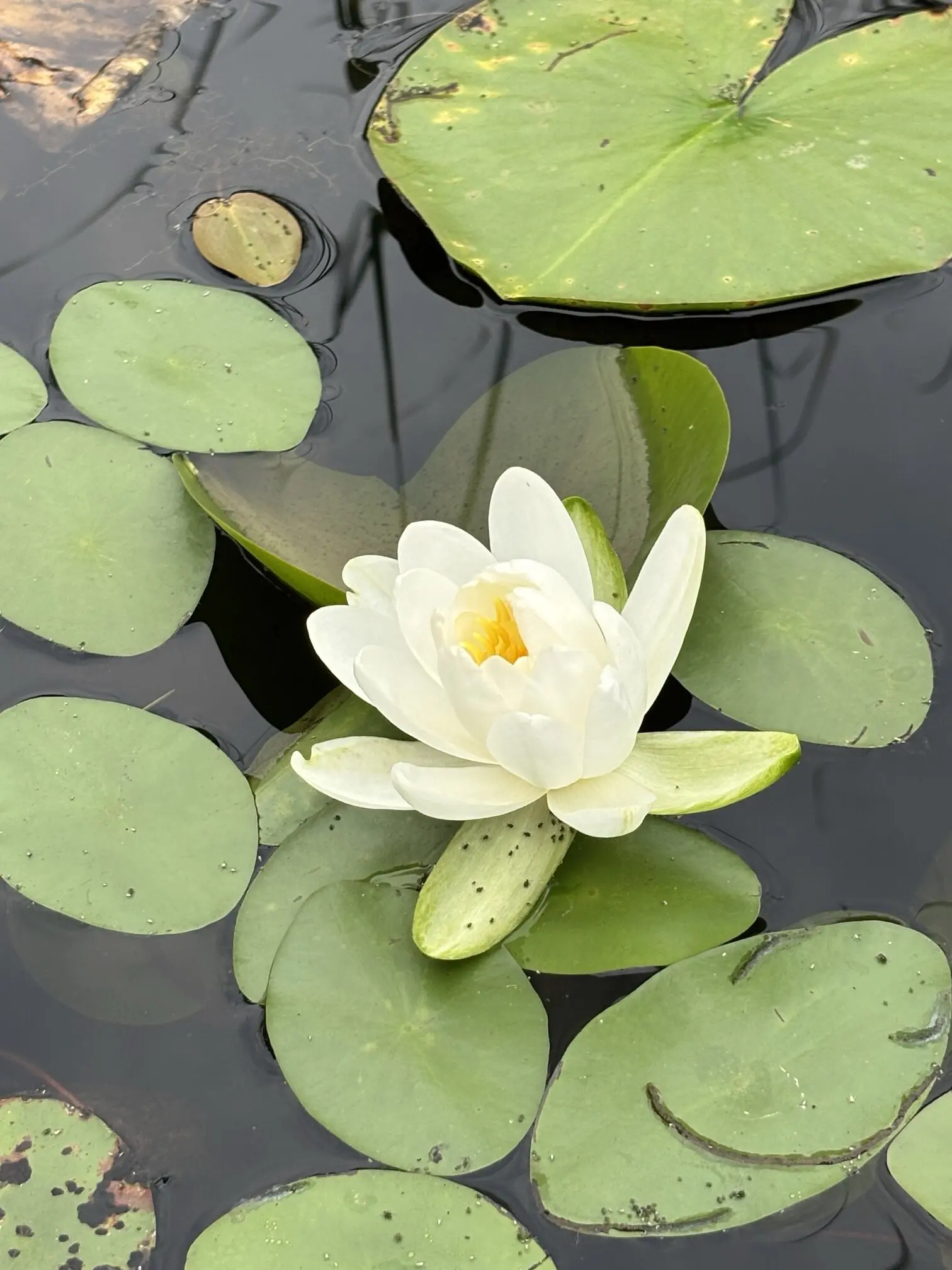
Water plants do double duty. Water lilies, arrowhead, bladderworts, sedges, and rushes give frogs places to attach eggs and give tadpoles cover. Leave some open water so you can watch the action. Plant shrubs beside at least part of the pond too. Treefrogs use them for cover and as perches to call from.
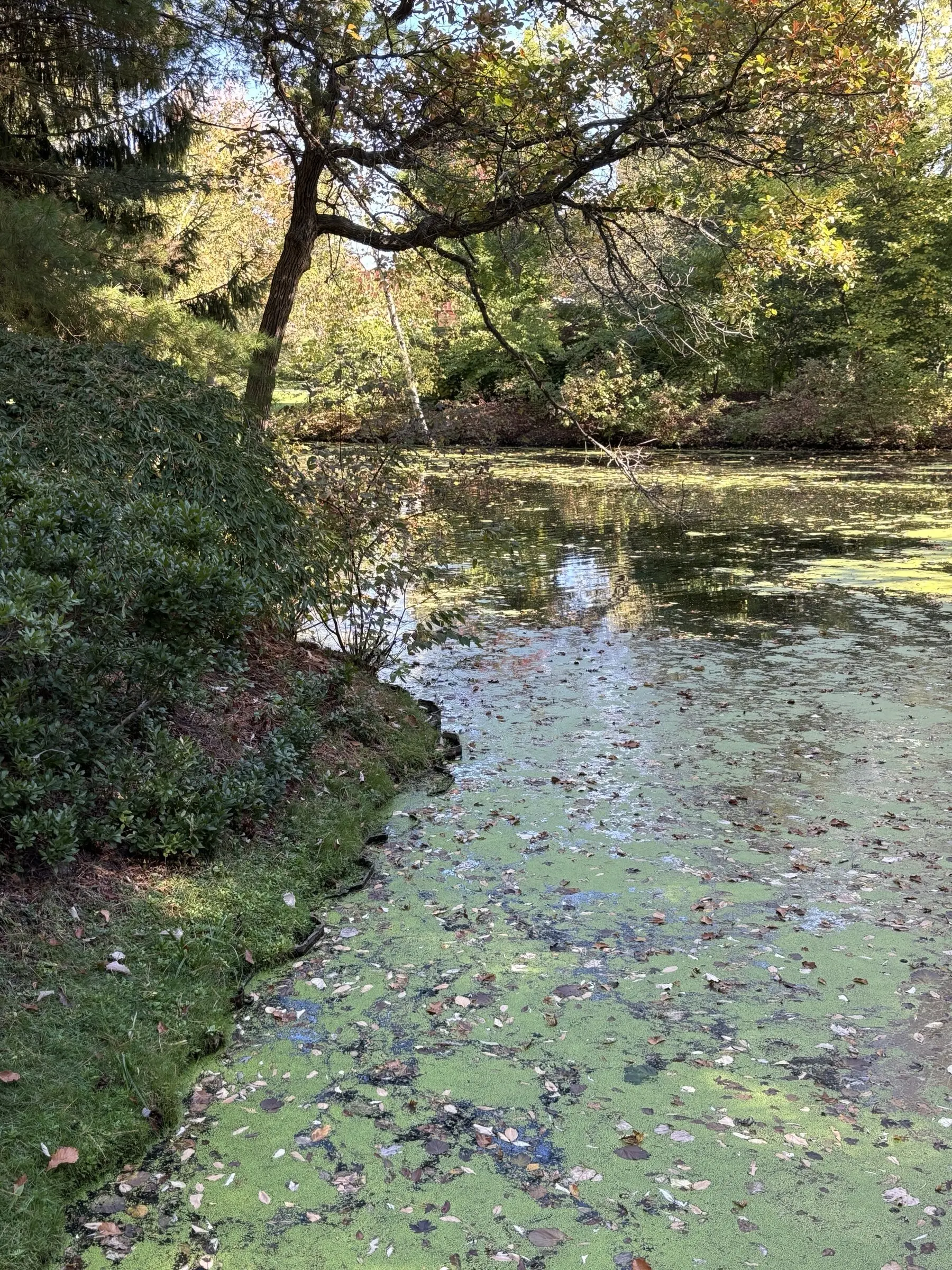
No room for a pond?
A pond is best, but it isn’t the only option. Even a large saucer of water set next to a toad house helps. A sunken tub or half barrel with a few water plants is a step up. Small setups like these may not support breeding, but they give toads and frogs moisture close to cover.
2. Give frogs cover on land
Here’s something many people don’t realize: most frogs and toads spend more time on land than in water. Leave logs, rocks, and leaf litter near the pond so frogs have places to hide when they are away from the water. Dense plants or layers of stone at the water’s edge also give frogs daytime shelter and a place to ambush insects.
Build a frog house or toad house
Frog houses, sometimes called frog hotels, give amphibians a cool, protected place to hide during the day. The two most common types are made from clay pots and PVC pipe, and each suits a different kind of frog.
Clay pot toad house (for toads and ground-dwelling frogs). This is the easiest frog house you’ll ever make. Turn a clay or ceramic flowerpot upside down and prop one edge on a rock to make a doorway, a simple design the National Wildlife Federation recommends. If the pot already has a toad-size crack or chip in the rim, that works too. Skip a floor, because toads like to dig. Set it in a shady spot near water.
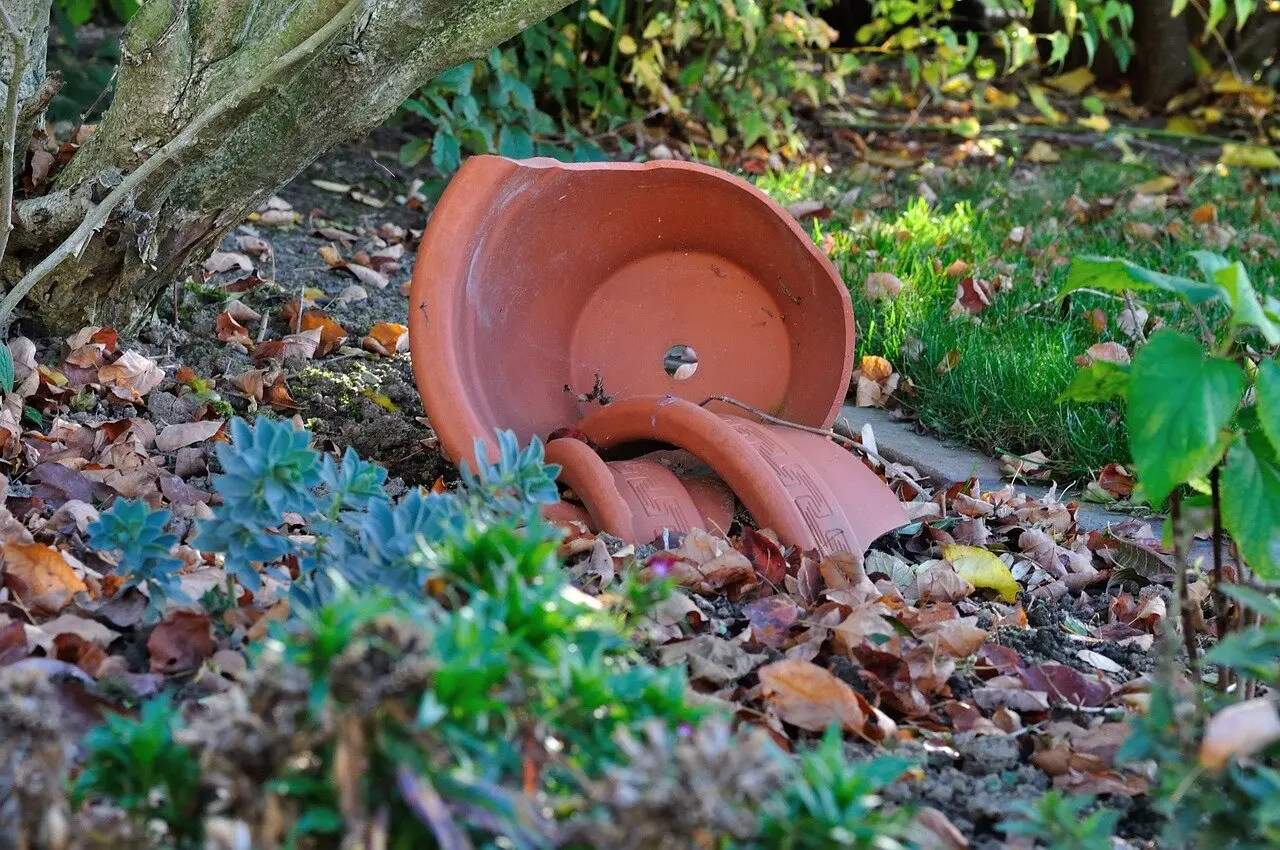
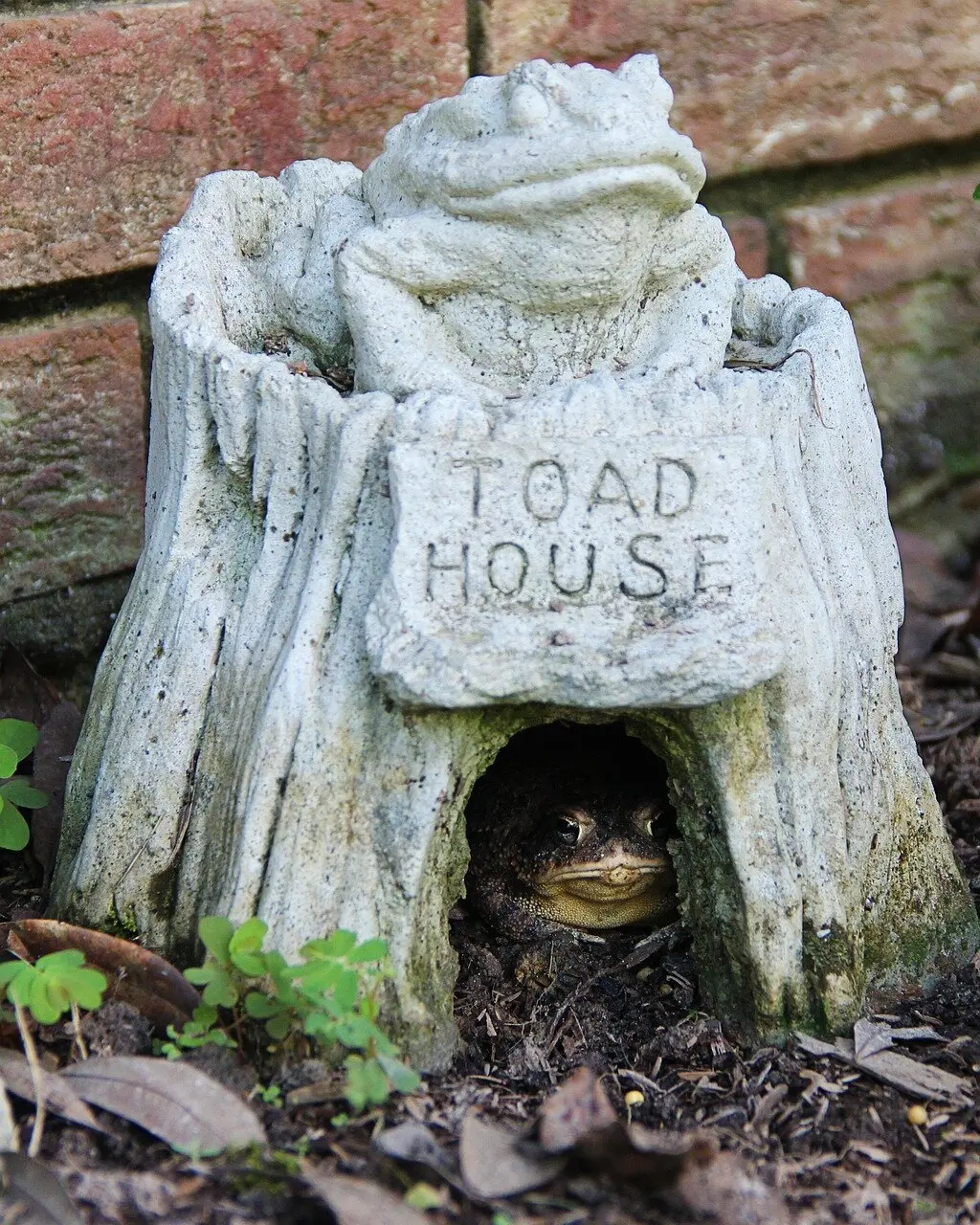
Store-bought frog and toad houses. Garden centers and online shops sell ready-made versions, from ceramic toad houses shaped like mushrooms or cottages to treefrog tubes. If you buy one, the same rules apply: choose one with an open bottom so toads can dig, and set it in shade near water. Decorative styles are fine, as long as the inside stays cool and damp.
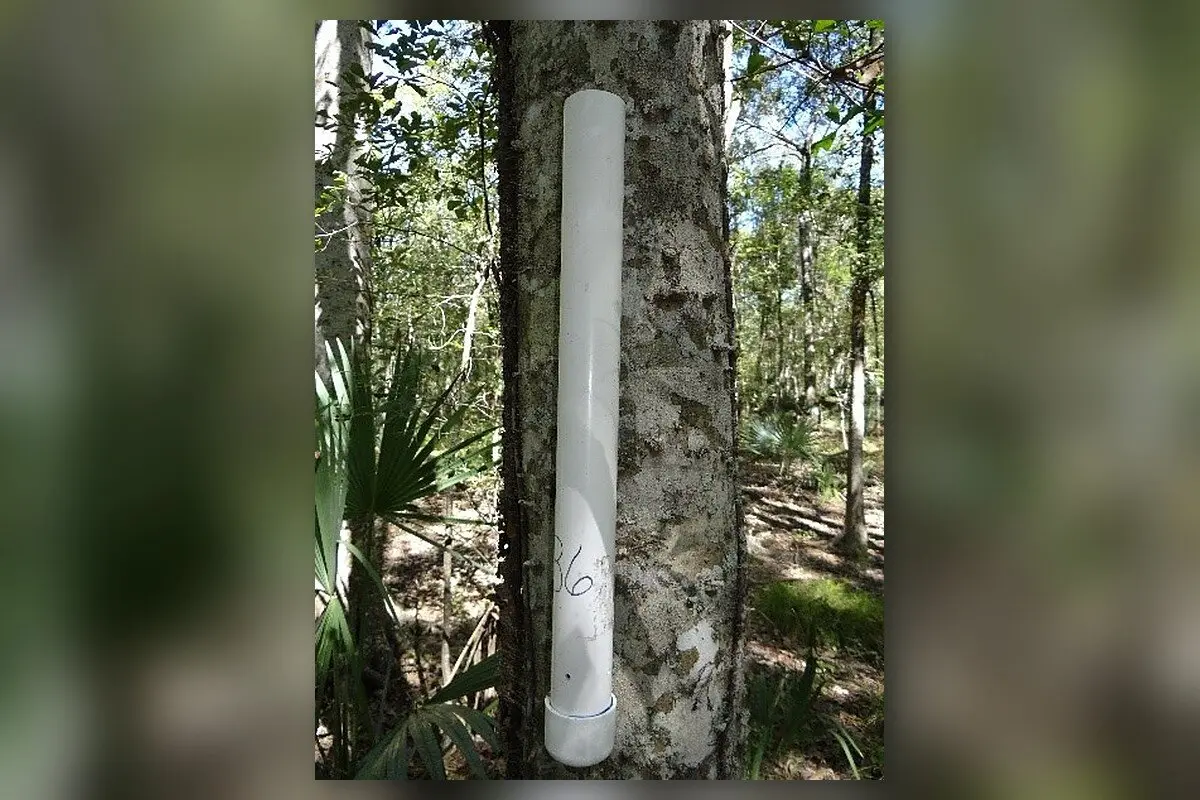
PVC pipe frog house (for treefrogs). Treefrogs prefer to hide off the ground in narrow, upright spaces. University of Florida IFAS Extension developed a simple treefrog house from PVC pipe:
- Use thin-wall white PVC pipe about 1.25 inches across. Skip heavy schedule 40 pipe, which is hard to cut.
- Cut a piece about 3 feet long, with one end sliced at a 45-degree angle so it works like a stake.
- Push or tap the angled end a couple of inches into the ground with a rubber mallet. Pull it back out, knock out the plug of soil, and reset it.
- Place it in a flower bed or beside shrubs, trees, or other tall plants.
- Check it after a week or two by peering down the top. If no frogs have moved in, try a new spot.
Green treefrogs and squirrel treefrogs use these houses in Florida, hiding inside by day and coming out at night to hunt insects. The research was done in Florida, so results elsewhere may vary.
Some versions mount a shorter pipe on a fence with a cap on the bottom to hold a little water. These need a drain hole and regular cleaning after rain so they do not breed mosquitoes.
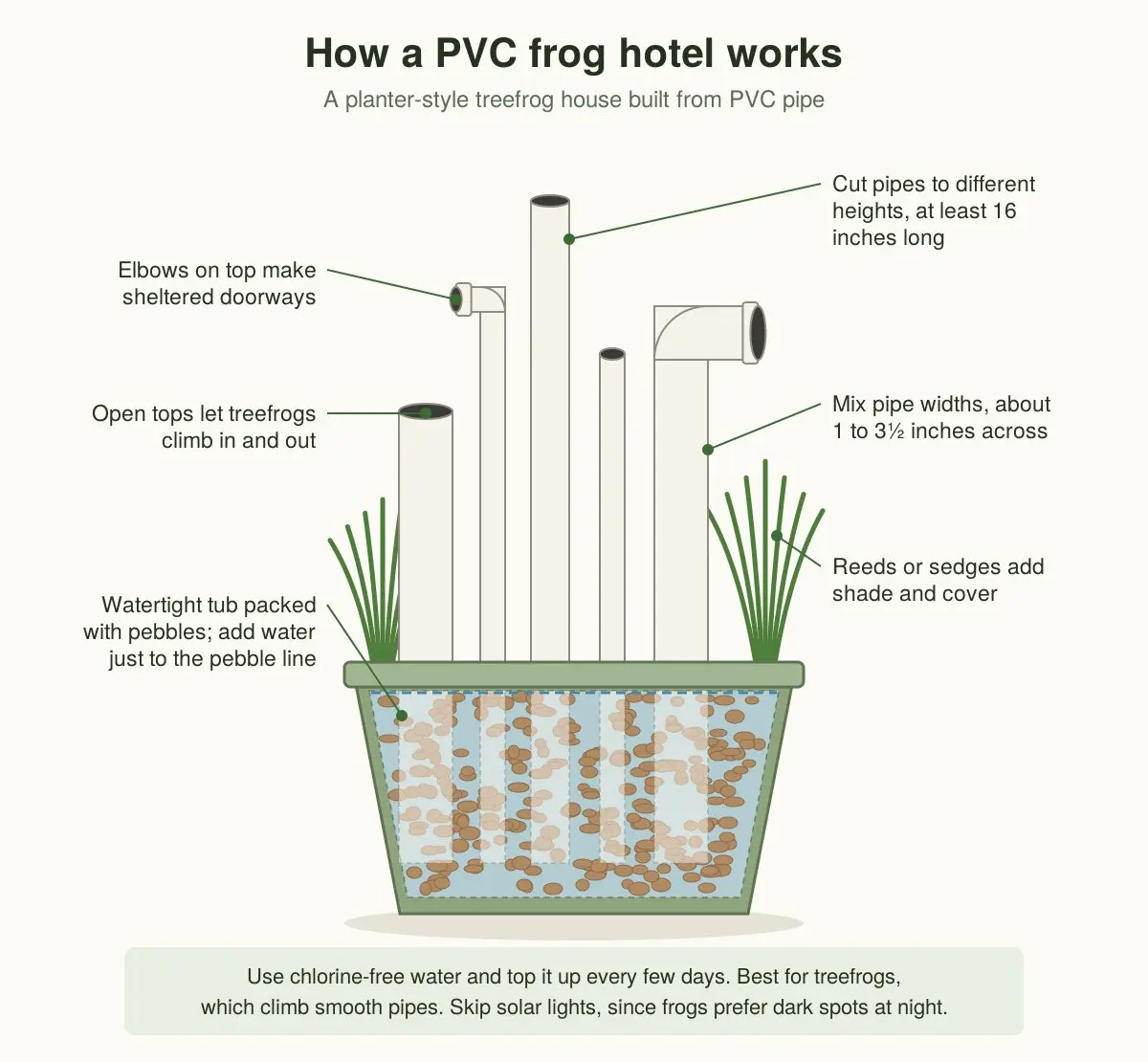
Planter-style frog hotel. A popular DIY version groups several PVC pipes in one container. Redland City Council in Queensland, Australia, suggests pipes of three widths, about 1, 1½, and 3½ inches across, each at least 16 inches long and cut to different heights. Stand them in a watertight tub, pack pebbles around and inside them, and add reeds or sedges. Fill with chlorine-free water only to the top of the pebbles, which helps avoid mosquitoes, and top it up every few days. Some guides suggest adding a solar light, but skip it. As section 5 explains, frogs prefer dark spots at night.
A note for Florida gardeners: Invasive Cuban treefrogs use PVC pipes too. Checking who has moved in also makes the pipes a handy way to find and remove invasive frogs. Don’t handle Cuban treefrogs with bare hands, because their skin secretions can irritate skin and eyes.
3. Plant natives to grow a food supply
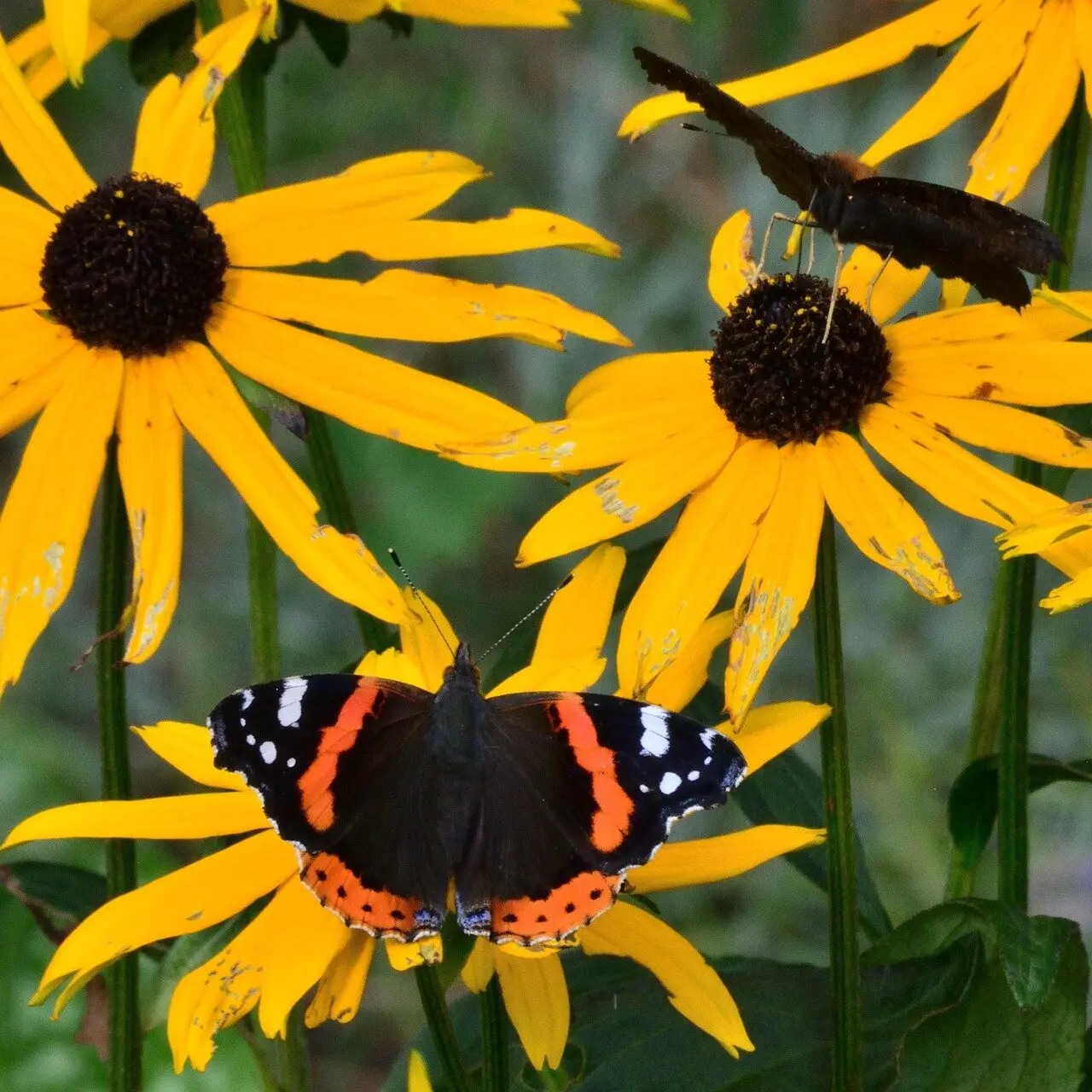
Frogs eat what your garden grows, so the more insects your plants draw, the better the menu. Native plants are the best bet. University of Missouri Extension notes that native wildlife, amphibians included, is drawn to native plants over nonnative ones, and that ringing a pond with them creates a small ecosystem frogs favor. Mix flowering perennials, grasses, and shrubs so insects are around from spring through fall.
4. Cut back on chemicals
Whatever you spray in the yard can end up in your frogs, since their skin soaks up what it touches. Use pesticides sparingly and keep runoff out of the pond. Insecticides also remove the insects frogs need to eat, which can drive them away even if the spray does not harm them directly. Choose hand-picking, row covers, and targeted treatments over broad sprays, and keep lawn chemicals well away from the water.
5. Turn off outdoor lights near the pond
Some guides suggest adding a solar light near a frog area. Research points the other way. In experiments by Case Western Reserve University, treefrogs preferred to settle in dark ponds over lit ones, and young American toads under artificial light at night were more active at night and grew more slowly. Toads raised in a lit pond weighed about 15% less after leaving the water.
Keep the pond area dark at night. Use motion-sensor lights or shield fixtures so light points down, not across the yard.
6. Leave the leaves this fall
Fall cleanup can remove the very places frogs need to survive winter. University of Illinois Extension says toads burrow below the frost line, while spring peepers and wood frogs overwinter closer to the surface and can partly freeze. A layer of fallen leaves adds insulation that may help them survive.
You don’t have to give up a tidy yard. Leave at least some leaves in garden beds and out-of-the-way areas. If only 10% to 20% of the lawn is covered, leaves can stay where they fall. Rake heavier layers into beds rather than bagging them, and note that mowing leaves into the lawn can harm animals already sheltering in them.
7. Make the yard safe
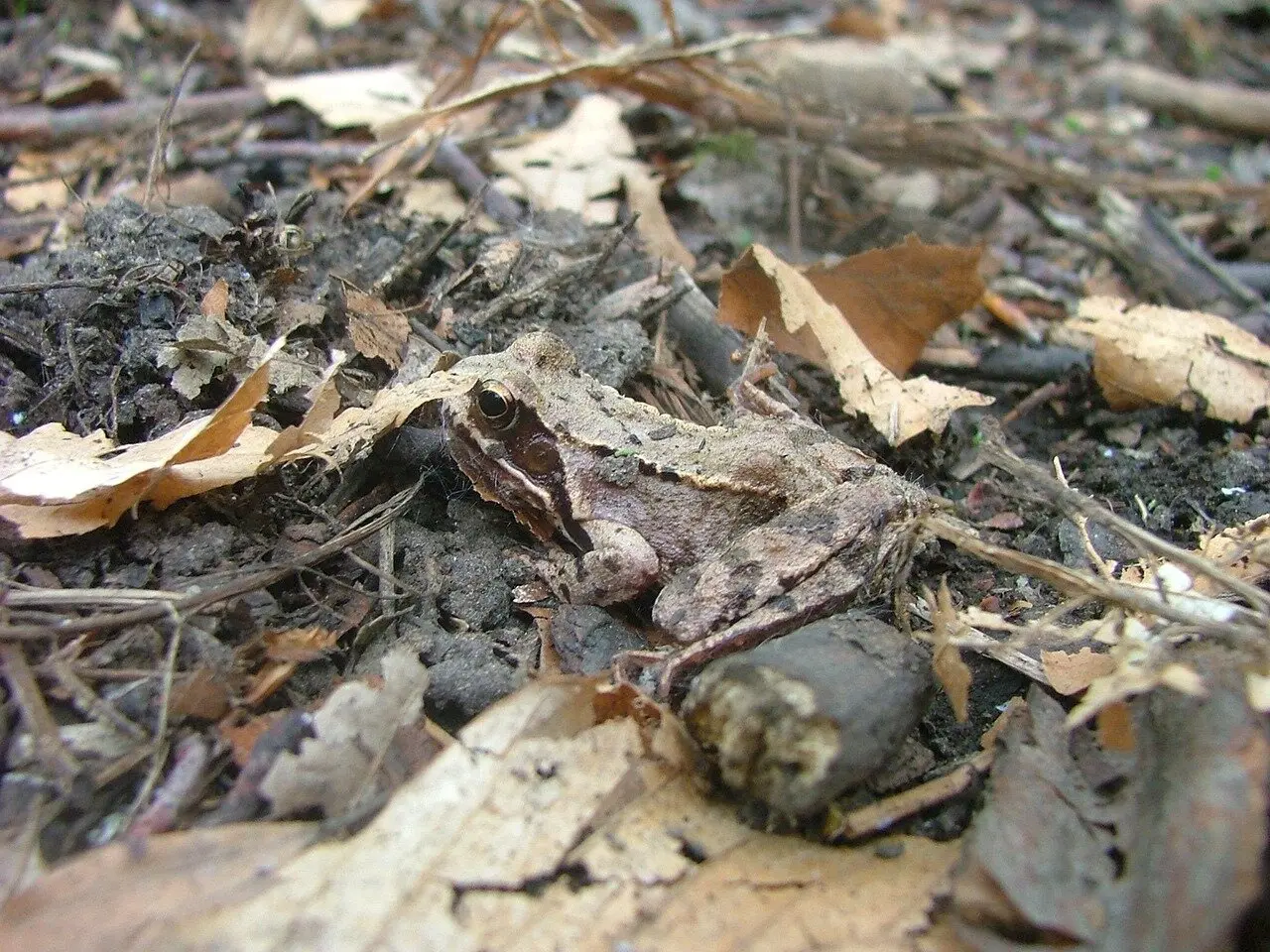
- Check before you mow. Frogs and toads hide in tall grass, and a mower blade can’t see them. Walk or sweep the lawn first so they have a chance to hop out of the way.
- Keep pets away from the pond area. Dogs and cats chase and catch frogs, so give the pond a quiet corner pets don’t patrol.
- Give pool visitors a way out. Frogs that hop into a swimming pool often cannot climb back out. A floating wildlife escape ramp gives them an exit.
What about mosquitoes in a frog pond?
A pond with plants and no fish can raise mosquito worries. A balanced, well-planted pond rarely produces unusual numbers of mosquitoes. If larvae do show up, Bti (Bacillus thuringiensis israelensis) is an option. The U.S. Environmental Protection Agency says Bti targets only the larvae of mosquitoes, black flies, and fungus gnats and lists ponds and bird baths among the places it can be used. Follow the label.
Don’t bring in frogs, tadpoles, or eggs
It is tempting to jump-start a new pond with tadpoles from a neighbor’s pond or a nearby creek. Don’t. The New York State Wildlife Health Program says wild tadpoles and frogs should not be moved between habitats because doing so can spread disease. Diseases such as chytrid fungus are already killing amphibians across the U.S. Build the habitat and let local frogs find it.
Watch for invasive frogs in Florida
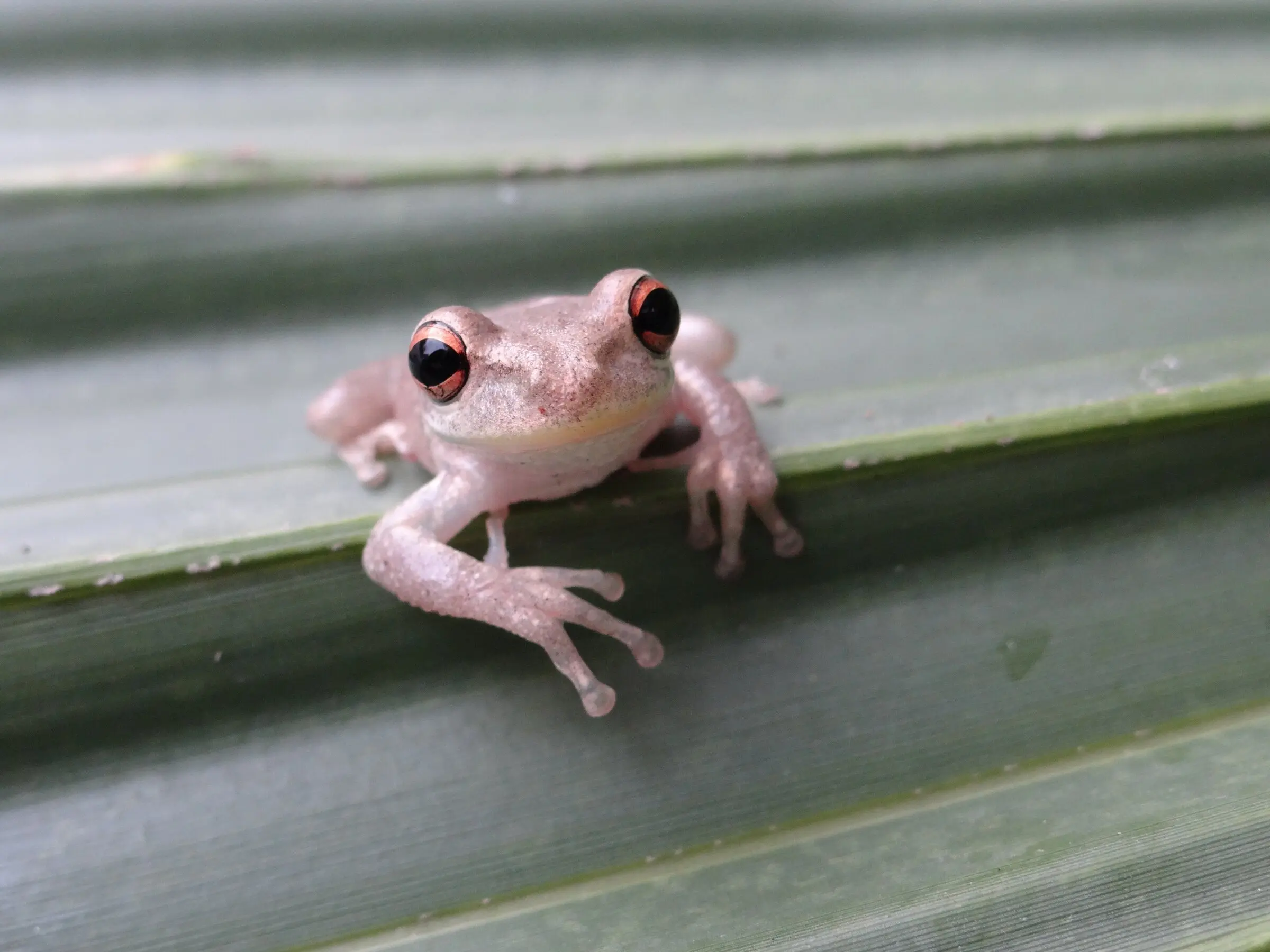
Not every frog is a welcome guest. In Florida, the invasive Cuban treefrog eats native frogs, toads, and lizards. Cane toads, also called Bufo toads or marine toads, produce a toxin that can be deadly to dogs and cats.
Identify any large frog or toad carefully before you act, since native species look similar. The skin on top of a Cuban treefrog’s head is fused to the skull and won’t slide when touched. If your pet bites or licks a cane toad, UF/IFAS advises rinsing the side of its mouth with a hose while pointing its head down, wiping the gums, and calling your veterinarian right away.
Handle with care
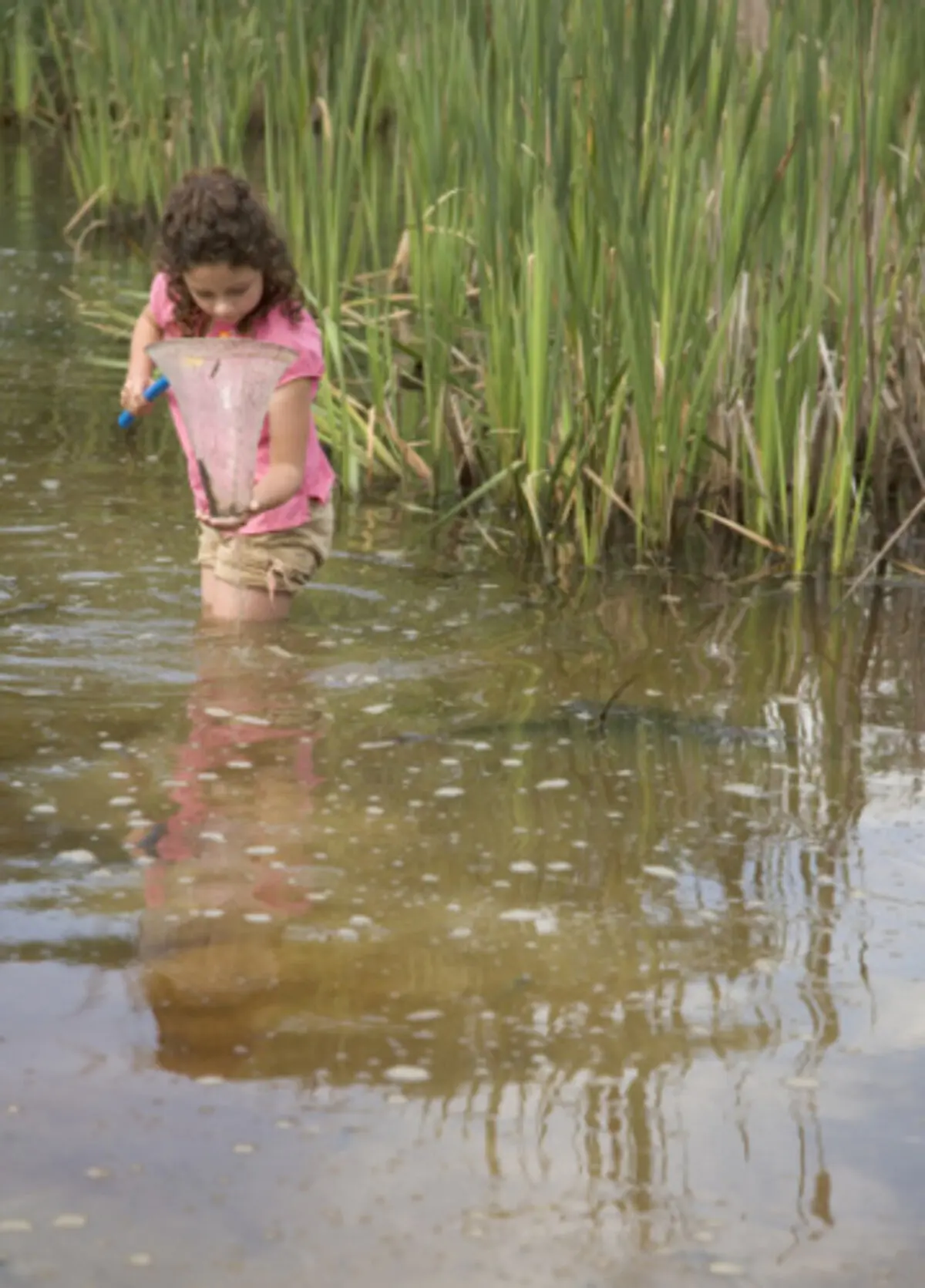
Growing up, the creek near my yard was so full of frogs that the neighborhood kids held frog races. Today, my local nature center lends pond dippers and nets during programs, camps, and self-guided visits, so families can scoop up tadpoles and frogs from its ponds, take a close look, and let them go. Catch and release is a great way to get to know frogs, as long as each one goes back where it was found.
Before you head back inside, wash up. Frogs and toads can carry Salmonella even when they look healthy, the Centers for Disease Control and Prevention warns, so wash your hands with soap and water after touching a frog, its pond water, or anything in its habitat. And no, toads do not cause warts.
How long does it take?
Be patient. A new pond usually draws wildlife quickly, but frogs have to find it first, and breeding usually starts in spring. Results come fastest when woods, wetlands, or other wild areas are nearby. A pond built this fall can be ready for frogs when they start calling next spring.
Listen in and help science
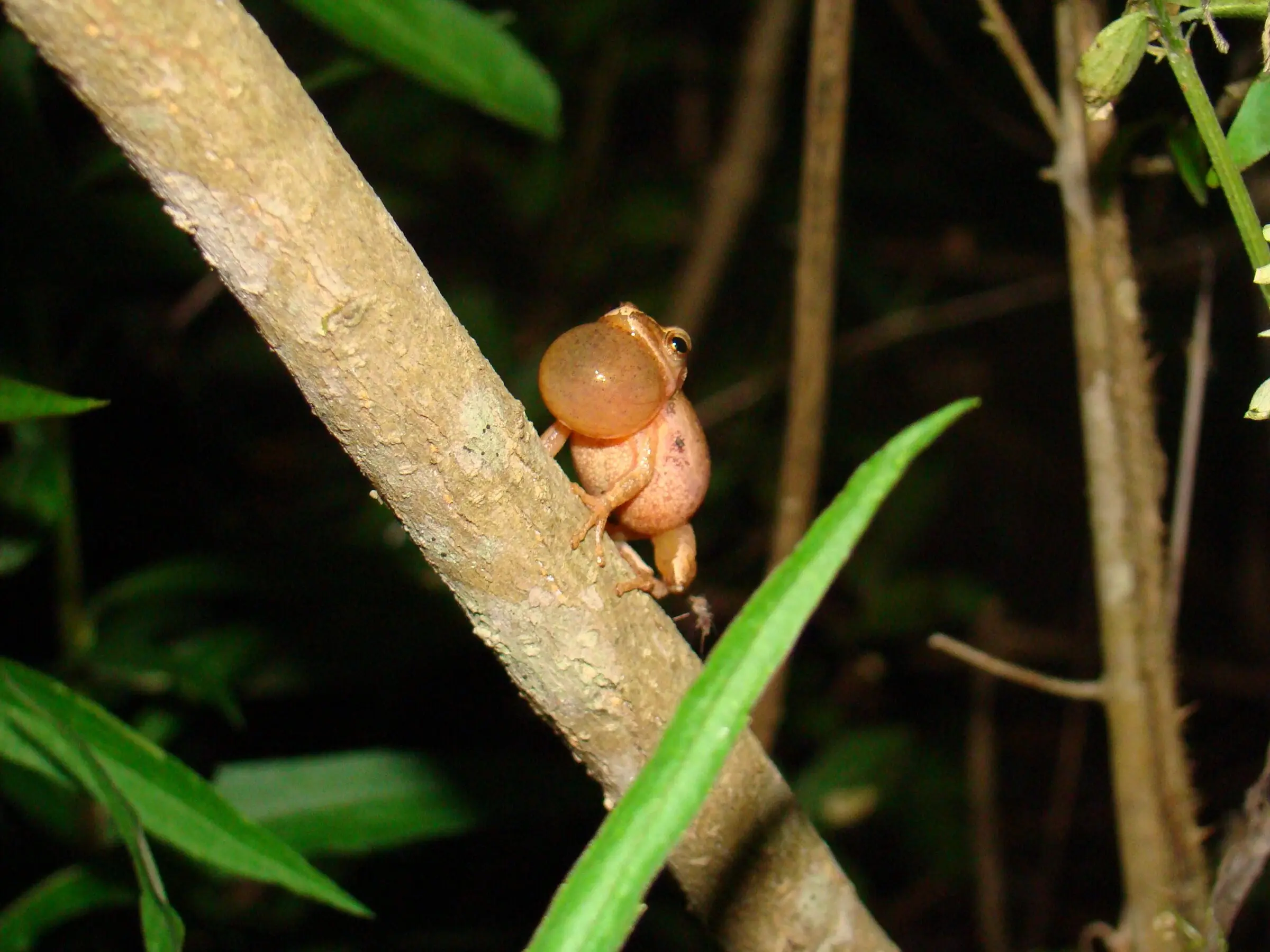
Once frogs move in, learn their calls. FrogWatch USA is a national citizen science program that trains volunteers to identify local frogs and toads by sound and report what they hear. Zoos, nature centers, and parks host trainings, usually in late winter and early spring. Your backyard chorus can add to what scientists know about amphibian declines.
Frequently asked questions
What is the fastest way to attract frogs to my yard?
Add a shallow, fishless pond with plants and a sloped edge, and place cover such as logs and rocks nearby. Water is the biggest draw because most frogs need it to breed.
Can I attract frogs without a pond?
Yes, to a degree. Moist, shady cover, leaf litter, a toad house, and a shallow dish of water can attract toads and some frogs. Most species still need a pond or wetland nearby to breed.
Do frog houses really work?
They can. A clay pot propped on a rock gives toads a cool, shady hideout. Upright PVC pipe frog houses draw treefrogs, which hide inside during the day. Store-bought ceramic toad houses work too if they have an open bottom. Place any of them near water and plants, and move it if nothing moves in after a couple of weeks.
Do frogs keep mosquitoes away?
Not much. Adult frogs eat plenty of insects, but mosquitoes aren’t an important part of their diet, according to mosquito researchers at the University of Wisconsin-Madison. Most tadpoles don’t eat mosquito larvae either.
Should I put fish in a frog pond?
No. Fish eat eggs and tadpoles. A few species, such as bullfrogs and green frogs, can live with fish, but a fishless pond attracts the most kinds of frogs.
Can I move tadpoles from another pond into mine?
No. Moving wild tadpoles or frogs between habitats can spread disease. Let local frogs find your pond on their own.
Are backyard frogs dangerous to pets?
Native frogs and toads generally just taste bad to pets. In Florida, invasive cane toads are toxic and can kill dogs and cats, so know how to identify them if you live there.
From the QT Bird Community
Join the conversation
Comments on QT Bird articles live in our community. Joining is free: share your tips, ask questions and get replies.
Sign up to PostLog in