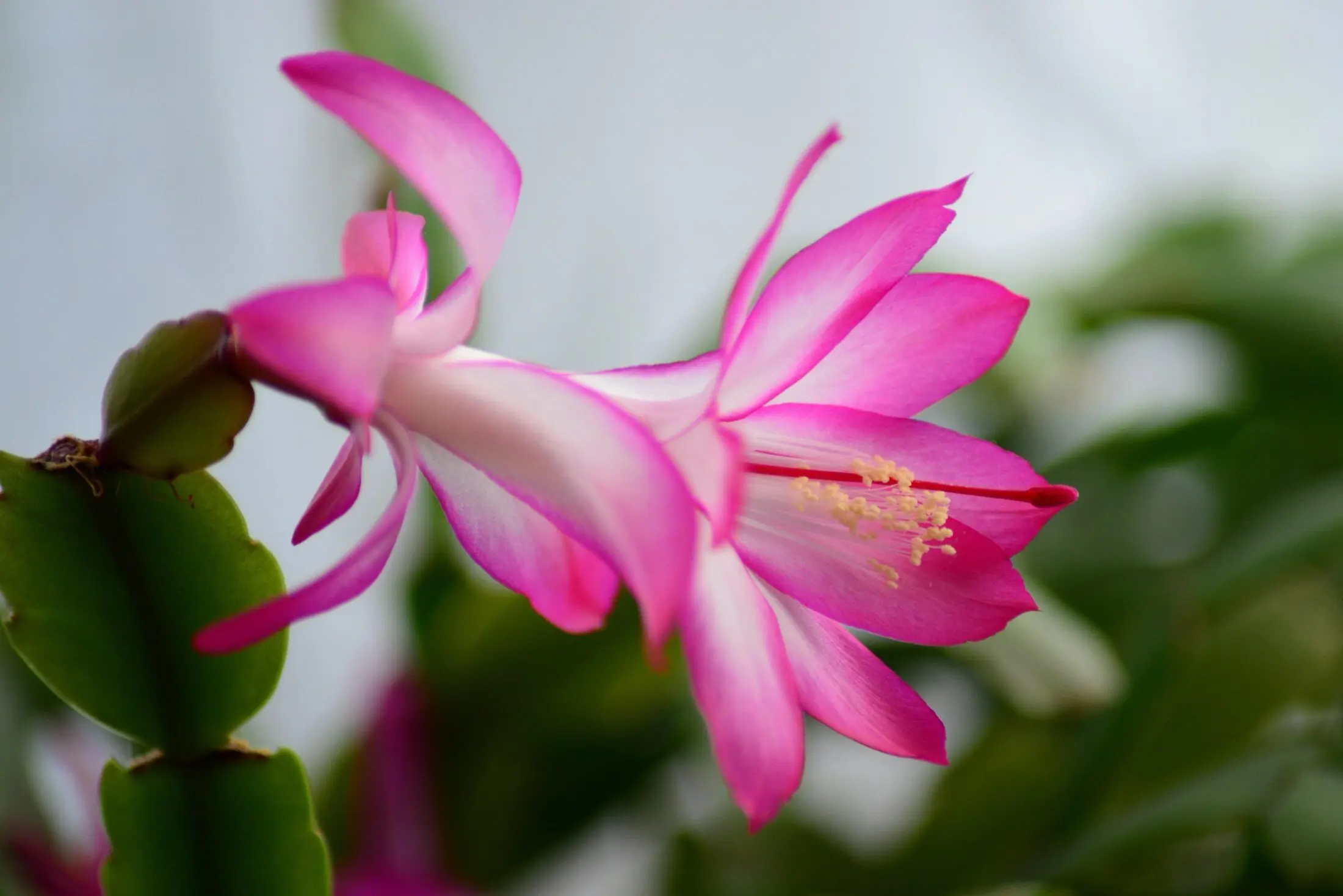
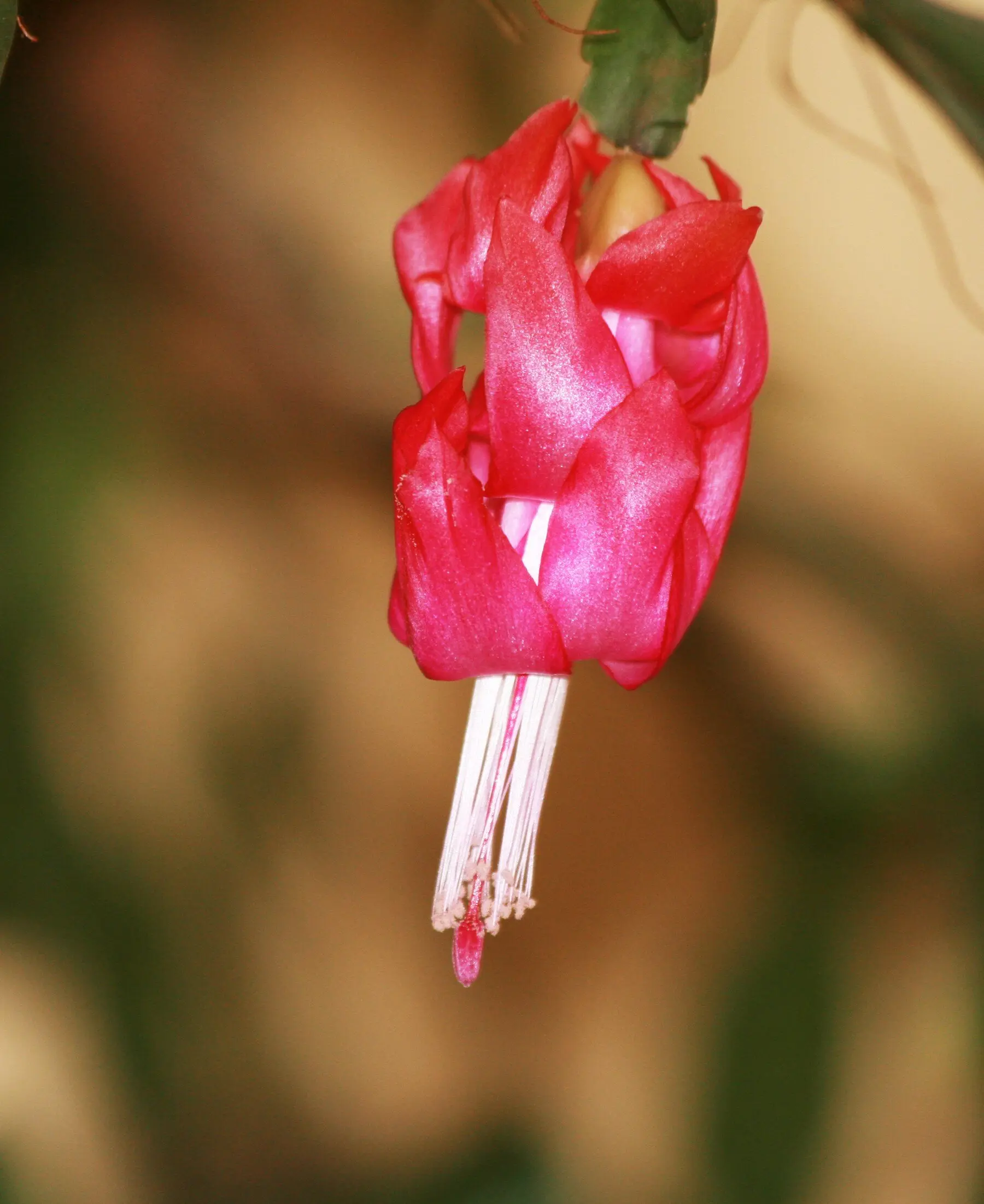
Christmas Cactus, also known as holiday cactus or Schlumbergera, is the old-fashioned houseplant that blooms when almost nothing else will. Its arching stems are made of flat, leaf-like segments, and in winter nearly every tip can carry a tubular flower in magenta, red, or pink, with petals that fold back in tiers. It’s the plant that gets handed down from grandmothers and shared as cuttings, and with good care it can live for decades. Here’s the thing, though. It isn’t a desert cactus at all, and plenty of plants sold as Christmas cactus aren’t Christmas cactus either.
Its wild relatives grow in the humid mountain forests of southeastern Brazil, where they perch in the crooks of tree branches and on mossy rocks instead of in the ground[1]. They live on rain and the bits of fallen leaves that collect around their roots, which is why this cactus prefers filtered light and a loose, airy mix. The true Christmas cactus is a garden hybrid of two of those forest cacti, bred in England in the 1840s by William Buckley, according to NC State Extension[2]. It’s hardy only in zones 10 to 12, so for most of us it’s a houseplant, or a summer porch plant in the shade.
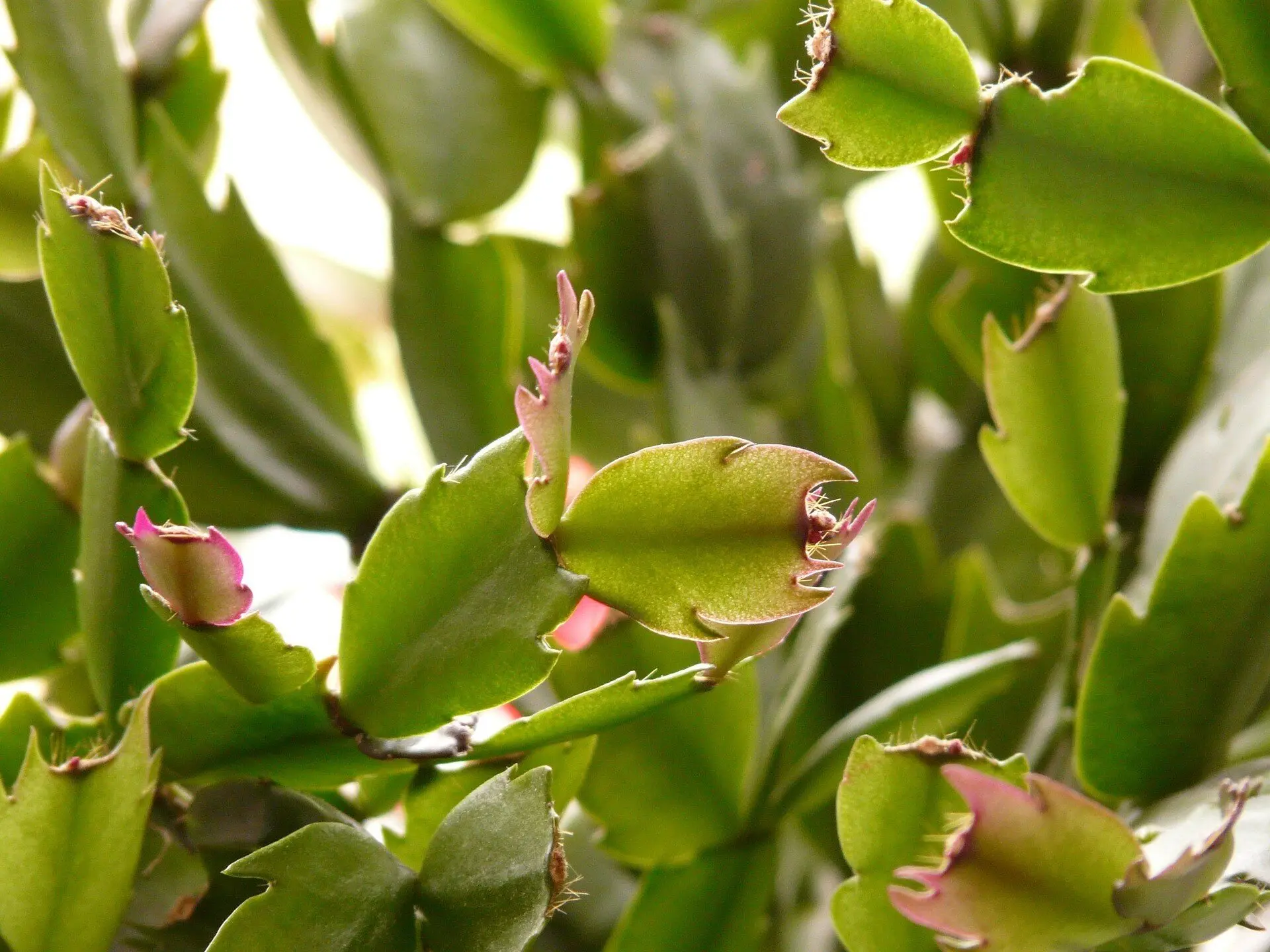
Most of the “Christmas cactus” sold in stores in November is actually Thanksgiving cactus, or a hybrid of the two. To tell which one you have, look at the edges of the stem segments. A Christmas cactus has smooth, rounded scallops. A Thanksgiving cactus has two to four sharp points on each segment that curve up like little claws. The flowers give clues, too. The pollen tips are yellow on a Thanksgiving cactus and purplish brown on a Christmas cactus, and the Thanksgiving cactus blooms first, from late November into December, while a Christmas cactus flowers from around Christmas into late winter[3]. Easter cactus, the spring-blooming cousin, has flat, star-shaped flowers. Christmas and Thanksgiving cactus take the same care, so if yours turns out to be a Thanksgiving cactus, everything here still applies.
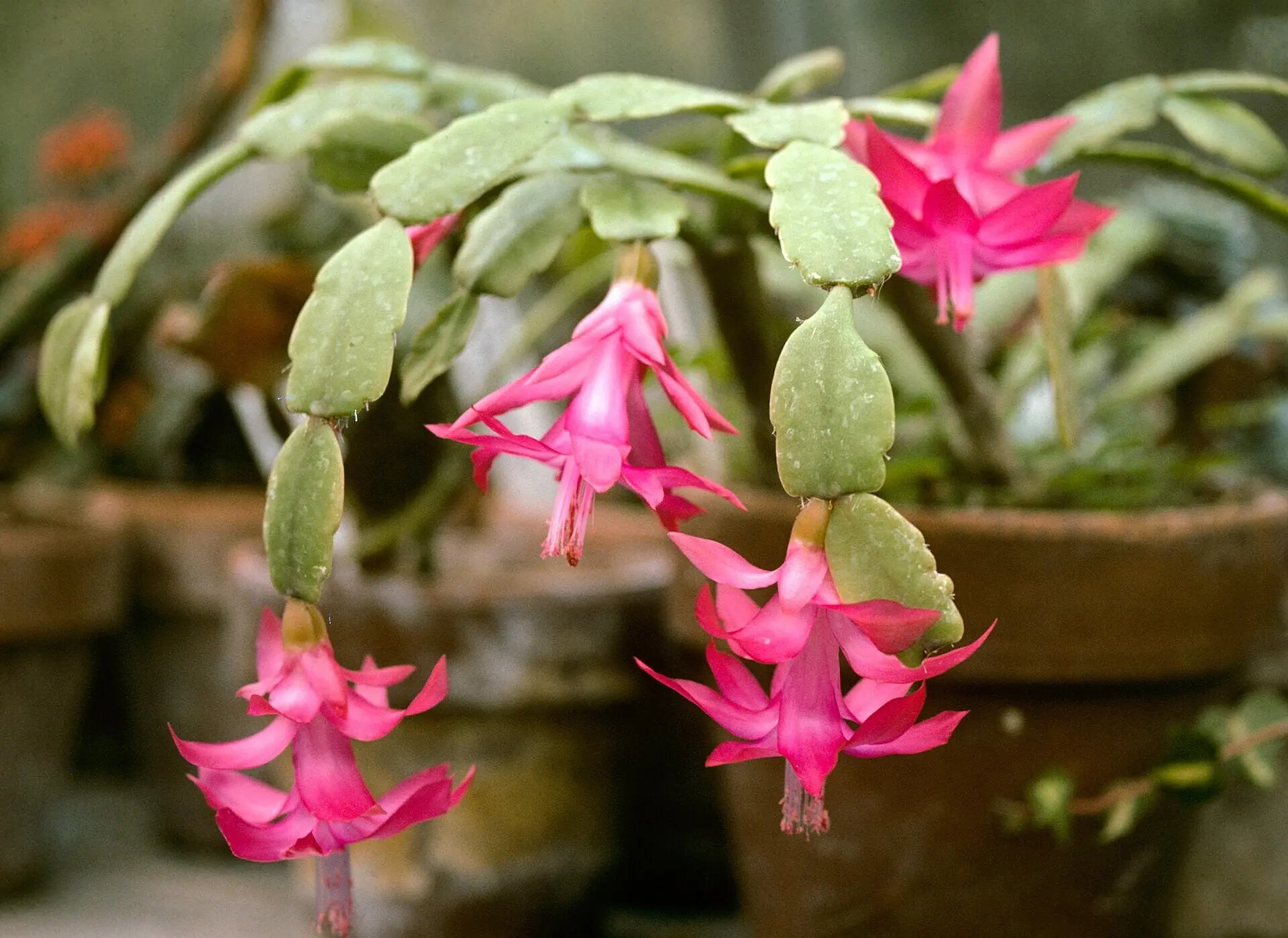
Give it bright, filtered light, like an east-facing window or a spot a few feet back from a south or west window. Too much direct sun turns the stems pale and can scorch them, and too little light means fewer flowers. In summer, it’s happy outdoors in part shade, with three to six hours of sun a day. Bring it back inside before night temperatures drop into the low 50s[4].
Water is where most people go wrong, because the word “cactus” makes them hold back. Water when the top inch of soil feels dry[5], then water thoroughly in the sink and let it drain. Empty the saucer so the roots never sit in water. While buds are forming and the plant is in bloom, keep the soil evenly moist, since a plant that dries out then may drop its buds. After the flowers fade, water less until new growth starts in spring.
It’s happiest at 65°F to 70°F during the day and 55°F to 65°F at night. Keep it away from heat vents, radiators, fireplaces, and cold drafts from outside doors.
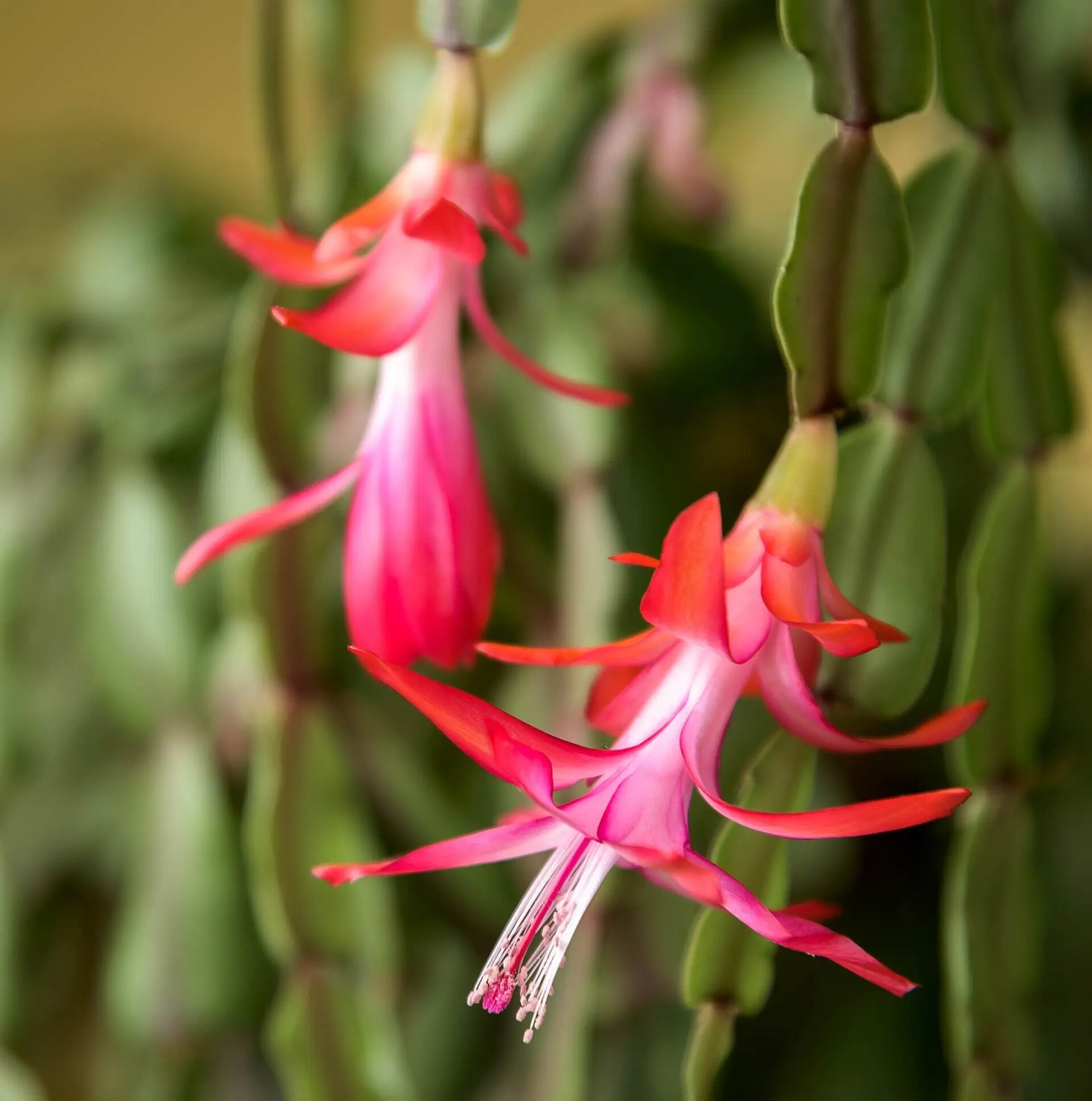
Getting it to bloom again is easier than it sounds. A Christmas cactus sets buds when the nights get long and cool, so it needs the same signals it would get outdoors in fall. Starting in early October, give it at least 12 hours of complete darkness every night for about six weeks, with nights around 60°F to 65°F[4]. A spare bedroom works, or a closet overnight, as long as it goes back into bright light during the day. Even a few hours of lamplight in the evening can keep it from setting buds. Cool nights help, too. At about 55°F, it can set buds no matter how long the nights are, while temperatures above 70°F keep it from blooming. Once you see buds, it no longer needs the long nights.
Buds that fall off before they open are the most common complaint, and they’re usually a reaction to change. A move to a new spot, a hot or cold draft, a heat vent, too much or too little water, and low light can all cause it, and a plant with more buds than it can support may drop a few on its own. Pick its spot before the buds form, and leave it there until the flowers fade.
Use a light, well-draining mix. A cactus mix works, or regular potting soil with peat and perlite or coarse sand mixed in, in a pot with drainage holes. Feed it once a month from June through August with a balanced houseplant fertilizer at half strength, then switch to a bloom fertilizer with less nitrogen in fall, when the buds start to form.
It blooms best when it’s a little snug in its pot, so repot only every three years or so, in spring after it finishes blooming, and go up just one pot size. Pinching off the stem tips in June makes it branch, and more tips mean more flowers.
Christmas cactus is easy to share. Twist off a piece of stem a few segments long, dip the end in water and then rooting hormone if you have it, and set it about an inch deep in damp coarse sand or a well-draining mix. Keep it warm, 70°F to 80°F, in bright light, and check for roots after about two weeks.
Common problems:
- Limp, wrinkled, or shriveled stems that look dull gray-green usually mean too much water has damaged the roots, though a plant that’s far too dry can look the same.
- Pale stems mean it’s getting too much direct sun.
- No buds in fall usually means the nights are too warm or too bright.
- Buds that drop before opening usually come from a sudden change in temperature, light, or water.
- Mealybugs, scale, and spider mites can show up on the stems, and tiny fungus gnats mean the soil is staying too wet.
The ASPCA lists Christmas cactus as non-toxic to dogs, cats, and horses, so it’s a good choice for a home with curious pets[6].
Forgiving, long-lived, and easy to share. I’d put it in the beginner-friendly category, and once you give it long, cool nights in fall, it will bloom for you every winter.
| Common Name | Christmas Cactus, Holiday Cactus |
|---|---|
| Botanical Name | Schlumbergera x buckleyi |
| Family | Cactaceae |
| Mature Size | 6-12 in. tall, 12-24 in. wide |
| Sun | Bright, indirect light |
| Soil | Airy, well-draining mix with peat, sand, and perlite |
| Flower Color | Magenta-red to pink |
| Native Area | Garden hybrid of cacti from southeastern Brazil |
| Toxicity | Non-toxic to dogs, cats, and horses |
Sources
QT Bird checks the facts in every article against trustworthy sources, like university extension services and established organizations.
- All About Holiday Cacti. Iowa State University Extension and Outreach.
- Schlumbergera x buckleyi. NC State Extension Gardener Plant Toolbox.
- How to Identify and Care for Holiday Cacti and Get Them to Rebloom. University of Illinois Extension.
- Holiday Cacti. University of Minnesota Extension.
- Christmas Cactus. University of Florida IFAS Extension.
- Toxic and Non-Toxic Plants: Christmas Cactus. ASPCA Animal Poison Control Center.