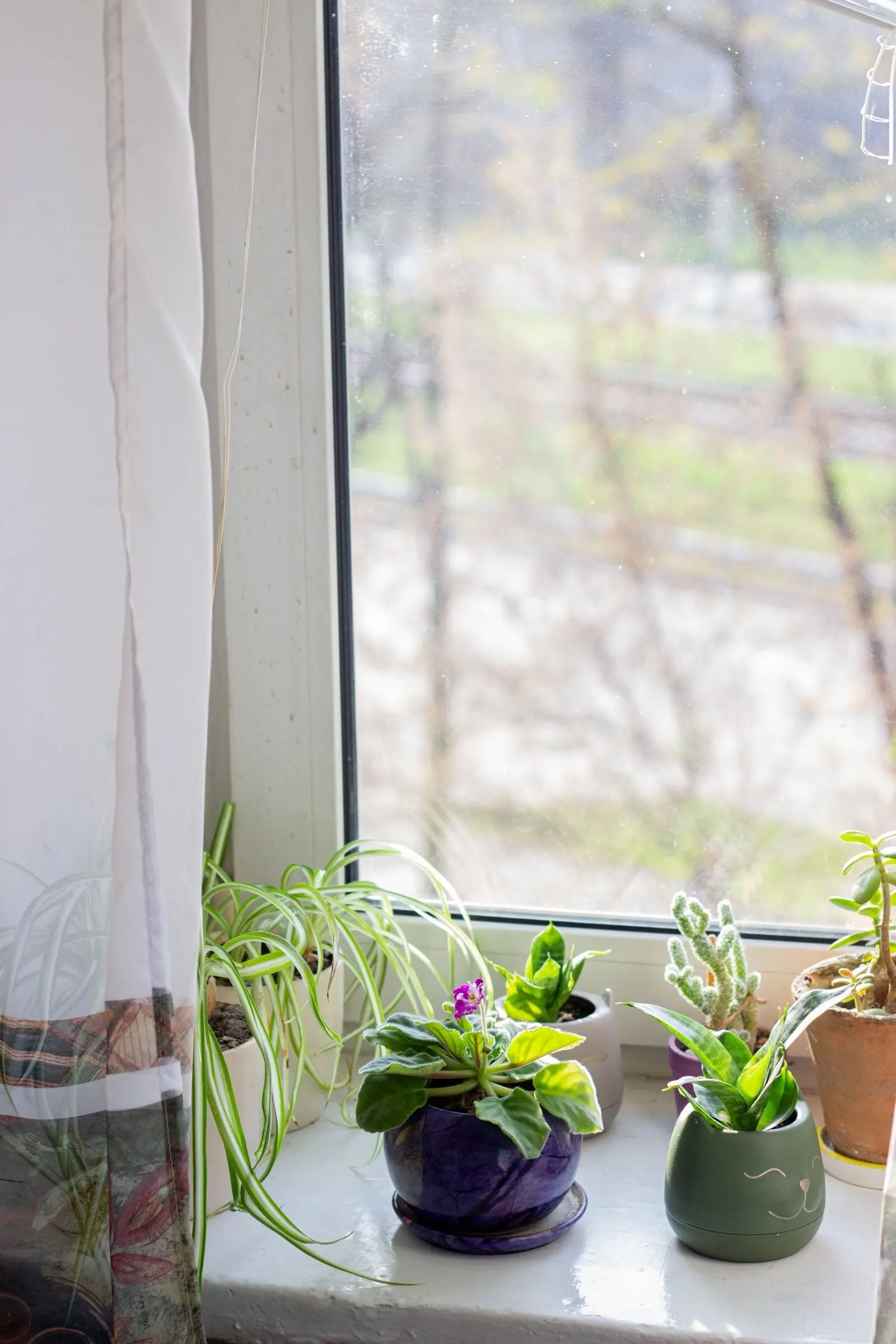
Water gets most of the attention, but light is what feeds a houseplant. A plant turns light into the energy it needs to grow, so a plant in the wrong spot will slowly fade no matter how carefully you water it. The tricky part is that our eyes are terrible at judging light. A room that feels bright and cheerful to us can be pretty dim for a plant.
This guide covers houseplant light requirements: how much light houseplants need, what “bright, indirect light” really means, how to read your windows, how to tell when a plant is getting too much or too little light, and when a grow light is worth it.
Why your eyes can’t judge light
Our eyes adjust so well that a room seems bright even when it gets a tiny fraction of the light outdoors. Plants don’t adjust that way. They respond to the actual amount of light reaching their leaves.
Light is measured in foot-candles. A sunny day outdoors delivers roughly 10,000 foot-candles. Indoors, even a spot right next to a bright window gets only a small share of that. Move a few feet into the room and the light drops off fast. That’s why a plant that looks “near the window” to you may be starving for light.
How to check the light in your home
You don’t need fancy equipment to size up your light. A few easy checks will get you most of the way there:
- Find the direction. Use your phone’s compass app to see which way each window faces.
- Turn off the lamps. Ordinary room lights add very little useful light for plants, so judge the daylight alone.
- Look for the sky. Stand where the plant sits and look out the window. If you can see a wide stretch of sky, that’s usually bright, indirect light. If you can barely see any sky, it’s low light.
- Count the hours of sun. Notice how long sun actually shines on the leaves. Several hours of direct sun means bright, direct light. An hour or two of gentle morning sun suits many tropical plants.
- Try a light meter. A free light meter app or an inexpensive handheld meter reads in foot-candles. Phone apps aren’t precise, but they’re great for comparing one spot to another.
What do low, medium, and bright light mean?
You’ll see these terms on plant tags and in every one of my plant care articles:
Bright, direct light means sun shining right on the leaves for several hours, like a spot right in front of a south-facing window. Succulents, cacti, jade, and the Tanzanian zipper plant love it. Most tropical foliage plants will scorch.
Bright, indirect light is the sweet spot for most houseplants. The room is bright, the plant sees a lot of sky, but harsh sun isn’t hitting the leaves for hours at a time. Think a few feet back from a south or west window, or right in front of an east window. Sheer curtains or blinds can turn direct sun into bright, indirect light, too.
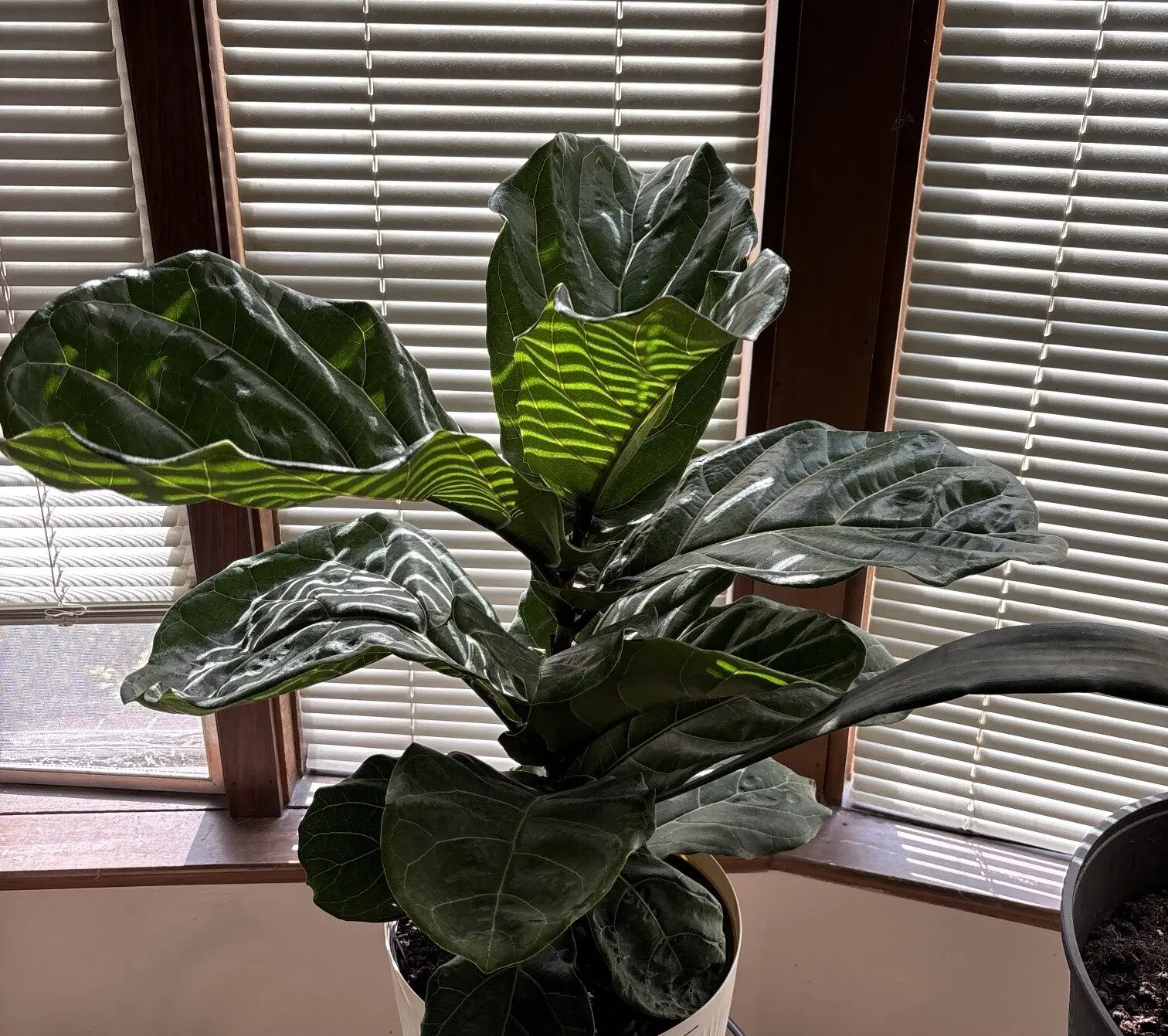
Medium light is a step down: a few feet from an east or west window, or right in front of a north window.
Low light is a spot farther into the room or near a north window, where you could comfortably read during the day but no sun reaches the plant. Here’s the catch: low light doesn’t mean no light. “Low-light plants” tolerate these spots. They grow slowly there, and almost none of them thrive in a dark corner.
Which window is best for houseplants?
Which way a window faces matters as much as how big it is. For those of us in the U.S. and the rest of the Northern Hemisphere:
South-facing windows get the most light, for the longest part of the day. They’re the best spot for succulents and sun lovers. For most tropical foliage plants, set them a few feet back or behind a sheer curtain, especially in summer.
East-facing windows get gentle morning sun and bright light the rest of the day. This is the easiest window for most houseplants, since morning sun is gentle enough for most of them.
West-facing windows get strong, hot afternoon sun. They’re bright, but the afternoon heat can scorch tender leaves. Pull plants back a bit, or filter the light.
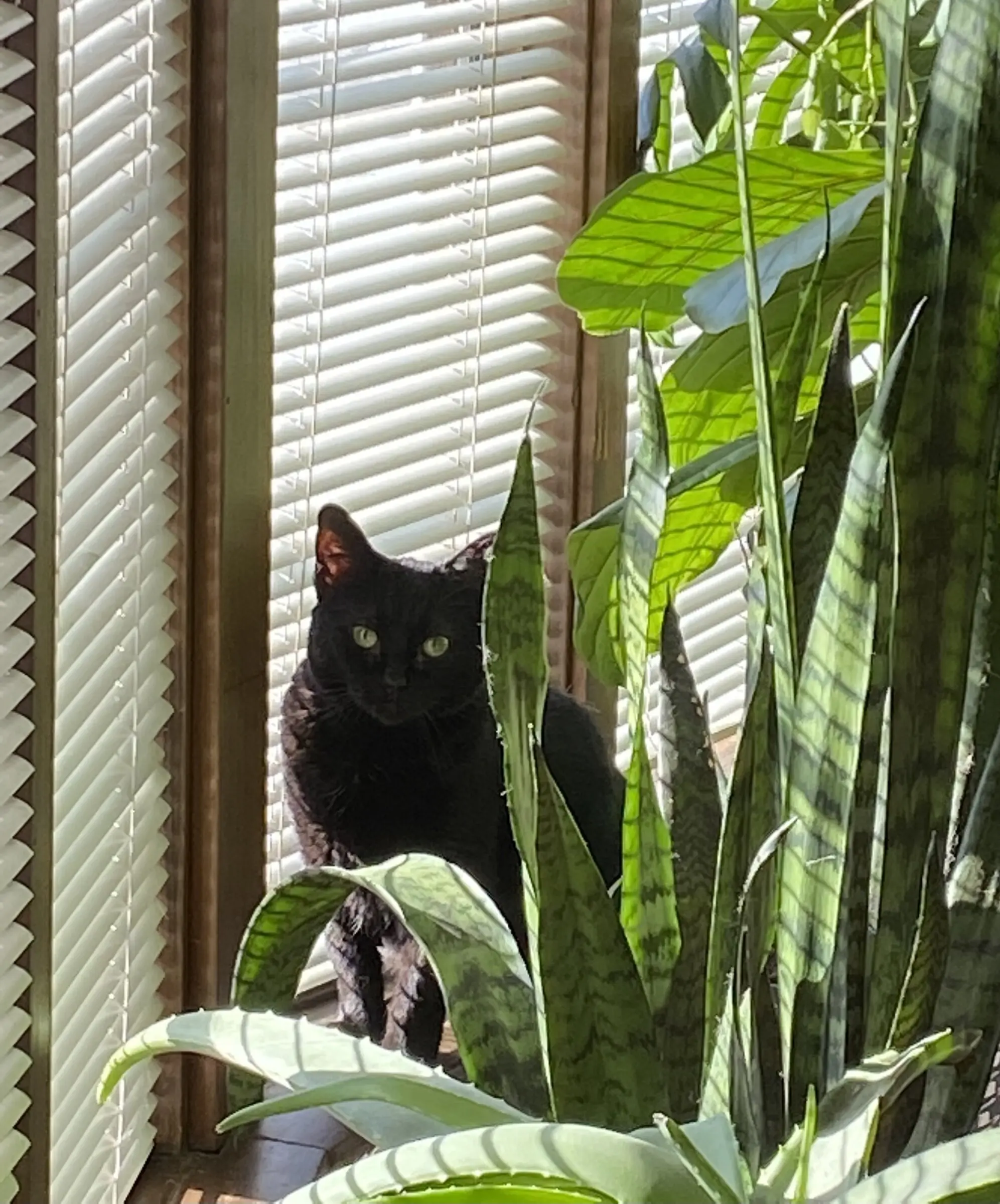
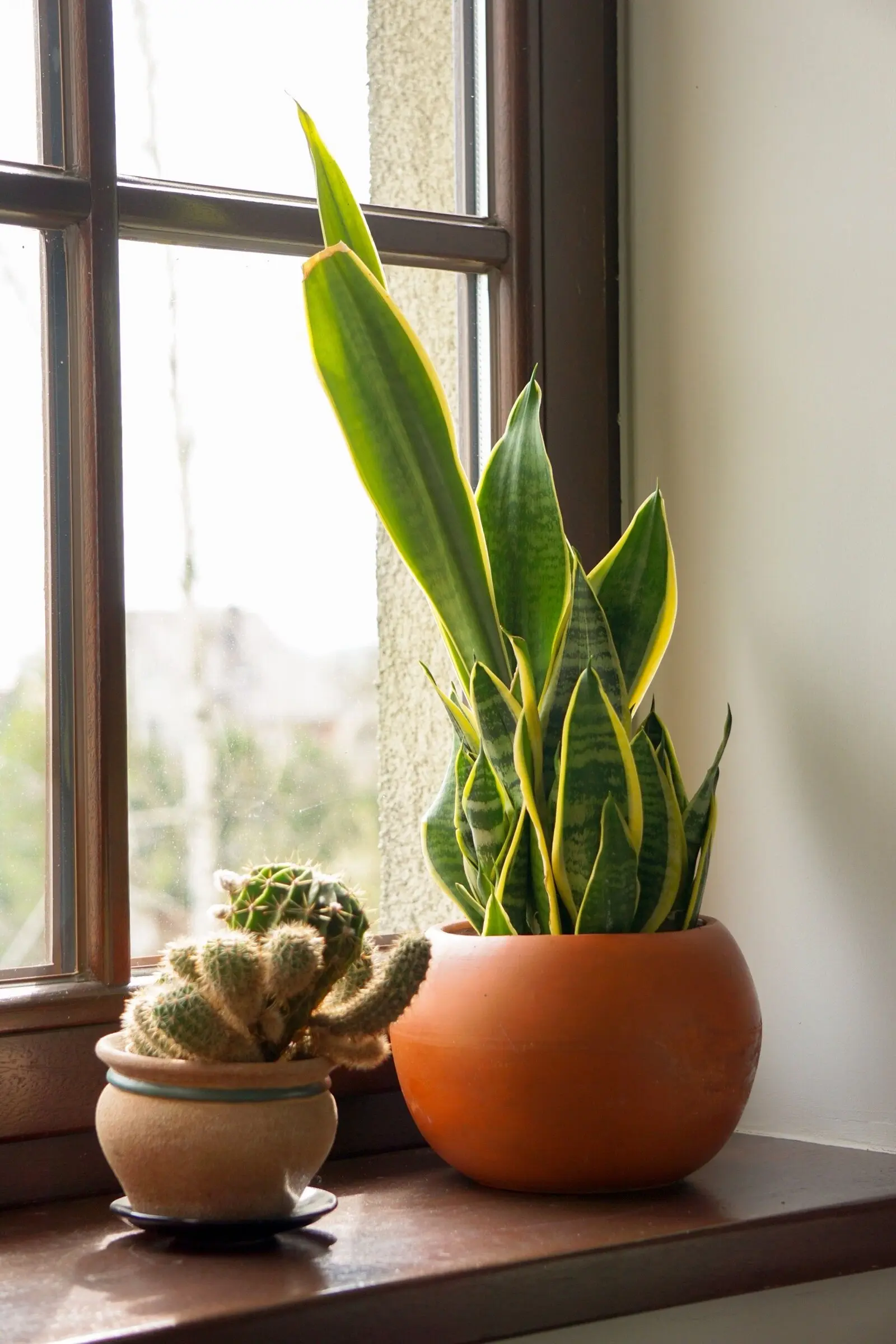
North-facing windows get the least light and almost no direct sun. They’re best for true low-light plants, like snake plants, ZZ plants, and some ferns.
Best houseplants for each light level
Here’s where the plants in my care articles do best:
| Light | Houseplants that do well |
|---|---|
| Bright, direct | Jade plant, Tanzanian zipper plant, succulents, cacti |
| Bright, indirect | Fiddle leaf fig, Petra croton, Ruby rubber plant, Thai Constellation monstera, Ring of Fire philodendron, Philodendron Birkin, Alocasia Ivory Coast, polka dot plant, aluminum plant, Neoregelia |
| Medium | Monstera Peru, Monstera adansonii, satin pothos, Golden Crocodile philodendron, baby rubber plant, Red Aglaonema, Rex begonia, rattlesnake plant, nerve plant, spider plant, Guzmania |
| Tolerates low | Snake plant, Chinese evergreen, peace lily |
Plants that tolerate low light still grow best with more of it.
Distance matters more than you think
Light fades quickly as you move away from a window. A plant that would thrive right next to an east window might only limp along 8 feet away. Here’s roughly how light levels change with window direction and distance:
| Light level | North window | East or west window | South window |
|---|---|---|---|
| Low (about 75 foot-candles) | A few feet away | 3 to 10 feet away | 15 to 20 feet away |
| Medium (about 150 foot-candles) | Directly in front | A few feet away | 3 to 10 feet away |
| Bright (about 300 foot-candles) | Not enough light | Directly in front | Up to 5 feet away |
| Direct sun (about 1,500 foot-candles) | Not enough light | Not enough light | Directly in front |
Source: University of Illinois Extension
Notice that a spot 15 to 20 feet back from a south window gets about the same light as a spot a few feet from a north window.
A few other things cut down the light your plants get:
- Trees, porches, awnings, and buildings outside the window
- Dirty windows and window screens
- Heavy curtains, even when they’re partly open
- Other plants and furniture blocking the light
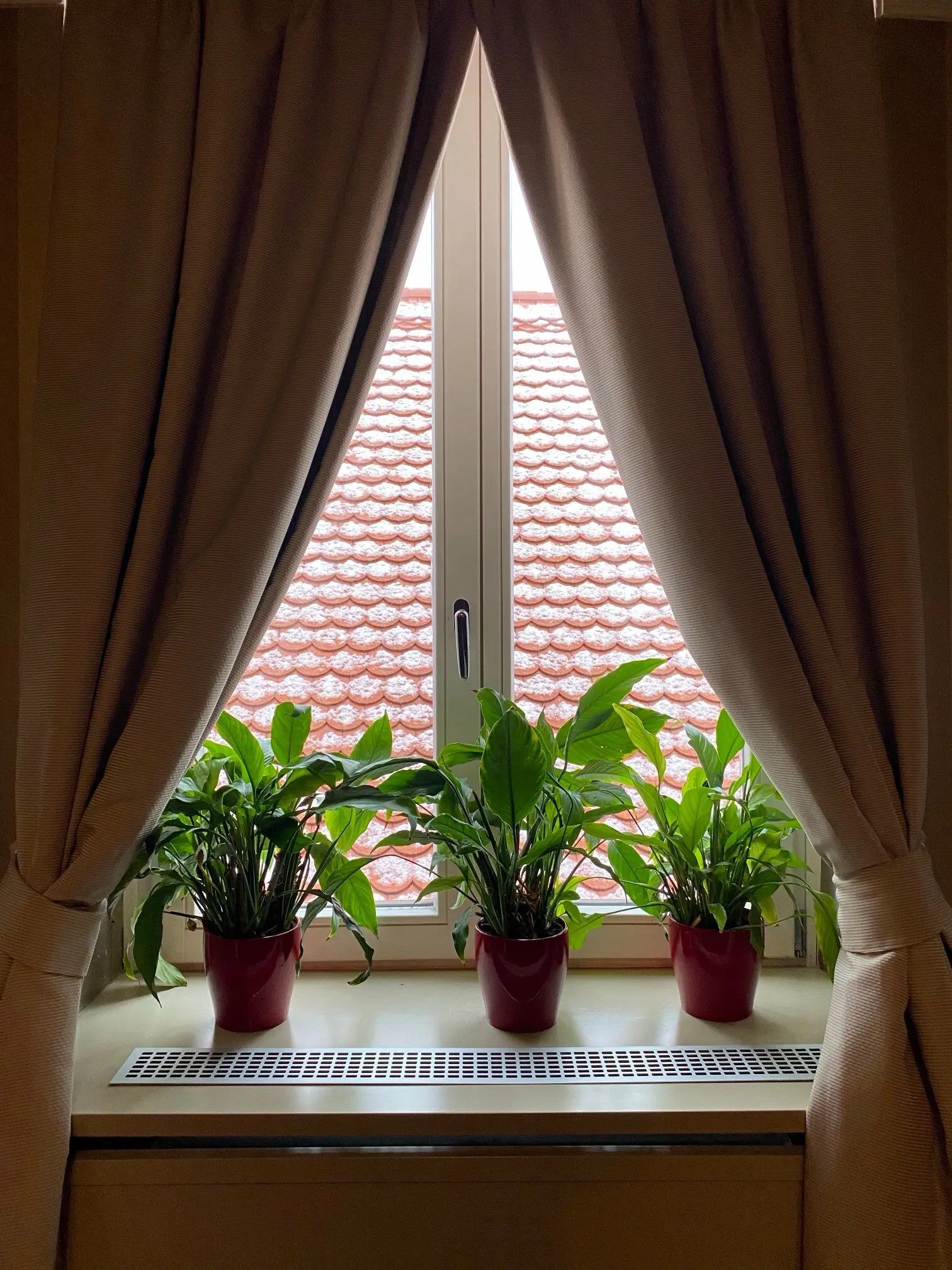
A quick wipe of the glass and a spot a little closer to the window can make a real difference, especially in winter.
Signs a plant needs more light
Plants tell you when they’re light-starved, but the signs come on slowly, so they’re easy to miss. Watch for:
- Long, stretched stems with big gaps between the leaves
- New leaves that come in smaller than the old ones
- Stems leaning hard toward the window
- Pale or faded leaves
- Lower leaves yellowing and dropping
- Colorful or variegated plants turning more green
- Flowering plants that won’t bloom
- Soil that stays wet for a long time after watering, because the plant isn’t using much water
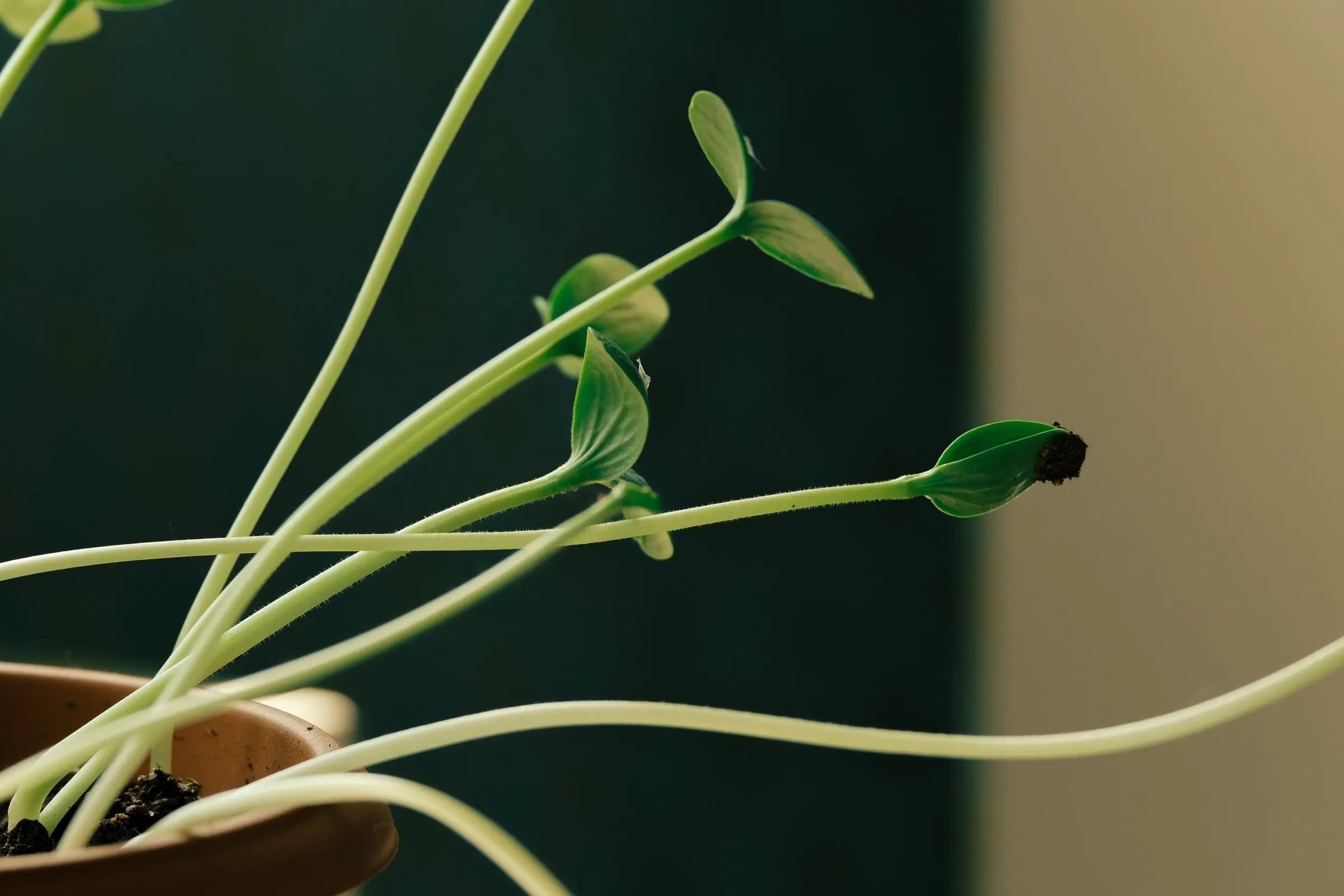
The University of Missouri Extension lists several of these classic signs of low light, including long stems between leaves, smaller leaves, and yellowing, dropping lower leaves.
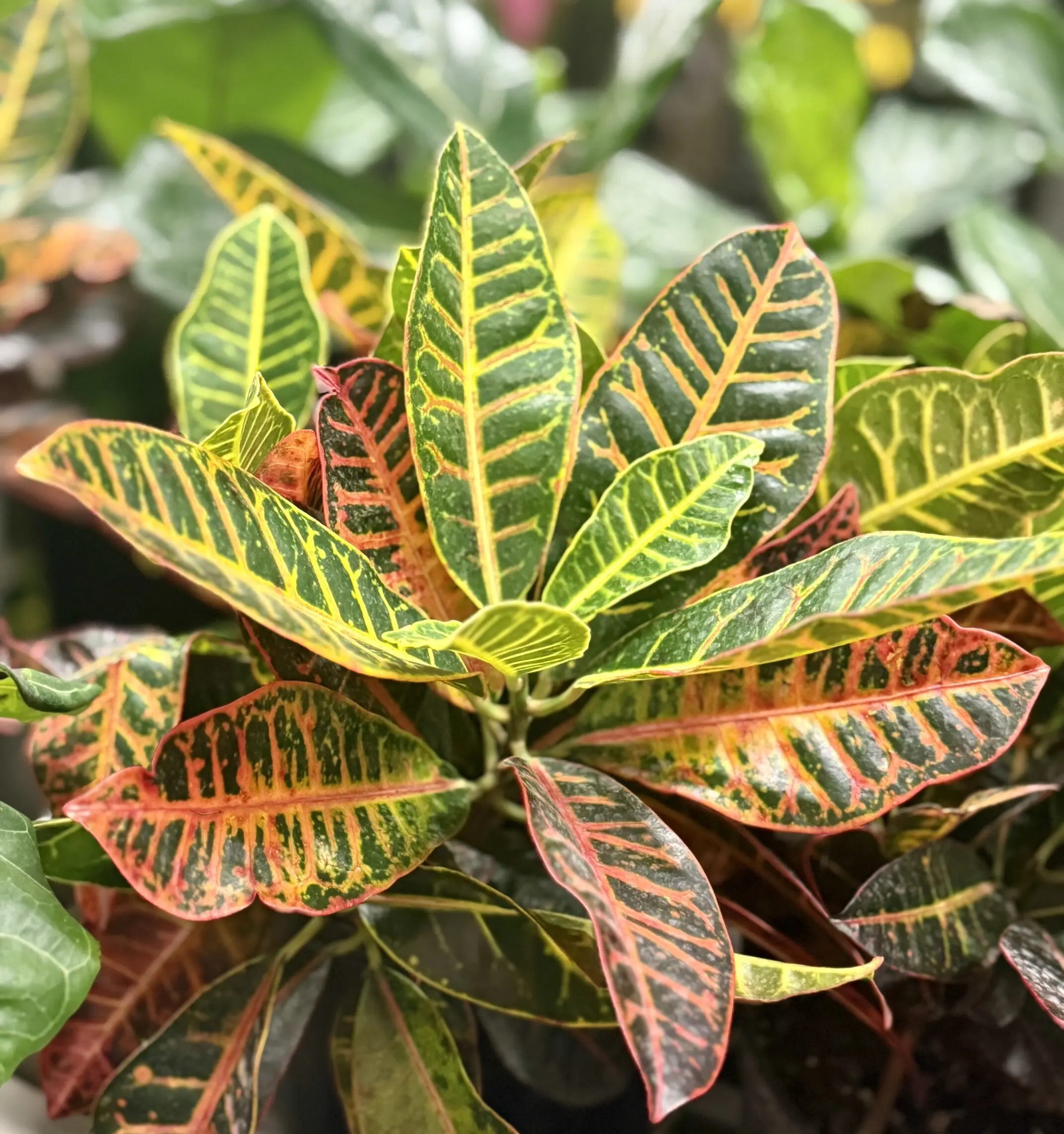
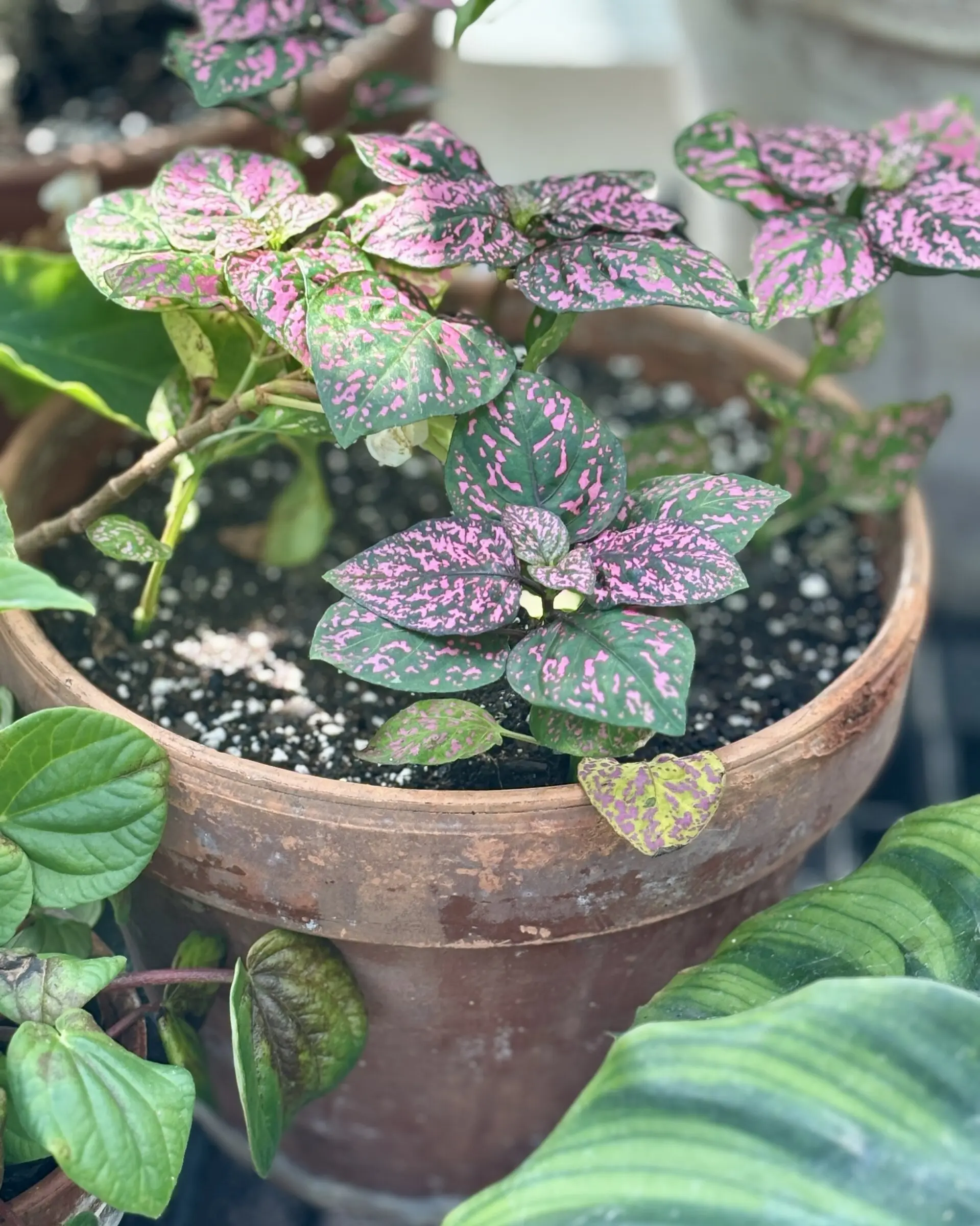
Variegated and colorful plants are especially sensitive. The white, cream, pink, or red parts of their leaves have little or no chlorophyll, so they need more light to make up for it. In too little light, a croton fades to plain green, a pink polka dot plant loses its spots, and a Philodendron Birkin loses its pinstripes.
Signs a plant is getting too much light
Too much direct sun is less common indoors, but it happens, especially in a south or west window in summer:
- Pale, bleached, or washed-out patches on the leaves
- Brown, crispy spots, especially on the side facing the window
- Leaves curling or drooping in the afternoon, even when the soil is moist
- Soil drying out unusually fast
If you see these, pull the plant back from the window, or filter the light with a sheer curtain or blinds. Sunburned spots won’t heal, but new leaves will come in healthy.
Move plants gradually
Plants adjust their leaves to the light they’re used to. A plant moved suddenly from a dim corner to a sunny window, or from indoors to the porch for the summer, can scorch even if it’s a sun lover. Make big moves over a week or two. Start the plant in a spot with a little more light than before, then move it closer each few days. When you bring plants back inside in fall, expect a few leaves to drop as they adjust to less light.
The same goes for rescuing a light-starved plant. Move it to a brighter spot in steps, and water sparingly while it recovers. In low light, it uses very little water, so soggy soil is a real risk.
Turn your plants
Plants grow toward their light source, so a plant that always sits in the same spot will start to lean. Give it a quarter turn every week or two, maybe when you water, and it will grow straight and even. University of Illinois Extension suggests turning plants regularly for the same reason.
Light changes with the seasons
The light in your home isn’t the same all year. Winter days are shorter, and the light is weaker. In northern areas like zone 6a, winter light can be especially weak. A spot that was perfect in summer may be too dim by December, and a window that was too hot in July may be just right in January.
In fall and winter:
- Move light-loving plants closer to the window.
- Clean your windows to let in every bit of light.
- Expect slower growth, and water less, since plants in lower light use less water.
In spring and summer, check plants near south and west windows. As the sun gets stronger, some may need to move back a bit to avoid scorching.
Do houseplants need grow lights?
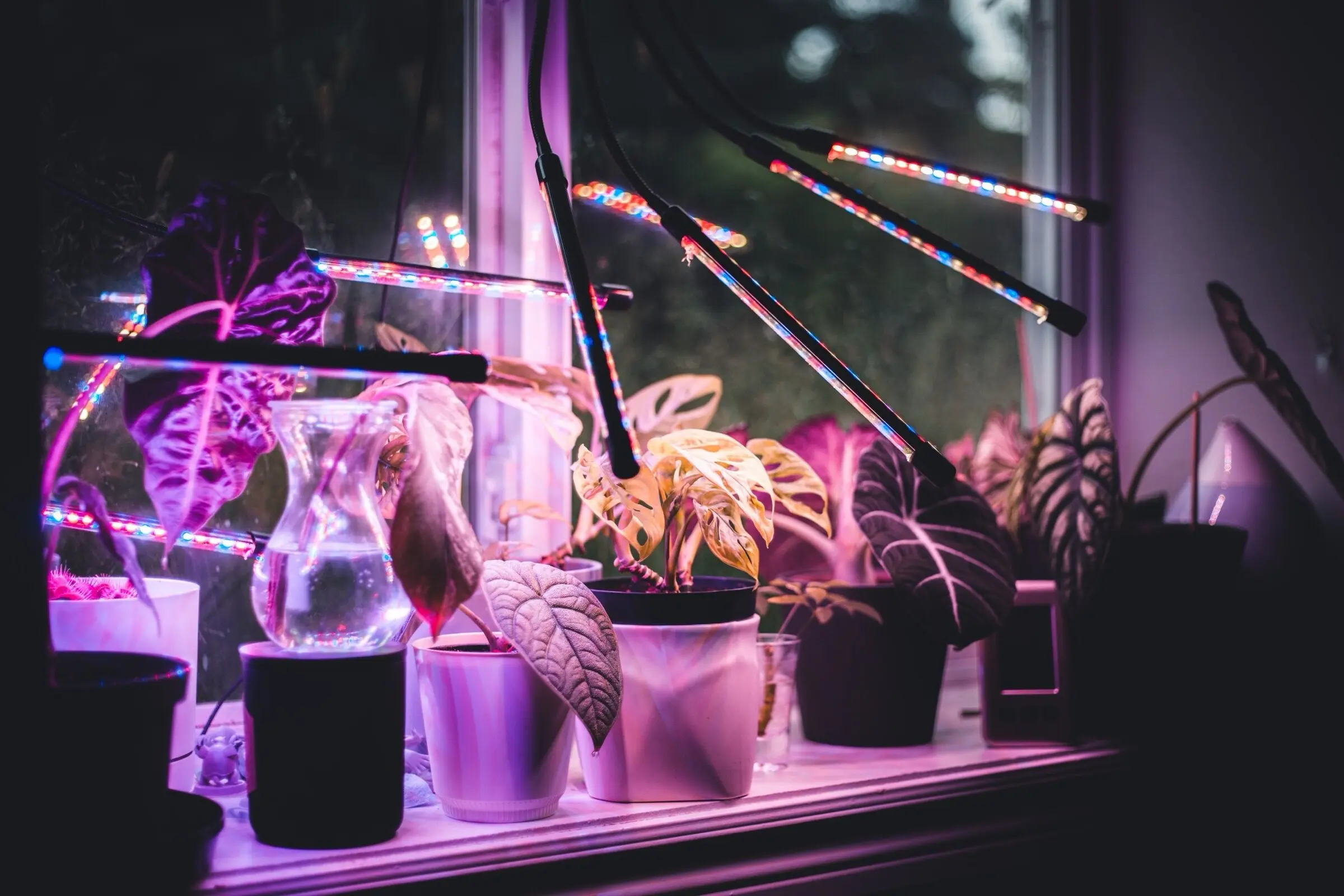
If your home doesn’t have much natural light, or you want to keep tropical plants happy through a long winter, a grow light can make a big difference. They’re also handy for shelves, plant stands, and corners far from a window.
Modern LED grow lights are the easiest choice. They’re energy efficient, they don’t run hot, and they come as bulbs, bars, and clip-on lamps that fit just about anywhere. A simple full-spectrum LED, which gives off white light, works well for most houseplants and looks more natural in a living space than the pink and purple kind.
A few tips for using one:
- Keep it close. Light weakens quickly with distance, so a grow light hung far above your plants won’t do much. LED lights can usually sit 12 to 24 inches above the foliage, and fluorescent fixtures 6 to 12 inches, according to Iowa State University Extension and Outreach.
- Give plants a rest. Plants need darkness, too. Run lights about 12 to 14 hours a day.
- Use a timer. An inexpensive plug-in timer turns lights on and off automatically, so you don’t have to remember.
- Watch the plants. If leaves bleach or brown, raise the light. If stems stretch, lower it.
Quick light checklist
- Match the plant to the window, not the other way around.
- Most houseplants want bright, indirect light.
- Move plants closer to windows in winter, and back a bit in summer.
- Turn plants every week or two.
- Make big moves gradually.
- Watch for stretched stems, small leaves, and faded color.
- Add a grow light when your windows aren’t enough.
Frequently asked questions
What does bright, indirect light mean? It means a bright spot where the plant sees a lot of sky, but harsh sun doesn’t hit the leaves for hours. A spot right in front of an east window, or a few feet back from a south or west window, usually fits.
What is the best window for houseplants? For most houseplants, an east-facing window is the easiest, because morning sun is gentle. South windows are best for succulents and cacti, and north windows suit true low-light plants.
Can houseplants live in a room with no windows? Only with a grow light. Even low-light plants need some light to survive, so a windowless room needs an LED grow light on a timer.
How do I know if my plant needs more light? Look for long, stretched stems, small new leaves, leaning toward the window, faded color, and yellowing lower leaves.
How many hours a day should a grow light be on? About 12 to 14 hours is a good starting point for most houseplants. Plants need some darkness, too, so don’t leave lights on around the clock.