If you share your home with a cat or a dog, you already know they want to be wherever the action is. That includes your plants. Cats climb up to them, dogs knock into them, and both like to see what a leaf tastes like. The good news is that you don’t have to choose between pets and plants. There are plenty of pet-safe houseplants that look great and are easy to care for.
This guide covers the best pet-safe houseplants to grow, the common ones that aren’t safe, the confusing plant names that trip people up, how to keep curious pets out of your pots, and what to do if your pet takes a bite of something it shouldn’t.
What does “pet-safe” mean?
When people call a houseplant pet-safe, they usually mean the American Society for the Prevention of Cruelty to Animals lists it as nontoxic to cats and dogs. The ASPCA keeps a searchable database of toxic and nontoxic plants, and it’s the first place I check before bringing a new plant home.
Nontoxic doesn’t mean it’s a snack, though. It means the plant isn’t poisonous. A pet that eats a lot of any plant, even a safe one, can still get an upset stomach and throw up. And a plant that gets chewed on every day won’t look very good for long.
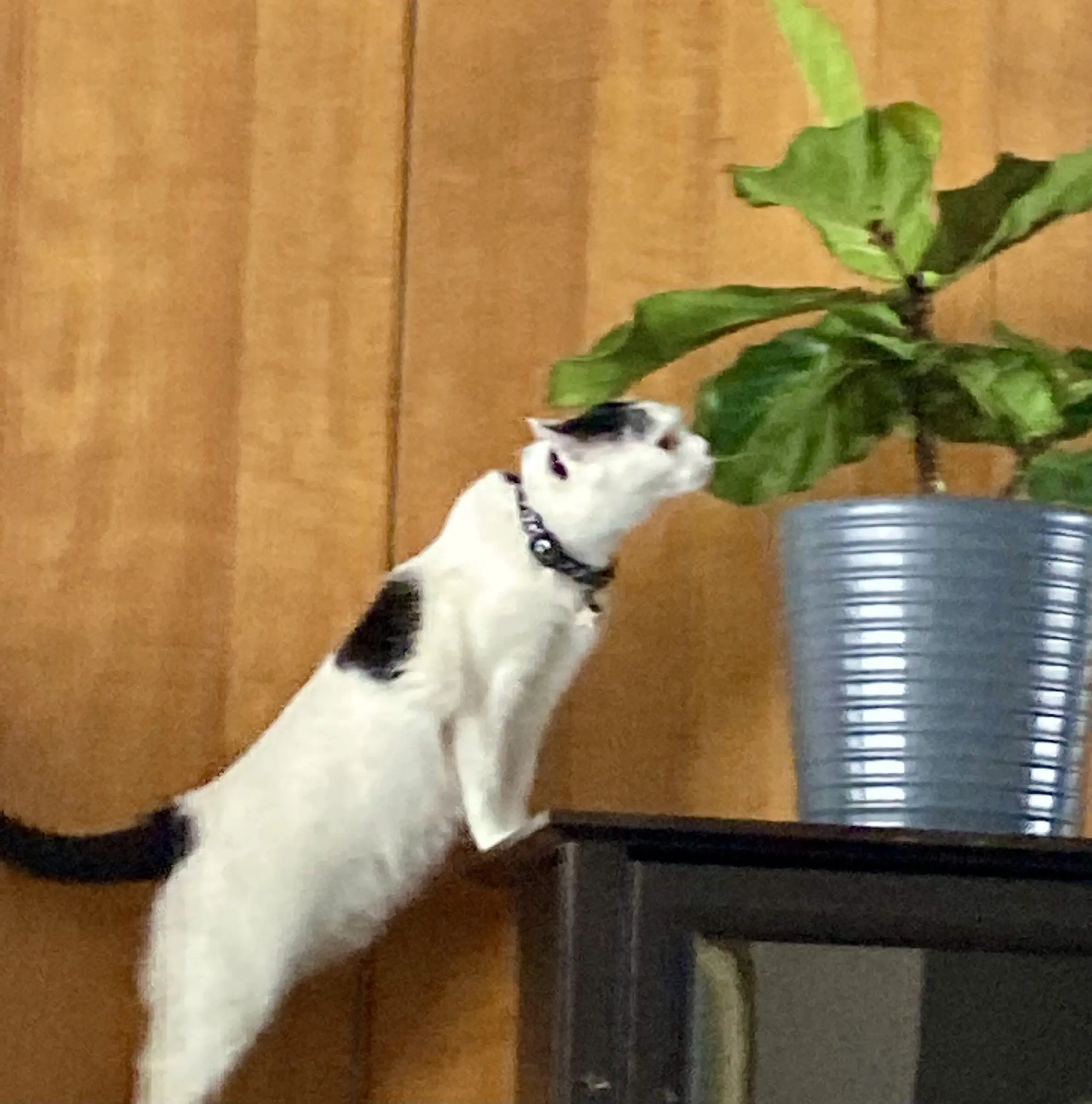
So the goal is really two things: grow plants that won’t hurt your pets if they take a nibble, and keep the plants that could hurt them out of reach.
Pet-safe houseplants to try
These are some of my favorite pet-safe houseplants. All of them are listed as nontoxic to both cats and dogs, and most of them are easy enough for a beginner.
Ponytail palm
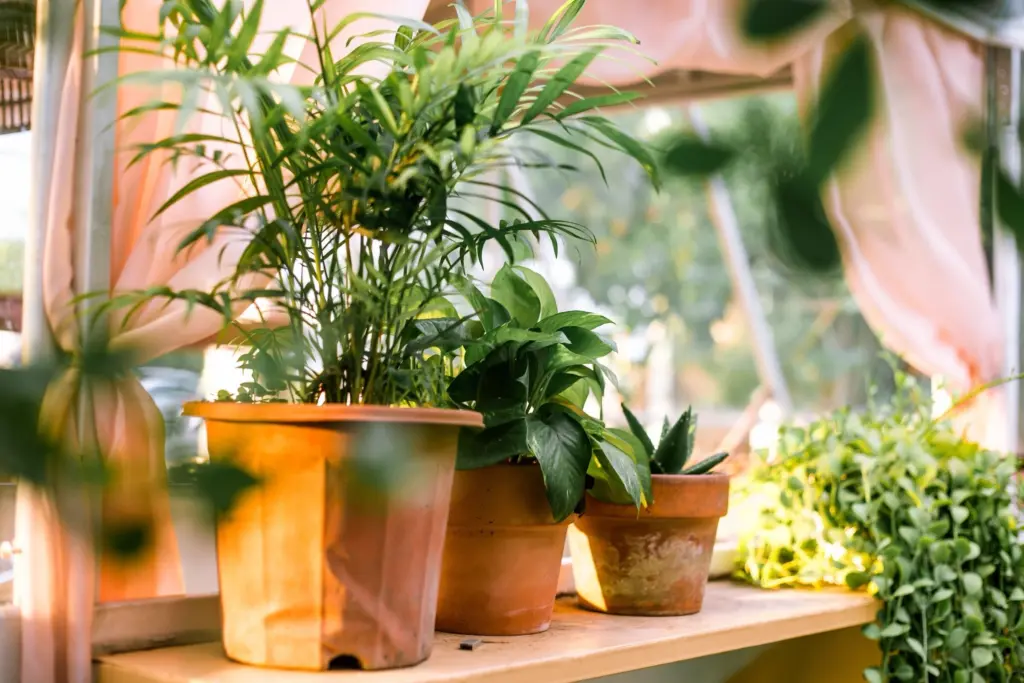
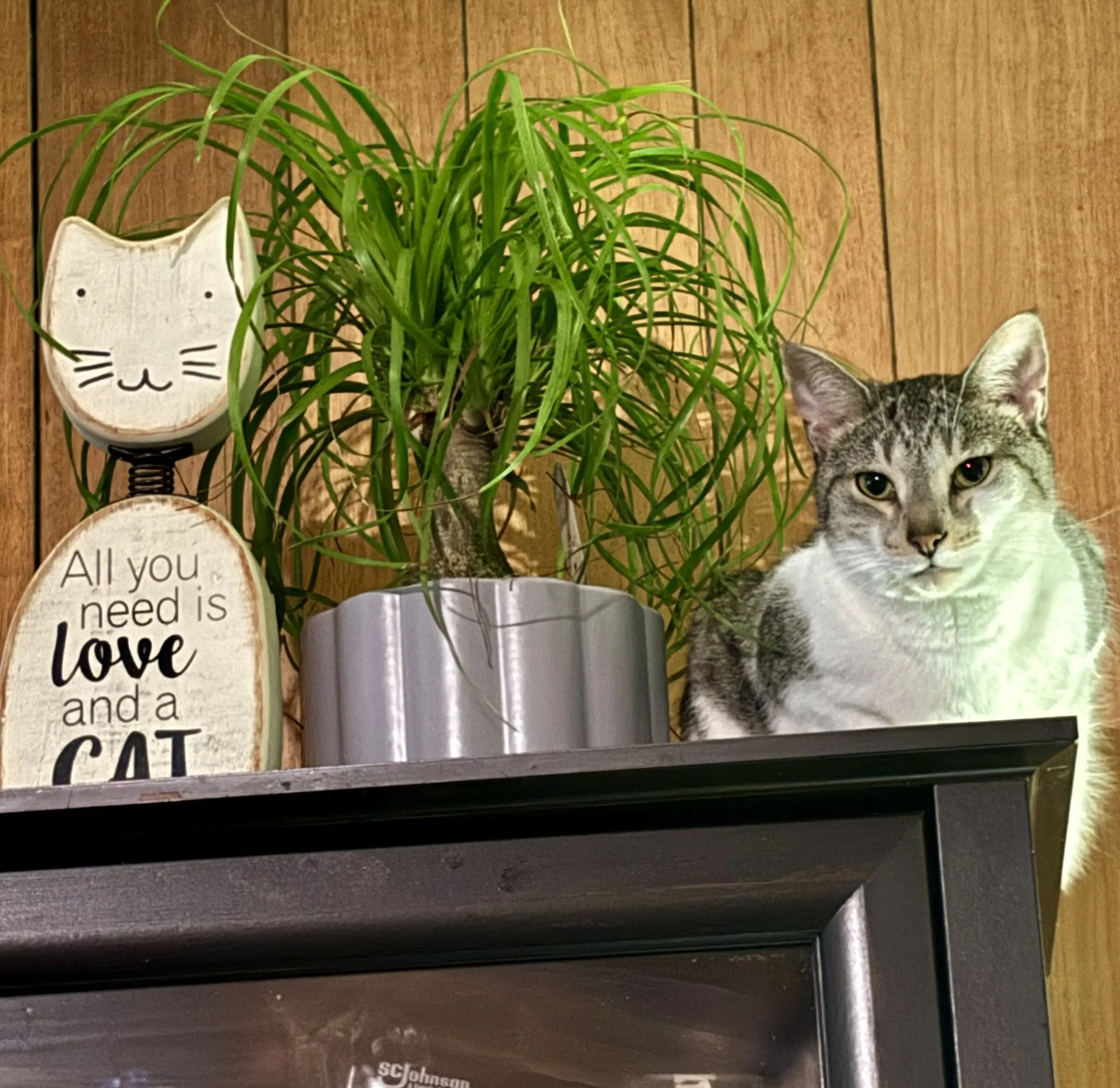
That’s the plant in my top photo. Ponytail palm has a swollen trunk that stores water and a fountain of long, curly leaves on top. It isn’t really a palm. It’s related to agaves and yuccas, and the ASPCA lists it as nontoxic to dogs and cats. Give it bright light and let the soil dry out between waterings. It’s very forgiving if you forget to water.
Spider plant
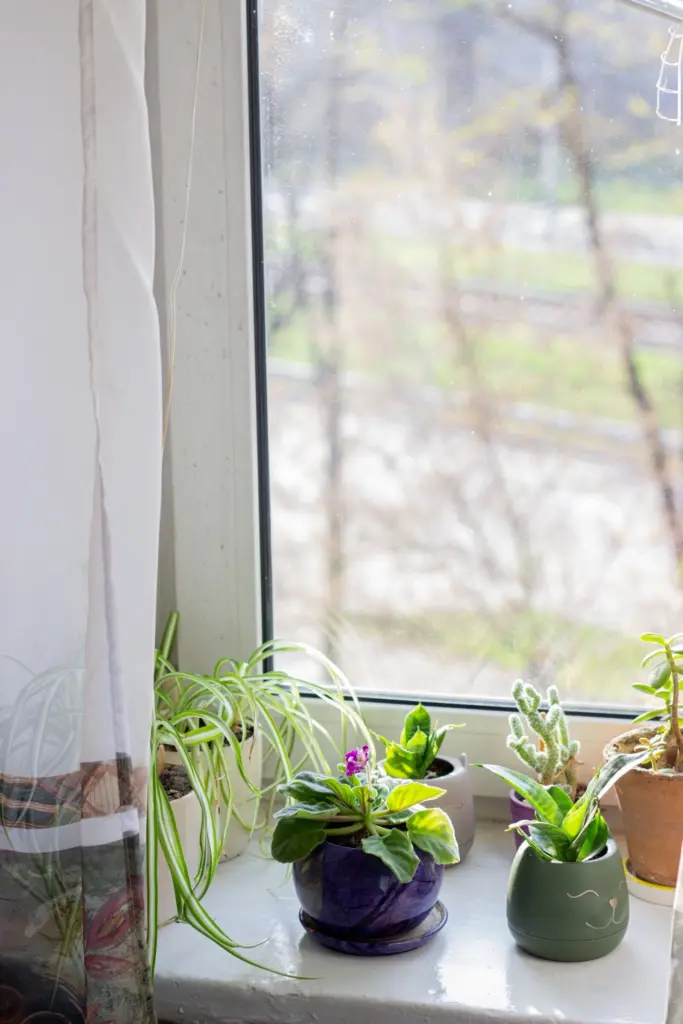
Spider plants are one of the classic pet-safe plants, and they’re nearly impossible to kill. Give them bright, indirect light and water when the top inch of soil is dry. Mature plants send out long stems with baby plants on the ends, which you can root to make new plants.
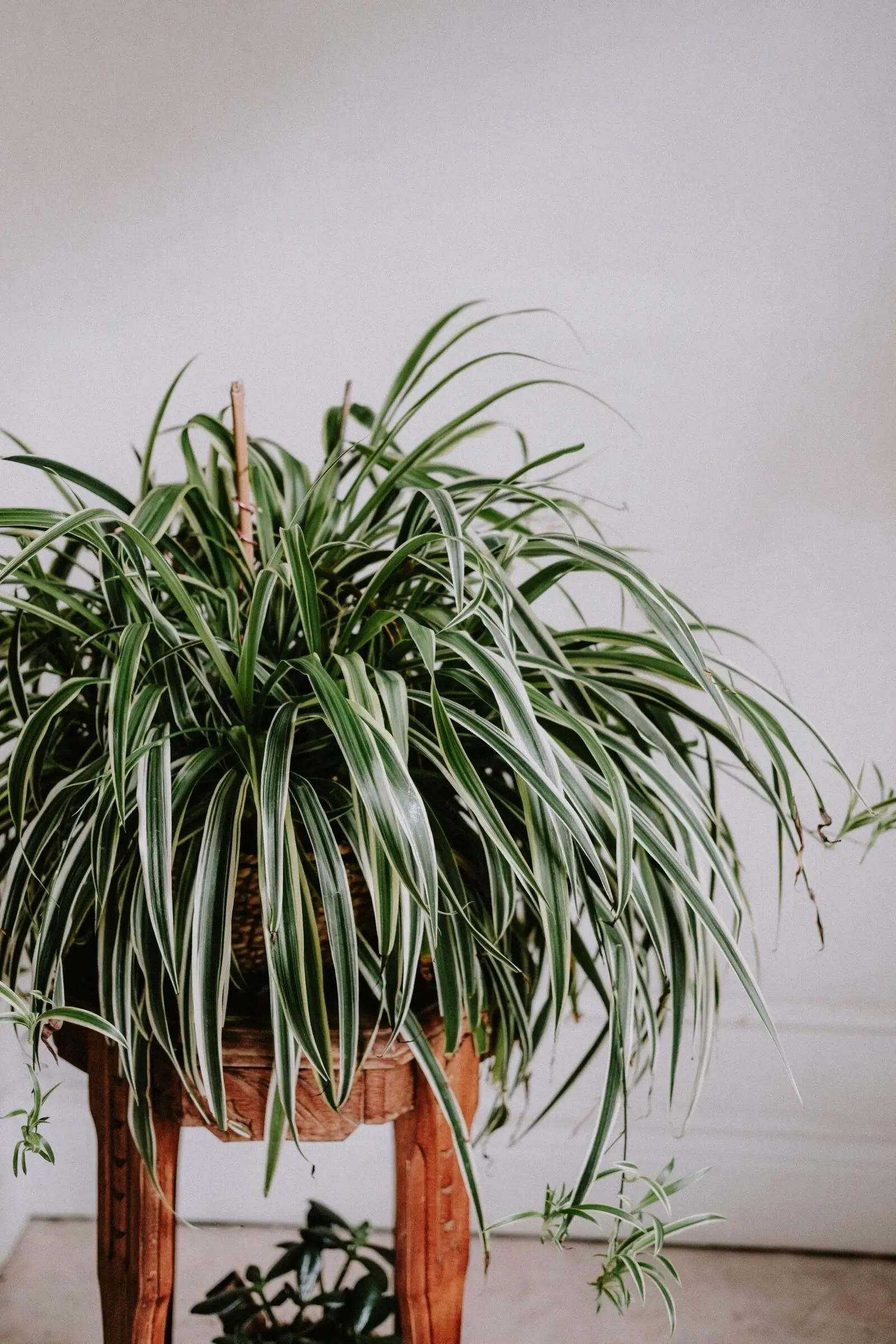
Cats seem to love spider plants more than almost anything else. The long, grassy leaves are just too tempting. They aren’t poisonous, but a cat that eats a lot of them may throw up. If your cat treats yours like a salad bar, hang it up out of reach.
Boston fern
Boston ferns are full and feathery, and they look great in a hanging basket, which also keeps them away from pets. They like bright, indirect light, steady moisture, and humidity, so don’t let them dry out completely. Expect some shedding of little leaflets.
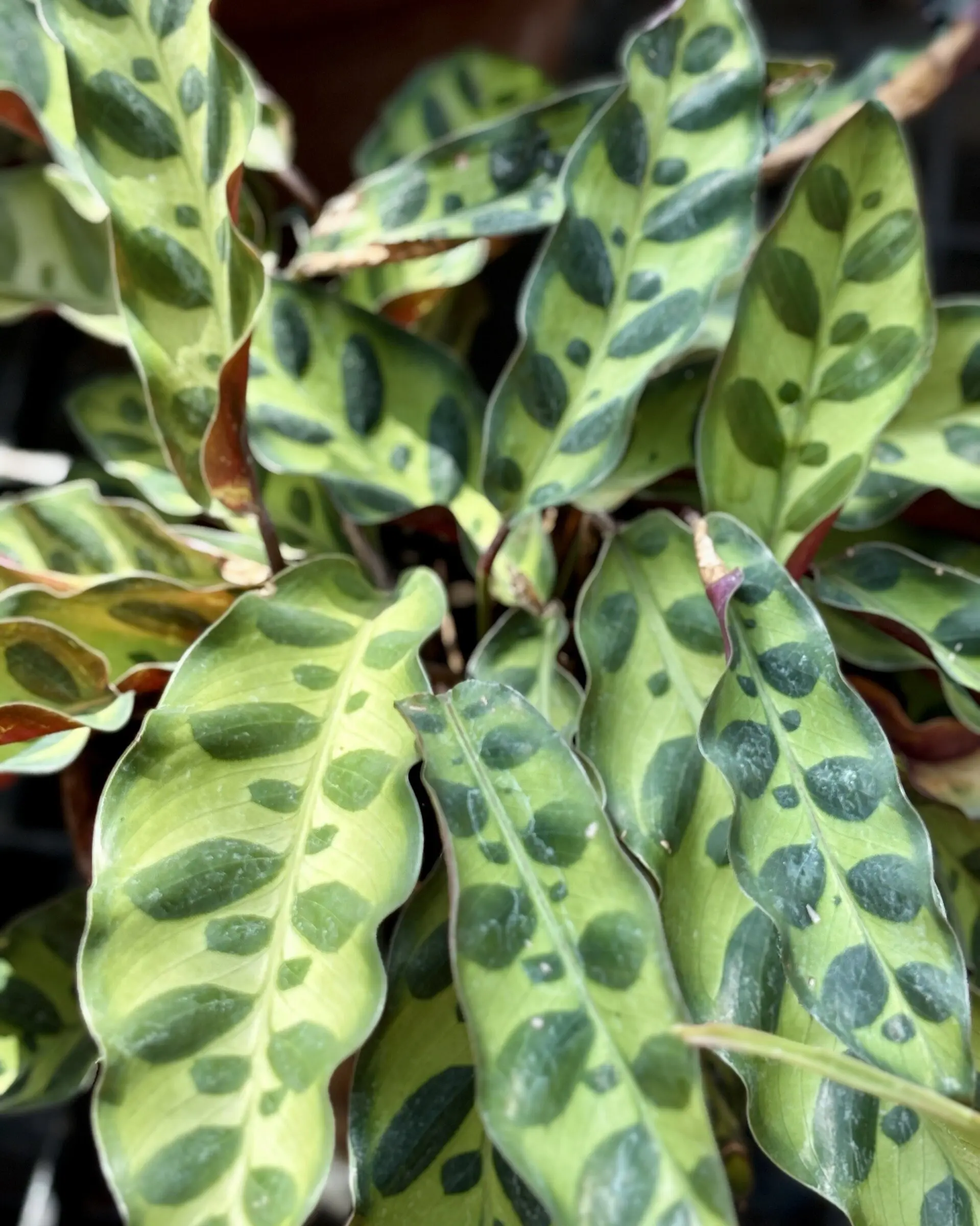
Calatheas and prayer plants
Calatheas have some of the most striking leaves of any houseplant, with stripes, spots, and purple undersides. Prayer plants are close relatives and fold their leaves up at night. Both are nontoxic to pets. They like medium to bright, indirect light, evenly moist soil, and higher humidity. They can be fussy about tap water and dry air, which causes brown, crispy edges.
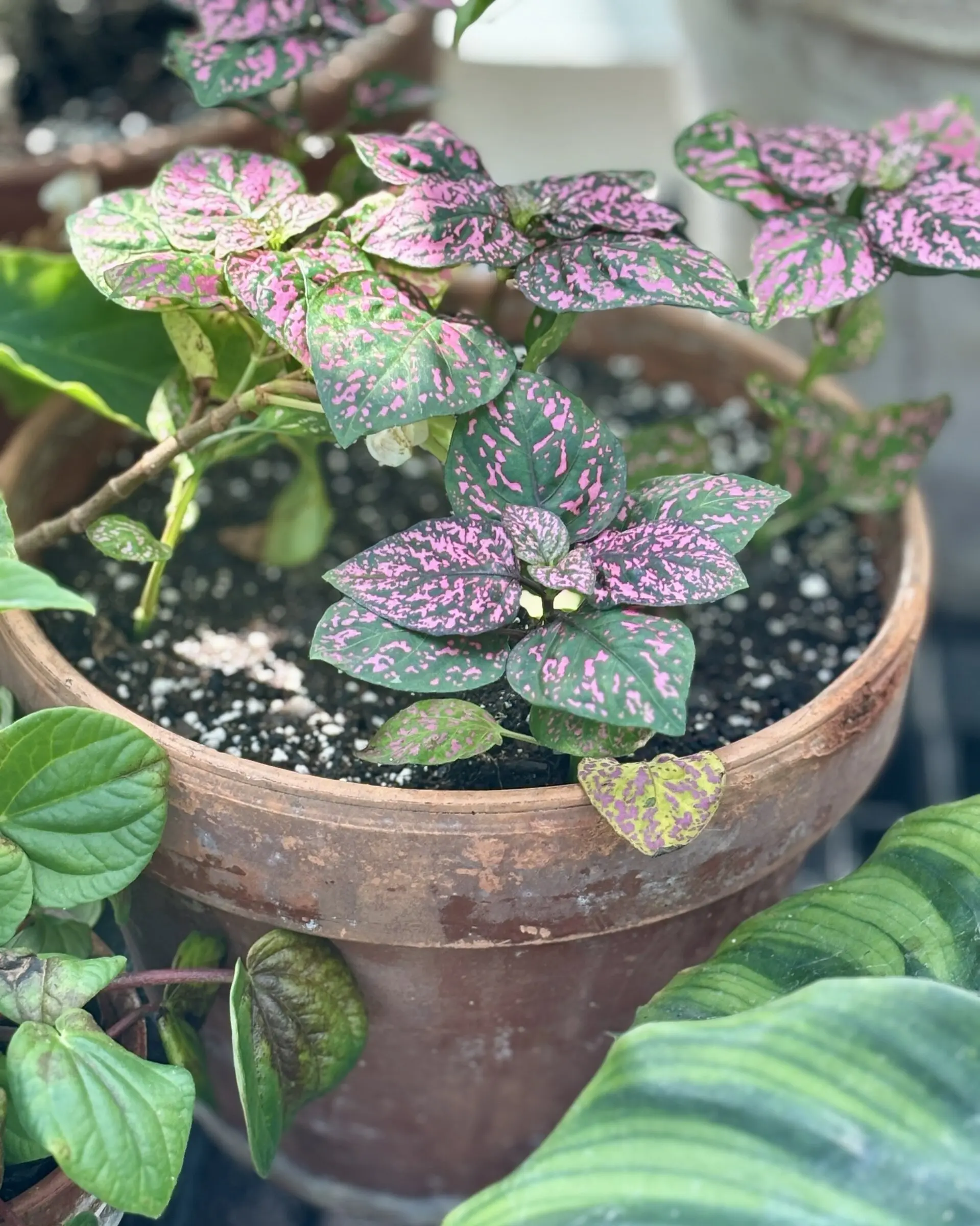
Polka dot plant
Polka dot plants have leaves splashed with pink, red, or white. They stay small, so they’re great for windowsills, desks, and terrariums. Give them bright, indirect light for the best color and keep the soil lightly moist. Pinch the tips to keep them bushy.
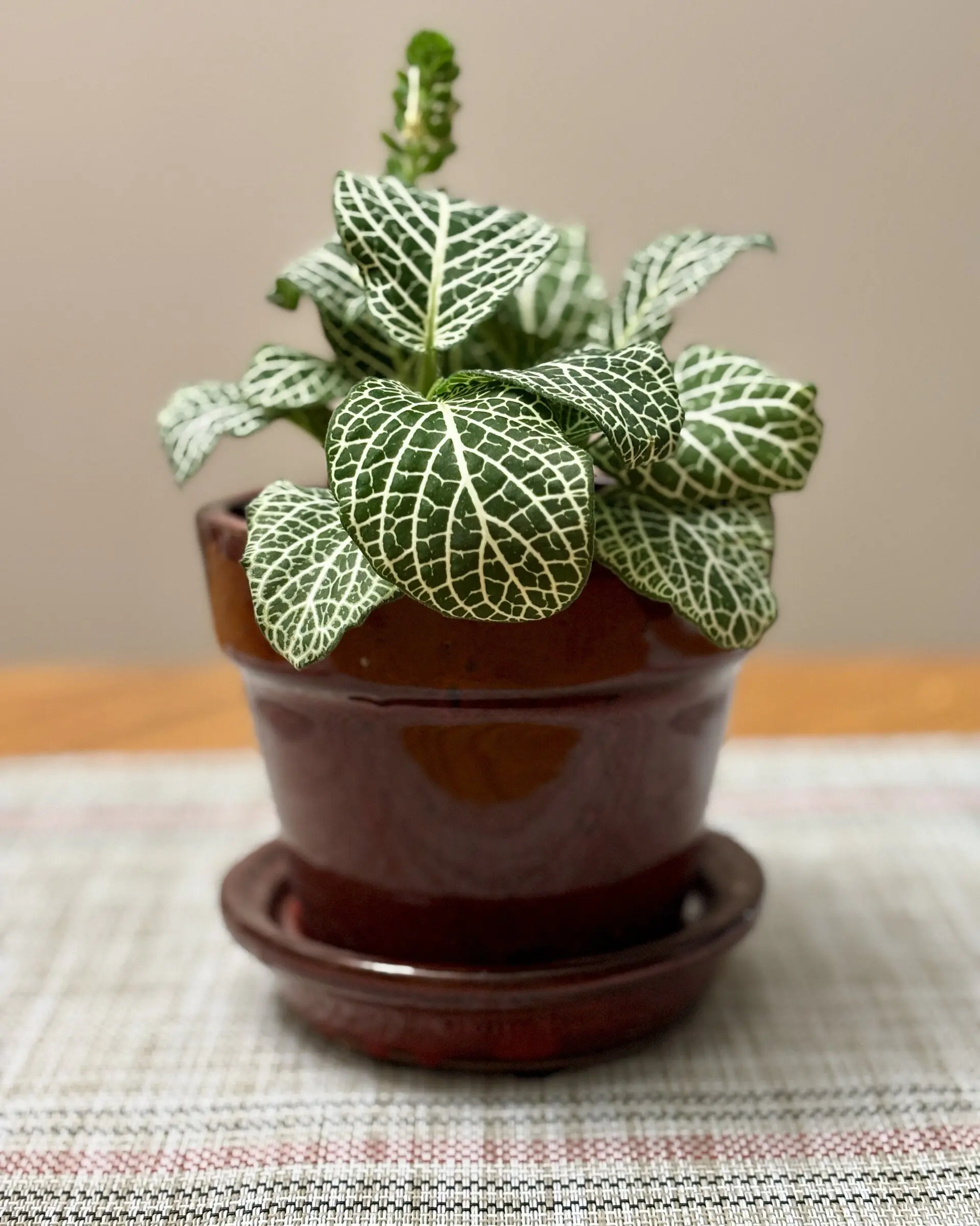
Nerve plant
Nerve plants have small leaves covered in a net of white, pink, or red veins. They’re perfect for terrariums and small spaces. They like moisture and humidity and will flop over dramatically when they’re thirsty, then perk back up after a drink.
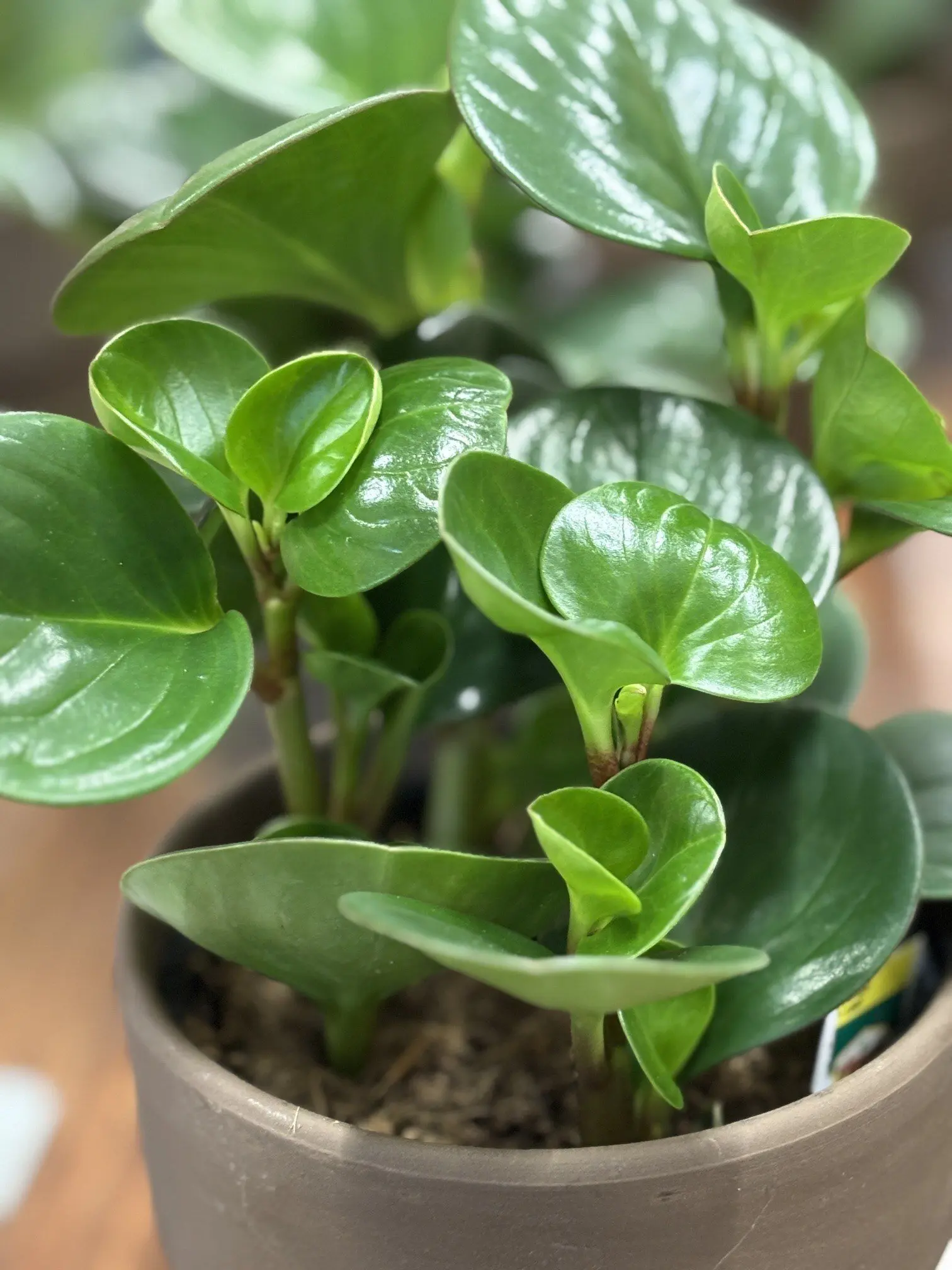
Baby rubber plant and other peperomias
The baby rubber plant has thick, glossy, rounded leaves and stays compact. It’s a peperomia, not a true rubber plant, and that difference matters for pets (more on that below). Clemson Cooperative Extension lists peperomias as a group as pet-safe. They store water in their thick leaves, so let the top couple of inches of soil dry out before watering.
Bromeliads
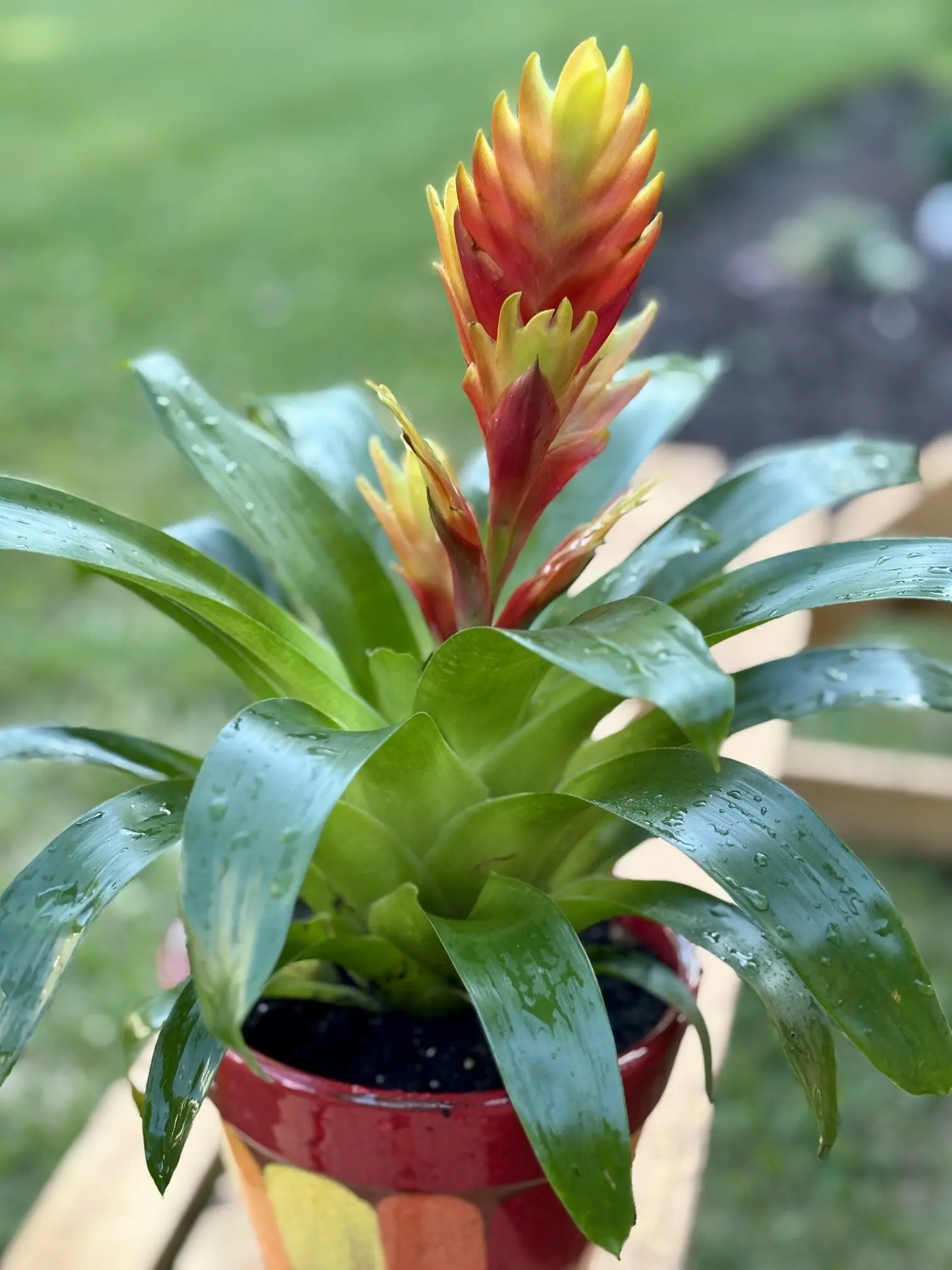
Bromeliads bring bright color with their long-lasting blooms, and they’re nontoxic to pets. Many have a cup in the center formed by their leaves that holds water. Give them bright, indirect light and keep the soil only lightly moist.
More pet-safe houseplants
A few more good choices, all on the safe side for cats and dogs:
- Aluminum plant, with silver-marked, quilted leaves
- African violets, which bloom on and off all year
- Moth orchids, a good choice for an east window
- Parlor palm, a true palm that handles lower light
- Christmas cactus and other holiday cacti
- Hoyas, trailing plants with waxy leaves and sweet-smelling flowers
Here’s a quick look at the pet-safe houseplants in this guide:
| Plant | Botanical name | Light |
|---|---|---|
| Ponytail palm | Beaucarnea recurvata | Bright |
| Spider plant | Chlorophytum comosum | Bright, indirect |
| Boston fern | Nephrolepis exaltata | Bright, indirect |
| Calatheas | Calathea species | Medium to bright, indirect |
| Polka dot plant | Hypoestes phyllostachya | Bright, indirect |
| Nerve plant | Fittonia species | Medium to bright, indirect |
| Baby rubber plant | Peperomia obtusifolia | Medium to bright, indirect |
| Aluminum plant | Pilea cadierei | Bright, indirect |
| African violet | Saintpaulia species | Bright, indirect |
| Moth orchid | Phalaenopsis species | Bright, indirect |
| Parlor palm | Chamaedorea elegans | Low to bright, indirect |
| Christmas cactus | Schlumbergera species | Bright, indirect |
Source: ASPCA
Common houseplants that aren’t pet-safe
A lot of the most popular houseplants are toxic to cats and dogs. That doesn’t mean you can’t grow them. It means they need a spot your pets can’t get to, or a home without a plant-chewer.
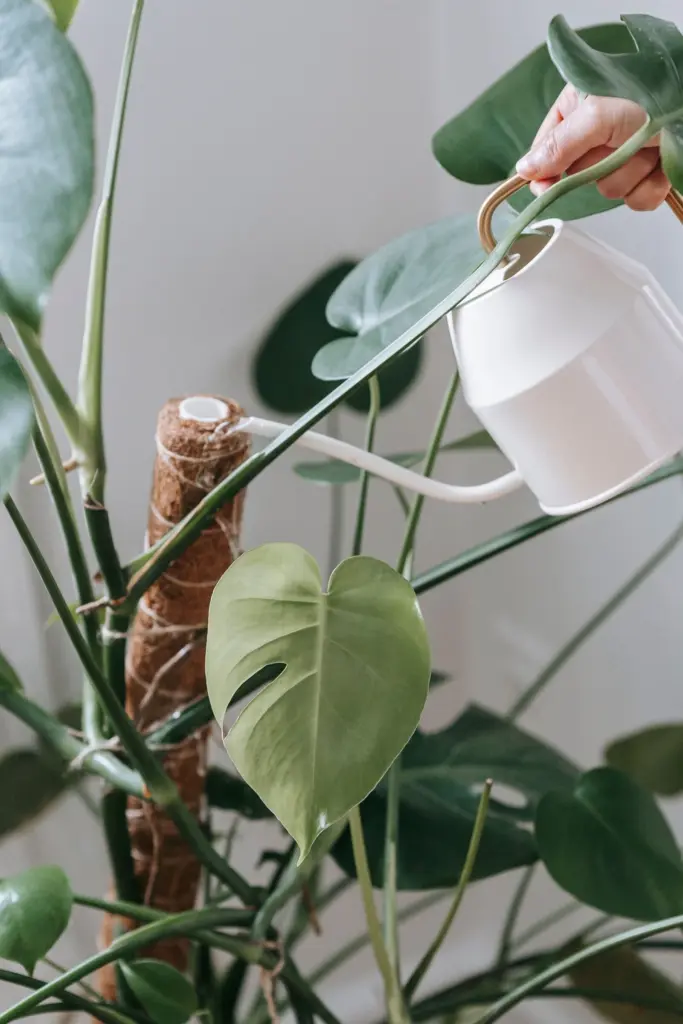
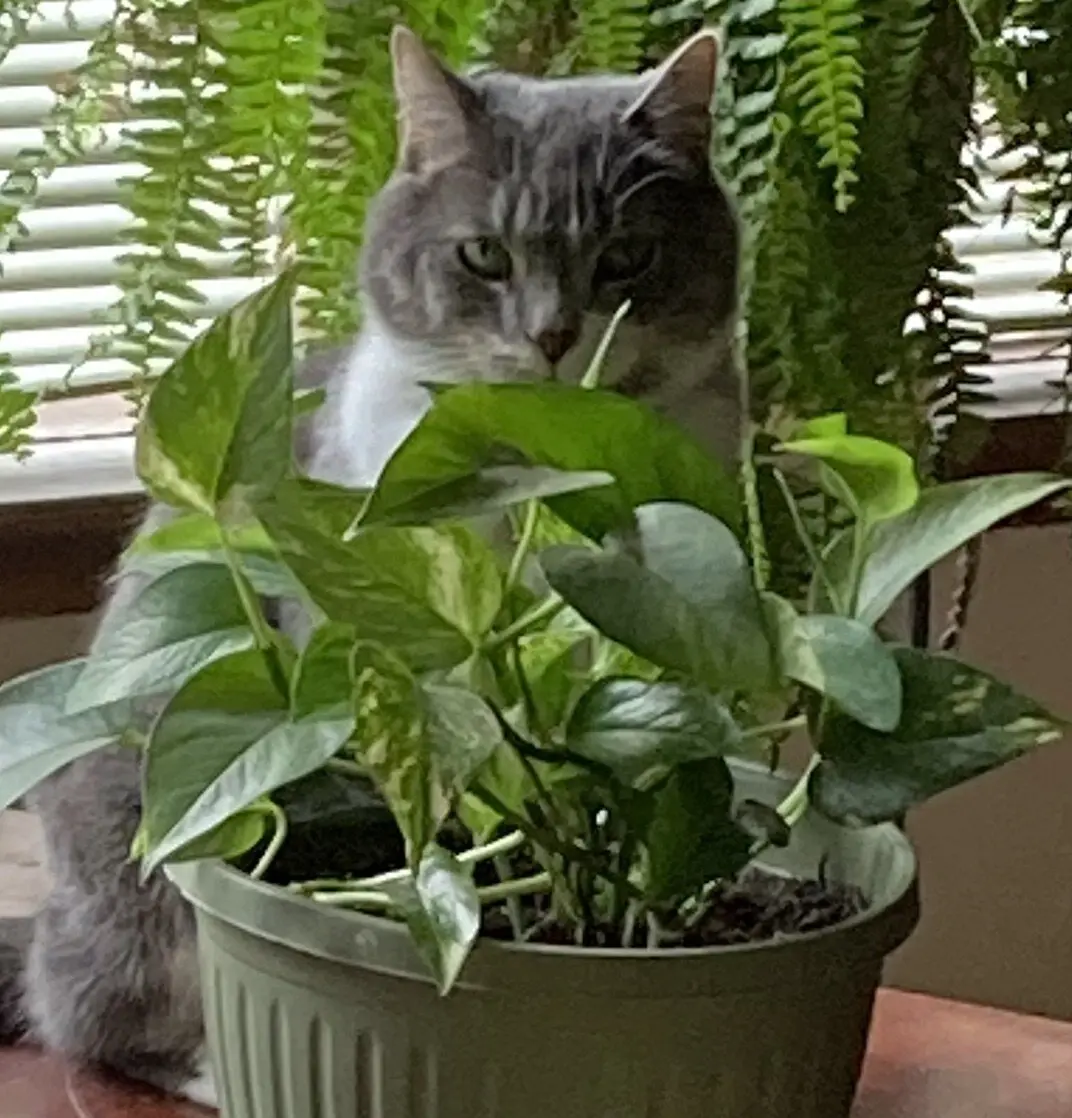
The most common culprits are in the arum family, which includes pothos, philodendrons, monsteras, peace lilies, Chinese evergreens, and dumb cane. These plants contain needle-like crystals called calcium oxalate. When a pet chews a leaf, the crystals irritate the mouth and stomach, causing drooling, vomiting, and trouble swallowing. These exposures usually aren’t life-threatening, according to the ASPCA, but a pet with a lot of swelling or trouble breathing needs a vet.
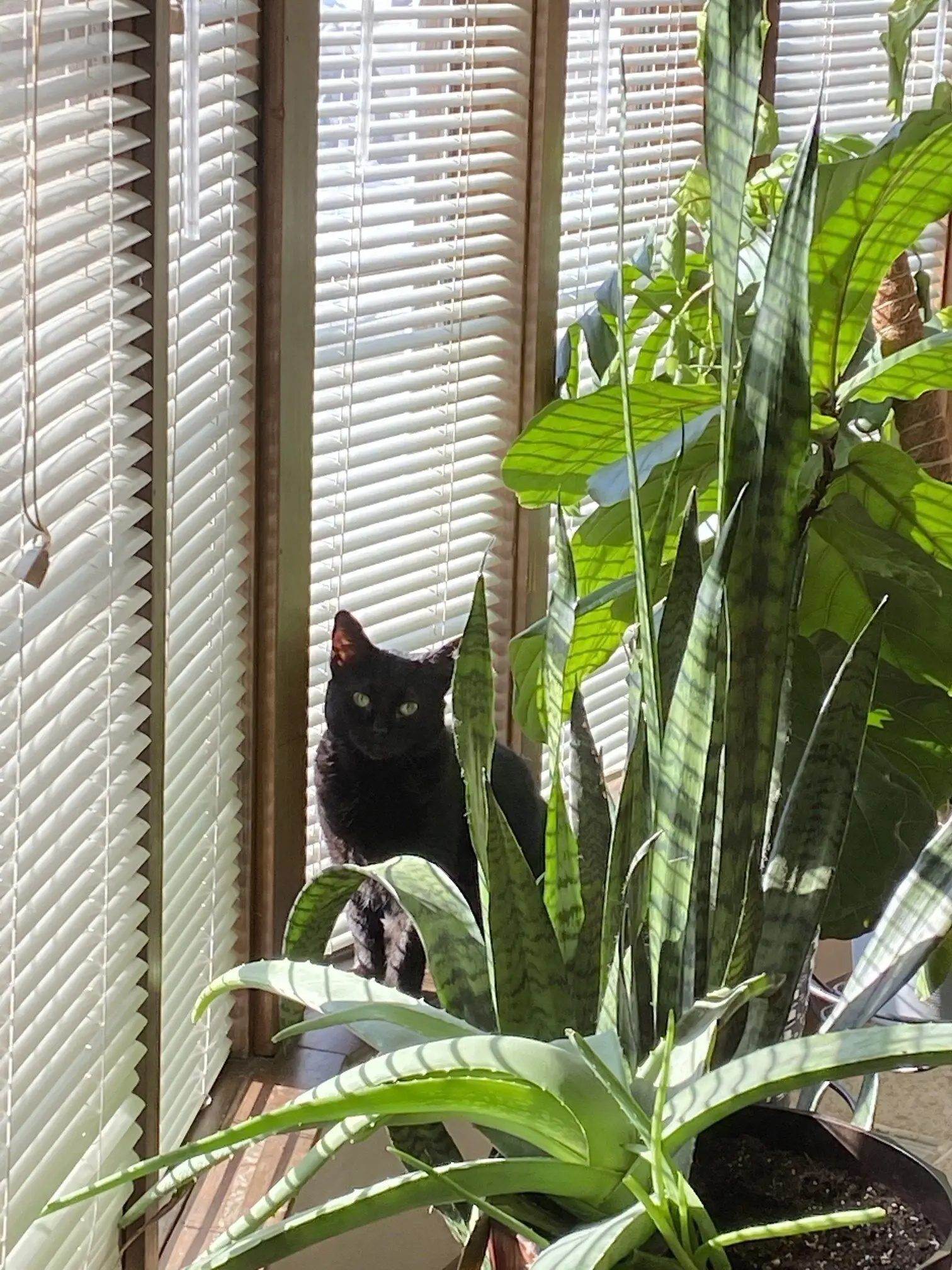
Snake plants and aloe surprise a lot of people, since they’re so often recommended as easy plants. Both contain saponins, natural compounds that can cause vomiting and diarrhea in pets.
| Plant | Why it’s a problem | Common signs |
|---|---|---|
| Pothos, philodendrons, monsteras, peace lilies, Chinese evergreens, dumb cane | Calcium oxalate crystals | Drooling, mouth irritation, vomiting, trouble swallowing |
| Snake plant | Saponins | Vomiting, diarrhea, drooling |
| Aloe | Saponins and other compounds | Vomiting, diarrhea, sluggishness |
| Fiddle leaf fig, rubber plant, weeping fig | Irritating sap | Upset stomach, skin irritation |
| Jade plant | Unknown | Vomiting, sluggishness, wobbliness |
| Dracaenas, including corn plant | Saponins | Vomiting, drooling; dilated pupils in cats |
Sources: ASPCA and Clemson Cooperative Extension
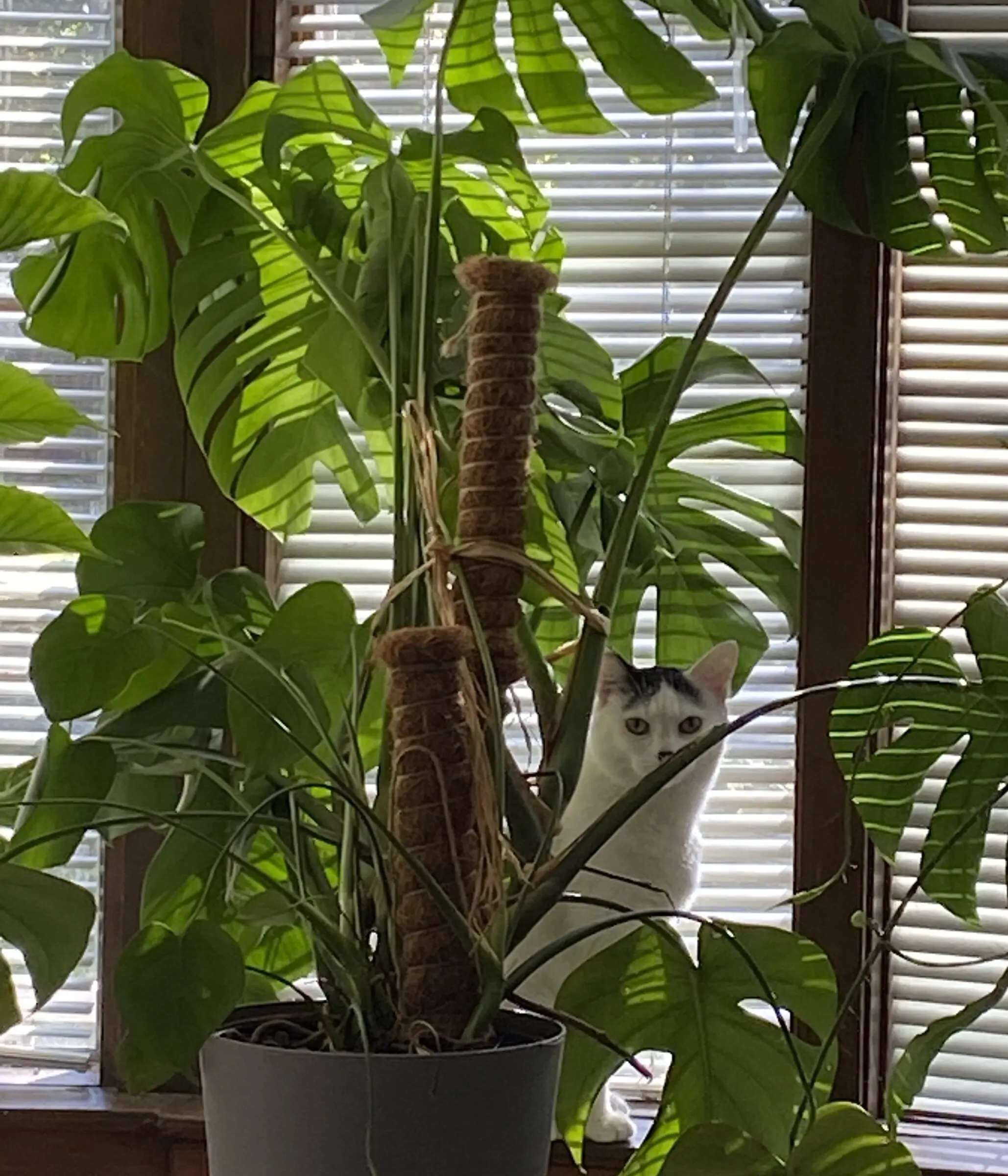
I share my home with several cats and a lot of plants, and not all of my plants are on the safe list, as you can see. The toxic ones go where my cats are least likely to chew them, and I watch for anyone who starts taking an interest in a particular plant. If a cat keeps going back to the same plant, it moves.
The two plants to never bring home with pets
Most toxic houseplants cause an upset stomach and a sore mouth. Two are in a much more dangerous category.
True lilies and cats. Lilies in the Lilium and Hemerocallis groups, which include Easter lilies, tiger lilies, Asiatic lilies, and daylilies, can be deadly to cats. Even a small exposure to the pollen can cause kidney failure, according to the ASPCA. This matters for houseplant people because lilies show up in cut flower bouquets and as potted Easter plants. If you have a cat, leave them out of the house entirely. Dogs who eat lilies usually only get an upset stomach.
Sago palm. The sago palm is one of the most dangerous plants for both dogs and cats. Every part of it is toxic, especially the seeds, and it can cause liver failure. It’s sold as a houseplant and as a patio plant, so it’s worth knowing by sight: stiff, glossy, feather-shaped fronds on a short, thick trunk.
If your pet gets into either of these, don’t wait for symptoms. Call your vet or a pet poison hotline right away.
Watch out for plant name mix-ups
Common plant names are confusing, and several pet-safe plants have toxic look-alikes or sound-alikes. These are the ones I see mixed up most:
- Baby rubber plant vs. rubber plant. The baby rubber plant is a peperomia and is pet-safe. The rubber plant, or rubber tree, is a ficus, related to the fiddle leaf fig, and is not.
- Spider plant vs. snake plant. Spider plants are safe. Snake plants aren’t.
- Ponytail palm vs. sago palm. Neither one is a true palm. The ponytail palm is safe. The sago palm is one of the most toxic plants you can own.
- Peace lily and calla lily vs. true lilies. Peace lilies and calla lilies aren’t true lilies. They contain calcium oxalate and cause mouth irritation, but they don’t cause the kidney failure that true lilies do in cats. They still aren’t pet-safe.
The easiest way to avoid a mix-up is to check the botanical name on the plant tag, not just the common name. If a plant doesn’t have a tag and you can’t identify it, treat it as unsafe until you know for sure.
How to keep pets away from houseplants
Even with pet-safe plants, it helps to make your plants less interesting to your pets. A few things that work:
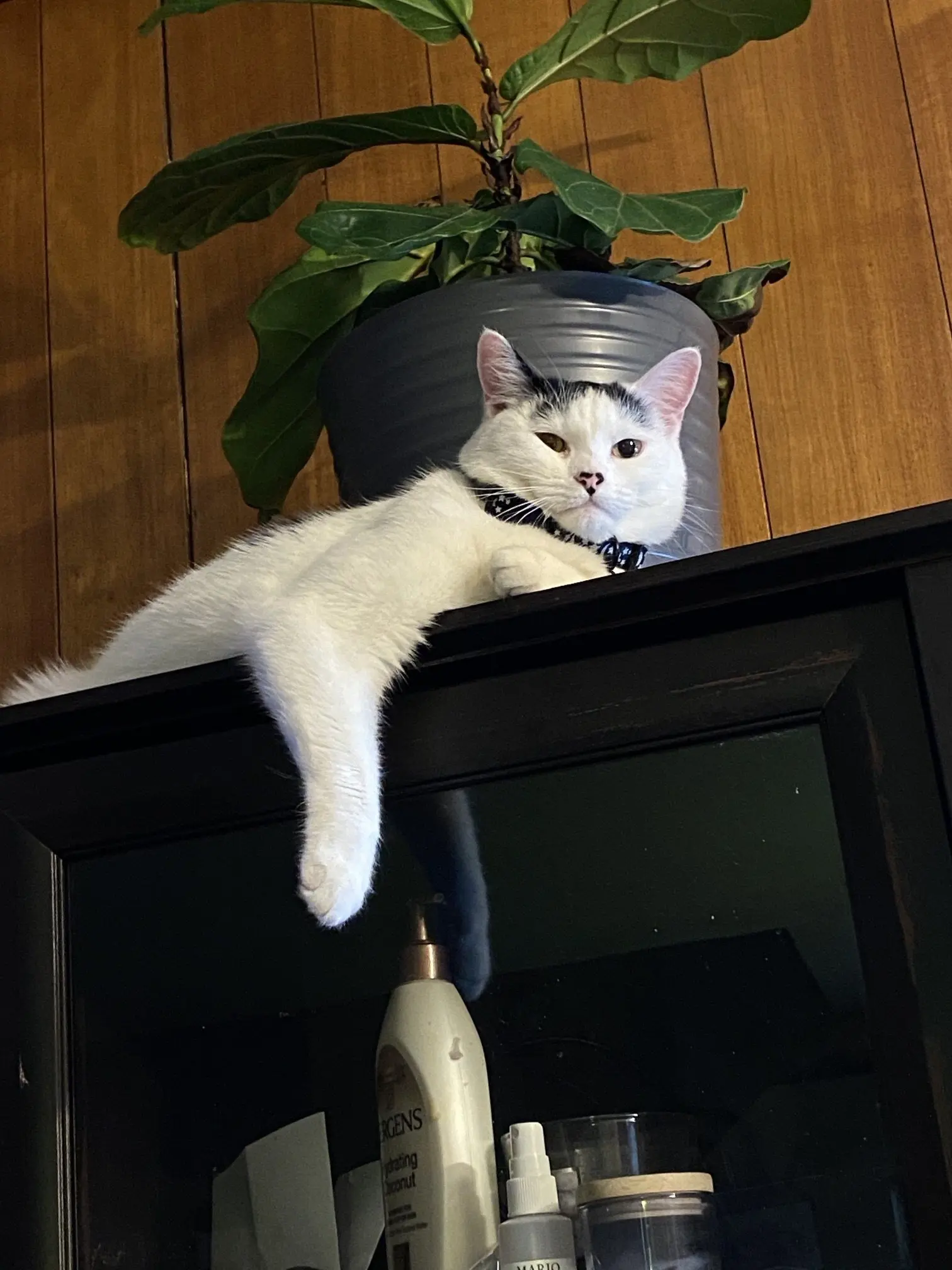
Go up, but know your pet. High shelves and hanging baskets keep plants away from dogs. Cats are another story. If a cat can reach the top of the cabinet, it can reach the plant on top of the cabinet.
Cover the soil. Many cats see a big pot of soil as a litter box or a place to dig. Covering the soil surface with rocks can stop the digging, according to the University of Wisconsin-Madison Extension. Large, smooth stones or a decorative mesh cover work well.
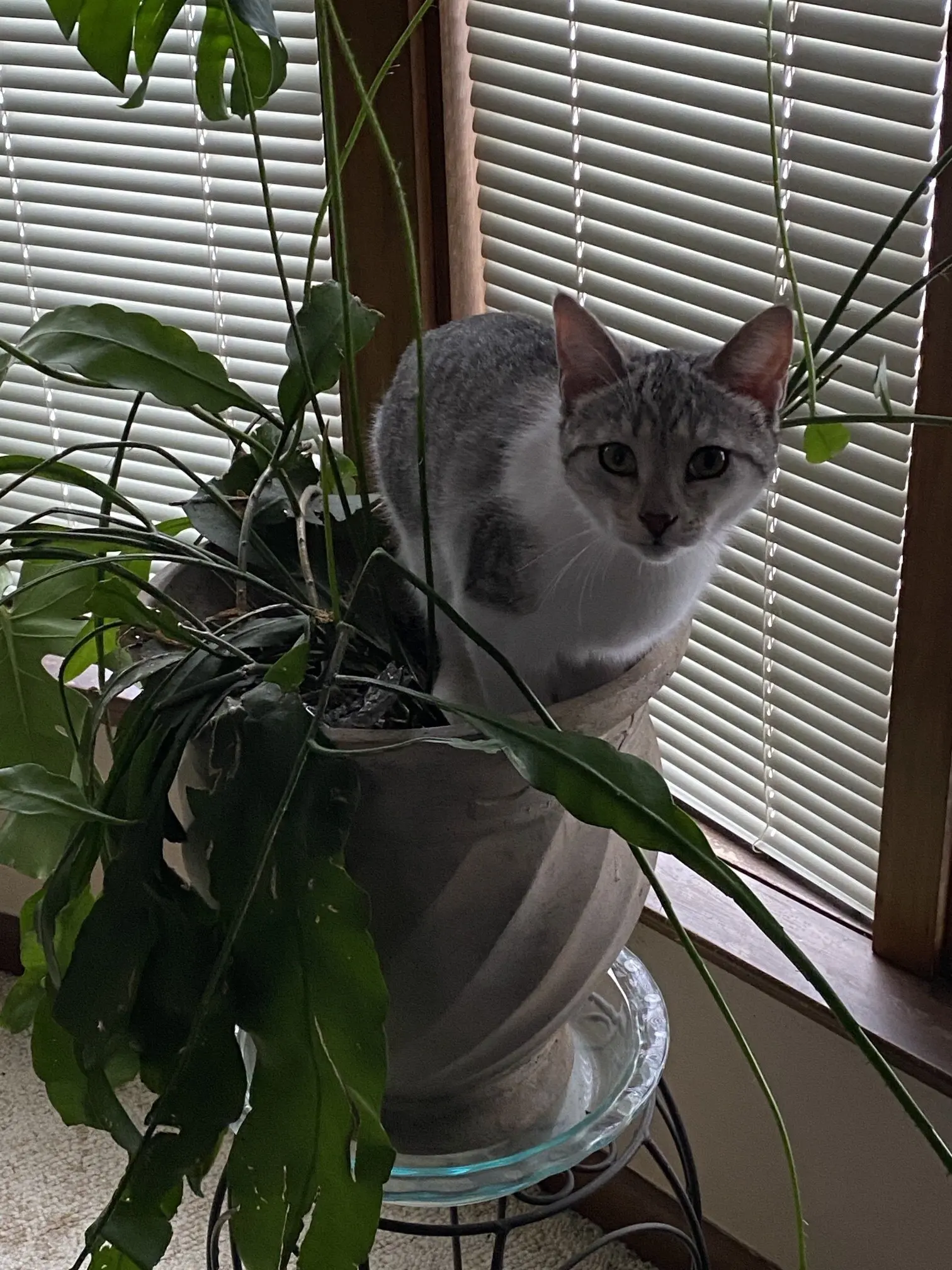
Give them their own plants. A pot of cat grass, grown from oats, wheat, or barley, gives cats something they’re allowed to chew. It may keep them busy enough to leave your other plants alone.
Use a plant room or closed cabinet. If you have plants that are toxic and a pet that won’t leave them alone, a room with a door or a glass cabinet with a grow light keeps everyone safe.
Make the spot unappealing. Many cats dislike the feel of double-sided tape or foil on the surface around a plant. A pet-safe bitter spray on the leaves can also discourage chewing.
Clean up fallen leaves. Pets are more likely to chew on leaves that have fallen to the floor. Pick them up when you see them.
Store plant products safely. Keep fertilizers, pest sprays, and systemic insecticides where pets can’t reach them. Don’t let pets drink from plant saucers, which can hold leftover fertilizer.
What to do if your pet eats a houseplant
If you catch your pet chewing on a plant, don’t panic. Most nibbles on most houseplants cause, at worst, a little drooling or vomiting. But it’s always worth finding out.
- Move your pet away from the plant and gently remove any leaves left in its mouth.
- Identify the plant. Find the plant tag or snap a photo of it. Knowing both the common name and the botanical name helps your vet.
- Call for help. Call your vet or the ASPCA Animal Poison Control Center at 888-426-4435. It’s open 24 hours a day, every day of the year, and a consultation fee may apply.
- Don’t try home remedies. Don’t make your pet throw up unless a vet tells you to.
- Watch for symptoms. Drooling, pawing at the mouth, vomiting, diarrhea, not eating, and acting tired or wobbly are all signs to call the vet.
With the right plants in the right spots, pets and houseplants can share a home just fine. Start with a few pet-safe houseplants, give the toxic ones a safe spot, and check the ASPCA list before you bring anything new home.
Frequently asked questions
What houseplants are safe for cats and dogs? Spider plants, Boston ferns, ponytail palms, calatheas, prayer plants, polka dot plants, nerve plants, peperomias like the baby rubber plant, bromeliads, African violets, moth orchids, and parlor palms are all nontoxic to cats and dogs.
Are spider plants safe for cats? Yes. Spider plants are nontoxic to cats and dogs. Cats love to chew them, though, and eating a lot of leaves may make a cat throw up. Hanging the plant up keeps it out of reach.
Is a snake plant safe for pets? No. Snake plants contain saponins that can cause vomiting, diarrhea, and drooling in cats and dogs.
Are peace lilies toxic to cats? Yes. Peace lilies contain calcium oxalate crystals that irritate the mouth and stomach. They aren’t true lilies, though, and don’t cause the kidney failure that true lilies cause in cats.
What is the most dangerous plant for cats? True lilies, including Easter lilies, tiger lilies, Asiatic lilies, and daylilies. Even a small amount of pollen can cause kidney failure in cats. Sago palms are also extremely dangerous to both cats and dogs.
What should I do if my dog or cat eats a houseplant? Remove any plant pieces from its mouth, identify the plant, and call your vet or the ASPCA Animal Poison Control Center at 888-426-4435. Don’t make your pet throw up unless a vet tells you to.