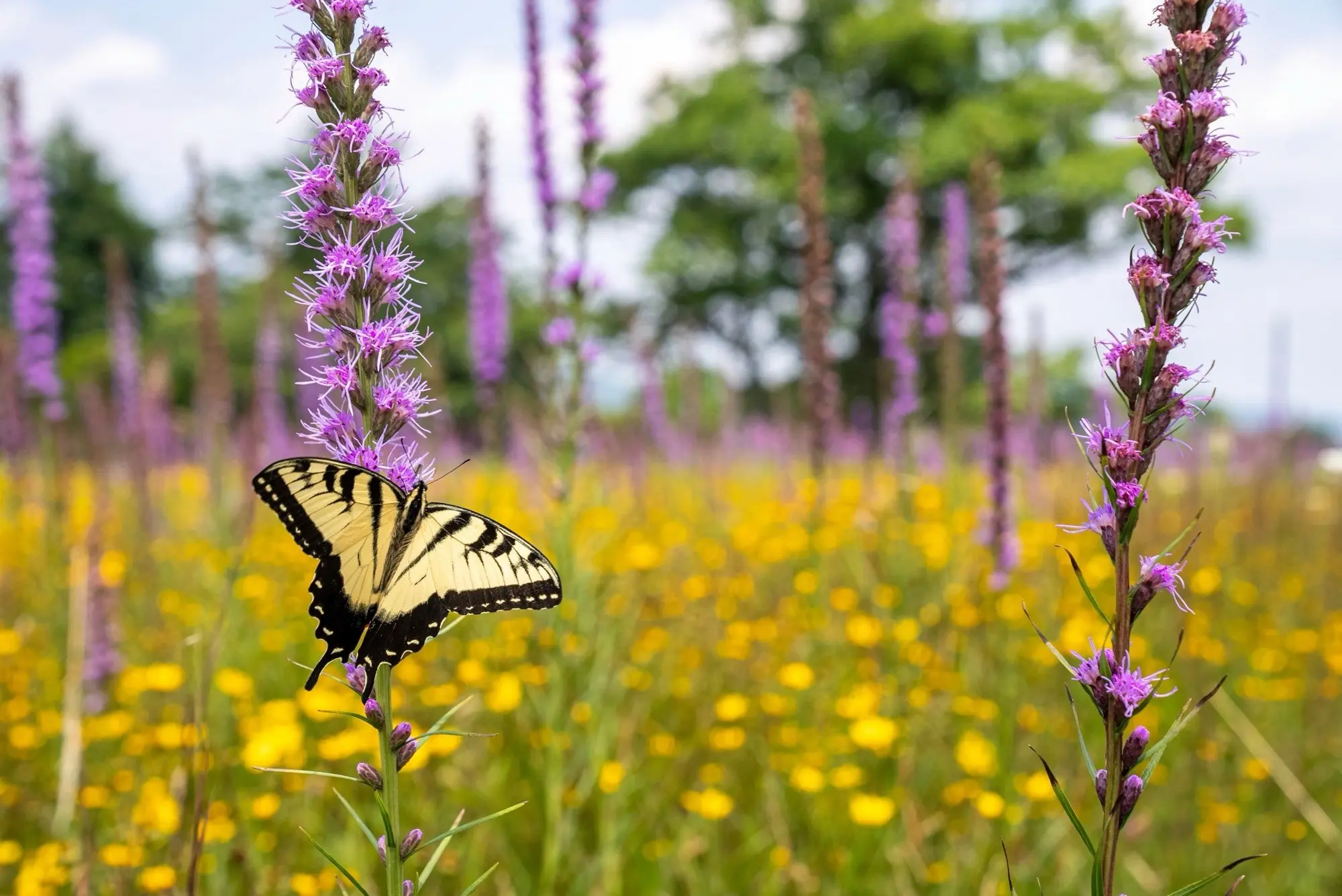
Liatris, also known as blazing star or gayfeather, is the flower that does things backward. Its spikes open from the top down, so each one looks like a purple torch burning toward the ground. It blooms in the heat of midsummer, draws bees and butterflies, and grows from a corm that comes back year after year.
It’s a native wildflower of the eastern United States, and it fits easily into a sunny border or a pollinator garden.
| Common Name | Liatris, blazing star, dense blazing star, gayfeather |
|---|---|
| Botanical Name | Liatris spicata |
| Family | Asteraceae |
| Plant Type | Perennial (grows from a corm) |
| Mature Size | 2 to 5 ft. tall, up to 1½ ft. wide |
| Sun Exposure | Full sun |
| Soil Type | Moist but well-drained; dislikes soggy winter soil |
| Soil pH | Acidic to neutral |
| Bloom Time | July to September |
| Flower Color | Purple; also white |
| Hardiness Zones | 3 to 8 (USDA); some sources say 9 |
| Native Area | Eastern United States |
| Attracts | Bees, butterflies, hummingbirds, birds |
| Deer Resistance | Moderate |
| Uses | Cut and dried flowers |
| Toxicity | Not on the ASPCA’s lists of toxic or nontoxic plants |
Care
Light
Plant liatris in full sun, at least six hours of direct sunlight a day. It’s a sun plant, according to North Carolina State Extension and the University of Wisconsin–Madison Extension.
Soil
Liatris likes soil that stays evenly moist in summer but drains well, especially in winter. That’s the key to keeping it. The corms rot in soil that stays too wet, University of Wisconsin–Madison Extension warns, and the Master Gardeners of Northern Virginia note it can’t take waterlogged winter soil. Clay is fine if it drains.
Water
Water new plants until they settle in. Once established, liatris tolerates drought, Illinois Extension says.
Temperature and humidity
Liatris is hardy to zone 3, and NC State lists it through zone 8, while Illinois Extension says zone 9. It tolerates summer heat and humidity, according to NC State.
Staking
Most liatris stands up on its own. In very rich or moist soil, the tall spikes can flop, NC State and Wisconsin Extension note. Skip the fertilizer, and stake only if you need to.
Types
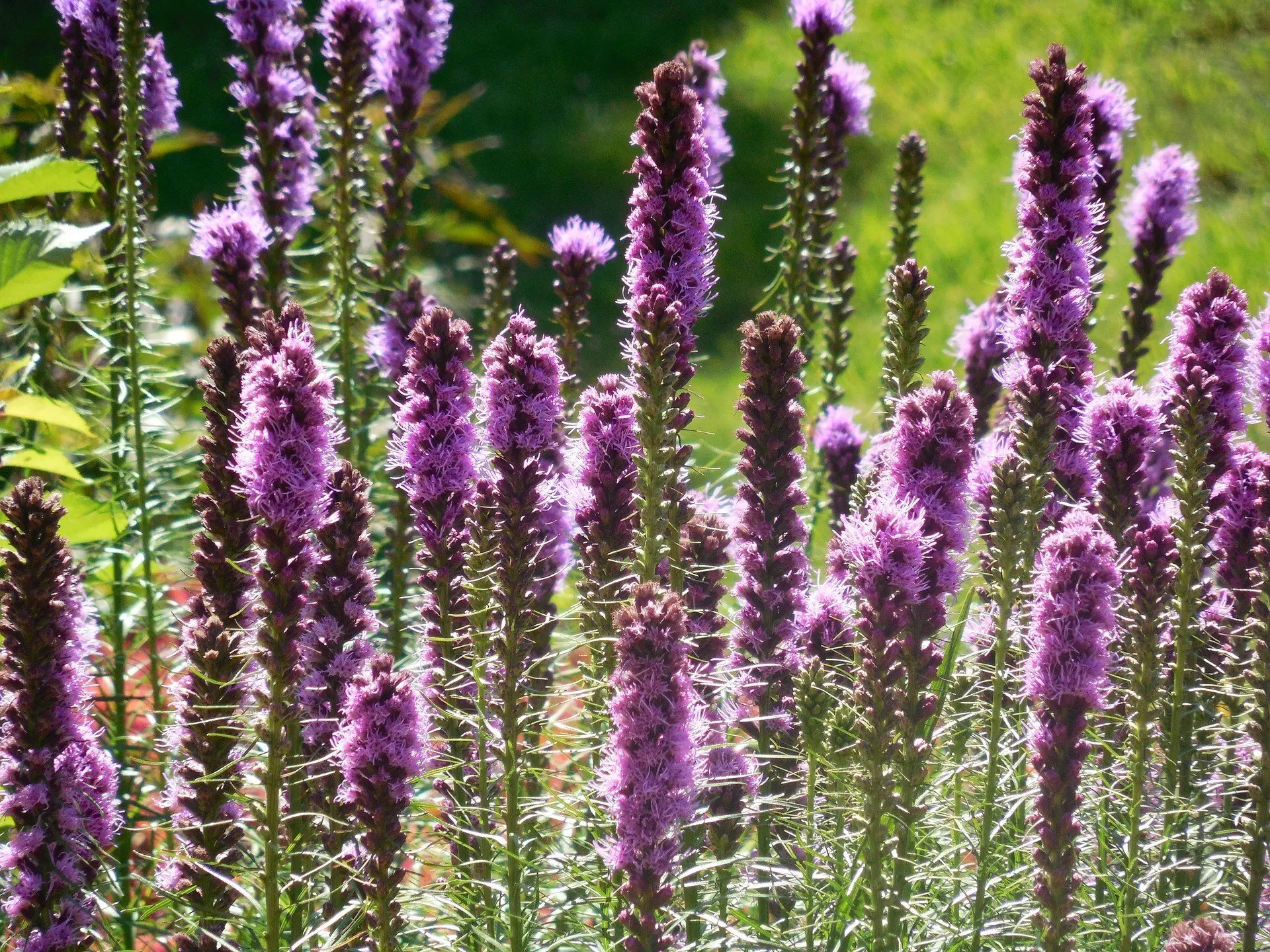
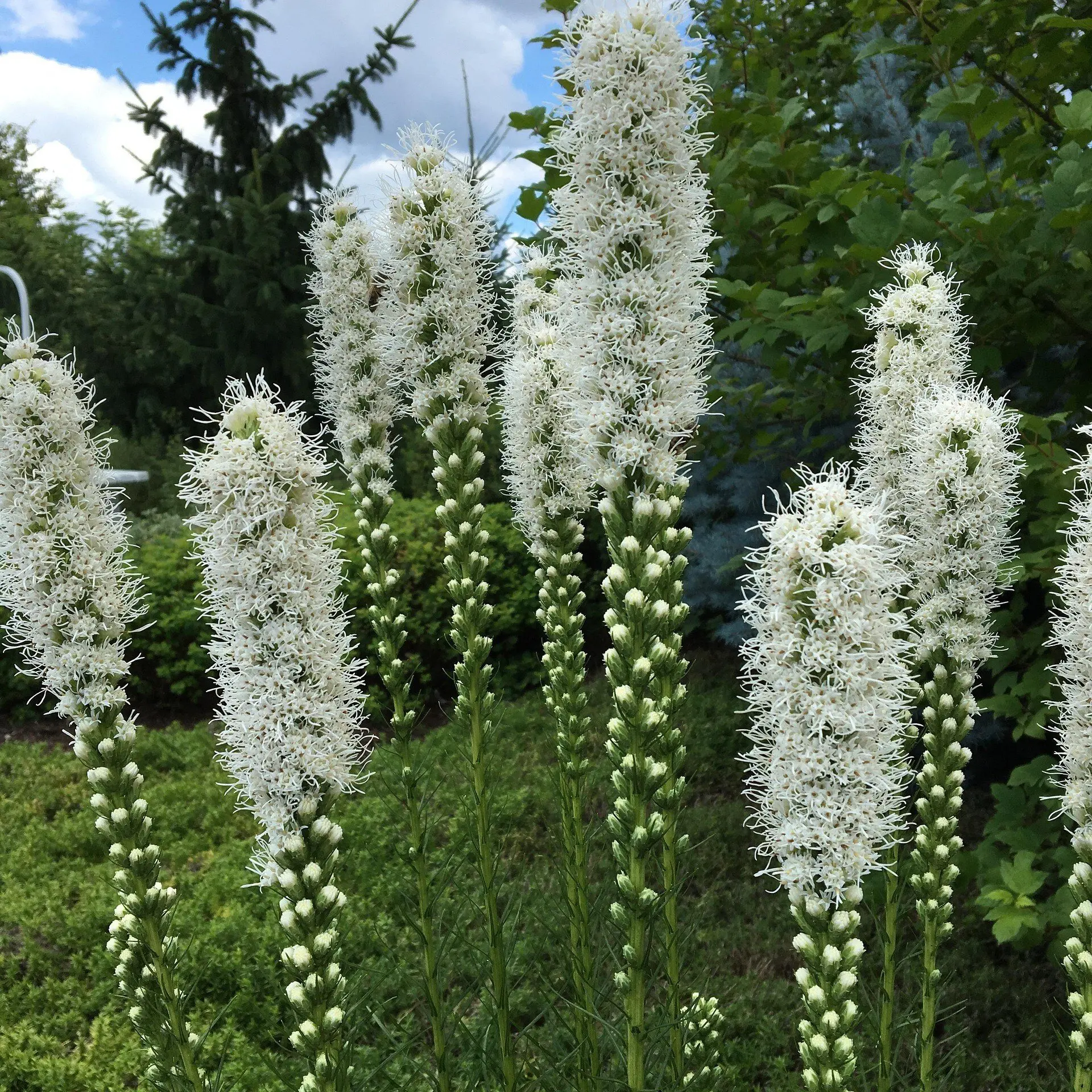
Purple is the classic, but liatris also comes in white, according to NC State and Illinois Extension. Named varieties differ mostly in height and color, so check the plant tag for your zone and how tall it grows.
Propagating
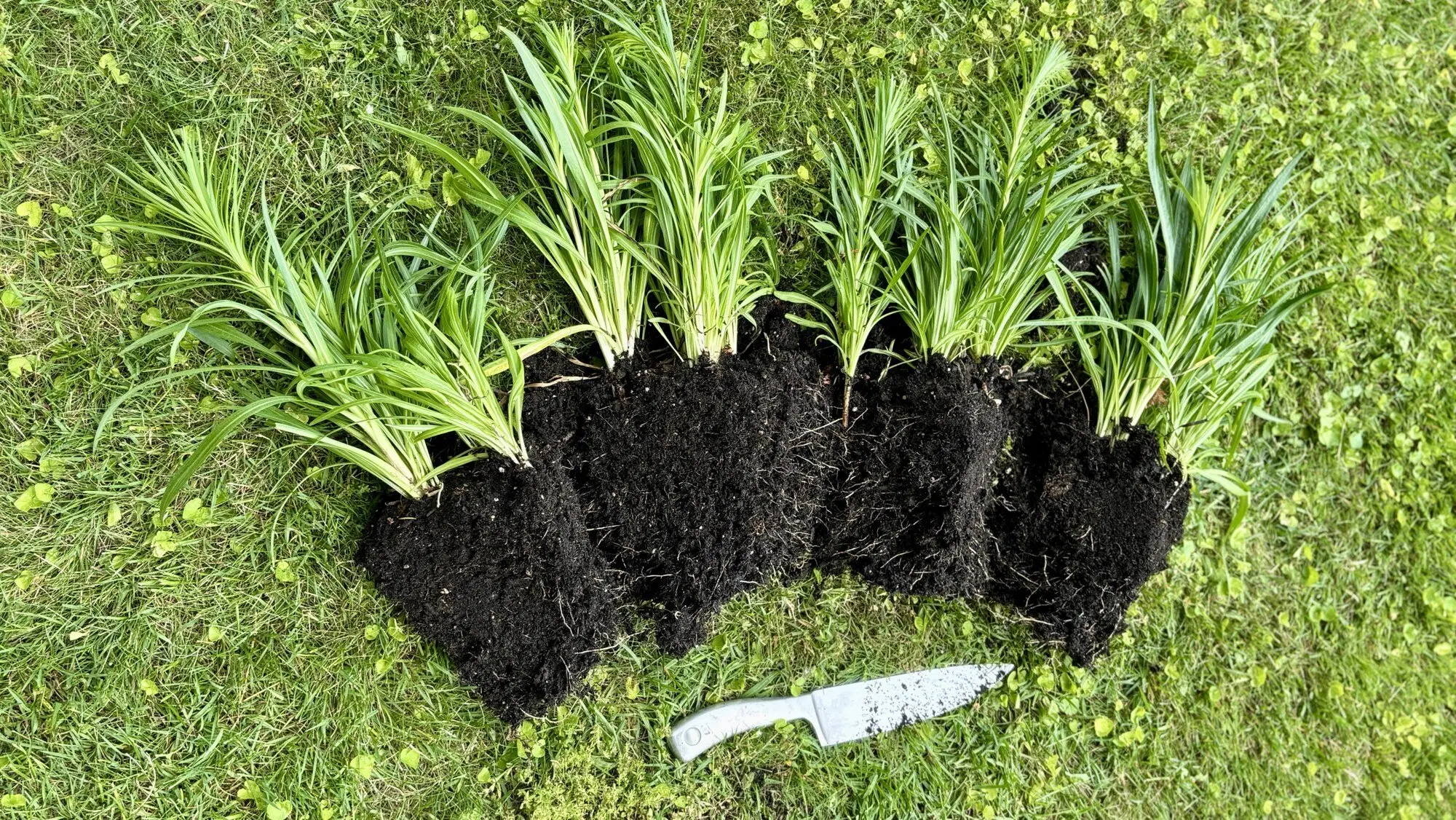
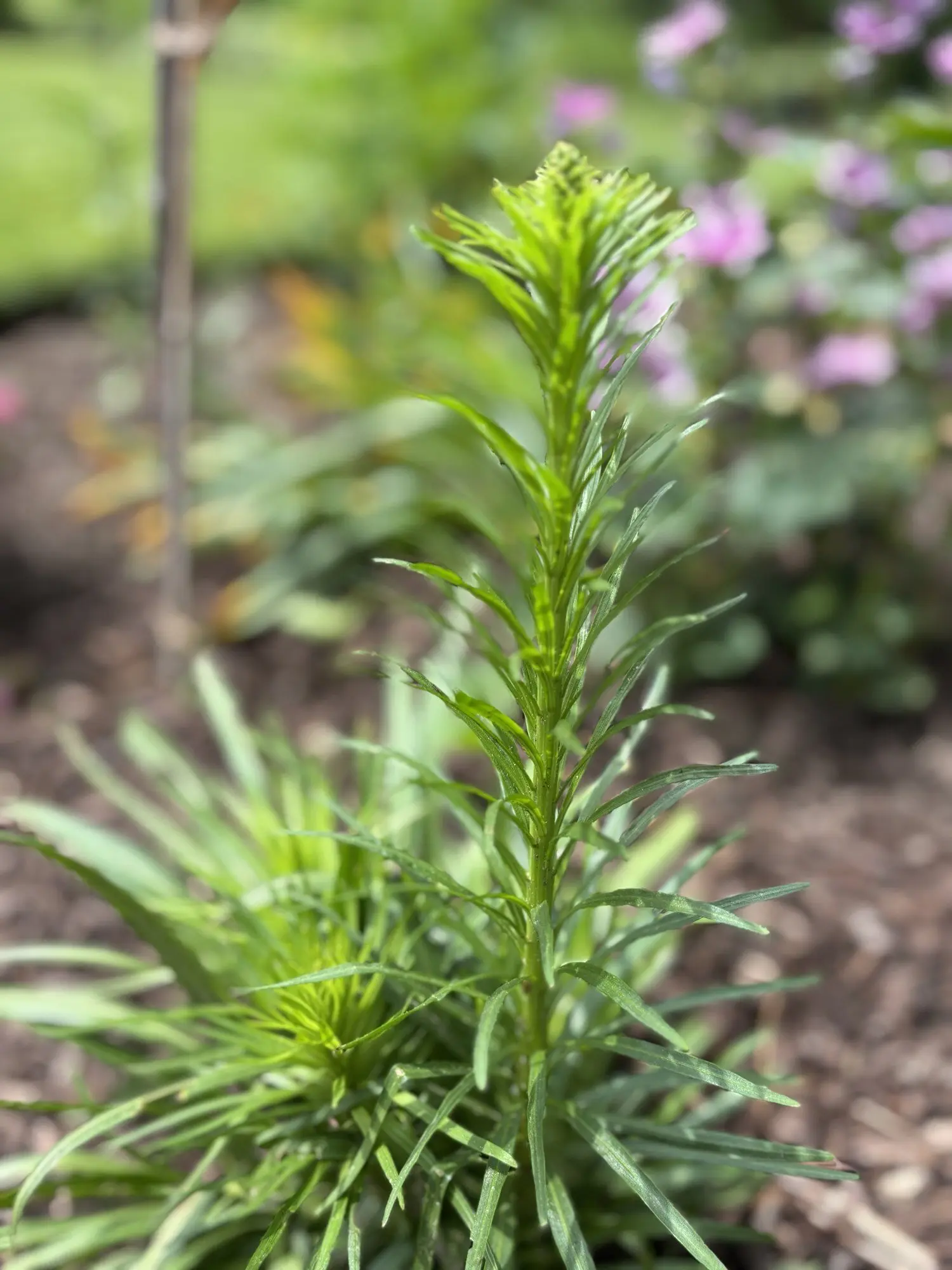
Liatris grows from a corm, a bulb-like base underground. When a clump gets crowded, dig it up in early spring just as the leaves come up and separate the corms, keeping at least one growing point on each piece. That’s the advice from University of Wisconsin–Madison Extension, and the Master Gardeners of Northern Virginia suggest dividing every four or five years.
Growing From Seed
Liatris seed sprouts best after a cold, moist spell. Sow it outdoors in fall or early winter and let nature do the work, or chill it first. Wisconsin Extension suggests four to six weeks of cold, moist stratification, and the Lady Bird Johnson Wildflower Center suggests three months at 40°F.
Pests and Diseases
Liatris has few serious problems, according to the Master Gardeners of Northern Virginia and Wisconsin Extension. Wet soil is its main enemy, so good drainage prevents most trouble. Give plants room so air can move between them, which helps keep leaf diseases down.
Watch for animals, though. Voles go after the corms, according to the Missouri Department of Conservation and the Master Gardeners of Northern Virginia, and rabbits and groundhogs nibble the leaves, Penn State Extension says.
Bloom
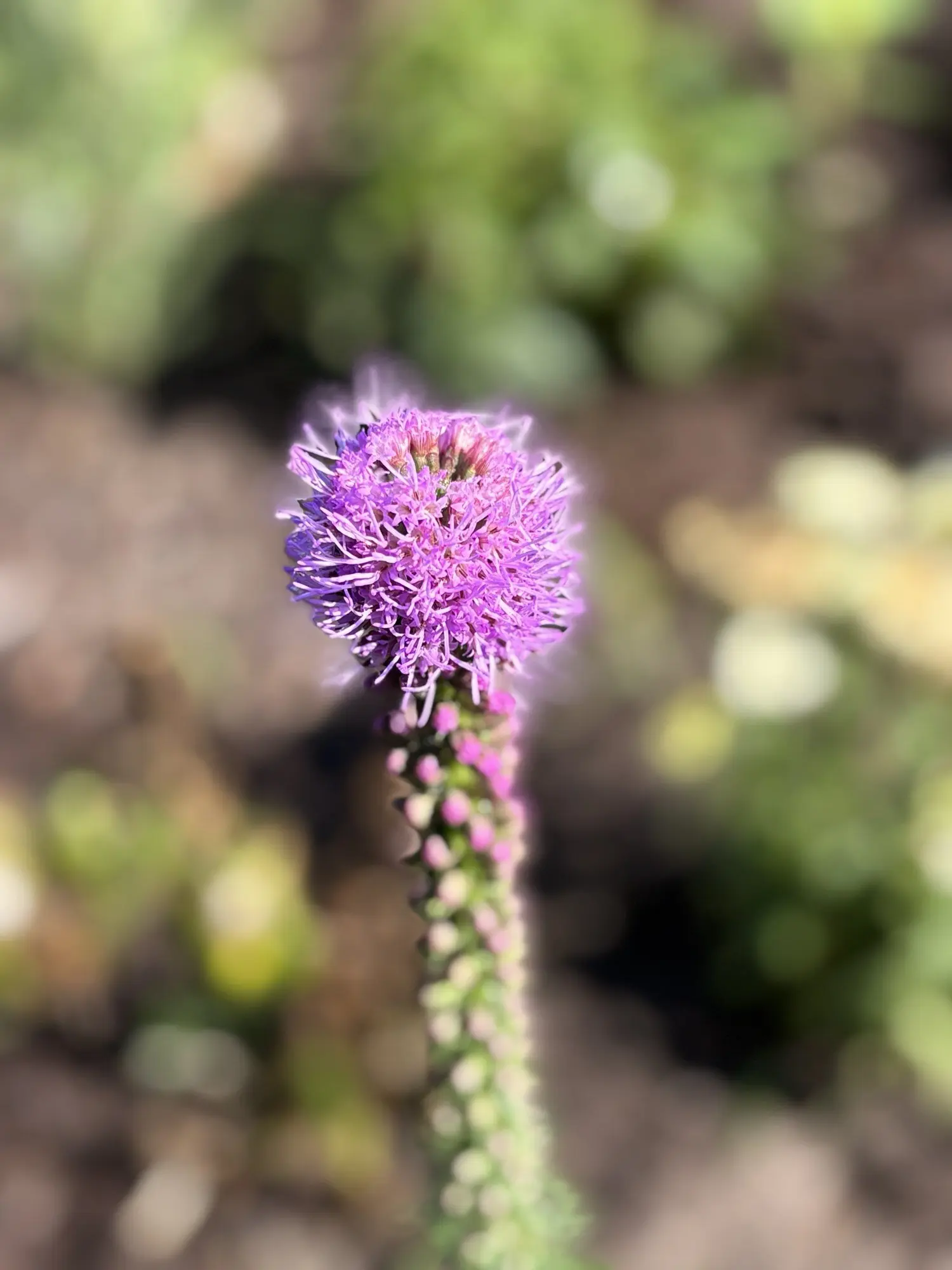
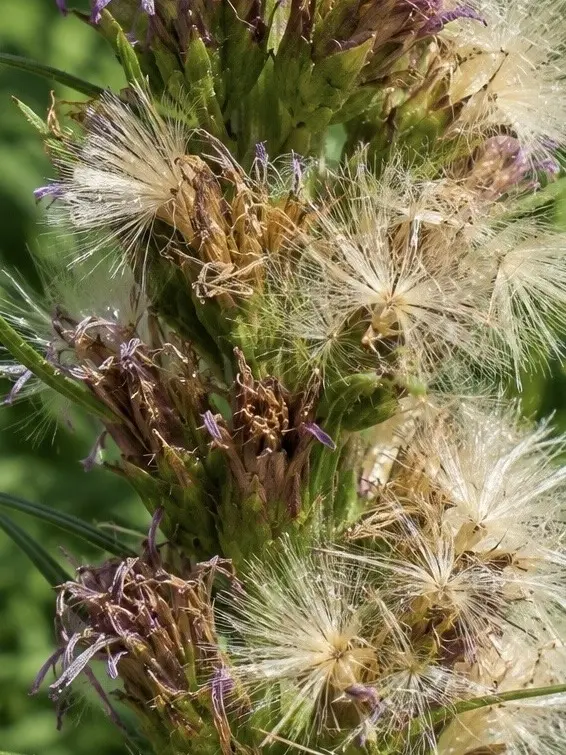
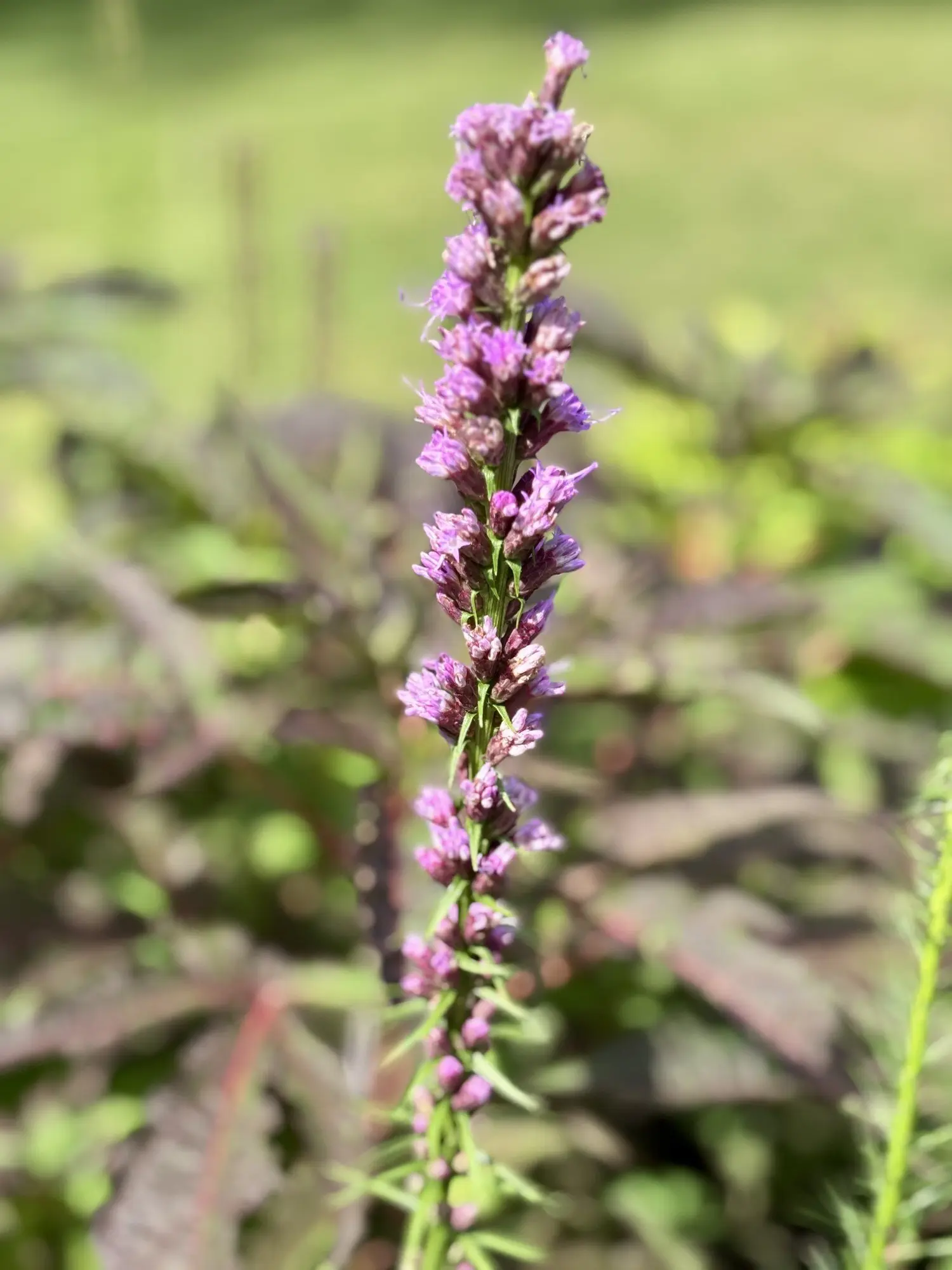
Liatris blooms in midsummer, from about July into September. Each spike opens from the top down, according to NC State, Wisconsin Extension, and Illinois Extension, so the top is finished and turning brown while the lower buds are still opening.
For the Birds and Pollinators
Liatris is a magnet for pollinators. Bees and butterflies visit the flowers, and hummingbirds stop by, too, according to NC State and the Lady Bird Johnson Wildflower Center, which notes its special value to native bees and bumblebees. Monarchs come for the nectar, Penn State Extension and Wisconsin Extension both say.

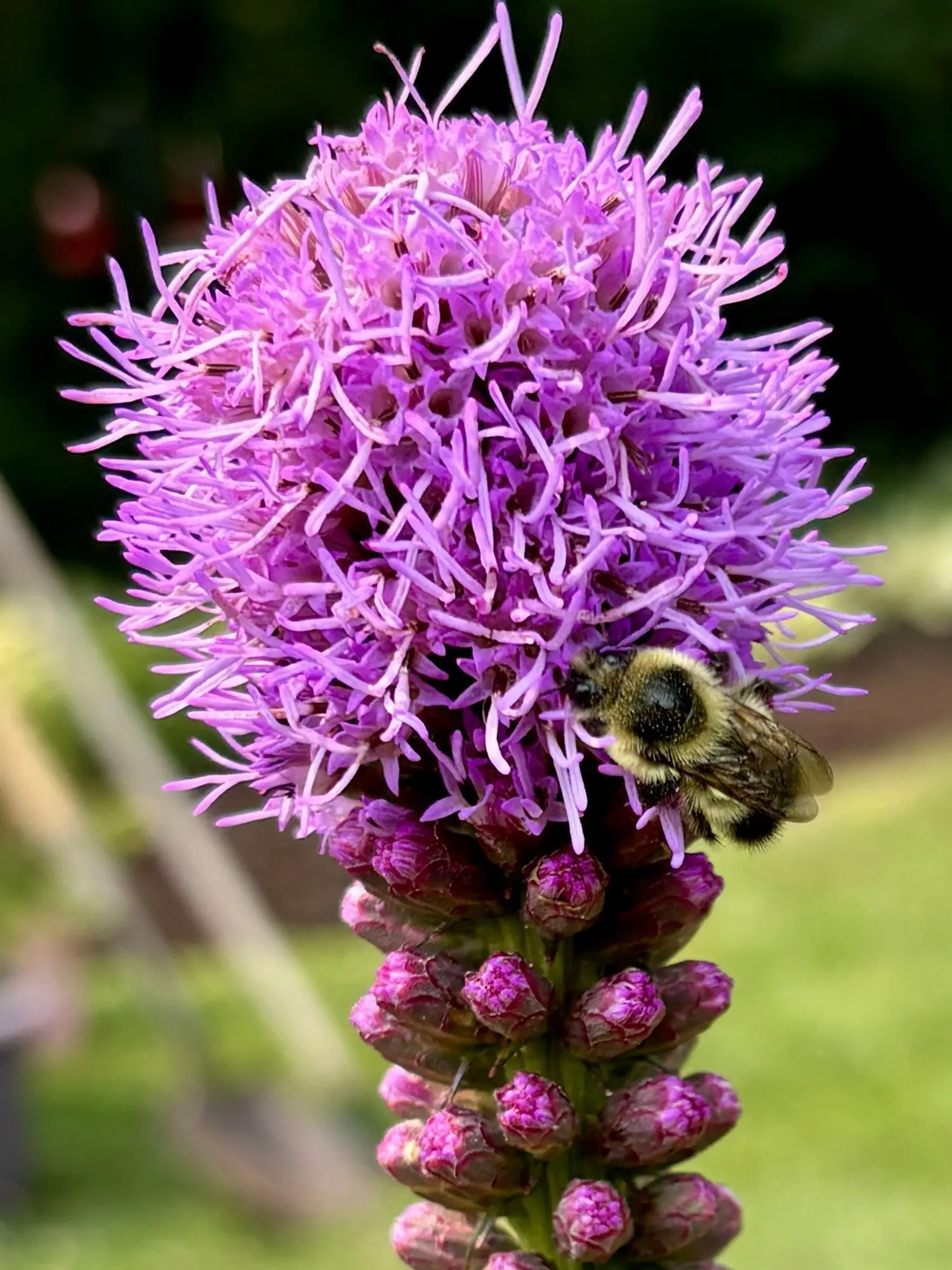
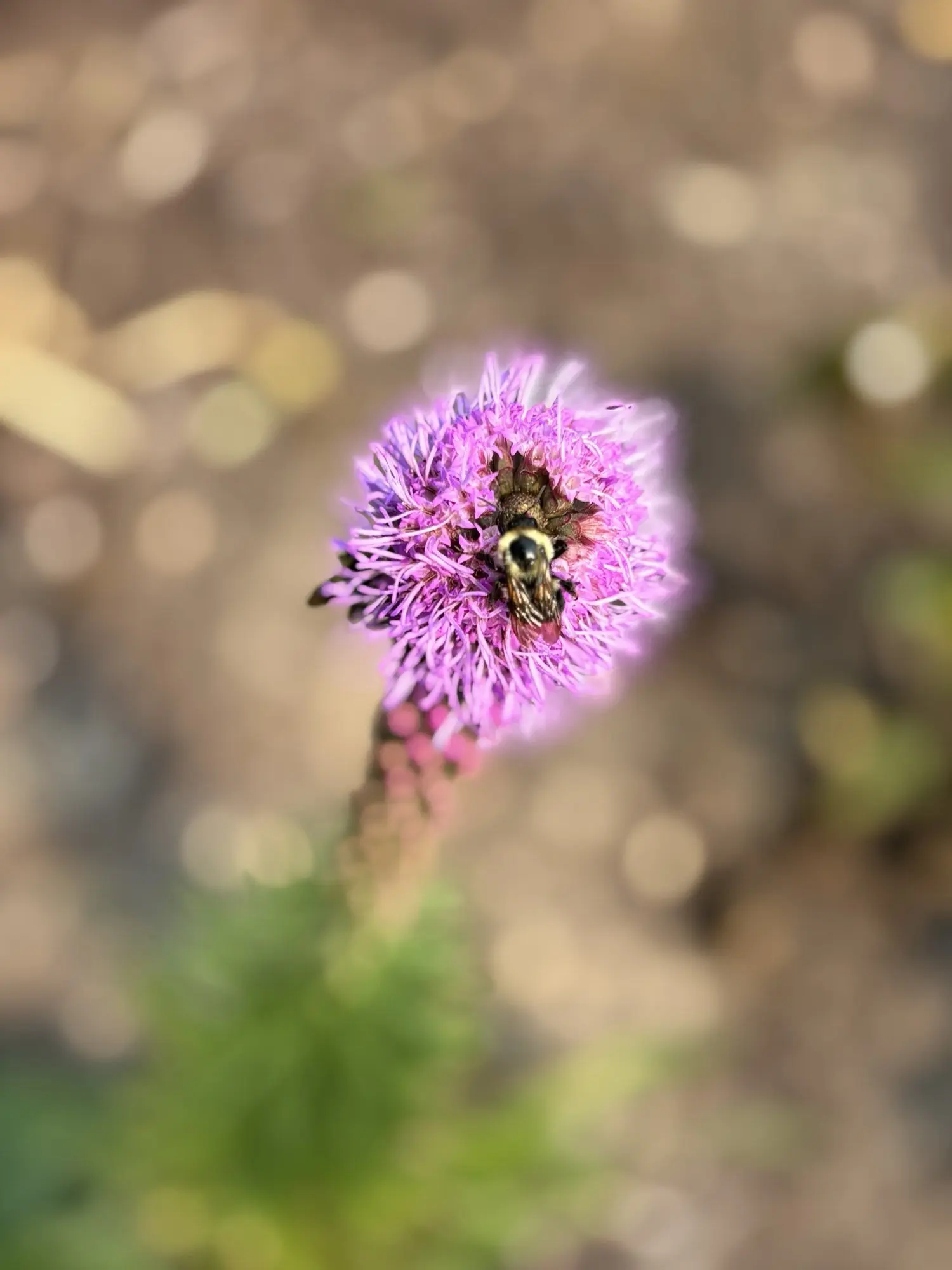
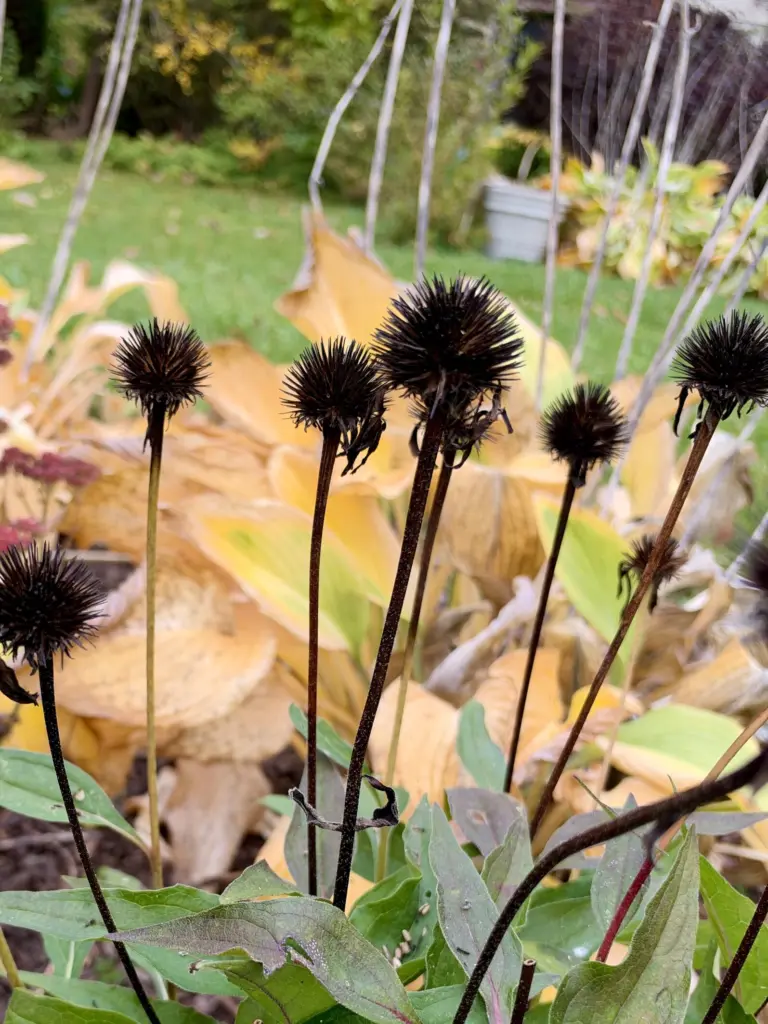
When the flowers finish, birds come for the seeds. The seed heads are an important food for songbirds in late fall and winter, Penn State Extension says, and NC State names goldfinches among them. Leave the seed heads standing for the birds.
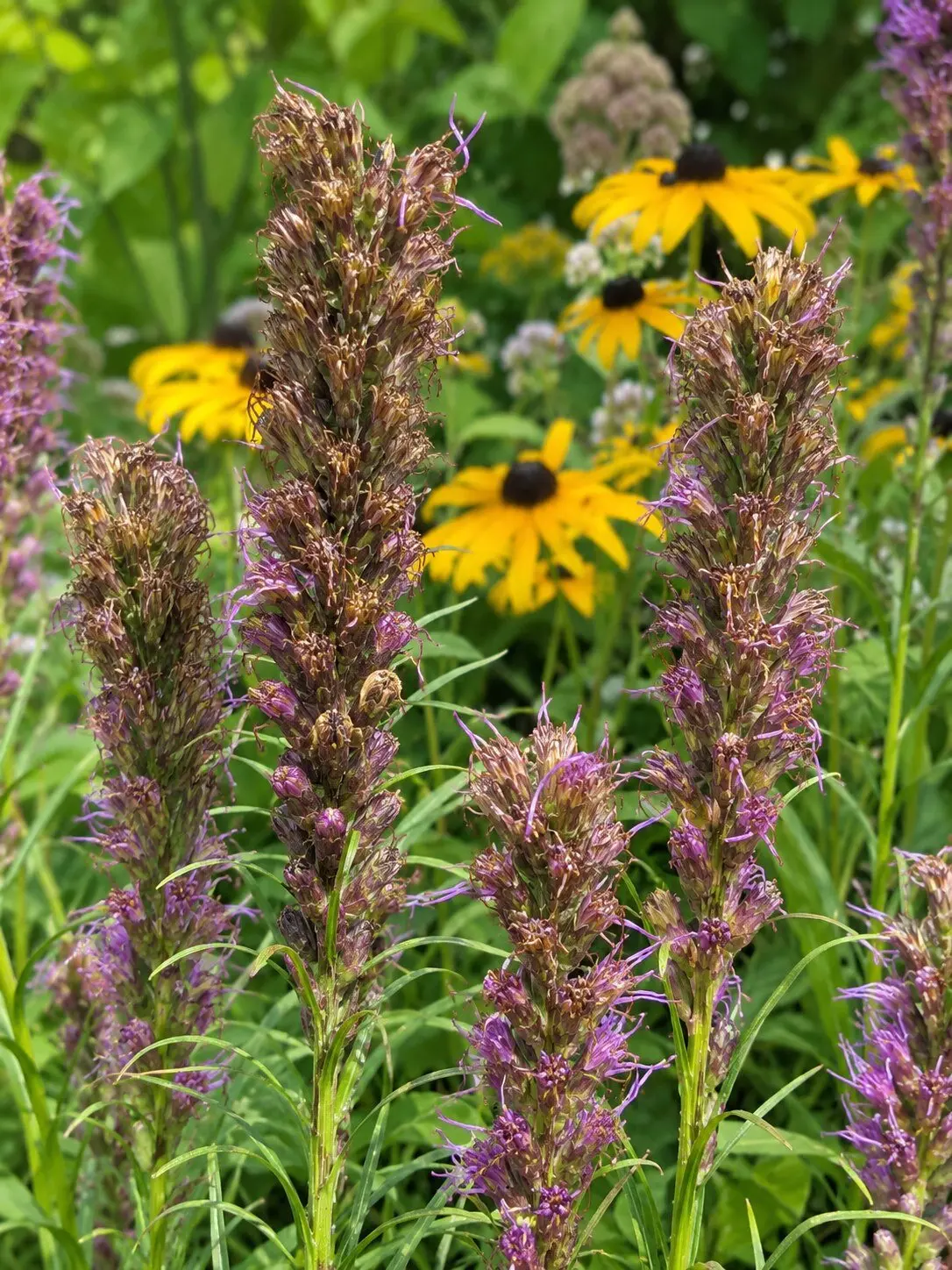
In spring, cut the old stalks back but leave 8 to 24 inches standing. Native bees nest inside the dead, hollow stems, NC State says, and the Maryland Department of Natural Resources lists blazing star among the plants to leave standing for them.
Uses
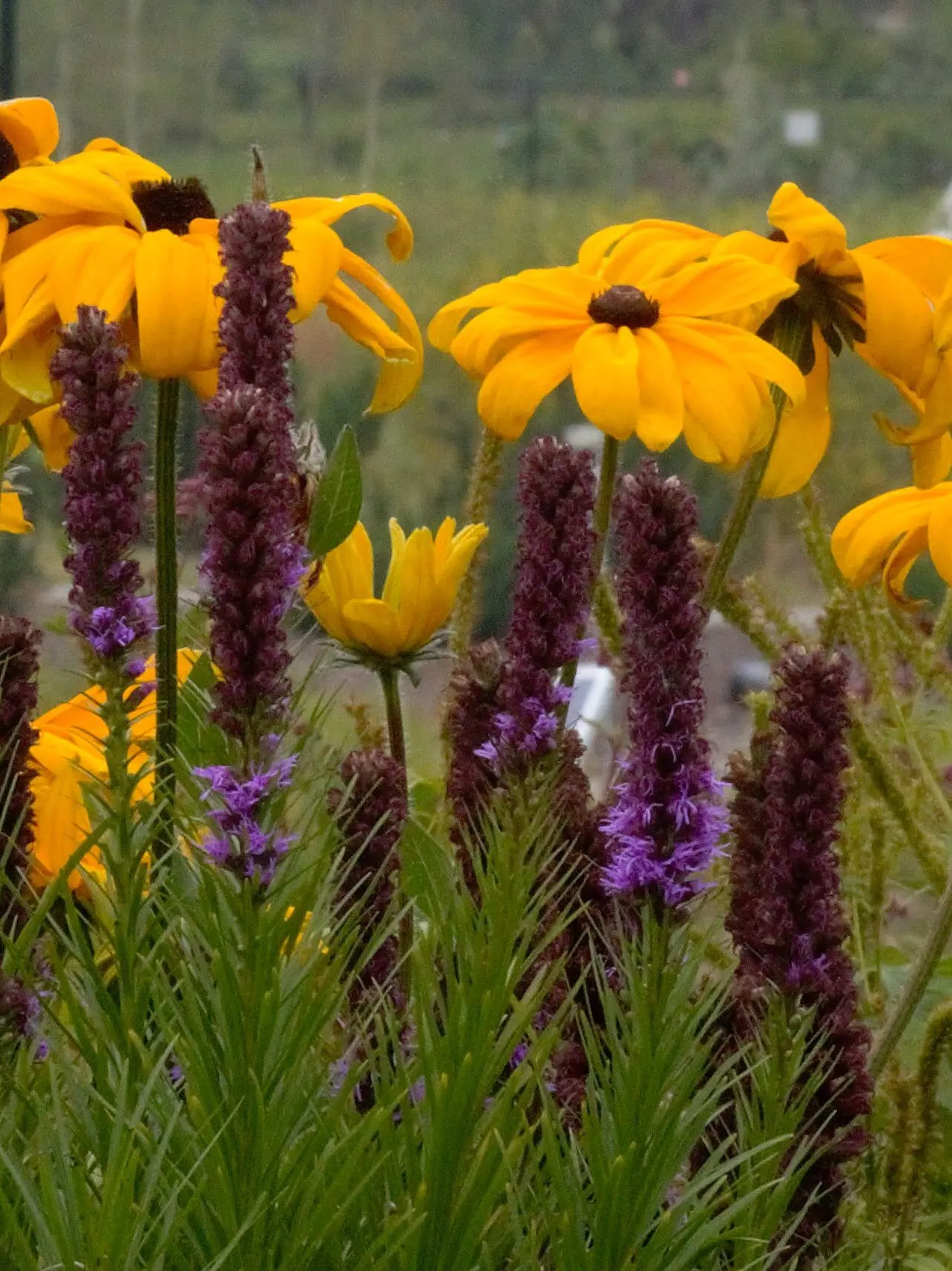
Liatris makes a good cut flower, fresh or dried, according to NC State and Wisconsin Extension.
Common Issues
My liatris didn’t come back. A common cause is wet soil over winter, which rots the corms. Plant it where water doesn’t sit.
The spikes flopped over. Rich soil or too much fertilizer makes tall, weak stems. Skip the fertilizer, or stake them.
Frequently Asked Questions
Does liatris come back every year? Yes. It’s a perennial that grows from a corm, and it spreads mostly by seed, NC State says.
Why is the top of my liatris brown? Liatris blooms from the top down, so the top finishes first while the lower buds are still opening.
Is liatris deer resistant? Moderately. NC State calls it moderately resistant to deer, and the Master Gardeners of Northern Virginia say deer rarely do serious damage. When food is scarce, though, deer may nibble it, Penn State Extension notes.
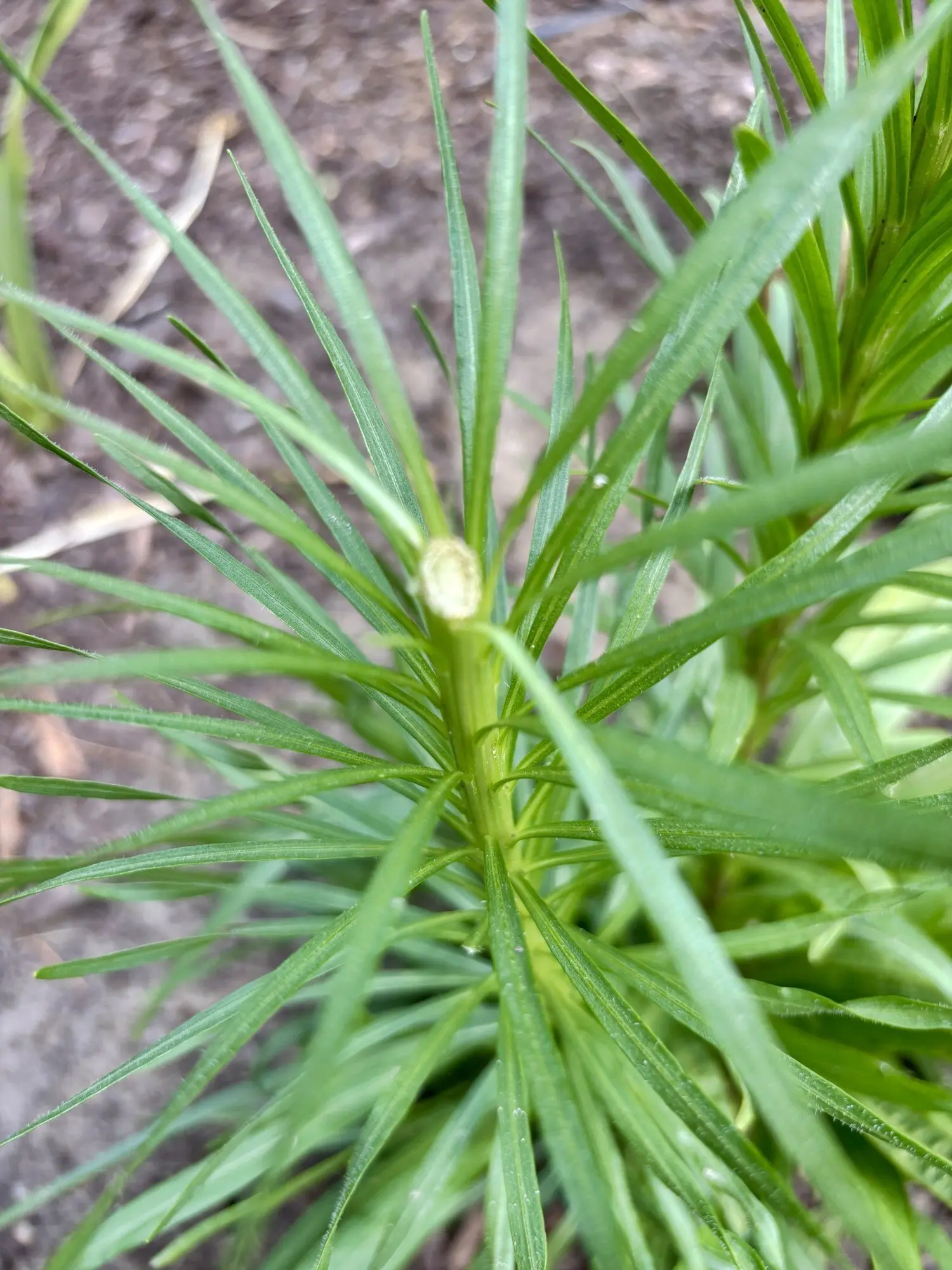
Is liatris safe for pets? Liatris isn’t on the ASPCA’s lists of toxic or nontoxic plants for dogs or cats. Keep pets from chewing on any garden plant.
When should I cut back liatris? Wait until spring. The seed heads feed birds over winter, and the old stems shelter native bees.
Can I grow liatris from seed? Yes. Sow it outdoors in fall, or chill the seed before sowing in spring.