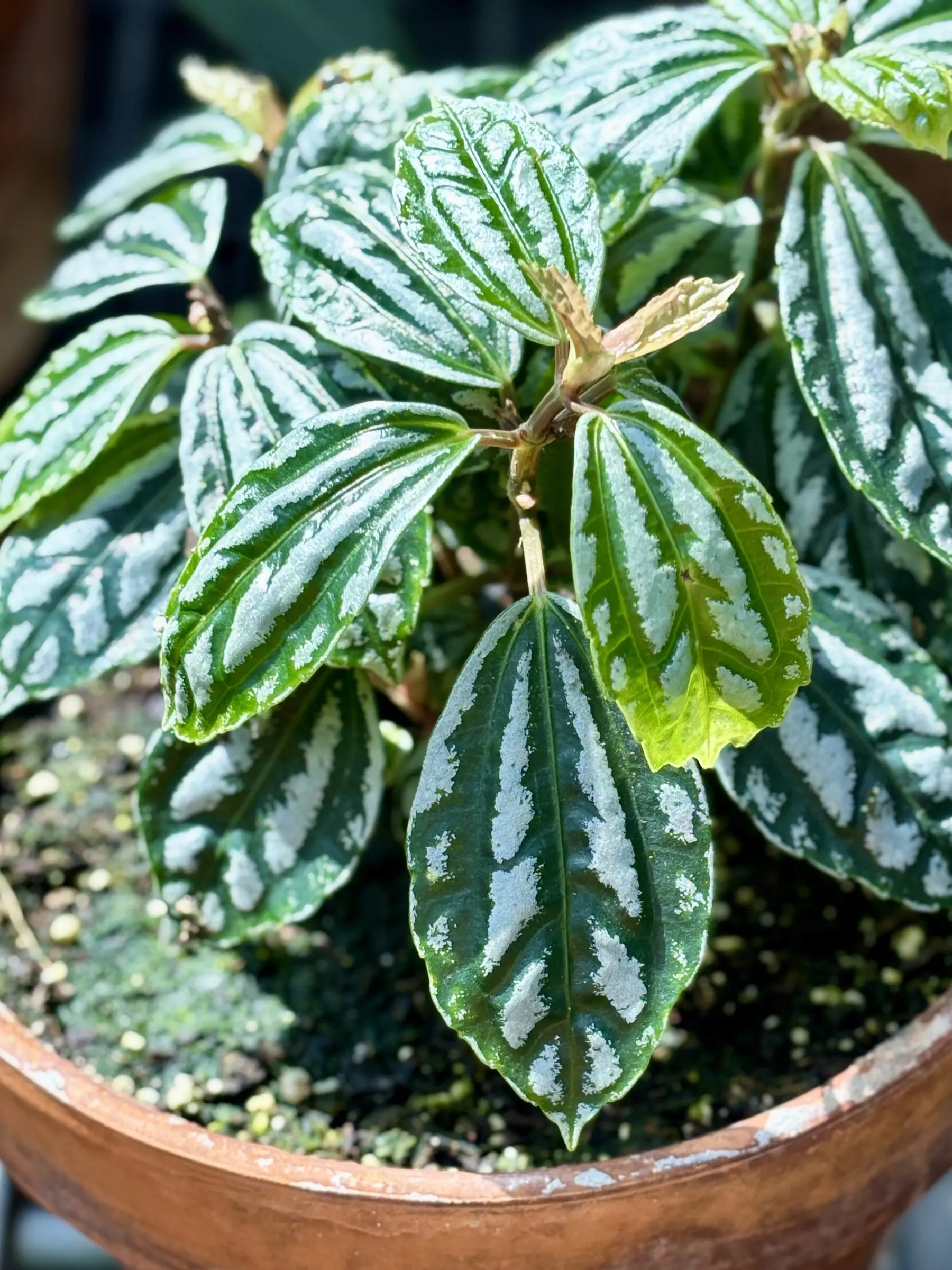
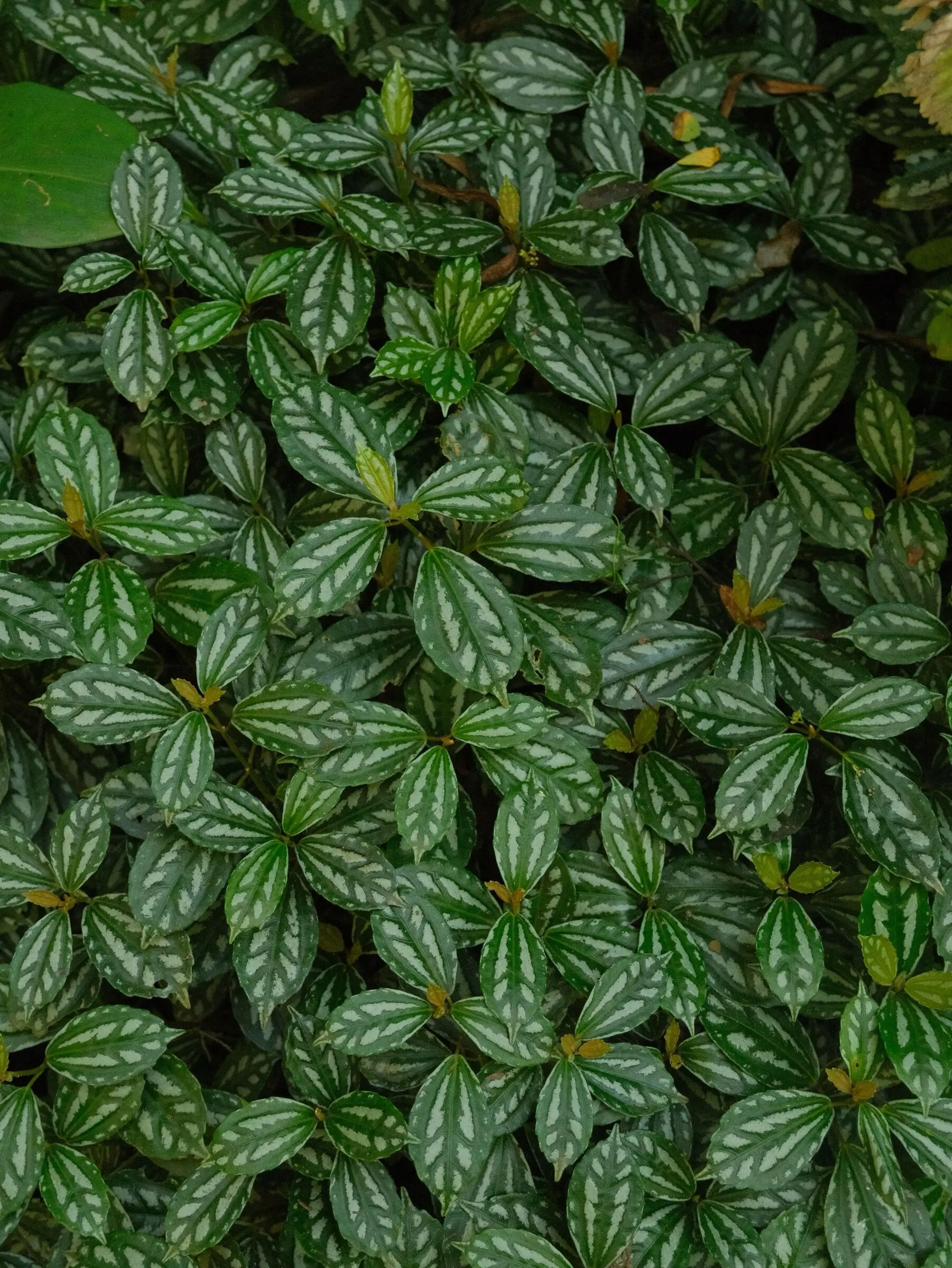
Aluminum Plant, also known as Pilea cadierei or Watermelon Pilea, gets its name from the shiny silver patches on its leaves. Each oval, pointed leaf is dark green, quilted between the veins, and marked with raised silver splashes that catch the light like brushed metal. The silver comes from tiny air pockets just under the leaf surface, which reflect light. It’s a cousin of the popular Chinese money plant (Pilea peperomioides) in the nettle family, Urticaceae. It’s native to southern China and Vietnam and hardy only in zones 10-12, so for most of us it’s a houseplant all year.
It’s a fast, bushy grower that usually stays 8-12 inches tall indoors, though it can reach about 2 feet. That makes it a nice fit for a windowsill, a tabletop, or a terrarium. It’s beginner friendly and safe for pets.
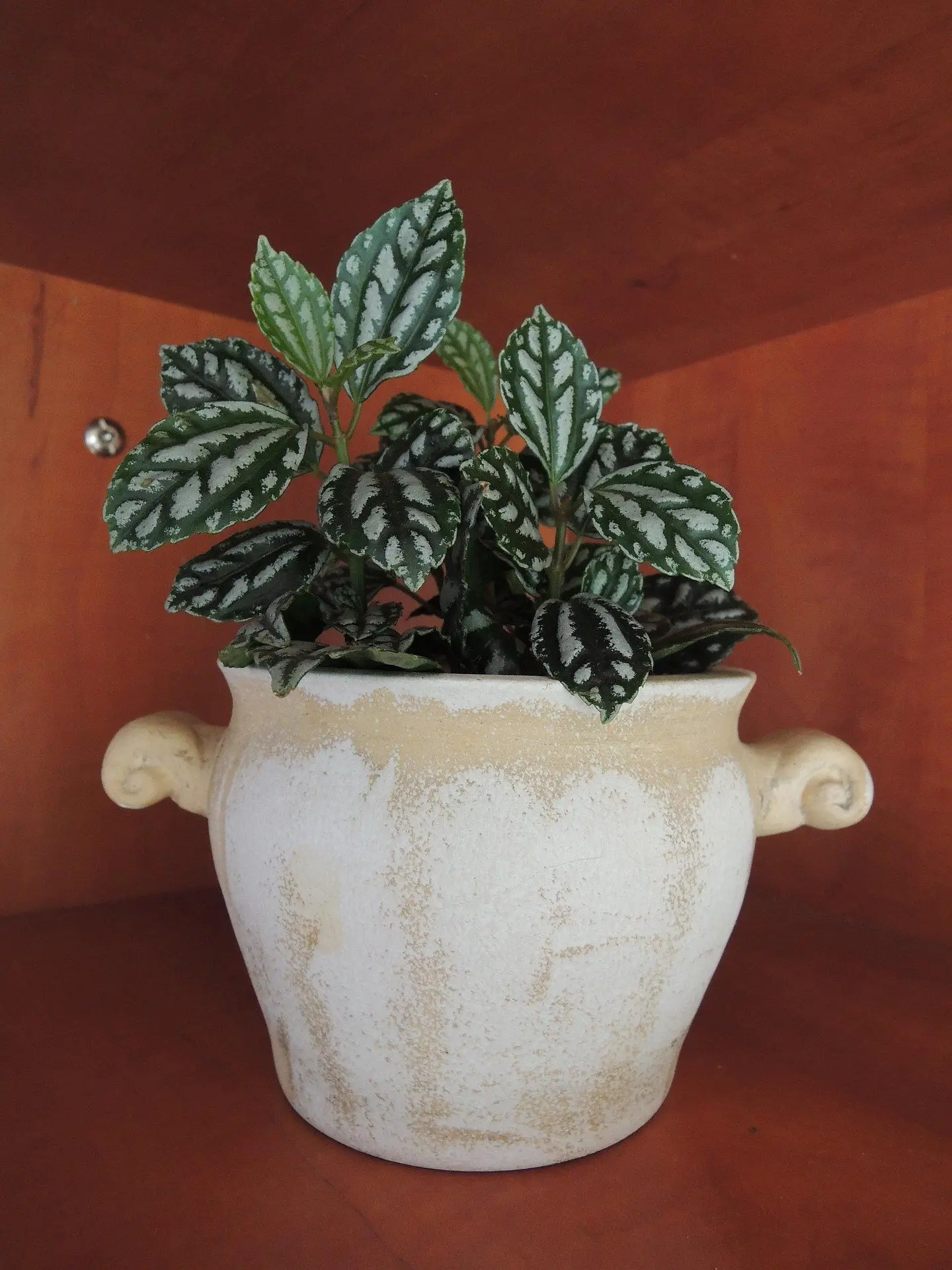
It wants bright, indirect light. An east-facing window, or a spot a few feet back from a south or west window, is ideal. Good light keeps the silver bright and the plant compact. In too little light, the stems stretch, the leaves spread apart, and the silver fades. Keep it out of hot direct sun, which can scorch the leaves.
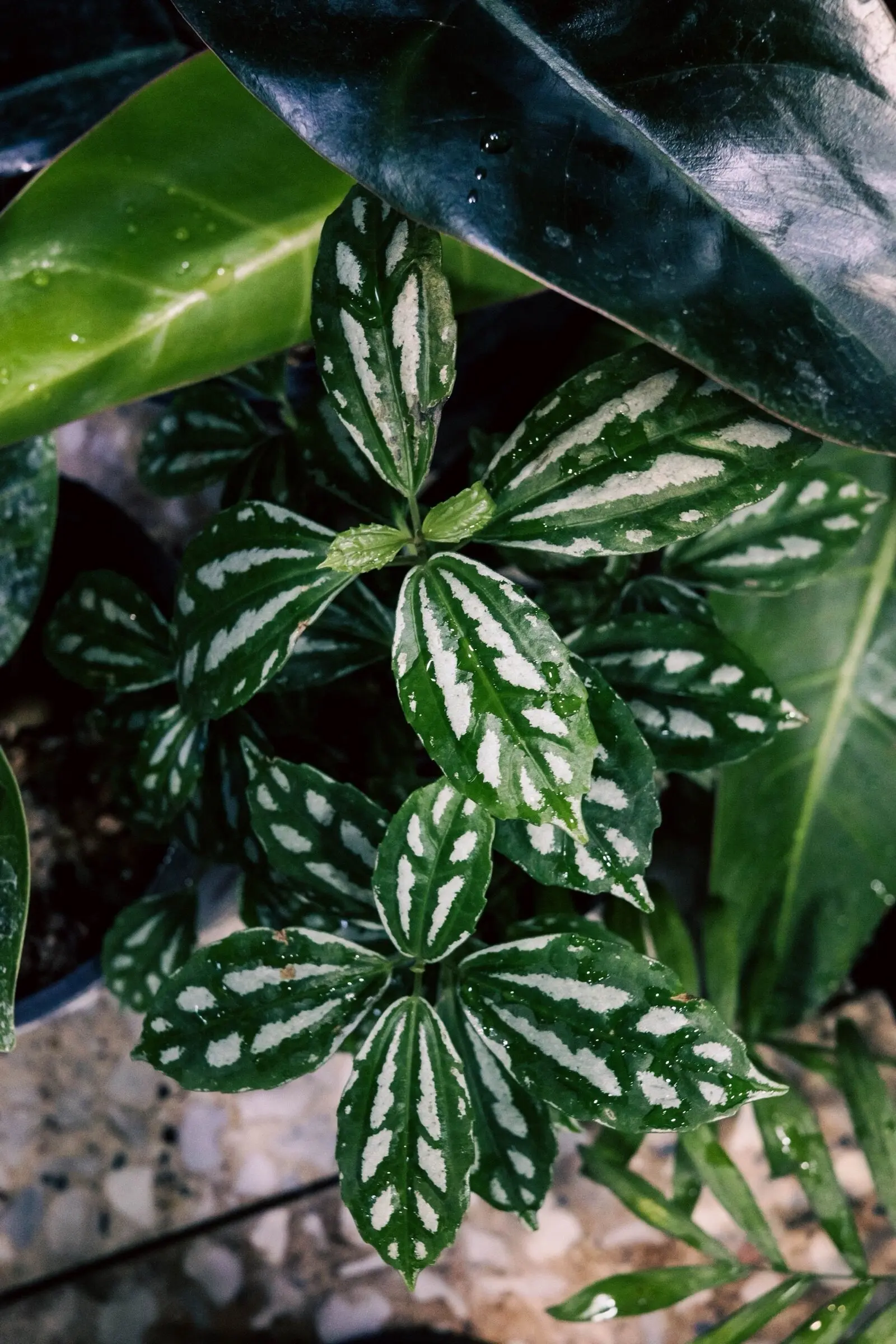
Keep the soil lightly moist during spring and summer, watering when the top inch feels dry. Water thoroughly, then let it drain and empty the saucer. Aluminum plants don’t like soggy soil, which leads to yellow leaves and root rot, but they also droop quickly when they get too dry. In winter, when growth slows, let the soil dry a little more between waterings.
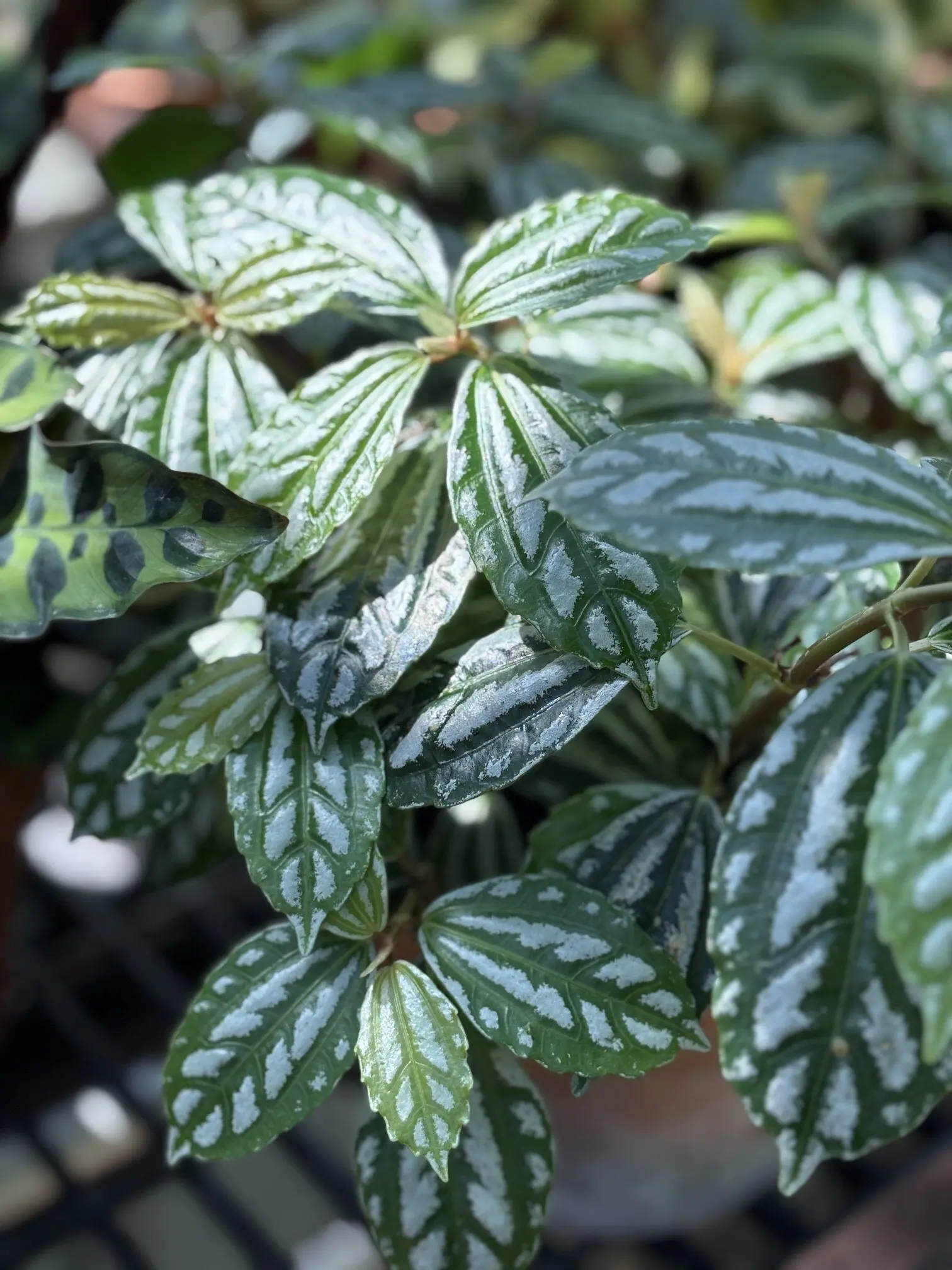
It’s happiest at 65°F to 80°F. Keep it away from cold drafts, cold windows in winter, and heating and air conditioning vents. Below 55°F, it can drop leaves. It likes moderate to high humidity, so a pebble tray, a humidifier, or grouping it with other plants helps in winter, especially if the leaf edges start to brown.
Use a regular, well-draining potting mix with some perlite added, in a pot with drainage holes. Feed a balanced water-soluble fertilizer at half strength once a month in spring and summer, and skip it in fall and winter.
Aluminum plants grow quickly and can get leggy, especially as they age. Pinch off the stem tips every few weeks during the growing season. Each pinch makes the stem branch out, keeping the plant full and compact. If it gets very tall and bare at the base, cut the stems back hard in spring, and new growth will fill in. Older plants tend to decline after a few years, so it’s a good idea to start fresh plants from cuttings now and then.
It’s easy to propagate. Take a 3-4 inch stem cutting with a few pairs of leaves, remove the lowest pair, and root it in water or moist potting mix. Roots usually form in 2-3 weeks. Your pinched-off tips make perfect cuttings, and you can tuck a few back into the pot to make it fuller.
Repot every year or two in spring, going up just one pot size. Since it’s a fast grower, it may outgrow a small pot sooner.
Most problems come back to water, light, or dry air:
- Drooping, limp stems usually mean it’s thirsty. It perks up quickly after a drink.
- Yellow leaves or mushy stems usually mean too much water.
- Leggy growth and faded silver mean it needs more light, or a pinch.
- Brown, crispy leaf edges mean dry air.
- Leaf drop can come from cold drafts or sudden temperature changes.
- Watch for spider mites, mealybugs, and aphids. Treat with insecticidal soap or neem oil.
Good news for pet owners: the aluminum plant is considered non-toxic to cats and dogs.
Shiny, fast-growing, and pet safe. I’d put it in the beginner-friendly category. Just keep up with the pinching.
| Common Name | Aluminum Plant, Watermelon Pilea |
|---|---|
| Botanical Name | Pilea cadierei |
| Family | Urticaceae |
| Mature Size | 8-12 in. tall indoors; up to 2 ft. |
| Sun | Bright, Indirect |
| Soil | Moist, well-drained |
| Native Area | Southern China and Vietnam |
| Toxicity | Non-toxic to pets |