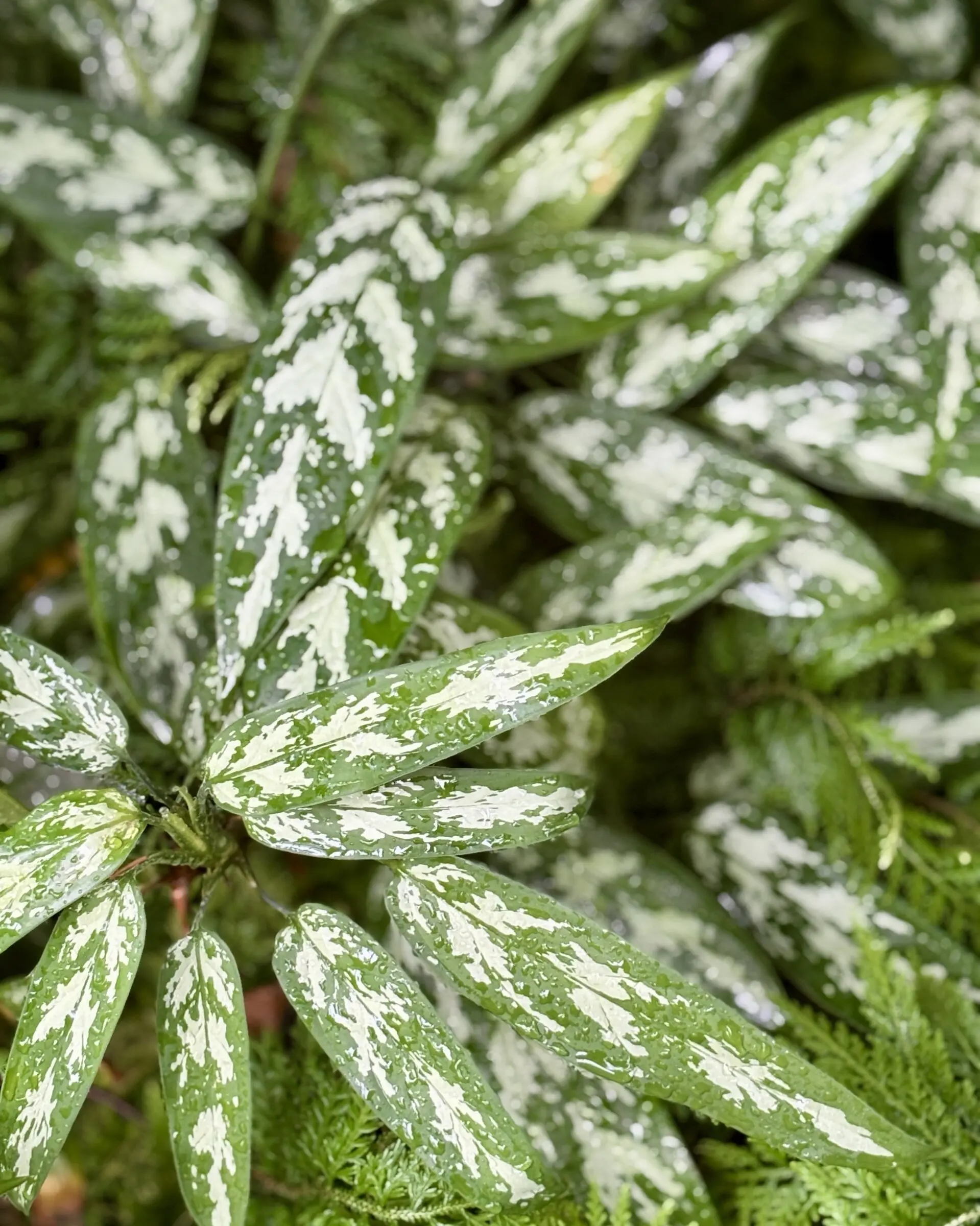
Chinese Evergreen, also known as Aglaonema, is one of the easiest and most forgiving houseplants you can grow. Its long, glossy leaves come in a huge range of patterns. This one is green splashed and feathered with bright white, but there are dozens of varieties in silver, cream, pink, and red, like my Red Aglaonema. Chinese evergreens are in the Araceae family, the same family as pothos, philodendrons, and peace lilies. They’re native to the tropical forests of Southeast Asia, where they grow in the shade of the forest floor. They’re hardy only in zones 10-12, so for most of us they’re houseplants all year.
They grow slowly in tidy, upright clumps, usually 1-3 feet tall, and new leaves unfold from the center of each stem. That compact shape makes them a great fit for a tabletop, a shelf, or a floor spot that needs some green.
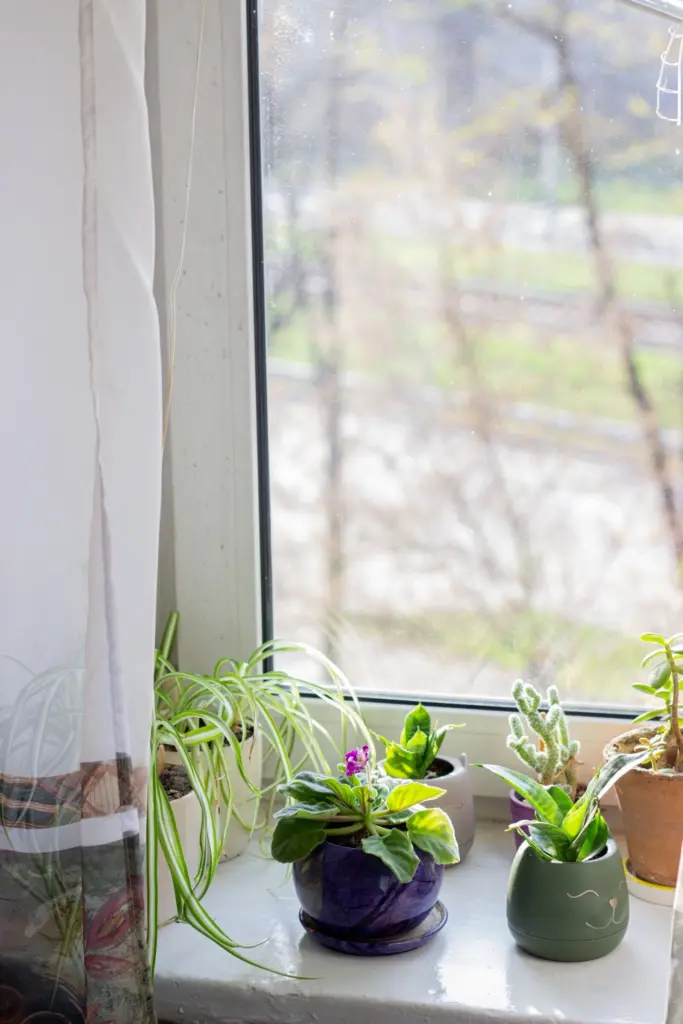
Chinese evergreens are famous for tolerating low light, which is a big part of why they’re so popular for offices and dim rooms. The darker green varieties handle low light best. Varieties with a lot of white, silver, or pink, like this one, need a little more light to keep their markings bright. Medium to bright, indirect light is ideal. An east- or north-facing window, or a spot a few feet back from a sunny window, works well. Keep it out of direct sun, which scorches the leaves and bleaches the pattern.
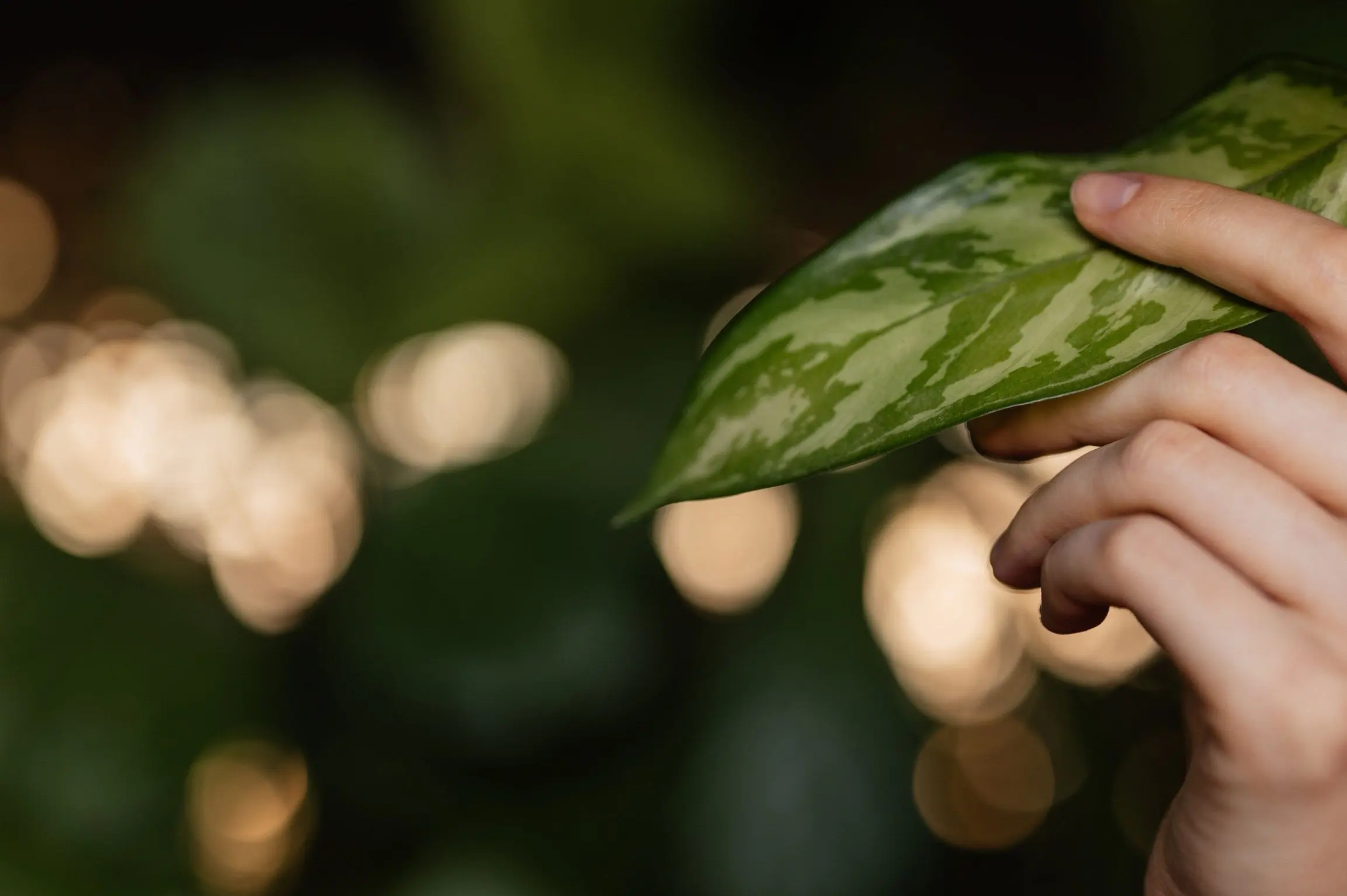
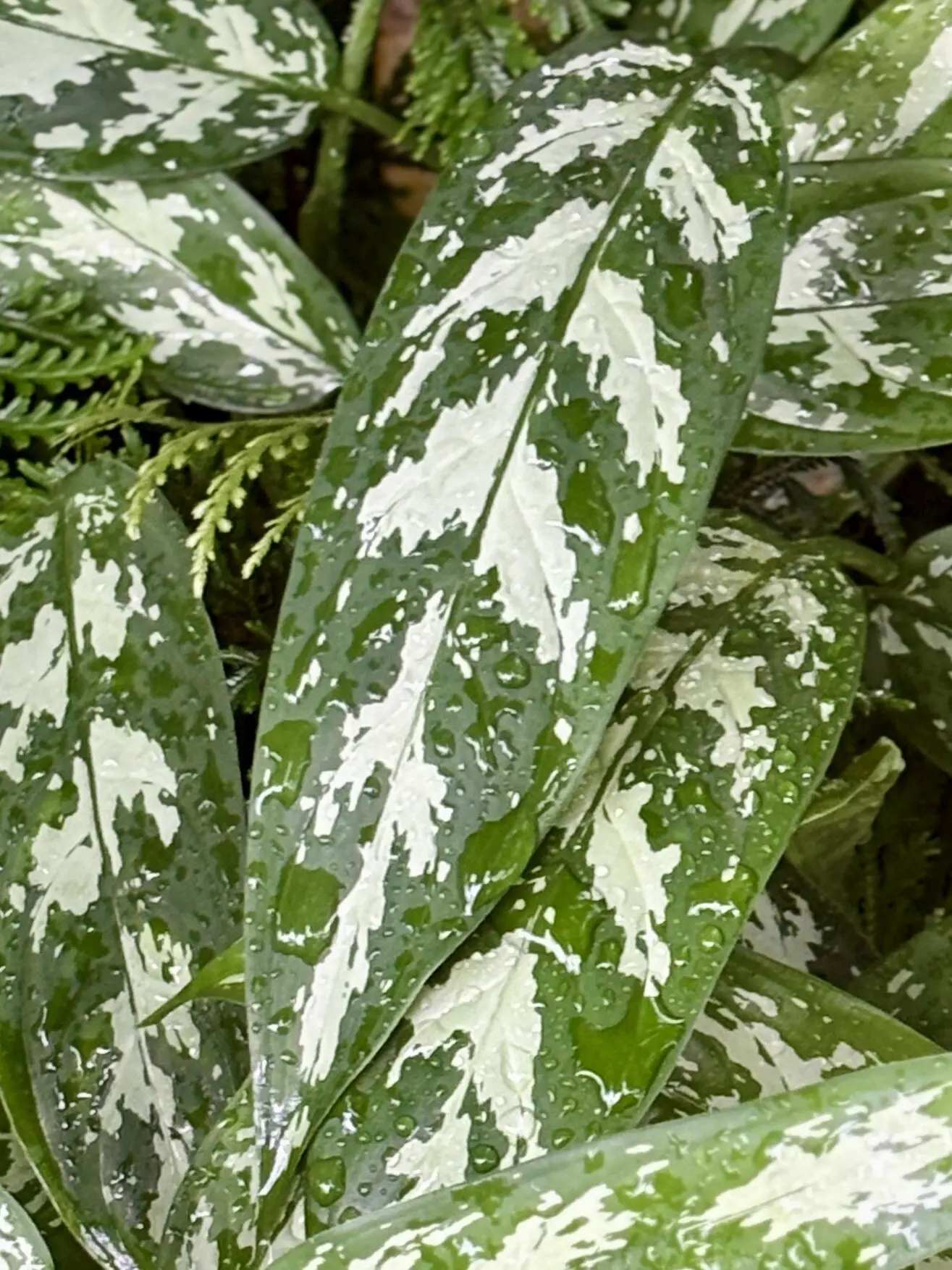
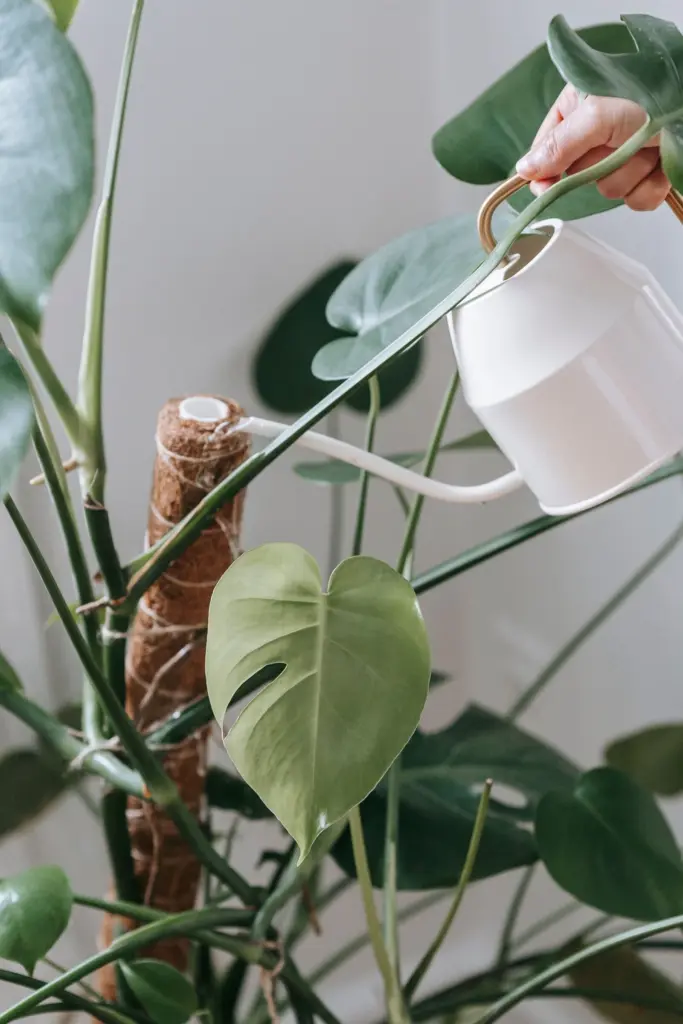
Water when the top inch or two of soil is dry, then water thoroughly until it runs out the drainage holes. Empty the saucer so it isn’t sitting in water. Chinese evergreens would rather be a little dry than too wet. Soggy soil leads to yellow leaves and root rot. In winter, when growth slows, water less often. Go by the soil, not the calendar.
It’s happiest at 65°F to 80°F, and it doesn’t like the cold. Temperatures below 60°F can damage the leaves, leaving dark, water-soaked patches. Keep it away from cold windows, drafts, doors that open in winter, and heating and air conditioning vents. Average household humidity is fine, but a pebble tray or humidifier helps keep the leaf tips from browning when the heat is running in winter.
Use a well-draining potting mix with some perlite or orchid bark mixed in, in a pot with drainage holes. Feed a balanced water-soluble fertilizer at half strength once a month in spring and summer, and skip it in fall and winter.
Wipe the leaves with a damp cloth every few weeks to keep them glossy and dust free. Trim off any yellow or damaged leaves at the base with clean scissors. A few older, lower leaves yellowing and dropping now and then is normal. If the plant gets leggy over time, you can cut a stem back, and new shoots will grow from the base.
Mature plants sometimes bloom with a small, creamy spathe that looks like a tiny peace lily flower. It’s not very showy, and many growers snip it off so the plant puts its energy into leaves.
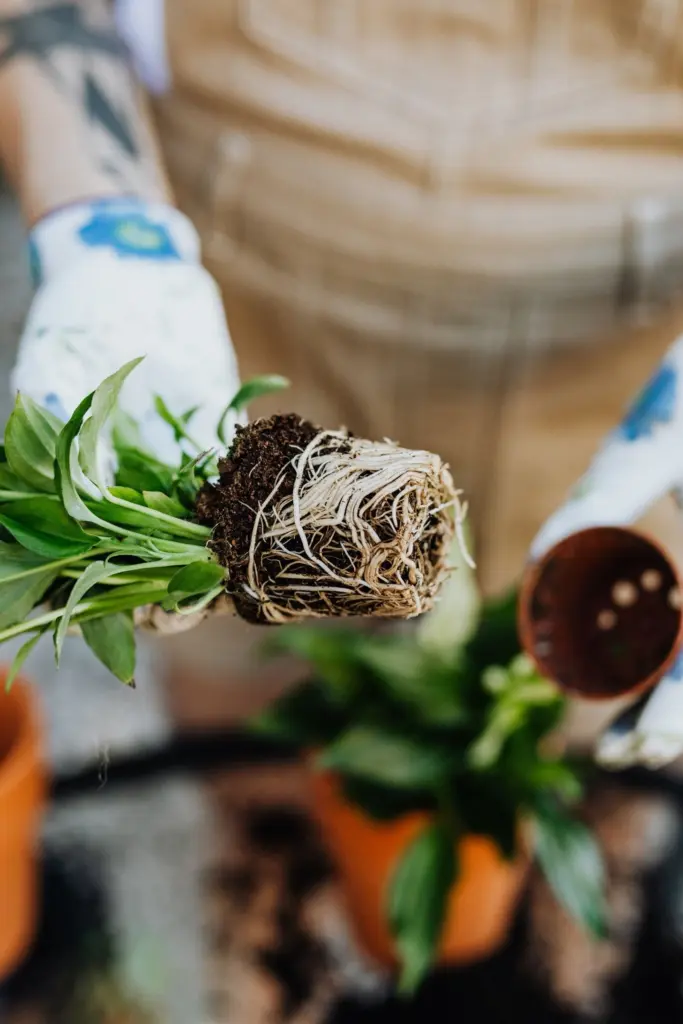
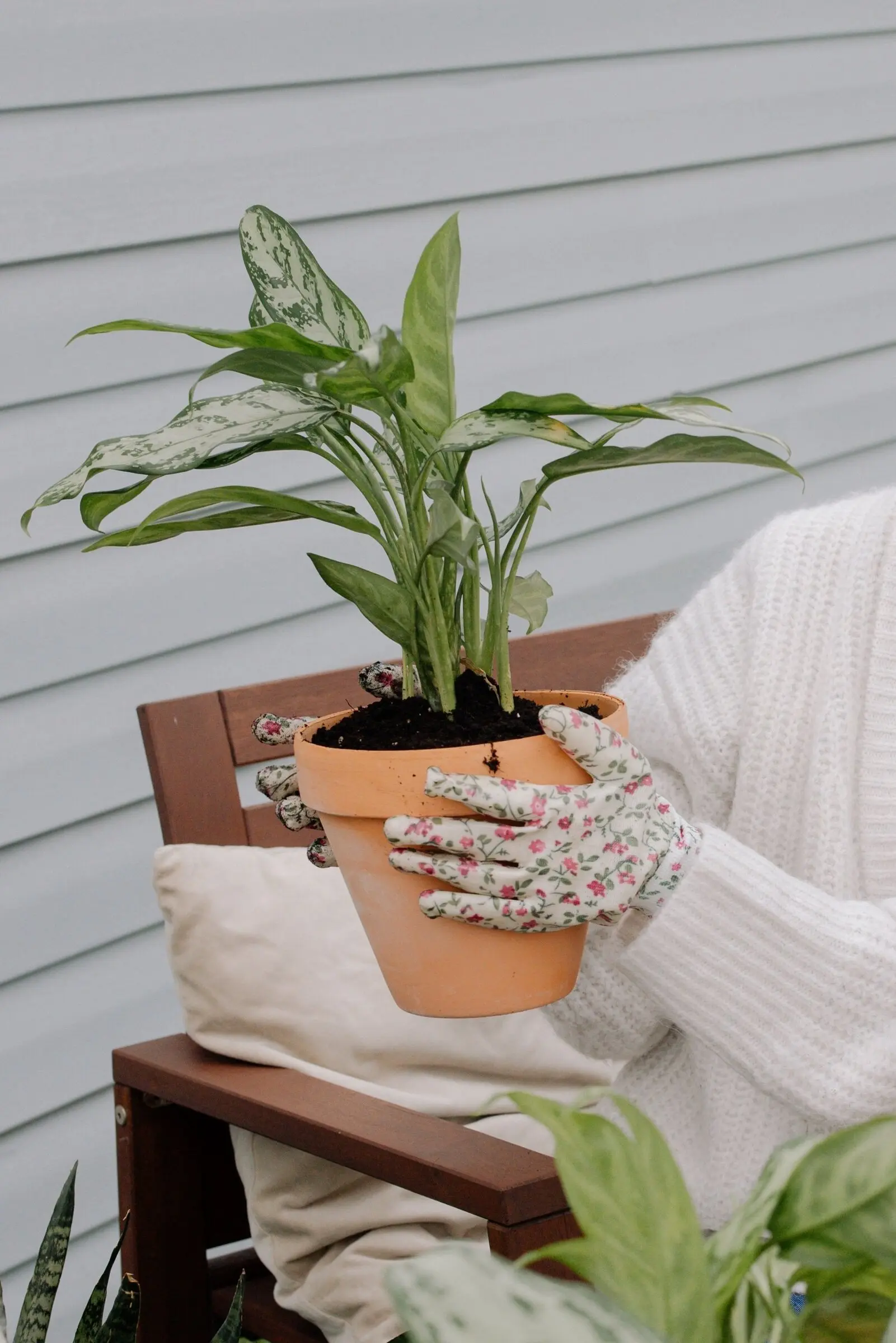
Chinese evergreens don’t mind being a little snug in their pots. Repot every couple of years in spring, going up just one pot size. That’s also the easiest time to propagate. Because they grow in clumps, division is simple. Gently separate the plant at the roots, making sure each section has a few leaves and roots of its own, and pot them up separately. You can also root a stem cutting with a few leaves in water. It takes a few weeks, so be patient.
Popular types of Chinese evergreen
There are dozens of Chinese evergreen varieties, and many are sold without a name on the tag, so don’t worry if you aren’t sure which one you have. Care is the same for all of them. A few you’re likely to see:
- ‘Silver Bay’: Leaves with a broad silvery center and a solid green edge. It grows into a big, full plant.
- ‘Maria’ (sometimes sold as ‘Emerald Beauty’): Dark green leaves with soft silver-gray markings. One of the best for low light.
- ‘Silver Queen’: Narrow leaves that are mostly silver, with small green flecks.
- White-splashed types: Green leaves splashed or feathered in bright white, like the ones in my photos.
- Red and pink types, like ‘Siam Aurora’: Green leaves edged and veined in pink or red. These need a little more light to keep their color. See my Red Aglaonema article for more.
Most problems come back to water, light, or cold:
- Yellow leaves, especially lower ones, usually mean too much water.
- Brown, crispy tips or edges usually mean dry air or uneven watering.
- Faded markings or greener new leaves mean it needs more light.
- Dark, mushy patches on the leaves often mean cold damage from a draft or chilly window.
- Watch for mealybugs (white cottony bits), spider mites (fine webbing under the leaves), and scale (small brown bumps). Neem oil or insecticidal soap takes care of all three.
Chinese evergreens are toxic to cats, dogs, and people if chewed. They contain calcium oxalate crystals, which irritate the mouth and can cause drooling and vomiting. The sap can also irritate skin, so wear gloves when dividing or trimming.
Tough, tidy, and beautiful in low light. I’d put it in the beginner-friendly category. It’s one of the best plants for a spot that doesn’t get much sun.
| Common Name | Chinese Evergreen, Aglaonema |
|---|---|
| Botanical Name | Aglaonema spp. |
| Family | Araceae |
| Mature Size | 1-3 ft. tall and wide indoors |
| Sun | Low to bright, Indirect |
| Soil | Well-drained, Slightly acidic |
| Flower Color | Creamy white |
| Native Area | Southeast Asia |
| Toxicity | Toxic to humans and pets |