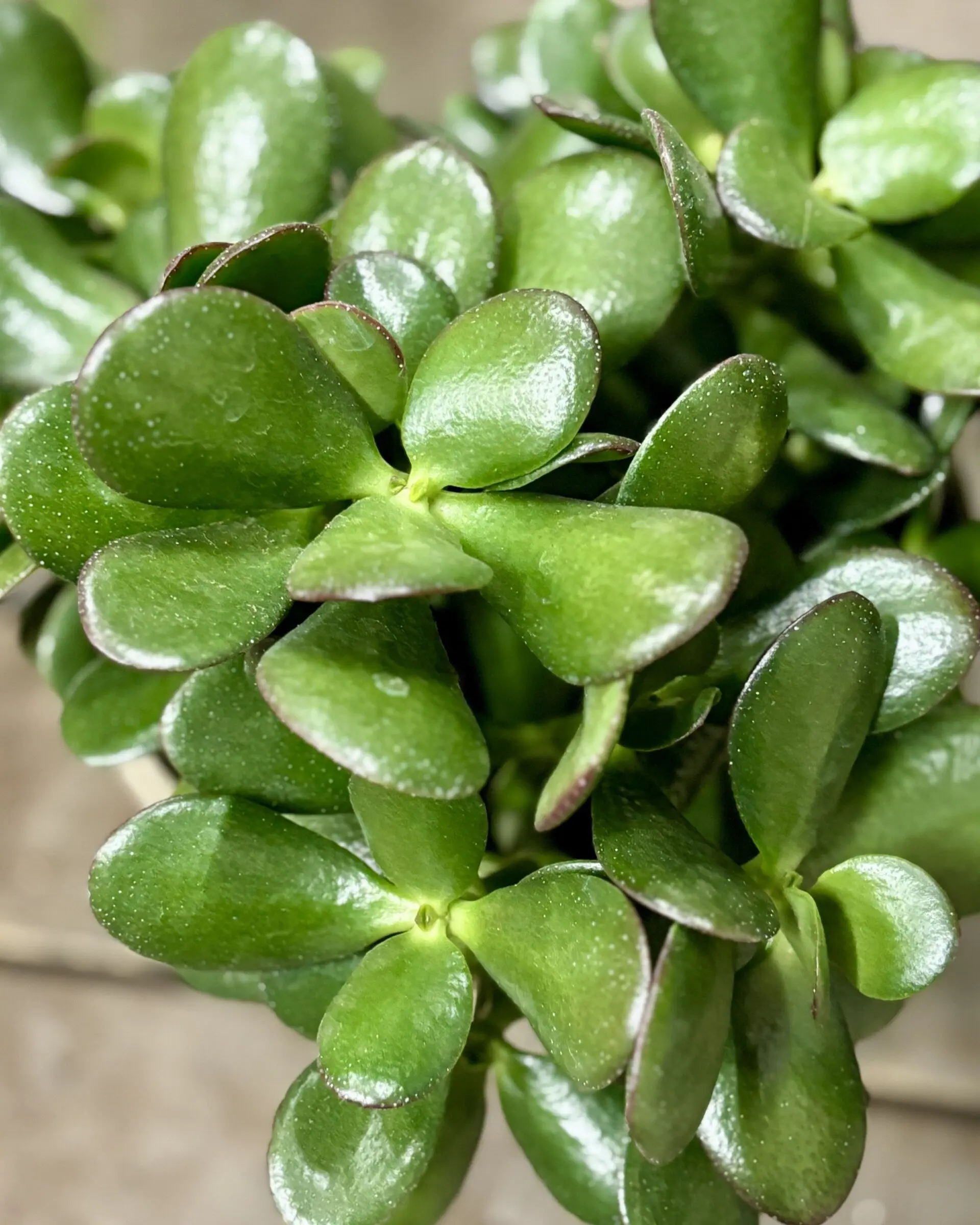
Jade Plant, also known as Crassula ovata, Money Plant, or Friendship Tree, is a classic succulent that can live for decades. Its thick, glossy, oval leaves grow on sturdy stems that slowly turn woody and brown, so over time a jade plant starts to look like a little tree. Many people pass them down through families or grow them as bonsai. Jade is in the Crassulaceae family, the same family as kalanchoe, and it’s native to South Africa and Mozambique. It’s hardy only in zones 10-11, so for most of us it’s a houseplant, or a summer patio plant that comes inside before temps drop below 50°F.
It’s often called a money plant or lucky plant, and it’s a popular housewarming gift for that reason. There are several varieties, including ‘Gollum’ and ‘Hobbit,’ with tube-shaped leaves, ‘Hummel’s Sunset,’ with gold and red leaves, and compact, small-leaved types.
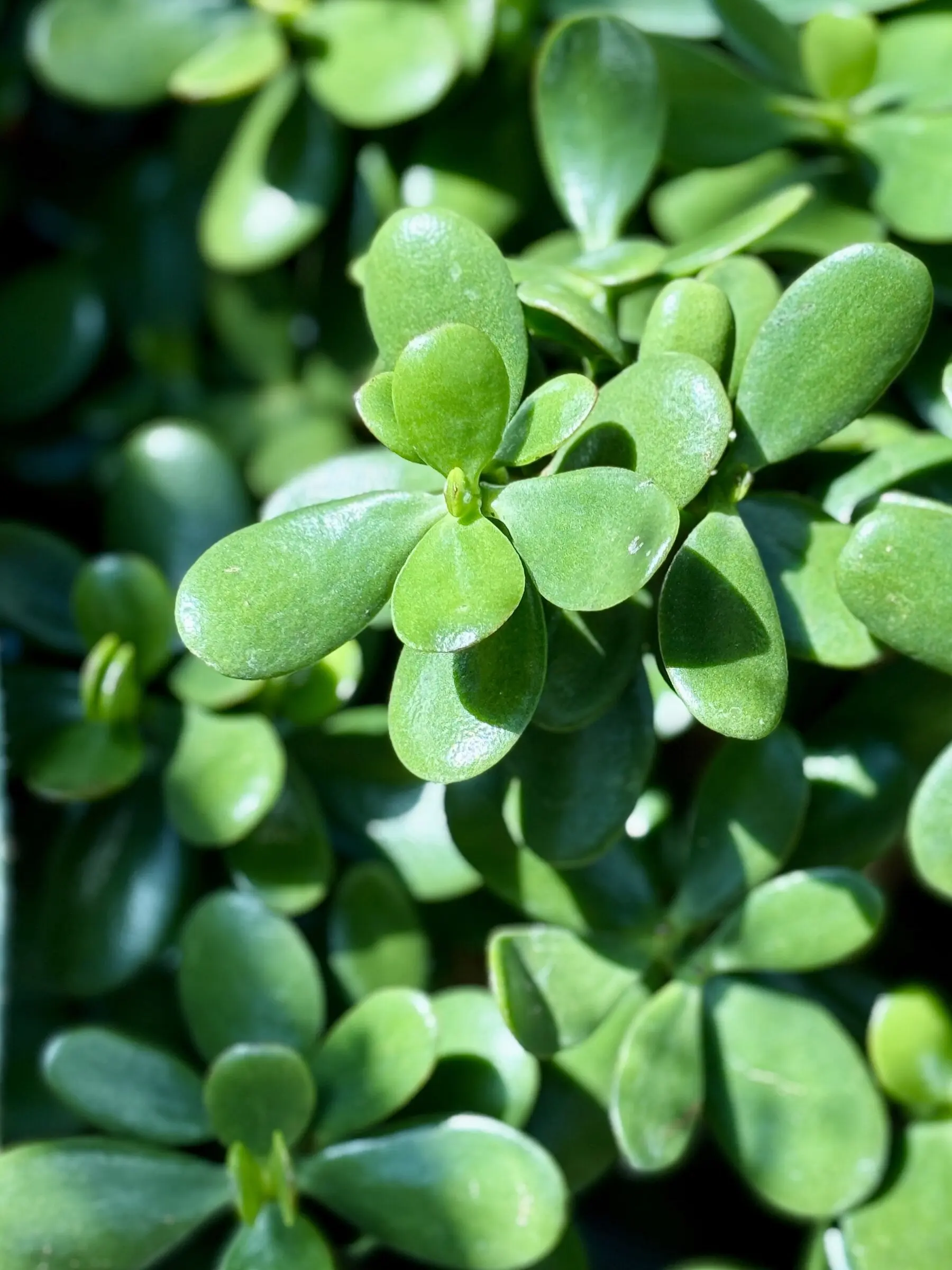
Light is the most important thing for a happy jade. It wants bright light, including at least four hours of direct sun a day. A south- or west-facing window is ideal. Jade can handle more sun than most houseplants, and the leaf edges often blush red when it gets plenty of light. That’s a good sign. In too little light, the stems stretch out, the leaves get small and spaced apart, and the plant can start to lean or flop. If you move it outside for the summer, ease it into full sun over a week or two so the leaves don’t scorch.
Jade stores water in its thick leaves, stems, and roots, so it’s very forgiving if you forget to water. Overwatering is the real danger. Let the soil dry out completely between waterings, then water thoroughly until it runs out the drainage holes. Empty the saucer so it isn’t sitting in water. In spring and summer, that may mean every two to three weeks. In winter, when growth slows, water much less, maybe once a month. Wrinkled or shriveled leaves mean it’s thirsty. Soft, mushy, or yellow leaves mean it’s getting too much water.
It’s happiest at 65°F to 75°F during the day. In winter, it likes cooler nights, around 50°F to 55°F, which also helps it bloom. Keep it away from frost and cold drafts. Average household humidity is fine, since dry air suits a succulent.
Use a fast-draining cactus and succulent mix, or regular potting soil with plenty of perlite or pumice mixed in. A pot with drainage holes is a must. A heavy clay or ceramic pot is a good choice, because it helps the soil dry out and keeps a top-heavy jade from tipping over. Feed it a balanced water-soluble fertilizer at a quarter to half strength a few times during spring and summer, and skip it in fall and winter.
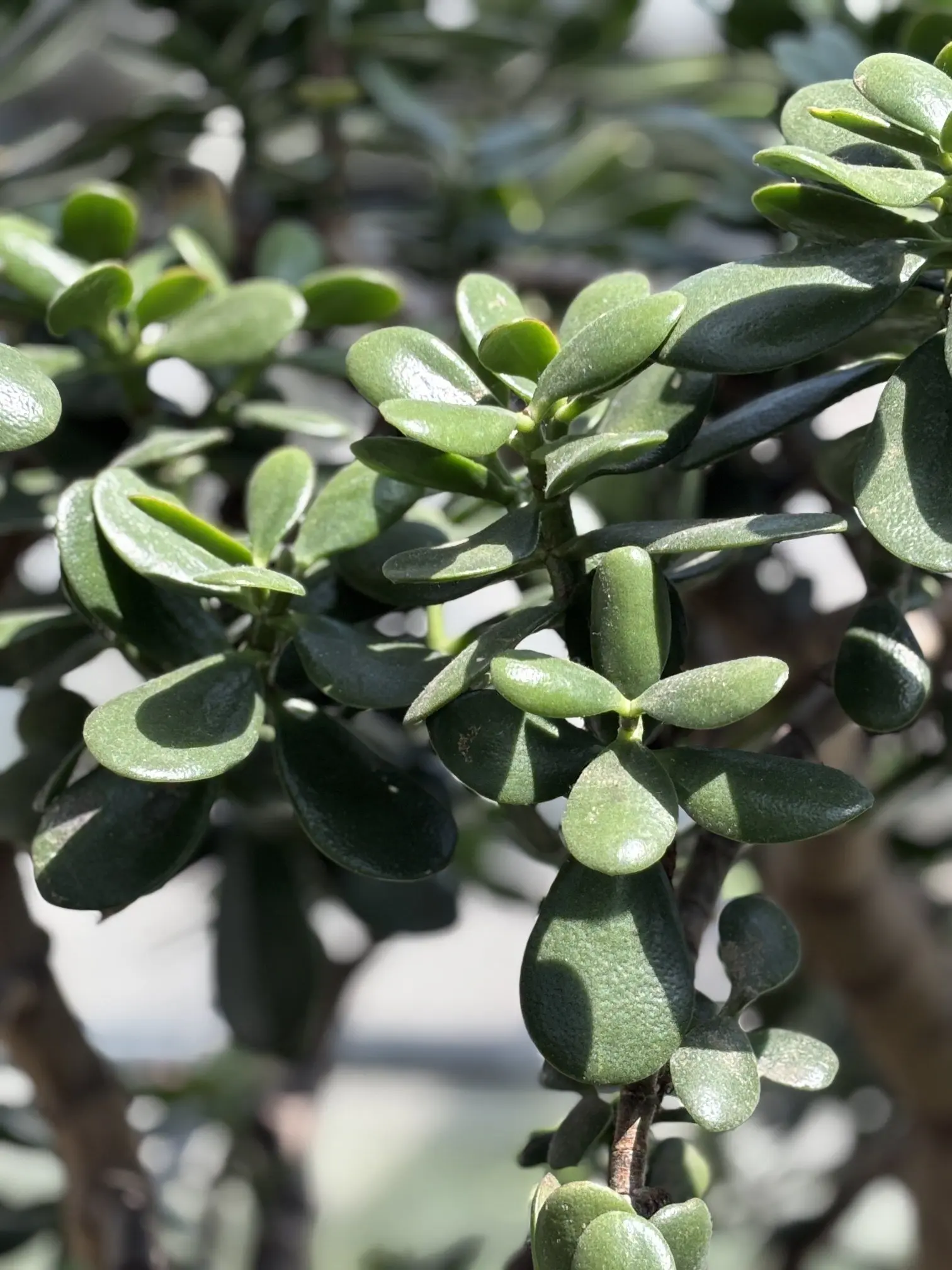
Jade plants can bloom indoors, which surprises a lot of people. Mature plants produce clusters of small, star-shaped white or pale pink flowers in late fall and winter. The trick is giving them what they get in nature: cool nights, short days, and less water in the fall. Plants that stay warm and well watered all year usually won’t bloom. Be patient, since young plants may take several years to flower.
Prune in spring or summer to shape the plant and keep it full. Cut just above a leaf pair, and new branches will grow from just below the cut. Pruning also helps keep a heavy, top-heavy plant from tipping over. Wipe the leaves with a soft, damp cloth now and then to keep them glossy and dust free.
Jade is one of the easiest plants to propagate. Take a stem cutting 3-4 inches long, or gently twist off a healthy leaf. Let it dry and callus for a few days to a week, then set it on or in dry, fast-draining mix. Wait about a week before watering lightly, and keep it in bright, indirect light. Roots usually form in a few weeks, and a leaf will sprout a tiny new plant at its base. Your pruned pieces make perfect cuttings to share with friends.
Repot every two to three years in spring, or when the plant becomes top-heavy or root-bound. Jade likes to be a little snug, so go up just one pot size. Let the soil dry before repotting, and wait a week before watering afterward so any damaged roots can heal.
Common problems:
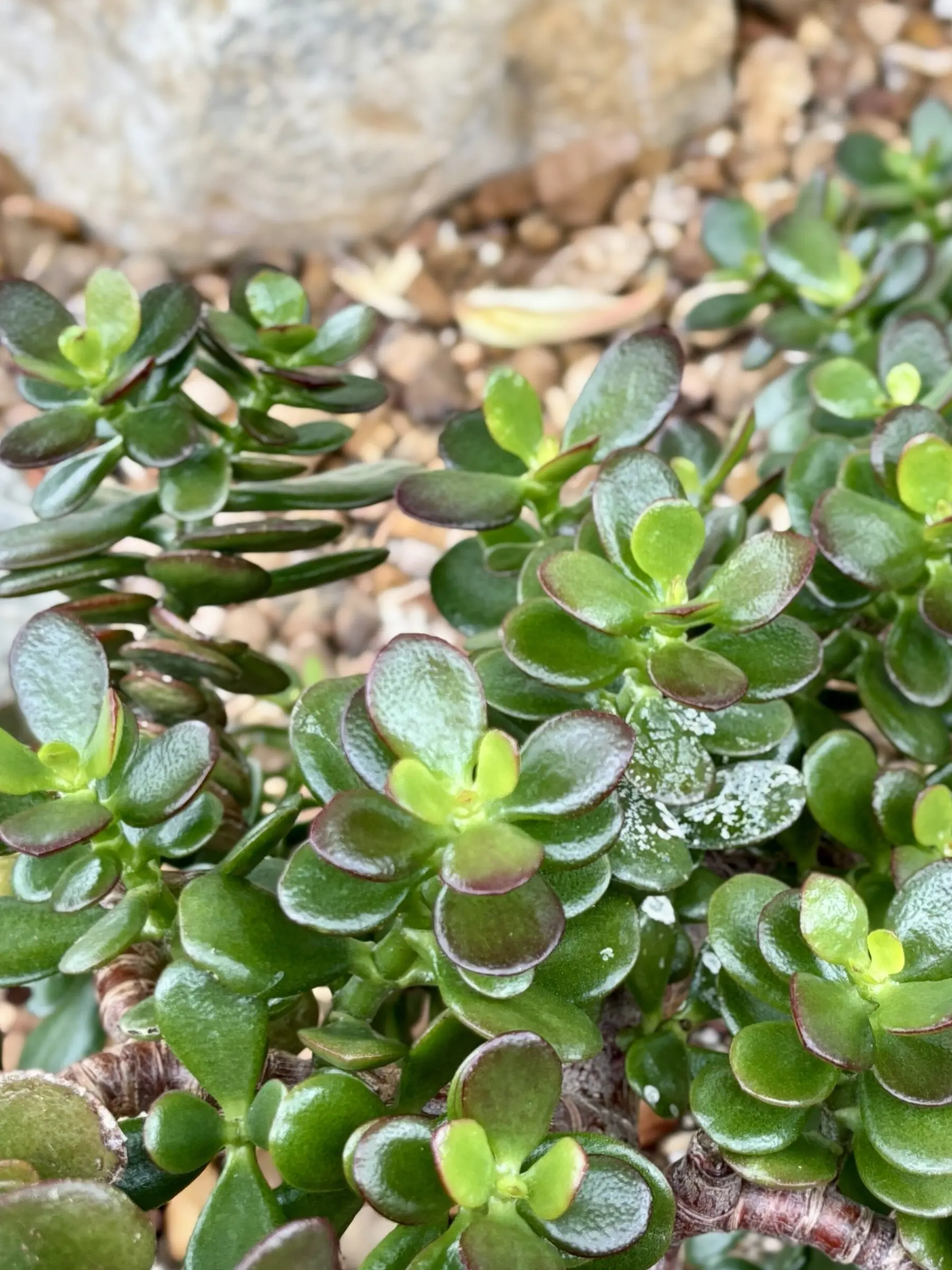
- Mealybugs are the most common jade plant pest. They look like little bits of white cotton, tucked between leaves and along the stems, like in the photo. Dab each one with a cotton swab dipped in rubbing alcohol, and check the plant again every few days. Jade leaves can be sensitive to oil sprays and some soaps, so test any spray on a few leaves first.
- Soft, mushy stems or yellow leaves mean too much water or root rot. Let the soil dry out, and cut away any rotted parts.
- Wrinkled or shriveled leaves mean it’s thirsty.
- Long, stretched stems and small, spaced-out leaves mean it needs more light.
- Leaf drop can come from overwatering, underwatering, or a sudden cold draft.
- Brown or tan patches can be sunburn from a sudden move into strong sun.
Jade plants are toxic to cats and dogs if chewed, and can cause vomiting and lethargy. They’re considered only mildly toxic to people. Keep it out of reach of curious pets.
Tough, long-lived, and easy to share. I’d put it in the beginner-friendly category. Give it lots of sun, go easy on the water, and it may outlive all of us.
| Common Name | Jade Plant, Money Plant, Friendship Tree |
|---|---|
| Botanical Name | Crassula ovata |
| Family | Crassulaceae |
| Mature Size | 2-5 ft. tall indoors |
| Sun | Bright light with some direct sun |
| Soil | Sandy, fast-draining (cactus mix) |
| Flower Color | White to pale pink |
| Native Area | South Africa and Mozambique |
| Toxicity | Toxic to pets; mildly toxic to humans |