
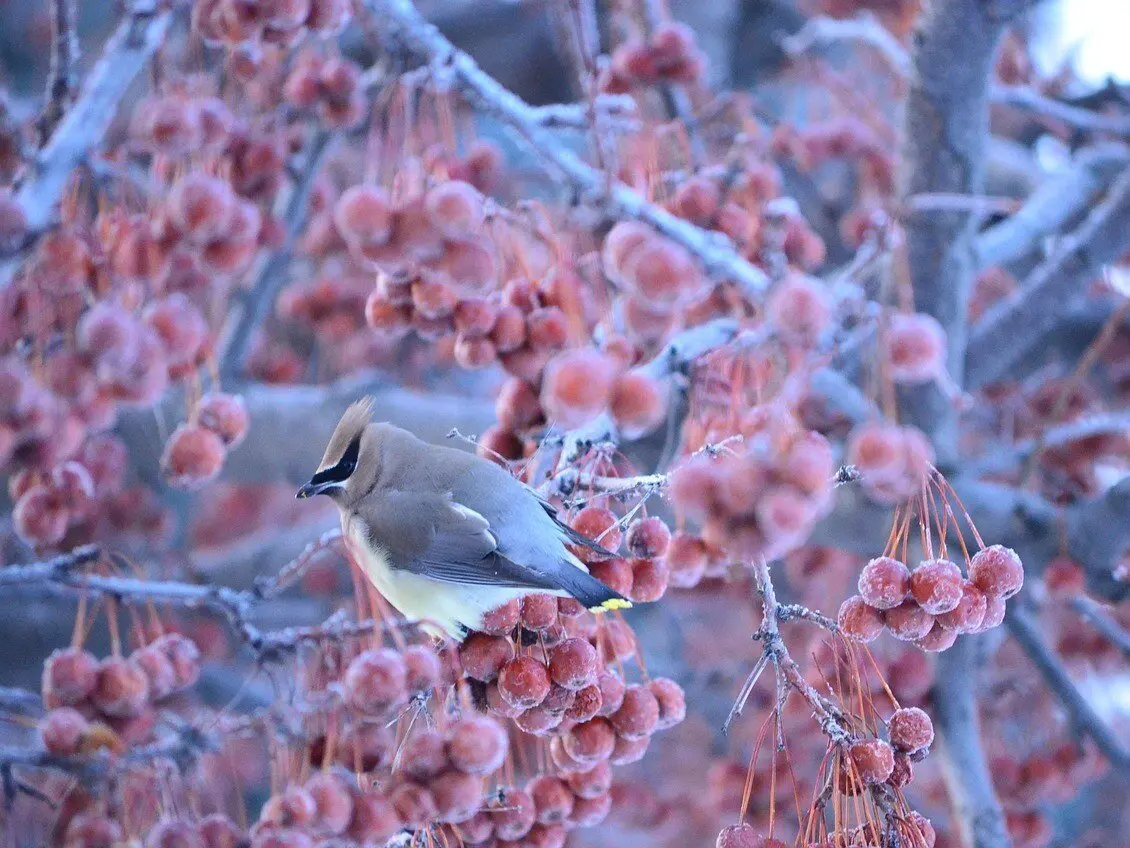
Winter can feel barren and gray. That makes fall the perfect time to plant for color and interest.
The shrubs, trees, bulbs and grasses on this list put red berries against fresh snow, bark that peels in cinnamon curls and flowers that open in freezing weather, and many of them feed the birds that stay through the cold months. An hour or two of digging now pays off when the rest of the garden has gone quiet. Here are 20 favorites, grouped by what they add.
Before you buy, check your USDA Plant Hardiness Zone against the zones listed below.
Berries that feed birds and brighten snow
1. Winterberry (Ilex verticillata)
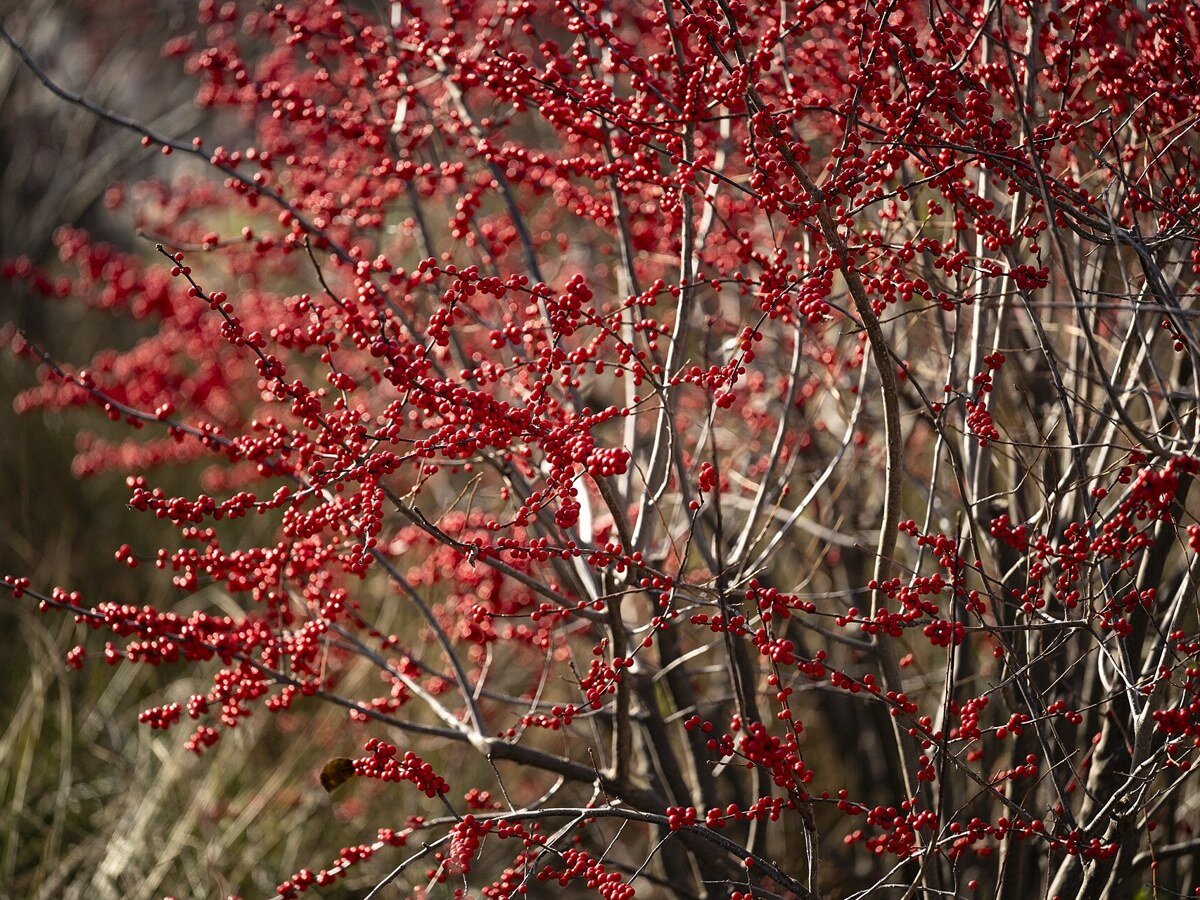
This native holly drops its leaves in fall and leaves its branches loaded with bright red berries that glow against snow. It grows 6 to 10 feet tall and wide in Zones 3 to 9 and does best in moist, acidic soil. Robins, cedar waxwings and eastern bluebirds all eat the berries, according to University of Maryland Extension. Only female plants bear fruit, and the extension service advises planting at least one male within 50 feet of up to 10 females. Ask the nursery for a male that blooms at the same time, such as ‘Jim Dandy’ with the female ‘Red Sprite’.
2. Crabapple (Malus)
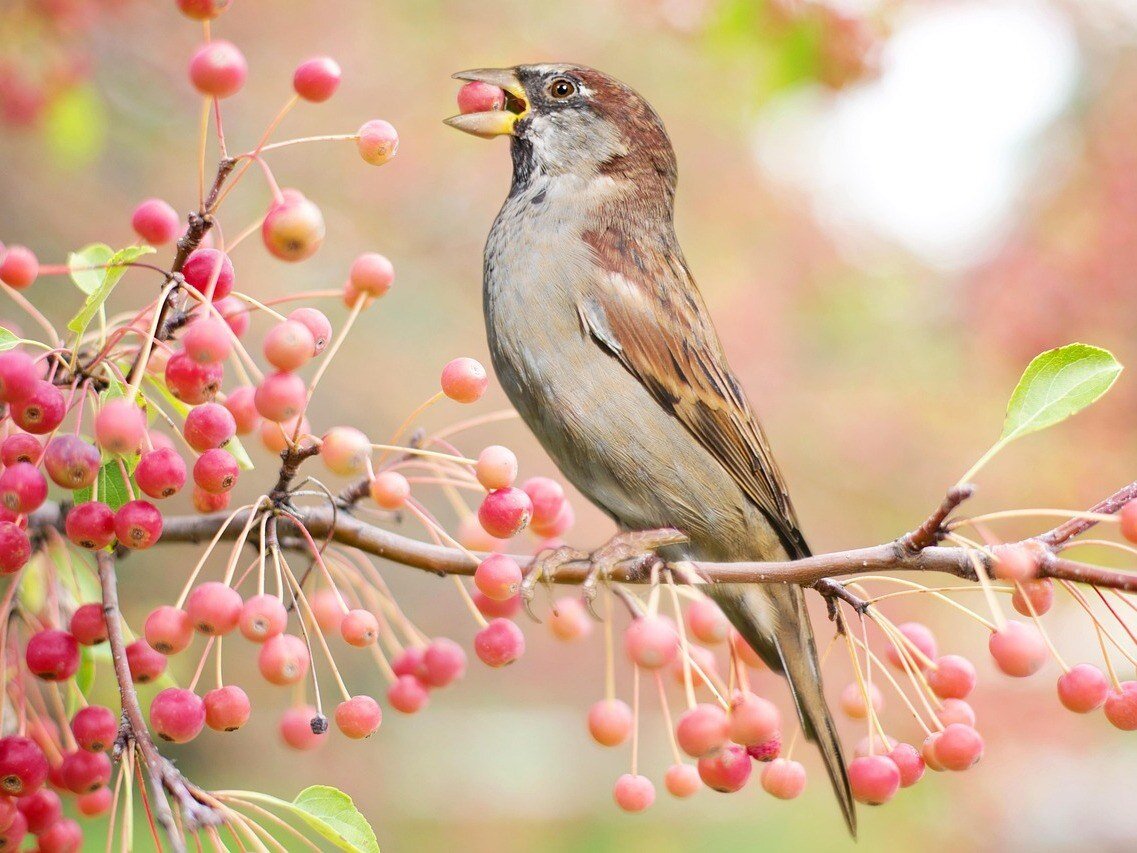
Spring blossoms get the credit, but a crabapple earns its keep in winter. Pick a variety with small fruit that clings to the branches after the leaves drop, and cedar waxwings and robins will come for it. Crabapples are hardy in Zones 3 to 9, depending on the variety. The fruit softens after repeated freezing and thawing, so birds often wait until late winter to eat it. An Iowa State University Extension horticulturist cautions that birds tend to skip a few varieties, including ‘Adams’, ‘Donald Wyman’ and ‘Red Jewel’. Choose one with resistance to apple scab, cedar-apple rust and fire blight so the tree stays healthy.
3. American cranberrybush viburnum (Viburnum opulus var. americanum)
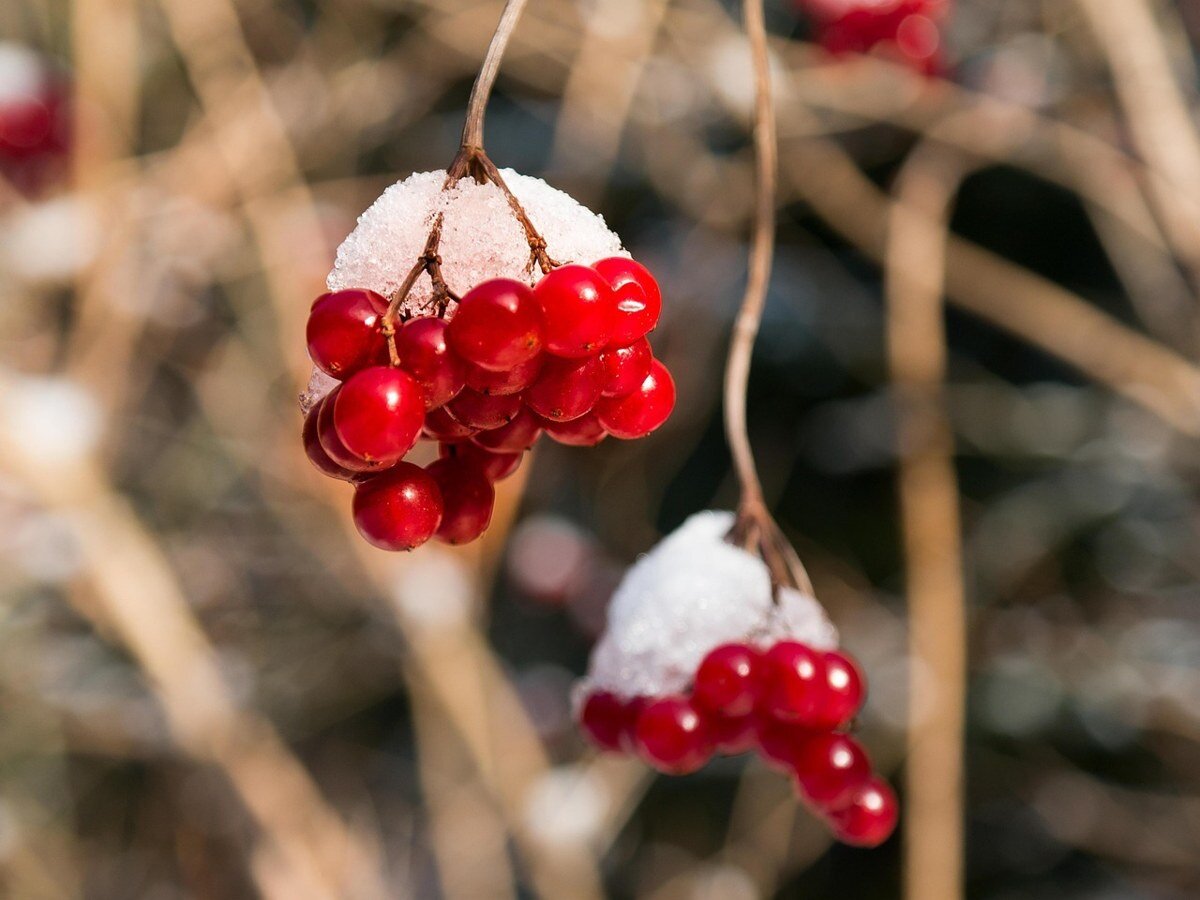
This tough native shrub grows 8 to 12 feet tall and wide, with white flowers in spring, red leaves in fall and clusters of bright red fruit that hang on all winter. Birds ignore the fruit at first, then turn to it in late winter once it mellows. The University of Connecticut Home & Garden Education Center notes that viburnum fruit holds well into winter and draws many birds. It is hardy in Zones 2 to 8, so it suits cold yards where many shrubs struggle. If viburnum leaf beetles trouble your area, plant arrowwood viburnum (Viburnum dentatum) instead.
4. American holly (Ilex opaca)
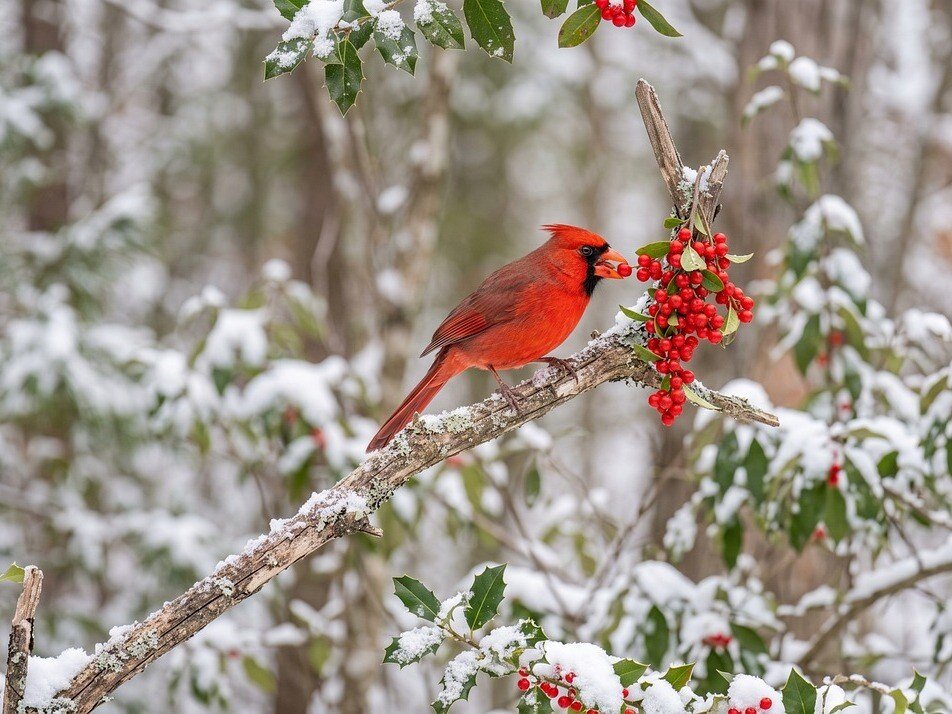
Glossy, spiny evergreen leaves and red berries make this the classic holly of holiday wreaths. Female trees ripen their berries in October and hold them through winter, and birds such as mockingbirds eat them, especially after a frost softens them. Trees grow slowly to 40 to 60 feet tall and are hardy in Zones 5 to 9, according to NC State Extension, so they suit larger yards. Plant at least one male nearby for berries, and shelter the tree from cold winter wind and winter sun.
Bark and stems that stand out
5. Redtwig dogwood (Cornus sericea)
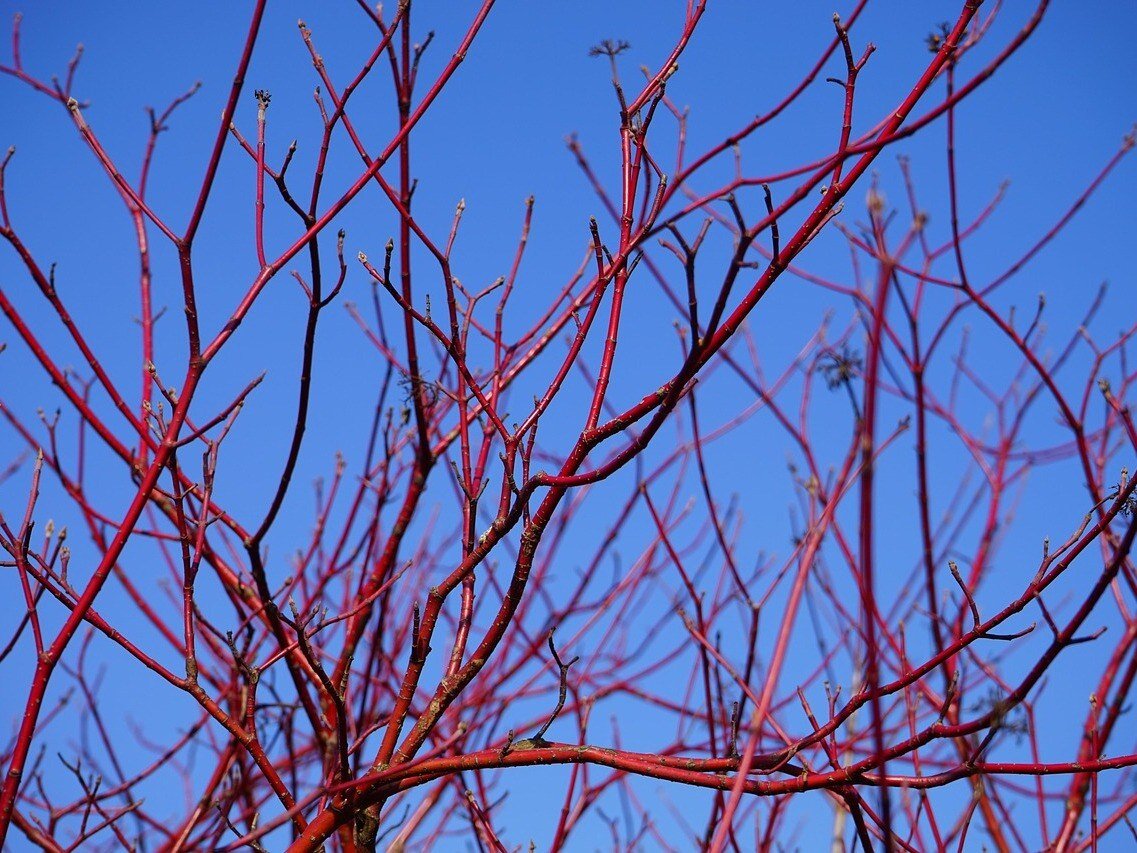
Bare stems turn a vivid red in winter, which makes this shrub one of the easiest ways to put strong color in a snowy yard. It is hardy in Zones 2 to 7. Yellow-twig types such as ‘Flaviramea’ give the same show in gold, and the two look striking planted together. The Chicago Botanic Garden notes that stems darken as they age, so remove about a third of the oldest, largest ones in late winter before growth begins. That encourages new stems and vibrant color. Fall is a good time to plant it.
6. Paperbark maple (Acer griseum)
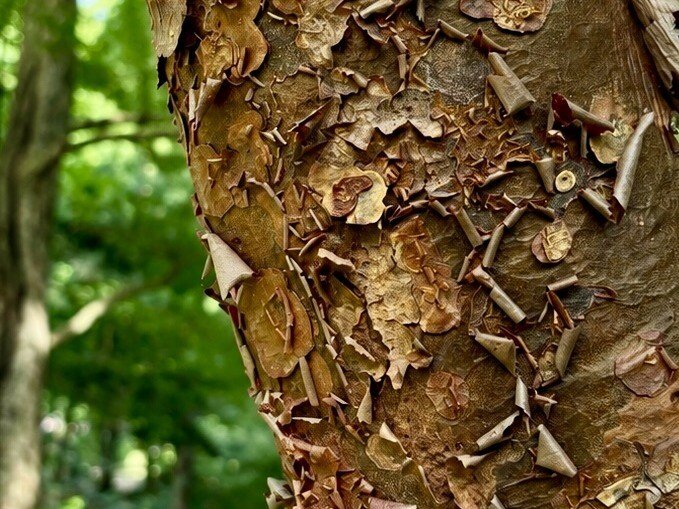
Thin curls of cinnamon-colored bark peel from the trunk and branches of this small tree, and the show peaks once the leaves fall. It grows slowly to 20 to 30 feet tall, Cornell University notes. It is hardy in Zones 4 to 8, so it fits near a patio or entry where you can see the bark up close. Leaves turn red to orange in fall. Pair it with dark evergreens, which make the bark look richer.
7. River birch (Betula nigra)
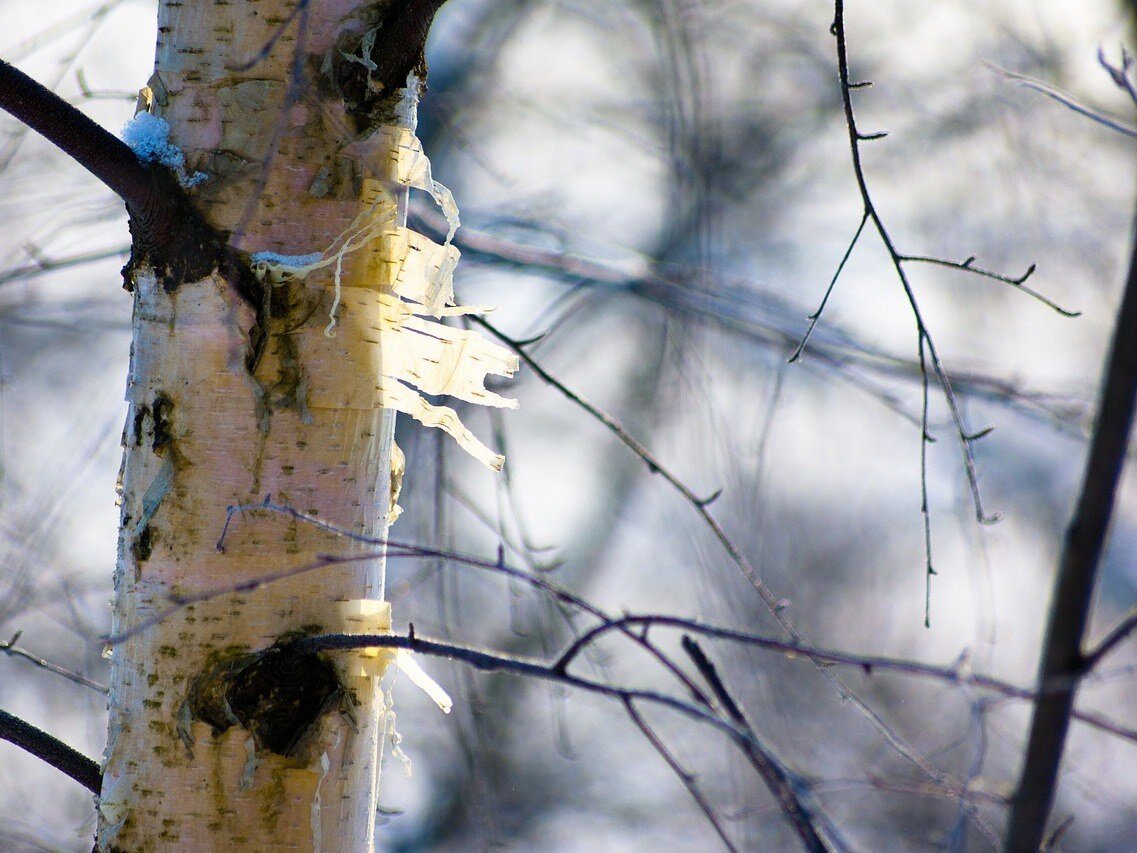
Salmon-pink to reddish-brown bark peels in papery curls, and the tree usually grows with several trunks. It thrives in moist soil and is hardy in Zones 4 to 9. Trees can reach 40 to 70 feet, so give a standard river birch plenty of room or choose a compact selection such as ‘Fox Valley’, which stays 10 to 12 feet tall. River birch also resists bronze birch borer, University of Minnesota Extension notes, a destructive pest on many other birches.
8. Harry Lauder’s walking stick (Corylus avellana ‘Contorta’)
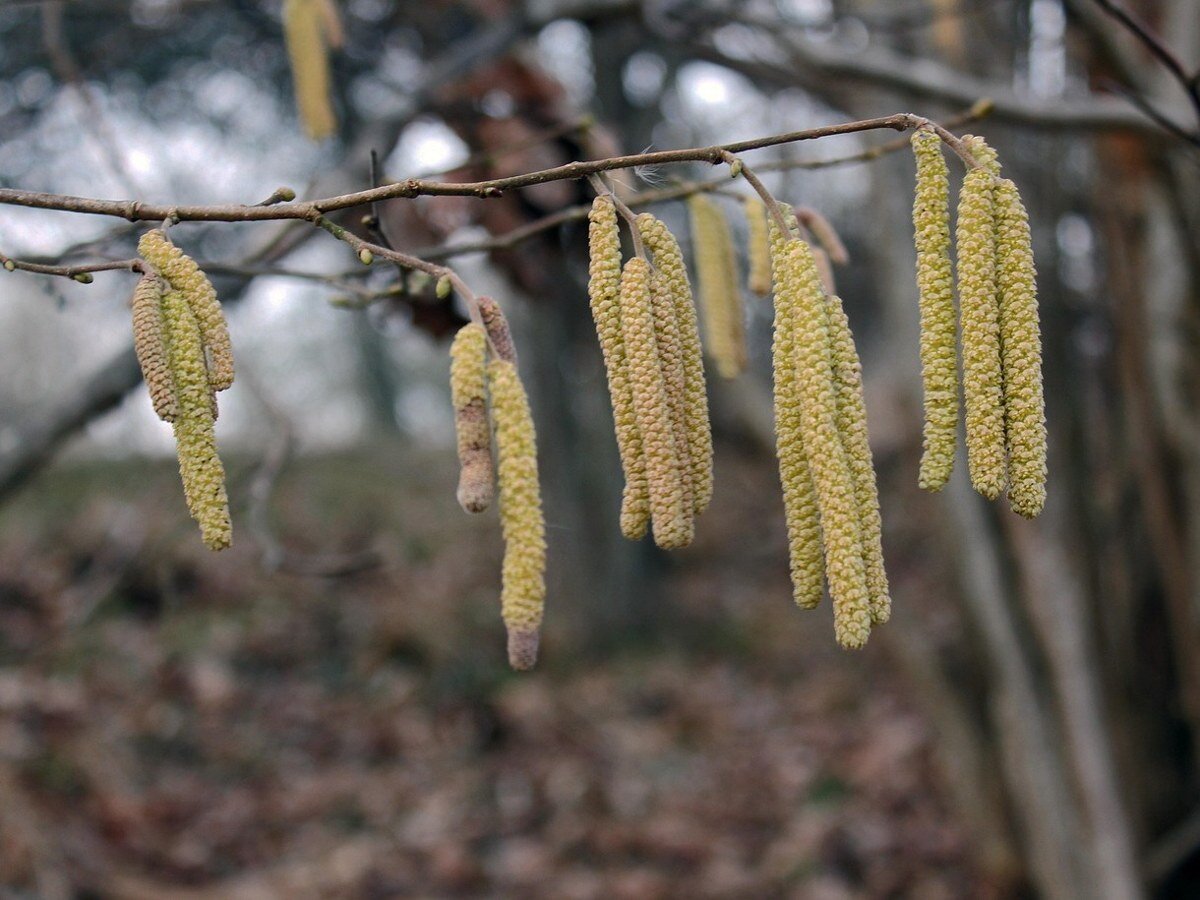
Twisted, corkscrew branches turn this shrub into living sculpture once the leaves drop, and yellow catkins dangle from the bare stems in late winter. It grows 8 to 10 feet tall in Zones 3 to 9. Nurseries typically graft it onto a straight-stemmed rootstock, so snip off any straight suckers that sprout from the base. Cut a few branches for a vase, where the curves look striking indoors.
Flowers that bloom in the cold
9. Witch hazel (Hamamelis)
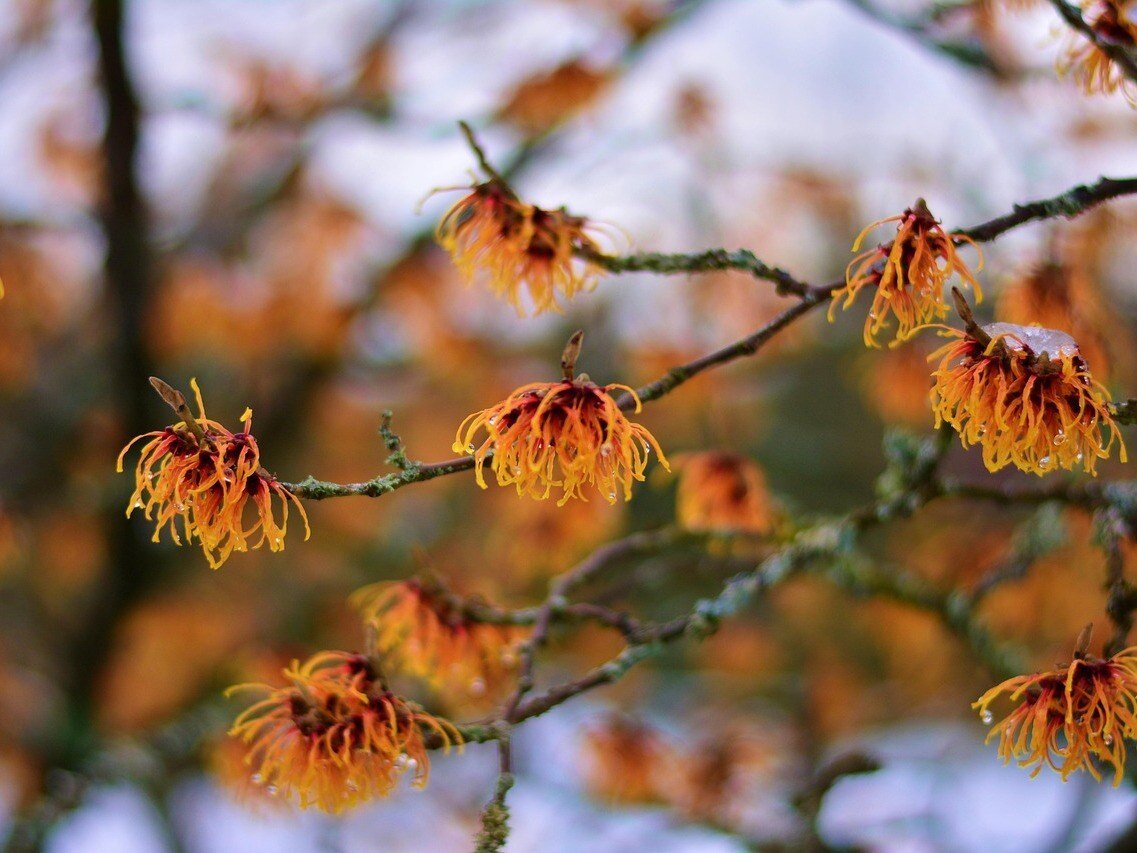
Spidery, ribbon-petaled flowers open when most plants have quit. Common witch hazel (Hamamelis virginiana) blooms yellow from mid-October to early December and is hardy in Zones 3 to 8, while vernal witch hazel and the hybrids bloom from early February to late March, according to Iowa State University Extension. The flowers carry a spicy scent, so plant one by a walkway or door you use in winter. Common witch hazel grows into a shrub about 20 feet tall and wide, so choose a vernal witch hazel or hybrid if space is tight, and give any witch hazel sun or part shade and a little patience, because it grows slowly.
10. Hellebores (Helleborus)
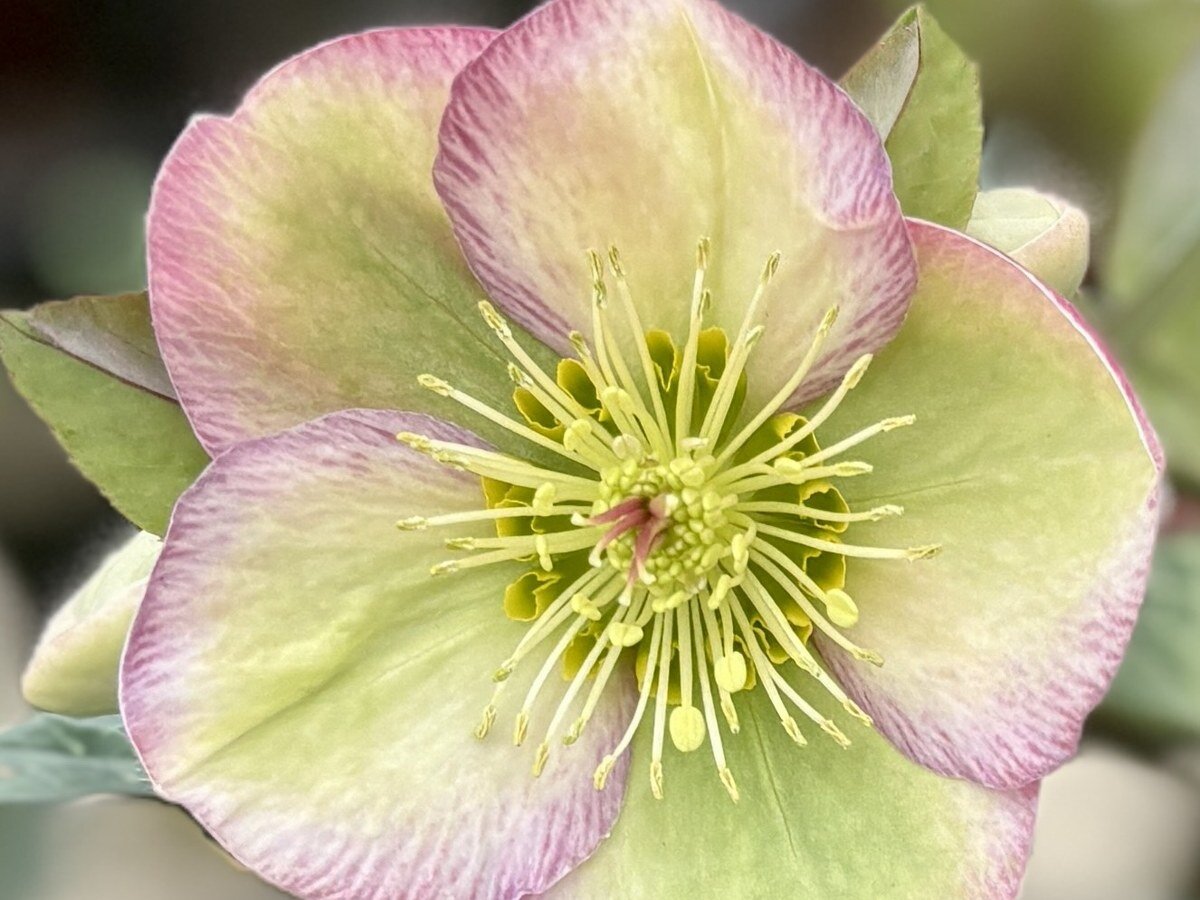
Often called Christmas rose or Lenten rose, hellebores hold leathery evergreen leaves and nodding flowers in white, green, yellow, pink, plum and nearly black. Christmas rose can start blooming in late November, though it usually waits until after Christmas, and most hybrids bloom from late winter into early spring for one to three months. These shade-loving perennials grow 12 to 24 inches tall and wide in Zones 4 to 9, and University of Vermont Extension calls them deer and rabbit resistant. Plant them where you can see them from indoors, give them a few years to settle in and remember that every part is toxic if eaten.
11. Snowdrops (Galanthus nivalis)
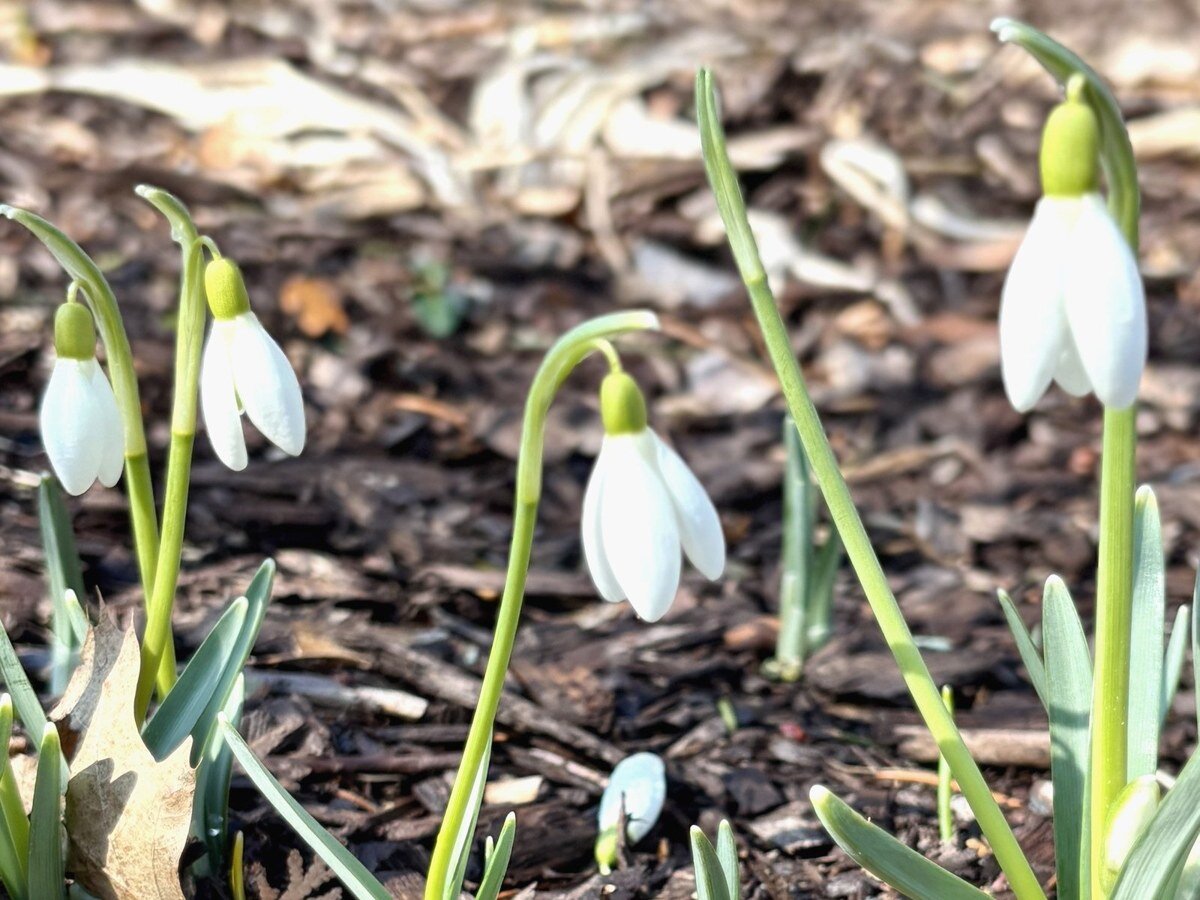
These dainty bulbs push up white, bell-shaped flowers from January through March, sometimes right through the snow. They stand only 4 to 10 inches tall, thrive in Zones 3 to 8 and look best naturalized under deciduous trees, where they catch winter sun before the canopy leafs out. Plant the bulbs 2 to 3 inches deep this fall and leave them alone, because clumps grow thicker over time. Deer ignore them, but they are poisonous if eaten.
12. Winter aconite (Eranthis hyemalis)
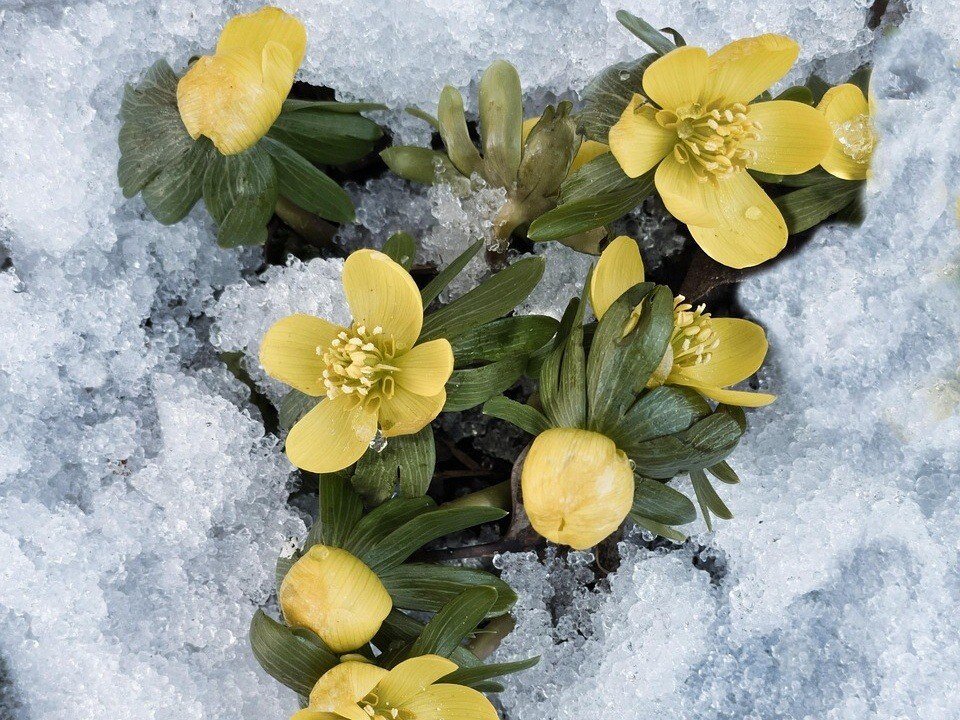
Bright yellow, buttercup-like flowers on stalks just 3 to 4 inches tall open in February and March, often ahead of the snowdrops. The plants are hardy in Zones 3 to 7. Ohio State University Extension recommends planting the tubers 2 to 3 inches deep and about 3 inches apart in late summer or early fall, so get them in the ground soon. Winter aconite grows well under black walnuts, and deer don’t care for it. Like snowdrops, it is toxic if eaten.
Evergreens and foliage that hold color
13. Colorado blue spruce (Picea pungens)
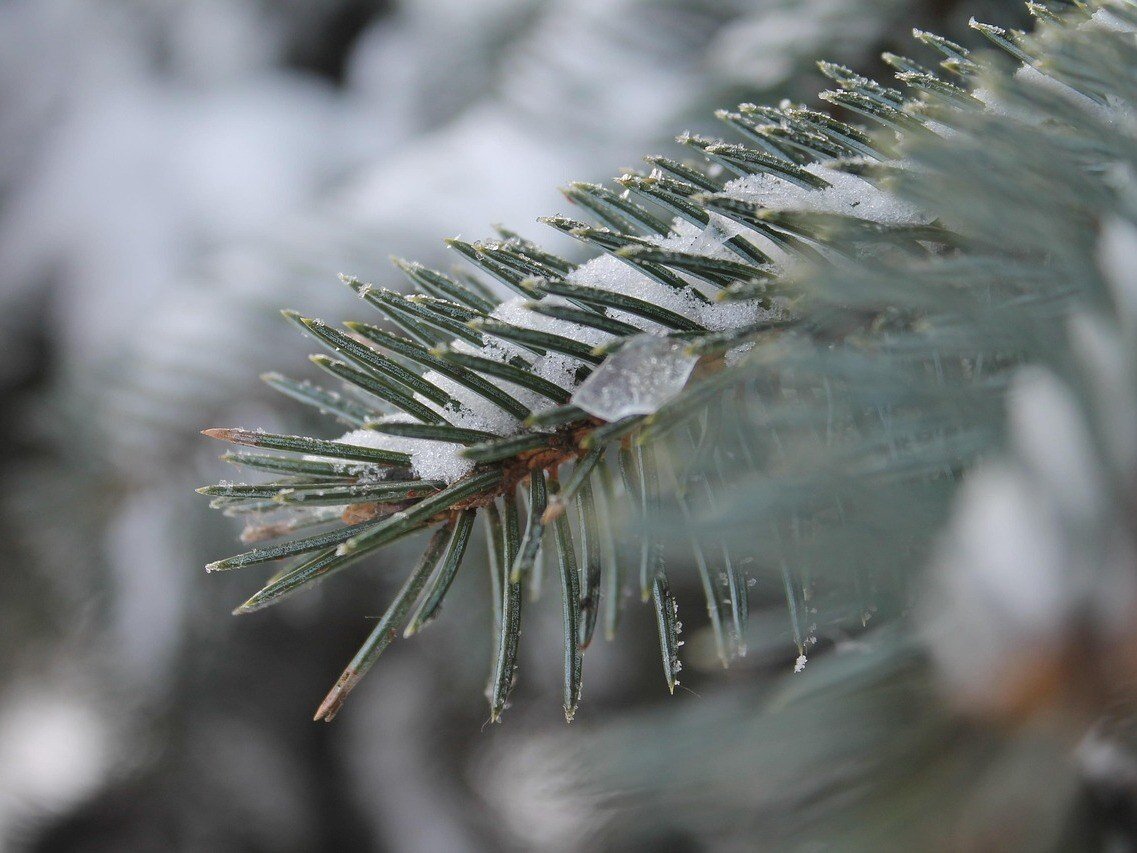
Stiff blue-gray needles and a neat pyramid shape make blue spruce a standout against snow, and the dense branches shelter birds and other wildlife in winter. Full-size trees grow 30 to 60 feet tall, so most home yards do better with a compact selection such as ‘Baby Blue Eyes’ at 15 to 20 feet. Blue spruce is hardy in Zones 3 to 7. Give it full sun and good drainage.
14. Oregon grape holly (Mahonia aquifolium)
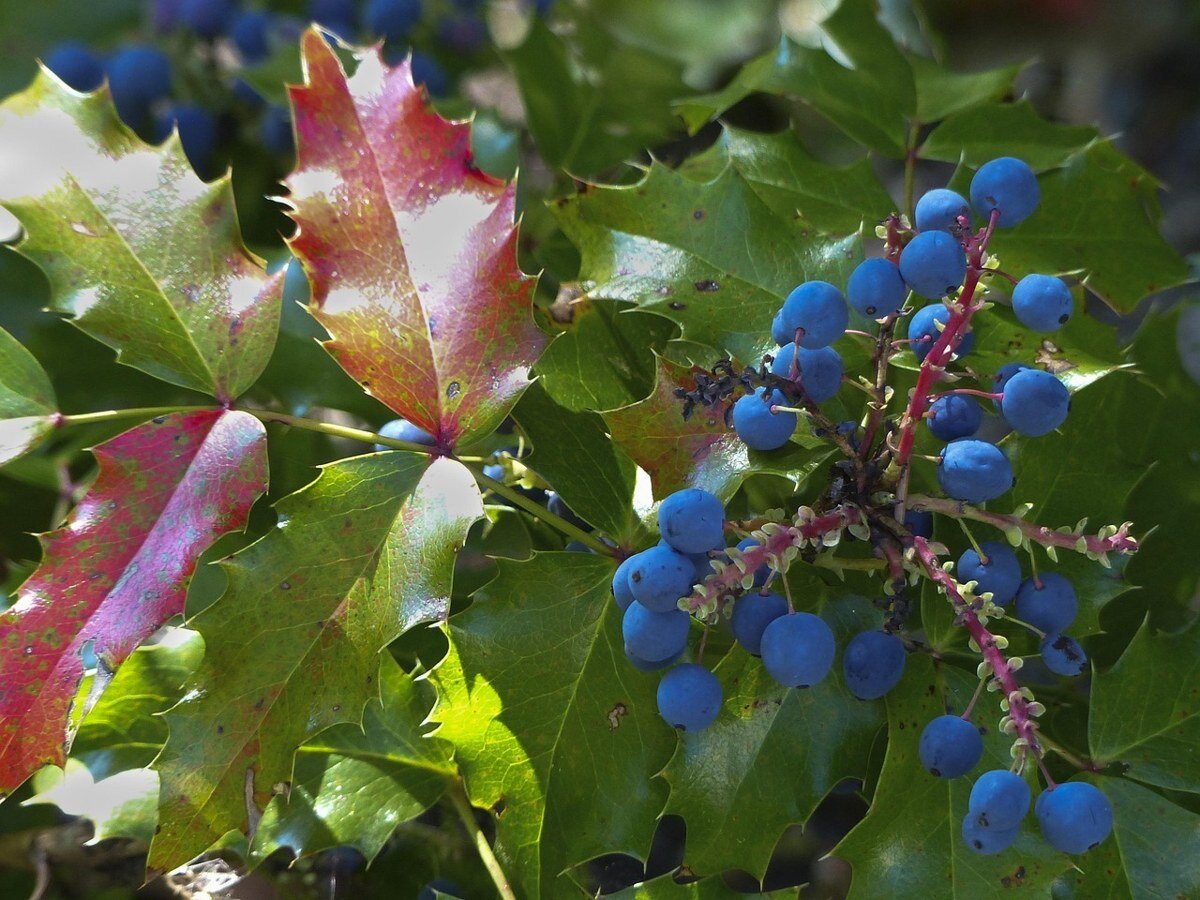
Glossy, holly-like leaves turn purplish-bronze in winter and set off blue-black berries that birds eat and that often persist into early winter. This semi-evergreen shrub reaches 4 to 5 feet tall, grows in Zones 5 to 8 and blooms in yellow clusters in spring. It prefers part to full shade, and the Morton Arboretum in Lisle, Illinois, advises sheltering it from wind and winter sun in cold regions to prevent leaf burn. Botanists now file it under Berberis aquifolium, so you may see either name at the nursery.
15. Coral bells (Heuchera)
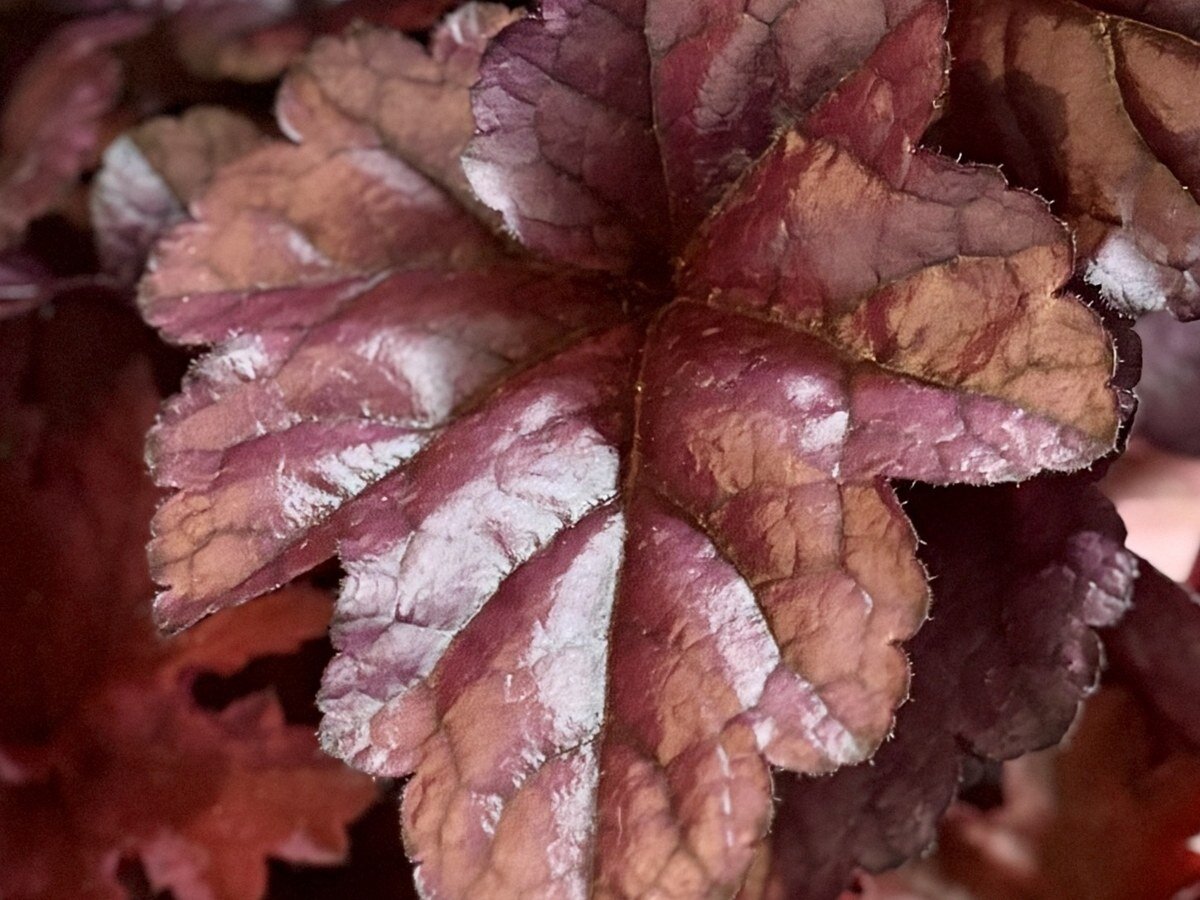
Grown for foliage in purple, bronze, caramel, silver and green, coral bells hold their leaves and color well into winter, so they keep the garden looking furnished when other perennials vanish. They grow 12 to 18 inches tall and are hardy in Zones 4 to 9. Oklahoma State University Extension notes that shallow roots can heave out of the ground in winter, so add a light layer of mulch around the base and avoid soggy soil.
16. Ornamental kale and cabbage (Brassica oleracea)
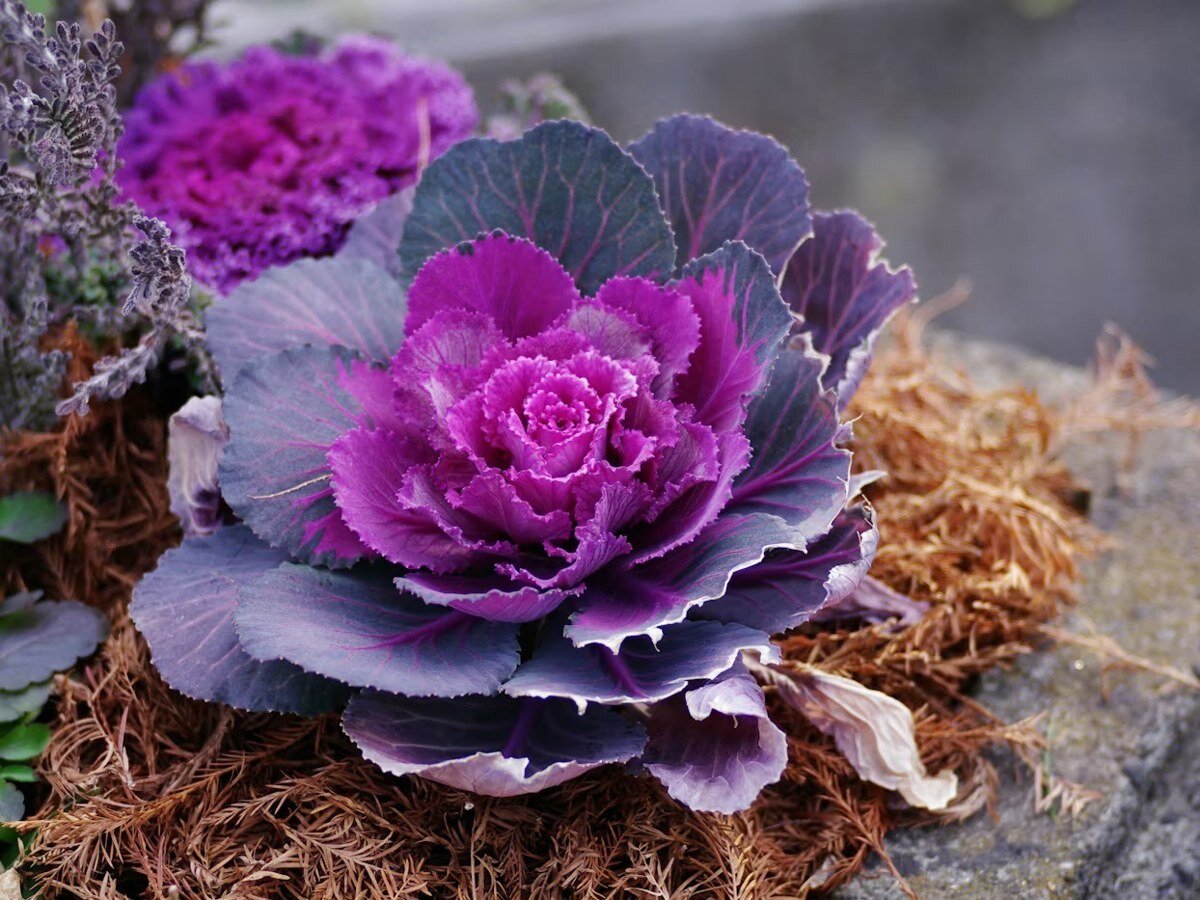
These ruffled rosettes in purple, pink, red and cream show their best color after cold weather arrives, and once acclimated they handle temperatures down to about 5°F. Gardeners grow them as annuals in any zone. Kale has the frilly leaves, and cabbage has the smooth ones. Plant them in early to mid-fall in containers or beds, because plants set out too early can stay green and grow leggy. The leaves are technically edible but taste bitter, so grow them for looks.
Grasses and standing seed heads
17. Little bluestem (Schizachyrium scoparium)
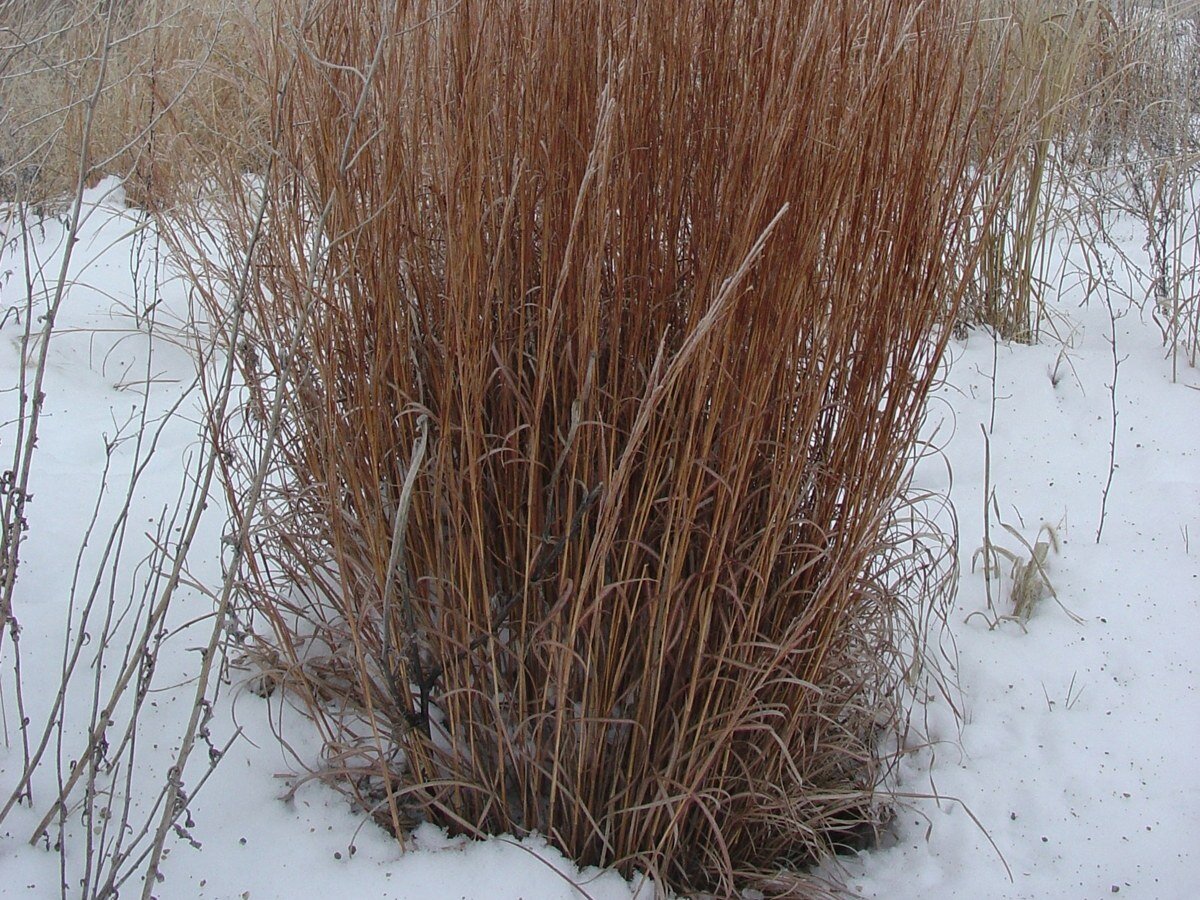
This native prairie grass turns from blue-green to copper and bronze in fall, then wears fluffy, silvery seed heads into winter. Many songbirds eat the seeds, the Connecticut Audubon Society notes, and snow sets off the tawny color. It grows 2 to 4 feet tall, tolerates poor soil and drought and thrives in Zones 3 to 10. Cut it back in late winter or early spring, and try ‘Blaze’ for extra pink-orange fall color.
18. Pink muhly grass (Muhlenbergia capillaris)
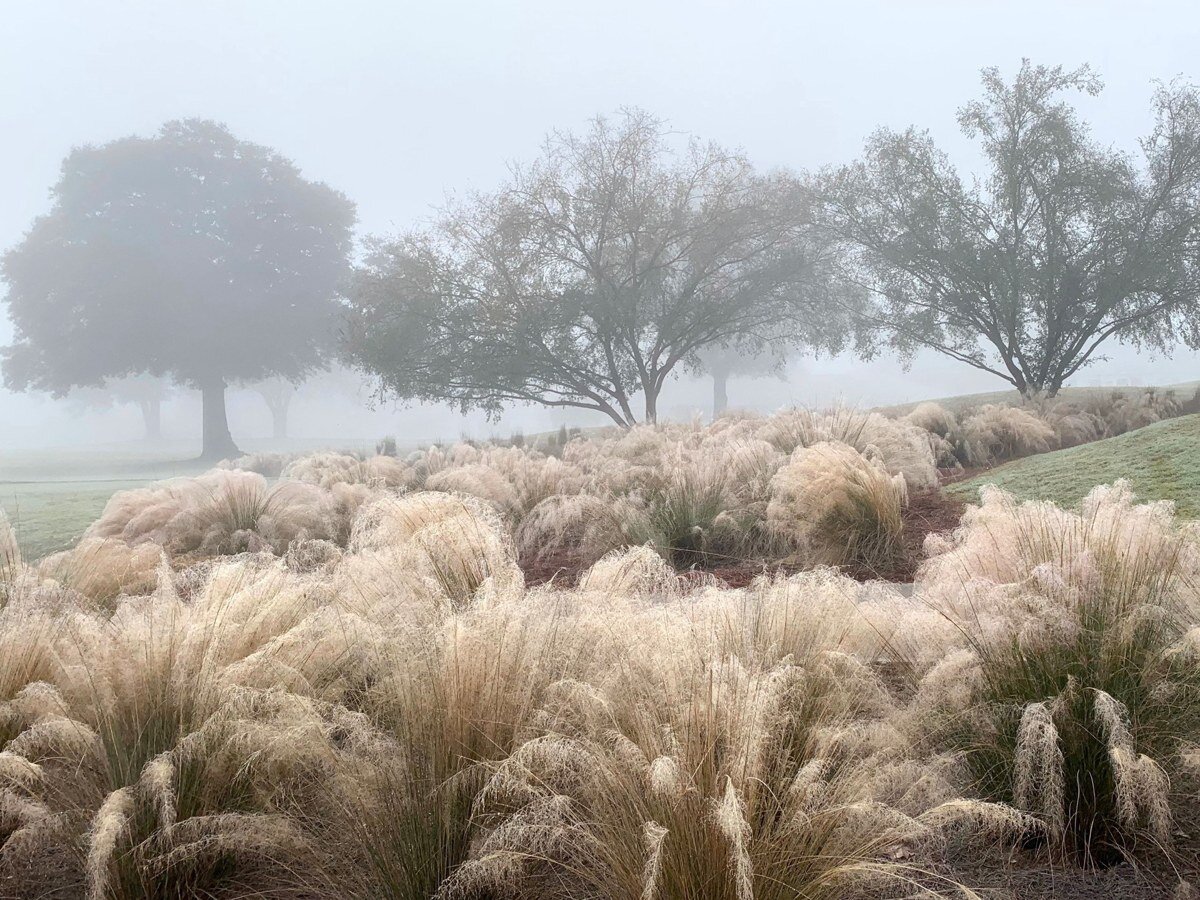
Clouds of pink plumes rise above fine green foliage in fall, then fade to tan and hold through much of winter. It grows 2 to 3 feet tall and wide, wants full sun and good drainage and tolerates drought. It is hardy in Zones 6 to 9, and the Morton Arboretum notes it behaves as an annual grass in northern Illinois, so gardeners in colder places should plant little bluestem instead. Cut it back in late winter.
19. Purple coneflower (Echinacea purpurea)
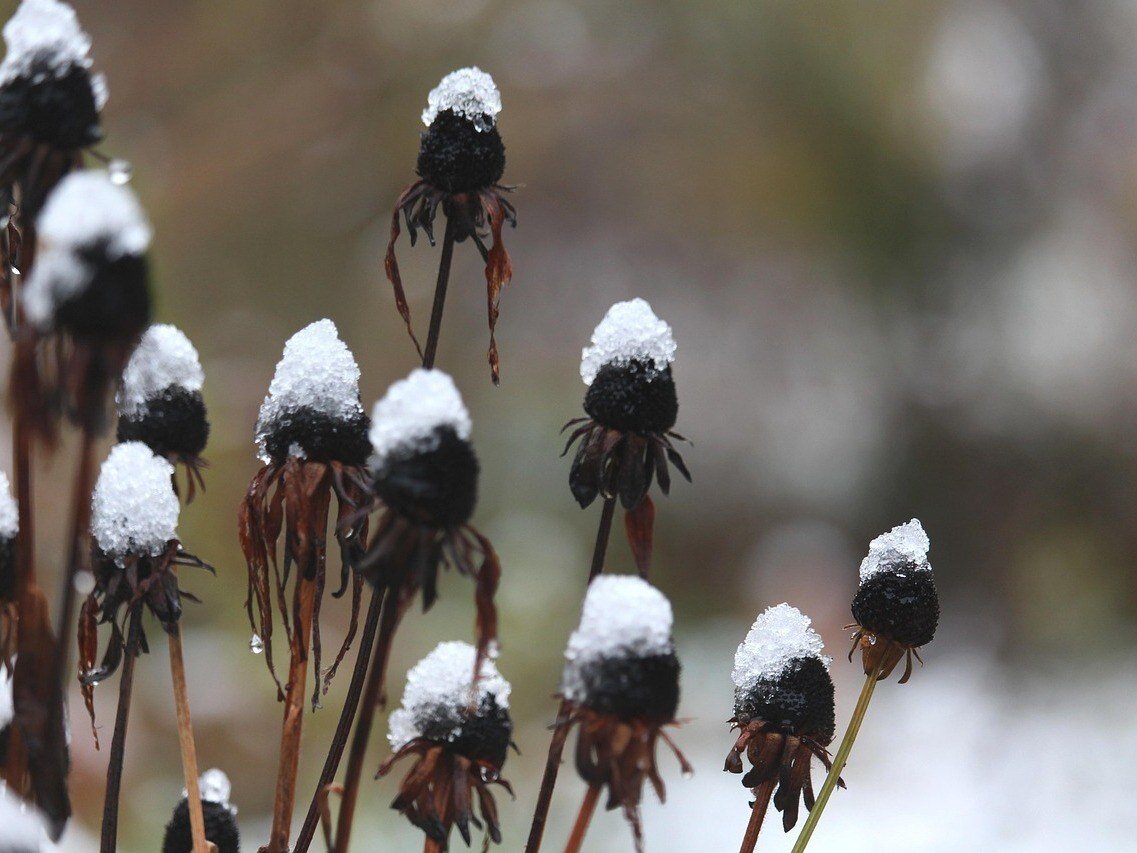
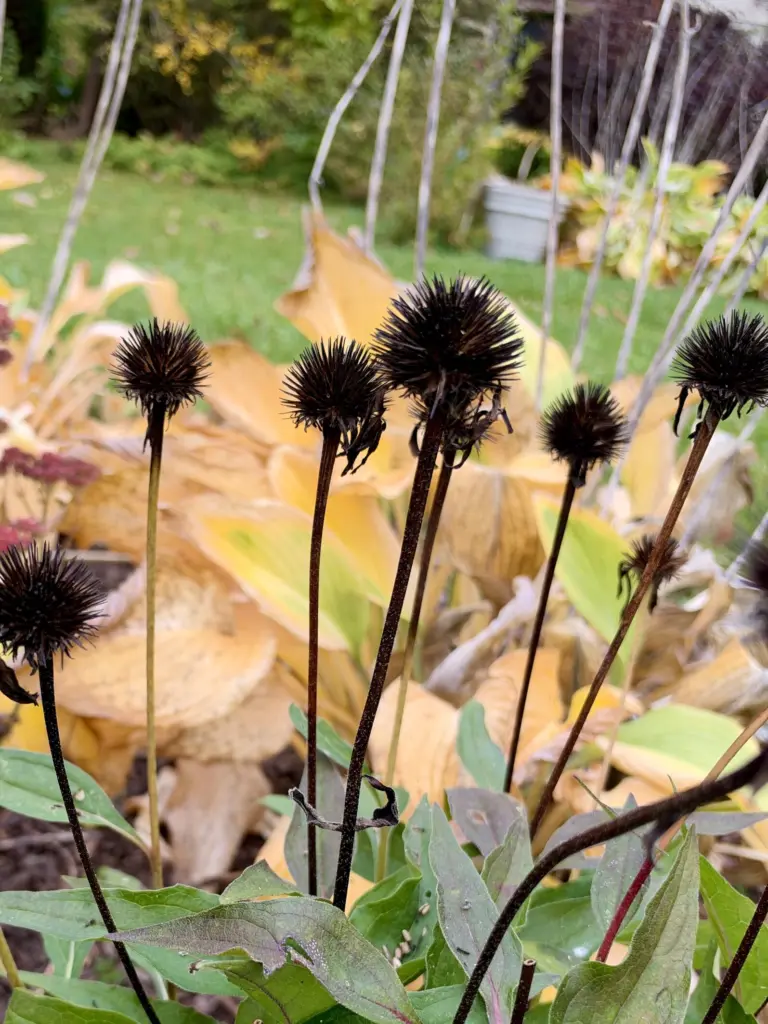
After the petals fall, the spiny cones turn chocolate brown and stand up through snow. In winter, goldfinches relish the seeds, according to the Missouri Department of Conservation, so skip the fall cleanup and leave the seed heads standing. Cut the stems back in late winter or early spring. This native perennial reaches 3 to 4 feet tall, grows in Zones 3 to 8 and tolerates heat and deer.
20. Sedum ‘Autumn Joy’
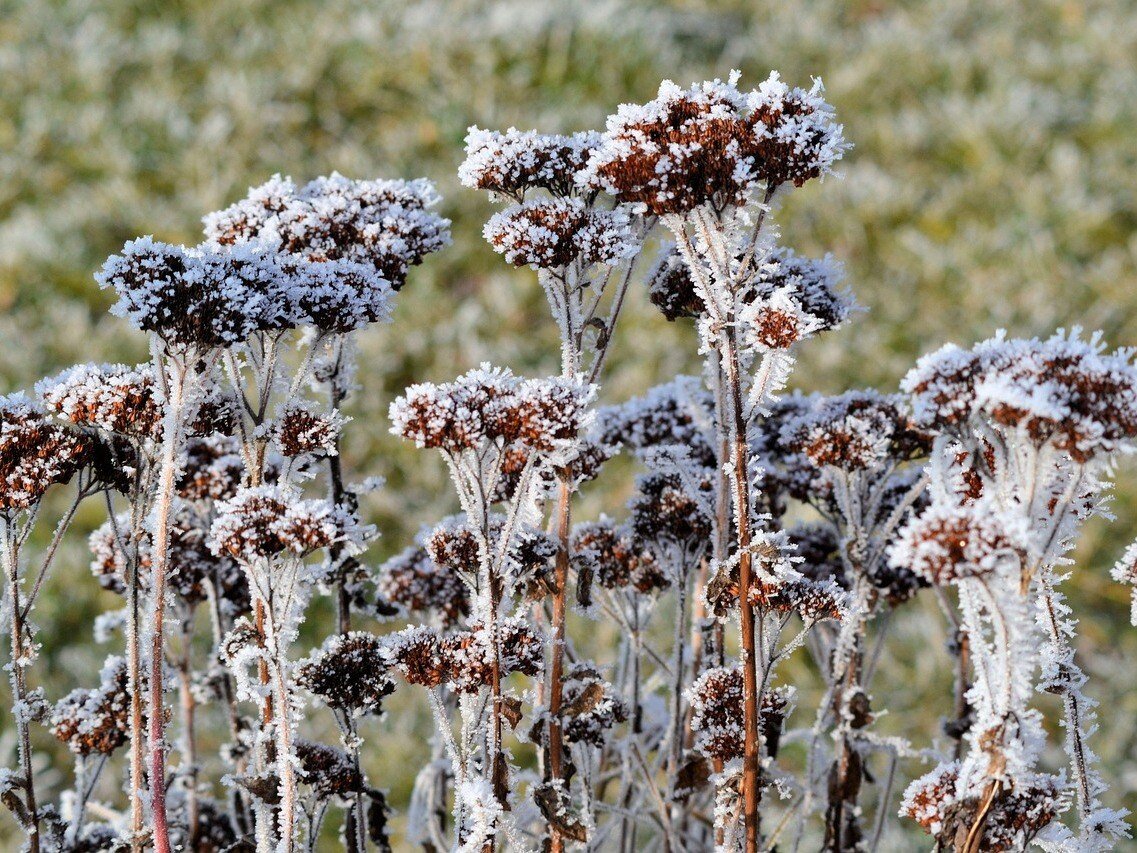
Pink flowers deepen to rusty bronze in fall, and the flat-topped heads stay on the stiff stalks long after frost. Skip the fall cleanup and snow will settle on top of them in white caps. The clumps reach 1 to 2 feet tall and wide and thrive in Zones 3 to 9. Leave them standing until early spring, then trim them back as new growth appears at the base.
How to plan a winter garden
Pick a mix instead of one star. Pair berries with a dark evergreen backdrop, tuck a few flowering plants where you will see them from indoors and let bark and seed heads carry the quiet weeks in between. Look out your favorite window before you decide where to dig, and put your boldest plants where you will see them most.
FAQ
What are the best winter plants for color?
Winterberry, redtwig dogwood, American holly and ornamental kale give the boldest color in cold weather, while witch hazel, hellebores and snowdrops add flowers. For quieter color, add blue spruce, coral bells and Oregon grape holly.
Which winter plants feed birds?
Winterberry, crabapple, American cranberrybush viburnum and American holly offer berries or fruit. Little bluestem, purple coneflower and sedum offer seeds when you leave them standing.
When should I plant winter plants?
Fall suits most shrubs, trees and bulbs. Snowdrop bulbs and winter aconite tubers need to go in before the ground freezes, and ornamental kale looks best planted in early to mid-fall.
Winter arrives whether the garden is ready or not, so give it something to show. Start with one or two plants from this list, set them where you will notice them on the grayest days and add more each fall. By the time snow flies, you will have a yard worth looking at, and the birds will visit all season.
From the QT Bird Community
Join the conversation
Comments on QT Bird articles live in our community. Joining is free: share your tips, ask questions and get replies.
Sign up to PostLog in