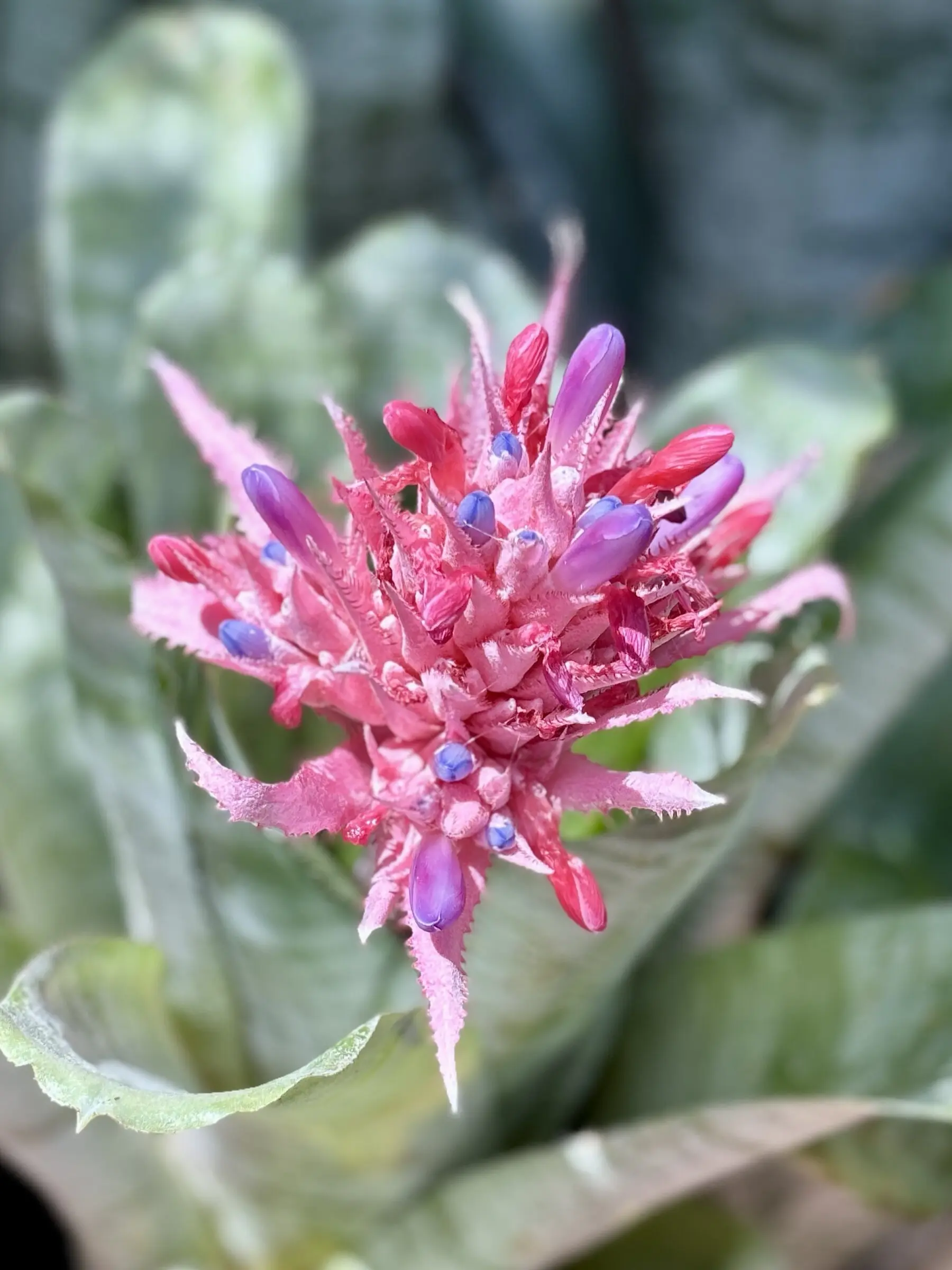
Aechmea fasciata, also known as Silver Vase, Urn Plant, or Urchin Plant, is one of the most striking bromeliads you can grow. Its wide, arching leaves are gray-green and banded with a silvery, powdery coating, and they form a tall vase shape that holds water in the center. When it blooms, a thick spike rises from the middle with a cluster of spiky, rosy-pink bracts studded with small flowers that open blue-violet and fade to red. It’s native to the rainforests of Brazil, where it grows on trees, and it’s hardy only in zones 10-11. For most of us, it’s a houseplant, or a summer porch plant that comes in before temps dip below 55°F.
This article covers what makes Aechmea different. For the basics all bromeliads share, like watering the center cup, removing pups, and getting one to bloom, see my main Bromeliad Care guide.
The bloom is the star of the show, and it lasts a long time. The pink bracts can hold their color for up to six months. The little flowers along the spike only last a few days each, but new ones keep opening, so you’ll see a mix of buds, blue-violet flowers, and older reddish ones. That’s what makes the bloom look so busy and colorful up close.
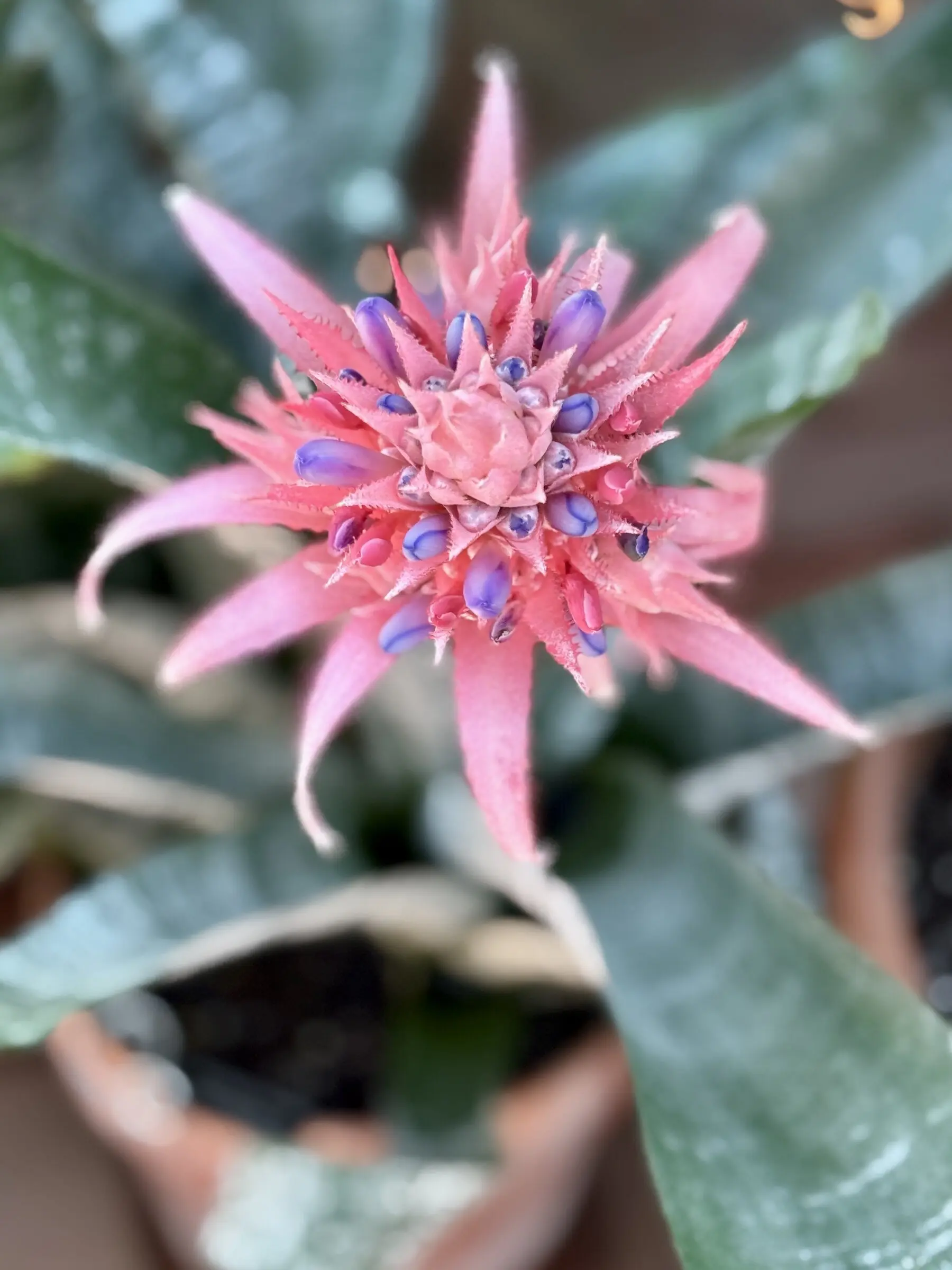
Those silvery bands on the leaves are made of tiny scales called trichomes, which help the plant absorb water and nutrients from the air. Don’t wipe or polish them off. If the leaves get dusty, rinse them gently with water instead. One more thing to know: Aechmea leaves have small, sharp spines along the edges, so handle it carefully, especially when repotting or removing pups.
Aechmea likes more light than softer bromeliads like Guzmania. Give it bright, indirect light. It can handle a little gentle morning sun, which helps keep the leaves silvery and the plant compact. In low light, the leaves stretch out, lose their silver banding, and it’s less likely to bloom. Hot afternoon sun can scorch the leaves, though, so filter strong light from south or west windows.
Water by keeping the vase-shaped center about a quarter to half full, and flush it out with fresh water every week or two so it doesn’t get stagnant. Keep the soil lightly moist, but not soggy, and let the top inch dry out between waterings. Rainwater, distilled water, or filtered water is best. In winter, keep less water in the cup.
It’s happiest at 60°F to 80°F, but it’s a bit tougher than most bromeliads and can handle brief dips into the 50s. Average household humidity is usually fine, though a pebble tray helps in dry winter months.
Use a loose, fast-draining mix, like orchid bark mix, in a heavy pot. The tall vase shape can make it top-heavy, so a clay or ceramic pot helps keep it from tipping. Feed lightly, with a balanced water-soluble fertilizer at a quarter strength once a month in spring and summer.
Like all bromeliads, each rosette blooms only once. When the bloom finally fades, cut the spike off near the base. Wear gloves for this, because of the spines. The mother plant will slowly decline but will usually produce one to three pups. Separate them when they’re about a third to half the size of the mother. Aechmea pups take a little patience. They typically bloom in two to three years. If a mature plant won’t bloom, the ripe apple trick in my main bromeliad guide works well for Aechmea.
Common problems:
- Brown leaf tips usually mean dry air or minerals in tap water.
- Leaves losing their silver banding, or stretching out, mean it needs more light.
- A mushy center or base means rot from soggy soil or stagnant water in the cup.
- Watch for scale, which looks like small brown bumps, especially at the leaf bases. Treat with insecticidal soap, and skip oil-based sprays like neem oil, which can damage bromeliad leaves.
Aechmea fasciata is generally considered non-toxic to cats and dogs, but its spiny leaf edges can poke curious pets and little hands, so place it where it won’t get bumped.
Bold, unusual, and long-blooming. I’d put Aechmea in the beginner-friendly category. Just give it more light than other bromeliads, and watch out for those spines.
| Common Name | Silver Vase, Urn Plant, Urchin Plant |
|---|---|
| Botanical Name | Aechmea fasciata |
| Family | Bromeliaceae |
| Mature Size | 1-2 ft. tall and wide |
| Sun | Bright, Indirect; some morning sun |
| Soil | Loose, fast-draining (orchid or bromeliad mix) |
| Flower Color | Pink bracts with blue-violet flowers |
| Native Area | Brazil |
| Toxicity | Non-toxic to pets |