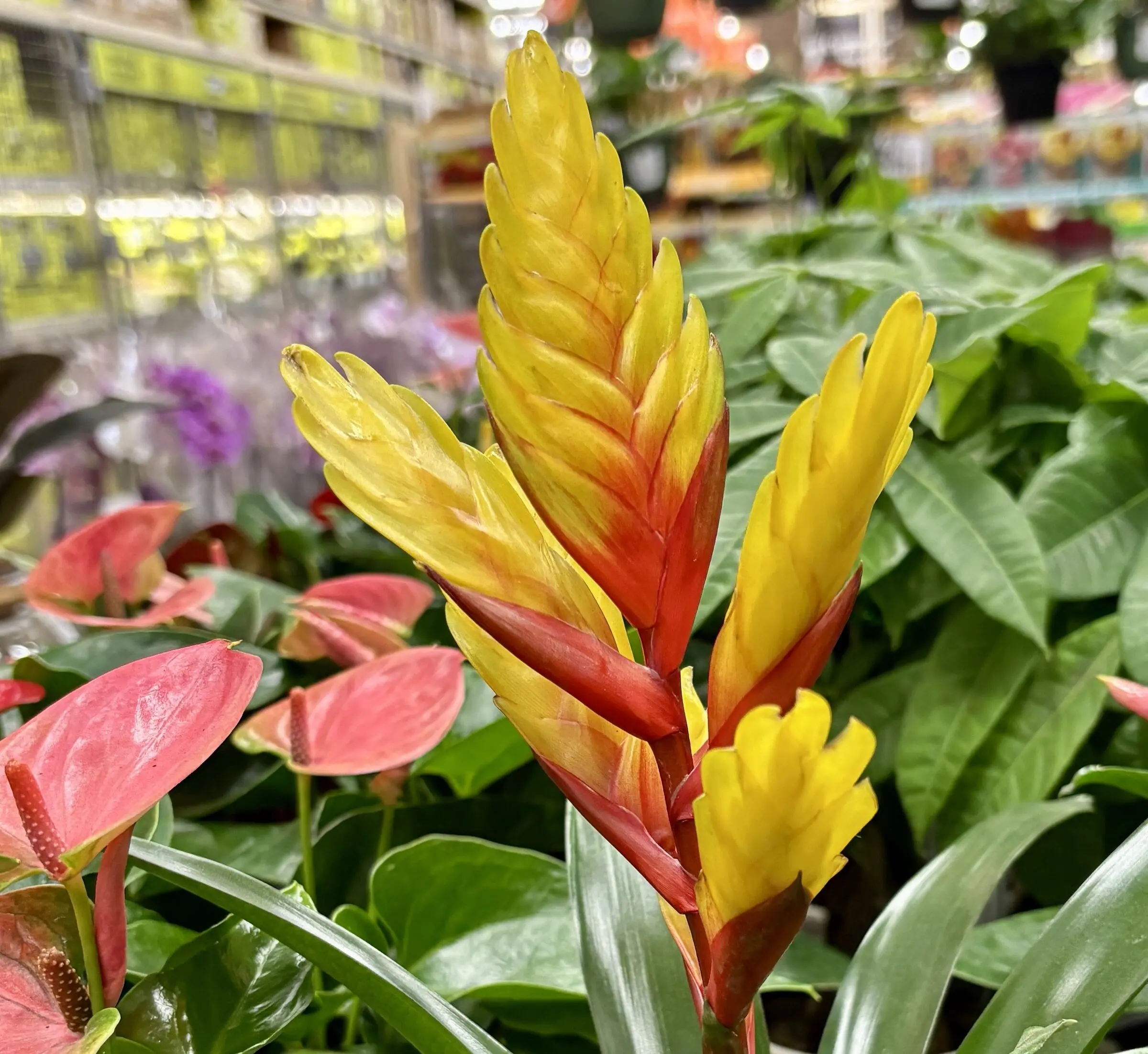
Vriesea, also known as Flaming Sword, gets its nickname from its bloom: a tall, flat spike of tightly overlapping bracts that looks like a sword or a feather, usually in fiery red, orange, or yellow. Some hybrids send up several branching spikes at once, like a bouquet. It’s one of the most eye-catching bromeliads you can grow, and its soft, spineless leaves make it easy to handle. There are more than 200 species, native to Central and South America and the Caribbean, where many grow on trees in the rainforest. It’s named after Willem Hendrik de Vriese, a 19th-century Dutch botanist. The best-known species, Vriesea splendens, has dark green leaves banded in deep purple-black, topped with a bright red sword. It’s hardy only in zones 10-12, so for most of us it’s a houseplant, or a summer porch plant that comes inside before temps dip below 55°F.
This article covers what makes Vriesea different. For the basics all bromeliads share, like watering the center cup, removing pups, and getting one to bloom, see my main Bromeliad Care guide.
Like other bromeliads, that colorful sword isn’t the true flower. It’s made of bracts, which are modified leaves. The real flowers are small, tubular, and usually yellow. They poke out from the edges of the sword a few at a time and last only a day or two. The bracts are what you’re enjoying, and they hold their color for several months.
Not all Vrieseas are grown for their blooms. Some are prized for their foliage, with leaves banded, striped, or mottled in green, burgundy, and cream. Varieties like Vriesea fosteriana ‘Red Chestnut’ and Vriesea hieroglyphica, sometimes called the “king of bromeliads,” are grown mostly for their dramatic leaves.
Vriesea does best in medium to bright, indirect light. It’s fairly adaptable and handles lower light better than bromeliads with stiff or silvery leaves, but brighter light brings out the best bloom color and keeps banded leaves bold. Keep it out of direct sun, which scorches the soft leaves. An east-facing window or a spot a few feet back from a south or west window works well.
Water by keeping the center cup about a quarter to half full, and flush it with fresh water every week or two. Keep the soil lightly moist, but not soggy, and let the top inch dry out between waterings. Rainwater, distilled water, or filtered water is best. Vriesea is a little thirstier for humidity than some bromeliads, so a pebble tray, humidifier, or a spot near other plants helps, especially in winter. Brown leaf tips are its way of saying the air is too dry.
It’s happiest at 65°F to 80°F. Keep it away from cold drafts and heating vents.
Use a loose, fast-draining mix, like orchid bark mix, in a small pot with drainage holes. The tall flower spike can make it top-heavy while it’s blooming, so a heavier pot helps. Feed lightly, with a balanced water-soluble fertilizer at a quarter strength once a month in spring and summer.
Each rosette blooms only once. When the sword fades and starts to brown, cut it off near the base. The mother plant will slowly decline, but first she’ll produce pups around her base. Vriesea often makes just one or two. Separate them when they’re about a third to half the size of the mother, or let them grow in place. Pups usually bloom in two to three years.
Common problems:
- Brown, crispy leaf tips usually mean dry air or minerals in tap water.
- A mushy center or base means rot from soggy soil or stagnant water in the cup.
- Dull bloom color or faded leaf bands mean it needs more light.
- Watch for scale and mealybugs at the base of the leaves. Treat with insecticidal soap, and skip oil-based sprays like neem oil, which can damage bromeliad leaves.
Vriesea is generally considered non-toxic to cats and dogs, and its soft, spineless leaves are safe to handle.
A showstopper that’s easier than it looks. I’d put Vriesea in the beginner-friendly category. Just give it a little extra humidity.
| Common Name | Flaming Sword, Vriesea |
|---|---|
| Botanical Name | Vriesea spp. (Vriesea splendens and hybrids) |
| Family | Bromeliaceae |
| Mature Size | 1-3 ft. tall with bloom; 1-2 ft. wide |
| Sun | Medium to bright, Indirect |
| Soil | Loose, fast-draining (orchid or bromeliad mix) |
| Flower Color | Red, orange, yellow bracts with yellow flowers |
| Native Area | Central and South America, Caribbean |
| Toxicity | Non-toxic to pets |