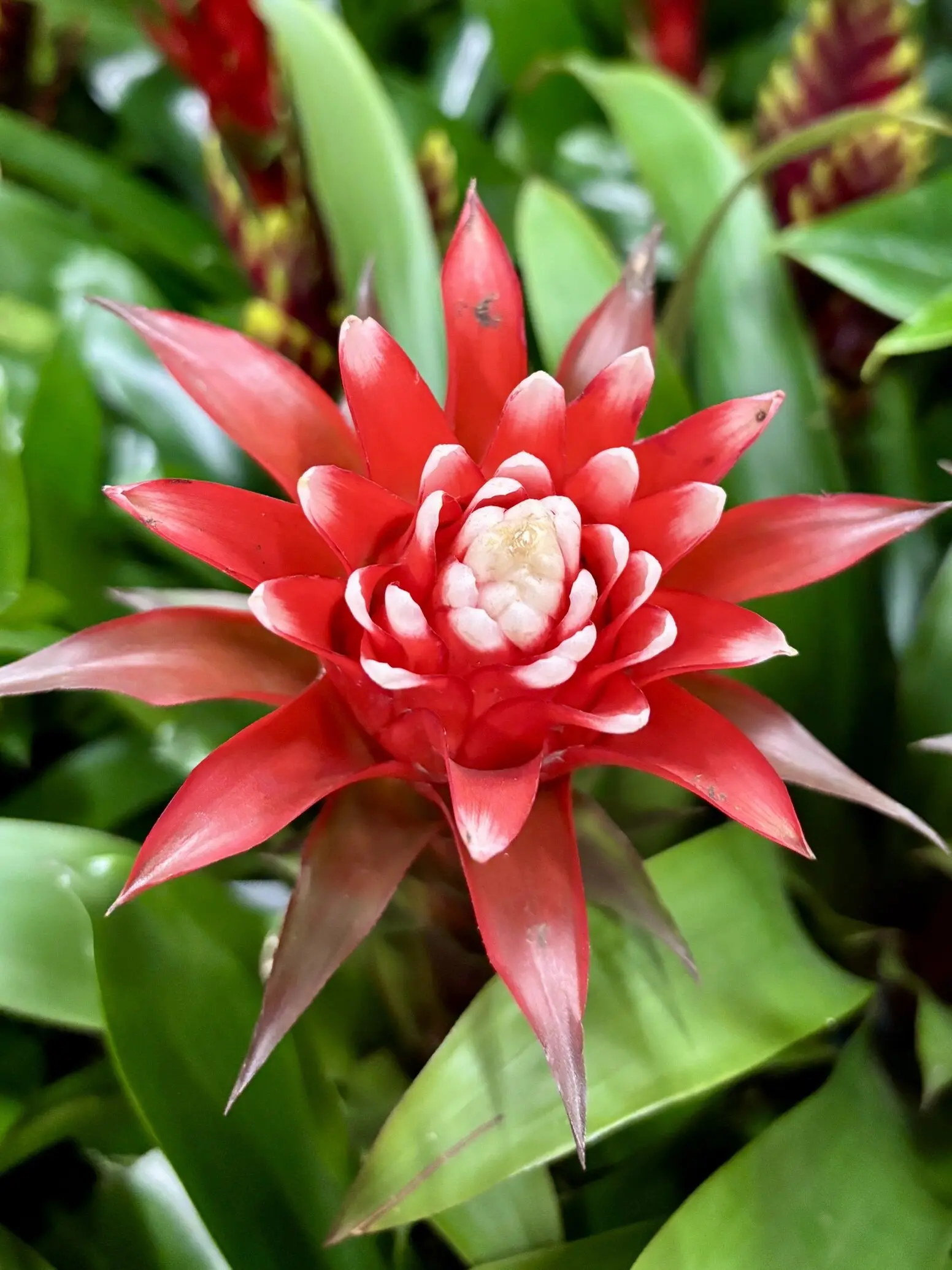
Guzmania is the bromeliad most people picture: a rosette of soft, glossy green leaves with a bold, star-shaped bloom rising from the center in red, orange, yellow, pink, or purple. It’s one of the most popular bromeliads sold as a houseplant, and one of the easiest to grow indoors. There are around 200 species, mostly native to the rainforests of Central and South America, where many grow on trees. It’s named after Anastasio Guzmán, an 18th-century Spanish pharmacist and naturalist. You’ll often see popular varieties like Scarlet Star (Guzmania lingulata) and hybrids sold by names like ‘Hilda,’ ‘Tempo,’ and ‘Rana.’ It’s hardy only in zones 10-12, so for most of us it’s a houseplant, or a summer porch plant that comes inside before temps dip below 55°F.
This article covers what makes Guzmania different. For the basics all bromeliads share, like watering the center cup, removing pups, and getting one to bloom, see my main Bromeliad Care guide.
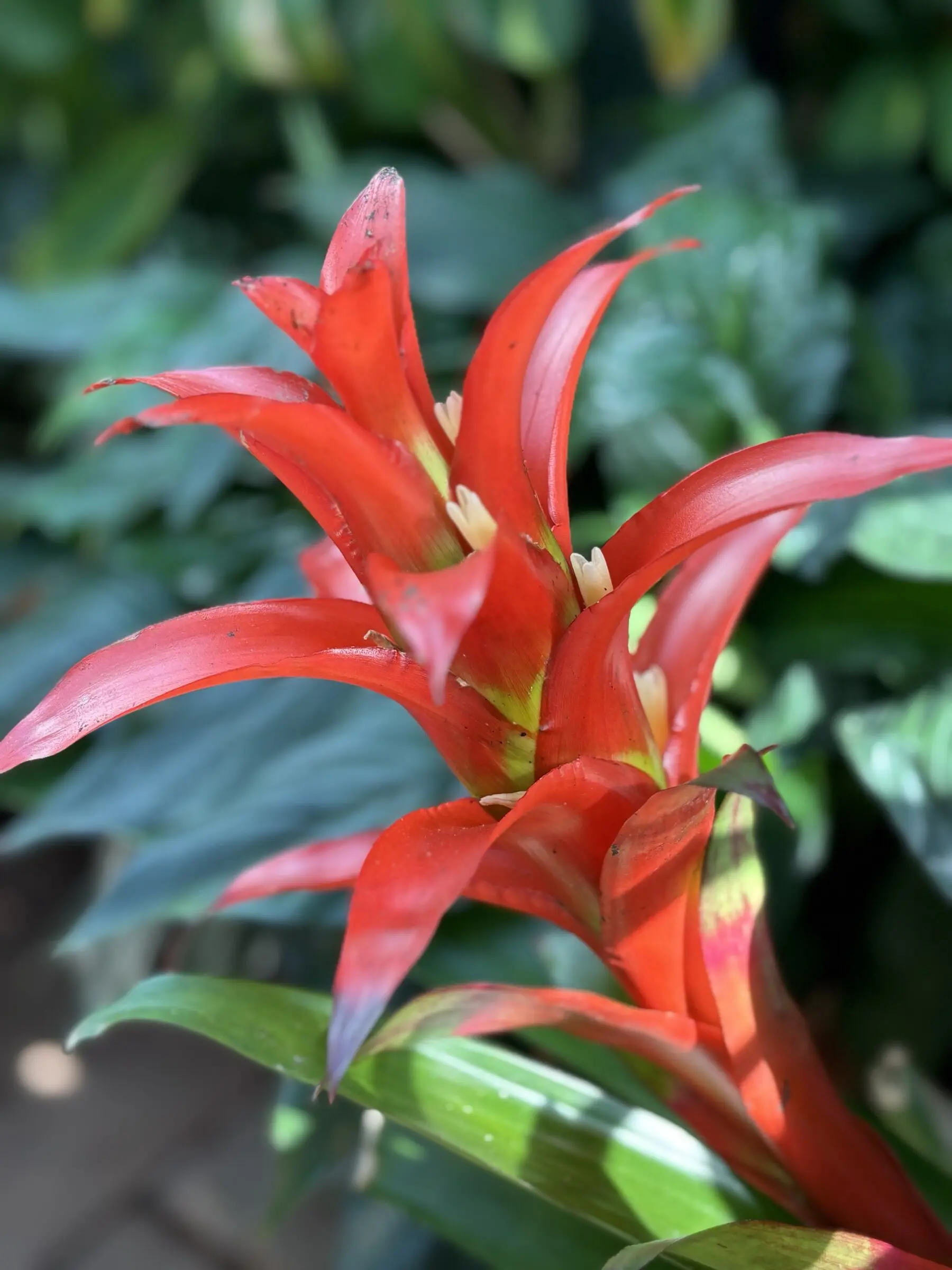
That colorful “flower” isn’t actually a flower. It’s a cluster of bracts, which are modified leaves. The true flowers are small, white or yellow, and peek out from between the bracts for just a few days. The bracts are what last, often holding their color for three to four months, and sometimes longer. That long-lasting color is why Guzmanias are such popular gifts and centerpieces.
Unlike some bromeliads, Guzmania has soft, smooth, spineless leaves, so it’s comfortable to handle and a good choice around kids and pets. It also tolerates lower light than most bromeliads. It does best in medium to bright, indirect light, like a spot near an east-facing window or a few feet back from a sunny one. Keep it out of direct sun, which scorches the soft leaves. In too little light, it will survive, but it may not bloom again.
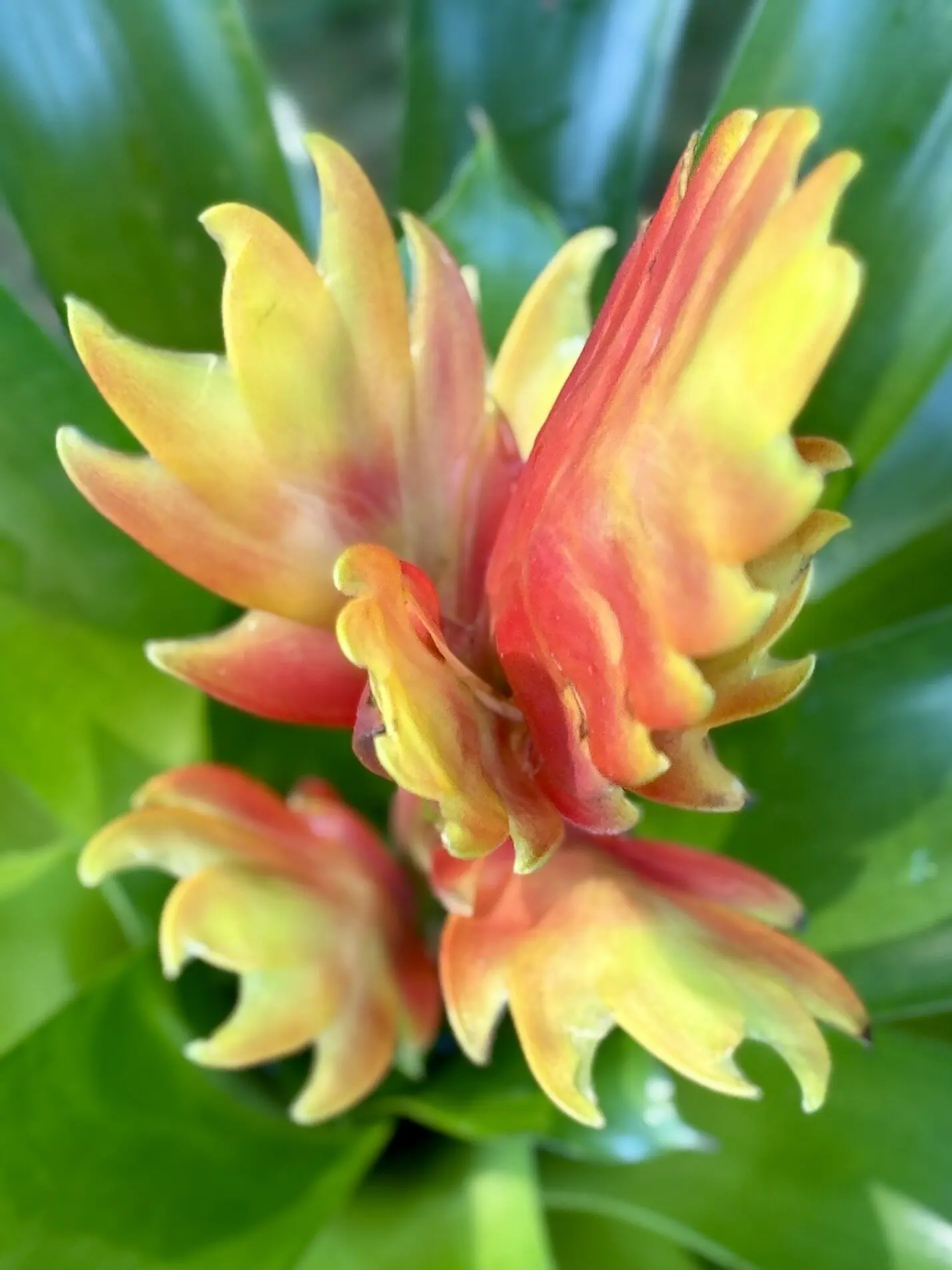
Water by keeping the center cup about a quarter to half full, and flush it with fresh water every week or two so it doesn’t get stagnant. Keep the soil lightly moist, but not soggy. Guzmanias are especially prone to rot in wet soil, so let the top inch dry out between waterings. Rainwater, distilled water, or filtered water is best. Guzmanias are known for being sensitive to the minerals in hard tap water, which can cause brown leaf tips.
They’re happiest at 65°F to 80°F, with medium to high humidity. A pebble tray, a humidifier, or grouping it with other plants helps, especially in winter. Keep it away from cold drafts and heating vents.
Use a loose, fast-draining mix, like orchid bark mix, in a small pot with drainage holes. Guzmanias have small root systems, so they don’t need a big pot. Feed them very lightly, with a balanced water-soluble fertilizer at a quarter strength once a month in spring and summer.
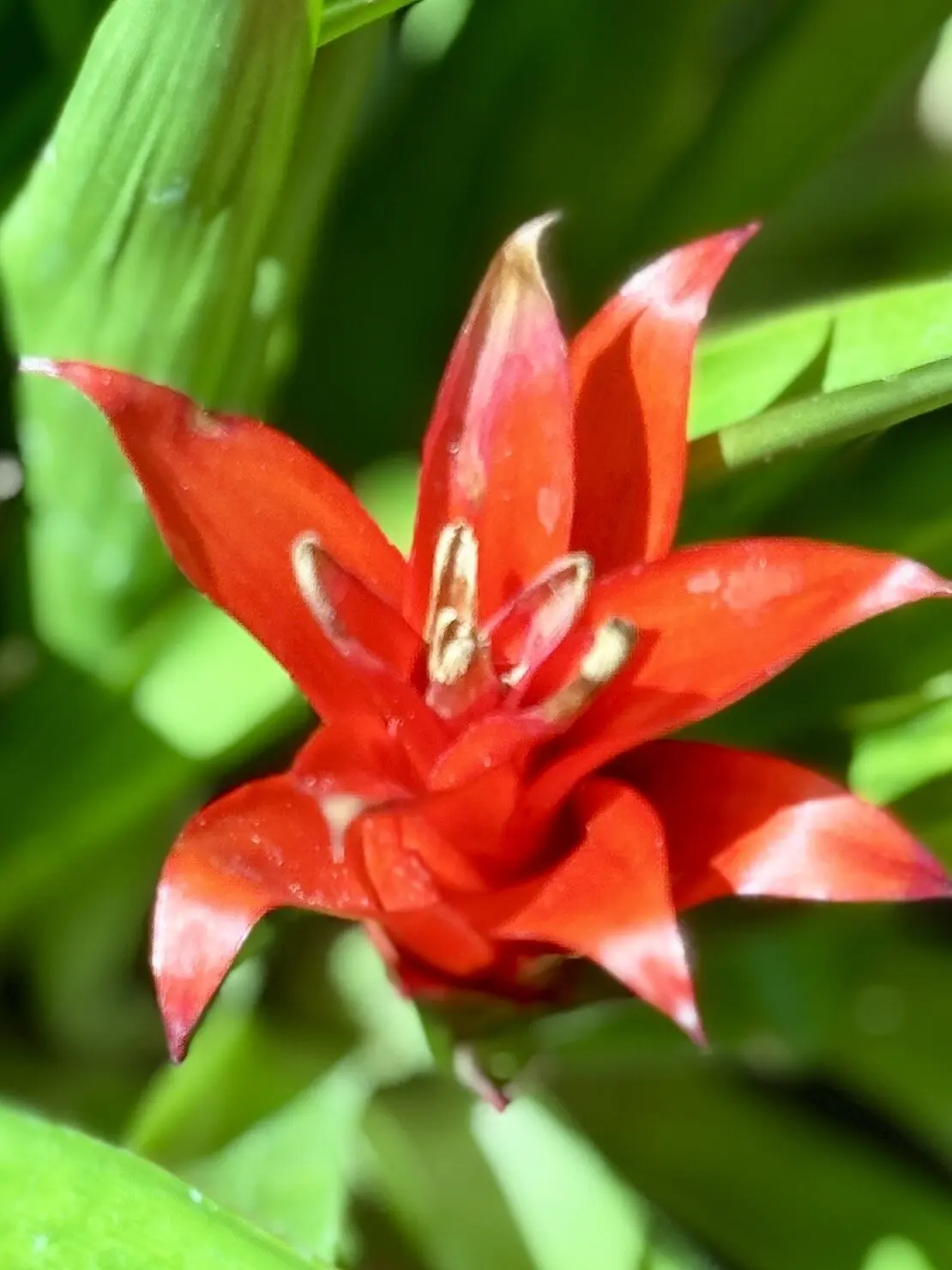
Like all bromeliads, each Guzmania rosette blooms only once. Once the bracts start to fade and brown, cut the flower stalk off near the base. The mother plant will slowly decline over the next several months, but she’ll send up pups around her base first. Guzmanias usually produce two or three. Separate them when they’re about a third to half the size of the mother plant, or leave them in place for a fuller clump. Pups typically bloom in one to three years.
Common problems:
- A mushy brown center or base means rot, usually from soggy soil or stagnant water in the cup.
- Brown leaf tips usually come from hard tap water or dry air.
- Faded bracts are normal after a few months. It doesn’t mean the plant is dying, just that the bloom is finishing.
- Watch for scale and mealybugs at the base of the leaves. Treat with insecticidal soap, and skip oil-based sprays like neem oil, which can damage bromeliad leaves.
Guzmanias are generally considered non-toxic to cats and dogs, and their soft, spineless leaves make them one of the most pet-friendly bromeliads.
Long-lasting color with very little fuss. I’d put Guzmania in the beginner-friendly category. It’s my top pick for a first bromeliad.
| Common Name | Guzmania, Scarlet Star, Tufted Airplant |
|---|---|
| Botanical Name | Guzmania spp. (Guzmania lingulata and hybrids) |
| Family | Bromeliaceae |
| Mature Size | 12-24 in. tall and wide |
| Sun | Medium to bright, Indirect |
| Soil | Loose, fast-draining (orchid or bromeliad mix) |
| Flower Color | Red, orange, yellow, pink, purple |
| Native Area | Central and South America |
| Toxicity | Non-toxic to pets |