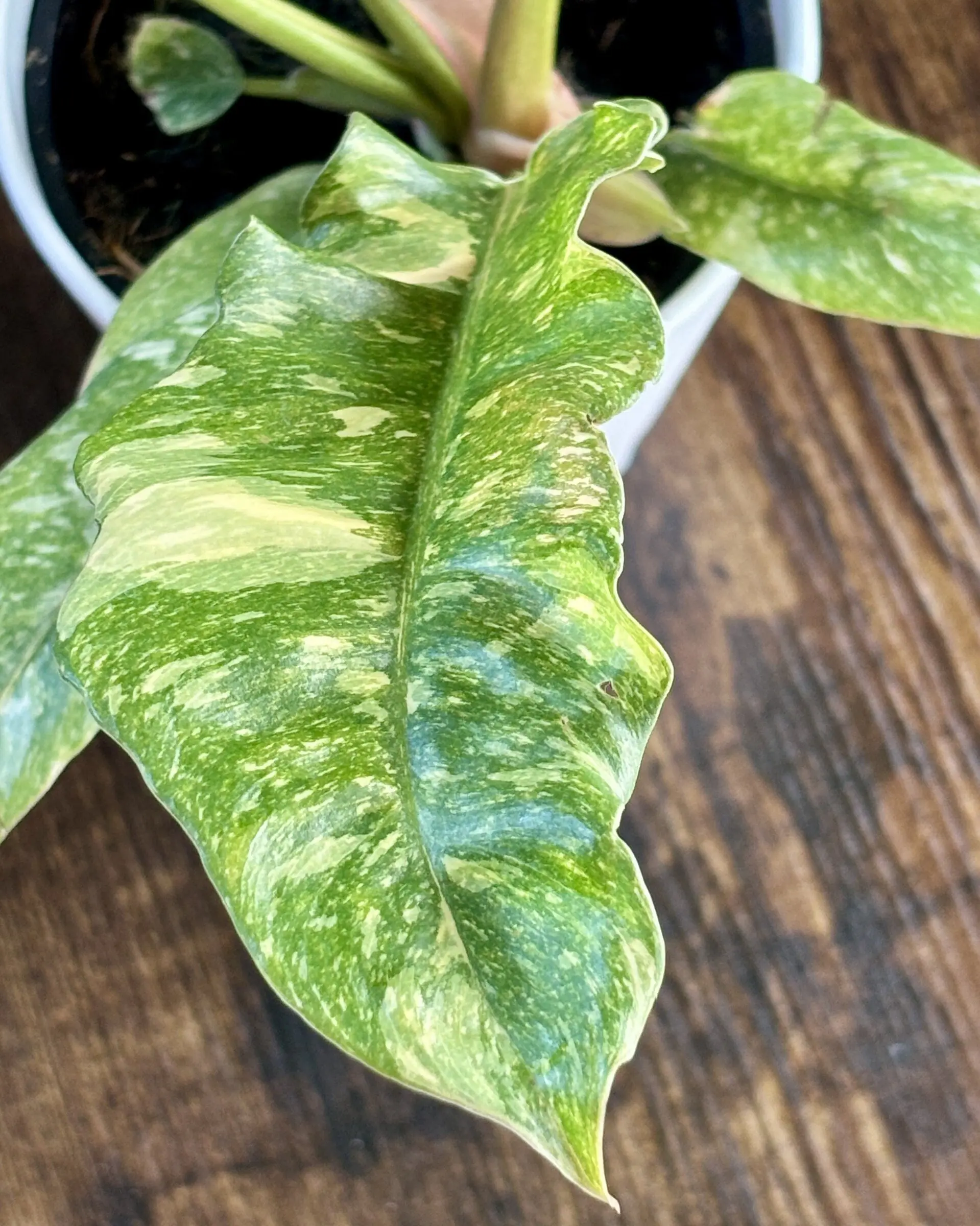
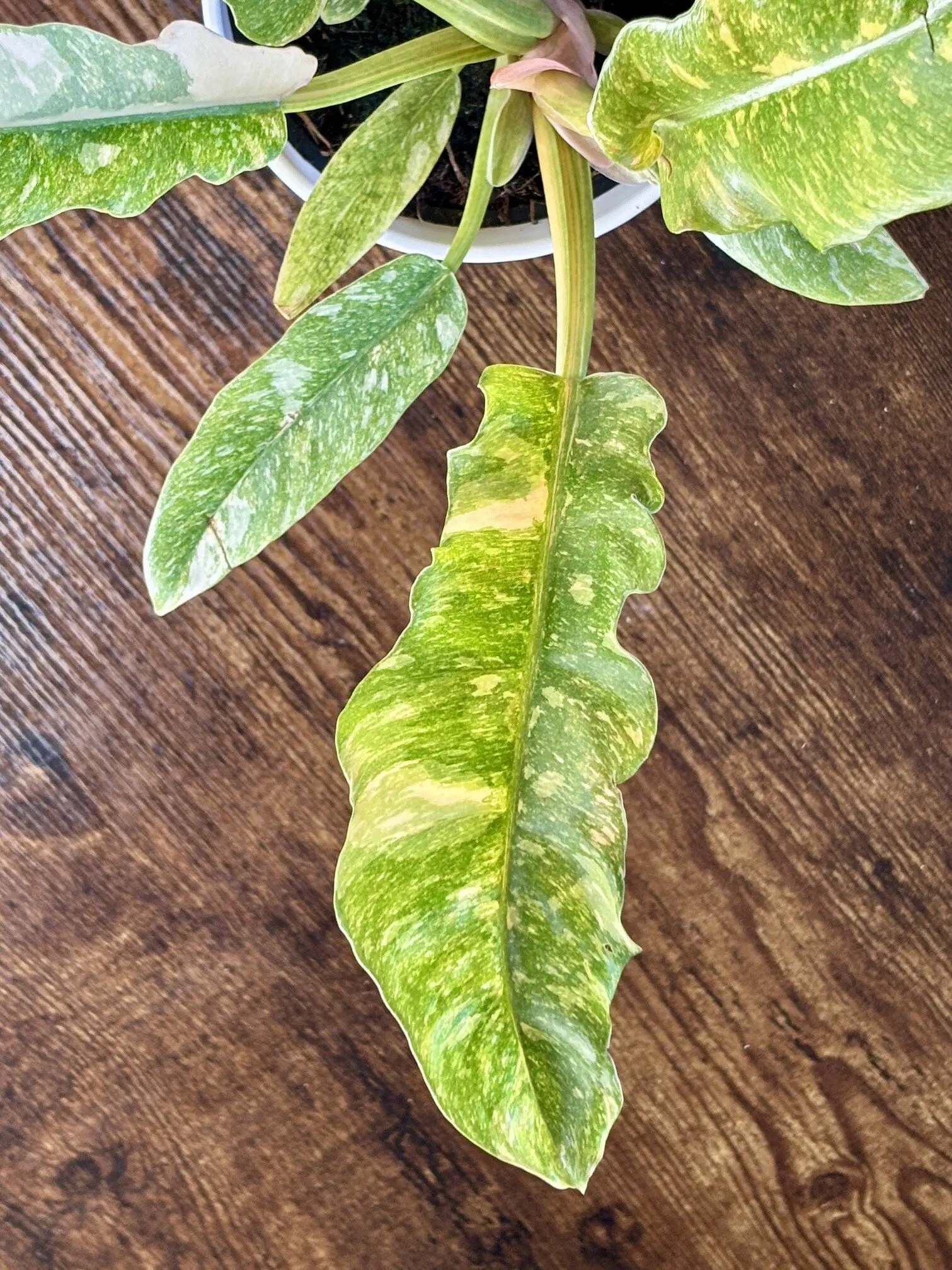
Ring of Fire Philodendron, also known as Philodendron ‘Ring of Fire,’ is one of the most colorful philodendrons you can grow. Its long, narrow leaves have wavy, notched edges, and they’re splashed, streaked, and speckled with cream, yellow, and pale green over darker green. Some leaves are mostly green with a dusting of flecks, while others have big creamy patches or blush with orange and pink. New growth often comes in with a pink sheath, which is part of how it earned its fiery name. It’s a hybrid philodendron in the Araceae family, the same family as pothos, monstera, and peace lilies. Philodendrons are native to the tropical rainforests of Central and South America, and it’s hardy only in zones 10-12, so for most of us it’s a houseplant all year.
No two leaves look alike, and the colors can shift from season to season. That’s part of the fun. It’s a slow grower, so each new leaf feels like a little reveal.
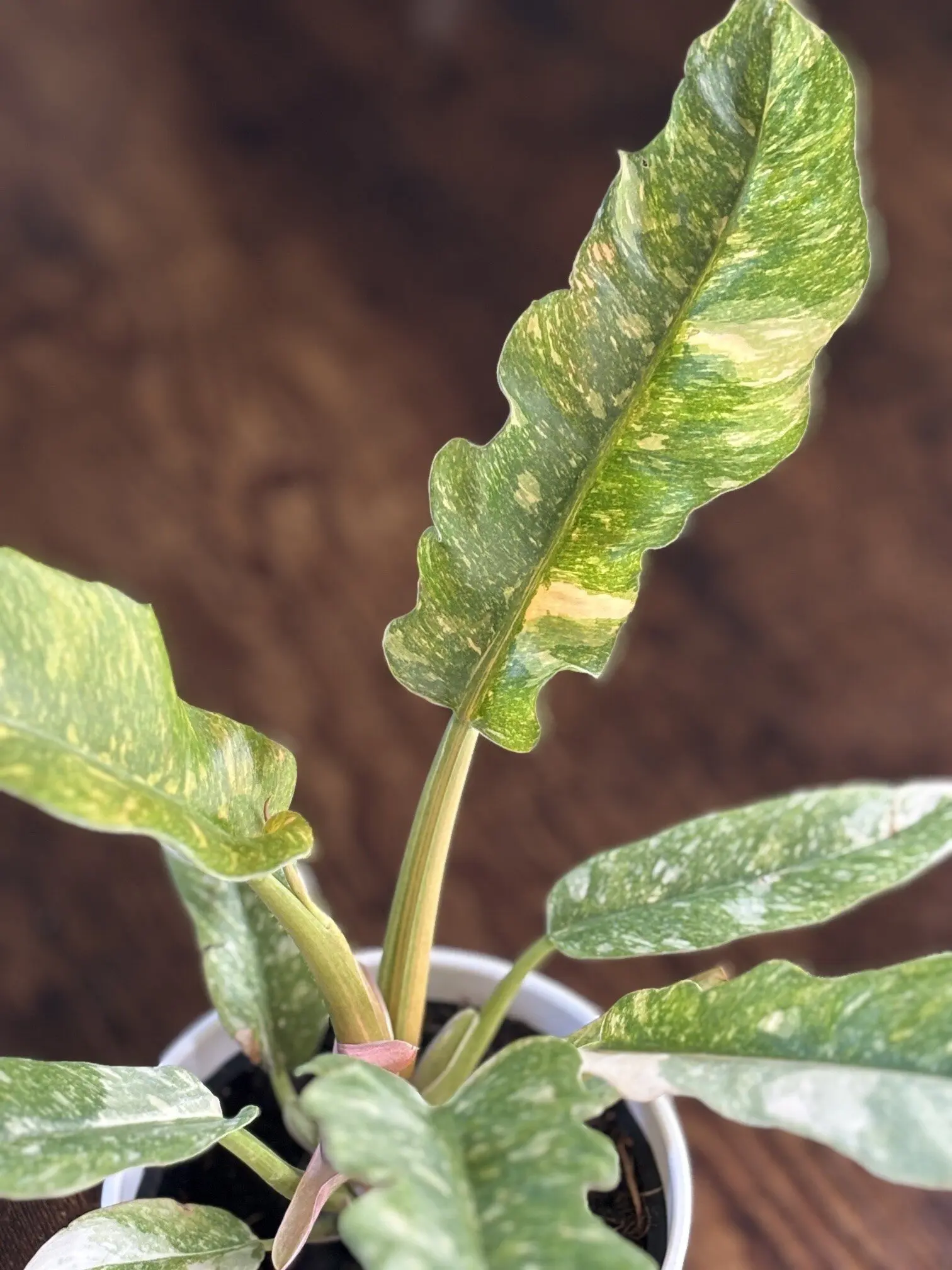
Light is the key to keeping the variegation. Give it bright, indirect light, like an east-facing window or a spot a few feet back from a south or west window. In low light, new leaves come in greener and the colorful patches shrink. Keep it out of hot direct sun, though. The cream and white areas have little or no chlorophyll, so they scorch and turn brown easily.
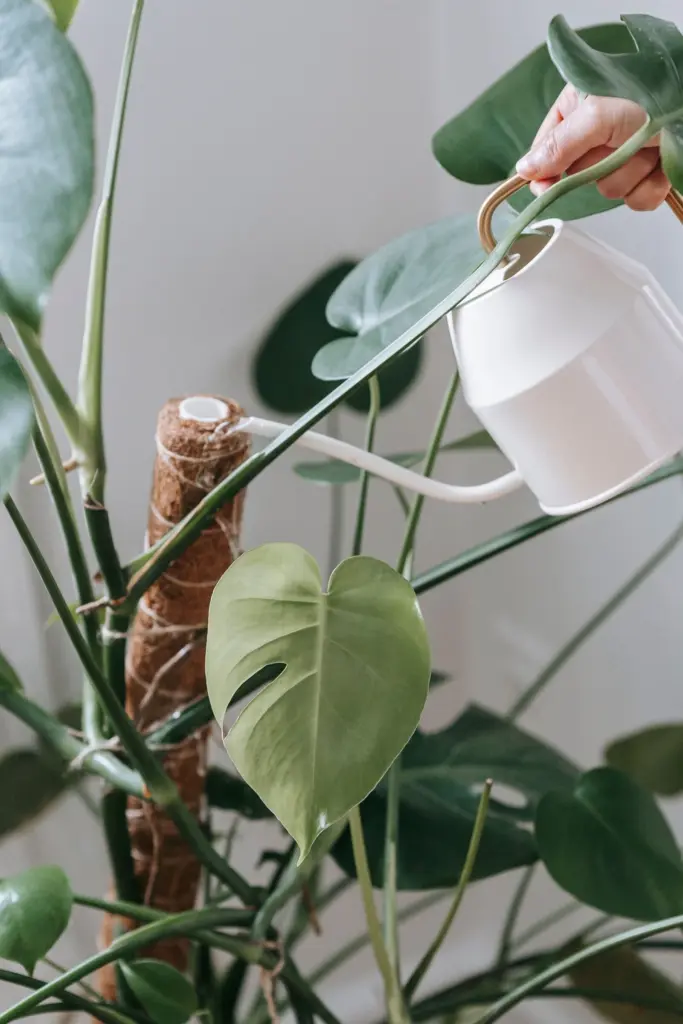
Water when the top 1-2 inches of soil are dry, then water thoroughly until it runs out the drainage holes. Empty the saucer so it isn’t sitting in water. Like other philodendrons, it doesn’t like soggy soil, which leads to yellow leaves and root rot. In winter, when growth slows, it will need water less often.
It’s happiest at 65°F to 80°F. Keep it away from cold drafts, cold windows, and heating and air conditioning vents. Below 55°F, it can be damaged. It likes moderate to high humidity, ideally 50% or higher. A humidifier, a pebble tray, or grouping it with other plants helps, especially in winter when the heat is running. Higher humidity also helps keep the delicate cream edges from browning.
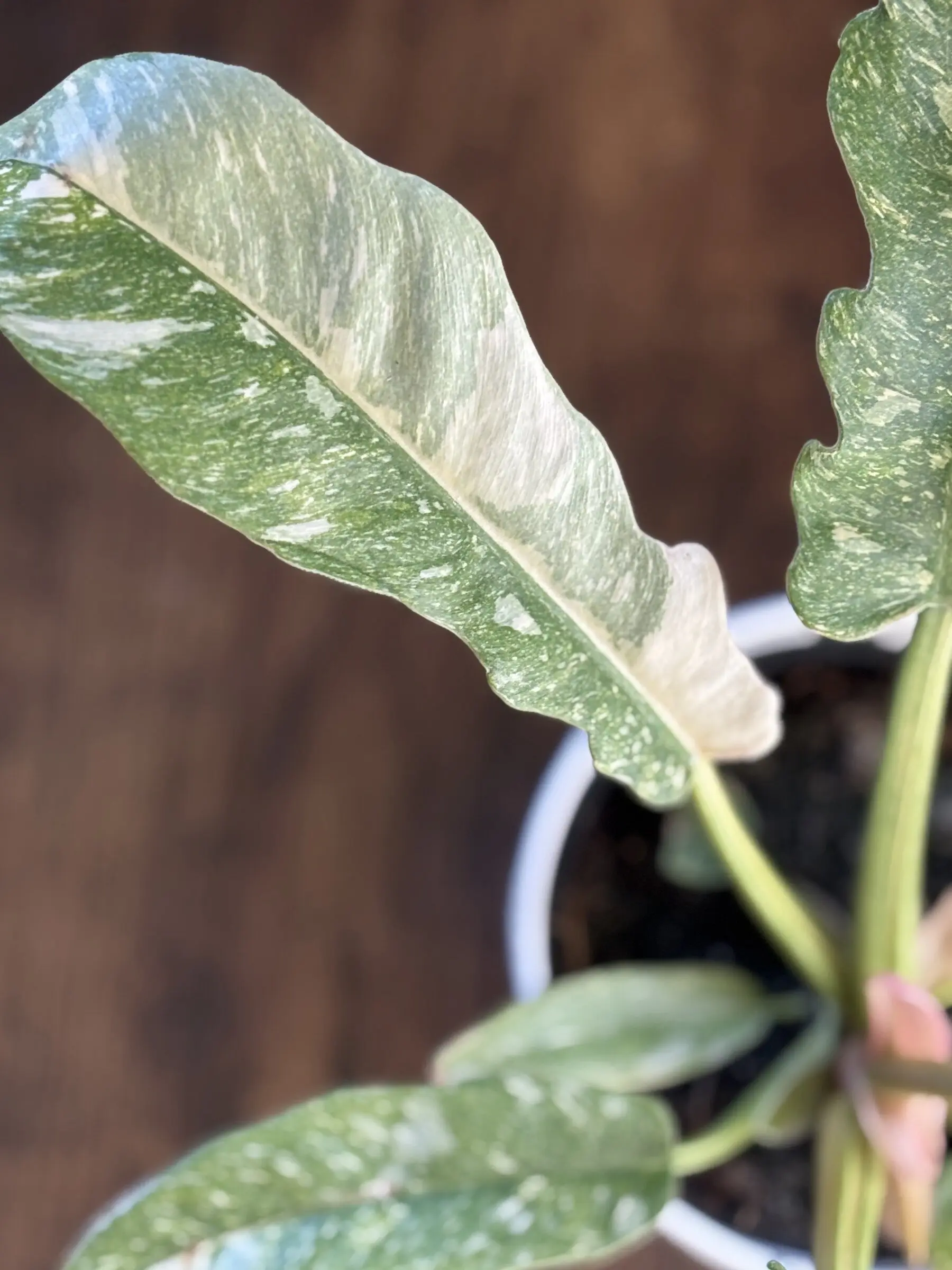
Use a chunky, well-draining aroid mix, like potting soil with orchid bark and perlite mixed in, in a pot with drainage holes. Feed a balanced water-soluble fertilizer at half strength once a month in spring and summer, and skip it in fall and winter.
As it matures, Ring of Fire can start to climb. Give it a moss pole or stake to grow up, and the leaves will usually get bigger and more dramatic. Wipe the leaves with a damp cloth every few weeks to keep them clean and dust free, and trim off any yellow or damaged leaves at the base.
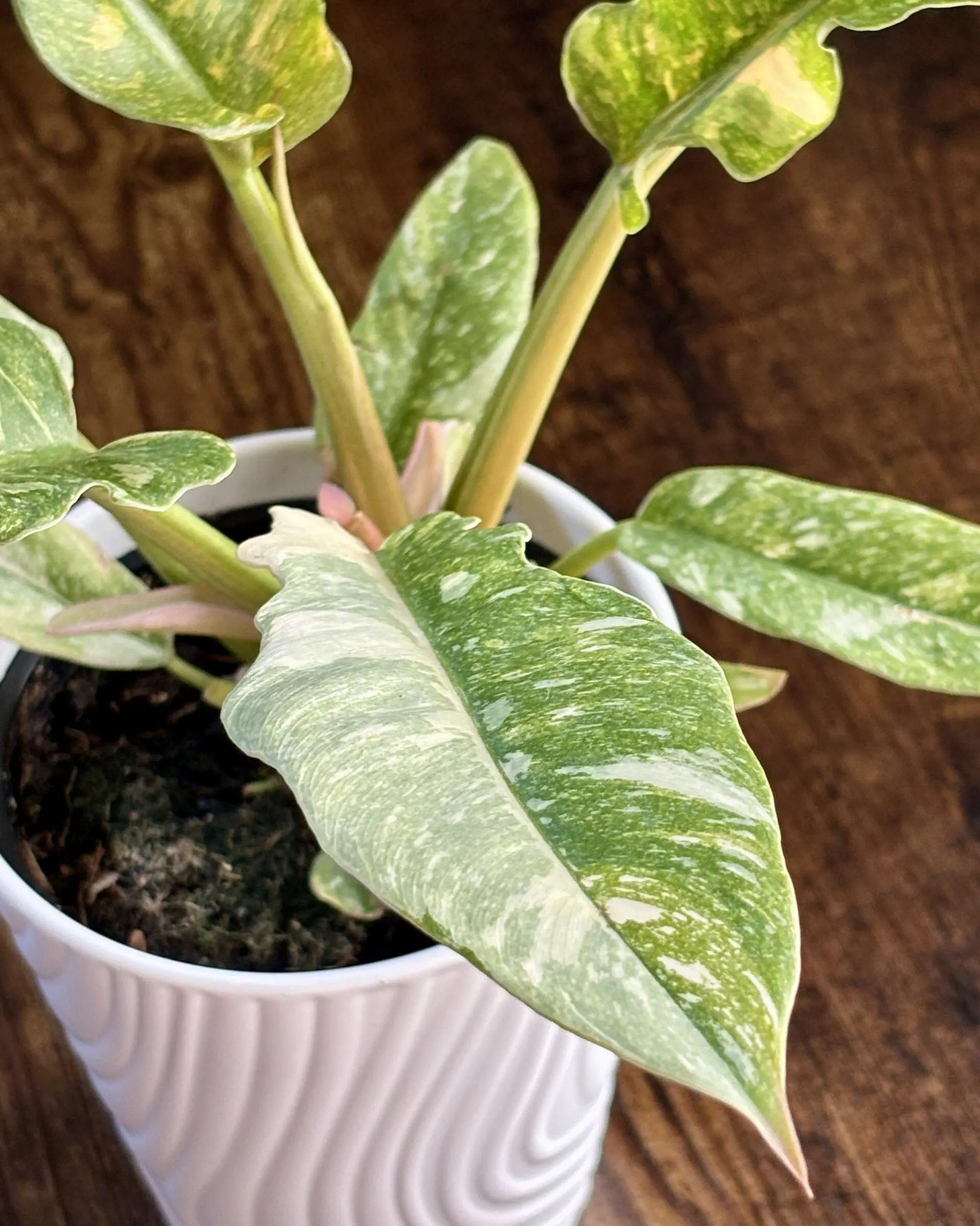
Variegation can be unpredictable. Sometimes a leaf comes in mostly green. That’s normal. Keep the light bright and the next one may be more colorful. A leaf that’s almost all cream looks stunning, but it can’t make much food for the plant, so it may not last as long.
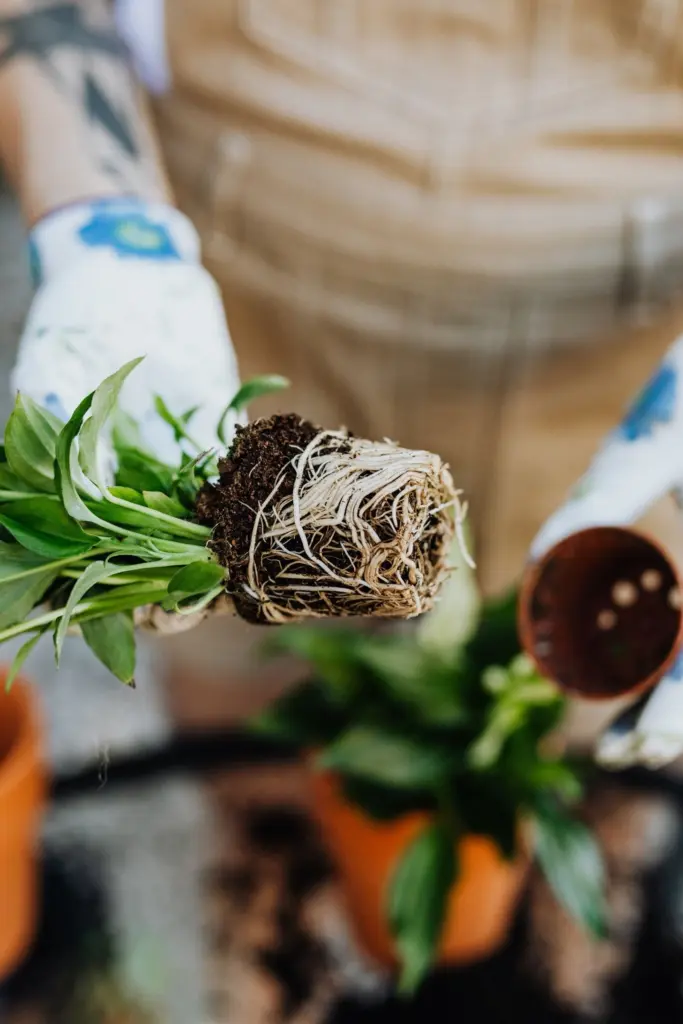
You can propagate it by stem cuttings once it has some stem to work with. Cut just below a node, the bump where a leaf meets the stem, making sure the cutting has at least one leaf. Root it in water or moist sphagnum moss, and keep it warm and in bright, indirect light. Choose a cutting with good variegation so the new plant keeps its color. It’s a slow grower, so be patient.
Repot every year or two in spring, going up just one pot size. A pot that’s too big holds extra wet soil.
Most problems come back to water, light, or dry air:
- Yellow leaves usually mean too much water.
- Brown, crispy patches on the cream areas mean dry air or too much direct sun.
- Greener new leaves mean it needs more light.
- Drooping leaves usually mean it’s thirsty.
- Watch for mealybugs (white cottony bits), spider mites (fine webbing under the leaves), and thrips (silvery streaks). Neem oil or insecticidal soap takes care of all three.
Ring of Fire is toxic to cats, dogs, and people if chewed. Like other philodendrons, it contains calcium oxalate crystals, which irritate the mouth and can cause drooling and vomiting. The sap can irritate skin, so wear gloves when taking cuttings.
Colorful, unpredictable, and worth the wait between leaves. I’d put it in the moderate care category, as long as you give it bright light and steady humidity.
| Common Name | Ring of Fire Philodendron |
|---|---|
| Botanical Name | Philodendron ‘Ring of Fire’ |
| Family | Araceae |
| Mature Size | 2-4 ft. tall indoors, more with a moss pole |
| Sun | Bright, Indirect |
| Soil | Chunky, well-drained, Slightly acidic |
| Native Area | Hybrid; philodendrons are native to Central and South America |
| Toxicity | Toxic to humans and pets |