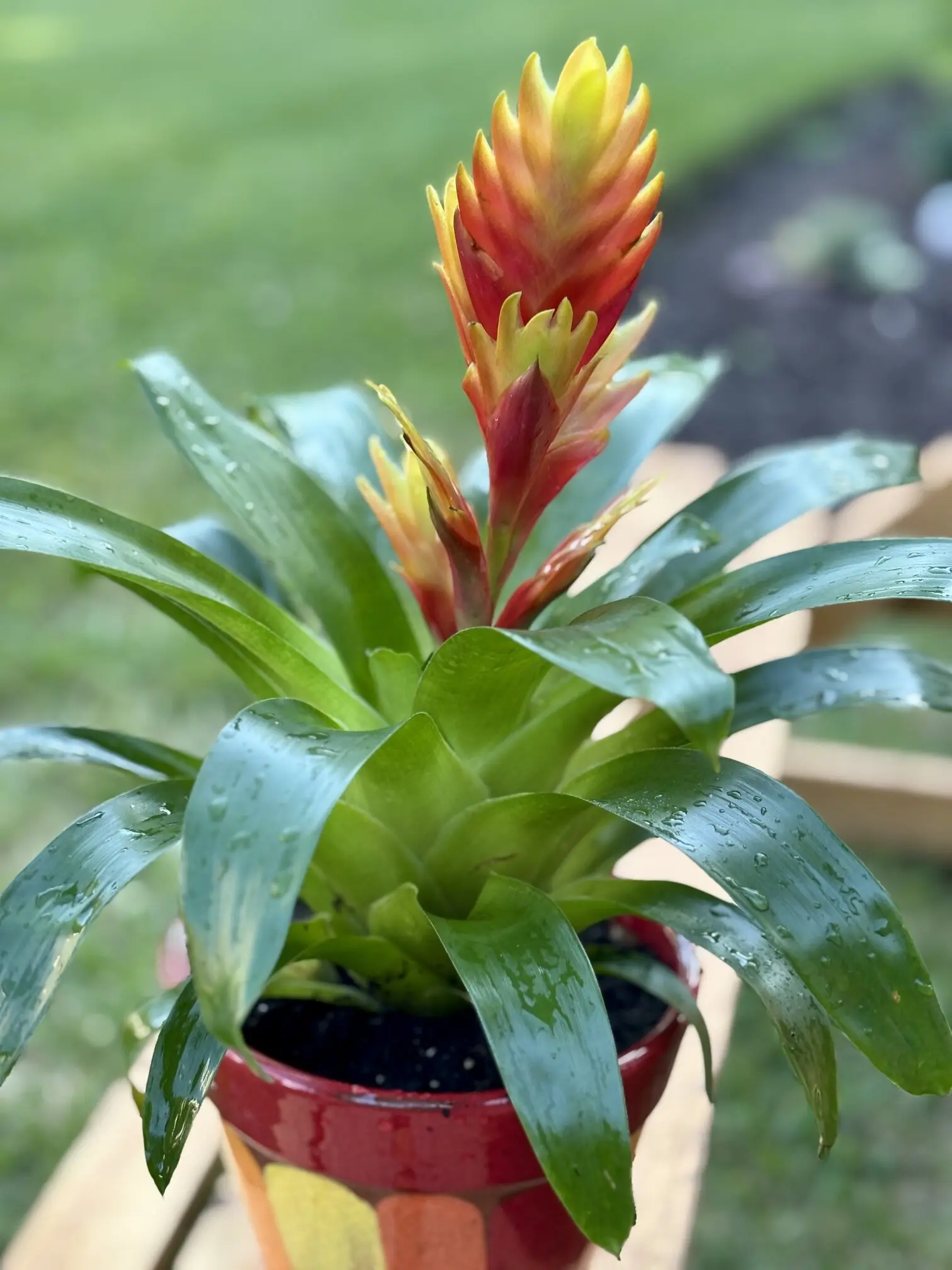
Bromeliads are some of the most colorful, tropical-looking plants you can grow, and they’re easier than they look. There are more than 3,000 kinds in the Bromeliaceae family, and yes, the pineapple is one of them. Most of the ones sold as houseplants form a rosette of stiff, strappy leaves around a center cup, with a bold, long-lasting bloom rising from the middle. Some are grown for those dramatic flower spikes in red, pink, orange, yellow, or purple. Others are grown for their leaves, which can be striped, spotted, splashed, or blushed in deep burgundy. They’re native to the tropical Americas and are hardy only in zones 10-12, so for most of us they’re houseplants or summer porch and patio plants that come inside before temps dip below 55°F.
In the wild, many bromeliads are epiphytes, which means they grow on trees instead of in the ground. Their roots are mostly for hanging on. They take in much of their water and nutrients through their leaves and that center cup. Once you understand that, their care makes a lot more sense.
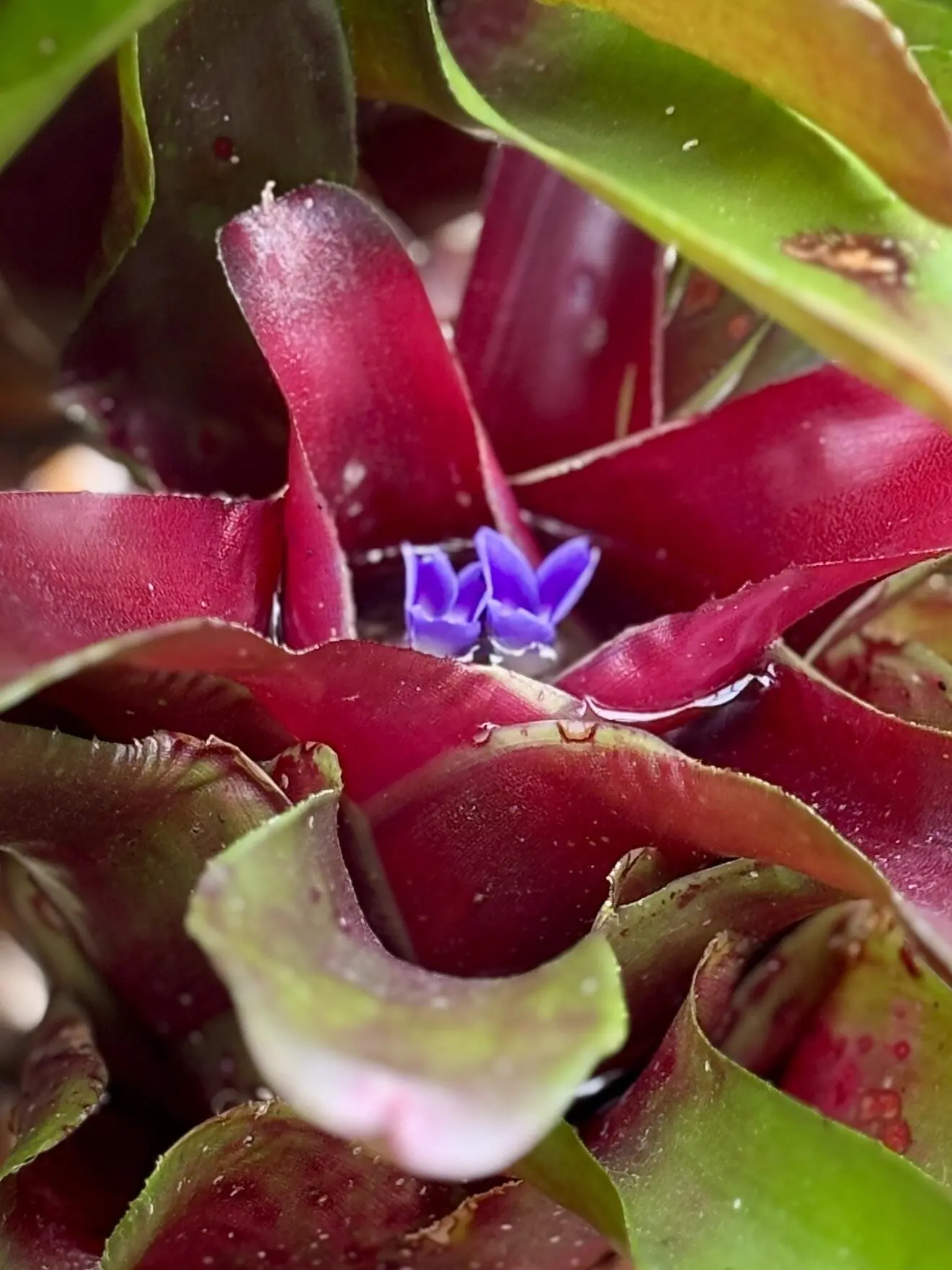
Watering is where bromeliads are different from most houseplants. Many of them have a center cup, sometimes called a tank, formed by their overlapping leaves. Keep the cup about a quarter to half full of water. Every week or two, tip the plant to empty the old water, or flush it out with fresh water, so it doesn’t get stagnant. Keep the soil lightly moist, but never soggy, and let the top inch dry out between waterings. Their roots rot easily in wet soil. Rainwater, distilled water, or filtered water is best, since bromeliads can be sensitive to the minerals and chemicals in tap water. In winter, or if the plant is in lower light, keep less water in the cup and water the soil less often. If you put your bromeliads outside for the summer, flush the cups weekly so they don’t become a mosquito nursery.
Most bromeliads want bright, indirect light. Those with soft, spineless leaves, like Guzmania and Vriesea, handle medium light well. Those with stiffer leaves, and the ones grown for their colorful foliage like Neoregelia, need brighter light to keep their colors. If the leaves look washed out or the colors fade to green, give it more light. Hot direct sun can scorch the leaves, though, so filter it with a sheer curtain or keep it a few feet back from a south or west window.
They’re happiest at 60°F to 80°F. Keep them away from cold drafts and heating vents. They like humidity, so a pebble tray, a humidifier, or grouping them with other plants helps, especially in winter when the heat is running.
Since their roots are mainly for anchoring, bromeliads don’t need much soil or a big pot. Use a loose, fast-draining mix, like orchid bark mix or a blend of potting soil, orchid bark, and perlite. Regular potting soil alone stays too wet. Choose a small, heavy pot so the plant doesn’t tip over. Avoid copper and metal containers, which can harm bromeliads.
They’re light feeders. During spring and summer, use a balanced water-soluble fertilizer at a quarter strength once a month, either watered into the soil or misted on the leaves. Skip it in fall and winter. Too much fertilizer leads to floppy growth and can burn the leaves.
Here’s the part that surprises a lot of people: each bromeliad rosette blooms only once. The good news is that the bloom lasts a long time, often two to six months. After it fades, the mother plant slowly starts to decline. It isn’t something you did wrong. That’s just its life cycle. But before it goes, it sends up baby plants called pups around its base.
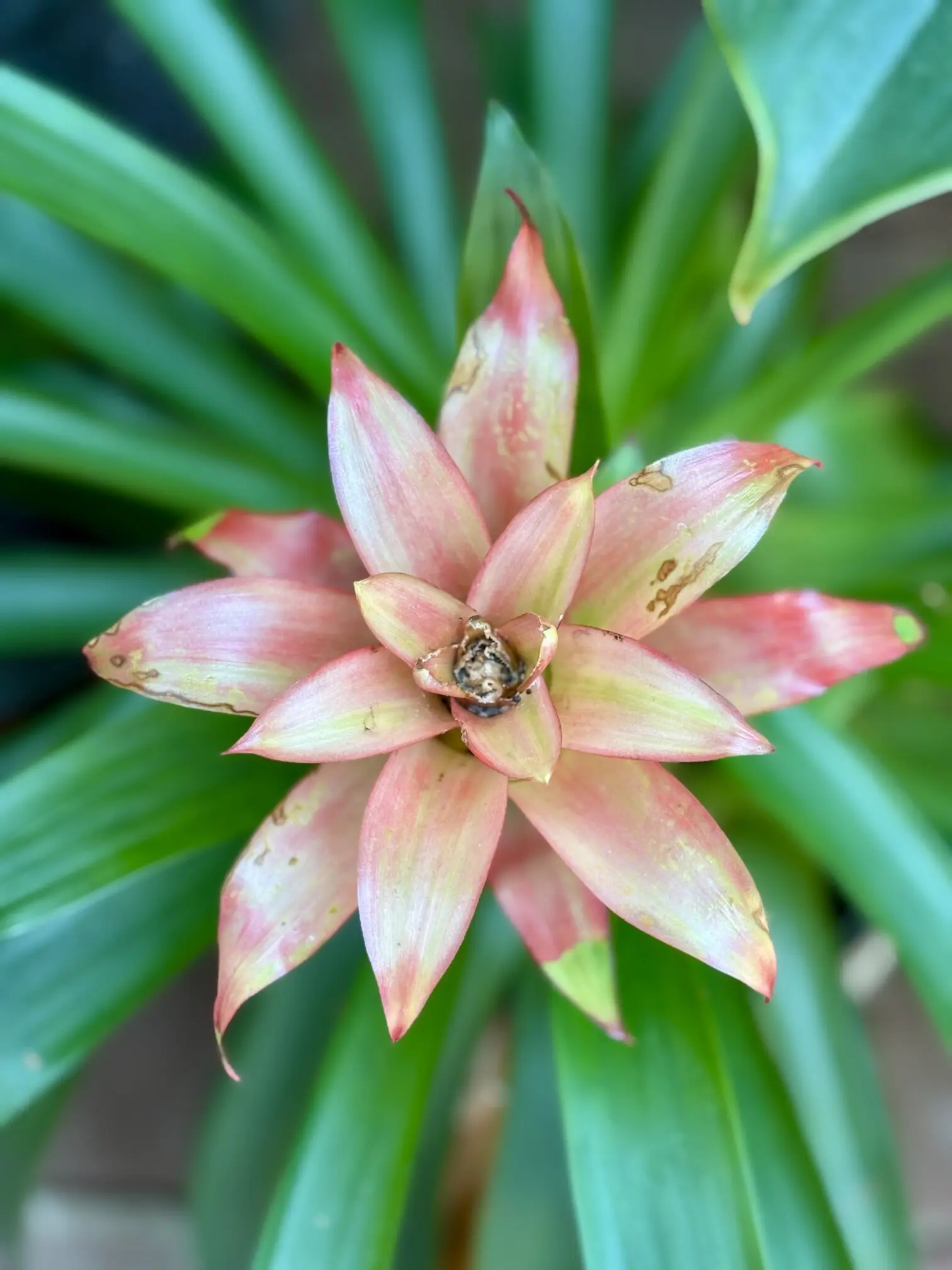
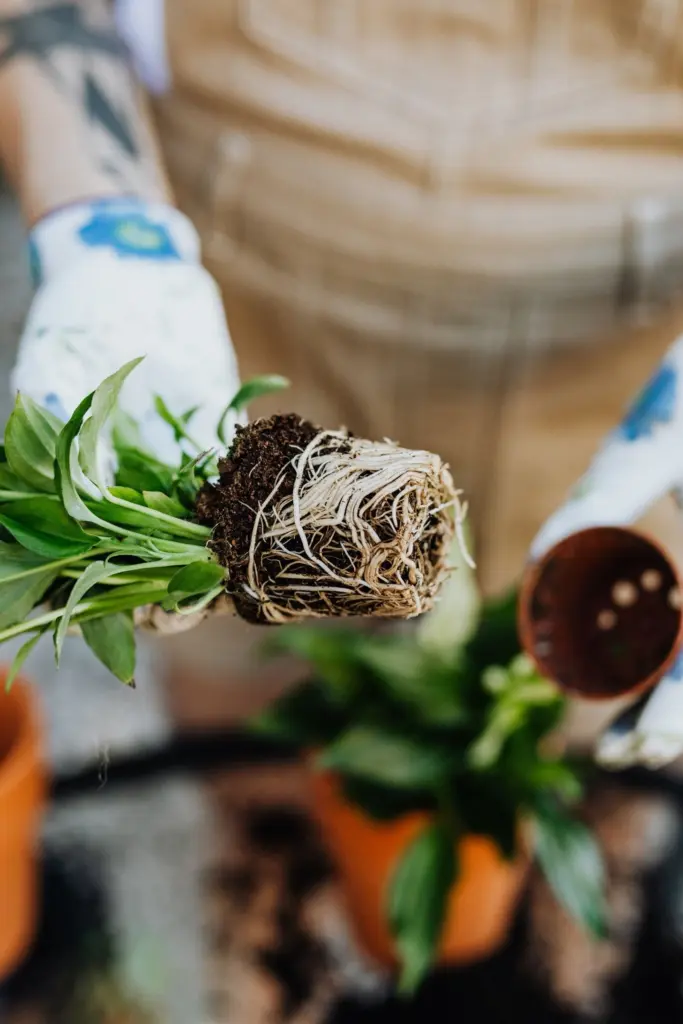
Once the bloom fades, you can cut the flower stalk off near the base. Keep caring for the mother plant as usual so it has the energy to produce pups. When the pups are about a third to half the size of the mother plant and have a few roots of their own, they’re ready to separate. Gently pull the plant out of the pot, then use a clean, sharp knife to cut each pup away from the mother as close to her as you can. Pot the pups in small pots of fresh, fast-draining mix, and care for them just like the mother plant. Spring and summer are the best times. You can also leave the pups in place and remove the old mother plant once it dries up, which gives you a fuller clump.
Pups usually take one to three years to bloom. If yours is mature and still won’t flower, you can try a trick: empty the cup, then put the plant in a clear plastic bag with a ripe apple for about a week, out of direct sun. The apple gives off ethylene gas, which can trigger a bloom. Flowers usually appear in 6-14 weeks.
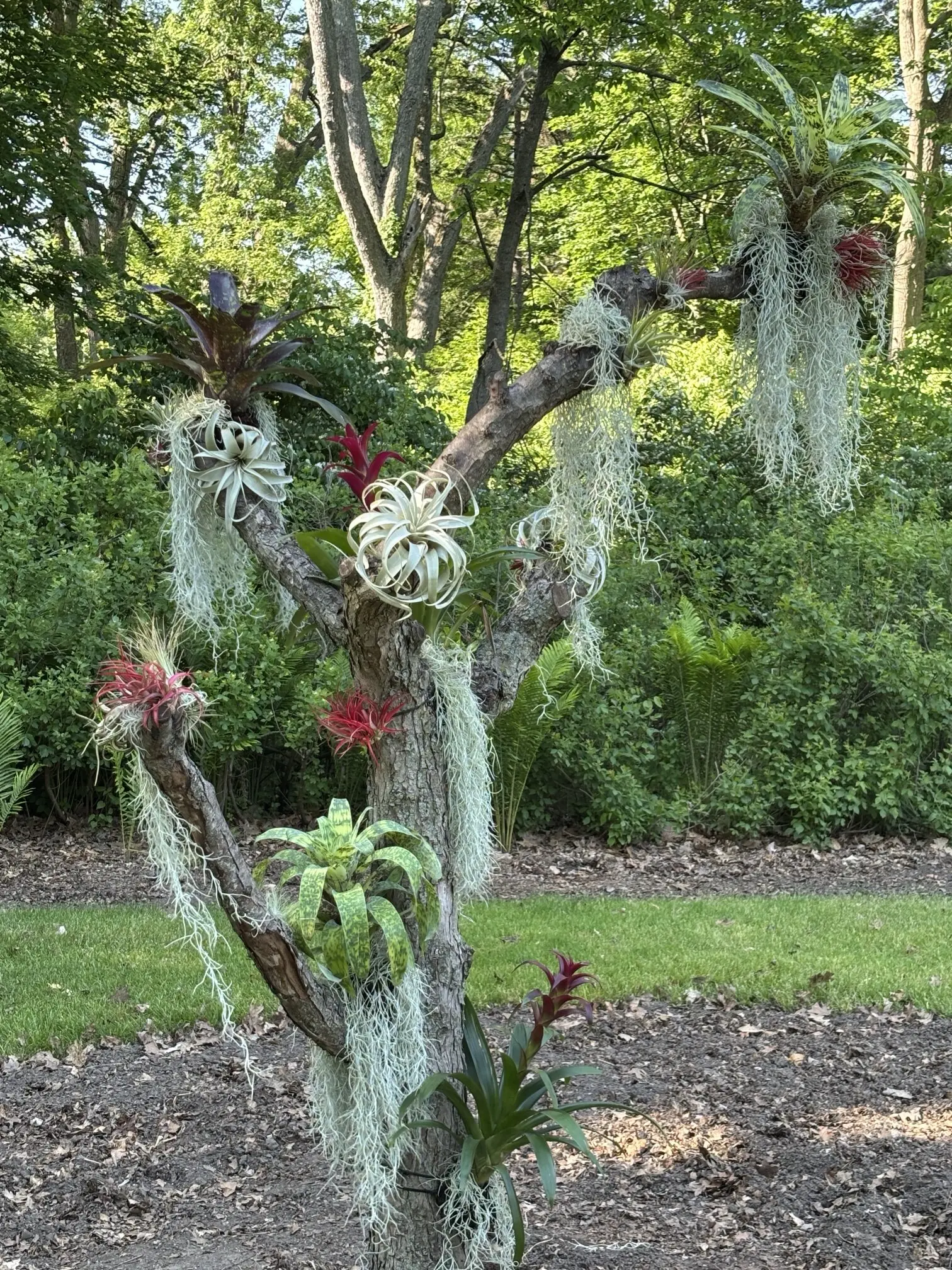
Because they grow on trees in nature, many bromeliads can also be mounted on wood, cork bark, or a branch instead of potted. Wrap the roots in a little sphagnum moss and attach the plant with fishing line, plant ties, or plant-safe glue. Mounted bromeliads dry out faster, so mist them and keep their cups filled. A mounted display like this makes a stunning summer feature in the garden or on a porch.
Most problems come back to water:
- A mushy, brown center usually means rot from soggy soil, stagnant water in the cup, or cold. Empty the cup, let the soil dry out, and keep it warmer.
- Brown, crispy leaf tips usually come from dry air or minerals in tap water. Switch to rainwater or filtered water and raise the humidity.
- Faded or greenish leaves mean it needs more light.
- Watch for scale (small brown bumps on the leaves) and mealybugs (white cottony bits), especially at the base of the leaves. Wipe them off and treat with insecticidal soap. Avoid oil-based sprays like neem oil, which can clog bromeliad leaves and damage the plant.
Good news for pet owners: bromeliads are generally considered non-toxic to cats and dogs. Some types do have spiny leaf edges, though, so keep them where curious pets and kids won’t get poked.
Popular Types of Bromeliads
There are thousands of bromeliads, but these are the ones you’re most likely to find at a garden center:
- Guzmania: The classic star-shaped bloom in red, orange, yellow, or pink, with soft, glossy, spineless leaves. One of the easiest to grow indoors.
- Aechmea (Silver Vase): Silvery, banded leaves and a pink bloom dotted with blue-purple flowers. Its leaves have small spines along the edges.
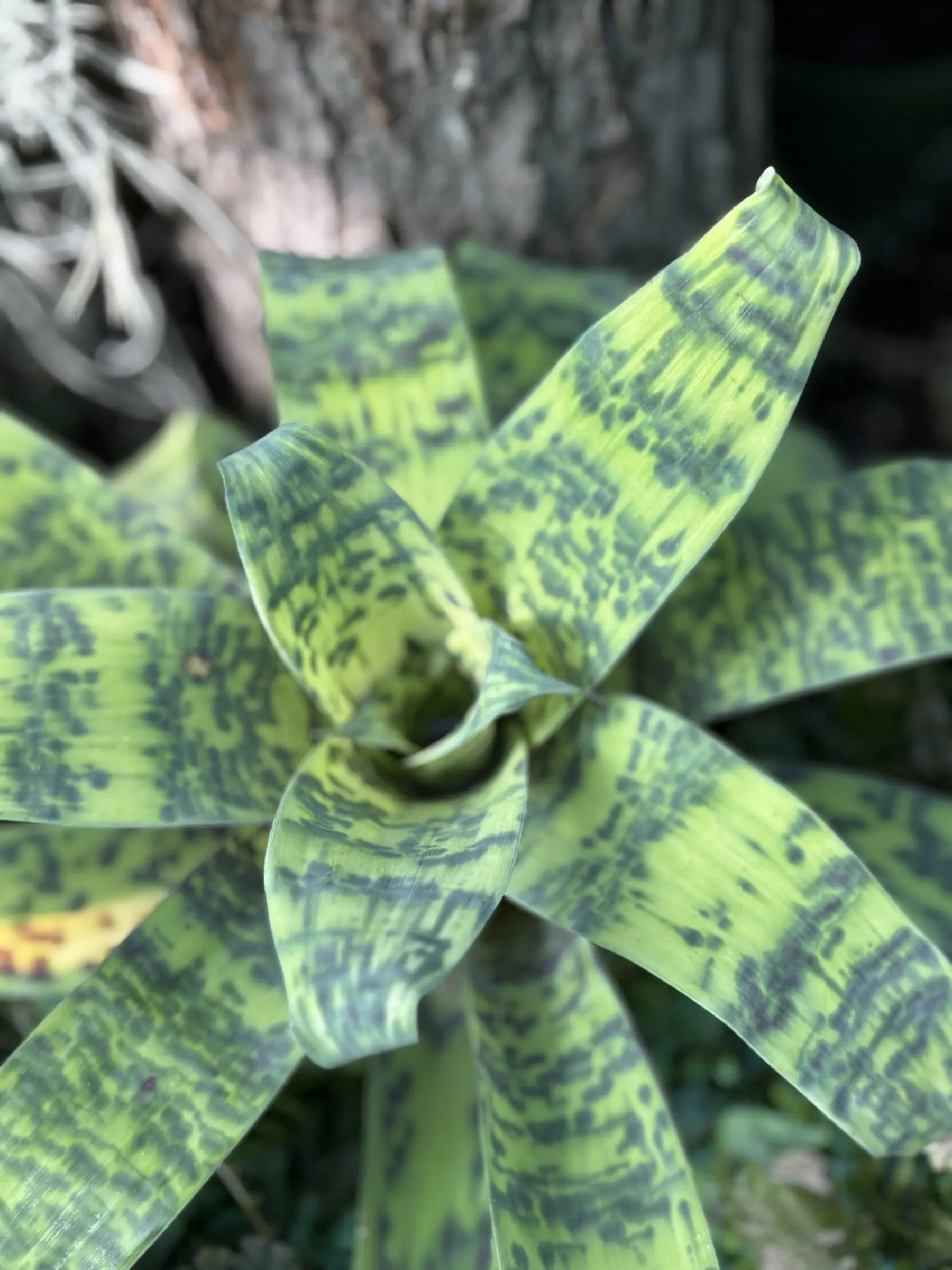
- Vriesea (Flaming Sword): Flat, sword-shaped flower spikes in red and yellow. Some types also have beautiful banded or mottled leaves.
- Neoregelia: Grown mostly for their colorful leaves, which can be burgundy, spotted, or splashed with color. The center blushes bright red or pink when they bloom, and their small flowers sit right in the cup.
- Pink Quill: A smaller bromeliad with grassy leaves and a flat, bright pink quill. It’s a cousin of air plants that grows happily in a pot.
Colorful, forgiving, and long-blooming. I’d put bromeliads in the beginner-friendly category, as long as you go easy on the soil water and keep that cup fresh.
| Common Name | Bromeliad |
|---|---|
| Botanical Name | Bromeliaceae family (Guzmania, Aechmea, Vriesea, Neoregelia and more) |
| Family | Bromeliaceae |
| Mature Size | 1-3 ft. tall and wide for most houseplant types |
| Sun | Bright, Indirect |
| Soil | Loose, fast-draining (orchid or bromeliad mix) |
| Flower Color | Red, pink, orange, yellow, purple |
| Native Area | Tropical Americas |
| Toxicity | Non-toxic to pets |