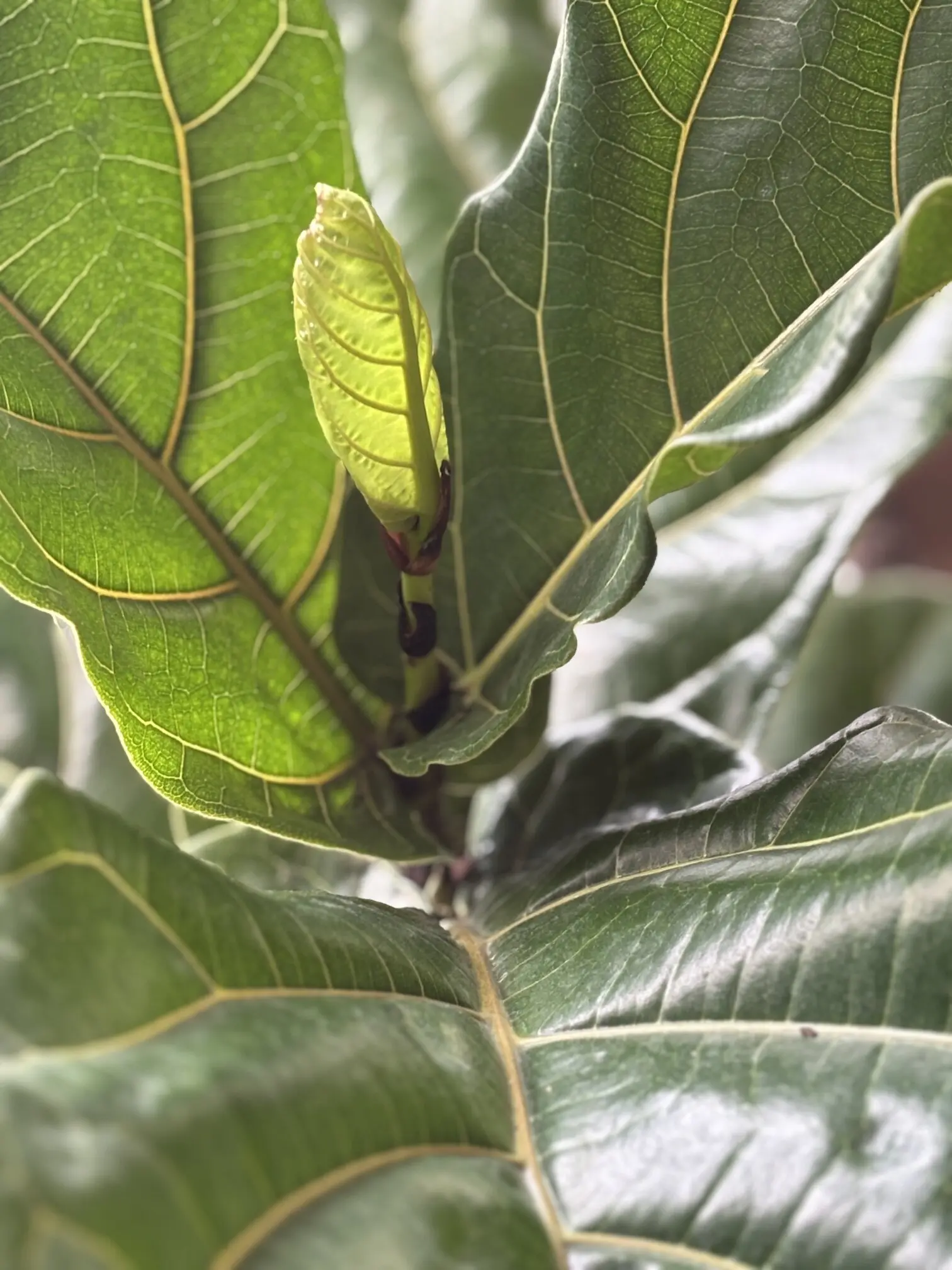
Fiddle Leaf Fig, also known as Ficus lyrata, is the plant you’ve seen in every magazine living room. Its huge, glossy, violin-shaped leaves have wavy edges and bold, pale veins, and a healthy one makes a real statement in a room. It’s a ficus, in the same family (Moraceae) as the rubber plant and weeping fig. In its native West African rainforests, it grows into a tree 40-50 feet tall. Indoors, it usually tops out at 6-10 feet, and you can keep it smaller with pruning. It’s hardy only in zones 10-12, so for most of us it’s a houseplant, with an optional summer outdoors.
It has a reputation for being fussy, and honestly, it’s earned. But most of the drama comes down to two things: it wants plenty of light, and it hates change. Get those right, and it’s much easier than its reputation.
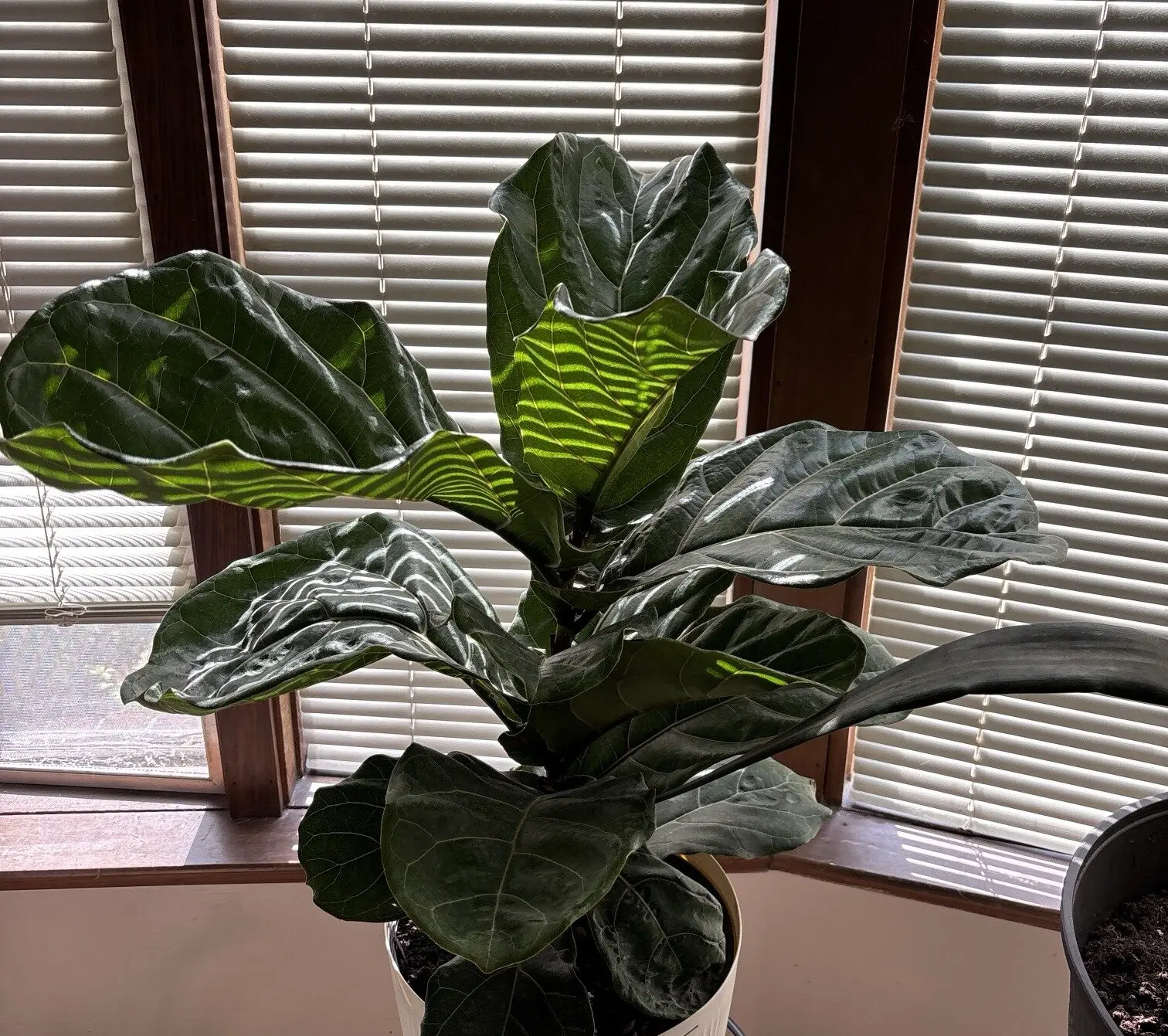
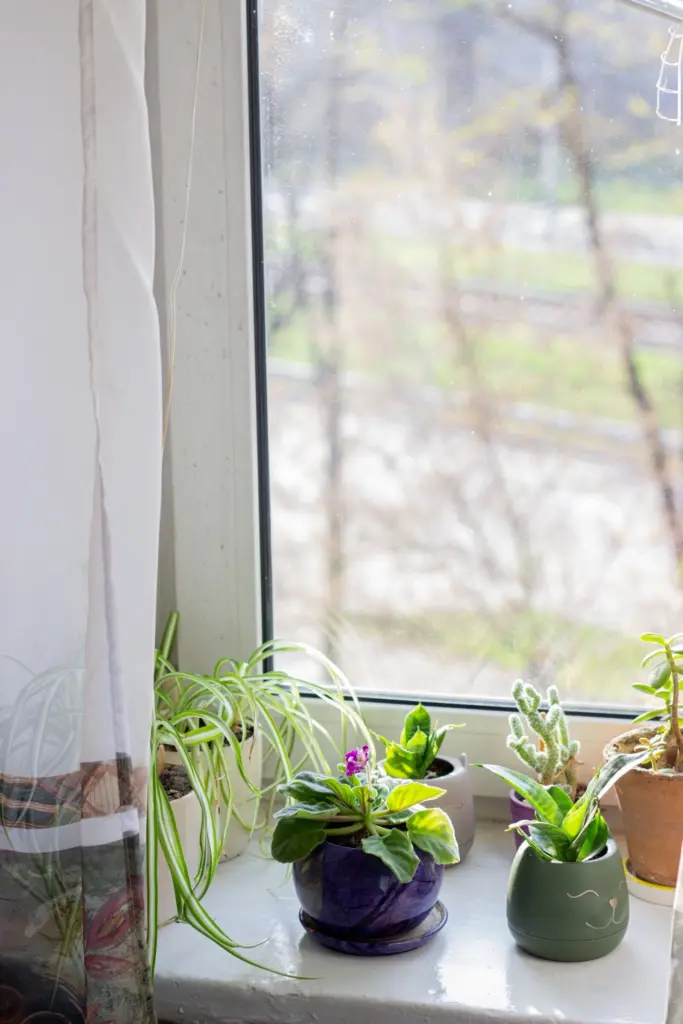
Light is the big one. Fiddle leaf figs need lots of bright light, more than most houseplants, and a dim corner will slowly starve one. Put it right in front of a bright window. An east-facing window is ideal, and it can handle a few hours of gentle morning sun. Once it’s used to it, it can even take some direct sun. Strong afternoon sun through a south or west window can scorch the leaves, though, so filter it with sheer curtains or blinds. Turn the plant a quarter turn every week or two so it grows straight instead of leaning toward the light.
Fiddle leaf figs hate change. Bringing one home, moving it to a new room, a cold draft, or even turning it too much can make it drop leaves. Pick a good spot and leave it there. Expect some leaf drop when you first bring it home. It’s adjusting, not dying.
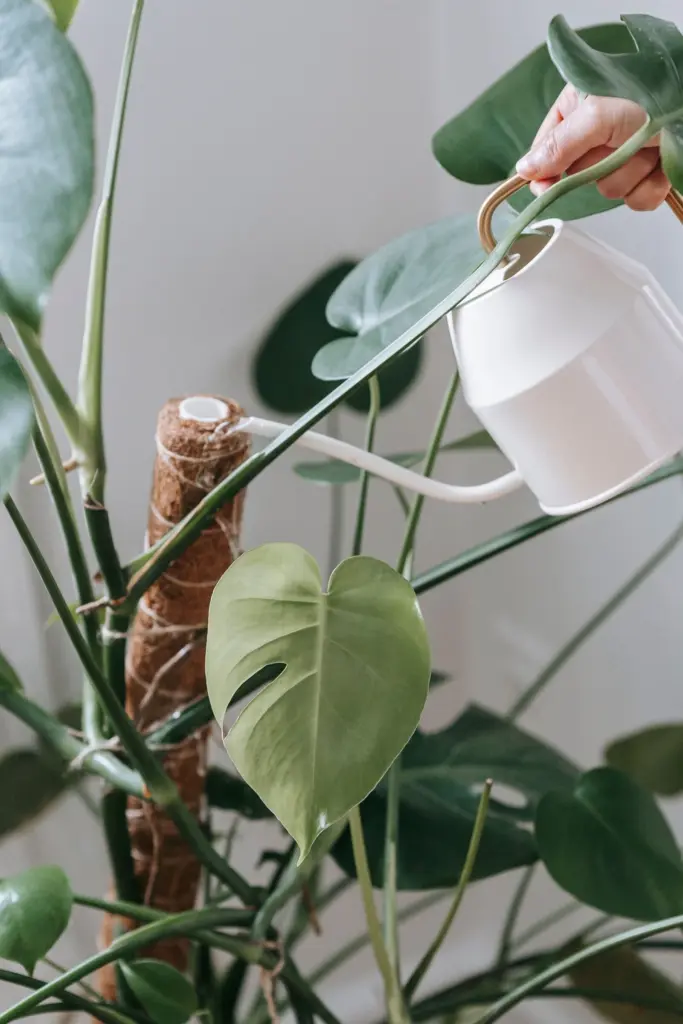
Water when the top 2 inches of soil are dry. Water thoroughly until it runs out the drainage holes, then empty the saucer. It doesn’t want to sit in water, and it doesn’t want to dry out completely. Consistency is key. Big swings between bone dry and soaking wet stress the plant. In winter, when growth slows, it will need water less often.
It’s happiest at 65°F to 80°F and doesn’t like cold. Keep it away from drafts, cold windows, doors that open in winter, and heating and air conditioning vents. Average household humidity is fine, though it appreciates a humidifier when the heat is running.
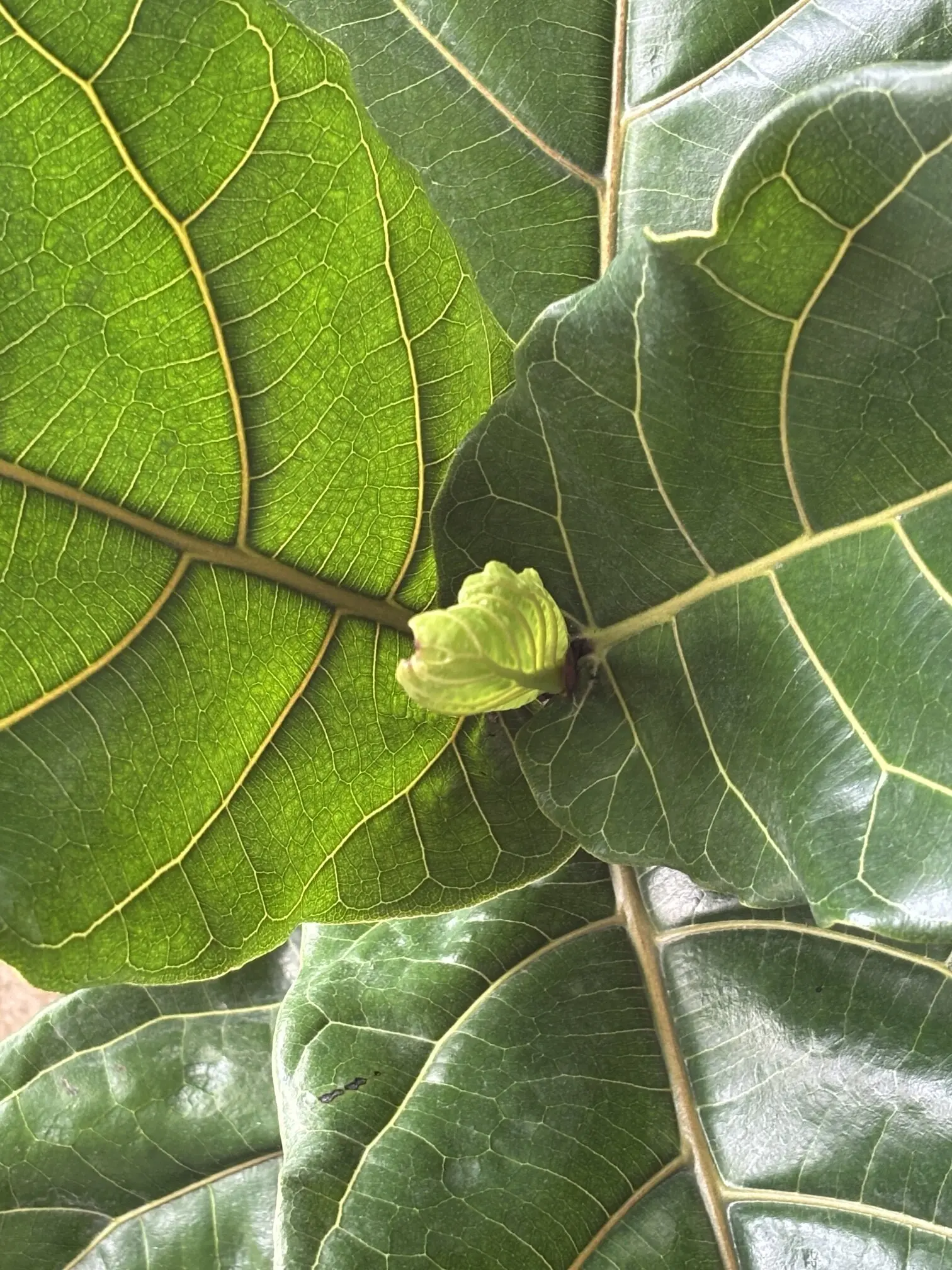
Use a well-draining potting mix with some perlite or orchid bark mixed in, and a pot with drainage holes. Feed a water-soluble fertilizer monthly during spring and summer, and skip it in fall and winter. Fiddle leaf figs are heavy feeders while they’re actively growing.
The big leaves collect dust. Wipe them with a damp cloth every few weeks. It keeps them shiny, helps them take in light, and lets you check for pests.
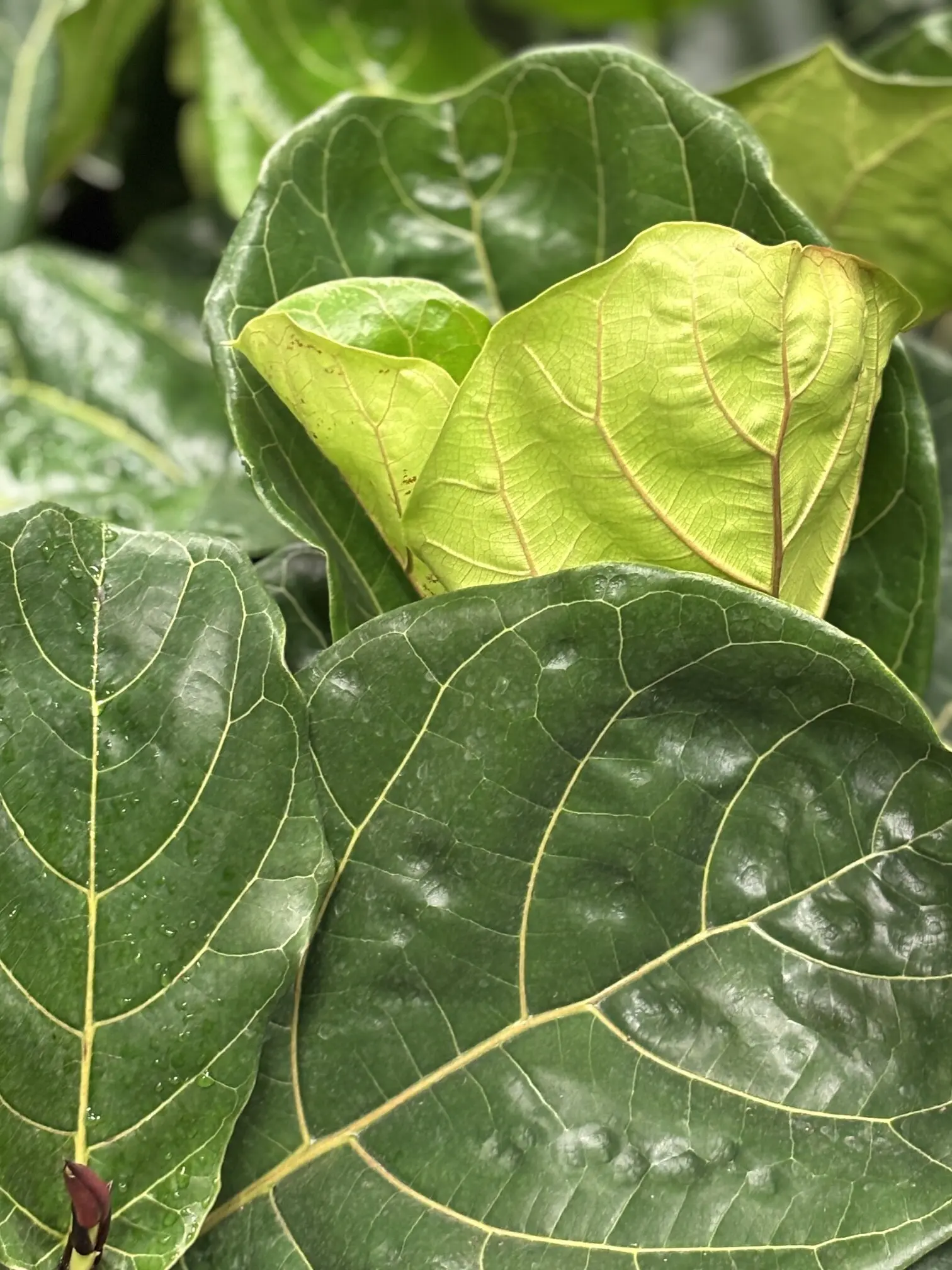
New leaves come in a lighter, brighter green and darken as they mature. You may also notice tiny reddish-brown dots on new leaves. That’s usually edema, which happens when the roots take up water faster than the leaves can use it, often after a big watering. It’s harmless and typically fades as the leaf matures. Keeping your watering consistent helps prevent it.
Fiddle leaf figs naturally grow as a single tall stem. If you want a fuller plant, you can encourage branching. In spring or early summer, prune the top few inches off the main stem, just above a leaf. New branches usually grow from just below the cut. Wear gloves. Like the rubber plant, it bleeds a milky white sap that can irritate skin. You can root the piece you cut off in water. It takes a few weeks to a couple of months.
Fiddle leaf figs give you clues when something’s wrong:
- Dark brown spots in the middle or at the base of leaves, especially lower leaves, usually mean overwatering and possibly root rot.
- Crispy, light brown edges usually mean underwatering or dry air.
- Sudden leaf drop usually means a change: a move, a draft, or a cold snap.
- Small new leaves and leaning or leggy growth mean it needs more light.
- Brown spots right after the plant got direct sun can be sunburn.
Watch for spider mites, mealybugs, and scale. Neem oil or insecticidal soap takes care of all three.
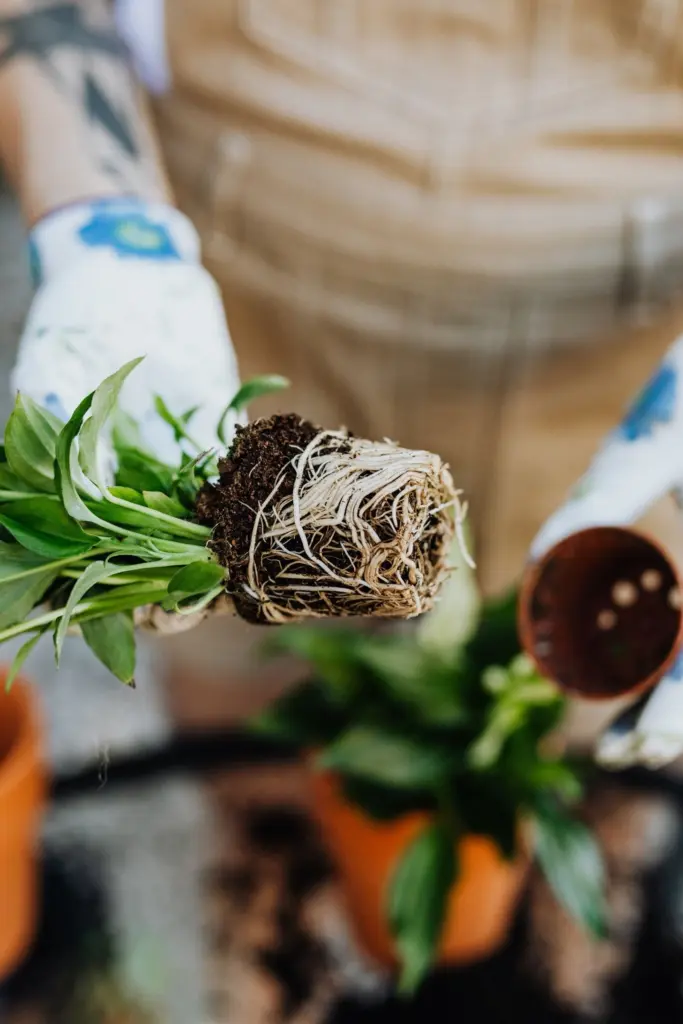
Repot every year or two in spring, when roots start circling the pot. Go up just one pot size, about 2 inches wider. A pot that’s too big holds extra wet soil, and that’s an invitation for root rot. Once a plant gets very large, you can top-dress it with fresh soil instead of repotting.
Fiddle leaf figs are toxic to pets and people if chewed or eaten. The milky sap can irritate skin and upset a pet’s stomach, so keep it out of reach of curious cats and dogs.
Dramatic, but worth it. I’d put it in the moderate care category. It’s a good plant for someone who has a bright window to spare and won’t be tempted to move it around.
| Common Name | Fiddle Leaf Fig |
|---|---|
| Botanical Name | Ficus lyrata |
| Family | Moraceae |
| Mature Size | 6-10 ft. indoors |
| Sun | Bright, Indirect; some morning sun |
| Soil | Well-drained, Slightly acidic |
| Native Area | West Africa |
| Toxicity | Toxic to humans and pets |