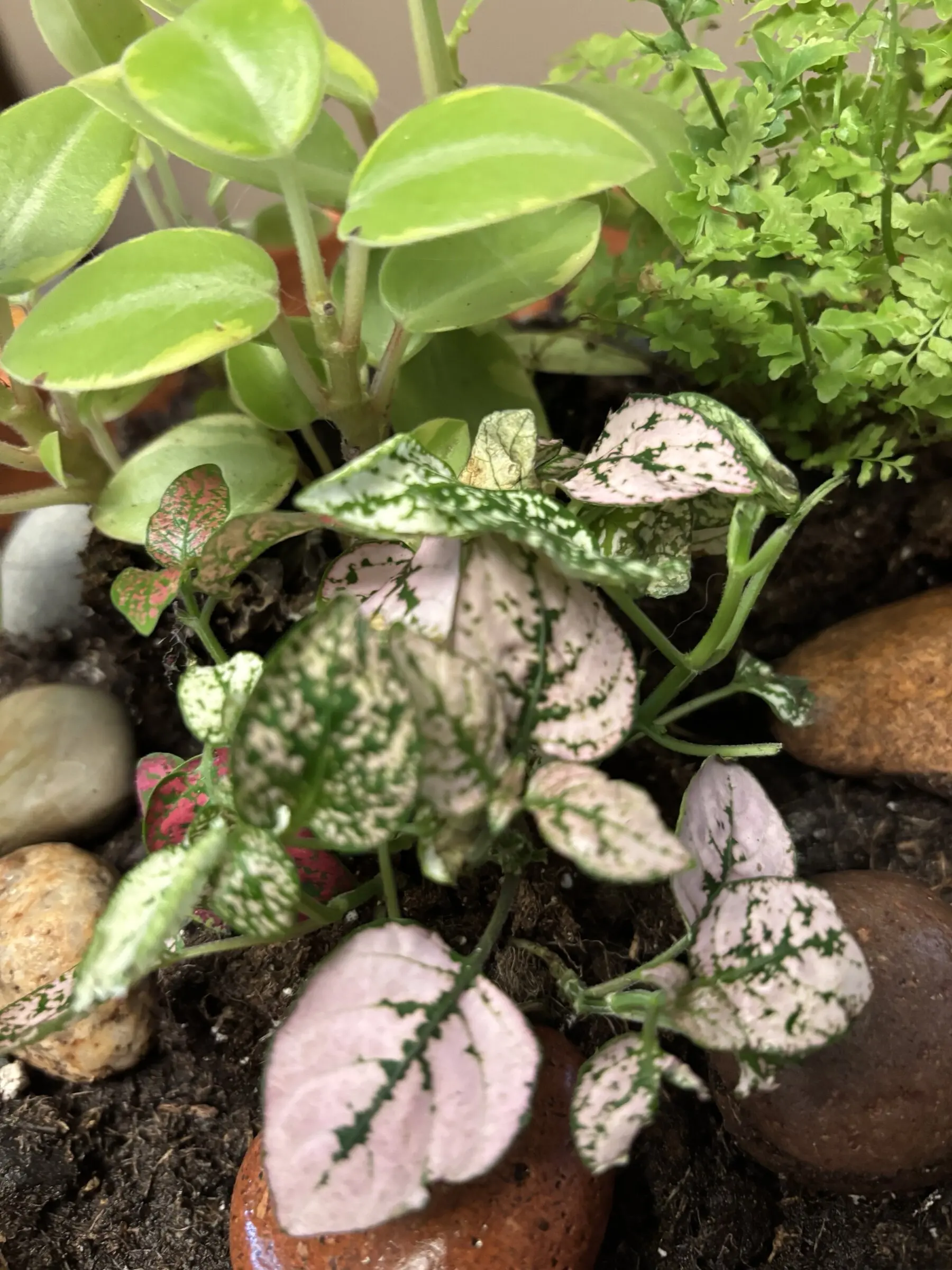
Polka Dot Plant, also known as Freckle Face, is about as cheerful as a houseplant gets. Its small, oval leaves are splashed and speckled with pink, white, or red over green, and every leaf looks like someone flicked paint across it. Its botanical name is Hypoestes phyllostachya. It’s native to Madagascar and hardy only in zones 10-11, so for most of us it’s a houseplant, or a bedding and container plant for summer. You’ll often find it sold in little pots in mixed colors, like the pink, white, and red ones in my dish garden.
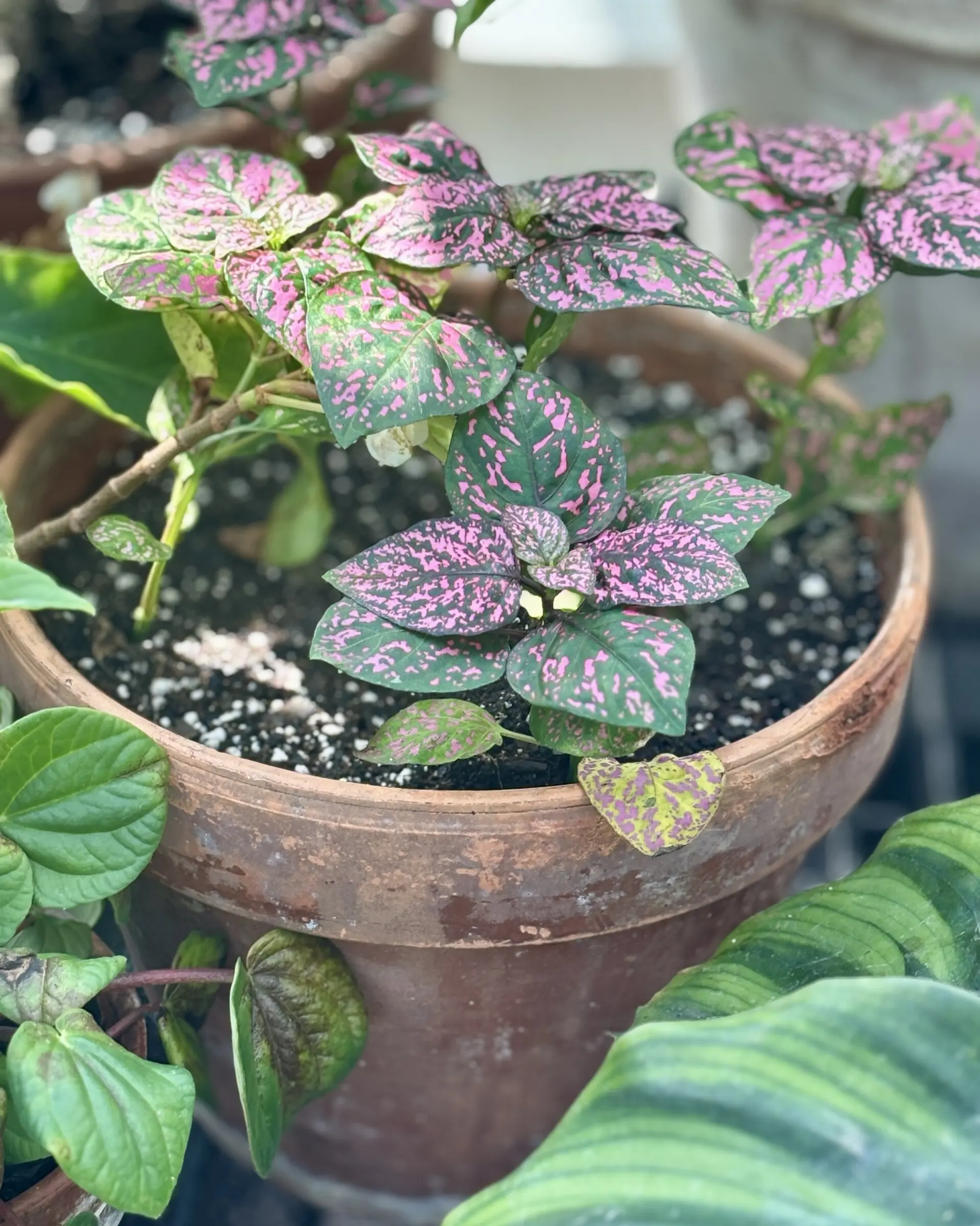
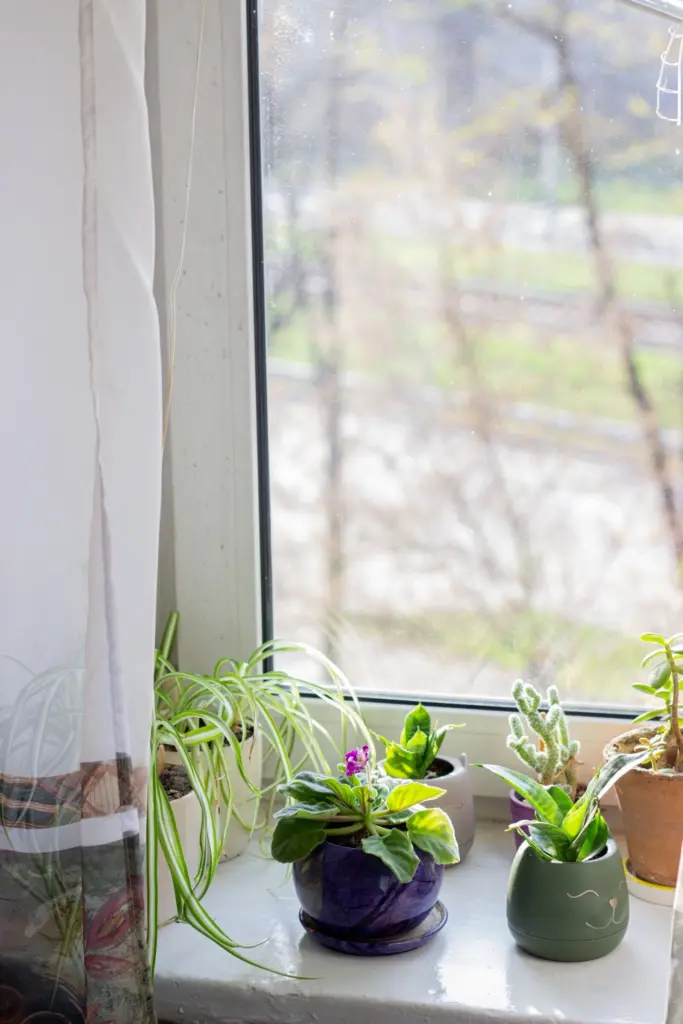
It needs bright, indirect light to keep its color. In too little light, the spots fade, the leaves turn mostly green, and the stems stretch out and get leggy. Too much direct sun can scorch the leaves and wash out the color, too. An east-facing window or a spot near a bright south or west window, out of the direct rays, is ideal.
Keep the soil evenly moist, but not soggy. Water when the top inch of soil starts to feel dry. This plant is a bit dramatic. If it dries out, it wilts and flops over, and it can look like it’s done for. Give it a good drink and it usually perks right back up within a few hours. Try not to let that happen too often, though, because repeated wilting leads to crispy, dropped leaves. On the flip side, soggy soil leads to root rot and yellow leaves.
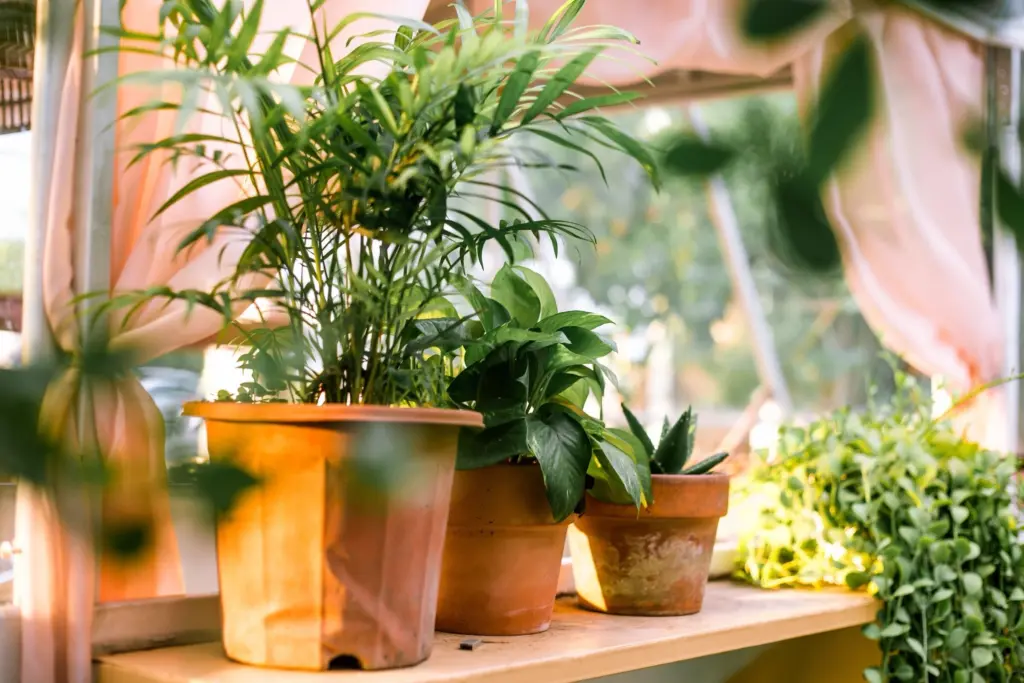
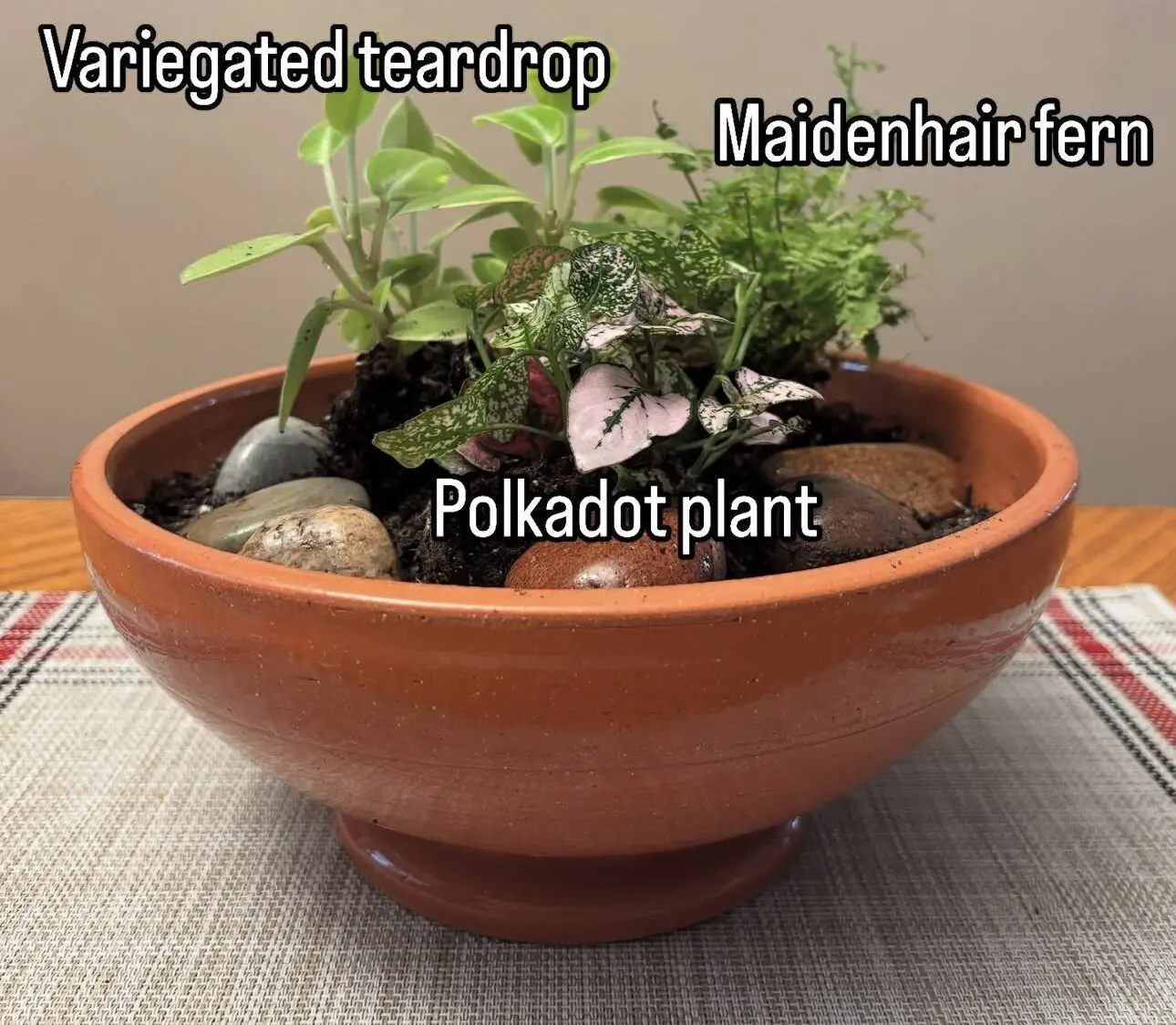
It’s happiest at 65°F to 80°F. Keep it away from cold drafts and heating vents, and don’t let it sit below 60°F. It likes humidity, so a pebble tray, a humidifier, or grouping it with other plants helps, especially in winter when the heat is running. Polka dot plants are wonderful in dish gardens and terrariums. They stay small, love humidity, and add a pop of color next to green plants. In mine, I paired them with a variegated teardrop peperomia for height and a maidenhair fern for soft, airy texture, then tucked river stones around them. Mix the pink, white, and red ones together for the most color. When you plan a dish garden, choose plants that like the same conditions. These three all want bright, indirect light, humidity, and evenly moist soil, so they’re easy to care for together. A shallow bowl doesn’t hold much soil, so check it often. It dries out faster than a regular pot.
Use a well-draining, all-purpose potting mix with some perlite added, in a pot with drainage holes. Feed a water-soluble fertilizer, diluted to half strength, monthly during spring and summer. Too much fertilizer can actually dull the color, so go easy.
Pinching is the secret to a nice, bushy polka dot plant. Pinch off the top set of leaves on each stem every couple of weeks during the growing season. Each pinch makes the stem branch into two, which keeps the plant full instead of tall and floppy. It will also send up small, lavender flower spikes. They’re pretty, but once it flowers, the plant puts its energy into making seeds and can start to decline. Pinch off the flower spikes as soon as you see them to keep it going longer.
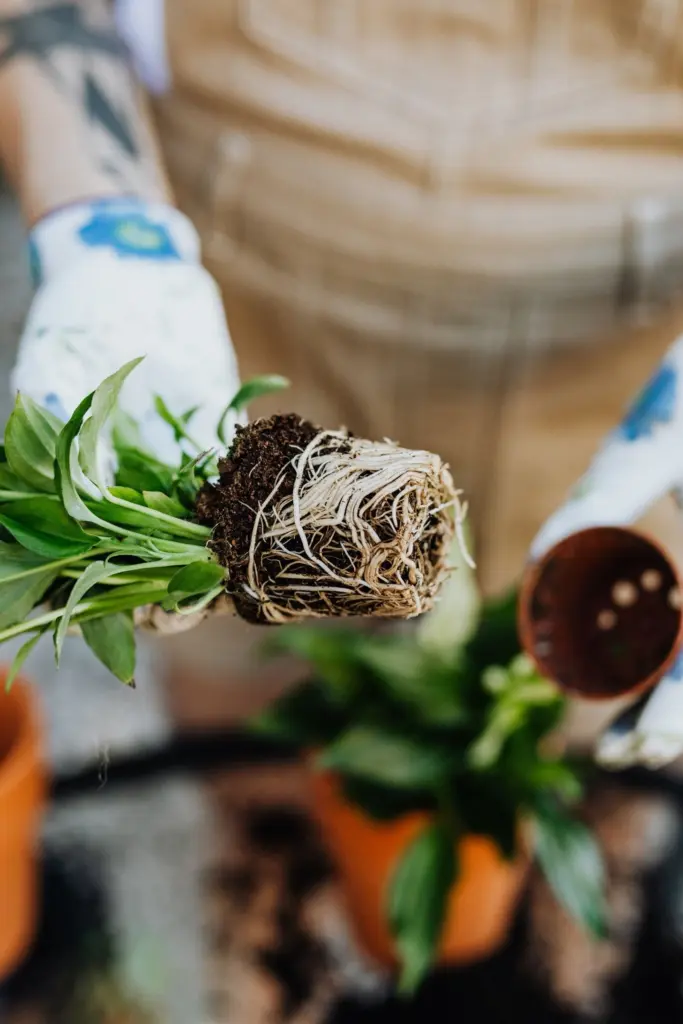
Even with good care, polka dot plants aren’t long-lived. They usually last a year or two before they get woody and tired. The good news is they’re very easy to start over. Take a 2-4 inch stem cutting, remove the lower leaves, and place it in water or moist soil. Roots form in a week or two. Your pinched-off tips can become new plants, so you’ll never run out.
Most problems come back to light or water. Faded color and leggy stems mean it needs more light. Wilting means it’s thirsty. Yellow leaves usually mean too much water. Crispy brown edges mean dry air. Watch for whiteflies, aphids, and mealybugs, which can be treated with insecticidal soap or neem oil.
Repot in spring if it outgrows its pot, going up just one size. Many people simply refresh it with new cuttings instead.
Good news for pet owners: polka dot plants are considered non-toxic to cats and dogs.
Colorful, easy, and pet-friendly, as long as you keep up with water and pinching. I’d put it in the beginner-friendly category. It’s perfect for dish gardens, and it’s a fun first plant for kids.
| Common Name | Polka Dot Plant, Freckle Face |
|---|---|
| Botanical Name | Hypoestes phyllostachya |
| Family | Acanthaceae |
| Mature Size | 1-2 ft. tall and wide; smaller indoors |
| Sun | Bright, Indirect |
| Soil | Moist, well-drained |
| Native Area | Madagascar |
| Toxicity | Non-toxic to pets |