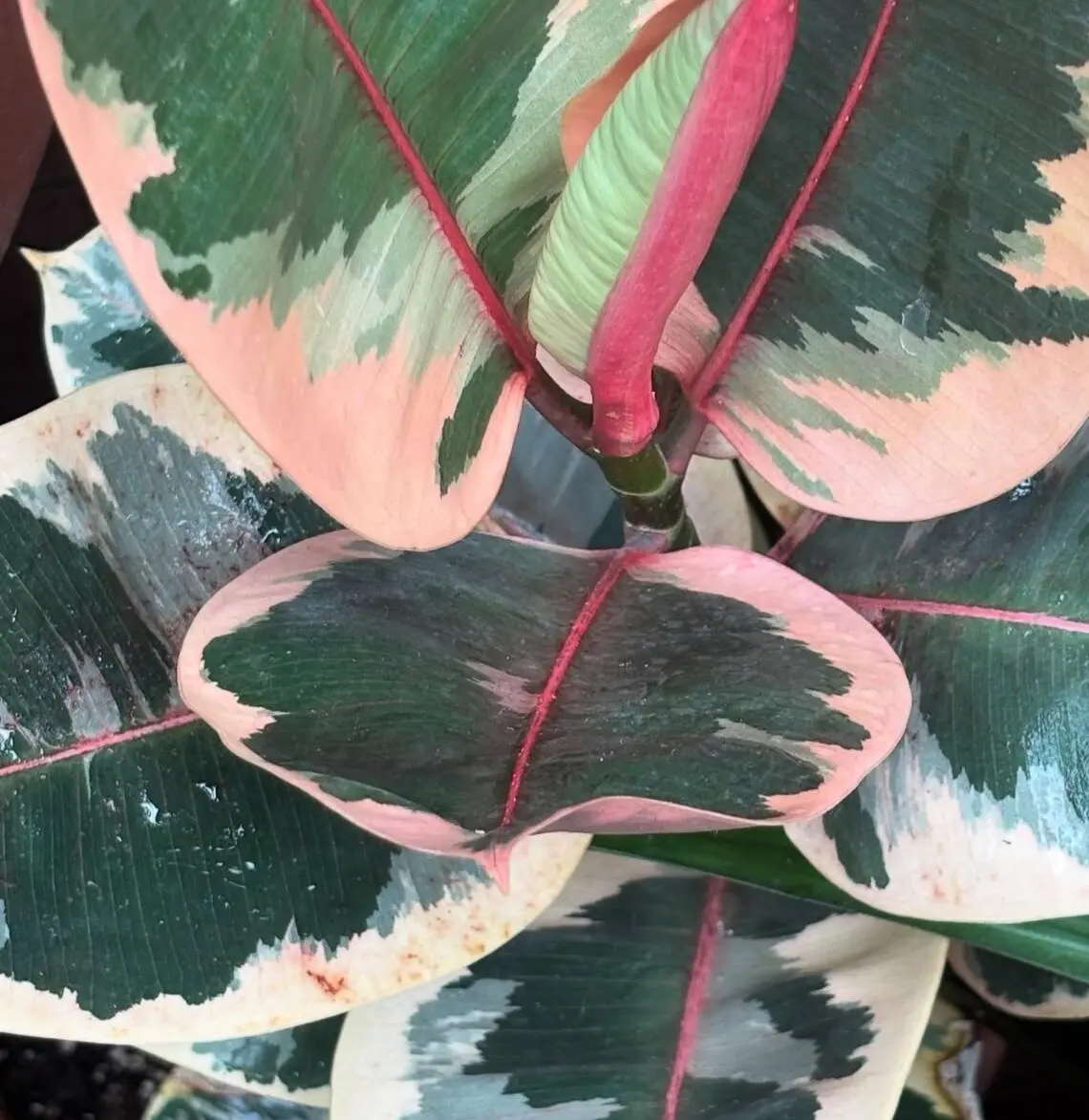
Ficus Elastica ‘Ruby’ is a pretty, variegated, glossy houseplant. It’s also known as a Rubber Tree or Rubber Plant. Its big, leathery leaves are painted in dark green, soft cream, and blush pink, with a hot pink midrib down the center, and no two leaves are the same. It’s easy to care for, with wonderful colors to include in your plant collection. It’s a ficus, in the same family as the fiddle leaf fig. In its native range in Southeast Asia and India, rubber trees grow into giants. Indoors, they stay a much more manageable 6-10 feet, and you can keep them smaller with trimming. They’re hardy in zones 10-12, so for most of us it’s a houseplant.
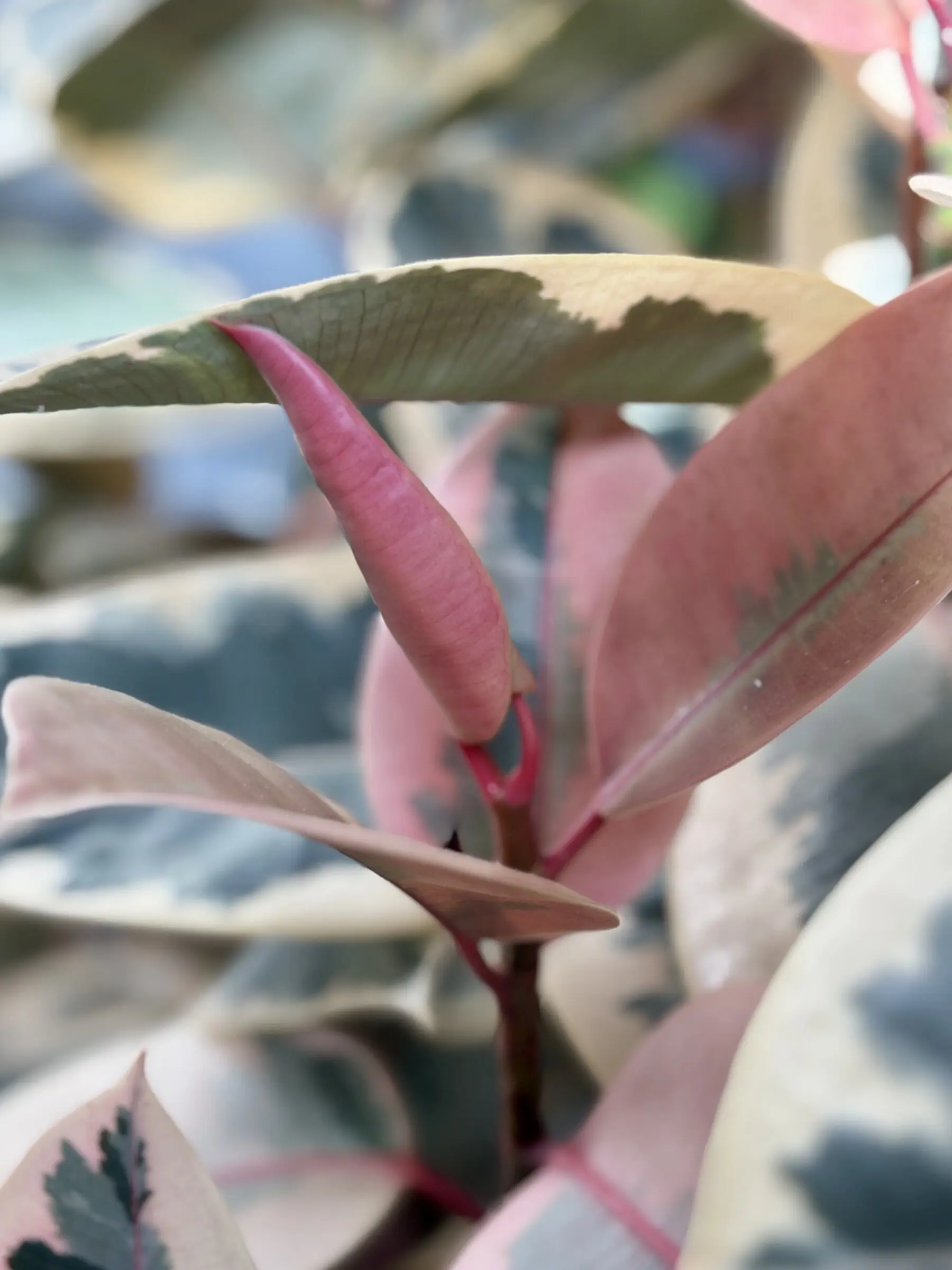
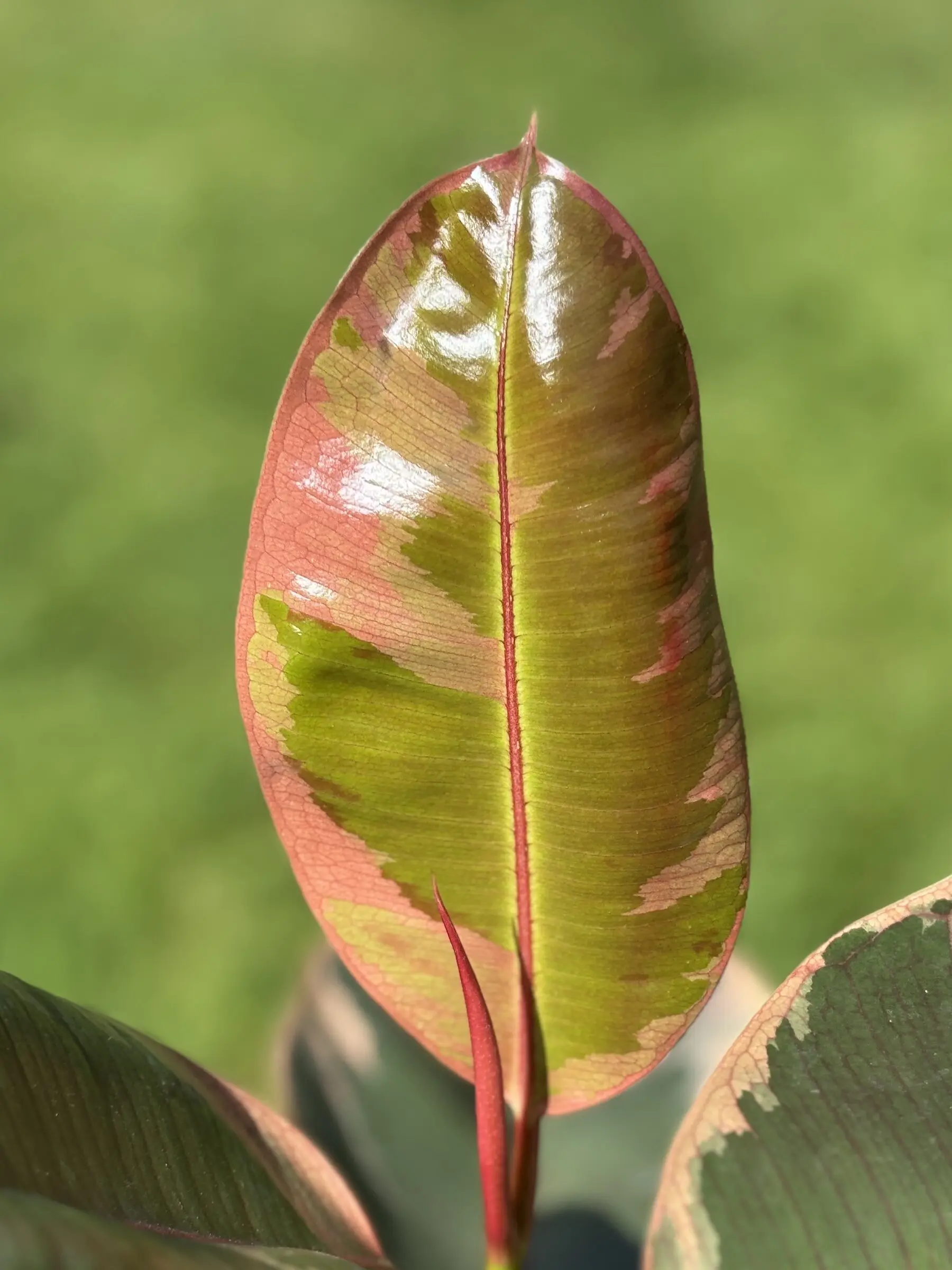
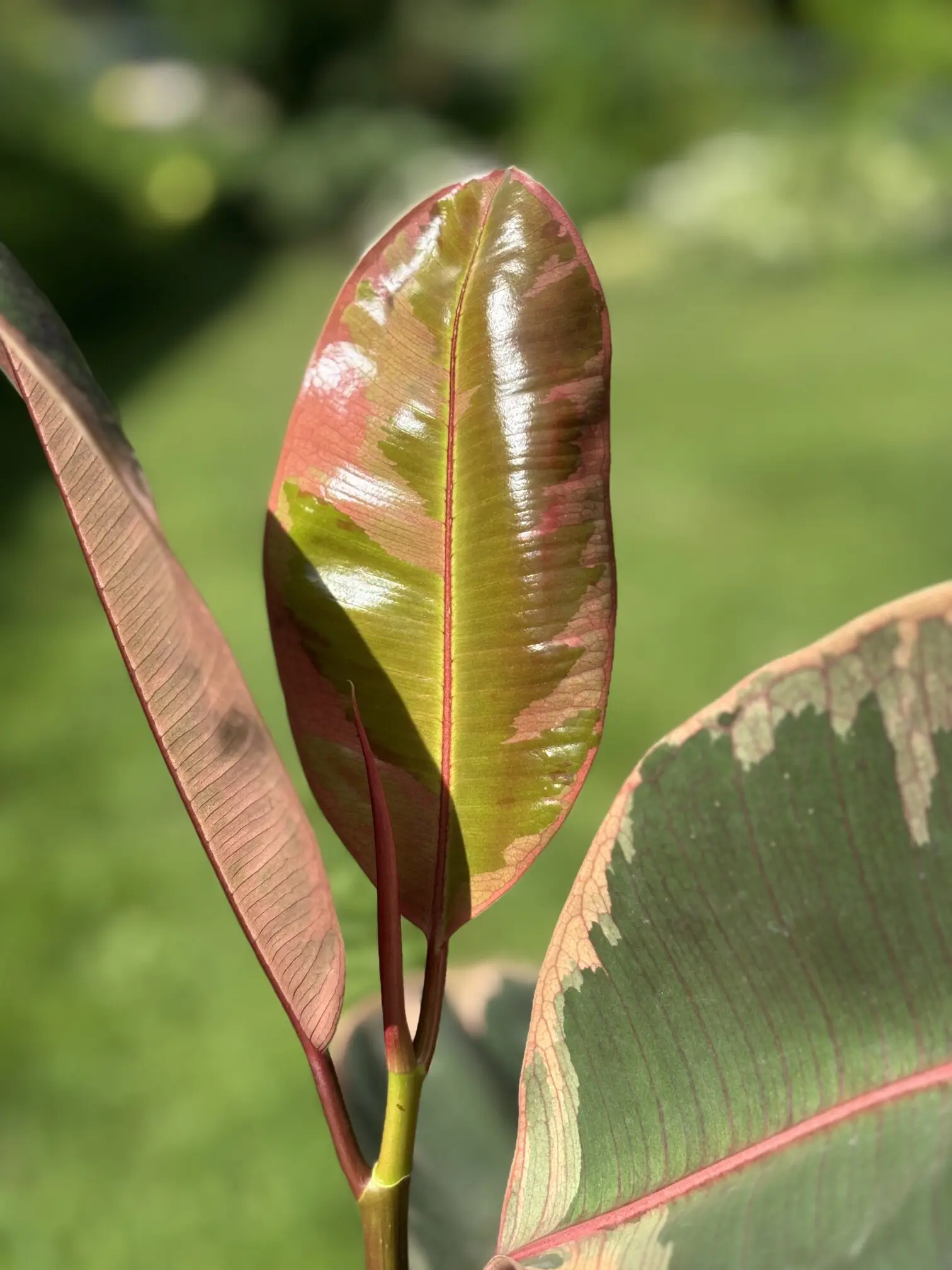
One of my favorite things about this plant is how new leaves arrive. Each one grows wrapped inside a bright red or pink sheath at the tip of the stem. When the leaf is ready, the sheath splits open, the new leaf unrolls, and the sheath dries up and drops off.
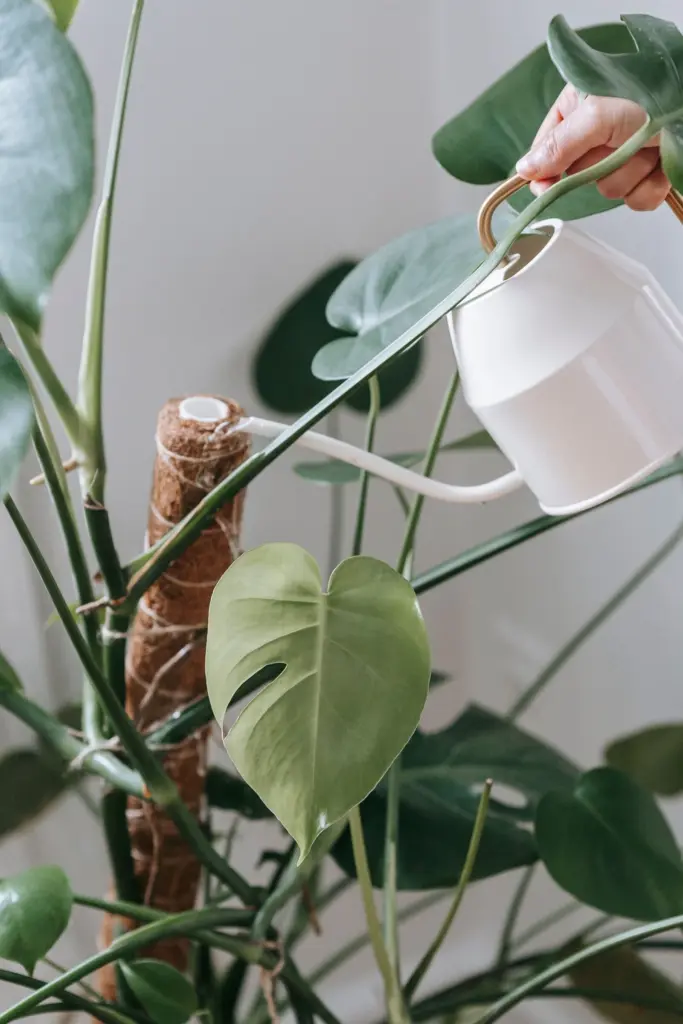
They don’t like to be overwatered and don’t like to be moved. Watering once a week is fine, and every two weeks during winter. I go by touch or a moisture meter rather than number of days, but I like to share a rough timeframe to give an idea of how frequently to water. Make sure it’s in a well-draining pot and soil. It doesn’t want wet feet. Water thoroughly until excess water drains out, then remove the drained water. Don’t let it sit in it. Do not let the soil dry out completely between waterings, as this can lead to leaf loss.
It likes bright but indirect light, so the leaves don’t scorch. Good light is also what keeps the pink. In low light, new leaves come in greener and the color fades. An east-facing window or a spot a few feet back from a south or west window works well. Turn it a quarter turn every week or two so it grows straight instead of leaning toward the light.
It also likes warmth, ideally 65°F to 80°F. So a spot near a window when temps drop below 65 (think: wintertime) is not a good idea. Don’t place it near air or heat vents.
It likes humidity, and while some people mist, I don’t recommend it due to leaf staining. The same is true when watering. Be careful and avoid getting the leaves wet. The tiny plant humidifiers work fine, as does keeping it close to other plants.
You can feed it a water-soluble plant fertilizer once a month in spring and summer. Skip it in fall and winter when growth slows.
Leaf drop happens most often due to being moved, but it also happens in soggy soil, with a considerable temperature difference, or with any cold drafts. Pick a good spot and try to leave it there. Don’t necessarily be alarmed by yellowing leaves, either. The older, lower leaves turn yellow before dropping, and that’s normal. If several leaves yellow at once, check whether the soil is staying too wet.
Maintain its shape by trimming yellow leaves and any uneven or leggy growth. Spring and early summer are the best times to prune. Cut just above a leaf node, and it will often branch out from just below the cut. Wear gloves when you trim. The stems and leaves bleed a milky white sap (latex, which is where the name “rubber plant” comes from), and it can irritate skin. Dab the cut with a damp paper towel until it stops.
This is a plant I suggest keeping clean and dust free. Those big leaves collect dust, which blocks light. Wipe them gently with a damp cloth every few weeks. Skip leaf-shine products, which can clog the leaves.
It’s easily propagated from stem cuttings. Take a 4-6 inch cutting with a couple of leaves, cutting just below a node, the bump on the stem where a leaf grows. Let the sap stop running, then root it in water or moist soil. Keep it warm and in bright, indirect light. Roots usually show up in 3-6 weeks. Variegated cuttings can be slower to root than all-green ones, so be patient. A single leaf will sometimes root, but it needs a piece of stem with a node to grow into a new plant.
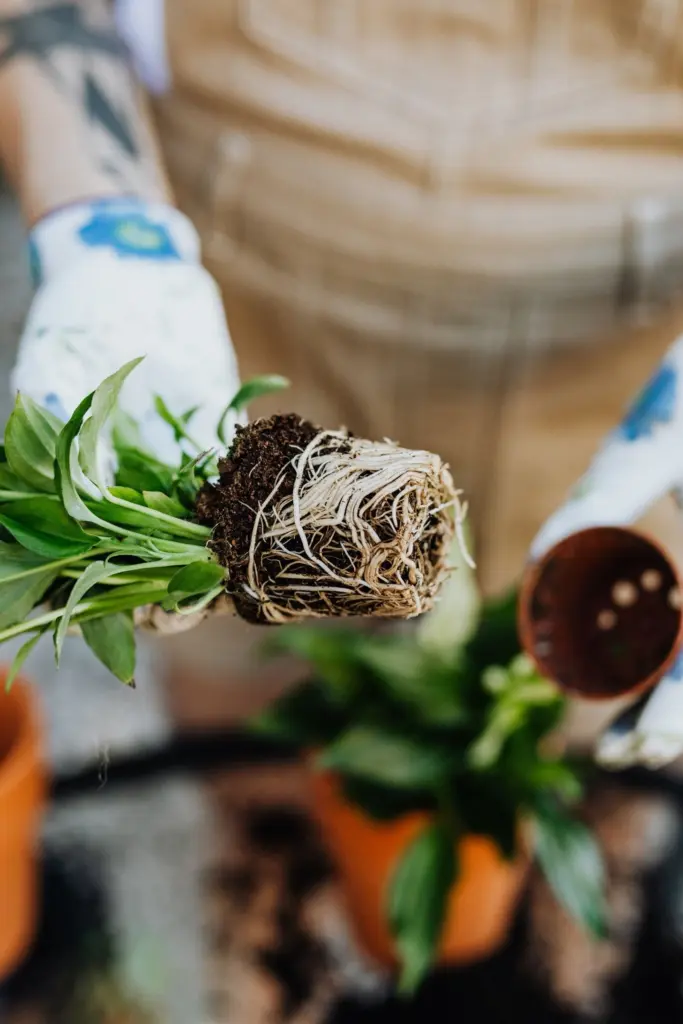
Repot every 1-2 years in the spring to refresh the soil and give it room to grow. Go up just one pot size. A pot that’s too big holds extra wet soil.
Monitor for pests like spider mites (fine webbing under the leaves), mealybugs (white cottony bits), and scale (small brown bumps on the stems and the undersides of the leaves). Treat infestations promptly with insecticidal soap or neem oil. Wiping the leaves regularly helps you catch them early.
Rubber plants are toxic to cats and dogs. The milky sap can irritate skin and upset a pet’s stomach if chewed, so keep it out of reach.
Bold, colorful, and easygoing once it settles in. I’d put it in the beginner-friendly category, as long as you give it bright light, don’t overwater, and don’t move it around.
| Common Names | Ficus Ruby, Variegated Pink Rubber Plant |
|---|---|
| Botanical Name | Ficus elastica ‘Ruby’ |
| Family | Moraceae |
| Mature Size | 6-10 ft. indoors |
| Sun | Partial, bright, indirect |
| Soil | Rich, well-drained, Acidic, neutral |
| Native Area | SE Asia/India and Malaysia |
| Toxicity | Toxic to cats and dogs |