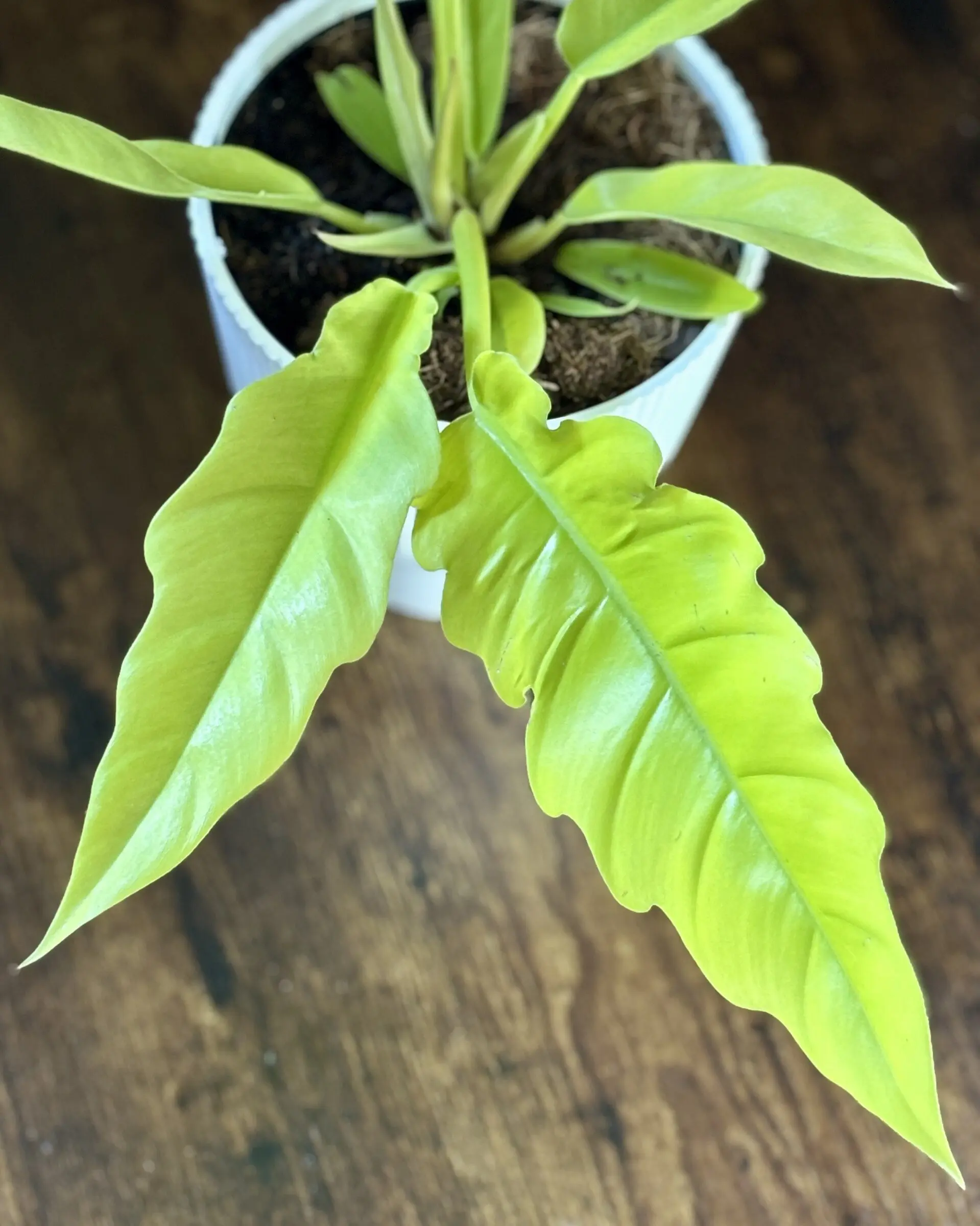
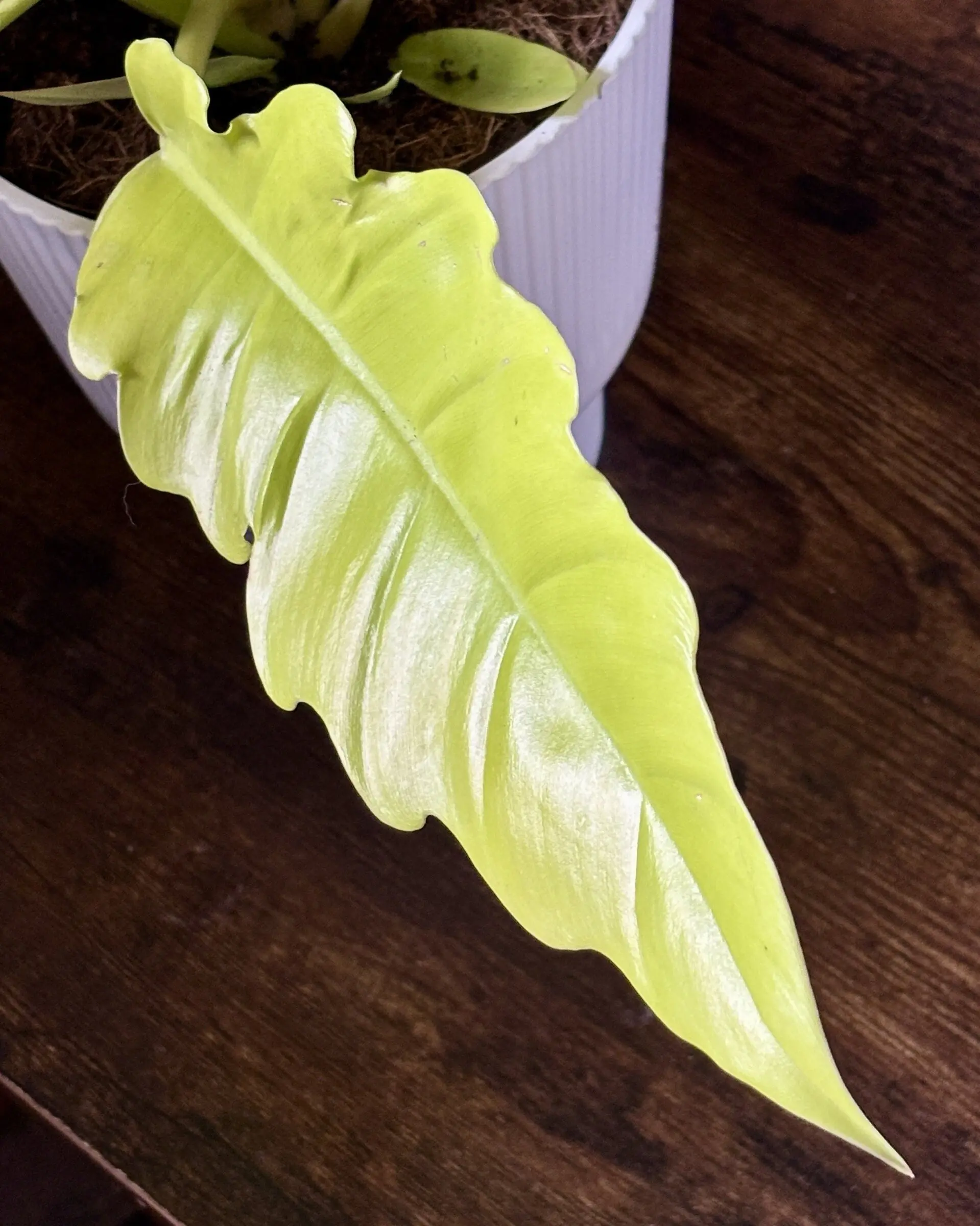
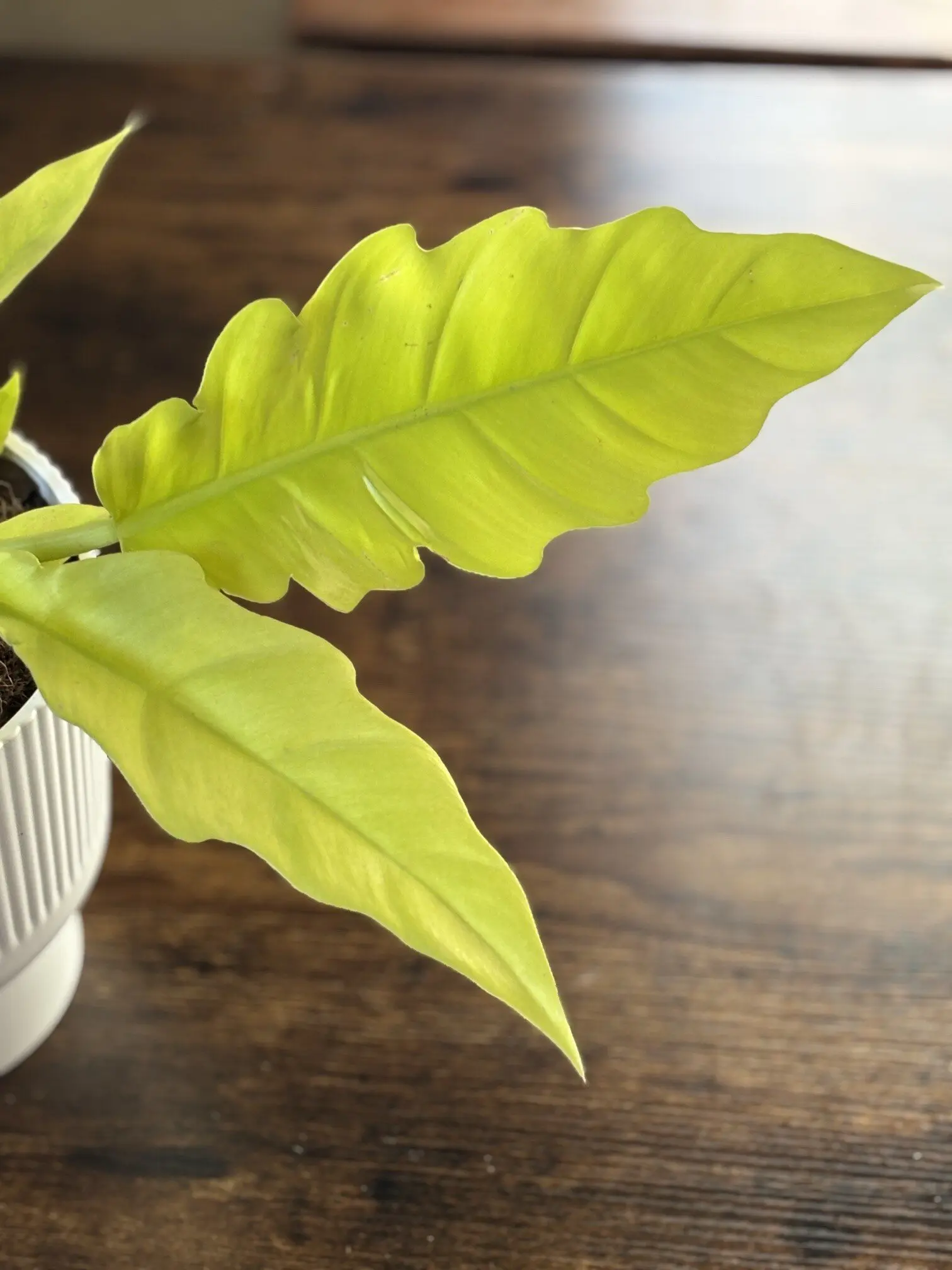
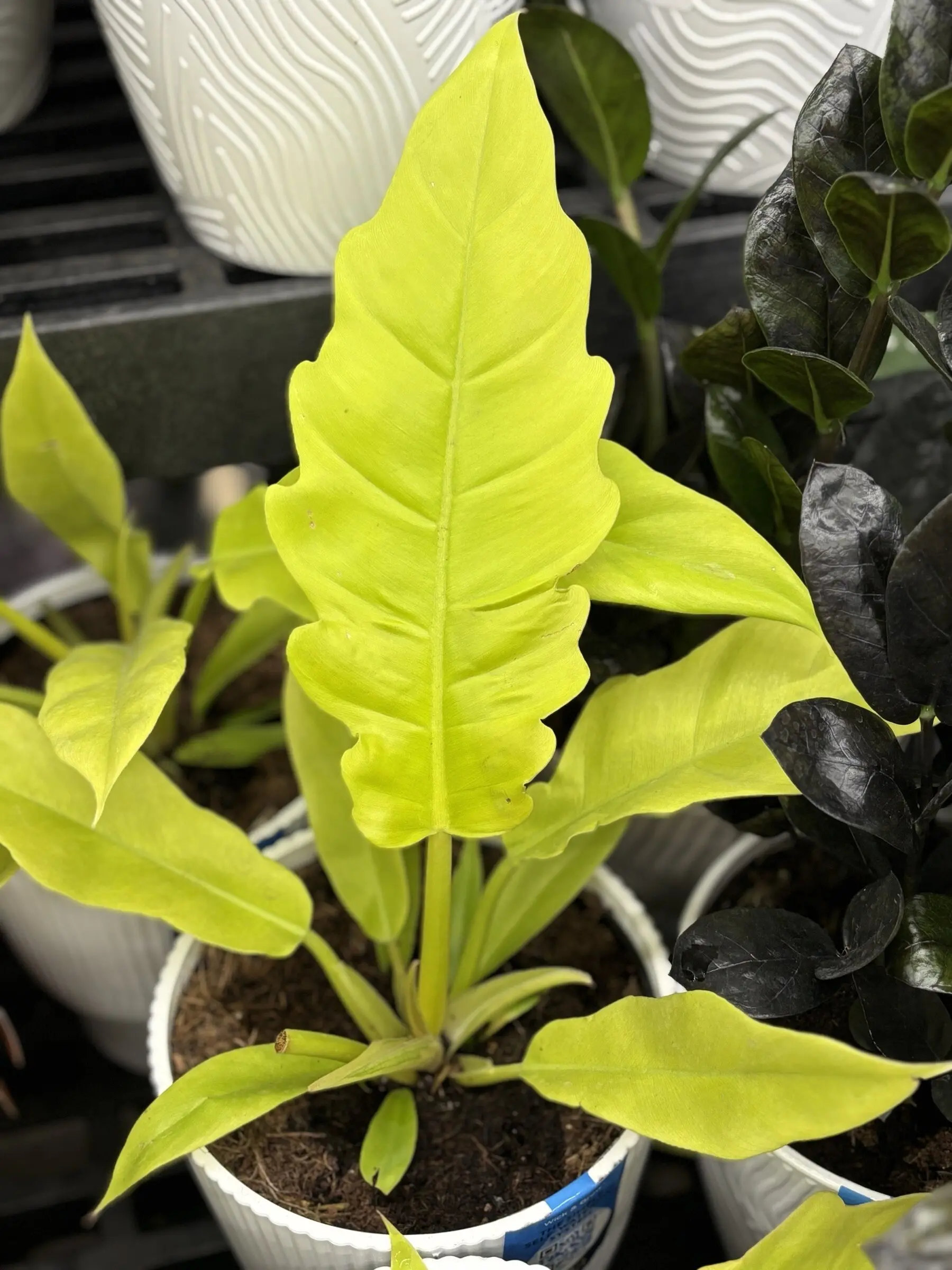
Golden Crocodile Philodendron, also known as Philodendron ‘Golden Crocodile,’ is a bright pop of color for any room. Its long, pointed leaves are a glowing chartreuse to golden yellow, and their edges are wavy and notched, a little like the bumpy back of a crocodile. That’s where the name comes from. It’s a newer hybrid philodendron, in the Araceae family, the same family as pothos, monstera, and peace lilies. Philodendrons are native to the tropical rainforests of Central and South America. It’s hardy only in zones 10-12, so for most of us it’s a houseplant all year.
Unlike vining philodendrons, it grows in an upright clump, with leaves rising from the center on sturdy stems. It stays fairly compact, usually 2-3 feet tall indoors, which makes it a great fit for a tabletop or a plant stand.
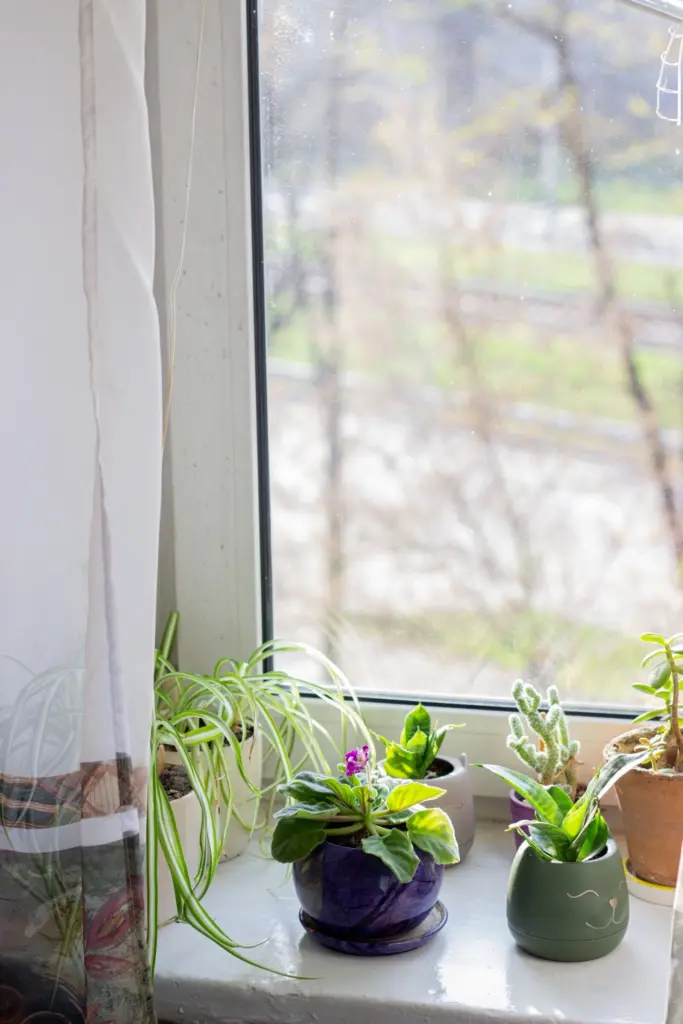
The color depends on light. Give it medium to bright, indirect light to keep the leaves golden and glowing. In too little light, new leaves come in greener and the stems stretch out. Too much direct sun can bleach or scorch the leaves, though, so keep it out of hot afternoon sun. An east-facing window, or a spot a few feet back from a south or west window, is ideal.
Water when the top 1-2 inches of soil are dry, then water thoroughly until it runs out the drainage holes. Empty the saucer so it isn’t sitting in water. Philodendrons don’t like soggy soil, which leads to yellow leaves and root rot. In winter, when growth slows, it will need water less often. Drooping leaves usually mean it’s thirsty and perk back up after a drink.
It’s happiest at 65°F to 80°F. Keep it away from cold drafts, cold windows, and heating and air conditioning vents. Below 55°F, growth slows and the leaves can be damaged. Average household humidity is fine, though it appreciates a pebble tray or humidifier when the heat is running in winter. Higher humidity helps keep those ruffled edges from browning.
Use a chunky, well-draining aroid mix, like potting soil with orchid bark and perlite mixed in, in a pot with drainage holes. Feed a balanced water-soluble fertilizer monthly in spring and summer, and skip it in fall and winter. Pale, washed-out leaves that aren’t caused by low light can mean it’s hungry.
The leaves are big and collect dust, so wipe them with a damp cloth every few weeks to keep them shiny. Trim off any yellow or damaged leaves at the base with clean scissors. Turn the pot a quarter turn every week or two so it grows evenly instead of leaning toward the window.
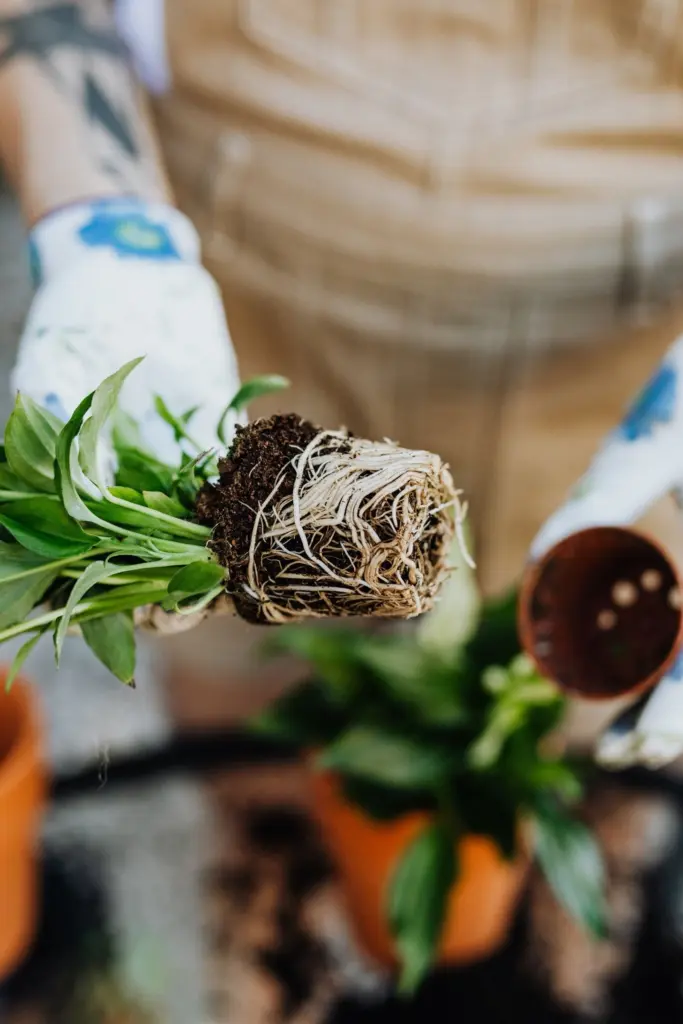
Since it grows as an upright clump rather than a long vine, it doesn’t root easily from stem cuttings the way a heartleaf philodendron does. The easiest way to propagate it is by division. When you repot in spring, look for side shoots with their own roots, gently separate them from the main plant, and pot them up on their own.
Repot every year or two in spring, or when roots start circling the pot or poking out the drainage holes. Go up just one pot size. A pot that’s too big holds extra wet soil.
Most problems come back to water and light:
- Yellow leaves, especially lower ones, usually mean too much water. A few old leaves yellowing now and then is normal.
- Brown, crispy edges or tips usually mean dry air or uneven watering.
- Greener new leaves and long stems mean it needs more light.
- Bleached or brown patches can be sunburn from direct sun.
- Watch for mealybugs (white cottony bits), spider mites (fine webbing under the leaves), and scale (small brown bumps). Neem oil or insecticidal soap takes care of all three.
Golden Crocodile is toxic to cats, dogs, and people if chewed. Like other philodendrons, it contains calcium oxalate crystals, which irritate the mouth and throat and can cause drooling and vomiting. The sap can irritate skin, too, so wear gloves when dividing or trimming.
Bright, bold, and easygoing. I’d put it in the beginner-friendly category. Give it good light and it will reward you with leaves that practically glow.
| Common Name | Golden Crocodile Philodendron |
|---|---|
| Botanical Name | Philodendron ‘Golden Crocodile’ |
| Family | Araceae |
| Mature Size | 2-3 ft. tall and wide indoors |
| Sun | Medium to bright, Indirect |
| Soil | Chunky, well-drained, Slightly acidic |
| Native Area | Hybrid; philodendrons are native to Central and South America |
| Toxicity | Toxic to humans and pets |