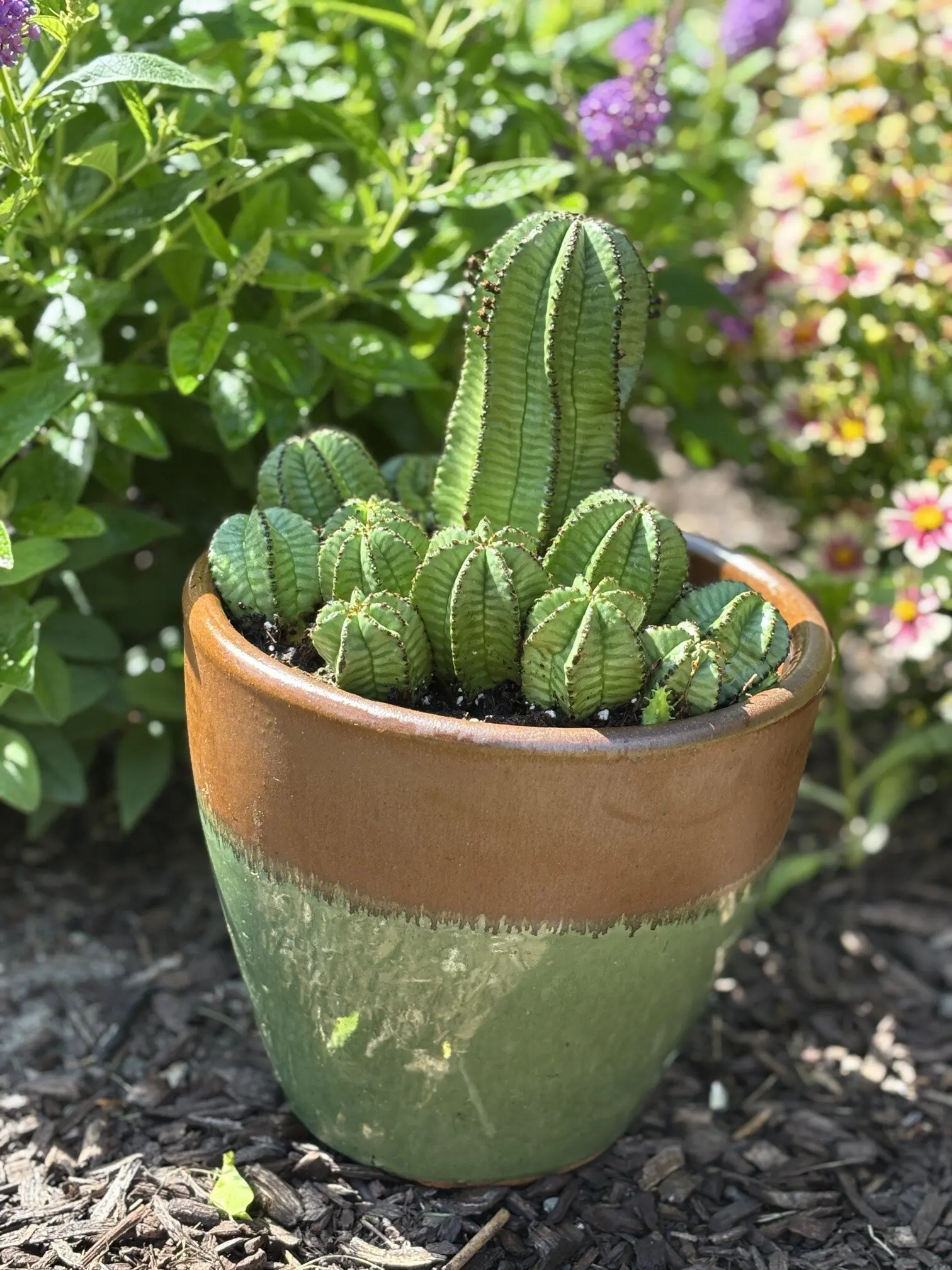
Tanzanian Zipper Plant, also known as Euphorbia anoplia or Euphorbia polygona var. anoplia, looks like a cactus, but it isn’t one. It’s a succulent euphorbia, in the same family (Euphorbiaceae) as poinsettias and crotons. Its plump, ribbed stems are pale green with darker stripes running across them, and the edges of each rib are lined with tiny brown bumps that look just like a zipper. That’s where the name comes from. Despite the “Tanzanian” in its name, it’s actually native to South Africa. It grows in a tight clump, with new stems popping up around the base, and stays small, usually under a foot tall. It’s hardy only in zones 9b-11, so for most of us it’s a houseplant or a summer patio plant that comes inside for winter.
Mine, and the glazed ceramic pot it’s in, were birthday gifts. It came as one crowded clump, so I separated it, put most of the stems in this pot and the rest into three smaller pots. Just love it!
How to tell it from a cactus: cacti have fuzzy little cushions called areoles where their spines grow. Euphorbias don’t. Look closely at the zipper plant and you’ll see smooth ribs with small brown nubs instead. Euphorbias also bleed a milky white sap when they’re cut, which cacti don’t. That sap matters, and I’ll get to it below.
It loves light. Indoors, give it the sunniest window you have, ideally a south or west window. Outdoors in summer, it can handle full sun once it’s used to it, but ease it into direct sun over a week or two to avoid scorching. In too little light, the stems stretch out, get skinny, and lean toward the window.
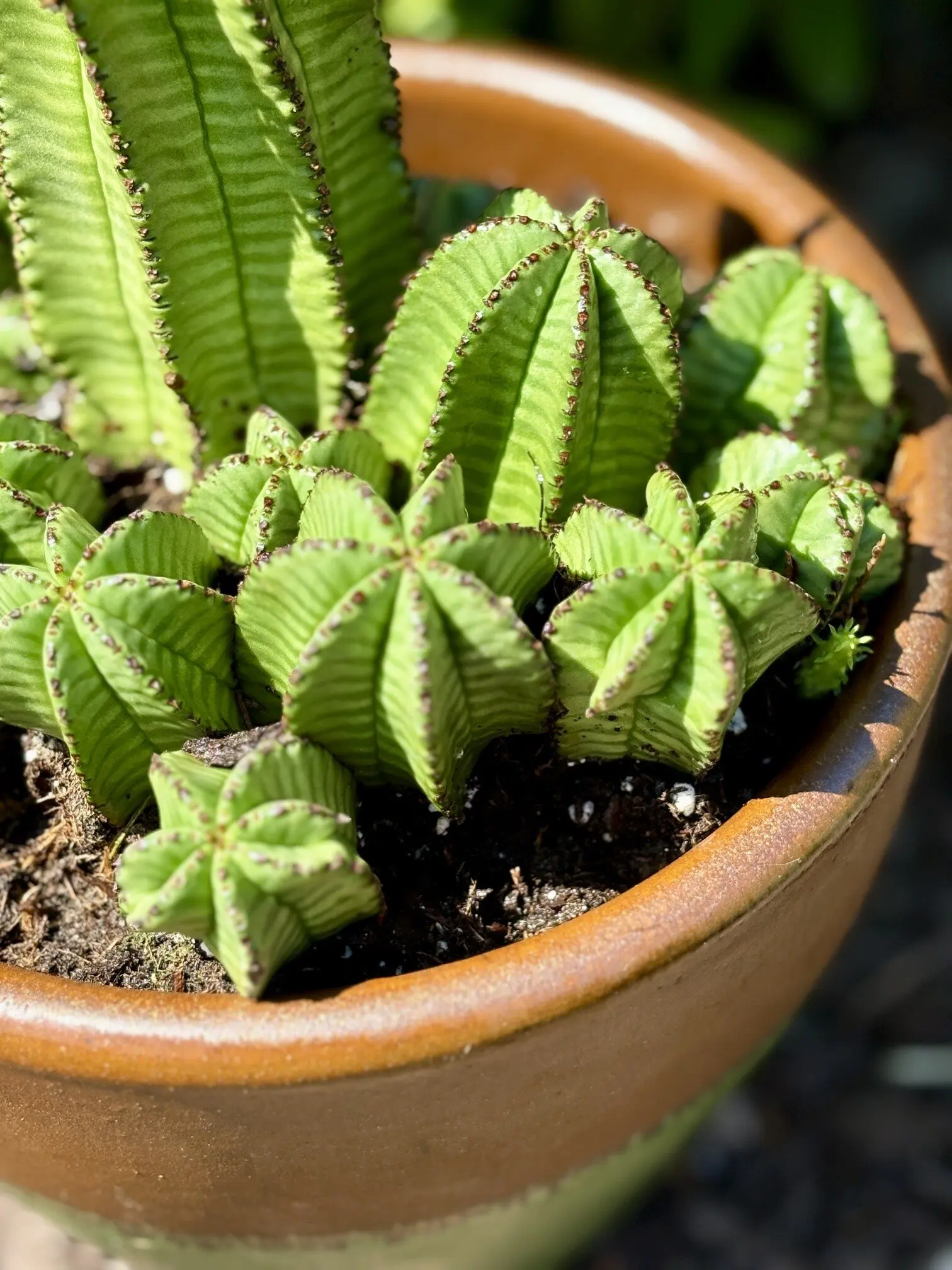
Water deeply, then let the soil dry out before watering again. Here’s where it’s a little different from many succulents: it doesn’t love long droughts, so in summer, when it’s growing and outside in the heat, it may need water about once a week. Check the soil first. In winter, cut way back, to about once a month or less, since it grows very little. Soggy soil is the biggest danger, because it leads to root rot.
Use a fast-draining cactus and succulent mix, or regular potting soil with plenty of perlite or pumice mixed in. A pot with drainage holes is a must, and a clay or ceramic pot helps the soil dry out. Feed a cactus fertilizer at half strength once a month in spring and summer, and skip it in fall and winter.
It likes warmth, roughly 60°F to 85°F during the growing season. It can handle cooler winter temperatures in the 50s indoors, but keep it away from frost. In zone 6a, move it outside once nights stay above 50°F to 55°F, and bring it back in before nights drop below 50 in fall. It does fine in average household humidity.
Wear gloves whenever you handle it. Like all euphorbias, the zipper plant has a milky white sap, sometimes called latex, that oozes from any cut or break. It can irritate skin and is especially painful if it gets in your eyes, so don’t touch your face, and wash your hands well afterward. If you get sap on your skin, rinse it right away with cool water.
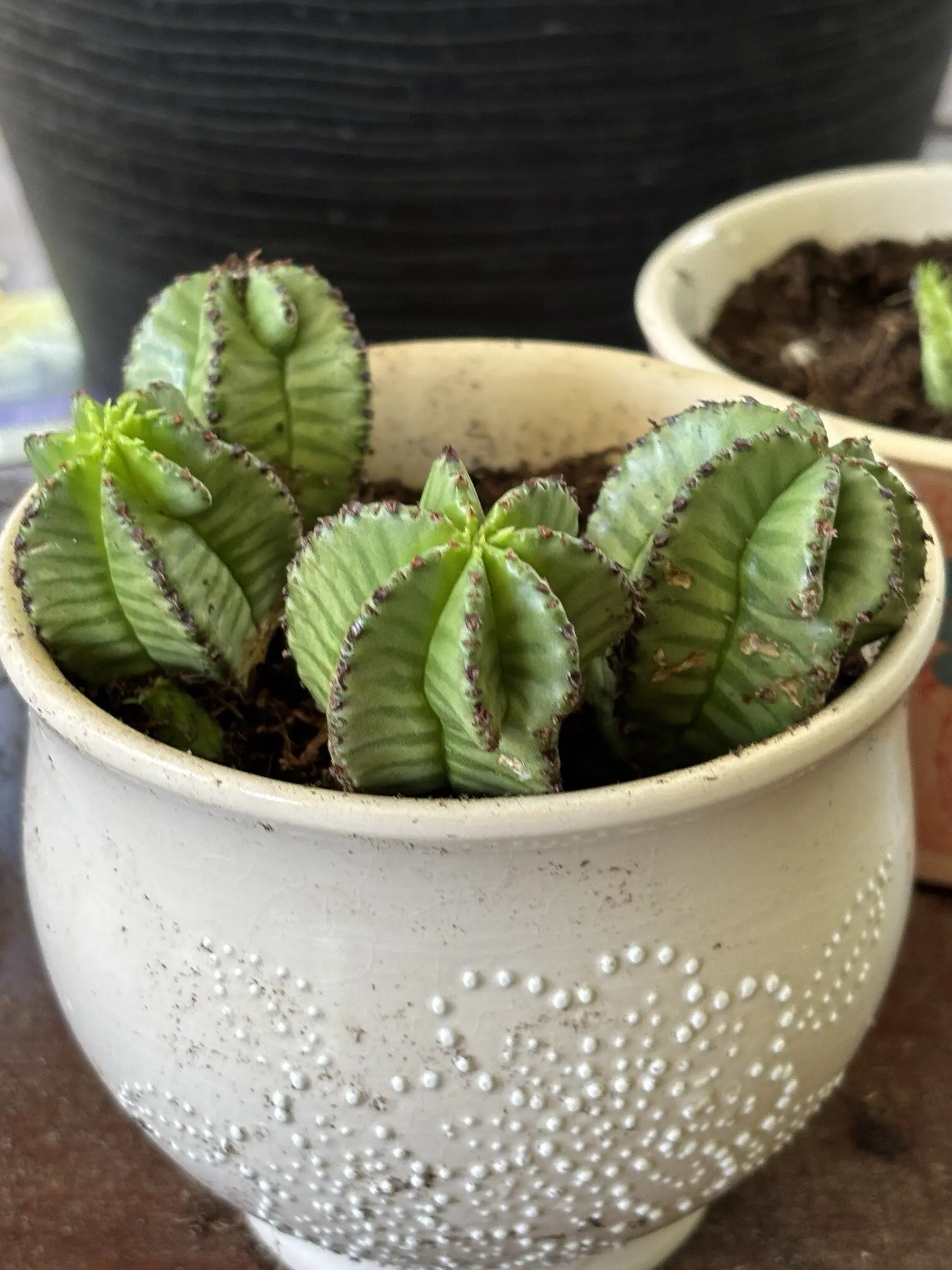
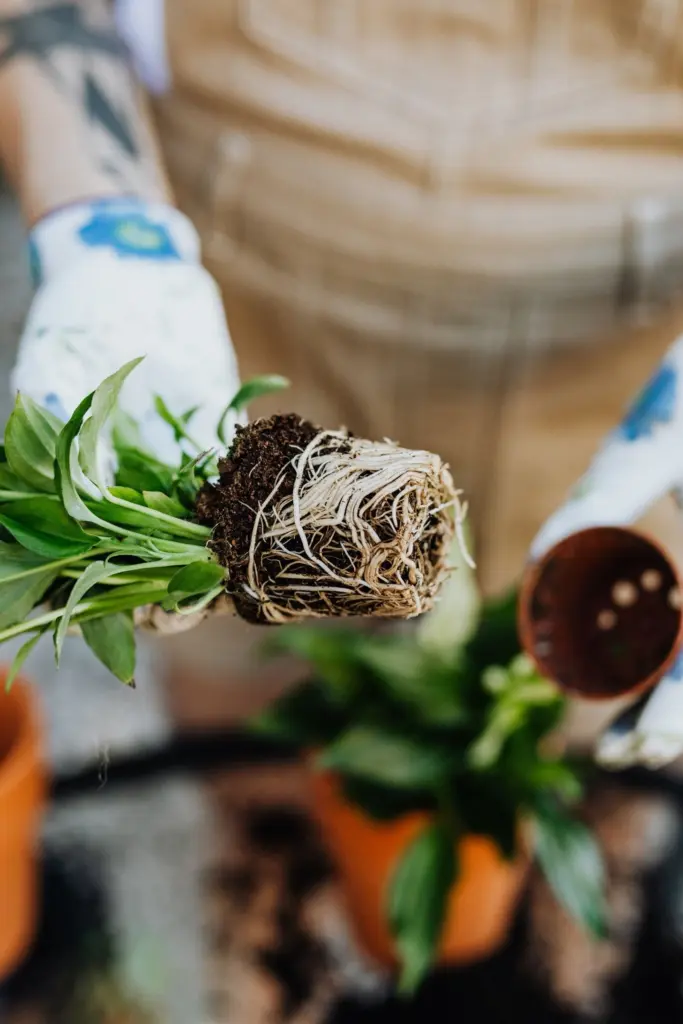
It’s easy to share, like I did with mine, because it makes lots of offsets, the small baby stems that form around the base. To propagate, wear gloves and gently separate an offset, or cut it off at the base with a clean knife. Rinse the cut end in cool water to stop the sap, then let it dry and callus for several days to a week. Dip it in rooting hormone if you have it, and set it in dry, fast-draining mix. Wait about a week before watering lightly, and keep it in bright light. Roots usually form in a few weeks.
Repot every couple of years in spring, or when the clump fills the pot. It has shallow roots, so a wide pot works better than a deep one. Go up just one size.
Common problems:
- Soft, mushy, or dark stems at the base mean rot from too much water. Cut away the rotted part and let the healthy piece callus, then replant it in dry mix.
- Wrinkled or shriveled stems mean it’s thirsty.
- Pale, stretched, or leaning growth means it needs more light.
- Tan or white scarring on the stems can be sunburn from a sudden move into strong sun, or old age near the base. It won’t heal, but new growth will be fine.
- Watch for mealybugs, which hide between the ribs and at the base. Dab them with rubbing alcohol on a cotton swab.
The sap is toxic to pets and people if chewed or swallowed, and it irritates skin and eyes. Keep it out of reach of curious pets and kids.
Quirky, sculptural, and very low maintenance. I’d put it in the beginner-friendly category, as long as you give it plenty of sun, go easy on the water, and wear gloves.
| Common Name | Tanzanian Zipper Plant, Zipper Plant |
|---|---|
| Botanical Name | Euphorbia anoplia (Euphorbia polygona var. anoplia) |
| Family | Euphorbiaceae |
| Mature Size | 6-12 in. tall, clumping |
| Sun | Full sun to bright light |
| Soil | Sandy, fast-draining (cactus mix) |
| Native Area | South Africa |
| Toxicity | Toxic to humans and pets; sap irritates skin and eyes |