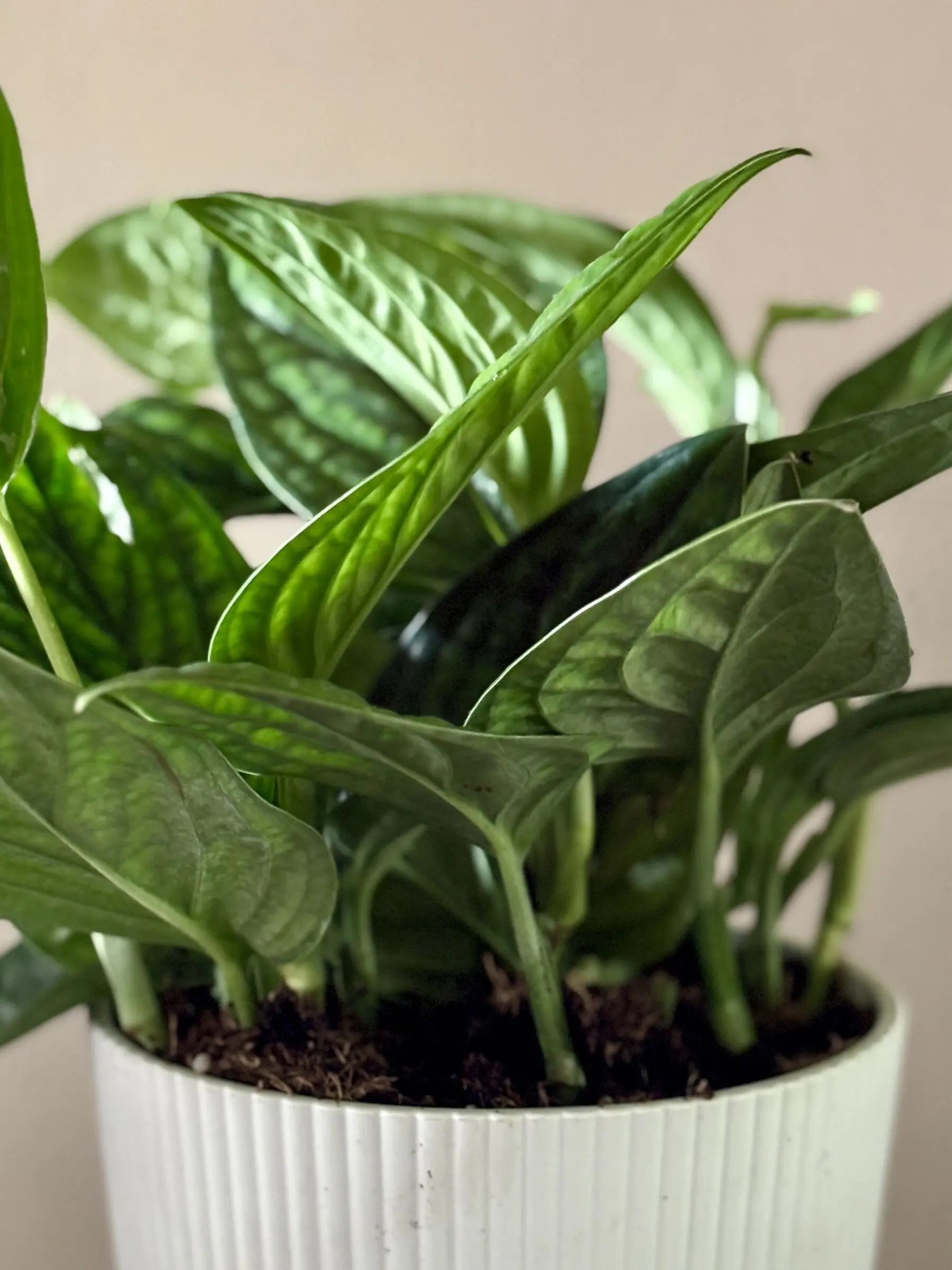
Monstera ‘Peru,’ sold as Monstera karstenianum, is all about texture. Its thick, glossy leaves are deeply puckered and quilted, almost like crocodile skin. Don’t expect the classic split leaves of a Monstera deliciosa. This one never develops holes. The name comes from the belief that it originated in Peru, but its exact origin in Central or South America is still a bit of a mystery. It’s a slow-growing, easy-to-care-for tropical climber. It’s hardy only in zones 10-12, so for most of us it’s an indoor plant or a summer porch plant that comes inside before temps dip below 60°F.
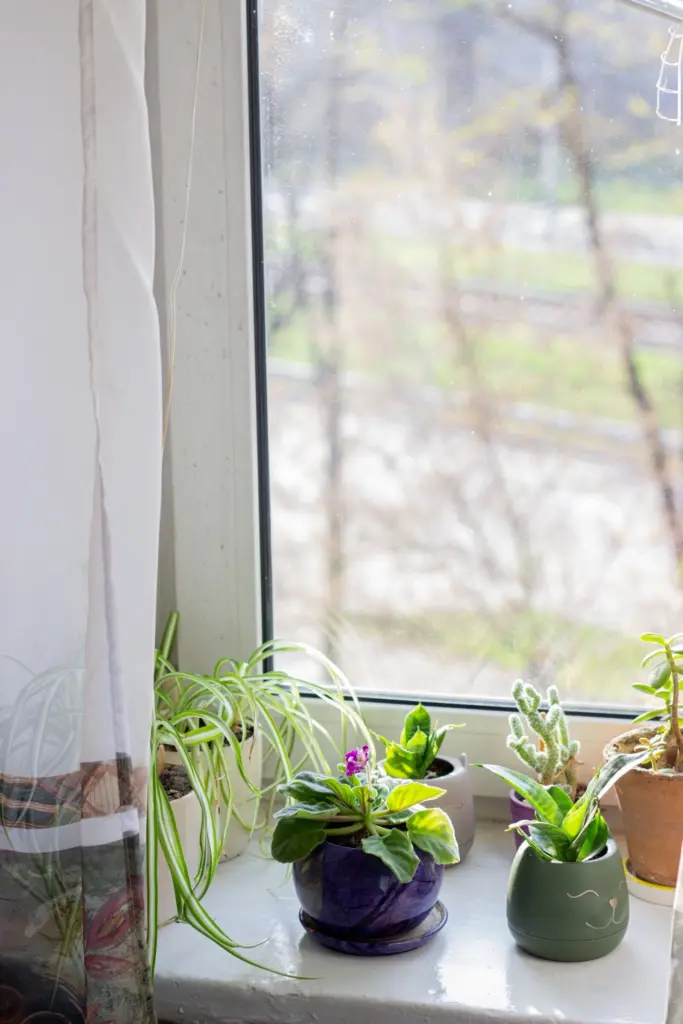
It requires bright, indirect light. Mine has done just fine in temporary lower light conditions, but the leaves are easy to scorch in direct light, so keep it out of hot sun. It should be kept between 60°F to 85°F and away from drafts.
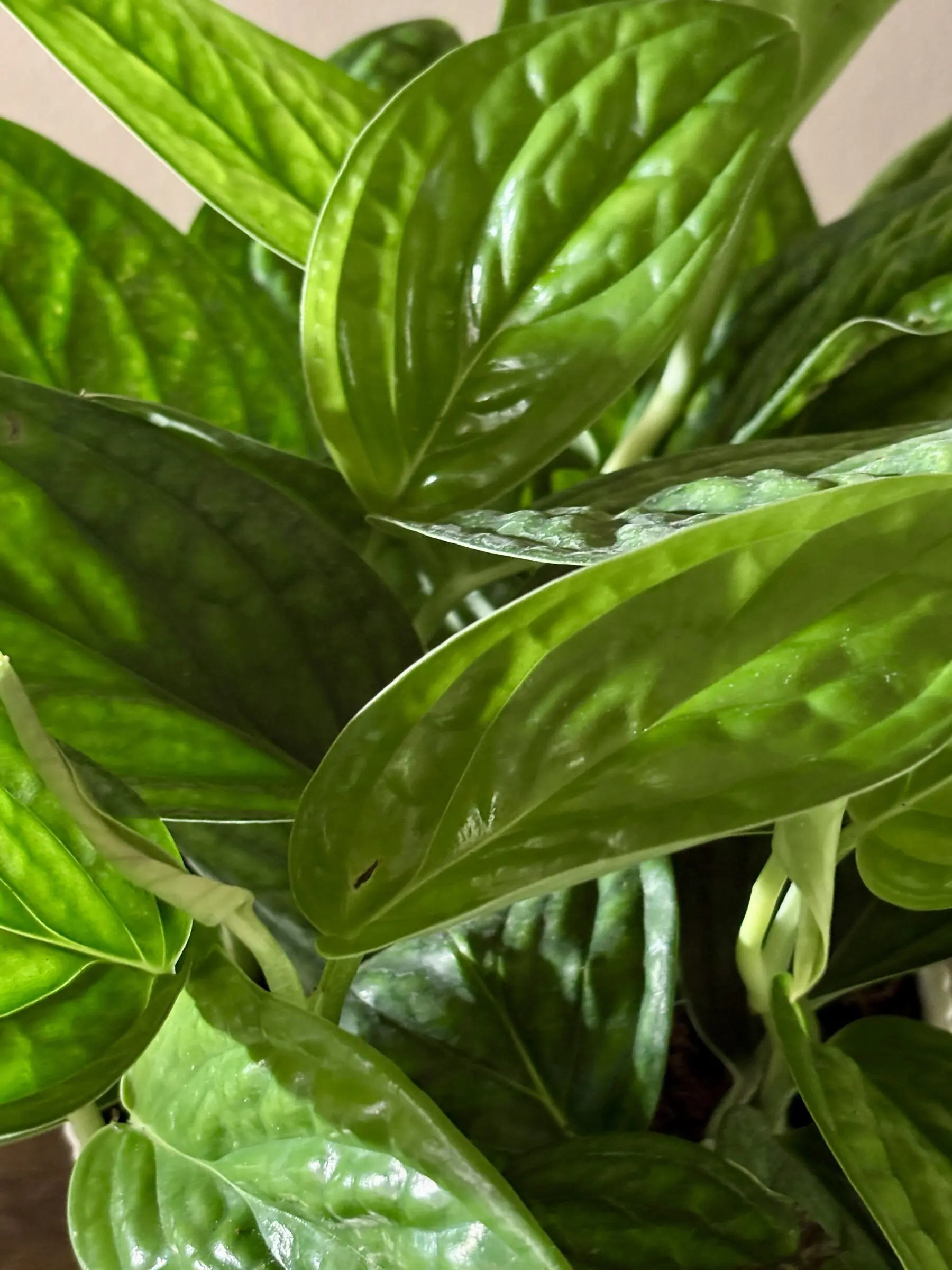
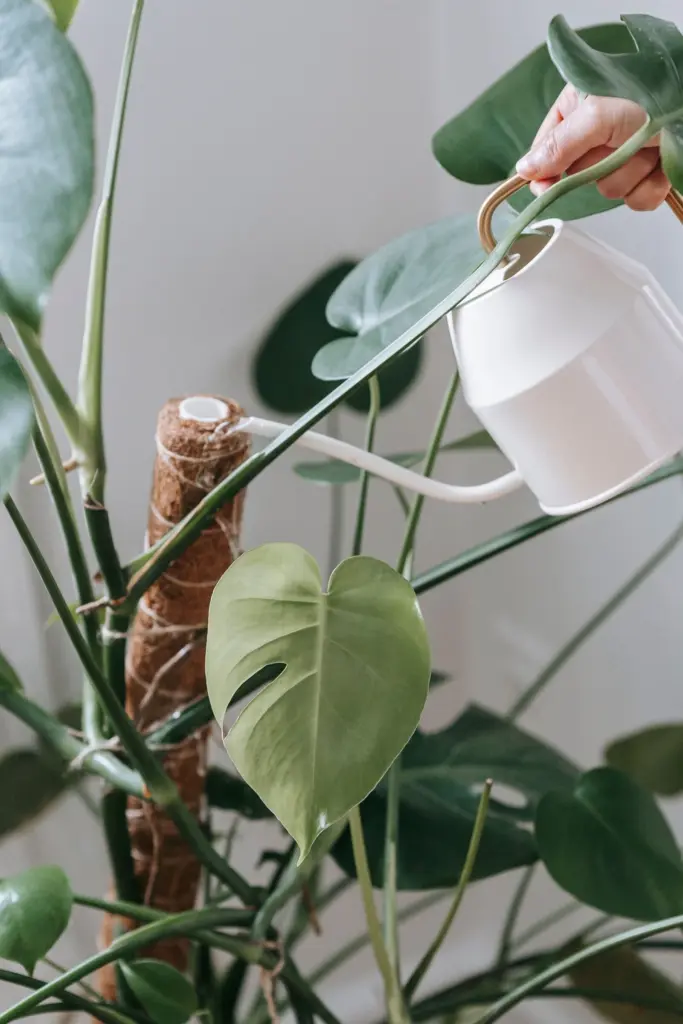
Those thick leaves hold water, which makes it more forgiving than many tropicals. It’s happiest when the soil is allowed to dry out completely between waterings. Overwatering is the real danger here. It likes humidity, so a pebble tray or humidifier will keep it happier, especially in dry winter months.
Soil should be airy, well-draining, and slightly acidic. A chunky mix of potting soil, orchid bark, and perlite works well, and a pot with drainage holes is a must. You can feed it a water-soluble fertilizer monthly during spring and summer.
It’s a natural climber. Mine is still small, but I’ll eventually add a trellis or moss pole to encourage upward vining, which also encourages bigger leaves. If you prefer, you can let it trail from a hanging planter instead. Watch for spider mites and mealybugs, which can be treated with neem oil.
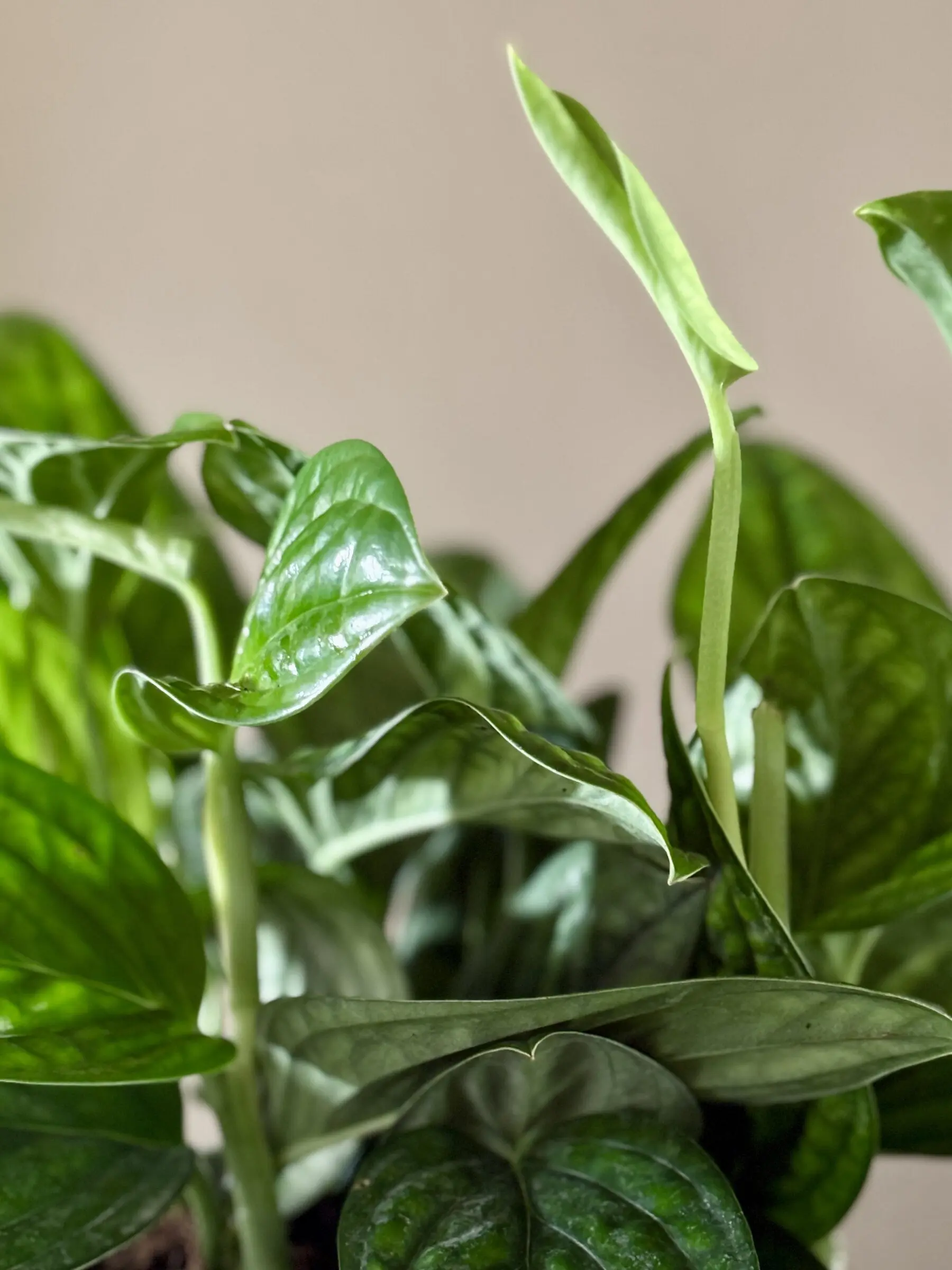
Its thick, glossy leaves can collect dust, which blocks light. Wipe them gently with a damp cloth every few weeks to keep that shine. Skip leaf-shine products, which can clog the leaves.
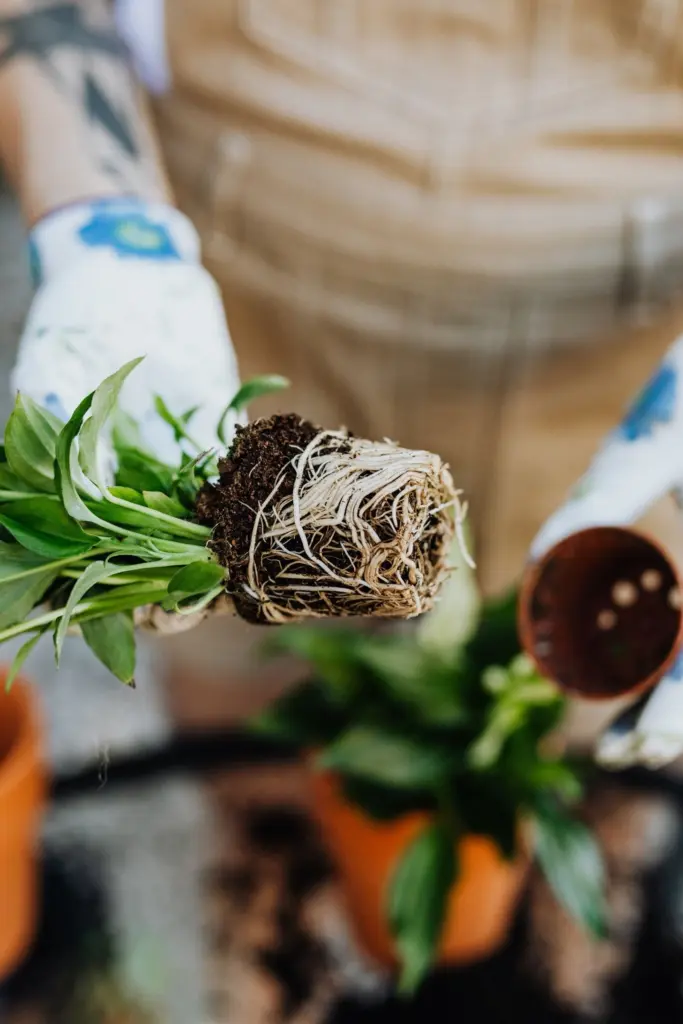
It doesn’t mind being a little snug in its pot, so repot only every couple of years, or when roots start poking out of the drainage holes. Spring is the best time. Go up just one pot size, about 1-2 inches wider. A pot that’s too big holds extra wet soil, and that’s an invitation for root rot.
Most problems come back to water or light. Yellow leaves, especially lower ones, usually mean too much water. Let the soil dry out more and check that the pot drains. If the leaves look wrinkled or curl inward, it’s thirsty. Those thick leaves are telling you they’ve used up their stored water. Small new leaves and long, stretched-out stems mean it needs more light. Crispy brown edges point to dry air, and pale or brown patches on top of the leaves are sunburn from direct light. Watch for spider mites (fine webbing on the undersides of leaves), mealybugs (little white cottony bits), and thrips, which leave silvery streaks. Neem oil or insecticidal soap takes care of all three. Check the undersides of the leaves when you water so you catch pests early.
Propagation is through stem cuttings in water. Aim for at least three nodes, the bumps where the leaf meets the stem. Change the water every few days so it stays fresh. Pot it up once the roots are a couple of inches long. You can also root cuttings in moist sphagnum moss, which works well for this one since it’s prone to rot.
It’s toxic to people and pets. If you look closely at my photos, you’ll see a cat claw mark on one leaf. I had to move it. 🤣 Keep it up high or in a room your pets can’t get to.
Easy, forgiving, and unique. I’d put it in the beginner-friendly category, a great next step after pothos.
| Common Name | Monstera Peru |
|---|---|
| Botanical Name | Monstera sp. ‘Peru’ (sold as Monstera karstenianum) |
| Family | Araceae |
| Mature Size | 2-3 ft. indoors; longer as a climber or trailer |
| Sun | Bright, Indirect |
| Soil | Airy, well-drained, Acidic |
| Native Area | Central and South America |
| Toxicity | Toxic to humans and pets |