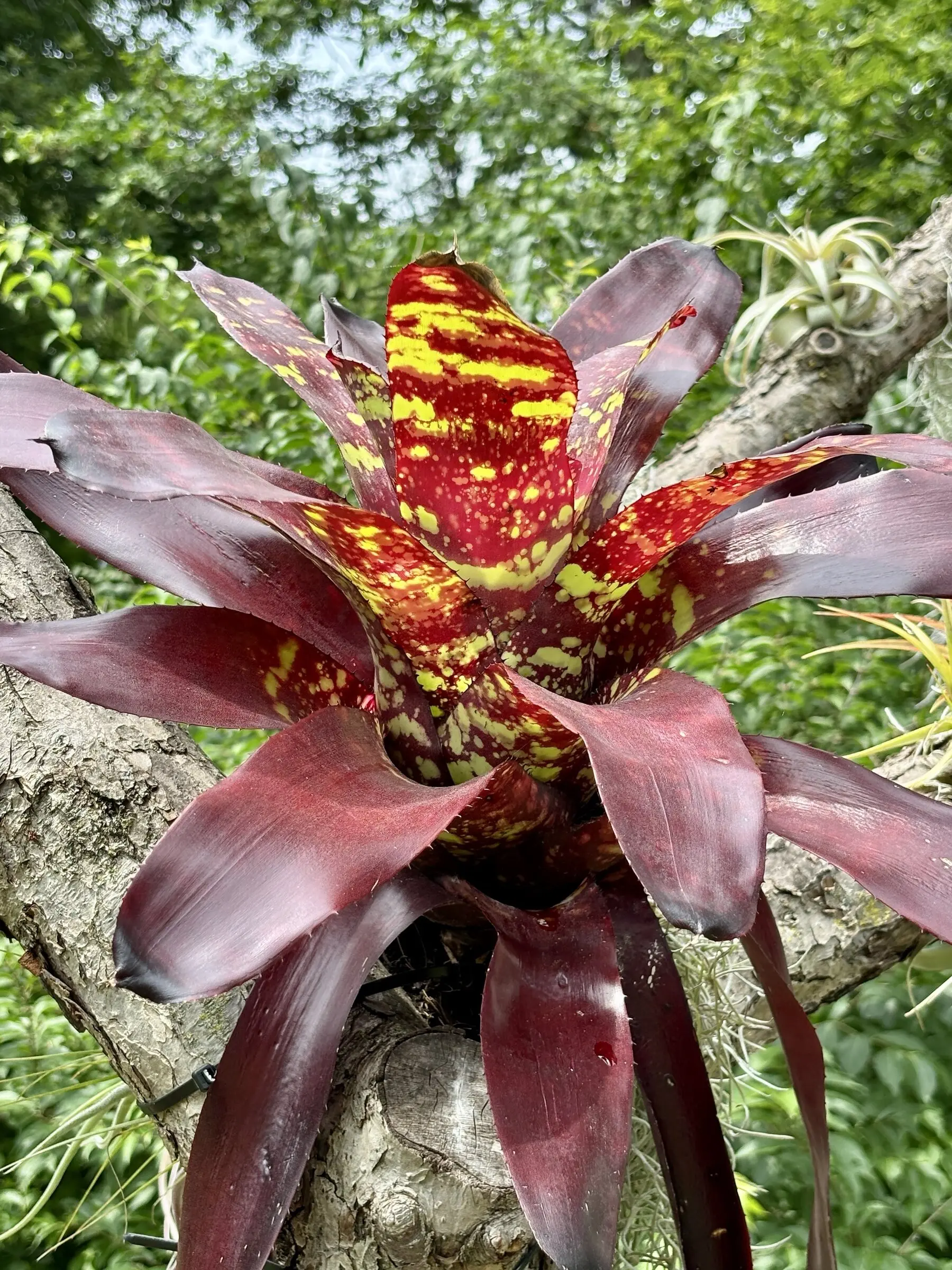
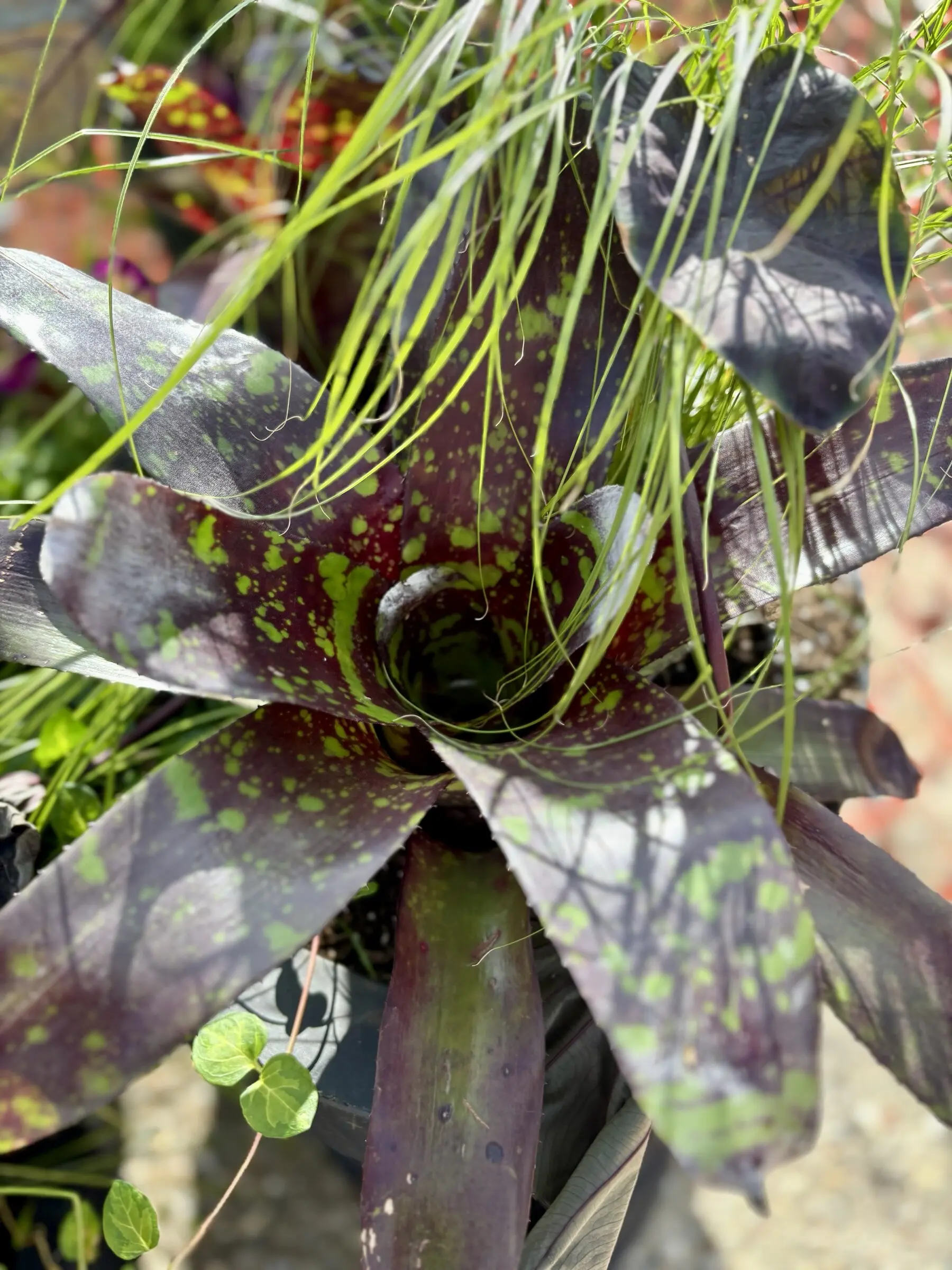
Neoregelia is the bromeliad for people who love colorful leaves. While most bromeliads are grown for their tall flower spikes, Neoregelias are grown for their foliage, which can be burgundy, red, pink, lime, or olive, and spotted, striped, or splashed with contrasting colors. Their leaves form a wide, open, flat rosette around a center cup, and some varieties look like they’ve been painted. There are around 120 species, mostly native to the rainforests of Brazil, where many grow on trees. It’s named after Eduard August von Regel, a 19th-century German botanist. One of the best-known is the Blushing Bromeliad, Neoregelia carolinae. Neoregelia is hardy only in zones 10-11, so for most of us it’s a houseplant, or a summer porch plant that comes inside before temps dip below 55°F.
This article covers what makes Neoregelia different. For the basics all bromeliads share, like watering the center cup, removing pups, and getting one to bloom, see my main Bromeliad Care guide.
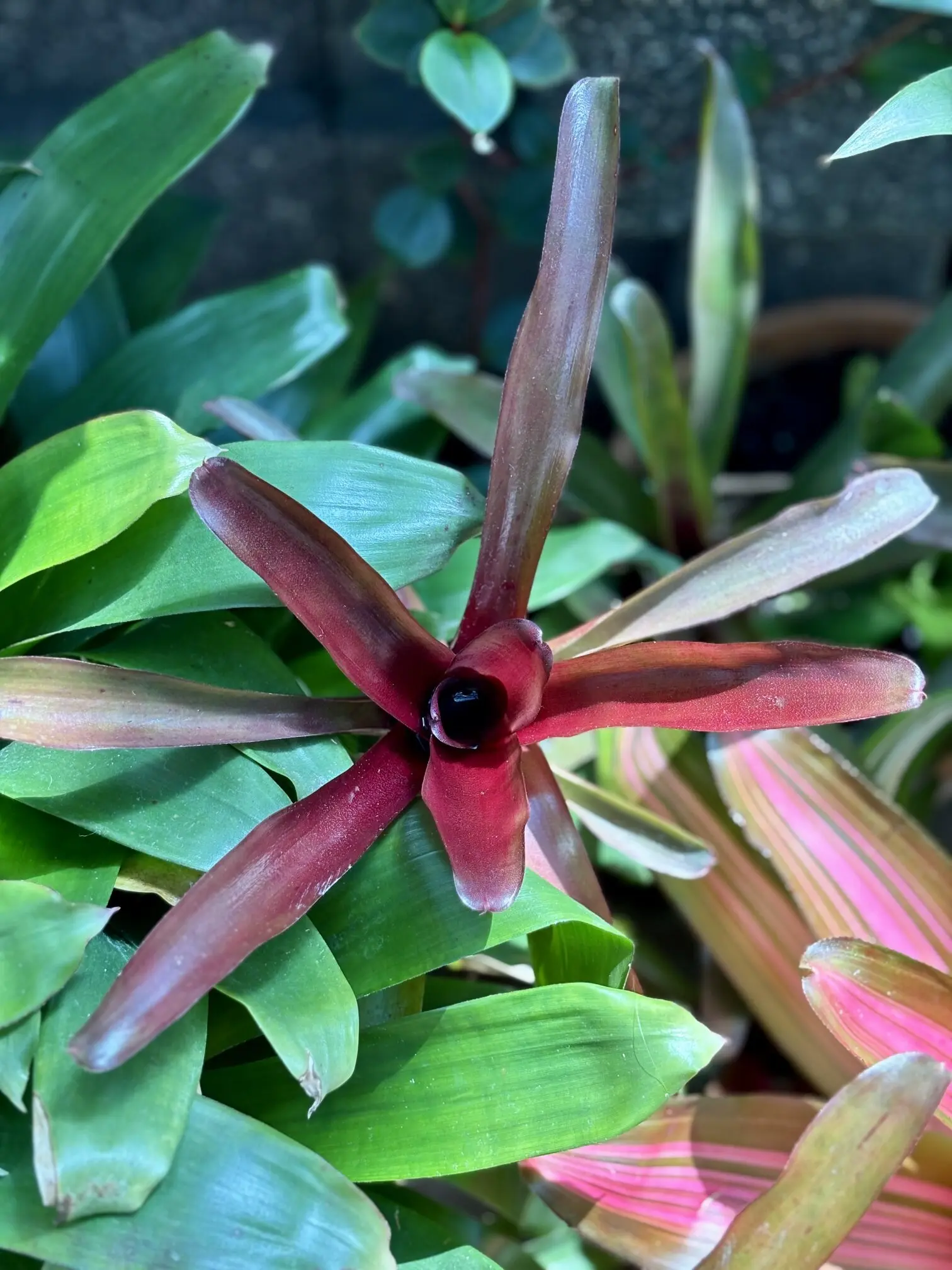
The way Neoregelia blooms is different from most bromeliads, too. There’s no tall flower spike. Instead, when the plant gets ready to bloom, the center leaves “blush,” turning bright red, pink, or purple. Then small flowers, usually blue, purple, or white, open right down inside the cup, often sitting in the water. Each flower lasts only a day or so, but the blushing center can hold its color for months.
Light is the big one for Neoregelia. Since you’re growing it for color, it needs more light than most bromeliads. Bright, indirect light is the minimum, and many varieties color up best with a few hours of direct morning sun. The more light it gets, the deeper and brighter the colors and spots. In low light, the leaves fade to plain green, stretch out, and lose that tight, flat rosette shape. Ease it into brighter light gradually, though, because a sudden move into strong sun can bleach or scorch the leaves.
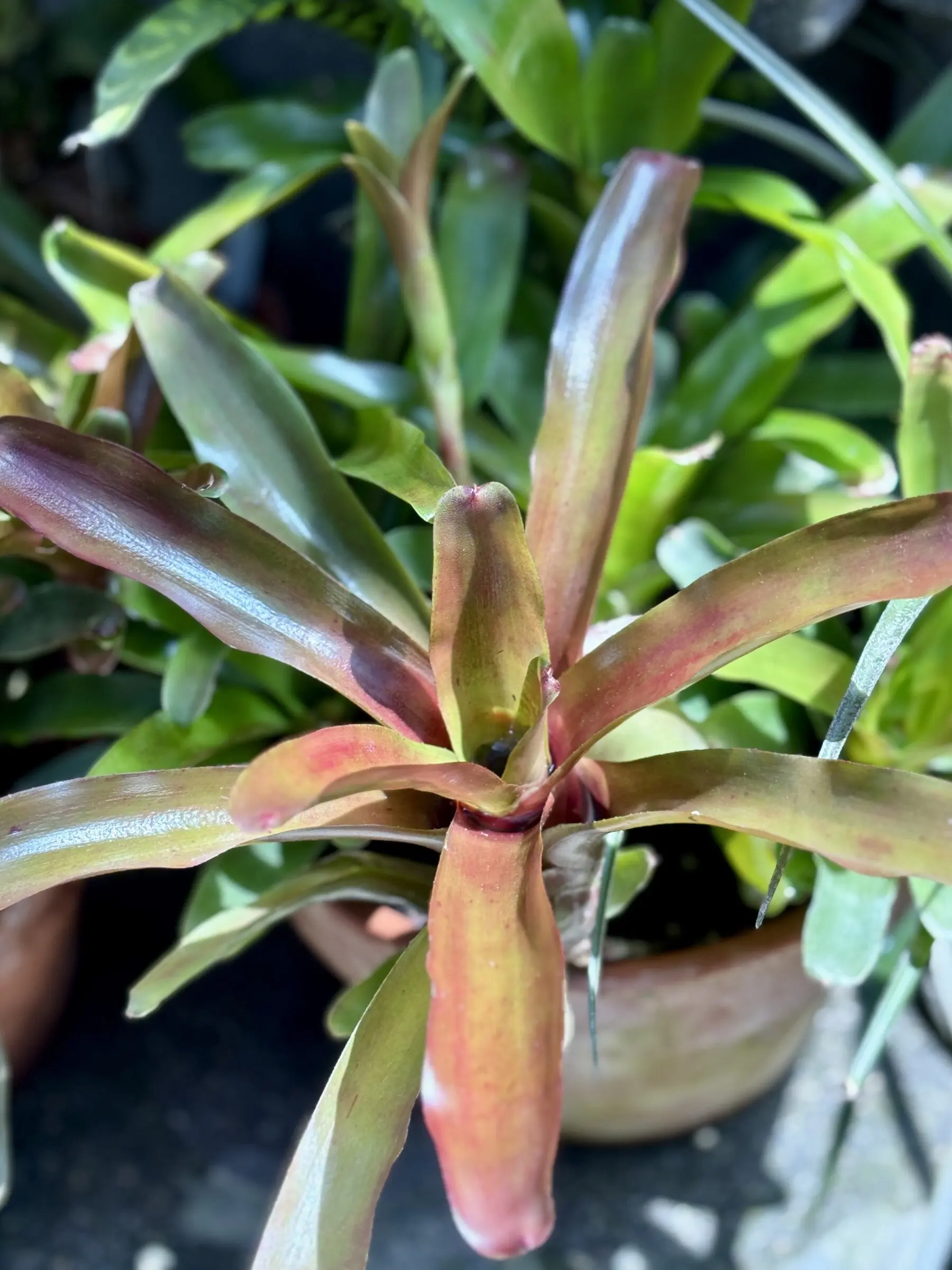
Water by keeping the center cup about a quarter to half full, and flush it with fresh water every week or two. Keep the soil lightly moist, but not soggy, and let the top inch dry out between waterings. Rainwater, distilled water, or filtered water is best. Because the flowers bloom in the cup, keeping that water fresh is especially important for Neoregelia.
It’s happiest at 60°F to 80°F, with moderate humidity. Keep it away from cold drafts. Most Neoregelias have small, sharp spines along their leaf edges, so handle them with care.
Use a loose, fast-draining mix, like orchid bark mix, in a small pot. Neoregelias also love being mounted on wood or bark. Since their roots are mostly for anchoring, they do beautifully on a branch or log, like the one in the top photo. Feed very lightly, with a balanced water-soluble fertilizer at a quarter strength once a month in spring and summer. Go easy on the fertilizer, because too much nitrogen can turn the leaves green and dull their colors.
Like all bromeliads, each rosette blooms only once. After it blooms, the mother plant slowly declines, but Neoregelias are generous with pups. Many types send out pups on short runners called stolons, so they spread into clumps over time. Separate the pups when they’re about a third to half the size of the mother, or let them fill in for a fuller look. Mini Neoregelias, like the popular ‘Fireball,’ are especially quick to multiply and look great mounted together in a cluster.
Common problems:
- Leaves fading to green or losing their spots mean it needs more light, or it’s getting too much fertilizer.
- Bleached or scorched patches mean it went into strong sun too quickly.
- Brown leaf tips usually mean dry air or minerals in tap water.
- A mushy center means rot from soggy soil or stagnant water in the cup.
- Watch for scale and mealybugs at the base of the leaves. Treat with insecticidal soap, and skip oil-based sprays like neem oil, which can damage bromeliad leaves.
Neoregelia is generally considered non-toxic to cats and dogs, but its spiny leaf edges can poke curious pets, so give it a spot out of the way.
Bold color all year long, no bloom required. I’d put Neoregelia in the beginner-friendly category, as long as you can give it plenty of light.
| Common Name | Neoregelia, Blushing Bromeliad |
|---|---|
| Botanical Name | Neoregelia spp. (Neoregelia carolinae and hybrids) |
| Family | Bromeliaceae |
| Mature Size | A few inches (minis) to 2-3 ft. wide |
| Sun | Bright, Indirect; some morning sun |
| Soil | Loose, fast-draining (orchid or bromeliad mix) |
| Flower Color | Blue, purple or white flowers in the cup |
| Native Area | Brazil |
| Toxicity | Non-toxic to pets |