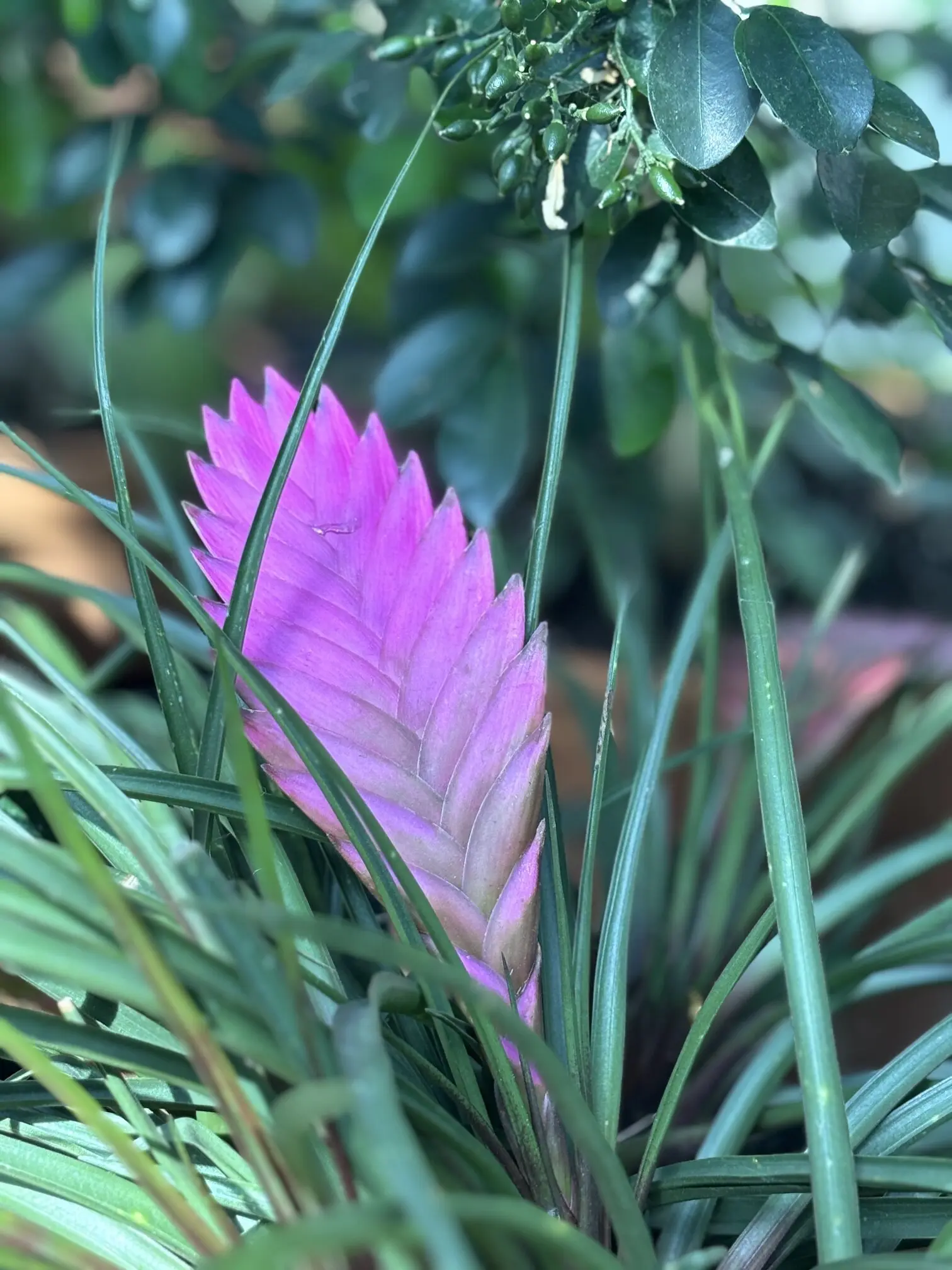
Pink Quill, also known as Tillandsia cyanea, is a small, charming bromeliad with a bloom that looks like a feather or a flattened paddle. The “quill” is a flat spike of tightly overlapping bracts in hot pink or magenta, and it rises from a clump of narrow, arching, grassy leaves. It’s related to air plants, and you’ll sometimes see it sold under its newer botanical name, Wallisia cyanea. Unlike most air plants, though, it grows happily in a pot. It’s native to the rainforests of Ecuador and Peru, where it grows on trees, and it’s hardy only in zones 10-11. For most of us, it’s a houseplant, or a summer porch plant that comes inside before temps dip below 55°F.
This article covers what makes Pink Quill different. For more on bromeliads in general, like growing new plants from pups and getting one to bloom, see my main Bromeliad Care guide.
The quill is the main show, and it lasts for months. The real surprise comes when the true flowers open. Small, vivid violet-blue flowers pop out from the edges of the quill, usually one or two at a time, working their way up the spike. Each one lasts only a few days, but they keep coming for weeks, and the blue against the pink is stunning. Some people also notice a light, sweet fragrance.
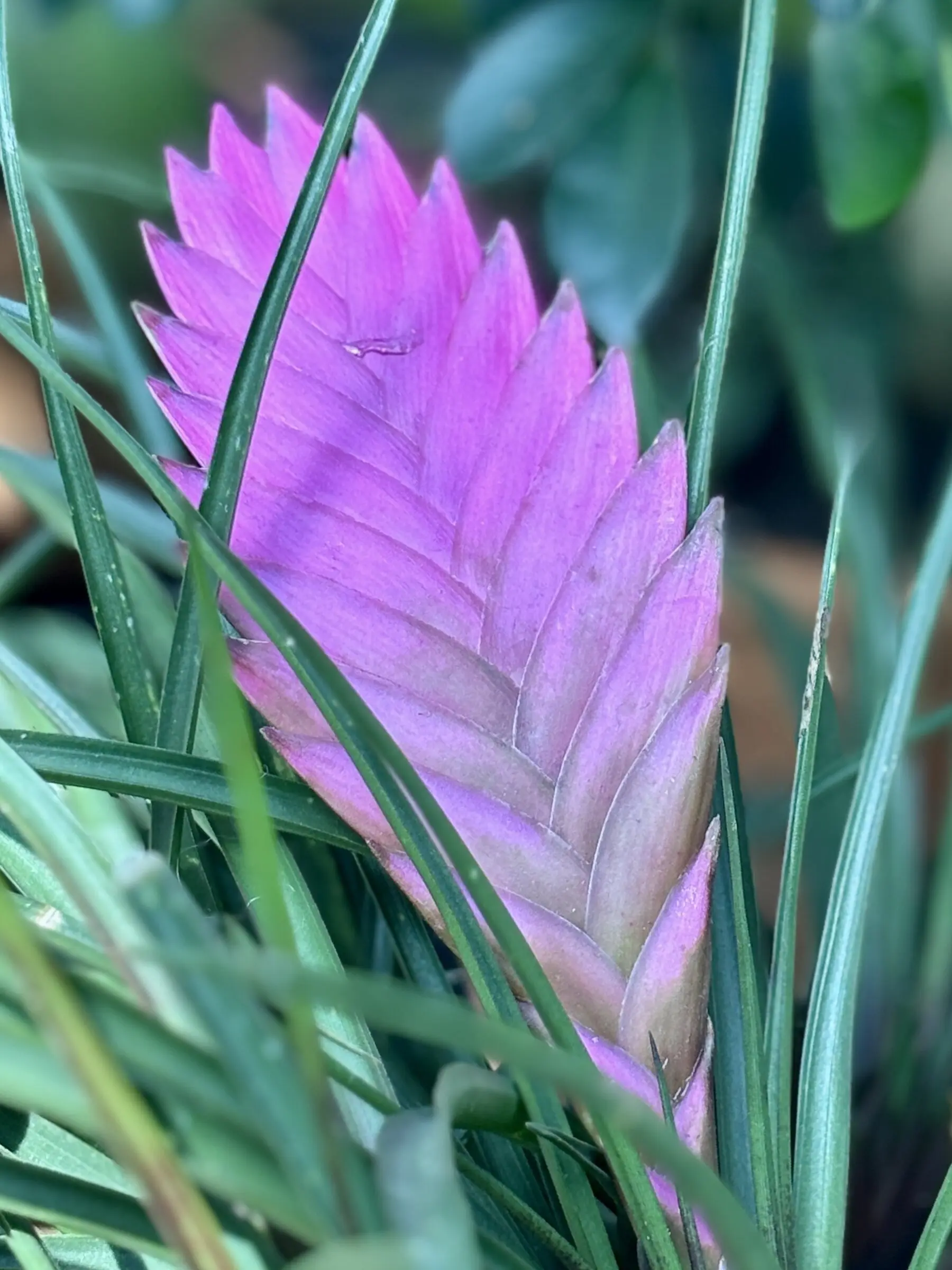
Here’s the biggest difference from other bromeliads: Pink Quill doesn’t have a center cup to fill. Its leaves are too narrow to hold water. Instead, water the soil when the top inch or so feels dry, then let it drain well. Like its air plant cousins, it also takes in moisture through its leaves, so mist the leaves a few times a week, especially when the air is dry. Rainwater, distilled water, or filtered water is best. Overwatering the soil is the most common way to lose one, so keep it lightly moist, never soggy.
It wants bright, indirect light. An east-facing window, or a spot a few feet back from a south or west window, works well. Good light helps it bloom and keeps the quill a bright pink. Keep it out of hot direct sun, which can scorch the leaves.
It’s happiest at 60°F to 80°F, with moderate to high humidity. A pebble tray, a humidifier, or grouping it with other plants helps. A bright bathroom is a great spot for it. Keep it away from cold drafts and heating vents.
Use a loose, fast-draining mix, like orchid bark mix, in a small pot. Its roots are small and mostly for anchoring, so it doesn’t need a big pot. Because it’s an air plant cousin, it can also be mounted on wood or cork. Feed it very lightly, with a balanced water-soluble fertilizer at a quarter strength, misted on the leaves or watered into the soil once a month in spring and summer.
Like other bromeliads, each plant blooms only once. When the quill fades and loses its color, cut it off near the base. The mother plant will slowly decline, but she’ll send up pups around her base. Separate them when they’re about a third to half the size of the mother, or leave them to grow into a fuller clump. Pups usually bloom in one to two years.
Common problems:
- Brown leaf tips usually mean dry air or minerals in tap water. Mist more often and switch to rainwater or filtered water.
- A mushy base or yellowing leaves mean the soil is staying too wet.
- A pale or faded quill means it needs more light, or the bloom is simply finishing.
- Watch for scale and mealybugs at the base of the leaves. Treat with insecticidal soap, and skip oil-based sprays like neem oil, which can damage bromeliad leaves.
Pink Quill is generally considered non-toxic to cats and dogs, and its soft, grassy leaves have no spines. Just keep it away from cats that like to chew on grassy plants.
Small, unusual, and easy to love. I’d put Pink Quill in the beginner-friendly category. It’s a great pick for a sunny windowsill or a bright bathroom.
| Common Name | Pink Quill |
|---|---|
| Botanical Name | Tillandsia cyanea (also Wallisia cyanea) |
| Family | Bromeliaceae |
| Mature Size | 10-12 in. tall and wide |
| Sun | Bright, Indirect |
| Soil | Loose, fast-draining (orchid or bromeliad mix) |
| Flower Color | Pink quill with violet-blue flowers |
| Native Area | Ecuador and Peru |
| Toxicity | Non-toxic to pets |