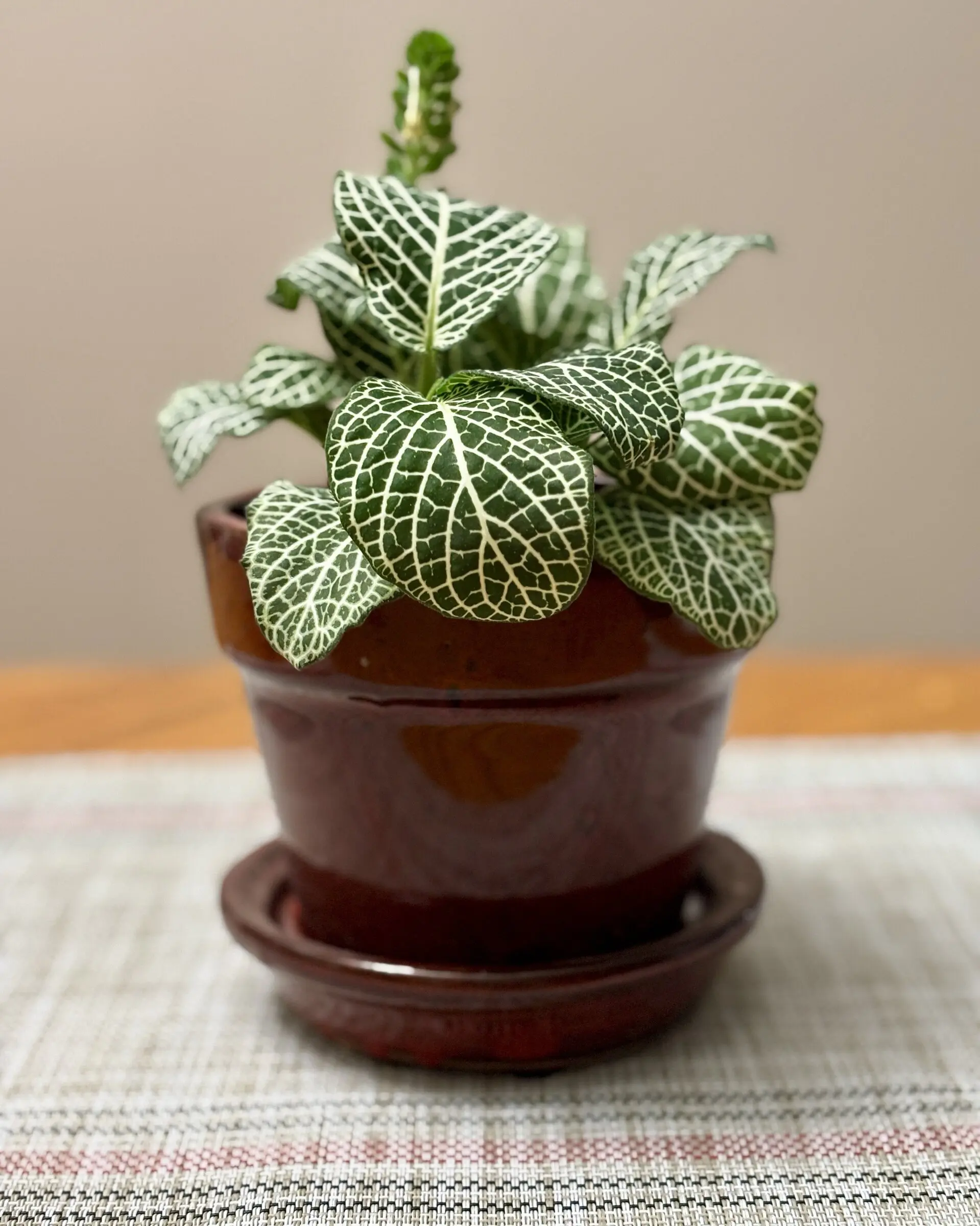
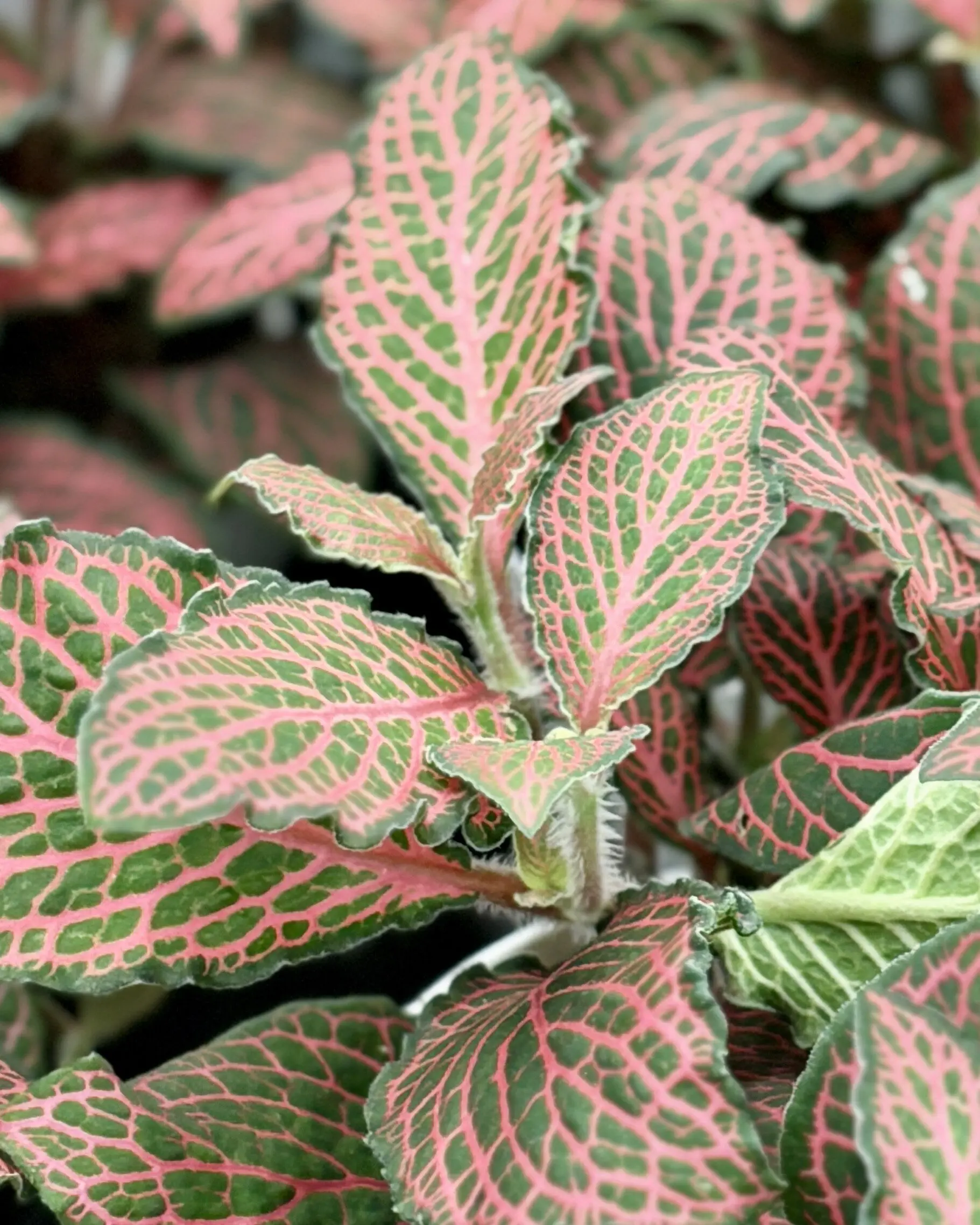
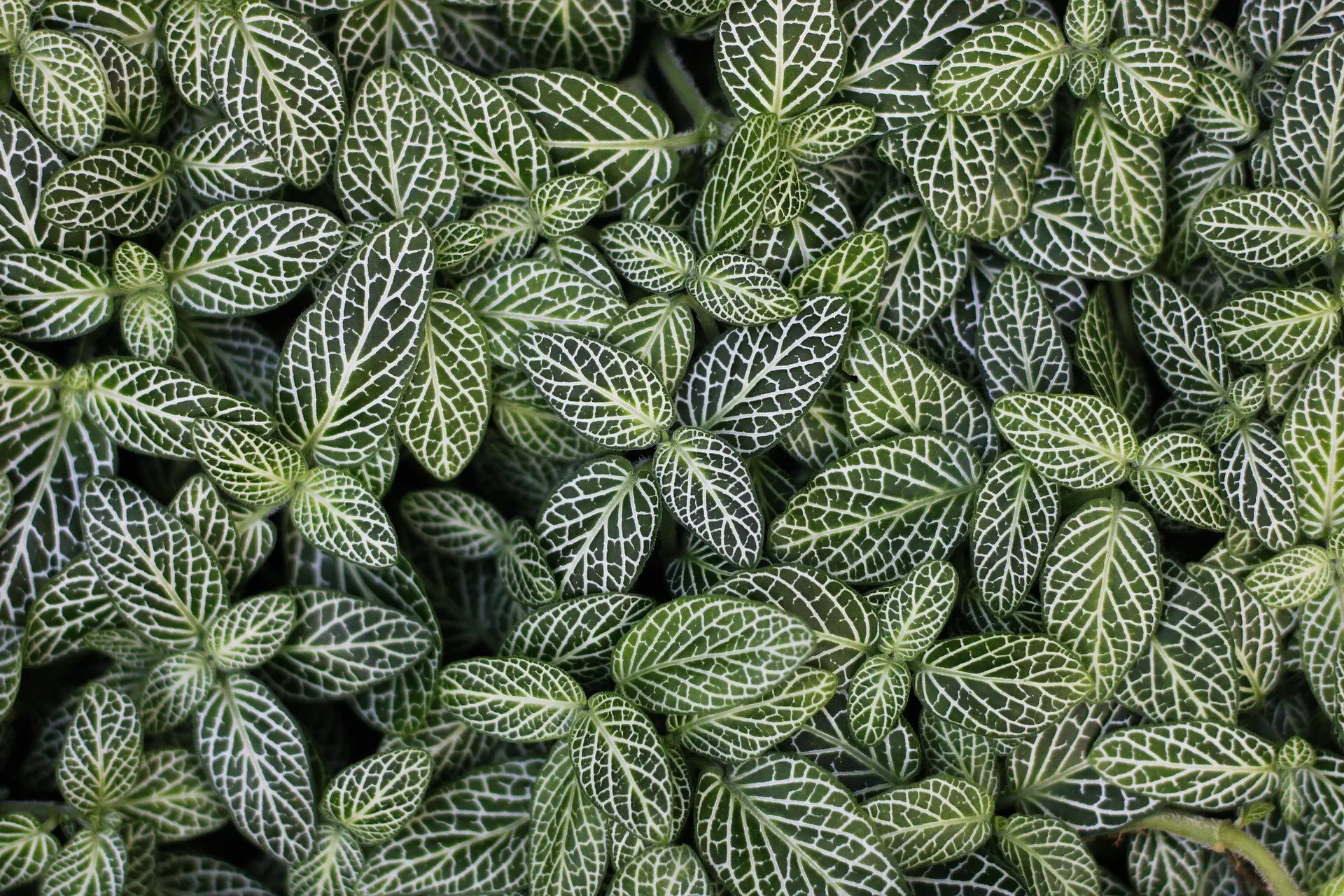
Nerve Plant, also known as Fittonia or Mosaic Plant, is a small, low-growing houseplant with leaves that look like they’ve been drawn on. Each leaf is covered in a fine net of contrasting veins, white on dark green, like mine, or pink, red, or silver on others. You’ll find them in red, pink, white, and green. Its botanical name is Fittonia albivenis, and it’s in the Acanthaceae family, the same family as the polka dot plant. It’s native to the rainforests of South America, especially Peru, where it creeps along the shady forest floor. It’s hardy only in zones 11-12, so for most of us it’s a houseplant all year.
It stays small, usually just 3-6 inches tall, and spreads out as it grows. That makes it perfect for a windowsill, a desk, a dish garden, or a terrarium.
Nerve plants are famous for being dramatic. Let the soil dry out, and the whole plant collapses and looks like it’s done for. Give it a good drink and it usually perks right back up within a few hours. It’s the plant world’s version of fainting. It’s a great reminder to water, but try not to let it happen often. Repeated wilting leads to crispy, brown leaves.
Keep the soil evenly moist, but never soggy. Water when the top half inch of soil starts to feel dry. Water thoroughly, let it drain, and empty the saucer so it isn’t sitting in water. Soggy soil leads to yellow leaves and root rot, so it’s a balancing act. Room-temperature water is best, since cold water can shock it.
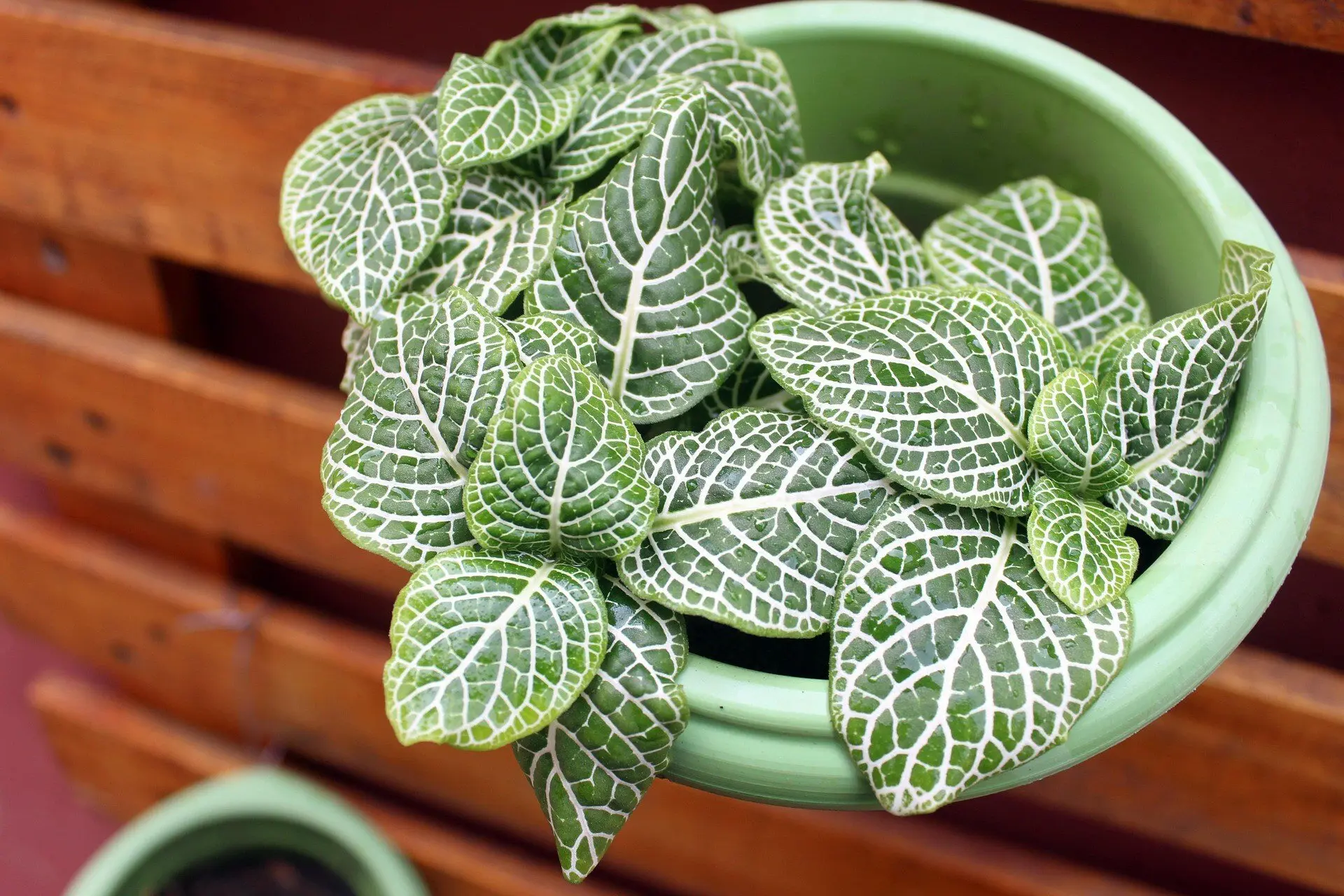
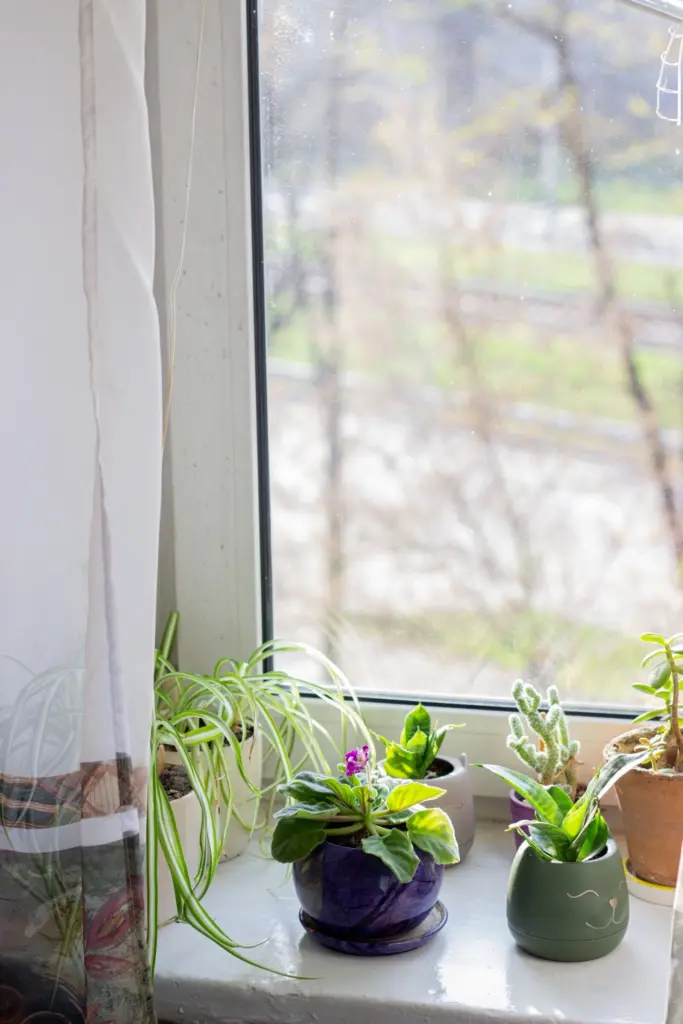
It likes medium to bright, indirect light. Its home is the forest floor, so direct sun scorches the leaves and fades the veins. Too little light, though, and the stems stretch out and the colors dull. An east- or north-facing window, or a spot a few feet back from a brighter window, works well. A grow light works great, too. I have mine under one.
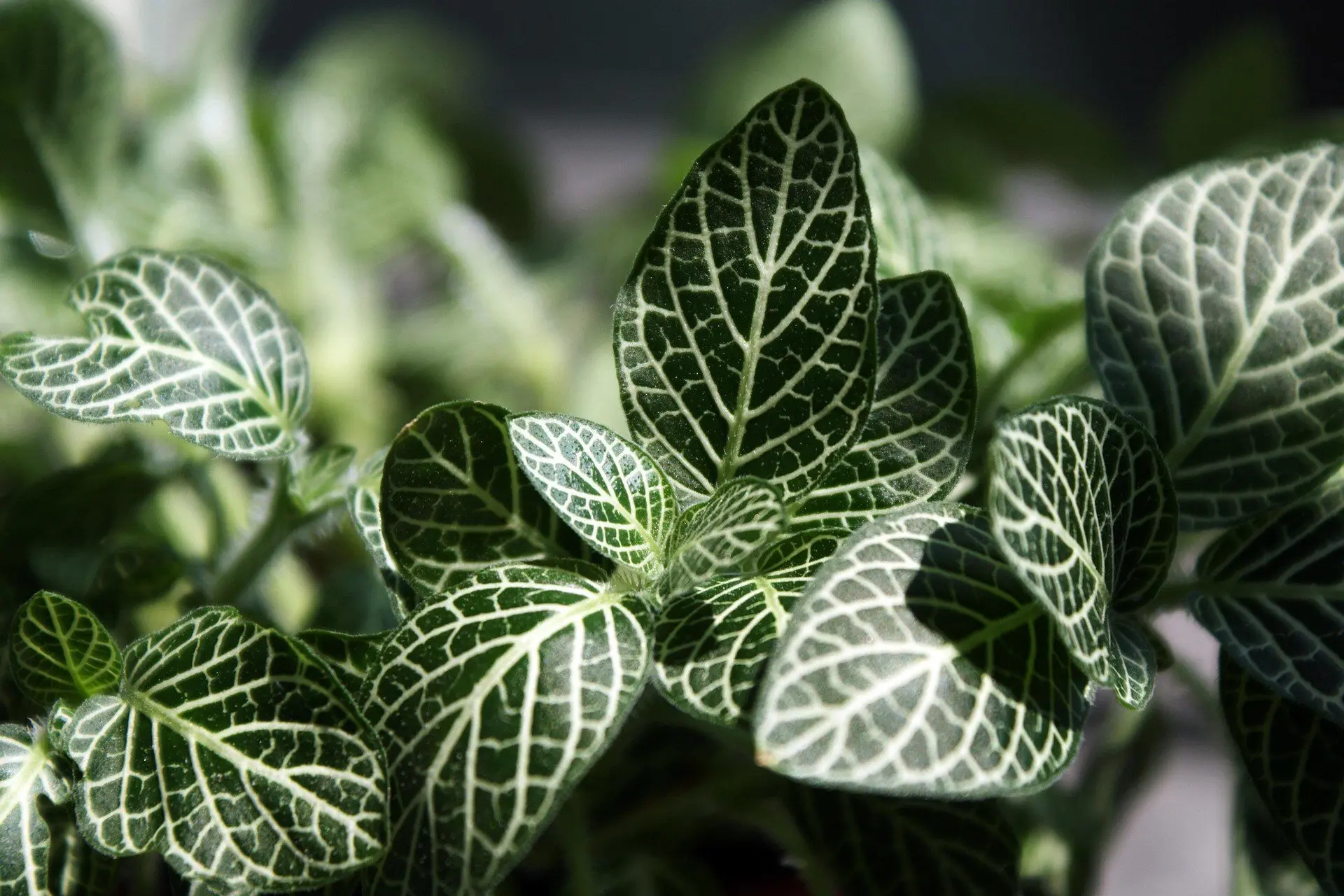
Humidity is what keeps a nerve plant happy. It wants 60% humidity or higher, which is more than most homes have, especially in winter when the heat is running. That’s why it’s such a popular terrarium plant. A humidifier, a pebble tray, or grouping it with other plants helps, too. Crispy brown leaf edges are usually its way of telling you the air is too dry.
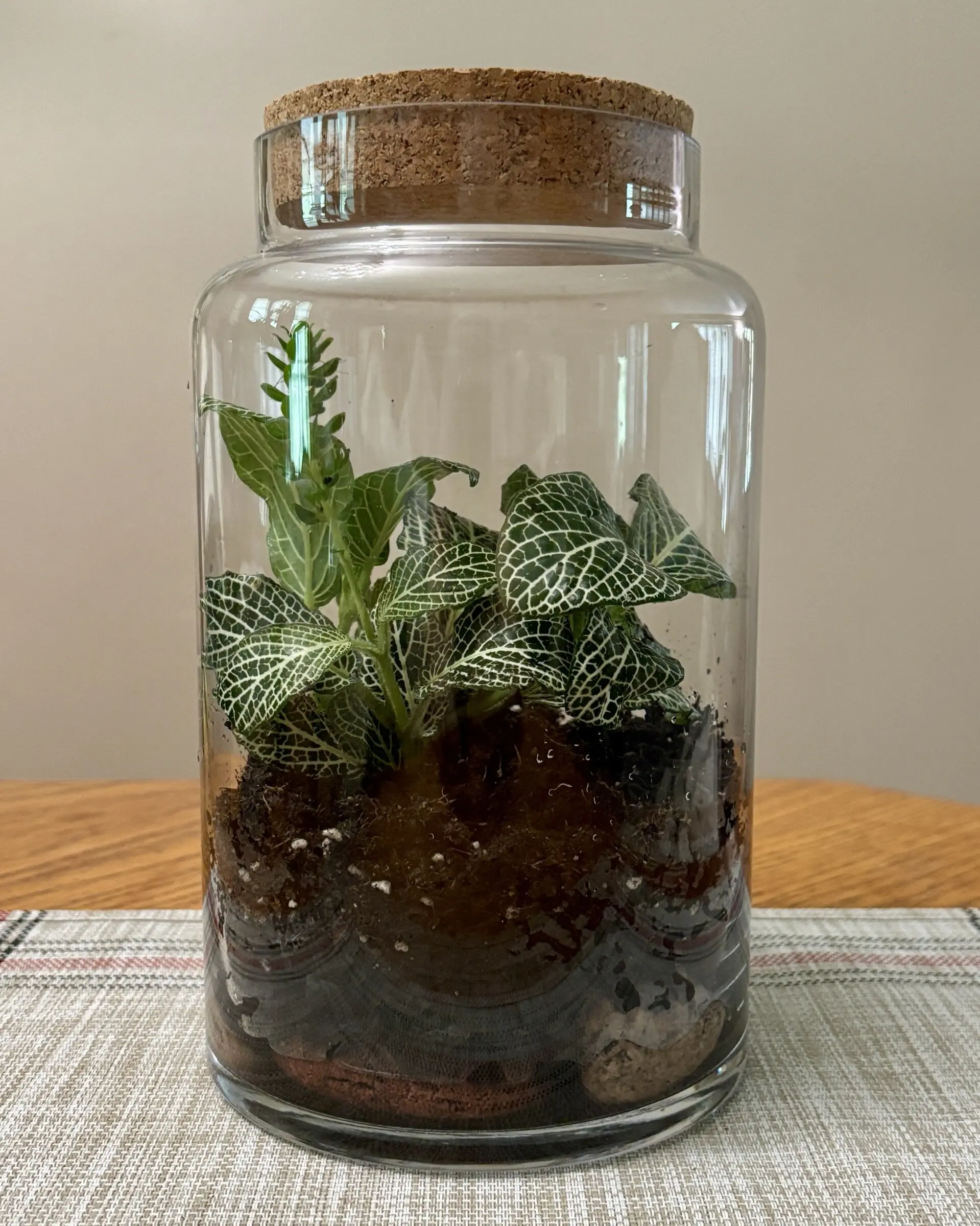
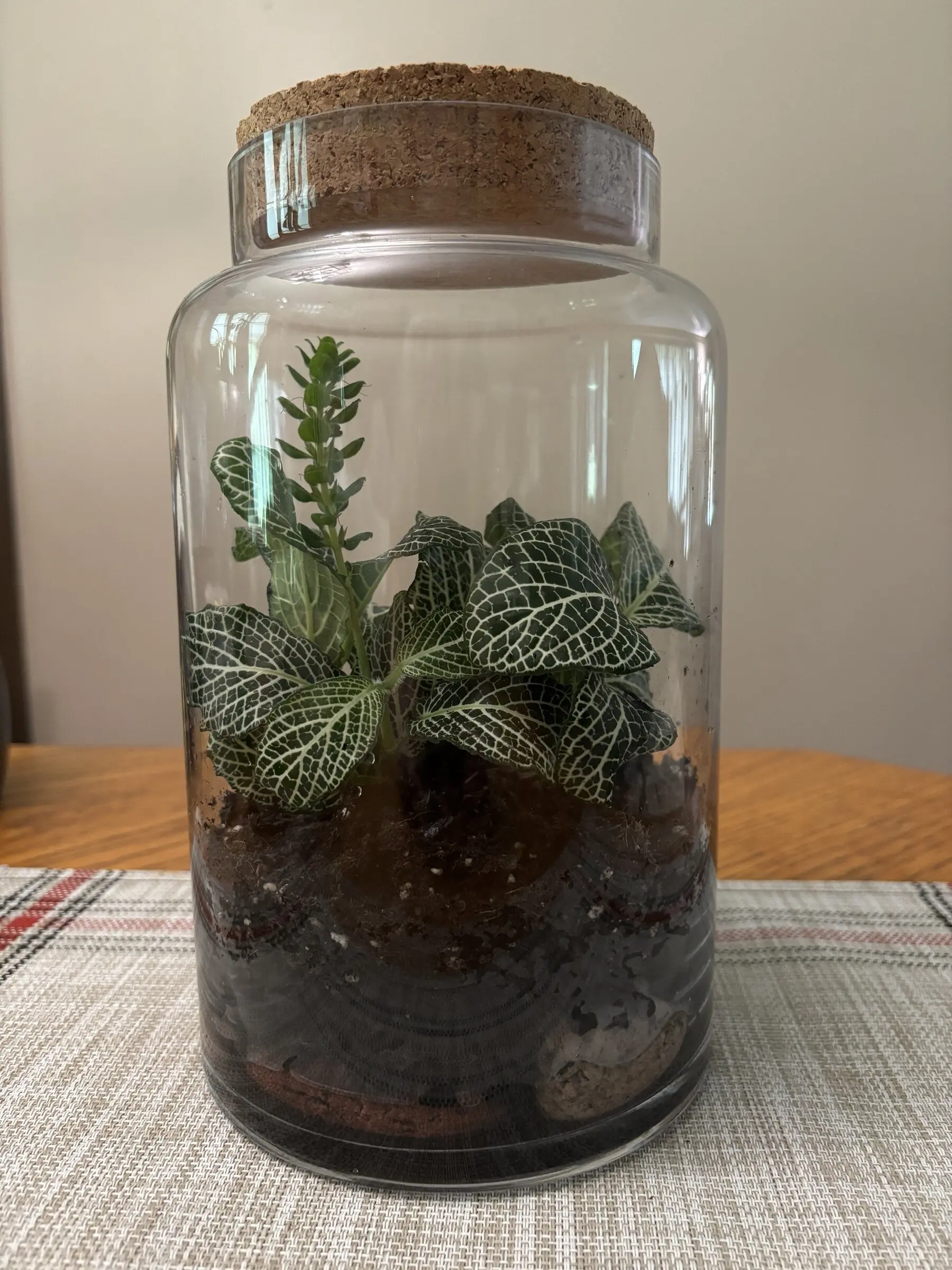
I had mine in a pot, but moved it to a terrarium. Looking back at my photos, you can see it was a bit thirsty in the pot. A closed terrarium makes a nerve plant almost carefree. The lid traps moisture, so the jar makes its own little rainforest. To build one, start with a layer of small stones or pebbles for drainage, add a piece of mesh to keep the soil from sifting down, then add a layer of moist potting mix. Plant the nerve plant, water lightly, and close the lid. A healthy closed terrarium will fog up a bit during the day. If the glass stays completely fogged, open the lid for a few hours to let it air out. If it never fogs, add a little water. Keep it in bright, indirect light, never direct sun, which can cook the plants inside the glass.
Nerve plants grow quickly in a terrarium’s warm, humid air. They’ll stretch toward the lid and get leggy, so plan on pinching them back every so often to keep them full.
It’s happiest at 65°F to 80°F. Keep it away from cold drafts, cold windows, and heating and air conditioning vents. Temperatures below 55°F can damage the leaves.
Use a light, moisture-retaining potting mix with some peat or coco coir and a little perlite, in a pot with drainage holes. It likes its soil peaty and slightly acidic. Feed a balanced water-soluble fertilizer at half strength once a month in spring and summer, and skip it in fall and winter. In a terrarium, skip fertilizer altogether or use it very rarely, so it doesn’t outgrow the jar.
Pinch back the stem tips regularly to keep it bushy instead of tall and floppy. It may also send up small, green flower spikes, like the ones in my photos. The flowers are tiny and not very showy, and many growers pinch them off so the plant puts its energy into leaves.
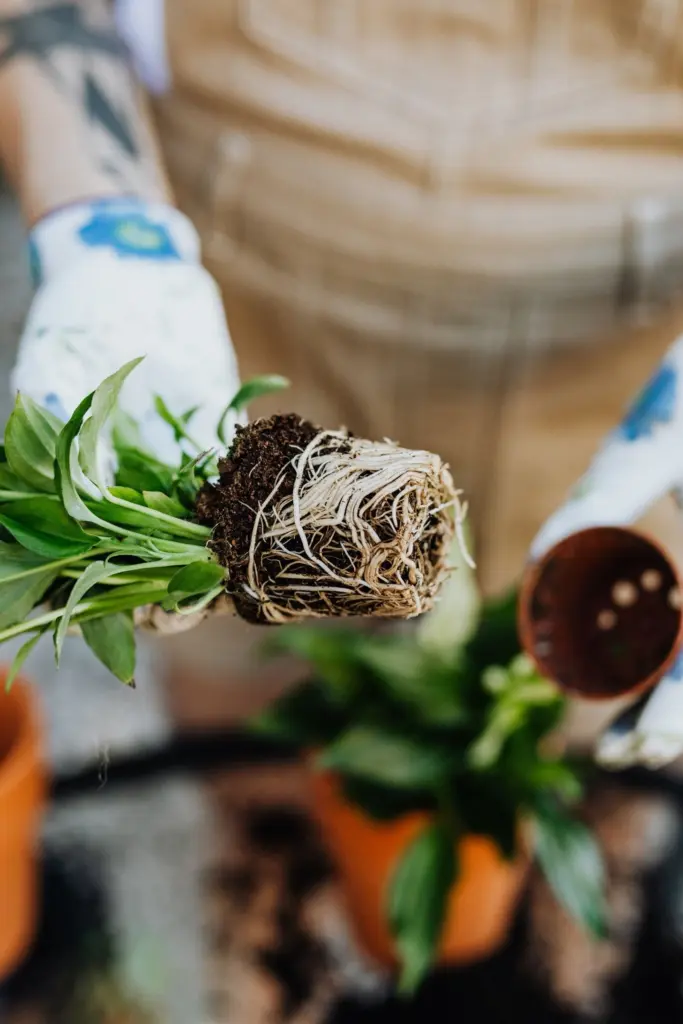
Nerve plants are easy to propagate. Take a 2-3 inch stem cutting with a few leaves, remove the lowest leaves, and root it in water or moist soil. To plant it directly into soil, cut it to include two nodes, the bumps on the stem where leaves grow, and bury the lower one. Keep it humid. Covering the cutting with a clear plastic bag works well. Roots usually form in a few weeks. Your pinched-off tips make perfect cuttings, and you can tuck them right back into the pot or terrarium to fill it in. Stems that touch the soil will often root on their own, too.
Repot in spring if it outgrows its pot, going up just one size. It has shallow roots, so a wide, shallow pot works well.
Most problems come back to water, humidity, or light:
- A collapsed, wilted plant usually means it’s thirsty. Water it and it should bounce back.
- Yellow leaves and mushy stems usually mean too much water.
- Brown, crispy leaf edges mean dry air or too much sun.
- Long, bare stems and faded veins mean it needs more light, or a pinch.
- Watch for mealybugs, aphids, and fungus gnats, which love damp soil. Treat pests with insecticidal soap or neem oil, and let the top of the soil dry slightly to discourage gnats.
Good news for pet owners: nerve plants are considered non-toxic to cats and dogs.
Small, striking, and pet-safe. I’d put it in the beginner-friendly to moderate category. In a pot it needs steady water and humidity, but in a terrarium it’s nearly carefree.
| Common Name | Nerve Plant, Fittonia, Mosaic Plant |
|---|---|
| Botanical Name | Fittonia albivenis |
| Family | Acanthaceae |
| Mature Size | 3-6 in. tall, 12-18 in. wide |
| Sun | Medium to bright, Indirect |
| Soil | Moist, well-drained, peaty, Acidic |
| Native Area | South America (Peru) |
| Toxicity | Non-toxic to pets |