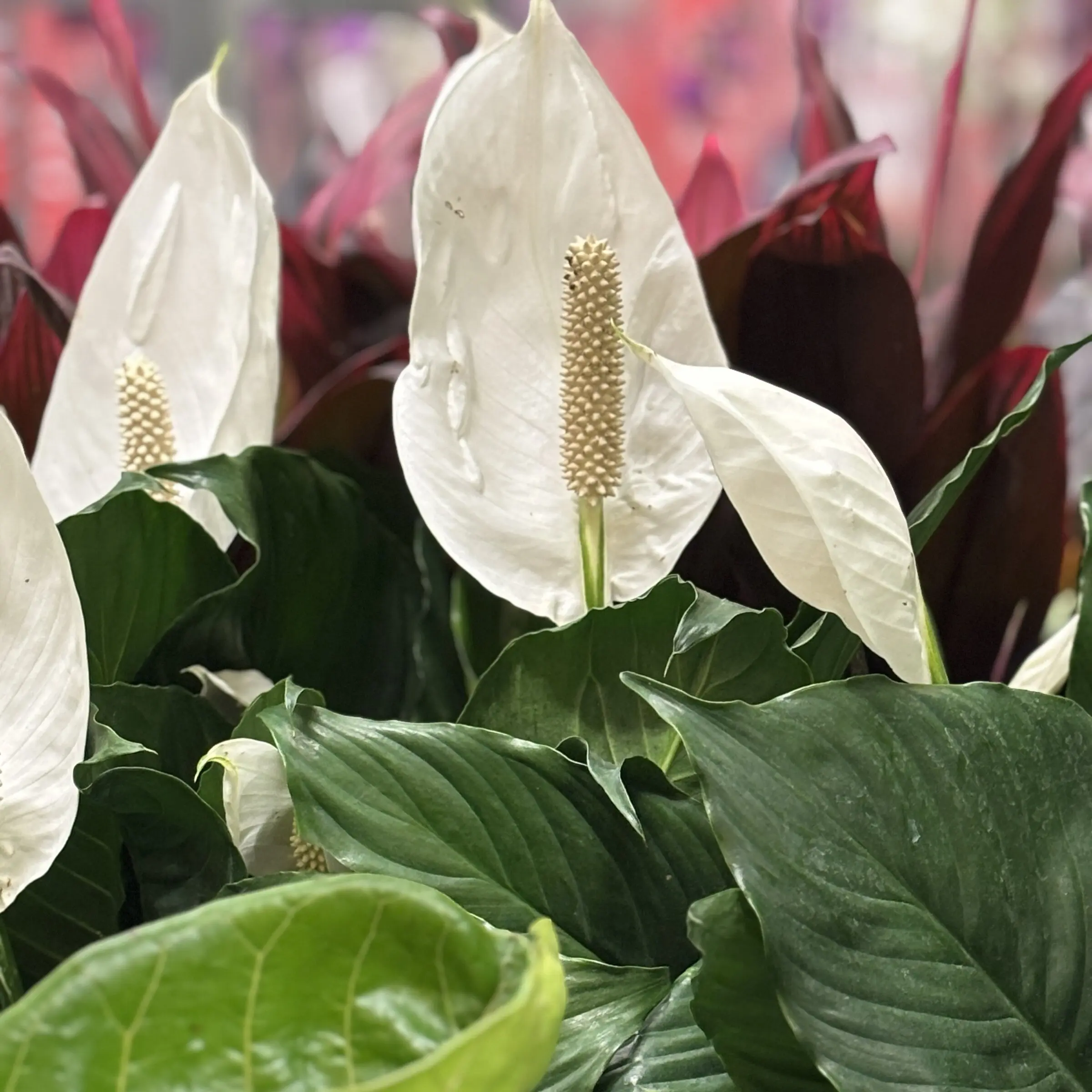
Peace Lily, also known as Spathiphyllum or Spath, is one of the most popular houseplants around, and for good reason. It has glossy, dark green leaves and elegant white blooms that rise above the foliage on tall stems. Here’s the thing, though: it isn’t a true lily at all. It’s in the Araceae family, the same family as pothos, monstera, and philodendron. And that white “flower” isn’t really a flower. It’s a modified leaf called a spathe, wrapped around a spike called a spadix, which holds the tiny true flowers. There are dozens of varieties, from compact tabletop plants to large floor plants that grow 4-6 feet tall. It’s native to tropical rainforests, mostly in Central and South America, and hardy only in zones 11-12, so for most of us it’s an indoor plant all year.
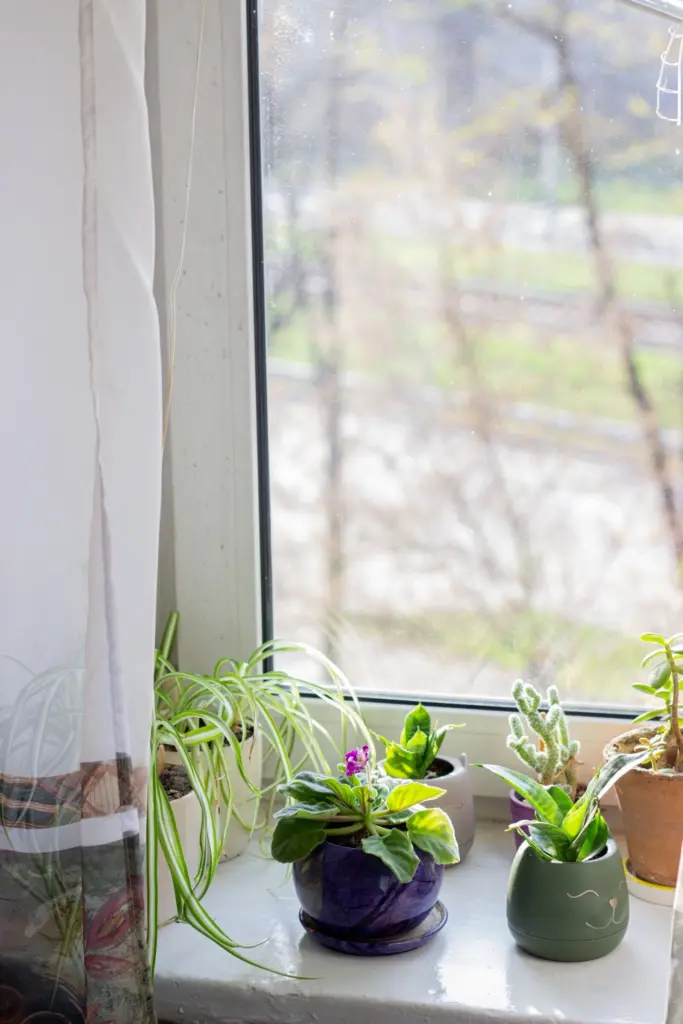
It’s known for tolerating low light, and it will survive in a dim corner. It just won’t bloom much there. For flowers, give it bright, indirect light, like a spot near an east-facing window or a few feet back from a south or west window. Keep it out of direct sun, which scorches the leaves and turns them pale or brown.
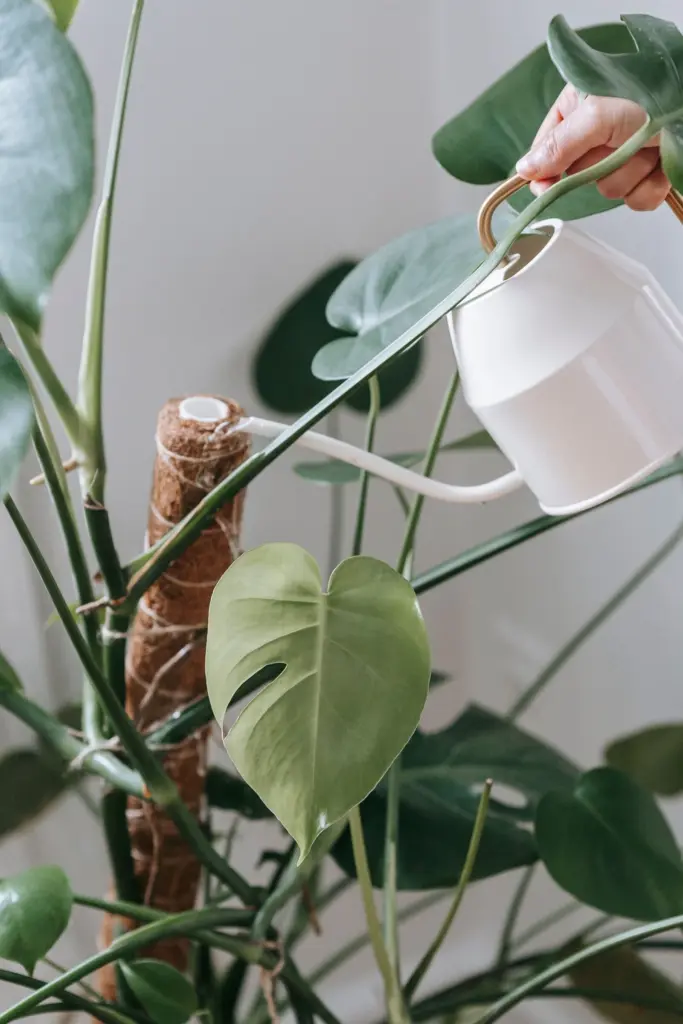
This plant tells you exactly when it’s thirsty. When the soil dries out, the whole plant droops dramatically, like it’s fainting. Water it well and it perks back up within a few hours. It’s a great plant for beginners for that reason. But don’t make a habit of waiting for the droop. Repeated wilting stresses the plant and leads to yellow and brown leaves. Water when the top inch of soil feels dry, water thoroughly until it runs out the drainage holes, then empty the saucer. Soggy soil leads to root rot, which also causes drooping, so always check the soil before you water a droopy plant.
Peace lilies can be sensitive to the chemicals in tap water, like chlorine and fluoride. If you see brown, crispy leaf tips, try letting tap water sit out overnight before using it, or use filtered water or rainwater.
It’s happiest at 65°F to 80°F and doesn’t like the cold. Keep it away from drafts, cold windows, and heating and air conditioning vents. Temperatures below 45°F can damage it. It loves humidity, so it’s a good fit for a bright bathroom or kitchen. A pebble tray or humidifier helps in winter, too.
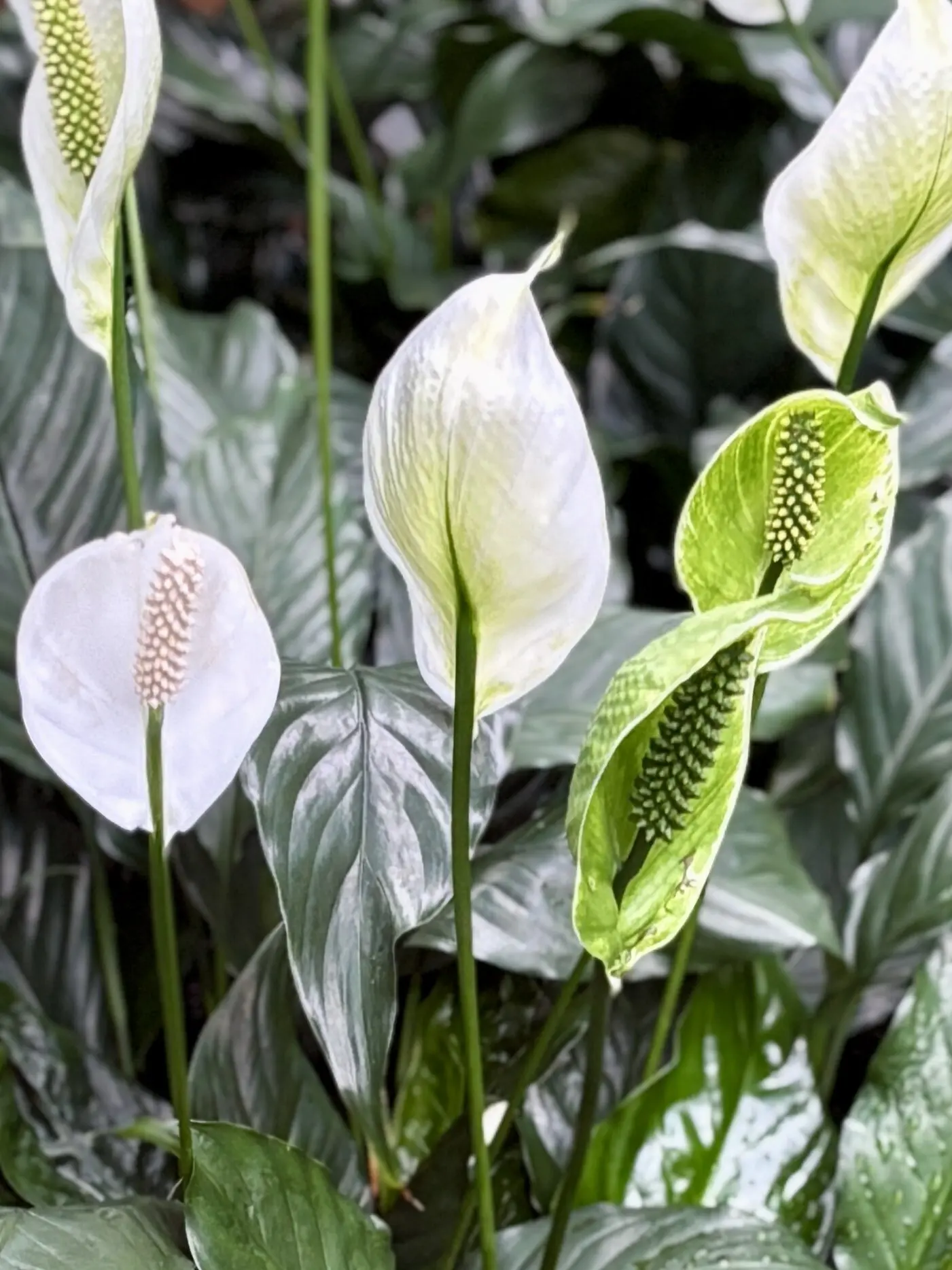
The blooms usually last several weeks. As they age, the white spathe slowly turns green, and the spadix darkens. That’s natural, not a sign that something is wrong. Once a bloom turns green or brown, cut its stalk off at the base, down near the soil. It keeps the plant looking tidy and directs its energy to new growth. Peace lilies usually bloom in spring and early summer, and some rebloom in fall with good light.
Not blooming? It’s almost always light. Move it somewhere brighter. Feeding can help, too. Use a balanced, water-soluble fertilizer at half strength every 6-8 weeks during spring and summer. Don’t overdo it, though. Too much fertilizer can cause brown leaf tips and green blooms.
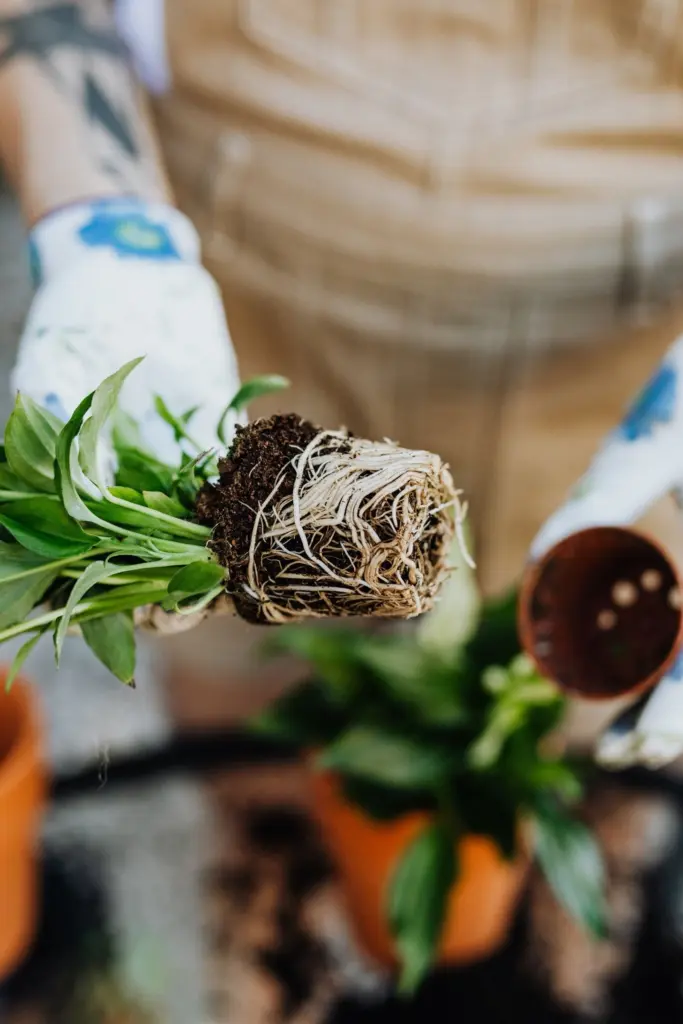
Use a well-draining, all-purpose potting mix, and a pot with drainage holes. Peace lilies don’t mind being a little snug in their pot. Repot every year or two in spring, or when roots start circling the pot or the plant needs water every couple of days. Go up just one pot size, about 1-2 inches wider.
You can propagate it by division when you repot. Gently pull the plant out of its pot, separate it into smaller clumps, each with its own leaves and roots, then pot them up separately. Peace lilies don’t grow from stem or leaf cuttings, so division is the way to go.
Those big, glossy leaves collect dust. Wipe them with a damp cloth every few weeks so they stay shiny and can soak up light. Trim off any yellow or brown leaves at the base.
Most problems come back to water and light. Drooping means it’s thirsty, or the roots are rotting if the soil is wet. Yellow leaves can mean overwatering or just old leaves dying off. Brown tips usually come from tap water chemicals, dry air, or too much fertilizer. No blooms means it needs more light. Watch for mealybugs (white cottony bits), spider mites (fine webbing under the leaves), and scale (small brown bumps). Neem oil or insecticidal soap takes care of all three.
Peace lilies are toxic to cats, dogs, and people if chewed or eaten. They contain calcium oxalate crystals, which irritate the mouth and throat and can cause drooling and vomiting. The good news is that it isn’t a true lily, so it doesn’t cause the kidney failure in cats that true lilies (like Easter lilies) do. Still, keep it out of reach of curious pets and kids.
Forgiving, beautiful, and it tells you when it’s thirsty. I’d put it in the beginner-friendly category, and it’s one of the best plants for brightening a spot that doesn’t get much sun.
| Common Name | Peace Lily, Spath |
|---|---|
| Botanical Name | Spathiphyllum spp. |
| Family | Araceae |
| Mature Size | 1-4 ft. tall indoors; larger varieties up to 6 ft. |
| Sun | Medium to bright, Indirect; tolerates low light |
| Soil | Moist, well-drained |
| Flower Color | White |
| Native Area | Central and South America |
| Toxicity | Toxic to humans and pets |