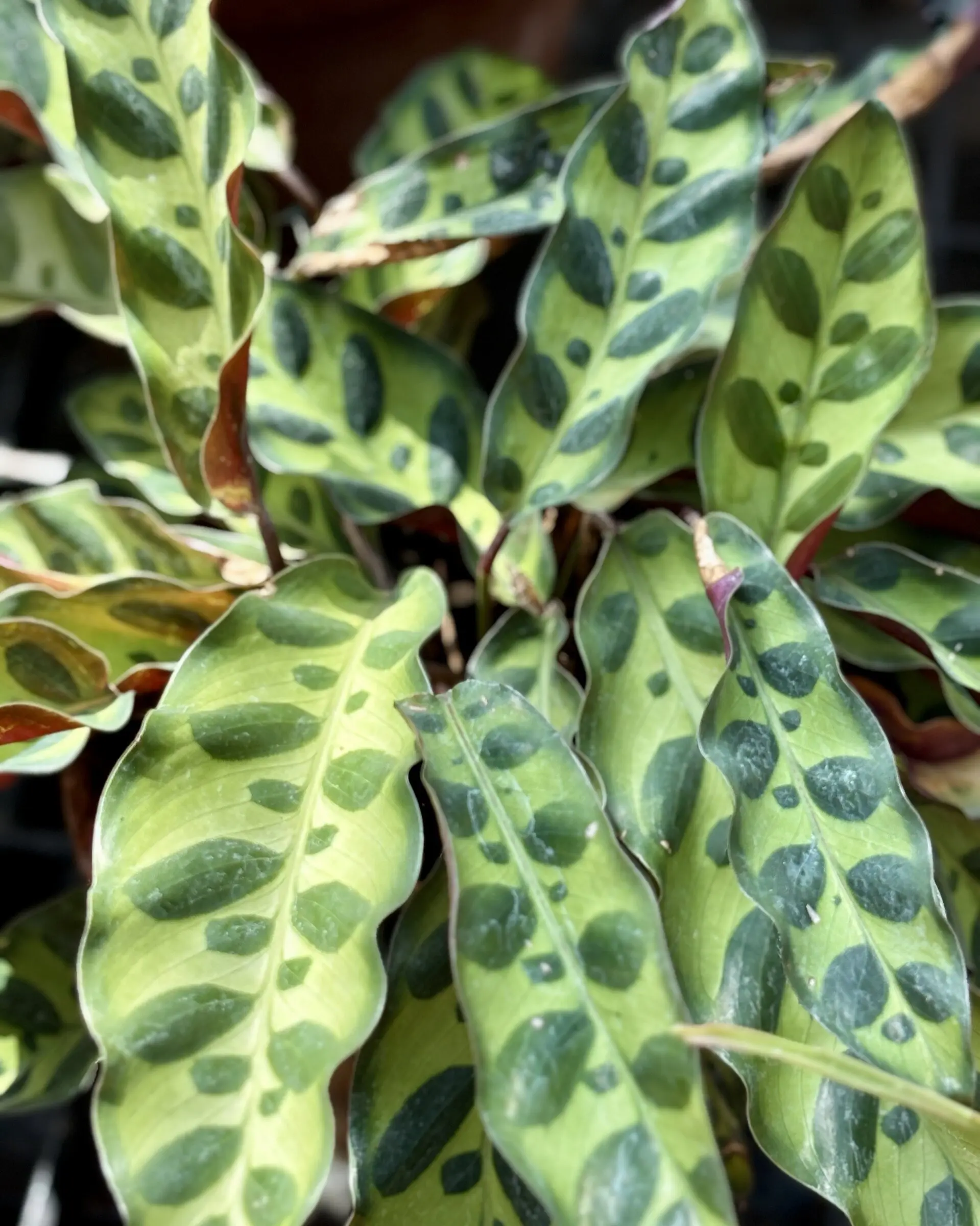
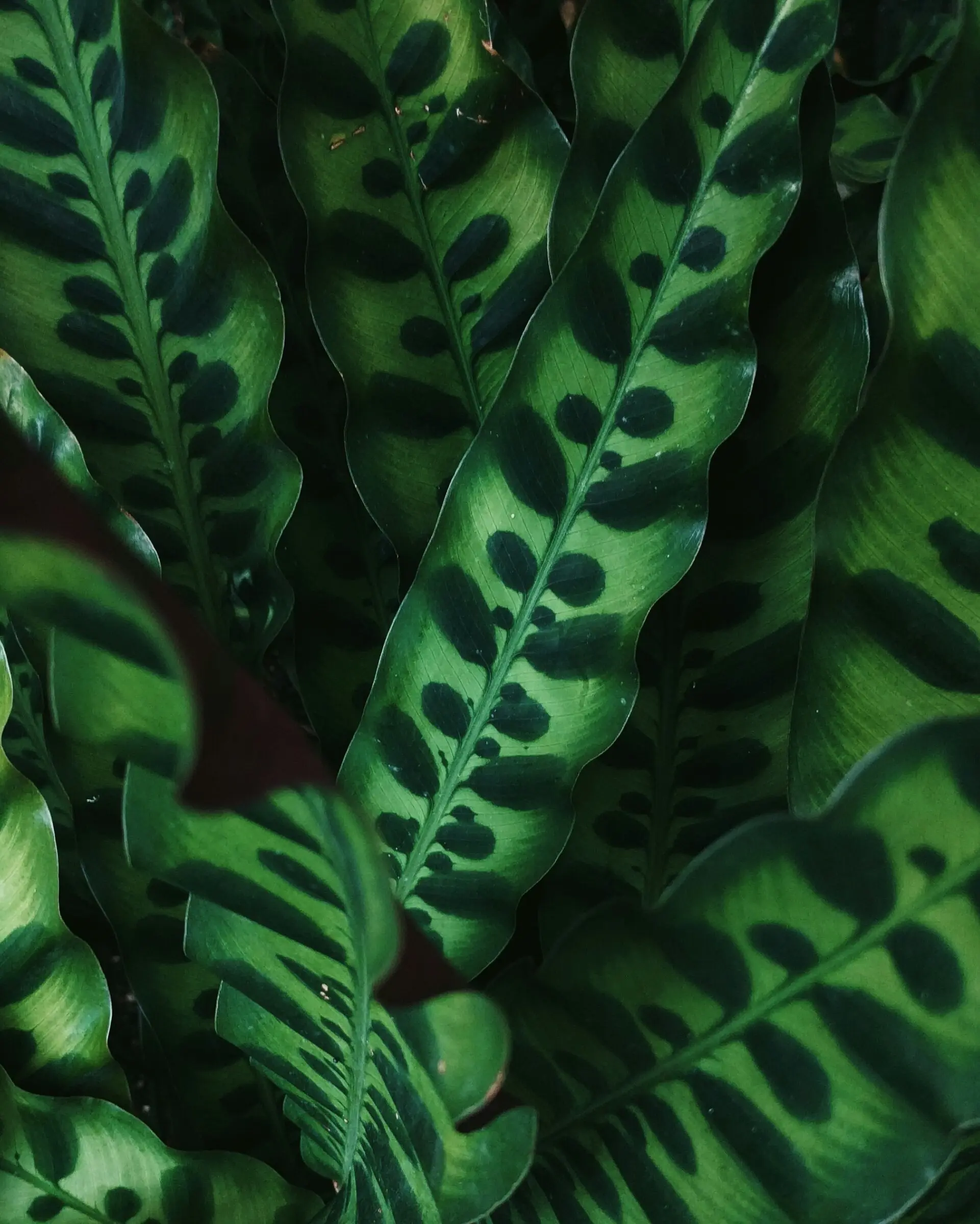
Rattlesnake Plant, also known as Calathea lancifolia or Goeppertia insignis, gets its name from its long, narrow leaves with wavy edges and rows of dark green oval spots on a light green background. They look a lot like snakeskin. Flip a leaf over and you’ll find a rich purple-burgundy underside. You’ll still see it sold as a Calathea, but botanists moved it to the Goeppertia genus, so you may see either name on the tag. It’s in the prayer plant family (Marantaceae), and it’s native to the rainforests of Brazil, where it grows on the shady forest floor. It’s hardy only in zones 11-12, so for most of us it’s a houseplant all year.
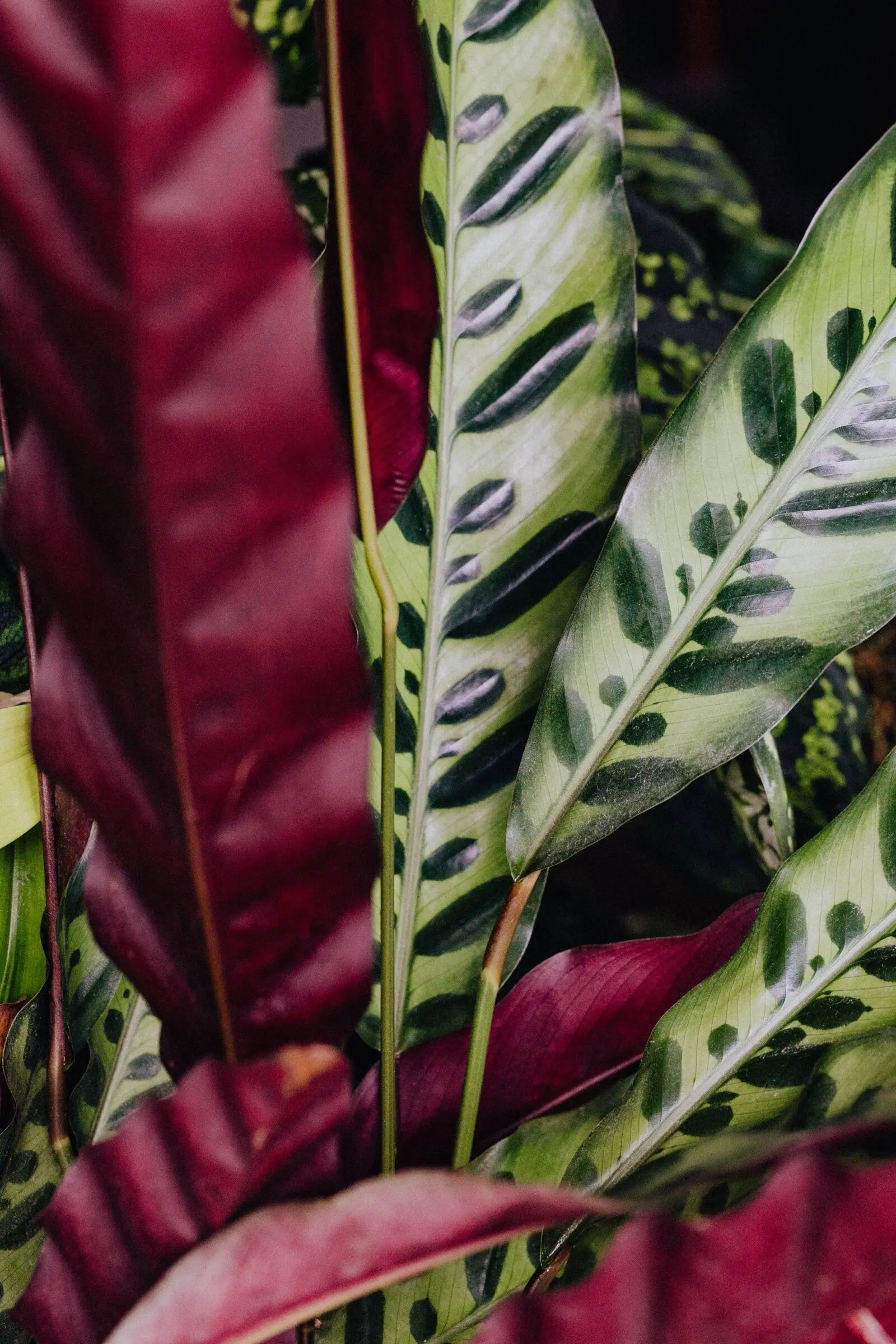
Like other prayer plants, it moves. In the evening, the leaves fold upward, and in the morning, they lower again to catch the light. You might even hear a faint rustle. It’s one of the fun things about living with one.
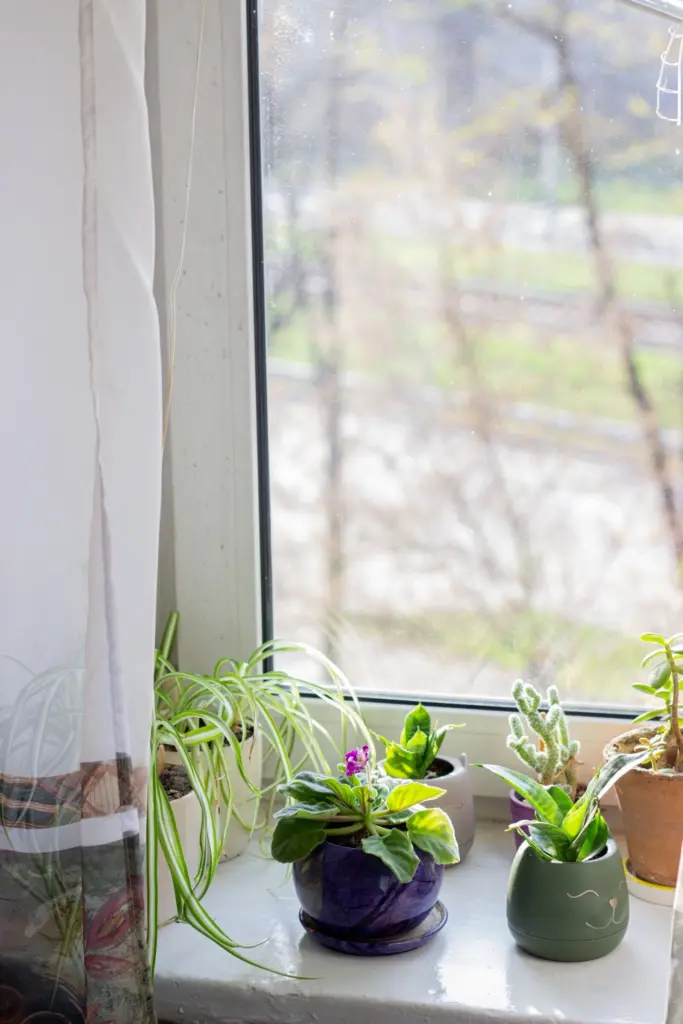
It wants medium to bright, indirect light. It’s used to the dappled light of a forest floor, so direct sun fades the pattern and scorches the leaves. Too little light, though, and the colors dull and growth slows. An east-facing window, or a spot a few feet back from a brighter window, works well.
Water is where calatheas get a reputation for being fussy. Keep the soil evenly moist, but never soggy. Water when the top inch of soil feels dry, then water thoroughly and let it drain. Don’t let it dry out completely, which leads to curling, crispy leaves, and don’t let it sit in water, which leads to root rot. Calatheas are sensitive to the chlorine, fluoride, and minerals in tap water, which cause brown, crispy tips and edges. Using distilled water, rainwater, or filtered water makes a big difference. If you use tap water, letting it sit out overnight can help a little.
Humidity matters too. It’s happiest at 50% humidity or higher. Our homes get dry in winter when the heat is running, so a humidifier, a pebble tray, or grouping it with other plants helps keep the leaf edges from browning. A bright bathroom is a great spot for one.
It likes steady warmth, 65°F to 80°F. Keep it away from cold drafts, cold windows, doors that open in winter, and heating and air conditioning vents. Temperatures below 60°F can damage the leaves.
Use a light, well-draining potting mix that holds some moisture. A regular indoor mix with some perlite and peat or coco coir works well. A pot with drainage holes is a must. Feed it a balanced water-soluble fertilizer at half strength once a month in spring and summer, and skip it in fall and winter. Too much fertilizer can burn the leaf edges.
Trim off any brown or yellow leaves at the base with clean scissors. You can also snip just the crispy brown tips, following the natural shape of the leaf. Wipe the leaves gently with a damp cloth now and then to keep them dust free.
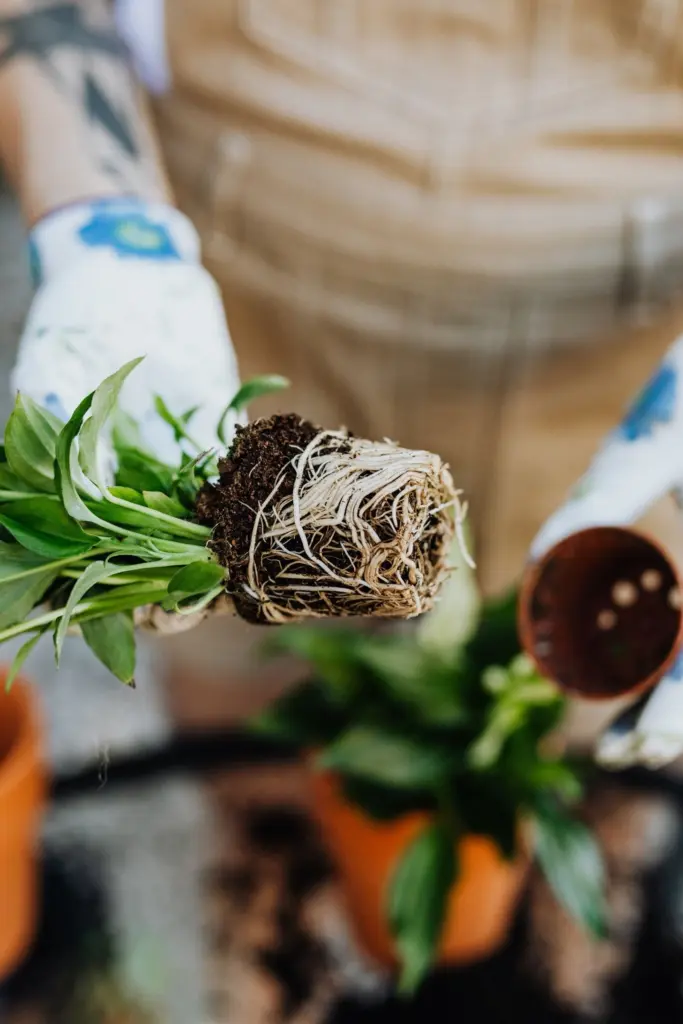
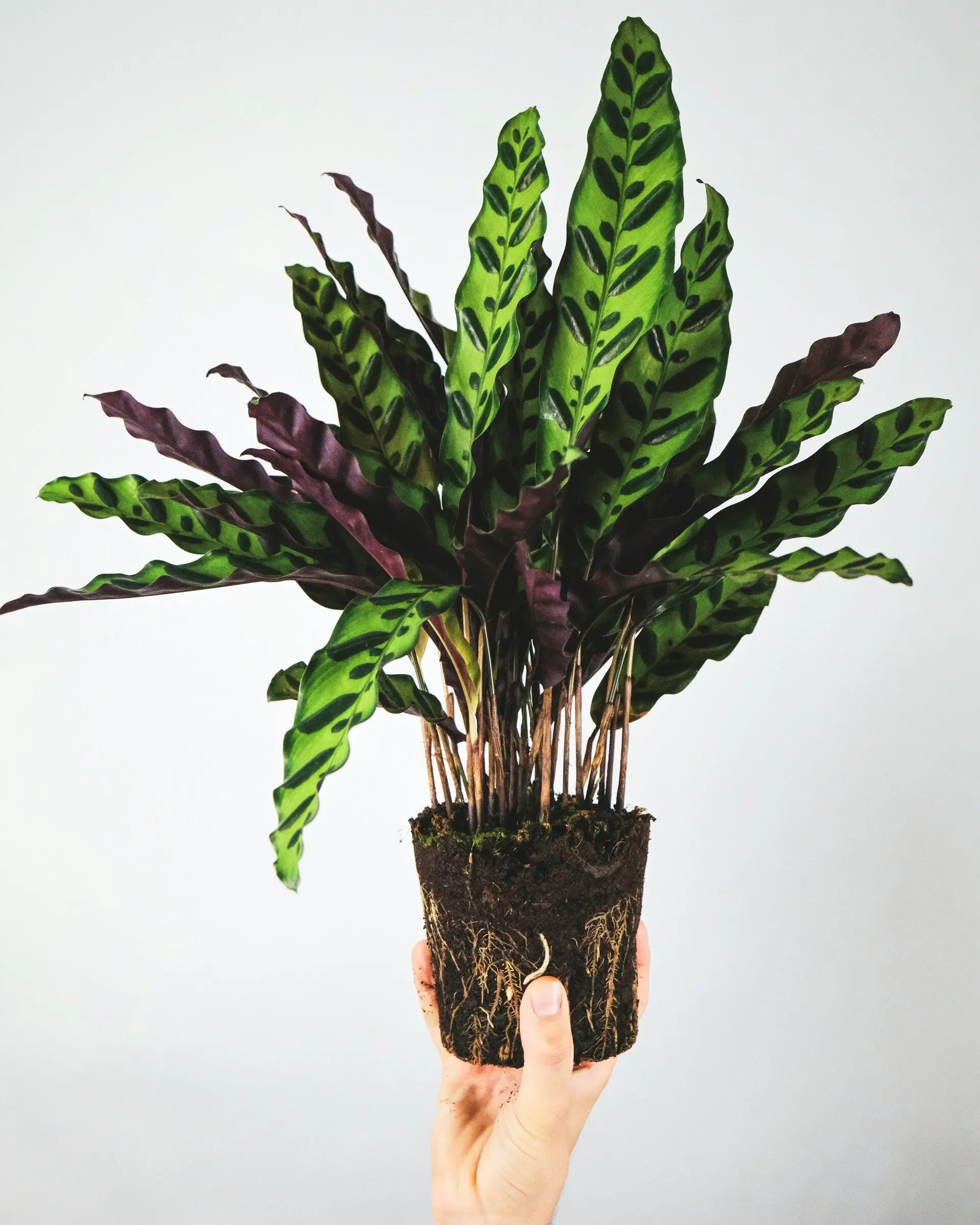
Rattlesnake plants don’t grow from stem or leaf cuttings. The way to propagate one is by division. When you repot in spring, gently separate the plant into clumps at the roots, making sure each piece has a few leaves and healthy roots, then pot them up on their own. Keep them warm and humid while they settle in. Repot every year or two, going up just one pot size.
Common problems:
- Brown, crispy tips and edges usually mean dry air, tap water, or uneven watering.
- Leaves curling inward mean it’s thirsty or the air is too dry.
- Yellow leaves and drooping stems usually mean too much water.
- Faded pattern or scorched patches mean too much direct sun.
- Watch for spider mites, which love dry air. Look for fine webbing or speckling on the undersides of the leaves. Mealybugs can show up too. Wipe the leaves, raise the humidity, and treat with neem oil or insecticidal soap.
Good news for pet owners: rattlesnake plants, like other calatheas, are considered non-toxic to cats and dogs.
Striking, pet-safe, and a little particular. I’d put it in the moderate care category. Once you get the water and humidity right, it will reward you with that showstopping snakeskin pattern.
| Common Name | Rattlesnake Plant |
|---|---|
| Botanical Name | Goeppertia insignis (formerly Calathea lancifolia) |
| Family | Marantaceae |
| Mature Size | 20-30 in. tall indoors |
| Sun | Medium to bright, Indirect |
| Soil | Moist, well-drained |
| Native Area | Brazil |
| Toxicity | Non-toxic to pets |