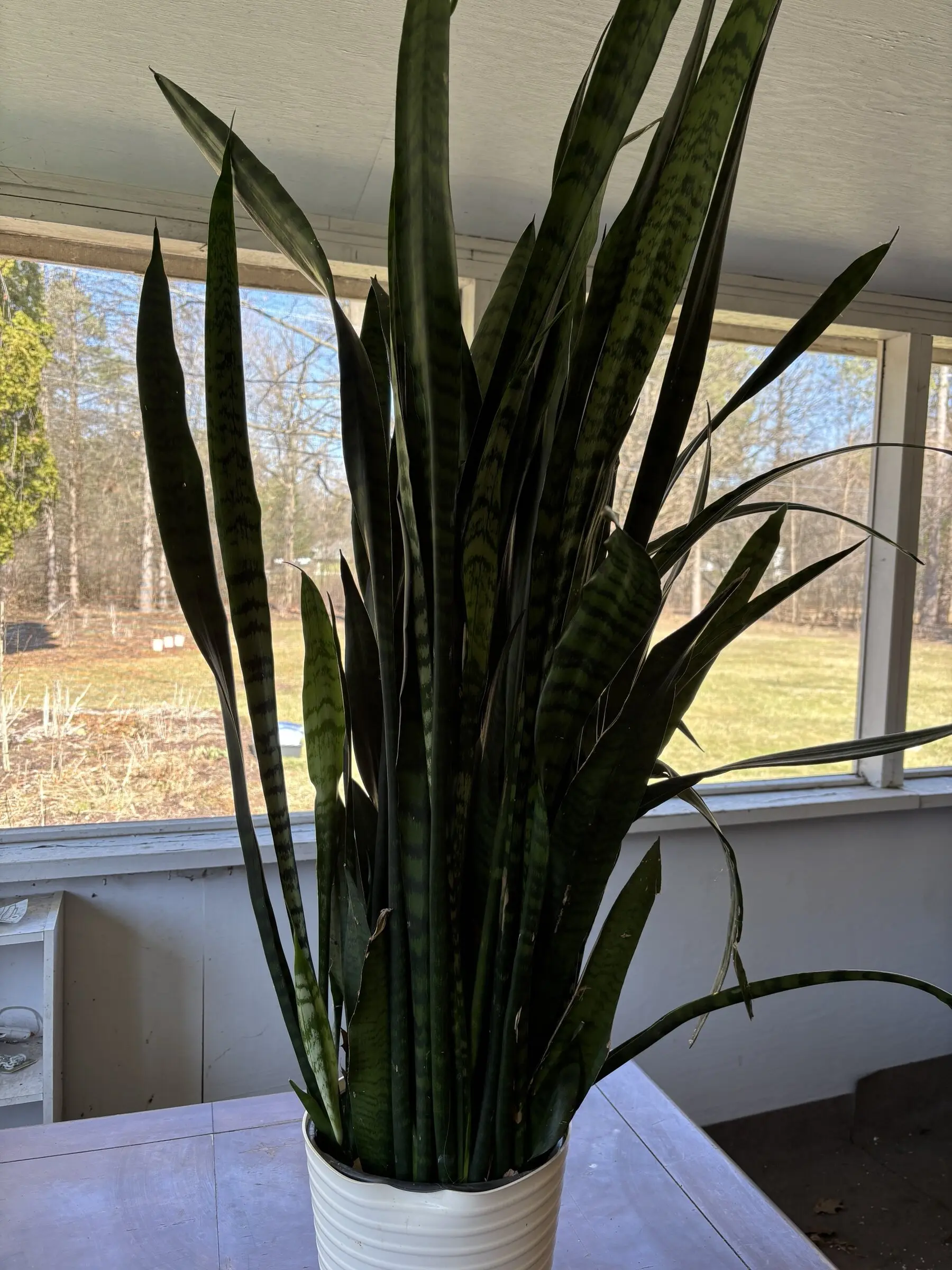
Snake Plant, also known as Mother-in-Law’s Tongue or Sansevieria, is about as tough as houseplants get. Its stiff, upright, sword-shaped leaves are dark green with lighter, wavy bands across them, a little like snakeskin, which is where the name comes from. You’ll still see it sold as Sansevieria, but botanists have moved it into the Dracaena genus, so its official name is now Dracaena trifasciata. There are many varieties, from the classic tall green ones to ‘Laurentii’ with yellow edges and short, rosette-shaped “bird’s nest” types. It’s native to tropical West Africa and hardy only in zones 10-12, so for most of us it’s a houseplant, with an optional summer on a porch or patio.
If you’re new to plants, start here. It tolerates low light, forgets-to-water neglect, and dry air. In fact, the most common way to kill a snake plant is by caring for it too much.
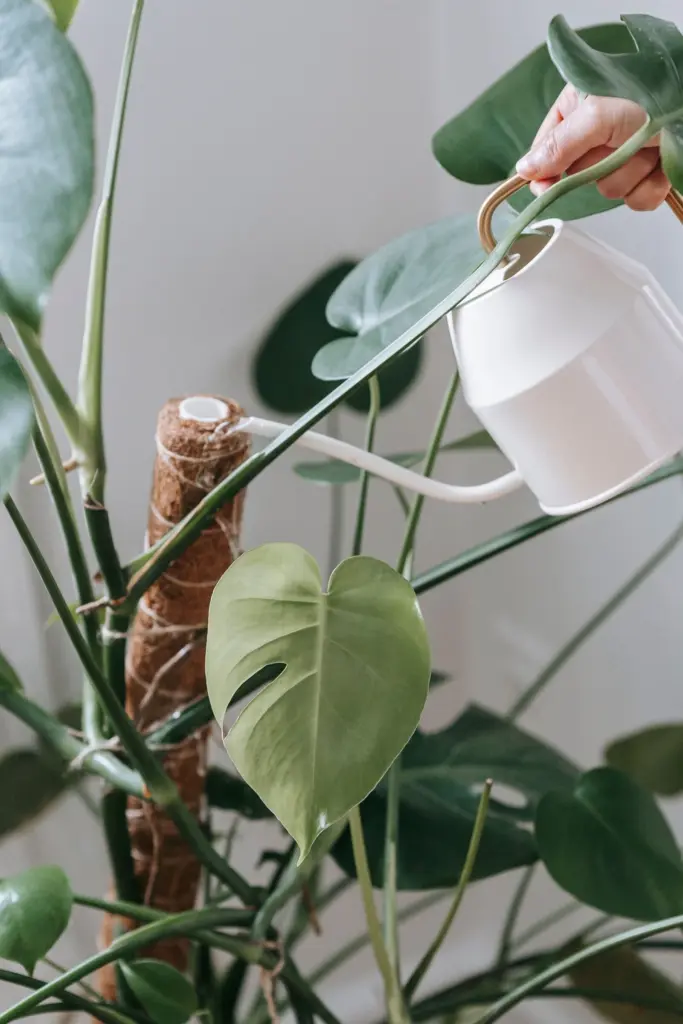
Water is where people go wrong. Snake plants store water in their thick leaves, so they need much less than most houseplants. Let the soil dry out completely between waterings. That usually means every 2-3 weeks in spring and summer, and as little as once a month in winter. Go by the soil, not the calendar. When you water, water thoroughly until it runs out the drainage holes, then empty the saucer. Overwatering leads to root rot, and soft, mushy, yellowing leaves are the sign. When in doubt, wait.
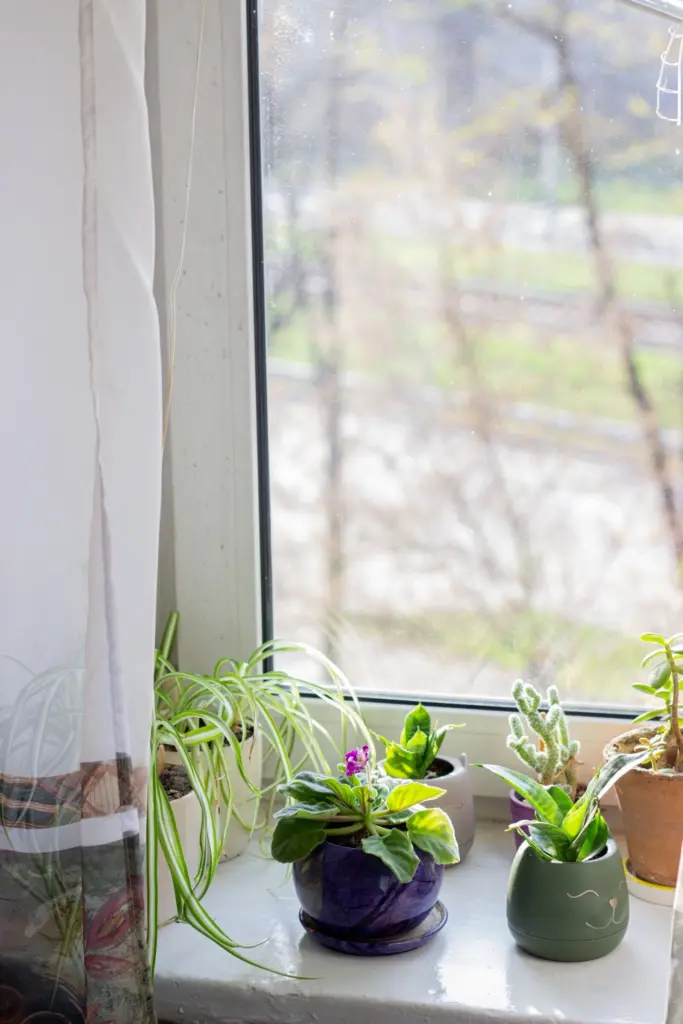
It’s famous for tolerating low light, and it will survive in a dim corner. It grows faster and looks its best in medium to bright, indirect light, though. It can handle some direct sun once it’s used to it, but move it into brighter light gradually so the leaves don’t scorch. In low light, it barely grows and needs even less water, so adjust accordingly.
It’s happiest at 60°F to 85°F. It doesn’t like cold, so keep it away from cold windows and drafts in winter, and don’t let it sit below 50°F. Average household humidity is just fine. No misting needed.
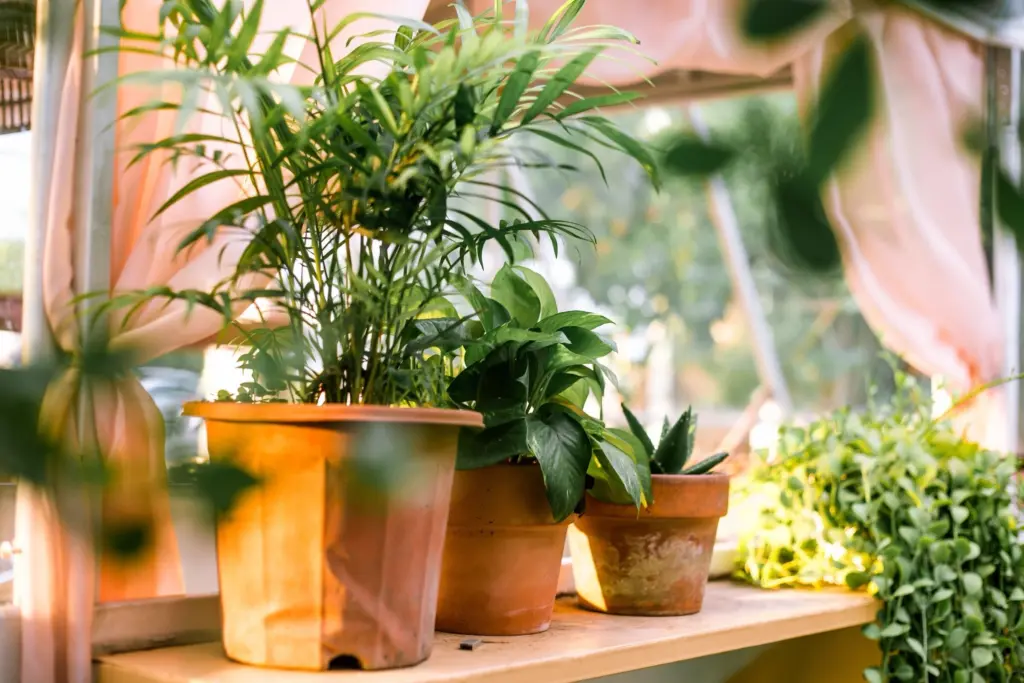
Use a fast-draining cactus or succulent mix, or regular potting soil with plenty of perlite mixed in. A pot with drainage holes is a must. Terra cotta is a good choice because it helps the soil dry out faster. Feed it a water-soluble fertilizer at half strength once or twice in spring and summer. That’s it. It’s a light feeder.
Snake plants actually like being a little crowded in their pots. Repot only every 2-3 years, or when the roots are so packed they start to bulge or crack the pot, or new shoots are coming up all around the edges. Spring is the best time.
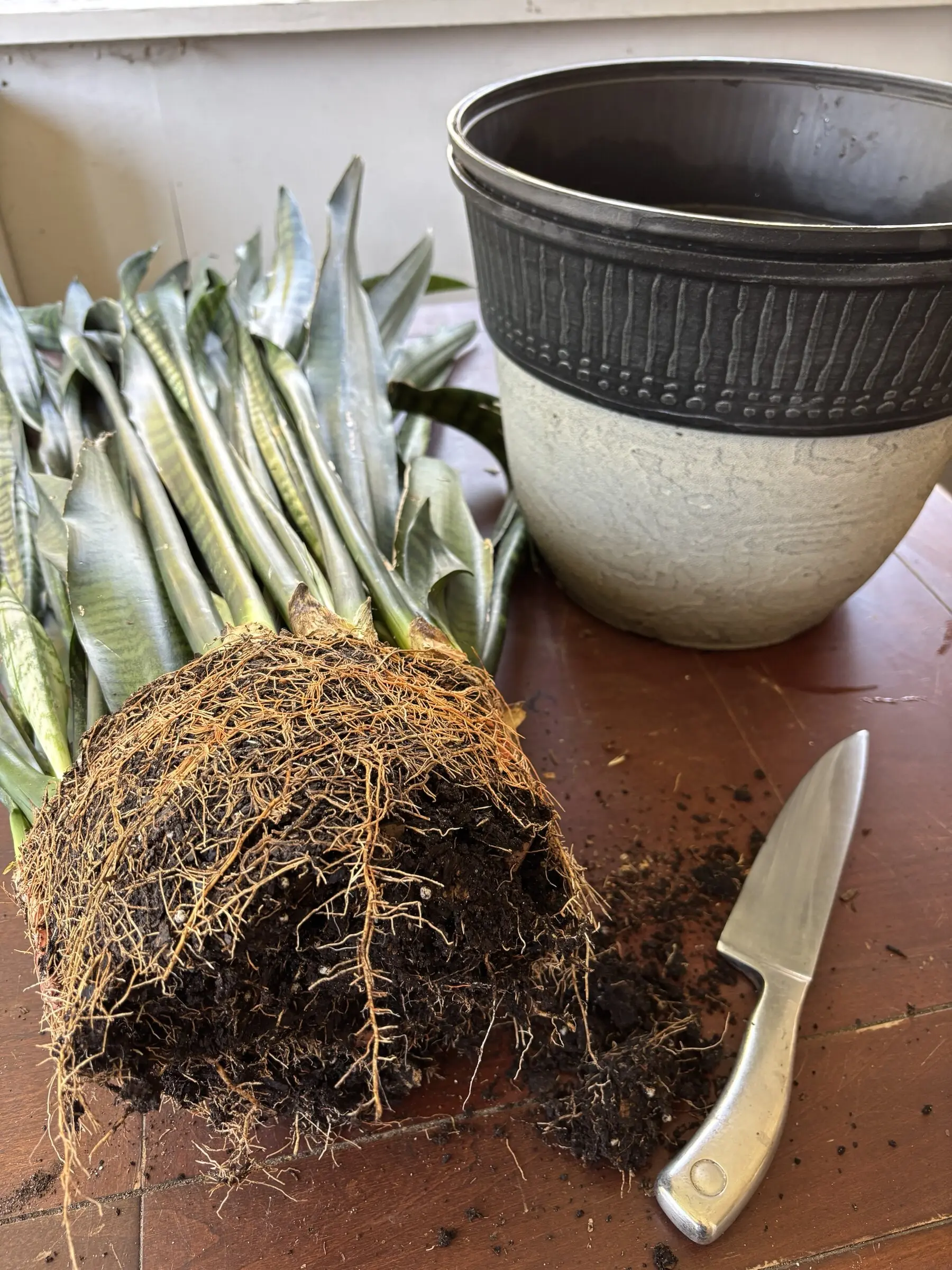
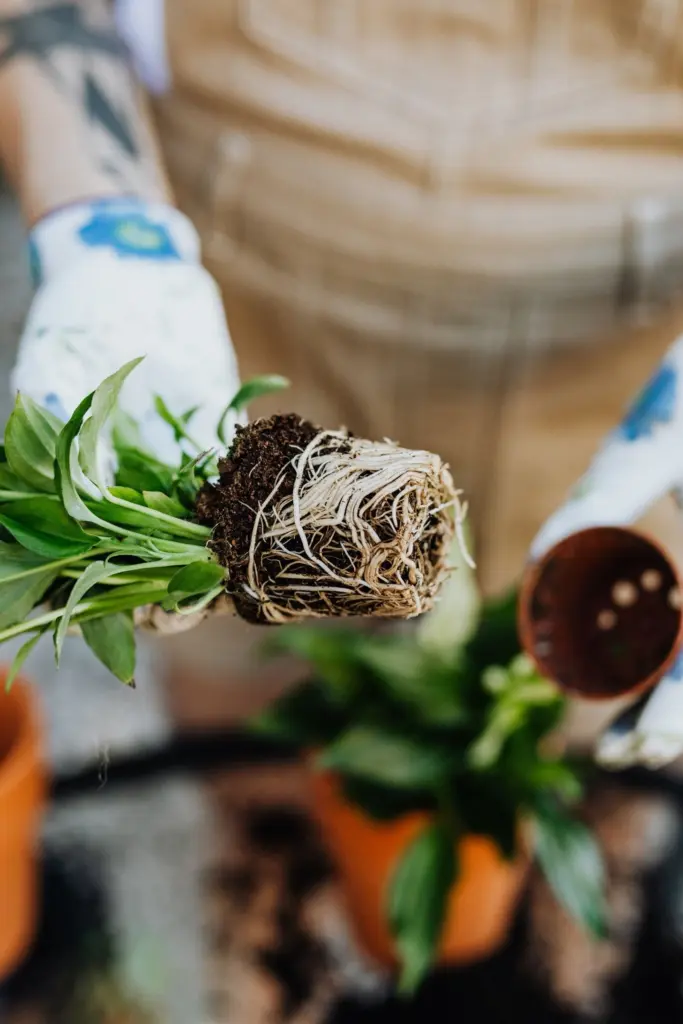
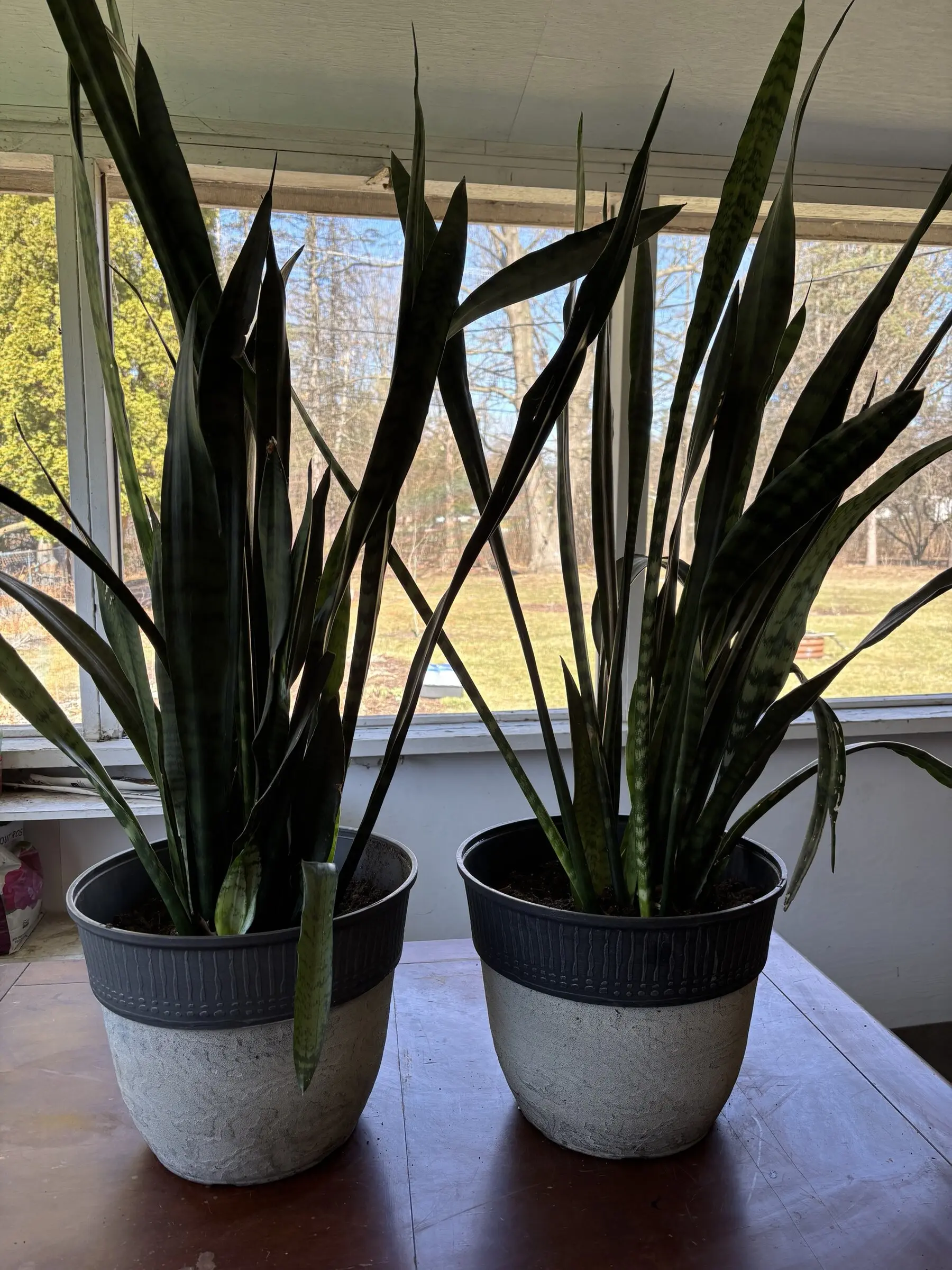
Dividing is the easiest way to get more plants, and it’s a good way to handle one that’s outgrown its pot. Slide the plant out and loosen the soil. You’ll see the thick roots and rhizomes (the underground stems) that connect the leaves. Use a clean, sharp knife to cut the root ball into sections, making sure each one has several leaves and a good chunk of roots and rhizome. Pot each section in fresh, fast-draining soil, then wait about a week before watering to let any cut roots heal.
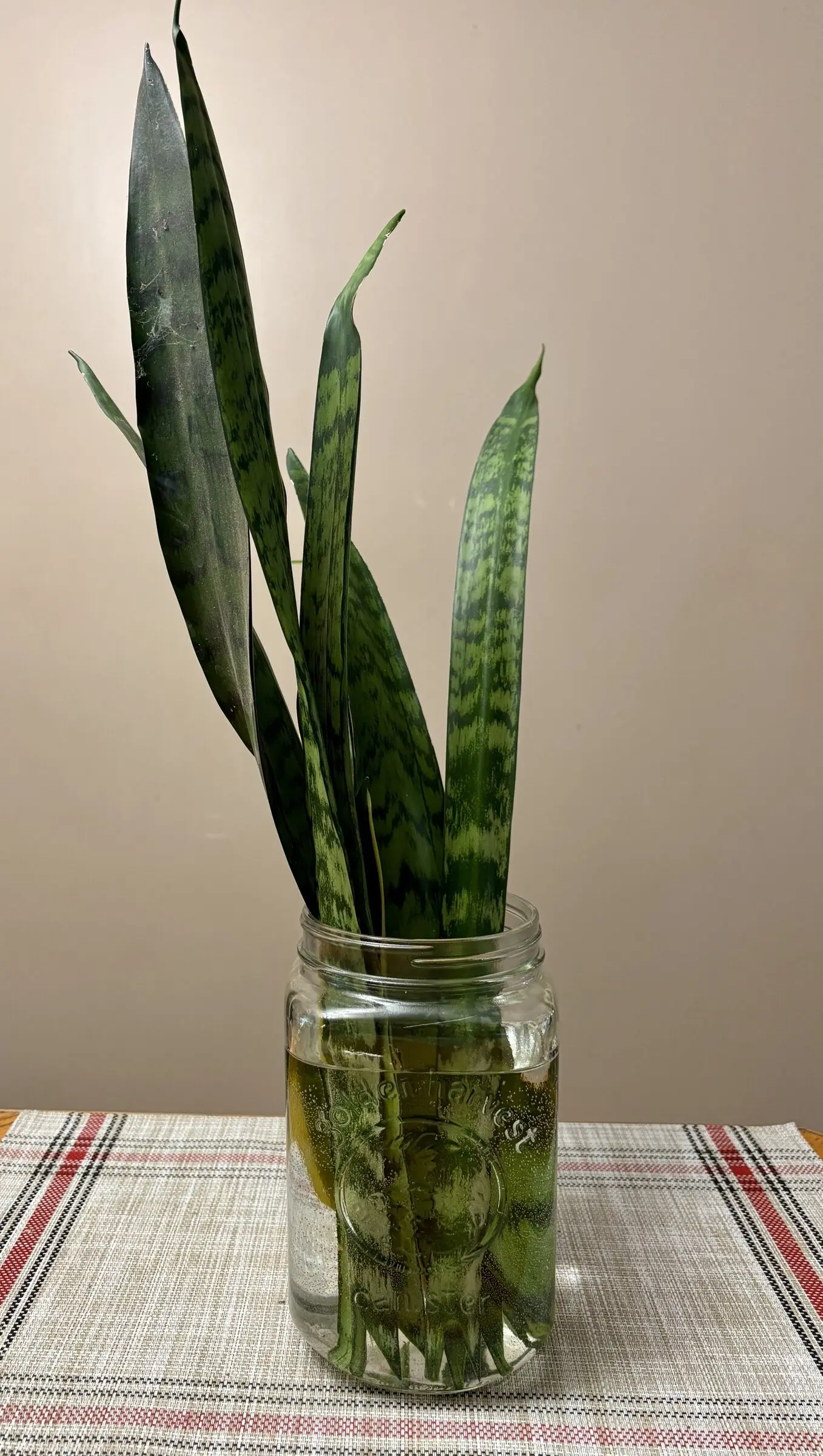
You can also propagate from leaf cuttings. Cut a healthy leaf near the base, then cut it into 3-4 inch sections. Keep track of which end was the bottom, because they only root from the end that was closest to the soil. Let the cut ends dry and callus for a day or two. Then set them in water or in moist, fast-draining soil. In water, change it every week or so. Be patient. Roots can take 4-8 weeks, and new shoots take even longer.
One thing to know: leaf cuttings from variegated types like ‘Laurentii’ usually lose their yellow edges, so divide those instead if you want to keep the variegation.
Snake plants rarely have problems, and most of them come back to water:
- Soft, mushy, or yellow leaves usually mean overwatering or root rot. Let it dry out. If the base is mushy, cut away the rotted parts and repot the healthy sections in dry soil.
- Wrinkled, curling, or thin leaves mean it’s thirsty. Give it a good soak.
- Leaves flopping over usually mean too much water or too little light.
- Brown, crispy tips can come from inconsistent watering. Trim them with clean scissors if they bother you.
- Pests are rare, but watch for mealybugs and spider mites. Treat with neem oil or insecticidal soap.
Wipe the leaves with a damp cloth now and then to keep them dust free.
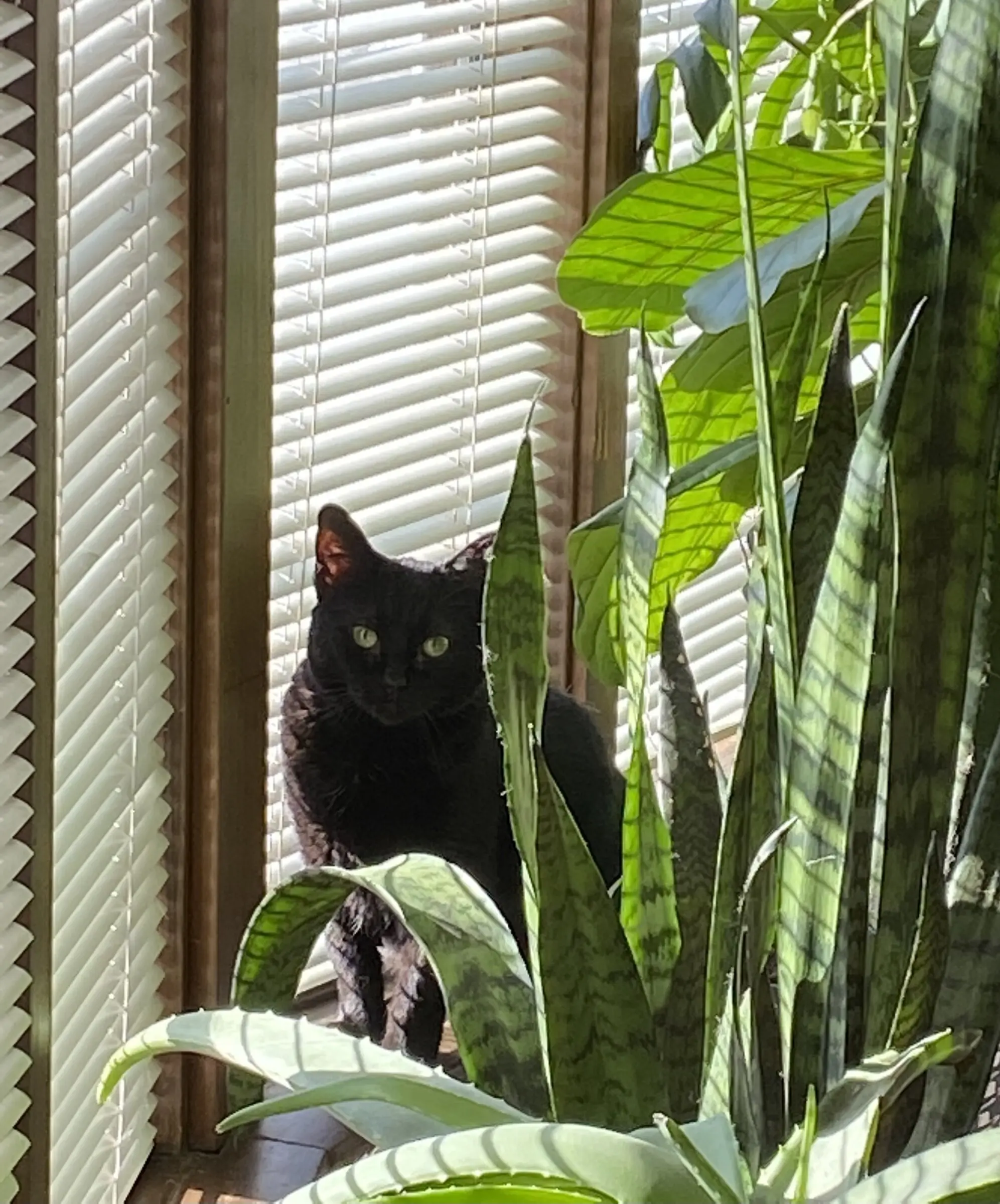
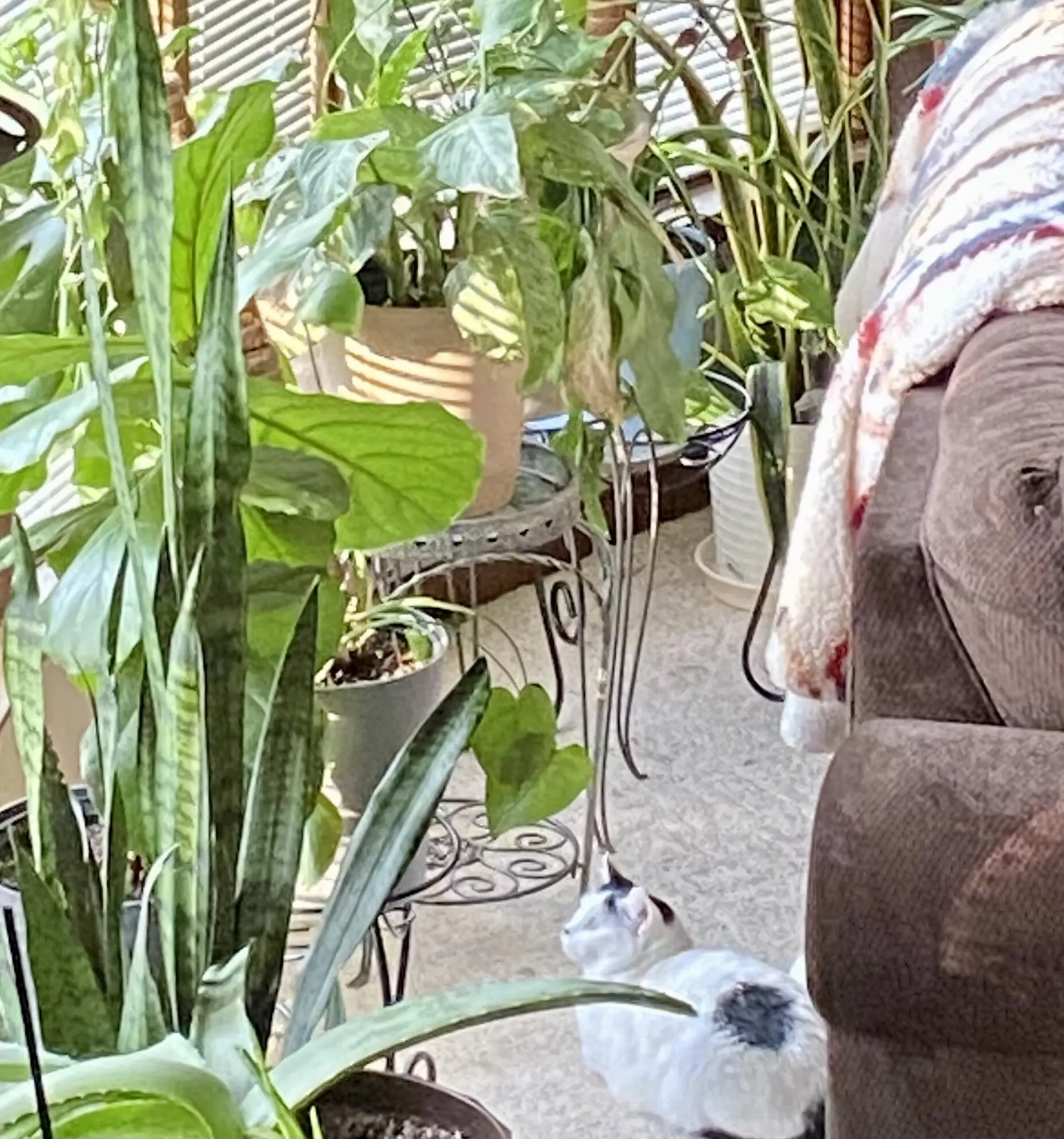
Snake plants are toxic to cats and dogs. They contain saponins, which can cause drooling, vomiting, and diarrhea if chewed. They’re mildly toxic to people, too. Keep them out of reach of pets that like to nibble. Their stiff leaves usually aren’t as tempting as softer plants, but it’s still worth watching.
Nearly indestructible as long as you don’t overwater. I’d put it in the beginner-friendly category, and it’s my top pick for anyone who says they kill every plant.
| Common Name | Snake Plant, Mother-in-Law’s Tongue, Sansevieria |
|---|---|
| Botanical Name | Dracaena trifasciata (formerly Sansevieria trifasciata) |
| Family | Asparagaceae |
| Mature Size | 2-4 ft. tall; some varieties up to 6 ft. |
| Sun | Low to bright, Indirect |
| Soil | Sandy, fast-draining |
| Native Area | West Africa |
| Toxicity | Toxic to pets; mildly toxic to humans |