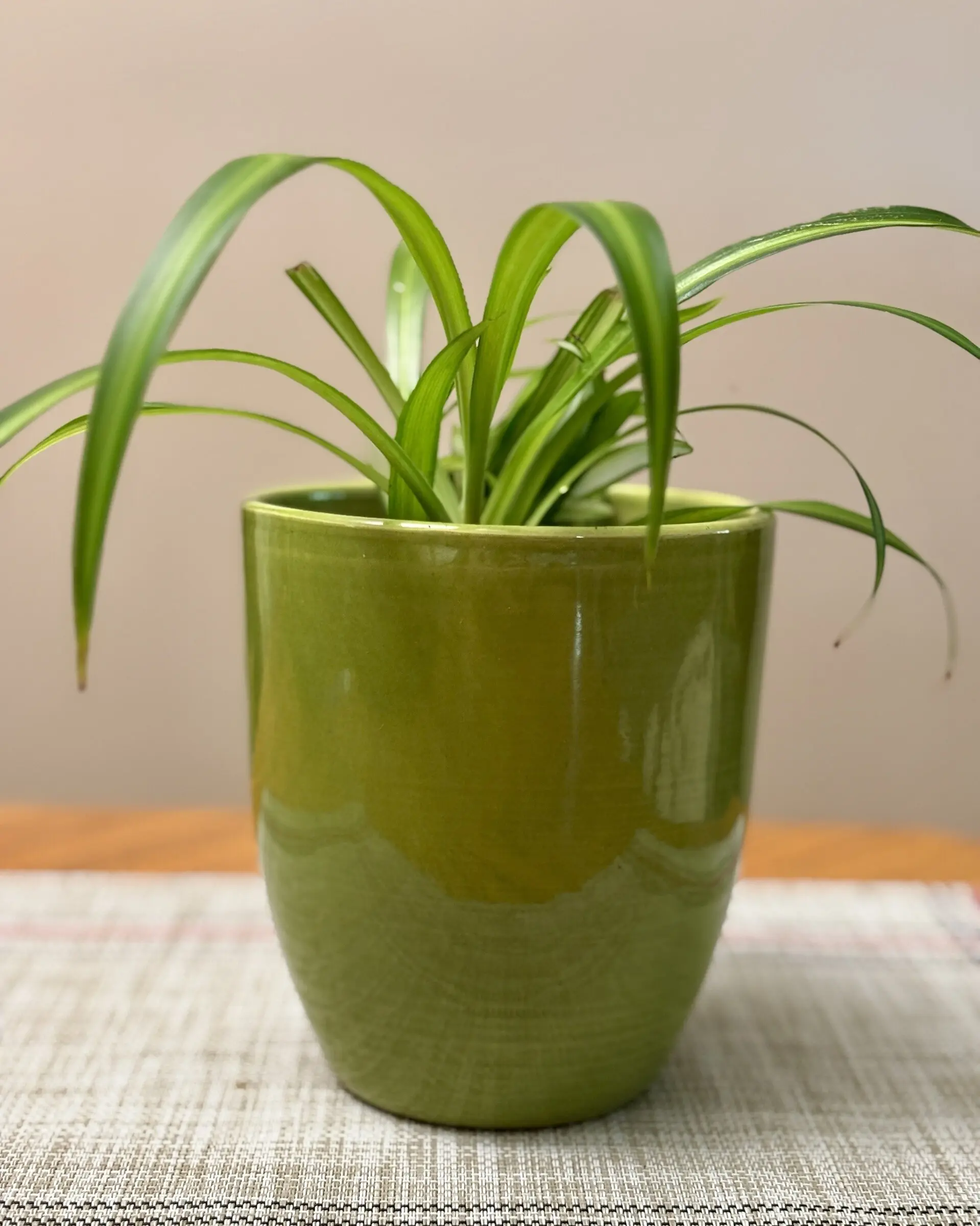
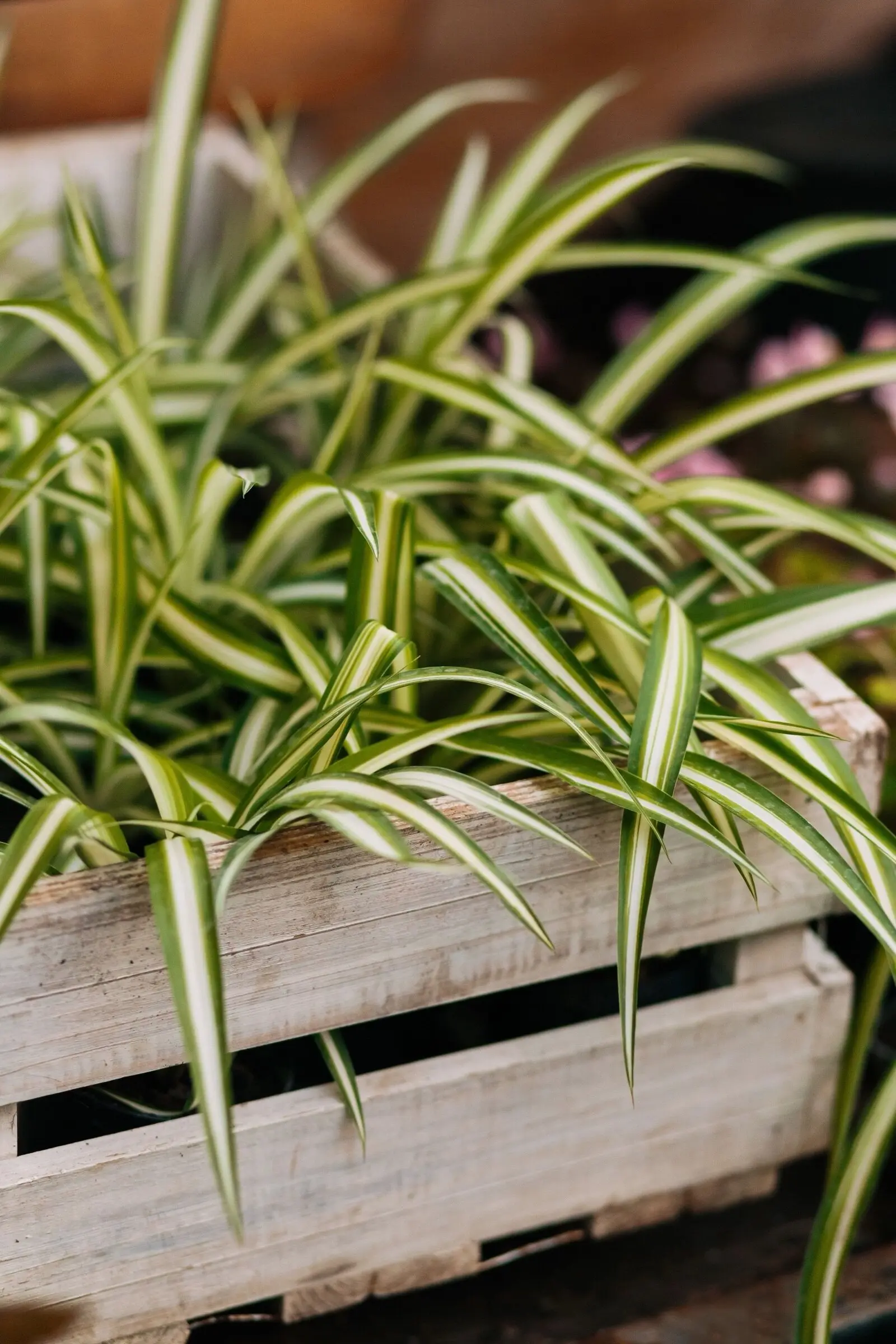
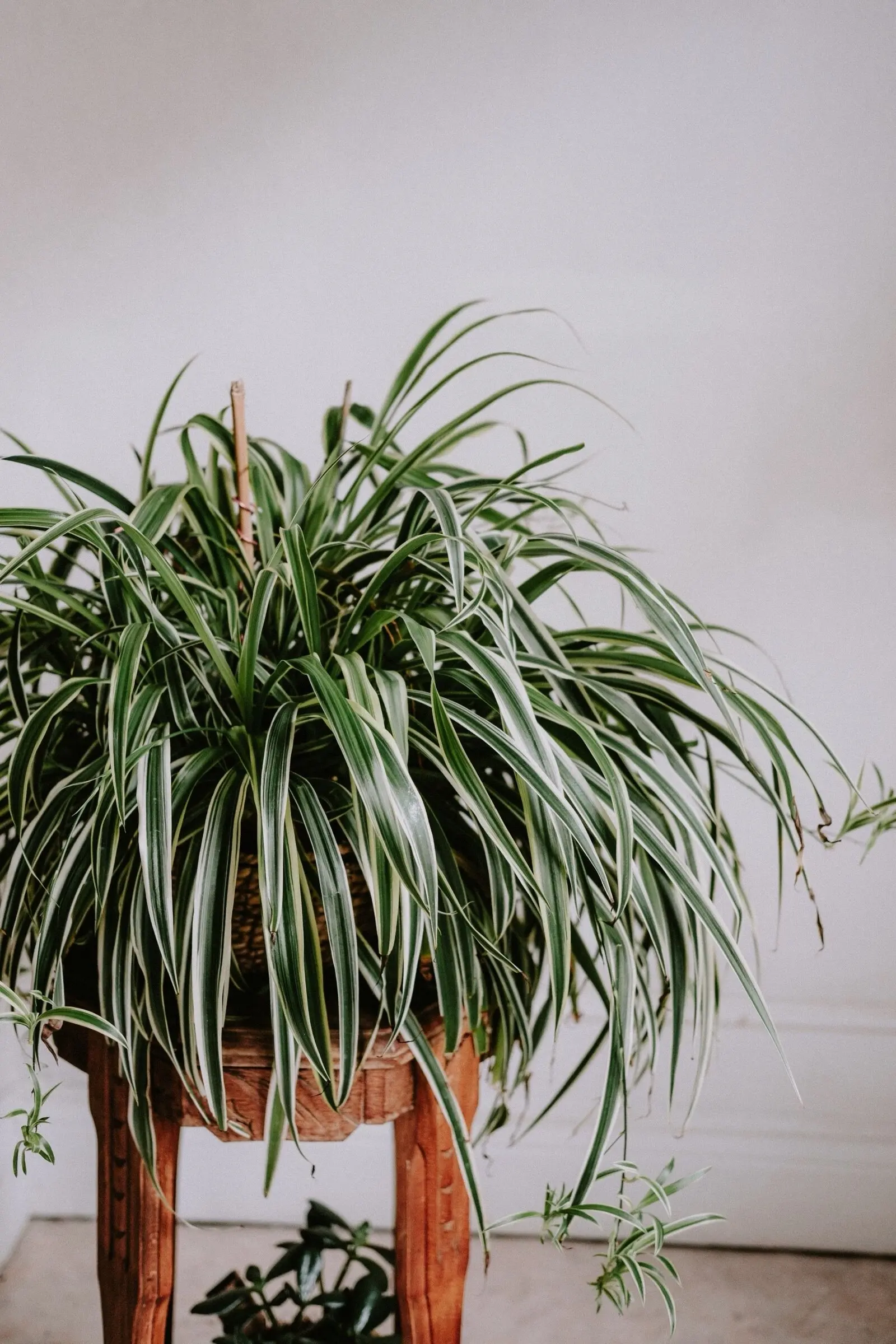
Spider Plant, also known as Chlorophytum comosum, Airplane Plant, or Ribbon Plant, is one of the most popular houseplants of all time, and for good reason. It’s easygoing, it grows fast, and it practically makes new plants for you. Its long, narrow, arching leaves are green, often striped down the middle or along the edges with cream or lighter green. Popular types include ‘Vittatum,’ with a white stripe down the center, ‘Variegatum,’ with white edges, and ‘Bonnie,’ with curly leaves. Spider plants are in the Asparagaceae family and are native to the tropical and southern parts of Africa. They’re hardy only in zones 9-11, so for most of us they’re houseplants, or summer porch plants in hanging baskets that come inside before frost.
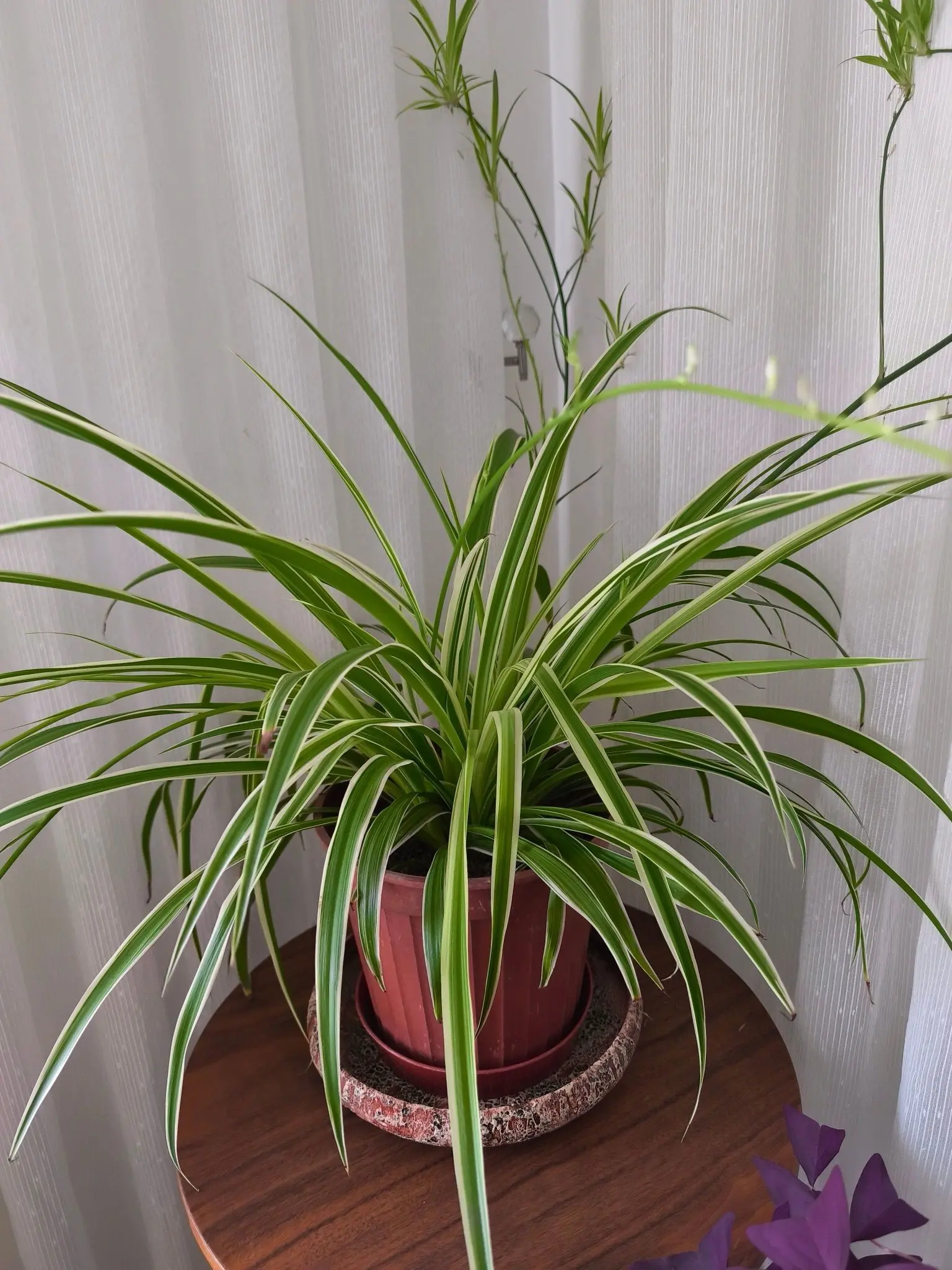
The name comes from the babies. A healthy, mature spider plant sends out long, wiry stems with small white flowers, followed by tiny plantlets, often called spiderettes or pups, that dangle from the stems like little spiders on a web. They look especially pretty spilling from a hanging basket.
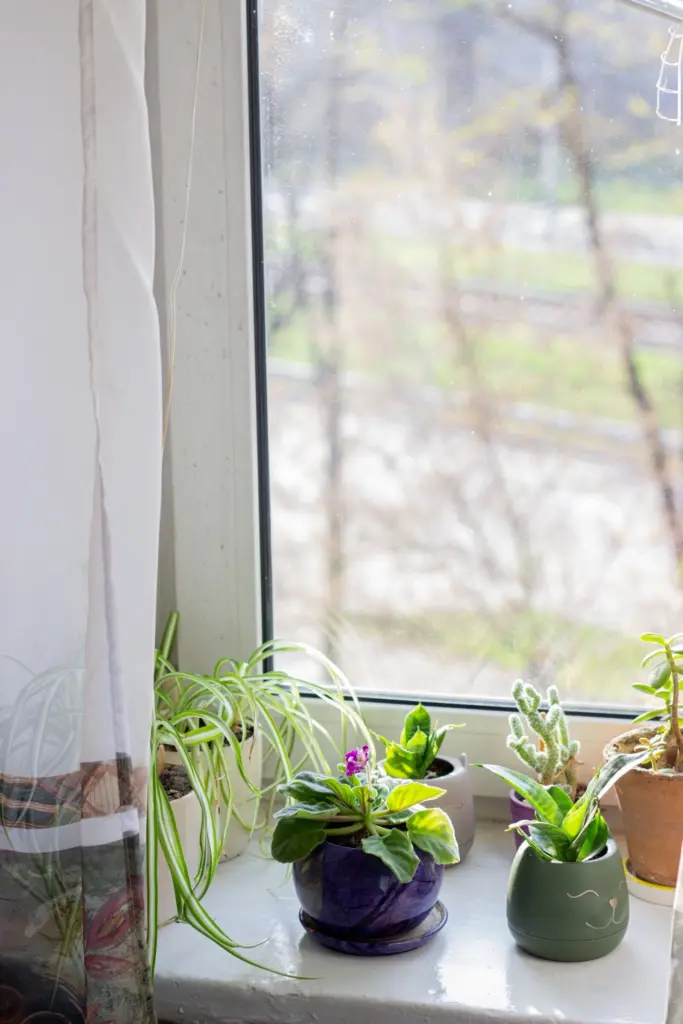
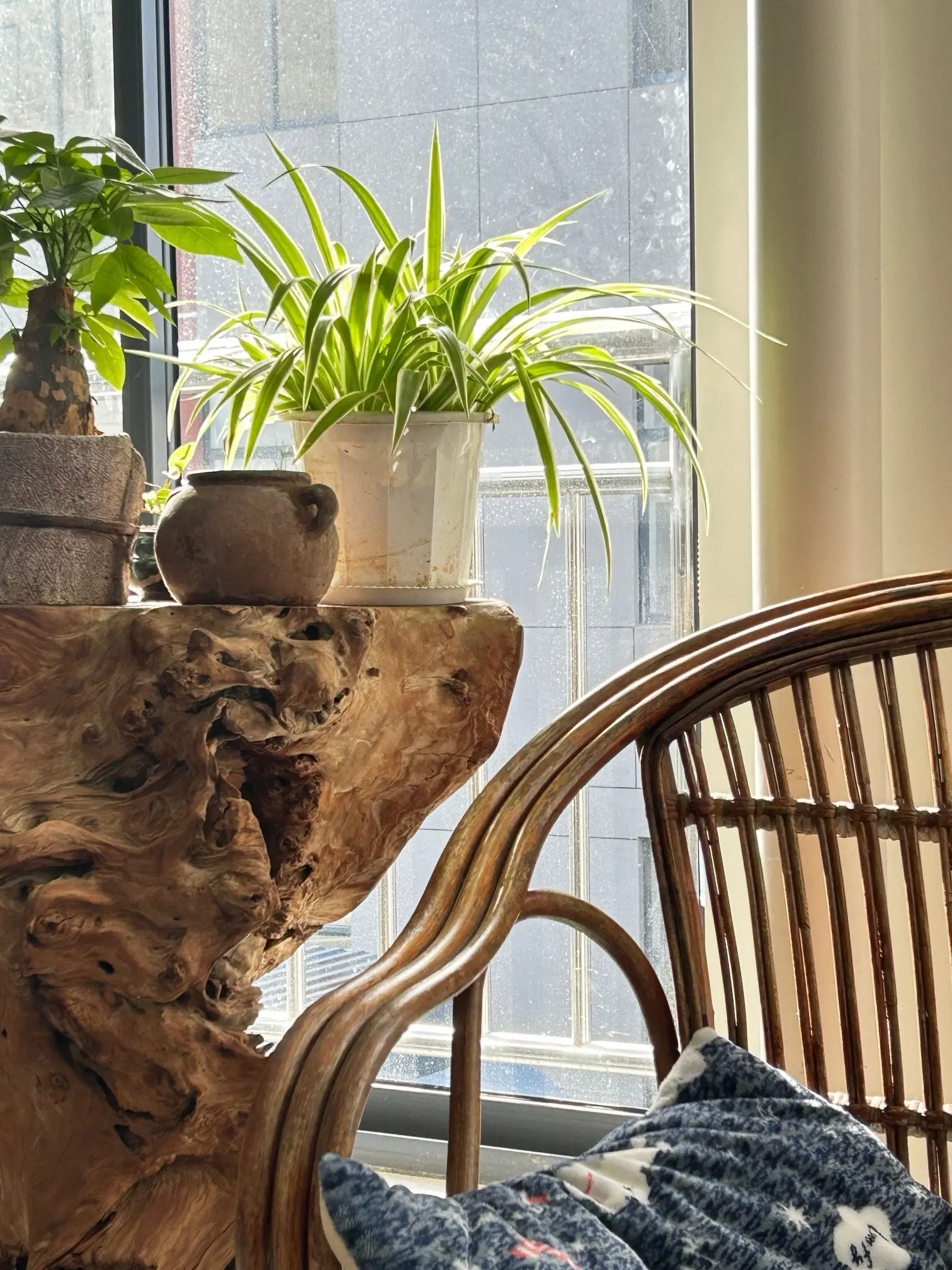
It likes bright, indirect light, but it’s very adaptable and handles medium light well. In lower light, the stripes fade and growth slows. Keep it out of hot direct sun, which can scorch the leaves and turn the tips brown. An east-facing window, or a spot a few feet back from a south or west window, is ideal. Plants in brighter light are also more likely to make babies.
Water when the top inch or two of soil is dry, then water thoroughly until it runs out the drainage holes. Empty the saucer so it isn’t sitting in water. Spider plants have thick, fleshy roots that store water, so they handle a missed watering better than overwatering. In winter, water less often.
Brown leaf tips are the most common spider plant complaint. You can see a few on mine. They usually come from the fluoride, chlorine, and salts in tap water, from dry air, or from uneven watering. Using rainwater, distilled water, or filtered water helps, and so does letting tap water sit out overnight. Brown tips won’t turn green again, but you can snip them off with clean scissors, following the natural point of the leaf.
It’s happiest at 60°F to 80°F. Keep it away from cold drafts and heating vents, and don’t let it sit below 50°F. Average household humidity is fine, though it appreciates a pebble tray or humidifier when the heat is running in winter.
Use a regular, well-draining potting mix in a pot with drainage holes. Feed a balanced water-soluble fertilizer at half strength once a month in spring and summer, and skip it in fall and winter. Too much fertilizer can cause brown tips, too, so go easy.
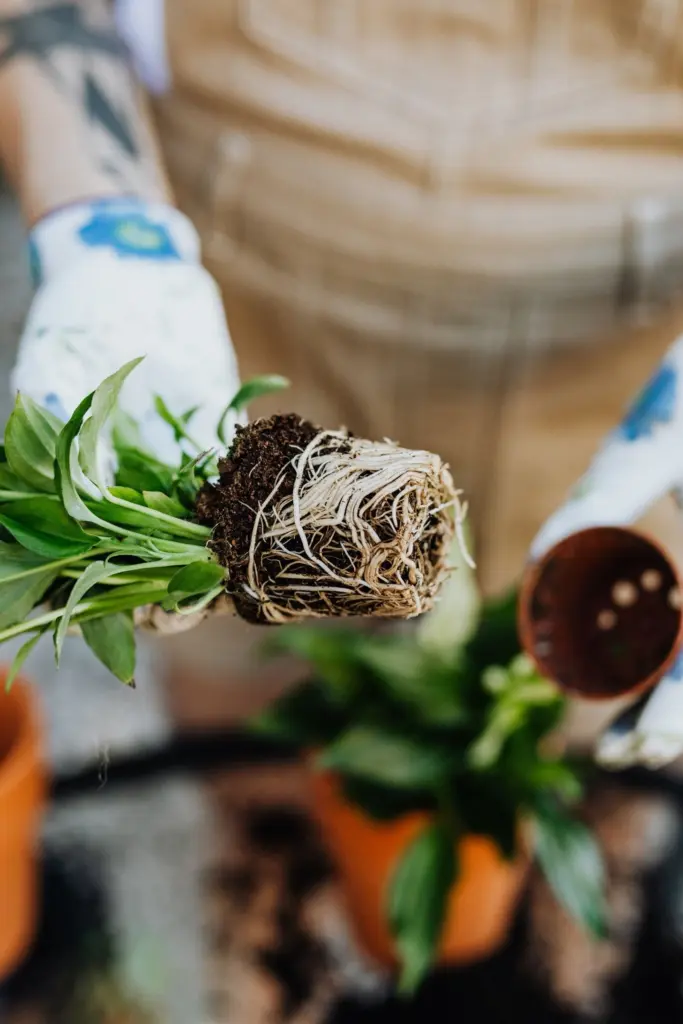
Spider plants grow fast and fill their pots with thick, white roots. They actually make more babies when they’re a little snug in their pot, so don’t rush to repot. When roots start pushing up out of the soil or out of the drainage holes, repot in spring, going up just one pot size. You can also divide a large plant into smaller clumps when you repot.
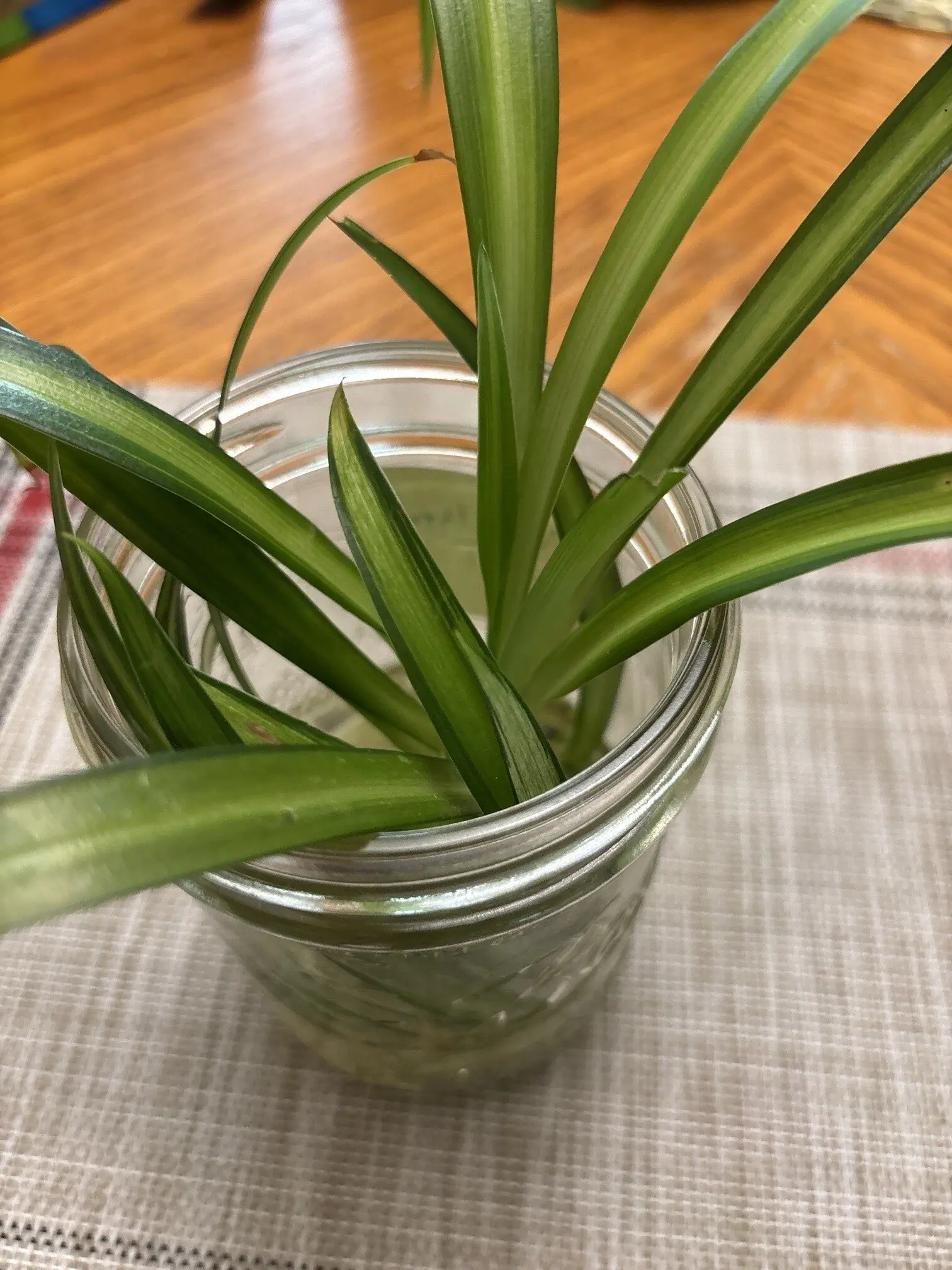
Propagating spider plants couldn’t be easier. Snip off a baby that has a few small roots, or little bumps where roots will grow, at its base. Then set it in a jar of water with just the base submerged, keeping the leaves out of the water. Change the water every few days. Once the roots are an inch or two long, pot it up in soil. You can also pin a baby onto a pot of soil while it’s still attached to the mother plant, then cut the stem once it has rooted.
Most problems come back to water or light:
- Brown tips usually mean tap water, dry air, too much fertilizer, or uneven watering.
- Yellow or mushy leaves usually mean too much water.
- Pale, washed-out leaves or faded stripes mean too much direct sun or not enough light.
- No babies usually means the plant is still young, needs more light, or is in a pot that’s too big.
- Watch for spider mites, mealybugs, and scale. Wipe the leaves and treat with insecticidal soap or neem oil.
Good news for pet owners: spider plants are considered non-toxic to cats and dogs. Cats often love to chew on the grassy leaves, though, and too much can cause an upset stomach, so a hanging basket keeps the leaves and your plant safe.
Fast-growing, forgiving, and pet-safe, with free baby plants to share. I’d put it in the beginner-friendly category. It’s one of the best first plants you can buy.
| Common Name | Spider Plant, Airplane Plant, Ribbon Plant |
|---|---|
| Botanical Name | Chlorophytum comosum |
| Family | Asparagaceae |
| Mature Size | 1-2 ft. tall, 2-3 ft. wide |
| Sun | Bright to medium, Indirect |
| Soil | Well-drained, slightly acidic to neutral |
| Flower Color | White |
| Native Area | Tropical and southern Africa |
| Toxicity | Non-toxic to pets |