

From our backyard
How to Attract Backyard Birds
Find your bird. Find its favorite feeder and food.
166 birds and growing
Pick a feeder or a food below to see which birds use it, or search by name.
166 birds. Pick one.
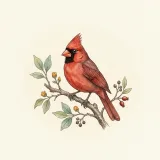 Cardinals & finches
- American Goldfinch Spinus tristis
- Black-headed Grosbeak Pheucticus melanocephalus
- Cassin’s Finch Haemorhous cassinii
- Common Redpoll Acanthis flammea
- Evening Grosbeak Coccothraustes vespertinus
- House Finch Haemorhous mexicanus
- Indigo Bunting Passerina cyanea
- Lazuli Bunting Passerina amoena
- Lesser Goldfinch Spinus psaltria
- Northern Cardinal Cardinalis cardinalis
- Painted Bunting Passerina ciris
- Pine Grosbeak Pinicola enucleator
- Pine Siskin Spinus pinus
- Purple Finch Haemorhous purpureus
- Pyrrhuloxia Cardinalis sinuatus
- Red Crossbill Loxia curvirostra
- Red-crested Cardinal Paroaria coronata
- Rose-breasted Grosbeak Pheucticus ludovicianus
- Yellow-billed Cardinal Paroaria capitata
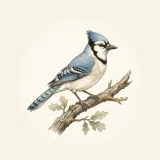 Jays
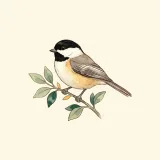 Chickadees, titmice & nuthatches
- Black-capped Chickadee Poecile atricapillus
- Black-crested Titmouse Baeolophus atricristatus
- Boreal Chickadee Poecile hudsonicus
- Brown Creeper Certhia americana
- Brown-headed Nuthatch Sitta pusilla
- Bushtit Psaltriparus minimus
- Carolina Chickadee Poecile carolinensis
- Chestnut-backed Chickadee Poecile rufescens
- Mountain Chickadee Poecile gambeli
- Oak Titmouse Baeolophus inornatus
- Pygmy Nuthatch Sitta pygmaea
- Red-breasted Nuthatch Sitta canadensis
- Tufted Titmouse Baeolophus bicolor
- Verdin Auriparus flaviceps
- White-breasted Nuthatch Sitta carolinensis
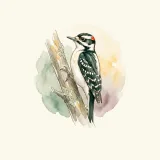 Woodpeckers
- Acorn Woodpecker Melanerpes formicivorus
- Downy Woodpecker Dryobates pubescens
- Gila Woodpecker Melanerpes uropygialis
- Golden-fronted Woodpecker Melanerpes aurifrons
- Hairy Woodpecker Dryobates villosus
- Ladder-backed Woodpecker Dryobates scalaris
- Northern Flicker Colaptes auratus
- Nuttall’s Woodpecker Dryobates nuttallii
- Pileated Woodpecker Dryocopus pileatus
- Red-bellied Woodpecker Melanerpes carolinus
- Red-headed Woodpecker Melanerpes erythrocephalus
- Yellow-bellied Sapsucker Sphyrapicus varius
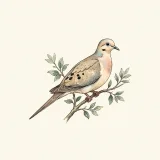 Doves
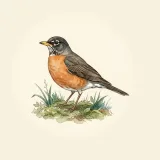 Robins & thrushes
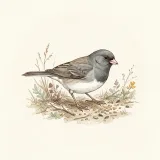 Sparrows & juncos
- Abert’s Towhee Melozone aberti
- American Tree Sparrow Spizelloides arborea
- Black-throated Sparrow Amphispiza bilineata
- California Towhee Melozone crissalis
- Canyon Towhee Melozone fusca
- Chipping Sparrow Spizella passerina
- Dark-eyed Junco Junco hyemalis
- Eastern Towhee Pipilo erythrophthalmus
- Fox Sparrow Passerella iliaca
- Golden-crowned Sparrow Zonotrichia atricapilla
- Harris’s Sparrow Zonotrichia querula
- House Sparrow Passer domesticus
- Lark Sparrow Chondestes grammacus
- Song Sparrow Melospiza melodia
- Spotted Towhee Pipilo maculatus
- White-crowned Sparrow Zonotrichia leucophrys
- White-throated Sparrow Zonotrichia albicollis
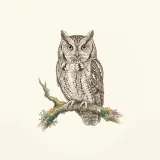 Owls
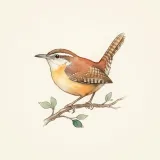 Wrens
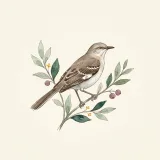 Mockingbirds & thrashers
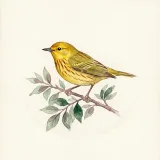 Warblers
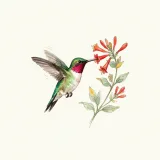 Hummingbirds
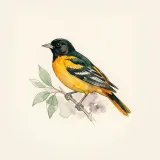 Orioles & blackbirds
- Baltimore Oriole Icterus galbula
- Brewer’s Blackbird Euphagus cyanocephalus
- Brown-headed Cowbird Molothrus ater
- Bullock’s Oriole Icterus bullockii
- Common Grackle Quiscalus quiscula
- Eastern Meadowlark Sturnella magna
- Great-tailed Grackle Quiscalus mexicanus
- Orchard Oriole Icterus spurius
- Red-winged Blackbird Agelaius phoeniceus
- Western Meadowlark Sturnella neglecta
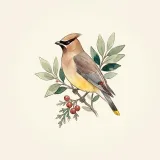 Waxwings
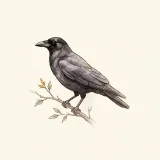 Crows
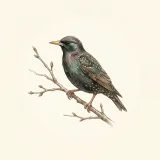 Starlings
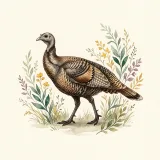 Quail & turkeys
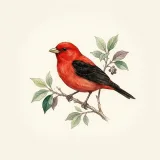 Tanagers
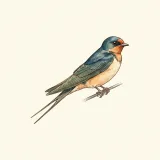 Swallows & martins
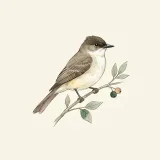 Flycatchers
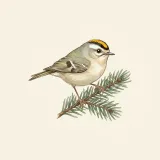 Kinglets & gnatcatchers
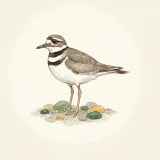 More backyard birds
- Common Waxbill Estrilda astrild
- Greater Roadrunner Geococcyx californianus
- Java Sparrow Padda oryzivora
- Killdeer Charadrius vociferus
- Phainopepla Phainopepla nitens
- Red-vented Bulbul Pycnonotus cafer
- Red-whiskered Bulbul Pycnonotus jocosus
- Scaly-breasted Munia Lonchura punctulata
- Warbling White-eye Zosterops japonicus
- White-rumped Shama Copsychus malabaricus
- Wrentit Chamaea fasciata
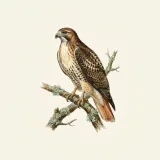 Hawks & falcons
No bird like that yet
Try one word, like “cardinal”, or see them all. You can also search the whole site.
Cardinals & finches
American Goldfinch
Spinus tristis
A small, bright yellow finch that loves nyjer seed and coneflowers.
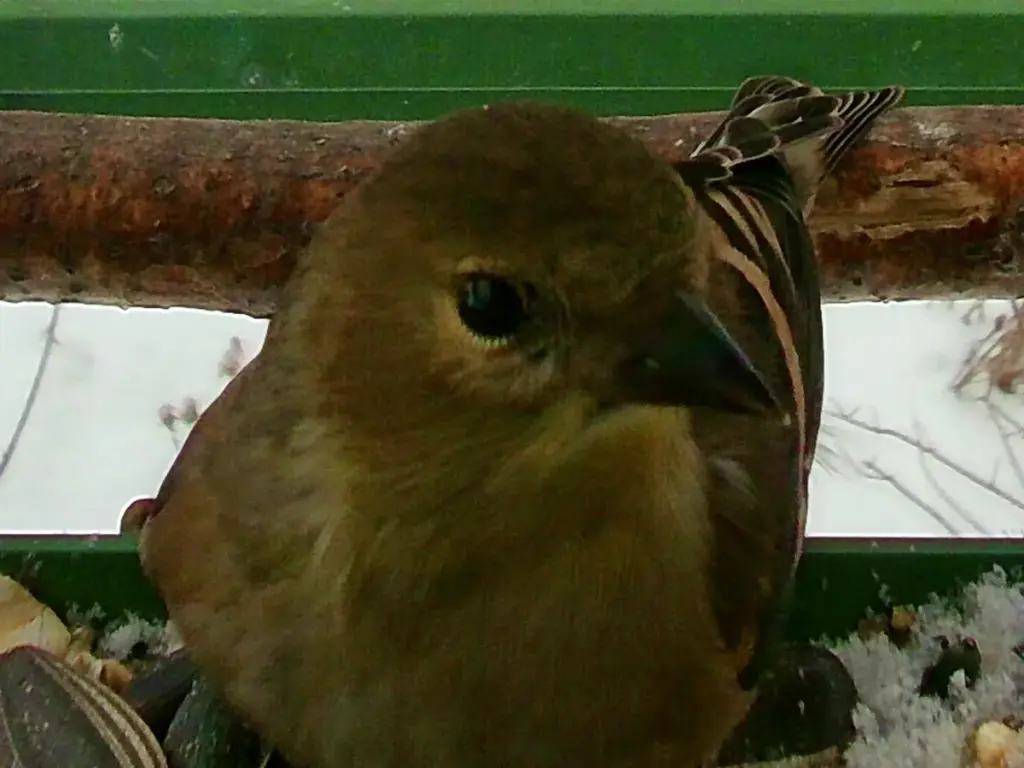
At a glance
- Favorite foods: nyjer seed, sunflower hearts
- Best feeders: nyjer tube, mesh feeder, sunflower tube, platform
- Plants: coneflowers, sunflowers, asters, native thistles, milkweed
- Habitat: open fields and gardens with seed-bearing flowers
- Nesting: late summer, after thistle and other seeds ripen
- Seasonality: year-round in much of Michigan
Best foods
Nyjer (thistle) seed is the favorite. Sunflower hearts, which are sunflower seeds with the hulls removed, are a good second choice.
Best feeders
Use a nyjer tube or mesh feeder with small ports. A sunflower tube feeder or a platform feeder works well too.
Plants that attract
Coneflowers, sunflowers, asters, native thistles and milkweed. Goldfinches eat the seeds, so leave the seed heads standing.
Water and habitat
Keep a shallow birdbath filled with fresh water, and leave patches of seed-bearing flowers in the garden.
Nesting and shelter
Goldfinches nest late, in summer, because they wait for seeds to ripen. Their nests are small cups in shrubs and saplings, and they do not use birdhouses.
Seasonal tips
Goldfinches look dull olive in winter and turn bright yellow in spring. Keep a nyjer feeder up all year.
One practical tip
Leave the seed heads on coneflowers and sunflowers until late fall so goldfinches can feed from them.
Fun fact
Goldfinches molt twice a year, which is why they change from bright yellow to a dull olive.
Shop this bird
Feeder and food picks for the American Goldfinch will go here once Sara adds her links.
As an Amazon Associate, QT Bird earns from qualifying purchases.
Quick checklist
- Nyjer or sunflower hearts
- A nyjer tube or mesh feeder
- Seed-bearing flowers left standing
- Fresh water
QT Bird · qtbird.com/backyard-birds/
Cardinals & finches
Black-headed Grosbeak
Pheucticus melanocephalus
An orange and black bird with a big, thick beak that visits in spring and summer.
Sara’s own photo of the Black-headed Grosbeak will go here.
At a glance
- Favorite foods: black oil sunflower seed, safflower, fruit and insects
- Best feeders: platform, hopper, tube
- Plants: elderberry, serviceberry, oaks, native shrubs
- Habitat: open woods and streamside trees
- Nesting: a loose cup in a shrub or tree
- Seasonality: spring to late summer; winters in Mexico
Best foods
Grosbeaks love black oil sunflower seed and safflower. They also eat fruit and insects.
Best feeders
A platform feeder, hopper feeder or tube feeder with a good perch works well.
Plants that attract
Elderberry, serviceberry and native shrubs.
Water and habitat
Offer a birdbath with fresh water, and keep trees close.
Nesting and shelter
Black-headed Grosbeaks nest in shrubs and small trees. They do not use birdhouses.
Seasonal tips
Look for them from spring to late summer.
One practical tip
Put out sunflower seed on a platform feeder as soon as the first males arrive in spring.
Fun fact
Both the male and the female Black-headed Grosbeak sing.
Shop this bird
Feeder and food picks for the Black-headed Grosbeak will go here once Sara adds her links.
As an Amazon Associate, QT Bird earns from qualifying purchases.
Quick checklist
- Black oil sunflower seed or safflower
- A platform, hopper or tube feeder
- Shrubs and trees
- Fresh water
QT Bird · qtbird.com/backyard-birds/
Cardinals & finches
Cassin’s Finch
Haemorhous cassinii
A mountain finch with a red cap, a lot like the Purple Finch.
Sara’s own photo of the Cassin’s Finch will go here.
At a glance
- Favorite foods: black oil sunflower seed, sunflower hearts
- Best feeders: tube feeder, hopper feeder, platform
- Plants: pines, firs and other evergreens
- Habitat: mountain evergreen forests
- Nesting: high in an evergreen tree
- Seasonality: year-round in mountains, winter lower down
Best foods
Black oil sunflower seed, sunflower hearts.
Best feeders
Try tube feeder, hopper feeder, platform.
Plants that attract
Pines, firs and other evergreens.
Water and habitat
Offer a birdbath with fresh water, and change it often.
Nesting and shelter
High in an evergreen tree.
Seasonal tips
Year-round in mountains, winter lower down.
One practical tip
Keep seed fresh and feeders clean when flocks visit in winter.
Fun fact
Cassin’s Finch is named for John Cassin, a Philadelphia ornithologist.
Shop this bird
Feeder and food picks for the Cassin’s Finch will go here once Sara adds her links.
As an Amazon Associate, QT Bird earns from qualifying purchases.
Quick checklist
- Black oil sunflower seed
- A tube feeder
- Pines
- Fresh water
QT Bird · qtbird.com/backyard-birds/
Cardinals & finches
Common Redpoll
Acanthis flammea
A small finch with a red cap that visits in cold winters.
Sara’s own photo of the Common Redpoll will go here.
At a glance
- Favorite foods: nyjer seed, sunflower hearts
- Best feeders: nyjer tube or mesh feeder, tube
- Plants: birches, alders and weedy seed heads
- Habitat: open fields and birch woods
- Nesting: far to the north, on the tundra
- Seasonality: irregular winter visitor
Best foods
Nyjer seed, sunflower hearts.
Best feeders
Try nyjer tube or mesh feeder, tube.
Plants that attract
Birches, alders and weedy seed heads.
Water and habitat
Offer a birdbath with fresh water, and change it often.
Nesting and shelter
Far to the north, on the tundra.
Seasonal tips
Irregular winter visitor.
One practical tip
Keep a nyjer feeder stocked and clean in winter.
Fun fact
Redpolls can store seed in a pouch in the throat, then digest it later.
Shop this bird
Feeder and food picks for the Common Redpoll will go here once Sara adds her links.
As an Amazon Associate, QT Bird earns from qualifying purchases.
Quick checklist
- Nyjer seed
- A nyjer tube or mesh feeder
- Birches
- Fresh water
QT Bird · qtbird.com/backyard-birds/
Cardinals & finches
Evening Grosbeak
Coccothraustes vespertinus
A big, bright yellow and black finch that arrives in flocks.
Sara’s own photo of the Evening Grosbeak will go here.
At a glance
- Favorite foods: black oil sunflower seed, sunflower hearts
- Best feeders: platform feeder, hopper feeder
- Plants: box elder, maples and fruiting trees
- Habitat: evergreen and mixed forests
- Nesting: high in a tree, in a loose cup
- Seasonality: irregular winter visitor
Best foods
Black oil sunflower seed, sunflower hearts.
Best feeders
Try platform feeder, hopper feeder.
Plants that attract
Box elder, maples and fruiting trees.
Water and habitat
Offer a birdbath with fresh water, and change it often.
Nesting and shelter
High in a tree, in a loose cup.
Seasonal tips
Irregular winter visitor.
One practical tip
Keep feeders full and clean in winters when flocks show up.
Fun fact
Evening Grosbeaks have huge, strong beaks that crack large seeds and fruit pits.
Shop this bird
Feeder and food picks for the Evening Grosbeak will go here once Sara adds her links.
As an Amazon Associate, QT Bird earns from qualifying purchases.
Quick checklist
- Black oil sunflower seed
- A platform feeder
- Box elder
- Fresh water
QT Bird · qtbird.com/backyard-birds/
Cardinals & finches
House Finch
Haemorhous mexicanus
A cheerful, streaky finch that is happy at almost any feeder.
Sara’s own photo of the House Finch will go here.
At a glance
- Favorite foods: black oil sunflower seed, nyjer, sunflower hearts
- Best feeders: tube, hopper, platform, nyjer feeder
- Plants: seed-bearing flowers and fruiting shrubs
- Habitat: yards, parks and towns
- Nesting: ledges, hanging planters and trees
- Seasonality: year-round
Best foods
Black oil sunflower seed is the favorite. House Finches also eat nyjer and sunflower hearts.
Best feeders
A tube, hopper or platform feeder works well. They also use nyjer feeders.
Plants that attract
Seed-bearing flowers such as coneflowers and sunflowers, and fruiting shrubs.
Water and habitat
Offer a clean birdbath with fresh water.
Nesting and shelter
House Finches often nest on ledges, in hanging planters and in the branches of evergreens.
Seasonal tips
House Finches stay all year, so keep feeders stocked in winter.
One practical tip
Clean feeders every week or two. Finches that crowd a feeder can pass on illness, so clean feeders keep them healthy.
Fun fact
The red color on a male House Finch comes from his food, so a diet rich in carotenoids makes him redder.
Shop this bird
Feeder and food picks for the House Finch will go here once Sara adds her links.
As an Amazon Associate, QT Bird earns from qualifying purchases.
Quick checklist
- Black oil sunflower seed or nyjer
- A tube, hopper or platform feeder
- A clean feeder, every week or two
- Fresh water
QT Bird · qtbird.com/backyard-birds/
Cardinals & finches
Indigo Bunting
Passerina cyanea
A small bird that looks bright blue in the sun.
Sara’s own photo of the Indigo Bunting will go here.
At a glance
- Favorite foods: small seeds, nyjer, white millet, insects
- Best feeders: nyjer feeder, platform feeder
- Plants: weedy fields, thistles, brambles
- Habitat: brushy fields and woodland edges
- Nesting: a cup low in dense shrubs
- Seasonality: spring to early fall
Best foods
Indigo Buntings eat small seeds. Offer nyjer, white millet and sunflower hearts, and leave seed heads standing.
Best feeders
A nyjer feeder or a platform feeder works well, near shrubs.
Plants that attract
Thistles, brambles and other weedy plants that go to seed, with dense shrubs for nesting.
Water and habitat
A shallow birdbath with fresh water helps.
Nesting and shelter
Indigo Buntings nest low in shrubs and brambles. They do not use birdhouses.
Seasonal tips
Look for them from late spring to early fall.
One practical tip
Leave a weedy corner and seed heads standing. Buntings forage there.
Fun fact
Indigo Buntings migrate at night, and they use the stars to find their way.
Shop this bird
Feeder and food picks for the Indigo Bunting will go here once Sara adds her links.
As an Amazon Associate, QT Bird earns from qualifying purchases.
Quick checklist
- Nyjer or small seeds
- A nyjer or platform feeder
- A weedy corner or brambles
- Fresh water
QT Bird · qtbird.com/backyard-birds/
Cardinals & finches
Lazuli Bunting
Passerina amoena
A small bunting with a bright blue head and an orange chest.
Sara’s own photo of the Lazuli Bunting will go here.
At a glance
- Favorite foods: nyjer seed, millet, sunflower hearts
- Best feeders: nyjer feeder, platform feeder
- Plants: shrubs, weedy fields and streamside brush
- Habitat: brushy slopes and streamsides
- Nesting: a cup low in a shrub
- Seasonality: spring to early fall
Best foods
Nyjer seed, millet, sunflower hearts.
Best feeders
Try nyjer feeder, platform feeder.
Plants that attract
Shrubs, weedy fields and streamside brush.
Water and habitat
Offer a birdbath with fresh water, and change it often.
Nesting and shelter
A cup low in a shrub.
Seasonal tips
Spring to early fall.
One practical tip
Leave a weedy corner or brush near the feeder.
Fun fact
A young male Lazuli Bunting learns his song from older birds nearby.
Shop this bird
Feeder and food picks for the Lazuli Bunting will go here once Sara adds her links.
As an Amazon Associate, QT Bird earns from qualifying purchases.
Quick checklist
- Nyjer seed
- A nyjer feeder
- Shrubs
- Fresh water
QT Bird · qtbird.com/backyard-birds/
Cardinals & finches
Lesser Goldfinch
Spinus psaltria
A tiny finch of the West with a yellow chest and a black cap.
Sara’s own photo of the Lesser Goldfinch will go here.
At a glance
- Favorite foods: nyjer seed, sunflower hearts
- Best feeders: nyjer tube or mesh feeder, tube
- Plants: sunflowers, thistles, native composites
- Habitat: open woods, brush and gardens
- Nesting: a small cup in a shrub or tree
- Seasonality: year-round in much of the West
Best foods
Nyjer (thistle) seed is the favorite. Sunflower hearts also work well.
Best feeders
A nyjer tube or mesh feeder with small ports.
Plants that attract
Sunflowers and other seed-bearing flowers. Leave the seed heads standing.
Water and habitat
A shallow birdbath with fresh water.
Nesting and shelter
Lesser Goldfinches nest in shrubs and trees in summer. They do not use birdhouses.
Seasonal tips
They stay all year in much of the West, but may move to find seed.
One practical tip
Keep a nyjer feeder clean and full, and plant sunflowers for seed.
Fun fact
In the western United States, male Lesser Goldfinches usually have a black back, while those in Texas have a green back.
Shop this bird
Feeder and food picks for the Lesser Goldfinch will go here once Sara adds her links.
As an Amazon Associate, QT Bird earns from qualifying purchases.
Quick checklist
- Nyjer seed
- A nyjer tube or mesh feeder
- Seed-bearing flowers
- Fresh water
QT Bird · qtbird.com/backyard-birds/
Cardinals & finches
Northern Cardinal
Cardinalis cardinalis
A bright red visitor that stays all year and loves a sunflower seed.
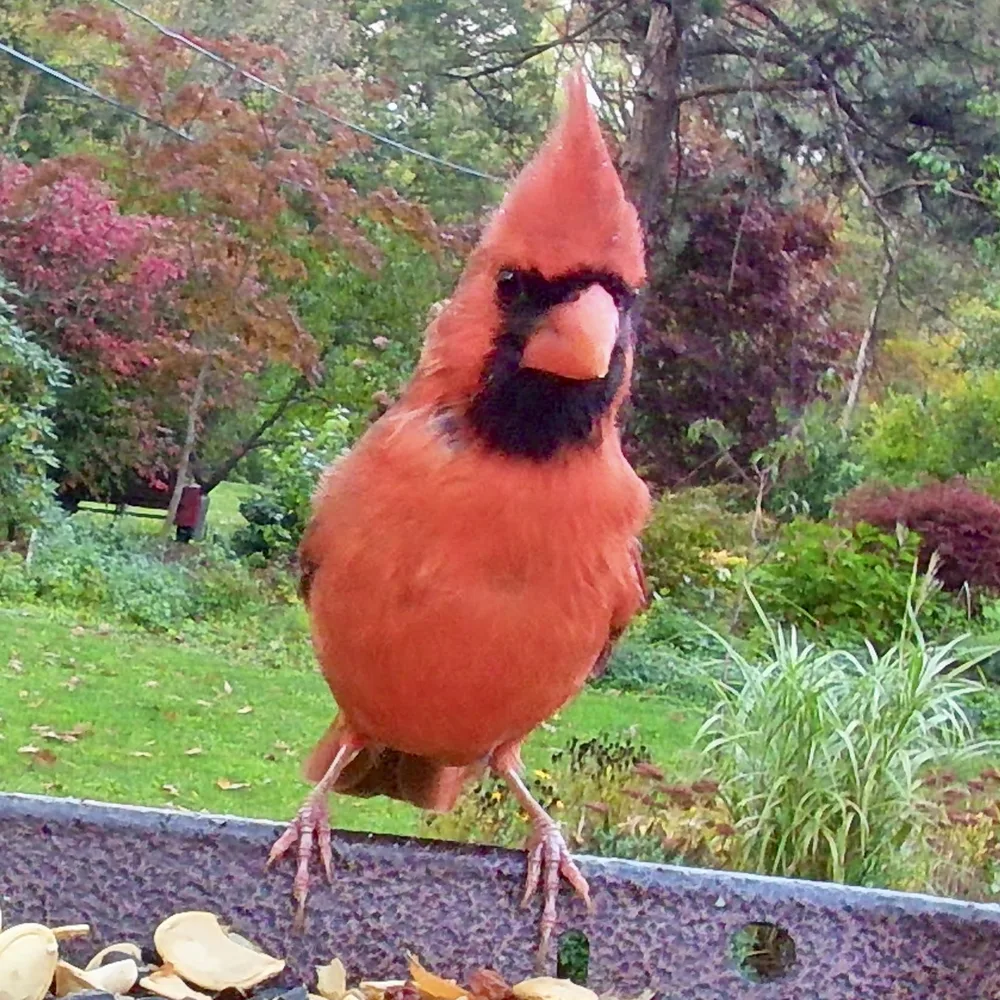
About the Northern Cardinal
Nothing brightens a snowy yard like a cardinal. The male is brilliant red with a crest and a black mask around his thick bill. The female is a warm brownish tan with touches of red, the same crest, and a pinkish bill. Both sing, and the female often sings in spring before nesting.
Cardinals stay all year and don't migrate. For decades they have been spreading north, and backyard feeders stocked with sunflower seed may have helped. In spring, a male may fight his own reflection in a window, thinking it's a rival.
At a glance
- Favorite foods: black oil sunflower seed, safflower
- Best feeders: platform, hopper, ground tray
- Plants: native sunflowers, dogwood, elderberry, serviceberry, brambles
- Habitat: dense shrubs and thickets for cover
- Nesting: cup nests in shrubs, not birdhouses
- Seasonality: year-round
Best foods
Black oil sunflower seed is the favorite. Safflower is a good second choice, and cardinals will also take sunflower hearts and a little cracked corn.
Best feeders
Cardinals like a place to perch while they eat. Offer seed on a platform feeder, in a hopper feeder with a good perch, or in a ground tray.
Plants that attract
Native sunflowers, dogwood, elderberry, serviceberry and brambles give cardinals seeds, berries and thick cover.
Water and habitat
Plant a mix of shrubs so cardinals can slip into cover, and add a birdbath with fresh water, a shallow one is best.
Nesting and shelter
Cardinals build cup nests in dense shrubs and vines. They do not use birdhouses, so leave some thick shrubs in the yard.
Seasonal tips
Cardinals stay all year, so keep feeders full in winter, when their red stands out against the snow.
One practical tip
Place a feeder close to a shrub or other cover. Cardinals feel safest when they can dart back to cover.
Fun fact
Female cardinals sing too, which is unusual among North American songbirds.
Shop this bird
HiBird smart feeder
My Amazon shop
As an Amazon Associate, QT Bird earns from qualifying purchases.
Quick checklist
- Black oil sunflower or safflower seed
- A platform, hopper or ground feeder
- Shrubs or thickets nearby
- Fresh water
Facts checked against the National Audubon Society field guide.
QT Bird · qtbird.com/backyard-birds/
Cardinals & finches
Painted Bunting
Passerina ciris
A tiny, rainbow-colored bird that visits Southeast feeders in summer.
Sara’s own photo of the Painted Bunting will go here.
At a glance
- Favorite foods: white proso millet, sunflower hearts, small seeds
- Best feeders: platform feeder, ground tray
- Plants: native grasses and weedy thickets
- Habitat: shrubby edges and thickets near the coast
- Nesting: in dense shrubs
- Seasonality: spring and summer, then south for winter
Best foods
Painted Buntings eat small seeds. Offer white proso millet, sunflower hearts and a little nyjer.
Best feeders
A platform feeder or a ground tray works well, near shrubs for cover.
Plants that attract
Native grasses and weedy, seed-bearing plants, with dense shrubs for cover.
Water and habitat
A shallow birdbath with fresh water is a big draw.
Nesting and shelter
Painted Buntings nest in dense shrubs and thickets, so they do not use birdhouses.
Seasonal tips
Look for Painted Buntings from spring to late summer. They head south in fall.
One practical tip
Put out a platform feeder with white millet near a thicket. The males are shy, so be patient.
Fun fact
The French nickname for the Painted Bunting is “nonpareil,” which means “without equal.”
Shop this bird
Feeder and food picks for the Painted Bunting will go here once Sara adds her links.
As an Amazon Associate, QT Bird earns from qualifying purchases.
Quick checklist
- White millet or sunflower hearts
- A platform or ground feeder
- A thicket nearby
- Fresh water
QT Bird · qtbird.com/backyard-birds/
Cardinals & finches
Pine Grosbeak
Pinicola enucleator
A large, rosy finch of northern evergreen forests.
Sara’s own photo of the Pine Grosbeak will go here.
At a glance
- Favorite foods: black oil sunflower seed, fruit and buds
- Best feeders: platform feeder, hopper feeder
- Plants: mountain ash, crabapple and evergreens
- Habitat: northern evergreen forests
- Nesting: in a conifer
- Seasonality: year-round in the far north
Best foods
Black oil sunflower seed, fruit and buds.
Best feeders
Try platform feeder, hopper feeder.
Plants that attract
Mountain ash, crabapple and evergreens.
Water and habitat
Offer a birdbath with fresh water, and change it often.
Nesting and shelter
In a conifer.
Seasonal tips
Year-round in the far north.
One practical tip
Offer sunflower seed and crabapples in winter.
Fun fact
Pine Grosbeaks are often very tame, and will let you come close.
Shop this bird
Feeder and food picks for the Pine Grosbeak will go here once Sara adds her links.
As an Amazon Associate, QT Bird earns from qualifying purchases.
Quick checklist
- Black oil sunflower seed
- A platform feeder
- Mountain ash
- Fresh water
QT Bird · qtbird.com/backyard-birds/
Cardinals & finches
Pine Siskin
Spinus pinus
A small, streaky finch with yellow flashes in its wings that arrives in flocks.
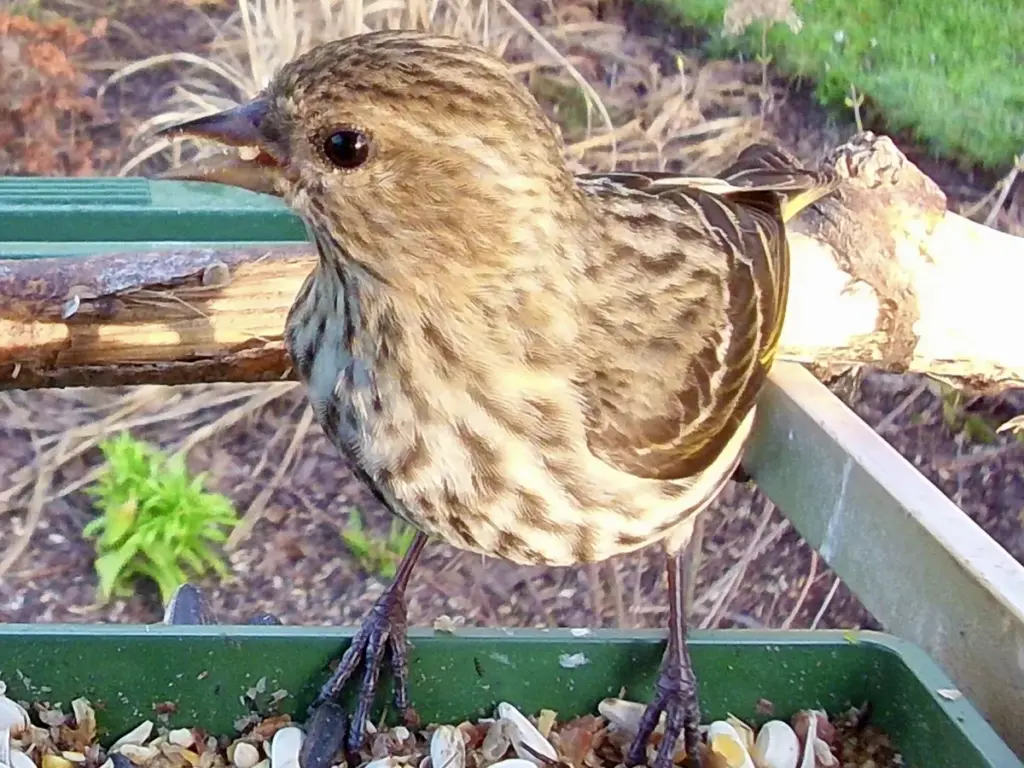
About the Pine Siskin
Some winters you won't see a single pine siskin. Other winters, a whole twittering flock shows up and empties the thistle feeder in an afternoon. Their numbers swing wildly from year to year.
At first glance a siskin looks like a streaky brown sparrow, but look closer: it has a thin, sharp bill and flashes of yellow in its wings and tail, easiest to see when it flies. It's really a little finch in disguise, and it often feeds right alongside goldfinches.
At a glance
- Favorite foods: nyjer seed, sunflower seed
- Best feeders: nyjer tube, tube
- Plants: evergreens, alders and birches
- Habitat: evergreen forests
- Nesting: in evergreen trees
- Seasonality: irregular winter visitor in much of the region
Best foods
Pine Siskins love nyjer seed. They also eat sunflower hearts and black oil sunflower seed.
Best feeders
A nyjer tube or mesh feeder, or a tube feeder.
Plants that attract
Evergreens, alders and birches.
Water and habitat
A shallow birdbath with fresh water.
Nesting and shelter
Pine Siskins nest in evergreen trees, so they do not use birdhouses.
Seasonal tips
Siskins come and go by year. In some winters, they show up in big flocks.
One practical tip
Clean feeders every week or two, especially when siskins visit. Crowded finches can pass on illness.
Fun fact
Pine Siskins flash yellow in their wings and tail when they fly.
Shop this bird
Feeder and food picks for the Pine Siskin will go here once Sara adds her links.
As an Amazon Associate, QT Bird earns from qualifying purchases.
Quick checklist
- Nyjer or sunflower seed
- A nyjer or tube feeder
- A clean feeder, every week or two
- Evergreens nearby
Facts checked against the National Audubon Society field guide.
QT Bird · qtbird.com/backyard-birds/
Cardinals & finches
Purple Finch
Haemorhous purpureus
A finch that looks as if it was dipped in raspberry juice.
Sara’s own photo of the Purple Finch will go here.
At a glance
- Favorite foods: black oil sunflower seed, sunflower hearts
- Best feeders: tube, hopper, platform
- Plants: evergreens and trees with buds and seeds
- Habitat: woods and yards with evergreens
- Nesting: in evergreen trees
- Seasonality: winter visitor in much of the region; summers farther north
Best foods
Black oil sunflower seed is the favorite. Sunflower hearts also work well.
Best feeders
A tube feeder, hopper feeder or platform feeder works well.
Plants that attract
Evergreens, and trees whose buds and seeds Purple Finches eat.
Water and habitat
Offer fresh water in a birdbath, and keep some evergreens nearby for cover.
Nesting and shelter
Purple Finches nest in evergreen trees, so they do not use birdhouses.
Seasonal tips
Purple Finches visit feeders most often in fall and winter.
One practical tip
Keep sunflower seed fresh in a feeder near evergreens. Purple Finches often arrive in small groups in winter.
Fun fact
The male Purple Finch was famously described as looking like a sparrow dipped in raspberry juice.
Shop this bird
Feeder and food picks for the Purple Finch will go here once Sara adds her links.
As an Amazon Associate, QT Bird earns from qualifying purchases.
Quick checklist
- Black oil sunflower seed
- A tube, hopper or platform feeder
- Evergreens nearby
- Fresh water
QT Bird · qtbird.com/backyard-birds/
Cardinals & finches
Pyrrhuloxia
Cardinalis sinuatus
A gray and red cousin of the cardinal, with a short, curved beak.
Sara’s own photo of the Pyrrhuloxia will go here.
At a glance
- Favorite foods: black oil sunflower seed, safflower
- Best feeders: platform feeder, hopper feeder
- Plants: mesquite, desert shrubs and thorny brush
- Habitat: desert scrub and brushy edges
- Nesting: in a thorny shrub or small tree
- Seasonality: year-round
Best foods
Black oil sunflower seed, safflower.
Best feeders
Try platform feeder, hopper feeder.
Plants that attract
Mesquite, desert shrubs and thorny brush.
Water and habitat
Offer a birdbath with fresh water, and change it often.
Nesting and shelter
In a thorny shrub or small tree.
Seasonal tips
Year-round.
One practical tip
Offer seed near thorny desert shrubs.
Fun fact
The Pyrrhuloxia has a short, curved beak that looks like a parrot’s.
Shop this bird
Feeder and food picks for the Pyrrhuloxia will go here once Sara adds her links.
As an Amazon Associate, QT Bird earns from qualifying purchases.
Quick checklist
- Black oil sunflower seed
- A platform feeder
- Mesquite
- Fresh water
QT Bird · qtbird.com/backyard-birds/
Cardinals & finches
Red Crossbill
Loxia curvirostra
A finch with a crossed bill that it uses to pry seeds from cones.
Sara’s own photo of the Red Crossbill will go here.
At a glance
- Favorite foods: pine and spruce seeds, black oil sunflower seed
- Best feeders: hopper feeder, platform feeder
- Plants: pines, spruces and hemlocks
- Habitat: evergreen forests
- Nesting: in an evergreen tree, sometimes in winter
- Seasonality: irregular, year-round in evergreen forests
Best foods
Pine and spruce seeds, black oil sunflower seed.
Best feeders
Try hopper feeder, platform feeder.
Plants that attract
Pines, spruces and hemlocks.
Water and habitat
Offer a birdbath with fresh water, and change it often.
Nesting and shelter
In an evergreen tree, sometimes in winter.
Seasonal tips
Irregular, year-round in evergreen forests.
One practical tip
Offer sunflower seed in winter near evergreen woods.
Fun fact
The Red Crossbill has a bill with crossed tips that is made for prying seeds out of cones.
Shop this bird
Feeder and food picks for the Red Crossbill will go here once Sara adds her links.
As an Amazon Associate, QT Bird earns from qualifying purchases.
Quick checklist
- Pine and spruce seeds
- A hopper feeder
- Pines
- Fresh water
QT Bird · qtbird.com/backyard-birds/
Cardinals & finches
Red-crested Cardinal
Paroaria coronata
A gray bird with a red head and crest, introduced from South America.
Sara’s own photo of the Red-crested Cardinal will go here.
At a glance
- Favorite foods: sunflower seed, cracked corn, fruit
- Best feeders: platform feeder, ground tray
- Plants: shrubs and trees in gardens
- Habitat: parks, gardens and lawns
- Nesting: in a cup in a shrub or tree
- Seasonality: year-round
Best foods
Sunflower seed, cracked corn, fruit.
Best feeders
Try platform feeder, ground tray.
Plants that attract
Shrubs and trees in gardens.
Water and habitat
Offer a birdbath with fresh water, and change it often.
Nesting and shelter
In a cup in a shrub or tree.
Seasonal tips
Year-round.
One practical tip
Offer seed on a platform feeder.
Fun fact
The Red-crested Cardinal is not related to the Northern Cardinal. It is closer to tanagers.
Shop this bird
Feeder and food picks for the Red-crested Cardinal will go here once Sara adds her links.
As an Amazon Associate, QT Bird earns from qualifying purchases.
Quick checklist
- Sunflower seed
- A platform feeder
- Shrubs and trees in gardens
- Fresh water
QT Bird · qtbird.com/backyard-birds/
Cardinals & finches
Rose-breasted Grosbeak
Pheucticus ludovicianus
A black and white bird with a bright rose-red patch on the chest.
Sara’s own photo of the Rose-breasted Grosbeak will go here.
At a glance
- Favorite foods: black oil sunflower seed, safflower, fruit and insects
- Best feeders: platform, hopper, tube
- Plants: elderberry, serviceberry, mulberry, dogwood
- Habitat: open woods and wooded edges
- Nesting: a loose cup in a small tree or shrub
- Seasonality: spring and summer; winters far to the south
Best foods
Grosbeaks love black oil sunflower seed and safflower. They also eat fruit and insects.
Best feeders
A platform feeder, hopper feeder or tube feeder with a good perch works well.
Plants that attract
Elderberry, serviceberry, mulberry and dogwood.
Water and habitat
Offer a birdbath with fresh water, and keep trees and shrubs close.
Nesting and shelter
Rose-breasted Grosbeaks build a loose cup nest in a small tree or shrub. They do not use birdhouses.
Seasonal tips
Look for them in spring when they return, and keep seed fresh through the summer.
One practical tip
Put out sunflower seed on a platform feeder as soon as the first males arrive in spring.
Fun fact
Both male and female Rose-breasted Grosbeaks sing, and males help sit on the eggs.
Shop this bird
Feeder and food picks for the Rose-breasted Grosbeak will go here once Sara adds her links.
As an Amazon Associate, QT Bird earns from qualifying purchases.
Quick checklist
- Black oil sunflower seed or safflower
- A platform, hopper or tube feeder
- Shrubs and small trees
- Fresh water
QT Bird · qtbird.com/backyard-birds/
Cardinals & finches
Yellow-billed Cardinal
Paroaria capitata
A South American bird with a red head and yellow bill, seen in a few Hawaiian places.
Sara’s own photo of the Yellow-billed Cardinal will go here.
At a glance
- Favorite foods: sunflower seed, cracked corn, fruit
- Best feeders: platform feeder, ground tray
- Plants: shrubs and trees in gardens
- Habitat: parks and gardens
- Nesting: in a cup in a shrub or tree
- Seasonality: year-round, in a few places
Best foods
Sunflower seed, cracked corn, fruit.
Best feeders
Try platform feeder, ground tray.
Plants that attract
Shrubs and trees in gardens.
Water and habitat
Offer a birdbath with fresh water, and change it often.
Nesting and shelter
In a cup in a shrub or tree.
Seasonal tips
Year-round, in a few places.
One practical tip
Offer seed on a platform feeder.
Fun fact
The Yellow-billed Cardinal is closely related to the Red-crested Cardinal, and neither is related to the Northern Cardinal.
Shop this bird
Feeder and food picks for the Yellow-billed Cardinal will go here once Sara adds her links.
As an Amazon Associate, QT Bird earns from qualifying purchases.
Quick checklist
- Sunflower seed
- A platform feeder
- Shrubs and trees in gardens
- Fresh water
QT Bird · qtbird.com/backyard-birds/
Jays
Blue Jay
Cyanocitta cristata
A loud, clever blue bird that goes straight for peanuts in the shell.
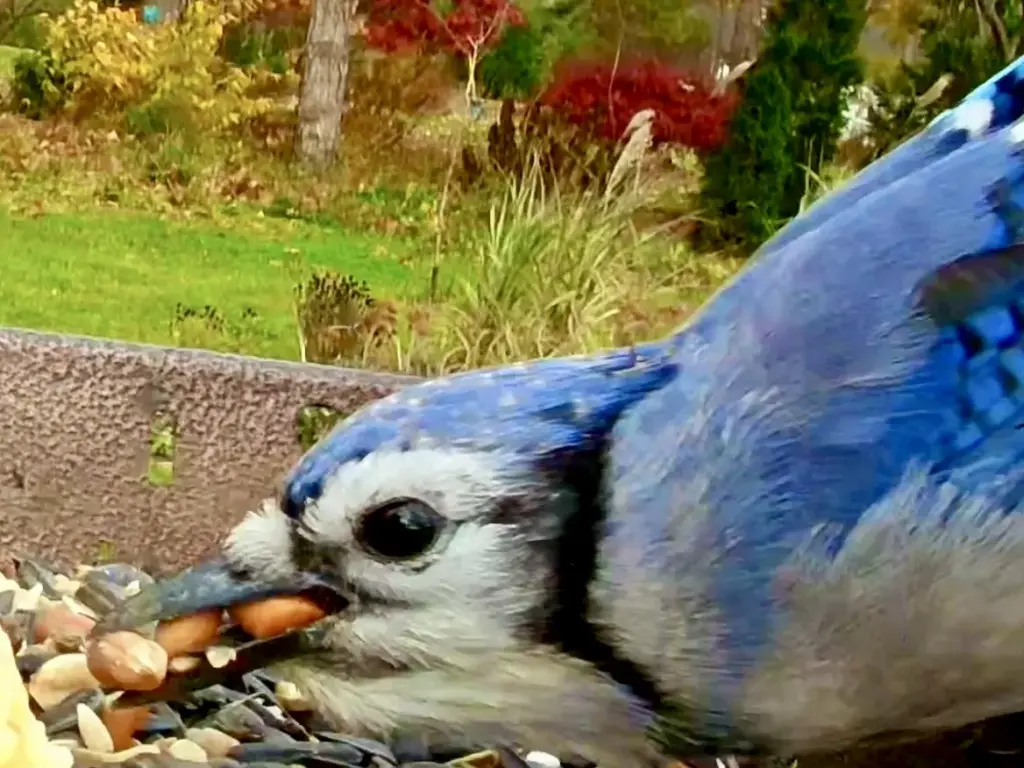
At a glance
- Favorite foods: peanuts in the shell, black oil sunflower seed, cracked corn
- Best feeders: platform feeder, peanut feeder, ground tray
- Plants: oaks (acorns), beeches, dogwood
- Habitat: woods and yards with big trees
- Nesting: in the fork of a tree, not birdhouses
- Seasonality: year-round
Best foods
Peanuts in the shell are the favorite. Blue Jays also eat black oil sunflower seed, cracked corn and acorns.
Best feeders
Blue Jays are big birds, so give them room: a platform feeder or a sturdy tray, or a feeder made for whole peanuts.
Plants that attract
Oaks are the best plant for Blue Jays because they love acorns. Beeches and dogwood help too.
Water and habitat
Blue Jays visit birdbaths. Keep the water fresh, and keep tall trees nearby for them to perch in.
Nesting and shelter
Blue Jays build bulky cup nests in the forks of trees. They do not use birdhouses.
Seasonal tips
Blue Jays stay in much of Michigan in winter. Whole peanuts are a good winter treat.
One practical tip
Put out a handful of peanuts in the shell on a platform feeder at the same time each day. Blue Jays learn the routine fast.
Fun fact
Blue Jays bury acorns and forget some of them, which helps new oak trees grow.
Shop this bird
HiBird smart feeder
My Amazon shop
As an Amazon Associate, QT Bird earns from qualifying purchases.
Quick checklist
- Peanuts in the shell
- A platform feeder or tray
- Oak or other big trees
- Fresh water
QT Bird · qtbird.com/backyard-birds/
Jays
California Scrub-Jay
Aphelocoma californica
A bold, blue and gray jay of western yards and oak country.
Sara’s own photo of the California Scrub-Jay will go here.
At a glance
- Favorite foods: peanuts, acorns, black oil sunflower seed
- Best feeders: platform, peanut feeder, ground tray
- Plants: oaks and other nut and berry plants
- Habitat: oak woodlands, scrub and yards
- Nesting: in shrubs and small trees
- Seasonality: year-round
Best foods
Peanuts in the shell and acorns are favorites. Scrub-jays also eat black oil sunflower seed.
Best feeders
A platform feeder or a peanut feeder. They are smart and will find it fast.
Plants that attract
Oaks, and berry shrubs such as toyon and manzanita.
Water and habitat
Scrub-jays visit birdbaths. Keep the water fresh.
Nesting and shelter
Scrub-jays nest in shrubs and small trees. They do not use birdhouses.
Seasonal tips
They stay all year.
One practical tip
Put out peanuts a few at a time. Jays bury extras for later.
Fun fact
Scrub-jays bury food, and will re-hide it if another bird watches them.
Shop this bird
Feeder and food picks for the California Scrub-Jay will go here once Sara adds her links.
As an Amazon Associate, QT Bird earns from qualifying purchases.
Quick checklist
- Peanuts in the shell
- A platform or peanut feeder
- Oaks or berry shrubs
- Fresh water
QT Bird · qtbird.com/backyard-birds/
Jays
Canada Jay
Perisoreus canadensis
A fluffy gray jay of northern evergreen forests, with a light face.
Sara’s own photo of the Canada Jay will go here.
At a glance
- Favorite foods: suet, peanuts, scraps
- Best feeders: platform feeder, suet feeder
- Plants: spruce, pine and fir
- Habitat: northern evergreen forests
- Nesting: in a bulky nest in an evergreen, early in the year
- Seasonality: year-round in the north
Best foods
Suet, peanuts, scraps.
Best feeders
Try platform feeder, suet feeder.
Plants that attract
Spruce, pine and fir.
Water and habitat
Offer a birdbath with fresh water, and change it often.
Nesting and shelter
In a bulky nest in an evergreen, early in the year.
Seasonal tips
Year-round in the north.
One practical tip
Offer suet and peanuts on a platform in northern woods.
Fun fact
Canada Jays use sticky saliva to stick bits of food to trees, saving it for later.
Shop this bird
Feeder and food picks for the Canada Jay will go here once Sara adds her links.
As an Amazon Associate, QT Bird earns from qualifying purchases.
Quick checklist
- Suet
- A platform feeder
- Spruce
- Fresh water
QT Bird · qtbird.com/backyard-birds/
Jays
Clark’s Nutcracker
Nucifraga columbiana
A big, gray and black mountain bird that eats pine seeds.
Sara’s own photo of the Clark’s Nutcracker will go here.
At a glance
- Favorite foods: pine seeds, peanuts, suet
- Best feeders: large platform feeder, peanut feeder
- Plants: whitebark and other large-seed pines
- Habitat: high mountain pine forests
- Nesting: high in an evergreen tree, early in spring
- Seasonality: year-round in the mountains
Best foods
Pine seeds, peanuts, suet.
Best feeders
Try large platform feeder, peanut feeder.
Plants that attract
Whitebark and other large-seed pines.
Water and habitat
Offer a birdbath with fresh water, and change it often.
Nesting and shelter
High in an evergreen tree, early in spring.
Seasonal tips
Year-round in the mountains.
One practical tip
Offer peanuts and suet on a sturdy platform if you live in the mountains.
Fun fact
A Clark’s Nutcracker buries tens of thousands of pine seeds each fall, and remembers many of the spots.
Shop this bird
Feeder and food picks for the Clark’s Nutcracker will go here once Sara adds her links.
As an Amazon Associate, QT Bird earns from qualifying purchases.
Quick checklist
- Pine seeds
- A large platform feeder
- Whitebark and other large-seed pines
- Fresh water
QT Bird · qtbird.com/backyard-birds/
Jays
Green Jay
Cyanocorax yncas
A very colorful jay in green, blue and yellow, found in south Texas.
Sara’s own photo of the Green Jay will go here.
At a glance
- Favorite foods: peanuts, sunflower seed, fruit
- Best feeders: platform feeder, peanut feeder
- Plants: native brush and woodland
- Habitat: thorn woods and brushy yards in south Texas
- Nesting: in a cup in a dense shrub or tree
- Seasonality: year-round
Best foods
Peanuts, sunflower seed, fruit.
Best feeders
Try platform feeder, peanut feeder.
Plants that attract
Native brush and woodland.
Water and habitat
Offer a birdbath with fresh water, and change it often.
Nesting and shelter
In a cup in a dense shrub or tree.
Seasonal tips
Year-round.
One practical tip
Put peanuts out on a platform in the early morning.
Fun fact
The Green Jay is a tropical bird that reaches the United States only in south Texas.
Shop this bird
Feeder and food picks for the Green Jay will go here once Sara adds her links.
As an Amazon Associate, QT Bird earns from qualifying purchases.
Quick checklist
- Peanuts
- A platform feeder
- Native brush and woodland
- Fresh water
QT Bird · qtbird.com/backyard-birds/
Jays
Steller’s Jay
Cyanocitta stelleri
A dark blue jay with a tall black crest, at home in the evergreen forests of the West.
Sara’s own photo of the Steller’s Jay will go here.
At a glance
- Favorite foods: peanuts in the shell, black oil sunflower seed, suet
- Best feeders: platform, peanut feeder, ground tray
- Plants: pines, firs, oaks and other cone and nut trees
- Habitat: evergreen and mixed forests
- Nesting: a bulky nest in an evergreen tree
- Seasonality: year-round
Best foods
Peanuts in the shell are a favorite. Steller’s Jays also eat black oil sunflower seed, suet and acorns.
Best feeders
A sturdy platform feeder or tray, or a feeder made for whole peanuts. Jays are big, so give them room.
Plants that attract
Pines, firs and oaks give them cones, seeds and nuts.
Water and habitat
A large, shallow birdbath with fresh water.
Nesting and shelter
Steller’s Jays build bulky nests in evergreen trees. They do not use birdhouses.
Seasonal tips
In winter, jays visit feeders more, so keep peanuts and seed stocked.
One practical tip
Put out peanuts in the shell at the same time each morning. Jays learn the routine quickly.
Fun fact
Steller’s Jays can imitate the calls of hawks.
Shop this bird
Feeder and food picks for the Steller’s Jay will go here once Sara adds her links.
As an Amazon Associate, QT Bird earns from qualifying purchases.
Quick checklist
- Peanuts in the shell
- A platform feeder or tray
- Evergreen trees nearby
- A large birdbath
QT Bird · qtbird.com/backyard-birds/
Jays
Woodhouse’s Scrub-Jay
Aphelocoma woodhouseii
A blue and gray jay of the dry interior West.
Sara’s own photo of the Woodhouse’s Scrub-Jay will go here.
At a glance
- Favorite foods: peanuts, acorns, sunflower seed
- Best feeders: platform feeder, peanut feeder
- Plants: oaks, pinyon pines and junipers
- Habitat: pinyon-juniper woods and scrub
- Nesting: in shrubs and small trees
- Seasonality: year-round
Best foods
Peanuts, acorns, sunflower seed.
Best feeders
Try platform feeder, peanut feeder.
Plants that attract
Oaks, pinyon pines and junipers.
Water and habitat
Offer a birdbath with fresh water, and change it often.
Nesting and shelter
In shrubs and small trees.
Seasonal tips
Year-round.
One practical tip
Put out peanuts in the shell at the same time each day.
Fun fact
Woodhouse’s Scrub-Jays bury pinyon seeds and acorns for later.
Shop this bird
Feeder and food picks for the Woodhouse’s Scrub-Jay will go here once Sara adds her links.
As an Amazon Associate, QT Bird earns from qualifying purchases.
Quick checklist
- Peanuts
- A platform feeder
- Oaks
- Fresh water
QT Bird · qtbird.com/backyard-birds/
Chickadees, titmice & nuthatches
Black-capped Chickadee
Poecile atricapillus
A tiny, friendly bird that grabs one seed at a time and flies off to eat it.
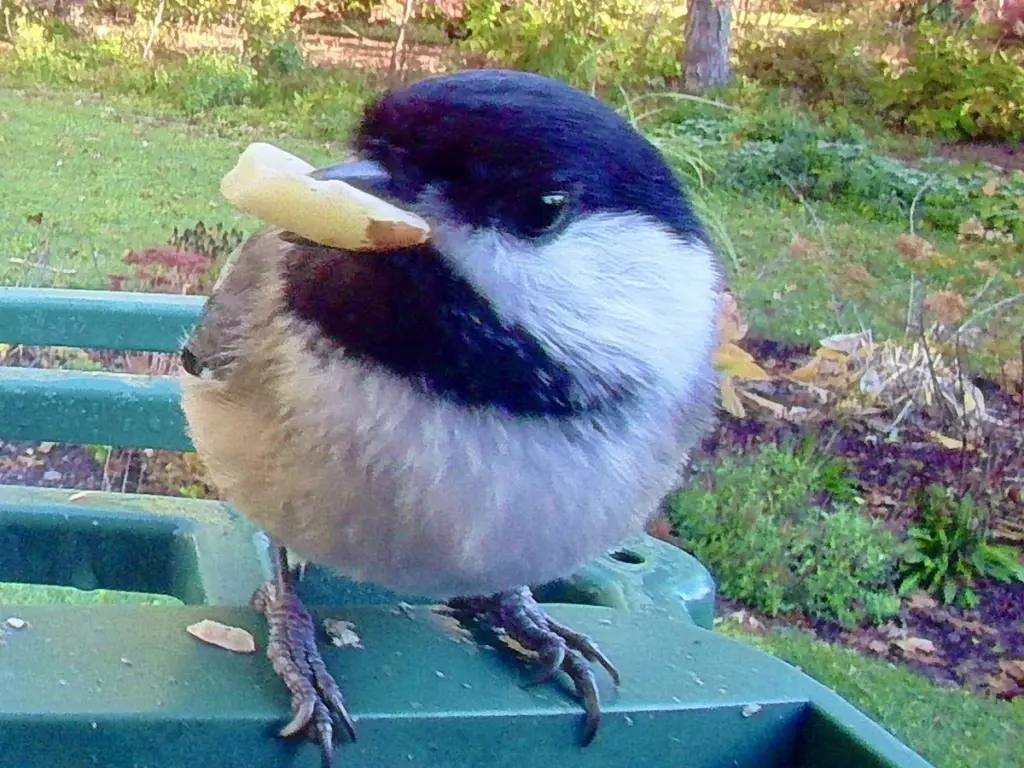
About the Black-capped Chickadee
Few birds are as friendly at the feeder as the chickadee. It's tiny, about 5 inches, with a black cap and bib, white cheeks, and a soft buff wash on its sides. You'll hear it before you see it, calling its own name: chick-a-dee-dee-dee. In late winter, listen for its sweet, whistled fee-bee.
Watch a chickadee for a minute and you'll see it grab one sunflower seed, fly off, and tuck it into a crack in the bark to eat later. In winter, chickadees travel in little flocks that often bring nuthatches, woodpeckers, and kinglets along with them. They nest in tree holes and will use a nest box.
At a glance
- Favorite foods: black oil sunflower seed, suet, peanuts
- Best feeders: tube, hopper, suet
- Plants: birch, oaks, pines, native shrubs
- Habitat: woods and yards with trees
- Nesting: nest boxes with a small hole, or old tree cavities
- Seasonality: year-round
Best foods
Black oil sunflower seed is the favorite, and chickadees also take suet, peanuts and sunflower hearts.
Best feeders
A tube feeder or hopper feeder works well. A suet feeder is a good winter addition.
Plants that attract
Birches, oaks and pines, and native shrubs that host caterpillars, which chickadees feed to their young.
Water and habitat
Offer a shallow birdbath with fresh water, and keep some trees and shrubs close for quick cover.
Nesting and shelter
Chickadees will use a nest box with a small entrance hole, about 1 1/8 inches. Put a few wood chips inside. They also dig into soft, rotting wood.
Seasonal tips
In winter, chickadees visit feeders often. Keep feeders full on the coldest days.
One practical tip
Place a feeder near a tree or shrub. Chickadees take a seed and fly to cover to eat it, so they like a perch close by.
Fun fact
The chickadee call gets more “dee” notes when a predator is near, a little warning for other birds.
Shop this bird
HiBird smart feeder
My Amazon shop
As an Amazon Associate, QT Bird earns from qualifying purchases.
Quick checklist
- Black oil sunflower seed or suet
- A tube, hopper or suet feeder
- Trees or shrubs nearby
- A nest box with a 1 1/8 inch hole
Facts checked against the National Audubon Society field guide.
QT Bird · qtbird.com/backyard-birds/
Chickadees, titmice & nuthatches
Black-crested Titmouse
Baeolophus atricristatus
A small gray titmouse with a black crest, found in Texas.
Sara’s own photo of the Black-crested Titmouse will go here.
At a glance
- Favorite foods: sunflower seed, suet, peanuts
- Best feeders: tube feeder, hopper feeder, suet feeder
- Plants: oaks, mesquite and native shrubs
- Habitat: oak and mesquite woods, yards
- Nesting: in a tree cavity or nest box with a 1 1/4 inch hole
- Seasonality: year-round
Best foods
Sunflower seed, suet, peanuts.
Best feeders
Try tube feeder, hopper feeder, suet feeder.
Plants that attract
Oaks, mesquite and native shrubs.
Water and habitat
Offer a birdbath with fresh water, and change it often.
Nesting and shelter
In a tree cavity or nest box with a 1 1/4 inch hole.
Seasonal tips
Year-round.
One practical tip
Hang a feeder near trees.
Fun fact
The Black-crested Titmouse was once thought to be the same bird as the Tufted Titmouse.
Shop this bird
Feeder and food picks for the Black-crested Titmouse will go here once Sara adds her links.
As an Amazon Associate, QT Bird earns from qualifying purchases.
Quick checklist
- Sunflower seed
- A tube feeder
- Oaks
- Fresh water
QT Bird · qtbird.com/backyard-birds/
Chickadees, titmice & nuthatches
Boreal Chickadee
Poecile hudsonicus
A brown-capped chickadee of northern evergreen forests.
Sara’s own photo of the Boreal Chickadee will go here.
At a glance
- Favorite foods: black oil sunflower seed, suet, peanuts
- Best feeders: tube feeder, suet feeder
- Plants: spruce and fir
- Habitat: northern evergreen forests
- Nesting: in a tree cavity
- Seasonality: year-round in the far north
Best foods
Black oil sunflower seed, suet, peanuts.
Best feeders
Try tube feeder, suet feeder.
Plants that attract
Spruce and fir.
Water and habitat
Offer a birdbath with fresh water, and change it often.
Nesting and shelter
In a tree cavity.
Seasonal tips
Year-round in the far north.
One practical tip
Keep suet and seed stocked on cold days.
Fun fact
The Boreal Chickadee stays in the northern forests all year, even in very cold weather.
Shop this bird
Feeder and food picks for the Boreal Chickadee will go here once Sara adds her links.
As an Amazon Associate, QT Bird earns from qualifying purchases.
Quick checklist
- Black oil sunflower seed
- A tube feeder
- Spruce and fir
- Fresh water
QT Bird · qtbird.com/backyard-birds/
Chickadees, titmice & nuthatches
Brown Creeper
Certhia americana
A small, streaky brown bird that climbs tree trunks in a spiral.
Sara’s own photo of the Brown Creeper will go here.
At a glance
- Favorite foods: suet, especially smeared on bark
- Best feeders: suet smeared on a rough tree trunk, suet feeder
- Plants: large mature trees with rough bark
- Habitat: mature forests and wooded yards
- Nesting: behind a loose flake of bark
- Seasonality: year-round in many areas, winter visitor farther south
Best foods
Suet, especially smeared on bark.
Best feeders
Try suet smeared on a rough tree trunk, suet feeder.
Plants that attract
Large mature trees with rough bark.
Water and habitat
Offer a birdbath with fresh water, and change it often.
Nesting and shelter
Behind a loose flake of bark.
Seasonal tips
Year-round in many areas, winter visitor farther south.
One practical tip
Smear a little suet on the rough bark of a tree trunk.
Fun fact
The Brown Creeper climbs up a trunk in a spiral, then flies to the base of the next tree and starts again.
Shop this bird
Feeder and food picks for the Brown Creeper will go here once Sara adds her links.
As an Amazon Associate, QT Bird earns from qualifying purchases.
Quick checklist
- Suet
- A suet smeared on a rough tree trunk feeder
- Large mature trees with rough bark
- Fresh water
QT Bird · qtbird.com/backyard-birds/
Chickadees, titmice & nuthatches
Brown-headed Nuthatch
Sitta pusilla
A small nuthatch with a brown cap, found in southern pine woods.
Sara’s own photo of the Brown-headed Nuthatch will go here.
At a glance
- Favorite foods: suet, sunflower seed, peanuts
- Best feeders: suet feeder, tube feeder
- Plants: longleaf and loblolly pines
- Habitat: southern pine woods
- Nesting: in a cavity in a dead pine stump or a nest box
- Seasonality: year-round
Best foods
Suet, sunflower seed, peanuts.
Best feeders
Try suet feeder, tube feeder.
Plants that attract
Longleaf and loblolly pines.
Water and habitat
Offer a birdbath with fresh water, and change it often.
Nesting and shelter
In a cavity in a dead pine stump or a nest box.
Seasonal tips
Year-round.
One practical tip
Offer suet near pines. Leave pine snags standing where it is safe.
Fun fact
Brown-headed Nuthatches sometimes use a bark flake as a tool to pry up other bark.
Shop this bird
Feeder and food picks for the Brown-headed Nuthatch will go here once Sara adds her links.
As an Amazon Associate, QT Bird earns from qualifying purchases.
Quick checklist
- Suet
- A suet feeder
- Longleaf and loblolly pines
- Fresh water
QT Bird · qtbird.com/backyard-birds/
Chickadees, titmice & nuthatches
Bushtit
Psaltriparus minimus
A tiny gray bird that travels in busy, chattering flocks.
Sara’s own photo of the Bushtit will go here.
At a glance
- Favorite foods: suet, insects
- Best feeders: suet feeder
- Plants: oaks and shrubs that hold insects
- Habitat: oak woods, scrub and gardens
- Nesting: a hanging, sock-shaped nest
- Seasonality: year-round
Best foods
Bushtits mostly eat tiny insects. Suet is the food they take at feeders.
Best feeders
A suet feeder. Flocks may arrive all at once and empty it fast.
Plants that attract
Oaks and native shrubs that hold insects.
Water and habitat
A shallow birdbath. Flocks may bathe together.
Nesting and shelter
Bushtits weave a hanging, sock-shaped nest from moss, spider webs and plant fibers.
Seasonal tips
In winter, flocks roam to find food, and may visit a suet feeder.
One practical tip
Offer suet in a cage feeder where several birds can cling at the same time.
Fun fact
A Bushtit builds a hanging sock-shaped nest out of spider webs, moss and other soft things.
Shop this bird
Feeder and food picks for the Bushtit will go here once Sara adds her links.
As an Amazon Associate, QT Bird earns from qualifying purchases.
Quick checklist
- Suet
- A suet feeder
- Oaks and shrubs
- A shallow birdbath
QT Bird · qtbird.com/backyard-birds/
Chickadees, titmice & nuthatches
Carolina Chickadee
Poecile carolinensis
The Southeast’s tiny, friendly chickadee, a close cousin of the Black-capped.
Sara’s own photo of the Carolina Chickadee will go here.
At a glance
- Favorite foods: black oil sunflower seed, suet, peanuts
- Best feeders: tube, hopper, suet
- Plants: oaks, pines, native shrubs
- Habitat: woods and wooded yards
- Nesting: nest boxes with a small hole, or old tree cavities
- Seasonality: year-round
Best foods
Black oil sunflower seed is the favorite. Chickadees also take suet, peanuts and sunflower hearts.
Best feeders
A tube feeder or hopper feeder works well, and a suet feeder is a good extra.
Plants that attract
Oaks and pines, and native shrubs that host caterpillars, which chickadees feed to their young.
Water and habitat
Offer a shallow birdbath with fresh water, and keep trees and shrubs close for quick cover.
Nesting and shelter
Chickadees will use a nest box with a small entrance hole, about 1 1/8 inches, with wood chips inside. They also dig into soft, rotting wood.
Seasonal tips
Chickadees visit feeders often in winter, so keep them full on the coldest days.
One practical tip
Place a feeder near a tree or shrub. Chickadees take one seed and fly to cover to eat it.
Fun fact
The Carolina and Black-capped Chickadees look almost alike. Listen to the song: the Carolina sings four notes, the Black-capped two.
Shop this bird
Feeder and food picks for the Carolina Chickadee will go here once Sara adds her links.
As an Amazon Associate, QT Bird earns from qualifying purchases.
Quick checklist
- Black oil sunflower seed or suet
- A tube, hopper or suet feeder
- Trees or shrubs nearby
- A nest box with a 1 1/8 inch hole
QT Bird · qtbird.com/backyard-birds/
Chickadees, titmice & nuthatches
Chestnut-backed Chickadee
Poecile rufescens
A chickadee with a rich chestnut back, along the Pacific coast.
Sara’s own photo of the Chestnut-backed Chickadee will go here.
At a glance
- Favorite foods: black oil sunflower seed, suet, peanuts
- Best feeders: tube, hopper, suet
- Plants: evergreens, oaks and native shrubs
- Habitat: coastal and mountain forests
- Nesting: tree cavities and nest boxes
- Seasonality: year-round
Best foods
Black oil sunflower seed is the favorite. Chestnut-backed Chickadees also take suet.
Best feeders
A tube feeder, a hopper feeder or a suet feeder.
Plants that attract
Evergreens, oaks and native shrubs.
Water and habitat
A shallow birdbath with fresh water.
Nesting and shelter
They nest in tree cavities and will use a nest box with a hole about 1 1/8 inches.
Seasonal tips
They stay all year, and join mixed flocks in winter.
One practical tip
Hang a feeder near evergreen trees.
Fun fact
Chestnut-backed Chickadees often line their nests with fur or hair.
Shop this bird
Feeder and food picks for the Chestnut-backed Chickadee will go here once Sara adds her links.
As an Amazon Associate, QT Bird earns from qualifying purchases.
Quick checklist
- Black oil sunflower seed or suet
- A tube, hopper or suet feeder
- Evergreen trees
- A nest box with a 1 1/8 inch hole
QT Bird · qtbird.com/backyard-birds/
Chickadees, titmice & nuthatches
Mountain Chickadee
Poecile gambeli
A small mountain chickadee with a white stripe over the eye.
Sara’s own photo of the Mountain Chickadee will go here.
At a glance
- Favorite foods: black oil sunflower seed, suet, peanuts
- Best feeders: tube, hopper, suet
- Plants: pines, firs and other evergreens
- Habitat: mountain evergreen forests
- Nesting: tree cavities and nest boxes
- Seasonality: year-round
Best foods
Black oil sunflower seed is the favorite. Mountain Chickadees also take suet and peanuts.
Best feeders
A tube feeder or hopper feeder works well, and a suet feeder is a good extra.
Plants that attract
Pines, firs and other evergreens.
Water and habitat
A shallow birdbath with fresh water.
Nesting and shelter
Mountain Chickadees nest in tree cavities, and will use a nest box with a small hole, about 1 1/8 inches.
Seasonal tips
In winter, they come down from the mountains to feeders in some places.
One practical tip
Put the feeder near a tree where they can dart away with a seed.
Fun fact
The Mountain Chickadee has a white stripe over each eye, which the Black-capped Chickadee does not.
Shop this bird
Feeder and food picks for the Mountain Chickadee will go here once Sara adds her links.
As an Amazon Associate, QT Bird earns from qualifying purchases.
Quick checklist
- Black oil sunflower seed or suet
- A tube, hopper or suet feeder
- Evergreen trees
- Fresh water
QT Bird · qtbird.com/backyard-birds/
Chickadees, titmice & nuthatches
Oak Titmouse
Baeolophus inornatus
A plain gray titmouse of California oak woods.
Sara’s own photo of the Oak Titmouse will go here.
At a glance
- Favorite foods: sunflower seed, suet, peanuts
- Best feeders: tube feeder, hopper feeder, suet feeder
- Plants: oaks
- Habitat: oak woods and foothills
- Nesting: in a tree cavity or nest box with a hole about 1 1/4 inches
- Seasonality: year-round
Best foods
Sunflower seed, suet, peanuts.
Best feeders
Try tube feeder, hopper feeder, suet feeder.
Plants that attract
Oaks.
Water and habitat
Offer a birdbath with fresh water, and change it often.
Nesting and shelter
In a tree cavity or nest box with a hole about 1 1/4 inches.
Seasonal tips
Year-round.
One practical tip
Hang a feeder near oaks.
Fun fact
The Oak Titmouse is plain gray, with a small crest.
Shop this bird
Feeder and food picks for the Oak Titmouse will go here once Sara adds her links.
As an Amazon Associate, QT Bird earns from qualifying purchases.
Quick checklist
- Sunflower seed
- A tube feeder
- Oaks
- Fresh water
QT Bird · qtbird.com/backyard-birds/
Chickadees, titmice & nuthatches
Pygmy Nuthatch
Sitta pygmaea
A tiny, chatty nuthatch of western pine forests.
Sara’s own photo of the Pygmy Nuthatch will go here.
At a glance
- Favorite foods: suet, sunflower seed, peanuts
- Best feeders: suet feeder, tube feeder
- Plants: ponderosa pines and other tall pines
- Habitat: pine forests
- Nesting: in a cavity in a pine or a nest box
- Seasonality: year-round
Best foods
Suet, sunflower seed, peanuts.
Best feeders
Try suet feeder, tube feeder.
Plants that attract
Ponderosa pines and other tall pines.
Water and habitat
Offer a birdbath with fresh water, and change it often.
Nesting and shelter
In a cavity in a pine or a nest box.
Seasonal tips
Year-round.
One practical tip
Hang a suet feeder near pines.
Fun fact
On cold nights Pygmy Nuthatches roost together in tree cavities, sometimes dozens in one hole.
Shop this bird
Feeder and food picks for the Pygmy Nuthatch will go here once Sara adds her links.
As an Amazon Associate, QT Bird earns from qualifying purchases.
Quick checklist
- Suet
- A suet feeder
- Ponderosa pines and other tall pines
- Fresh water
QT Bird · qtbird.com/backyard-birds/
Chickadees, titmice & nuthatches
Red-breasted Nuthatch
Sitta canadensis
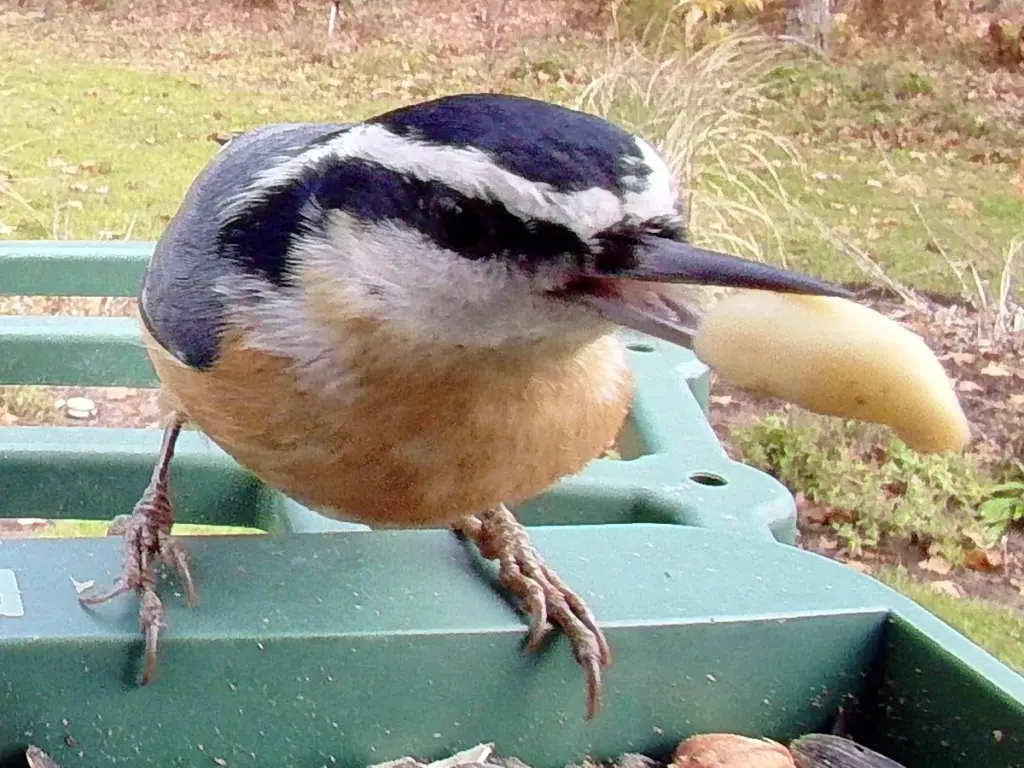
A small, rusty-breasted nuthatch that loves evergreens.
At a glance
- Favorite foods: suet, black oil sunflower seed, peanuts
- Best feeders: suet, tube, hopper
- Plants: pines, spruces, firs
- Habitat: evergreen forests
- Nesting: holes in dead trees
- Seasonality: year-round in the north and West, winter visitor farther south
Best foods
Suet, black oil sunflower seed and peanuts all work.
Best feeders
A suet feeder, tube feeder or hopper feeder near evergreen trees.
Plants that attract
Pines, spruces and firs.
Water and habitat
A shallow birdbath with fresh water.
Nesting and shelter
Red-breasted Nuthatches dig nest holes in dead trees or branches, or use a nest box with a small hole.
Seasonal tips
In some winters, more of them move south to visit feeders.
One practical tip
Put the feeder near evergreen trees.
Fun fact
The Red-breasted Nuthatch smears sticky tree pitch around the entrance of its nest hole.
Shop this bird
HiBird smart feeder
My Amazon shop
As an Amazon Associate, QT Bird earns from qualifying purchases.
Quick checklist
- Suet or sunflower seed
- A suet, tube or hopper feeder
- Evergreens
- Fresh water
QT Bird · qtbird.com/backyard-birds/
Chickadees, titmice & nuthatches
Tufted Titmouse
Baeolophus bicolor
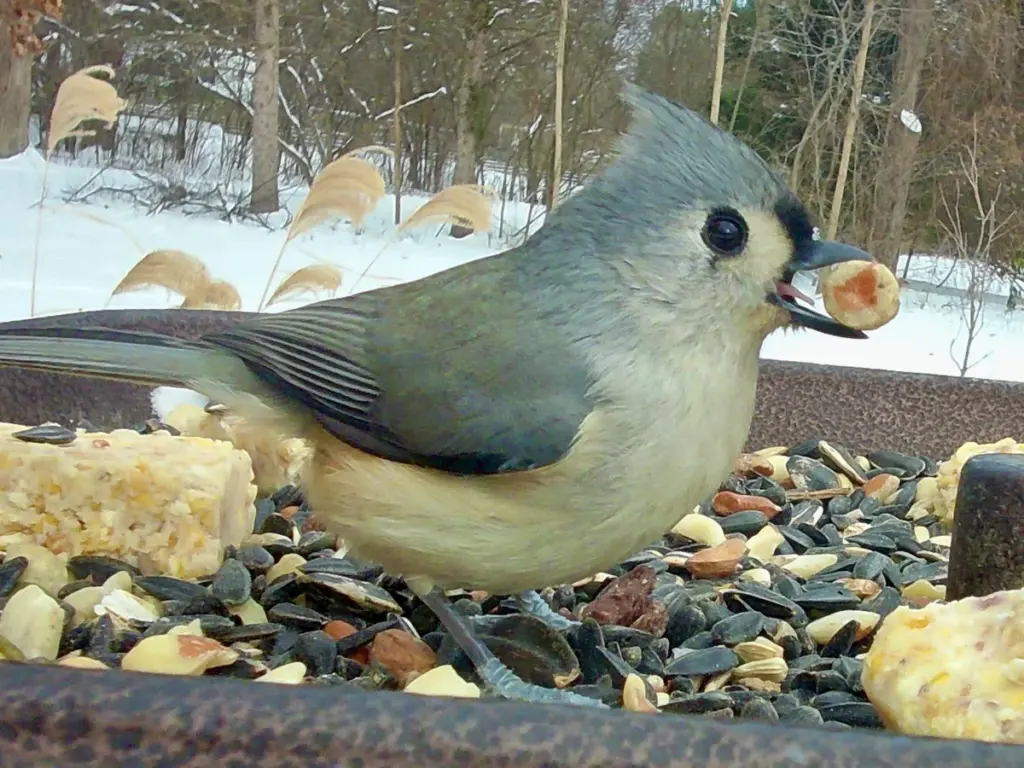
A gray bird with a crest that grabs a seed and takes it away to eat.
At a glance
- Favorite foods: black oil sunflower seed, peanuts, suet
- Best feeders: tube, hopper, suet
- Plants: oaks, beeches, dogwood, native shrubs
- Habitat: woods and wooded yards
- Nesting: old woodpecker holes and nest boxes
- Seasonality: year-round
Best foods
Black oil sunflower seed is the favorite. Titmice also take peanuts, sunflower hearts and suet.
Best feeders
A tube feeder, a hopper feeder or a suet feeder works well, with a perch nearby.
Plants that attract
Oaks, beeches and dogwood, and native shrubs that host caterpillars.
Water and habitat
Keep a birdbath filled with fresh water, and leave some mature trees in the yard.
Nesting and shelter
Titmice nest in tree holes and will use a nest box with a hole about 1 1/4 inches wide.
Seasonal tips
Titmice stay all year, so keep a feeder going in winter.
One practical tip
Hang a feeder near trees. Titmice take one seed at a time and fly to a branch to eat it.
Fun fact
Titmice sometimes line their nests with hair, and they may even pull it from a dog or other animal.
Shop this bird
Feeder and food picks for the Tufted Titmouse will go here once Sara adds her links.
As an Amazon Associate, QT Bird earns from qualifying purchases.
Quick checklist
- Black oil sunflower seed or peanuts
- A tube, hopper or suet feeder
- Mature trees nearby
- Fresh water
QT Bird · qtbird.com/backyard-birds/
Chickadees, titmice & nuthatches
Verdin
Auriparus flaviceps
A tiny, gray desert bird with a yellow face.
Sara’s own photo of the Verdin will go here.
At a glance
- Favorite foods: insects, nectar, suet
- Best feeders: nectar feeder, suet feeder
- Plants: mesquite, creosote and desert shrubs
- Habitat: desert scrub and desert yards
- Nesting: in a ball of thorny twigs in a shrub
- Seasonality: year-round
Best foods
Insects, nectar, suet.
Best feeders
Try nectar feeder, suet feeder.
Plants that attract
Mesquite, creosote and desert shrubs.
Water and habitat
Offer a birdbath with fresh water, and change it often.
Nesting and shelter
In a ball of thorny twigs in a shrub.
Seasonal tips
Year-round.
One practical tip
Offer nectar and a shallow water dish.
Fun fact
The Verdin builds a ball-shaped nest from thorny twigs, with a small side entrance.
Shop this bird
Feeder and food picks for the Verdin will go here once Sara adds her links.
As an Amazon Associate, QT Bird earns from qualifying purchases.
Quick checklist
- Insects
- A nectar feeder
- Mesquite
- Fresh water
QT Bird · qtbird.com/backyard-birds/
Chickadees, titmice & nuthatches
White-breasted Nuthatch
Sitta carolinensis
A small bird that walks head-first down tree trunks.
Sara’s own photo of the White-breasted Nuthatch will go here.
At a glance
- Favorite foods: suet, black oil sunflower seed, peanuts
- Best feeders: suet feeder, tube, hopper
- Plants: oaks, hickories and other mature trees
- Habitat: mature woods and wooded yards
- Nesting: tree cavities
- Seasonality: year-round
Best foods
Suet is a favorite, along with black oil sunflower seed, sunflower hearts and peanuts.
Best feeders
A suet feeder, tube feeder or hopper feeder works well. Nuthatches like to land on the trunk or a feeder near a tree.
Plants that attract
Oaks, hickories and other mature trees with bark that holds insects and seeds.
Water and habitat
Offer a birdbath with fresh water, and keep mature trees in the yard.
Nesting and shelter
Nuthatches nest in tree cavities. Leave dead trees standing when it is safe to do so.
Seasonal tips
Nuthatches visit feeders all winter. Suet is especially welcome in cold weather.
One practical tip
Put a suet feeder on a tree trunk or on a post near trees. Nuthatches go to feeders close to tree trunks.
Fun fact
The nuthatch often climbs down a tree trunk head first, which most other birds do not do.
Shop this bird
Feeder and food picks for the White-breasted Nuthatch will go here once Sara adds her links.
As an Amazon Associate, QT Bird earns from qualifying purchases.
Quick checklist
- Suet or black oil sunflower seed
- A suet, tube or hopper feeder
- Mature trees
- Fresh water
QT Bird · qtbird.com/backyard-birds/
Woodpeckers
Acorn Woodpecker
Melanerpes formicivorus
A clown-faced woodpecker that stores acorns in holes in trees.
Sara’s own photo of the Acorn Woodpecker will go here.
At a glance
- Favorite foods: acorns, suet, peanuts, insects
- Best feeders: suet feeder, peanut feeder
- Plants: oaks
- Habitat: oak woodlands
- Nesting: holes the bird digs in dead trees
- Seasonality: year-round
Best foods
Acorns are the favorite. At feeders, they take suet and peanuts.
Best feeders
A sturdy suet feeder or peanut feeder.
Plants that attract
Oaks, which they depend on.
Water and habitat
A birdbath with fresh water, and nearby oaks.
Nesting and shelter
Acorn Woodpeckers dig nest holes in dead trees and branches.
Seasonal tips
They stay all year in oak country.
One practical tip
Leave oak trees and standing dead wood, where it is safe.
Fun fact
Acorn Woodpeckers store acorns in a “granary tree,” with thousands of small holes.
Shop this bird
Feeder and food picks for the Acorn Woodpecker will go here once Sara adds her links.
As an Amazon Associate, QT Bird earns from qualifying purchases.
Quick checklist
- Suet or peanuts
- A sturdy feeder
- Oak trees
- Fresh water
QT Bird · qtbird.com/backyard-birds/
Woodpeckers
Downy Woodpecker
Dryobates pubescens
A small black-and-white woodpecker that loves suet.
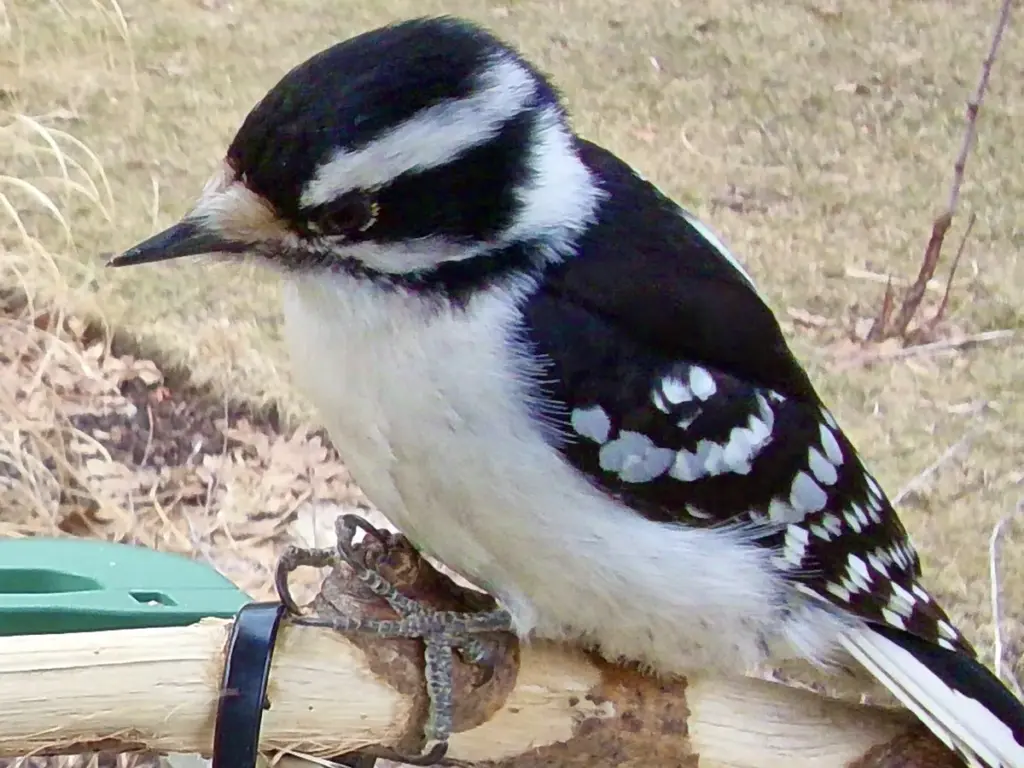
About the Downy Woodpecker
The downy is North America's smallest woodpecker, and one of the easiest to welcome to the yard. It's black and white with a white stripe down its back and a short, stubby bill. Males have a small red patch on the back of the head. The look-alike hairy woodpecker is bigger, with a much longer bill.
Downies climb all over trunks, branches, and even weed stalks, often hanging upside down. In winter they join the chickadees and nuthatches as they make their rounds. Listen for a quiet "pik" and a rattling call that runs down the scale.
At a glance
- Favorite foods: suet, black oil sunflower seed, peanuts
- Best feeders: suet feeder, tube, hopper
- Plants: trees with dead branches, native shrubs
- Habitat: woods, orchards and wooded yards
- Nesting: holes the bird digs in dead wood
- Seasonality: year-round
Best foods
Suet is the favorite. Downy Woodpeckers also eat black oil sunflower seed and peanuts.
Best feeders
Use a suet feeder, with a tail prop if you can. A tube or hopper feeder also works.
Plants that attract
Trees with some dead wood, and native plants that bring insects.
Water and habitat
Offer a birdbath, and leave a dead tree or branch standing if it is safe.
Nesting and shelter
Downy Woodpeckers dig their own nest holes in dead wood. They do not use nest boxes much.
Seasonal tips
Suet is especially helpful in winter, when insects are hard to find.
One practical tip
Offer suet year-round, and clean the feeder often so the suet stays fresh.
Fun fact
The Downy Woodpecker is the smallest woodpecker in North America.
Shop this bird
Feeder and food picks for the Downy Woodpecker will go here once Sara adds her links.
As an Amazon Associate, QT Bird earns from qualifying purchases.
Quick checklist
- Suet
- A suet feeder
- A dead branch or tree, if safe
- Fresh water
Facts checked against the National Audubon Society field guide.
QT Bird · qtbird.com/backyard-birds/
Woodpeckers
Gila Woodpecker
Melanerpes uropygialis
A desert woodpecker that nests in saguaro cactus.
Sara’s own photo of the Gila Woodpecker will go here.
At a glance
- Favorite foods: suet, fruit, nectar, insects
- Best feeders: suet feeder, nectar feeder, platform
- Plants: saguaro and other large cactus, mesquite
- Habitat: desert scrub and desert yards
- Nesting: in a hole in a saguaro cactus
- Seasonality: year-round
Best foods
Suet, fruit, nectar, insects.
Best feeders
Try suet feeder, nectar feeder, platform.
Plants that attract
Saguaro and other large cactus, mesquite.
Water and habitat
Offer a birdbath with fresh water, and change it often.
Nesting and shelter
In a hole in a saguaro cactus.
Seasonal tips
Year-round.
One practical tip
Offer suet and orange halves, and a shallow dish of water.
Fun fact
Gila Woodpeckers dig their nest holes in saguaro cactus.
Shop this bird
Feeder and food picks for the Gila Woodpecker will go here once Sara adds her links.
As an Amazon Associate, QT Bird earns from qualifying purchases.
Quick checklist
- Suet
- A suet feeder
- Saguaro and other large cactus
- Fresh water
QT Bird · qtbird.com/backyard-birds/
Woodpeckers
Golden-fronted Woodpecker
Melanerpes aurifrons
A zebra-backed woodpecker with a golden patch above the bill, found in Texas.
Sara’s own photo of the Golden-fronted Woodpecker will go here.
At a glance
- Favorite foods: suet, fruit, nectar, insects
- Best feeders: suet feeder, platform feeder, nectar feeder
- Plants: mesquite, oaks and fruiting trees
- Habitat: mesquite woods and yards
- Nesting: in a hole it digs in a dead tree or large cactus
- Seasonality: year-round
Best foods
Suet, fruit, nectar, insects.
Best feeders
Try suet feeder, platform feeder, nectar feeder.
Plants that attract
Mesquite, oaks and fruiting trees.
Water and habitat
Offer a birdbath with fresh water, and change it often.
Nesting and shelter
In a hole it digs in a dead tree or large cactus.
Seasonal tips
Year-round.
One practical tip
Offer suet, orange halves and a dish of water.
Fun fact
The Golden-fronted Woodpecker will drink from hummingbird feeders.
Shop this bird
Feeder and food picks for the Golden-fronted Woodpecker will go here once Sara adds her links.
As an Amazon Associate, QT Bird earns from qualifying purchases.
Quick checklist
- Suet
- A suet feeder
- Mesquite
- Fresh water
QT Bird · qtbird.com/backyard-birds/
Woodpeckers
Hairy Woodpecker
Dryobates villosus
A black-and-white woodpecker like the Downy, but bigger, with a long bill.
Sara’s own photo of the Hairy Woodpecker will go here.
At a glance
- Favorite foods: suet, peanuts, black oil sunflower seed
- Best feeders: suet feeder, peanut feeder, hopper
- Plants: mature trees, including some dead wood
- Habitat: woods and large wooded yards
- Nesting: holes the bird digs in trees
- Seasonality: year-round
Best foods
Suet is the favorite. Hairy Woodpeckers also eat peanuts and black oil sunflower seed.
Best feeders
Use a sturdy suet feeder, a peanut feeder or a hopper feeder. This is a bigger bird than the Downy, so give it room.
Plants that attract
Mature trees, and a dead tree or branch if it is safe to leave one standing.
Water and habitat
Offer a birdbath with fresh water, and keep large trees nearby.
Nesting and shelter
Hairy Woodpeckers dig their own nest holes in trees, so they do not use nest boxes much.
Seasonal tips
Suet is especially welcome in winter, when insects are hard to find.
One practical tip
If you see a Downy-like woodpecker that is bigger, check the bill. It is the easiest way to tell the two apart.
Fun fact
A Hairy Woodpecker has a bill almost as long as its head, while the Downy’s bill is much shorter.
Shop this bird
Feeder and food picks for the Hairy Woodpecker will go here once Sara adds her links.
As an Amazon Associate, QT Bird earns from qualifying purchases.
Quick checklist
- Suet or peanuts
- A sturdy suet or peanut feeder
- Mature trees
- Fresh water
QT Bird · qtbird.com/backyard-birds/
Woodpeckers
Ladder-backed Woodpecker
Dryobates scalaris
A small desert woodpecker with a barred, ladder-like back.
Sara’s own photo of the Ladder-backed Woodpecker will go here.
At a glance
- Favorite foods: suet, peanuts, insects
- Best feeders: suet feeder
- Plants: mesquite, yucca and cactus
- Habitat: desert scrub and dry woods
- Nesting: in a hole it digs in a dead branch or cactus
- Seasonality: year-round
Best foods
Suet, peanuts, insects.
Best feeders
Try suet feeder.
Plants that attract
Mesquite, yucca and cactus.
Water and habitat
Offer a birdbath with fresh water, and change it often.
Nesting and shelter
In a hole it digs in a dead branch or cactus.
Seasonal tips
Year-round.
One practical tip
Offer suet in a shaded spot.
Fun fact
The Ladder-backed Woodpecker is named for the black and white bars on its back.
Shop this bird
Feeder and food picks for the Ladder-backed Woodpecker will go here once Sara adds her links.
As an Amazon Associate, QT Bird earns from qualifying purchases.
Quick checklist
- Suet
- A suet feeder
- Mesquite
- Fresh water
QT Bird · qtbird.com/backyard-birds/
Woodpeckers
Northern Flicker
Colaptes auratus
A spotted woodpecker that often feeds on the ground, hunting for ants.
Sara’s own photo of the Northern Flicker will go here.
At a glance
- Favorite foods: ants and other insects, suet, peanuts
- Best feeders: suet feeder, ground or platform
- Plants: berry shrubs and mature trees
- Habitat: open woods, edges and lawns
- Nesting: a hole in a dead tree or branch
- Seasonality: year-round in much of the region; many migrate north
Best foods
Flickers eat many ants and beetles. At feeders they take suet, and sometimes peanuts.
Best feeders
Use a sturdy suet feeder with a tail prop, or put suet on a platform. Flickers also feed on the lawn.
Plants that attract
Berry shrubs such as dogwood and sumac, and mature trees.
Water and habitat
Offer a birdbath with fresh water, and leave an open lawn where they can hunt ants.
Nesting and shelter
Flickers dig nest holes in dead trees. They will use a large nest box filled with wood chips.
Seasonal tips
Many flickers leave in fall and return in spring, but some stay all winter and love suet.
One practical tip
Leave a dead tree standing when it is safe, and skip the lawn chemicals.
Fun fact
Unlike most woodpeckers, flickers often feed on the ground.
Shop this bird
Feeder and food picks for the Northern Flicker will go here once Sara adds her links.
As an Amazon Associate, QT Bird earns from qualifying purchases.
Quick checklist
- Suet
- A sturdy suet feeder
- A lawn without chemicals
- A dead tree, if safe
QT Bird · qtbird.com/backyard-birds/
Woodpeckers
Nuttall’s Woodpecker
Dryobates nuttallii
A small, black and white woodpecker of California oak woods.
Sara’s own photo of the Nuttall’s Woodpecker will go here.
At a glance
- Favorite foods: suet, peanuts, insects
- Best feeders: suet feeder
- Plants: oaks and native trees
- Habitat: oak woods and streamside trees
- Nesting: in a hole it digs in a dead branch
- Seasonality: year-round
Best foods
Suet, peanuts, insects.
Best feeders
Try suet feeder.
Plants that attract
Oaks and native trees.
Water and habitat
Offer a birdbath with fresh water, and change it often.
Nesting and shelter
In a hole it digs in a dead branch.
Seasonal tips
Year-round.
One practical tip
Offer suet near oaks.
Fun fact
Nuttall’s Woodpecker lives almost entirely in California.
Shop this bird
Feeder and food picks for the Nuttall’s Woodpecker will go here once Sara adds her links.
As an Amazon Associate, QT Bird earns from qualifying purchases.
Quick checklist
- Suet
- A suet feeder
- Oaks and native trees
- Fresh water
QT Bird · qtbird.com/backyard-birds/
Woodpeckers
Pileated Woodpecker
Dryocopus pileatus
A big black woodpecker with a bright red crest.
Sara’s own photo of the Pileated Woodpecker will go here.
At a glance
- Favorite foods: carpenter ants, suet, fruit and nuts
- Best feeders: large, sturdy suet feeder
- Plants: mature trees, fruiting shrubs
- Habitat: mature forest and big wooded yards
- Nesting: a big hole in a dead tree
- Seasonality: year-round
Best foods
Pileated Woodpeckers eat carpenter ants. At feeders they take suet, and they also eat fruit and nuts.
Best feeders
Use a big, sturdy suet feeder, such as a log or a large cage feeder, and mount it on a tree trunk or a stout post.
Plants that attract
Mature trees, and fruiting plants such as dogwood and elderberry.
Water and habitat
Offer a large birdbath with fresh water, and keep mature trees close.
Nesting and shelter
Pileated Woodpeckers dig big nest holes in dead trees. They do not use ordinary nest boxes.
Seasonal tips
Offer suet all year, especially in winter.
One practical tip
Leave dead trees and stumps standing, where it is safe. They are the best pantry for this bird.
Fun fact
A Pileated Woodpecker can dig a hole that is oval or rectangular and large enough to see from a distance.
Shop this bird
Feeder and food picks for the Pileated Woodpecker will go here once Sara adds her links.
As an Amazon Associate, QT Bird earns from qualifying purchases.
Quick checklist
- Suet
- A big, sturdy suet feeder
- Mature trees and dead wood
- Fresh water
QT Bird · qtbird.com/backyard-birds/
Woodpeckers
Red-bellied Woodpecker
Melanerpes carolinus
A medium woodpecker with a zebra back and a red cap.
Sara’s own photo of the Red-bellied Woodpecker will go here.
At a glance
- Favorite foods: suet, peanuts, sunflower seed, fruit
- Best feeders: suet feeder, peanut feeder, platform
- Plants: oaks, native fruiting trees
- Habitat: woods and wooded yards
- Nesting: holes the bird digs in dead trees
- Seasonality: year-round
Best foods
Suet and peanuts are favorites. Red-bellied Woodpeckers also take sunflower seed, oranges and other fruit.
Best feeders
A suet feeder, a peanut feeder or a sturdy platform feeder works well.
Plants that attract
Oaks and native trees that bear fruit and nuts.
Water and habitat
Offer a birdbath, and leave mature trees and some dead wood in the yard.
Nesting and shelter
Red-bellied Woodpeckers dig their own nest holes in dead trees or branches.
Seasonal tips
They visit feeders all year and rely on suet and peanuts in winter.
One practical tip
Put out peanuts or suet and be patient. These woodpeckers are shy and often take a bite and fly away.
Fun fact
The Red-bellied Woodpecker has a tongue that can reach about 2 inches beyond its bill, which helps it grab insects from cracks in bark.
Shop this bird
Feeder and food picks for the Red-bellied Woodpecker will go here once Sara adds her links.
As an Amazon Associate, QT Bird earns from qualifying purchases.
Quick checklist
- Suet or peanuts
- A suet or peanut feeder
- Mature trees
- Fresh water
QT Bird · qtbird.com/backyard-birds/
Woodpeckers
Red-headed Woodpecker
Melanerpes erythrocephalus
A striking woodpecker with a full red head and big white patches.
Sara’s own photo of the Red-headed Woodpecker will go here.
At a glance
- Favorite foods: acorns, suet, peanuts, fruit
- Best feeders: suet feeder, peanut feeder, platform
- Plants: oaks and beeches
- Habitat: open woods and large wooded yards
- Nesting: in a hole in a dead tree
- Seasonality: year-round in the South, spring to fall farther north
Best foods
Acorns, suet, peanuts, fruit.
Best feeders
Try suet feeder, peanut feeder, platform.
Plants that attract
Oaks and beeches.
Water and habitat
Offer a birdbath with fresh water, and change it often.
Nesting and shelter
In a hole in a dead tree.
Seasonal tips
Year-round in the South, spring to fall farther north.
One practical tip
Leave a dead tree standing where it is safe, and offer peanuts and suet.
Fun fact
Red-headed Woodpeckers store food in cracks in trees, and sometimes cover it up.
Shop this bird
Feeder and food picks for the Red-headed Woodpecker will go here once Sara adds her links.
As an Amazon Associate, QT Bird earns from qualifying purchases.
Quick checklist
- Acorns
- A suet feeder
- Oaks and beeches
- Fresh water
QT Bird · qtbird.com/backyard-birds/
Woodpeckers
Yellow-bellied Sapsucker
Sphyrapicus varius
A woodpecker that drills neat rows of small holes in trees to drink sap.
Sara’s own photo of the Yellow-bellied Sapsucker will go here.
At a glance
- Favorite foods: tree sap, suet, fruit
- Best feeders: suet feeder
- Plants: birches, maples and fruit trees
- Habitat: woods and wooded yards
- Nesting: in a hole in a dead tree, far north
- Seasonality: winter in much of the country
Best foods
Tree sap, suet, fruit.
Best feeders
Try suet feeder.
Plants that attract
Birches, maples and fruit trees.
Water and habitat
Offer a birdbath with fresh water, and change it often.
Nesting and shelter
In a hole in a dead tree, far north.
Seasonal tips
Winter in much of the country.
One practical tip
Offer suet and orange halves in winter.
Fun fact
Sapsuckers drill rows of small holes in tree bark, and hummingbirds and other birds also drink from them.
Shop this bird
Feeder and food picks for the Yellow-bellied Sapsucker will go here once Sara adds her links.
As an Amazon Associate, QT Bird earns from qualifying purchases.
Quick checklist
- Tree sap
- A suet feeder
- Birches
- Fresh water
QT Bird · qtbird.com/backyard-birds/
Doves
Band-tailed Pigeon
Patagioenas fasciata
A large, gray pigeon of western forests.
Sara’s own photo of the Band-tailed Pigeon will go here.
At a glance
- Favorite foods: sunflower seed, cracked corn, fruit and acorns
- Best feeders: large platform feeder, ground tray
- Plants: oaks, madrone and berry-bearing trees
- Habitat: mountain and coastal forests
- Nesting: a loose platform of twigs in a tree
- Seasonality: year-round in much of the West
Best foods
Sunflower seed, cracked corn, fruit and acorns.
Best feeders
Try large platform feeder, ground tray.
Plants that attract
Oaks, madrone and berry-bearing trees.
Water and habitat
Offer a birdbath with fresh water, and change it often.
Nesting and shelter
A loose platform of twigs in a tree.
Seasonal tips
Year-round in much of the West.
One practical tip
Use a sturdy platform feeder, since these pigeons are large.
Fun fact
The Band-tailed Pigeon is the closest living relative of the extinct Passenger Pigeon.
Shop this bird
Feeder and food picks for the Band-tailed Pigeon will go here once Sara adds her links.
As an Amazon Associate, QT Bird earns from qualifying purchases.
Quick checklist
- Sunflower seed
- A large platform feeder
- Oaks
- Fresh water
QT Bird · qtbird.com/backyard-birds/
Doves
Eurasian Collared-Dove
Streptopelia decaocto
A pale gray dove with a black collar that has spread across the country.
Sara’s own photo of the Eurasian Collared-Dove will go here.
At a glance
- Favorite foods: cracked corn, millet, sunflower seed
- Best feeders: ground tray, platform feeder
- Plants: evergreens and trees for nesting
- Habitat: towns, farms and yards
- Nesting: a thin platform of twigs in trees
- Seasonality: year-round
Best foods
Cracked corn, millet, sunflower seed.
Best feeders
Try ground tray, platform feeder.
Plants that attract
Evergreens and trees for nesting.
Water and habitat
Offer a birdbath with fresh water, and change it often.
Nesting and shelter
A thin platform of twigs in trees.
Seasonal tips
Year-round.
One practical tip
Offer seed on a tray close to the ground.
Fun fact
This dove reached Florida from the Bahamas in the 1980s, and has since spread across the continent.
Shop this bird
Feeder and food picks for the Eurasian Collared-Dove will go here once Sara adds her links.
As an Amazon Associate, QT Bird earns from qualifying purchases.
Quick checklist
- Cracked corn
- A ground tray
- Evergreens and trees for nesting
- Fresh water
QT Bird · qtbird.com/backyard-birds/
Doves
Inca Dove
Columbina inca
A tiny, scaly-looking dove of the Southwest and Texas.
Sara’s own photo of the Inca Dove will go here.
At a glance
- Favorite foods: small seeds such as millet and cracked corn
- Best feeders: ground tray
- Plants: mesquite and native shrubs
- Habitat: towns and desert edges
- Nesting: a flimsy nest of twigs in a tree or shrub
- Seasonality: year-round
Best foods
Small seeds such as millet and cracked corn.
Best feeders
Try ground tray.
Plants that attract
Mesquite and native shrubs.
Water and habitat
Offer a birdbath with fresh water, and change it often.
Nesting and shelter
A flimsy nest of twigs in a tree or shrub.
Seasonal tips
Year-round.
One practical tip
Offer small seed on the ground in a shaded spot.
Fun fact
Inca Doves sometimes huddle in piles when it is cold.
Shop this bird
Feeder and food picks for the Inca Dove will go here once Sara adds her links.
As an Amazon Associate, QT Bird earns from qualifying purchases.
Quick checklist
- Small seeds such as millet and cracked corn
- A ground tray
- Mesquite and native shrubs
- Fresh water
QT Bird · qtbird.com/backyard-birds/
Doves
Mourning Dove
Zenaida macroura
A gentle, soft-colored bird that feeds on the ground.
Sara’s own photo of the Mourning Dove will go here.
At a glance
- Favorite foods: small seeds, millet, cracked corn, sunflower seed
- Best feeders: ground tray, platform feeder
- Plants: native grasses and seed-bearing plants
- Habitat: open areas with trees for perching
- Nesting: a thin platform of twigs in a tree or shrub
- Seasonality: year-round in much of Michigan
Best foods
Mourning Doves eat small seeds. Offer millet, cracked corn and black oil sunflower seed.
Best feeders
Doves feed on the ground, so use a ground tray or a platform feeder. Tube feeders are too small for them.
Plants that attract
Native grasses and seed-bearing plants, plus evergreens and shrubs for nesting.
Water and habitat
Doves like a birdbath at ground level or a shallow dish with fresh water.
Nesting and shelter
Mourning Doves build a thin platform of twigs in trees or shrubs. Evergreens are a good place for nests.
Seasonal tips
In winter, scatter seed on a cleared patch of ground or a tray after snow.
One practical tip
Put out seed on a tray close to the ground, and sweep up old seed so it does not get damp.
Fun fact
Doves can drink with their heads down, sucking up water, which most birds cannot do.
Shop this bird
Feeder and food picks for the Mourning Dove will go here once Sara adds her links.
As an Amazon Associate, QT Bird earns from qualifying purchases.
Quick checklist
- Millet, cracked corn or sunflower seed
- A ground tray or platform feeder
- Evergreens or shrubs
- A shallow water dish
QT Bird · qtbird.com/backyard-birds/
Doves
Rock Pigeon
Columba livia
The familiar city pigeon, common in towns.
Sara’s own photo of the Rock Pigeon will go here.
At a glance
- Favorite foods: cracked corn, millet, sunflower seed
- Best feeders: ground tray, platform feeder
- Plants: buildings and ledges, rather than plants
- Habitat: towns, farms and parks
- Nesting: on ledges and in buildings
- Seasonality: year-round
Best foods
Cracked corn, millet, sunflower seed.
Best feeders
Try ground tray, platform feeder.
Plants that attract
Buildings and ledges, rather than plants.
Water and habitat
Offer a birdbath with fresh water, and change it often.
Nesting and shelter
On ledges and in buildings.
Seasonal tips
Year-round.
One practical tip
If you prefer not to feed pigeons, use tube feeders and avoid spilled seed.
Fun fact
Rock Pigeons can find their way home from long distances.
Shop this bird
Feeder and food picks for the Rock Pigeon will go here once Sara adds her links.
As an Amazon Associate, QT Bird earns from qualifying purchases.
Quick checklist
- Cracked corn
- A ground tray
- Buildings and ledges
- Fresh water
QT Bird · qtbird.com/backyard-birds/
Doves
Spotted Dove
Streptopelia chinensis
A pinkish-brown dove with a spotted collar.
Sara’s own photo of the Spotted Dove will go here.
At a glance
- Favorite foods: cracked corn, millet, sunflower seed
- Best feeders: ground tray, platform feeder
- Plants: trees and shrubs for nesting
- Habitat: towns, parks and farms
- Nesting: a thin platform of twigs in a tree
- Seasonality: year-round
Best foods
Cracked corn, millet, sunflower seed.
Best feeders
Try ground tray, platform feeder.
Plants that attract
Trees and shrubs for nesting.
Water and habitat
Offer a birdbath with fresh water, and change it often.
Nesting and shelter
A thin platform of twigs in a tree.
Seasonal tips
Year-round.
One practical tip
Offer seed on a tray close to the ground.
Fun fact
The Spotted Dove has a black collar covered with white spots.
Shop this bird
Feeder and food picks for the Spotted Dove will go here once Sara adds her links.
As an Amazon Associate, QT Bird earns from qualifying purchases.
Quick checklist
- Cracked corn
- A ground tray
- Trees and shrubs for nesting
- Fresh water
QT Bird · qtbird.com/backyard-birds/
Doves
White-winged Dove
Zenaida asiatica
A dove with a white stripe on each wing, common in the Southwest.
Sara’s own photo of the White-winged Dove will go here.
At a glance
- Favorite foods: sunflower seed, millet, cracked corn
- Best feeders: ground tray, platform feeder
- Plants: mesquite, cactus and native trees
- Habitat: deserts, towns and yards
- Nesting: a thin platform of twigs in a tree or cactus
- Seasonality: year-round in the south
Best foods
Sunflower seed, millet, cracked corn.
Best feeders
Try ground tray, platform feeder.
Plants that attract
Mesquite, cactus and native trees.
Water and habitat
Offer a birdbath with fresh water, and change it often.
Nesting and shelter
A thin platform of twigs in a tree or cactus.
Seasonal tips
Year-round in the south.
One practical tip
Offer seed and water on the ground or on a tray.
Fun fact
White-winged Doves feed on the fruit of saguaro cactus.
Shop this bird
Feeder and food picks for the White-winged Dove will go here once Sara adds her links.
As an Amazon Associate, QT Bird earns from qualifying purchases.
Quick checklist
- Sunflower seed
- A ground tray
- Mesquite
- Fresh water
QT Bird · qtbird.com/backyard-birds/
Doves
Zebra Dove
Geopelia striata
A small, barred dove that is very common in Hawaii.
Sara’s own photo of the Zebra Dove will go here.
At a glance
- Favorite foods: small seeds, cracked corn
- Best feeders: ground tray
- Plants: grasses and trees for nesting
- Habitat: towns, parks and lawns
- Nesting: a thin platform of twigs in a tree or shrub
- Seasonality: year-round
Best foods
Small seeds, cracked corn.
Best feeders
Try ground tray.
Plants that attract
Grasses and trees for nesting.
Water and habitat
Offer a birdbath with fresh water, and change it often.
Nesting and shelter
A thin platform of twigs in a tree or shrub.
Seasonal tips
Year-round.
One practical tip
Offer small seed on a tray close to the ground.
Fun fact
The Zebra Dove has fine black and white bars that look like zebra stripes.
Shop this bird
Feeder and food picks for the Zebra Dove will go here once Sara adds her links.
As an Amazon Associate, QT Bird earns from qualifying purchases.
Quick checklist
- Small seeds
- A ground tray
- Grasses and trees for nesting
- Fresh water
QT Bird · qtbird.com/backyard-birds/
Robins & thrushes
American Robin
Turdus migratorius
A familiar lawn bird that does not eat seed, but likes mealworms and fruit.
Sara’s own photo of the American Robin will go here.
At a glance
- Favorite foods: earthworms, insects, fruit, mealworms
- Best feeders: platform feeder or open tray
- Plants: serviceberry, dogwood, crabapple, winterberry
- Habitat: lawns and garden beds with open soil
- Nesting: a cup of grass and mud on a ledge or in a tree
- Seasonality: spring to fall, and some stay all winter
Best foods
Robins do not usually eat birdseed. Offer mealworms, chopped apple, raisins and berries, and leave a chemical-free lawn for the worms.
Best feeders
Use an open platform feeder or a shallow tray. Robins do not like feeders with small perches or ports.
Plants that attract
Serviceberry, dogwood, crabapple and winterberry give robins fruit, and they are good for other birds too.
Water and habitat
Robins love a birdbath for drinking and splashing. A shallow dish with fresh water helps.
Nesting and shelter
Robins build a cup of grass and mud on a ledge, a sturdy branch or a nesting shelf. An open-front nest platform under an overhang can help.
Seasonal tips
In spring, robins hunt for worms on damp lawns. In winter, the robins that stay in Michigan turn to fruit.
One practical tip
Skip the lawn chemicals. Robins eat worms and bugs from the lawn, so a chemical-free lawn is the best feeder.
Fun fact
Robins can find worms by sight, tilting their heads to look instead of listening.
Shop this bird
Feeder and food picks for the American Robin will go here once Sara adds her links.
As an Amazon Associate, QT Bird earns from qualifying purchases.
Quick checklist
- Mealworms or fruit on an open tray
- A shallow birdbath
- Chemical-free lawn
- Fruiting shrubs
QT Bird · qtbird.com/backyard-birds/
Robins & thrushes
Eastern Bluebird
Sialia sialis
A blue and orange thrush that likes mealworms and a nest box in an open yard.
Sara’s own photo of the Eastern Bluebird will go here.
At a glance
- Favorite foods: mealworms, fruit, suet bits (not seed)
- Best feeders: open platform or bluebird feeder
- Plants: native berry plants such as dogwood, holly and sumac
- Habitat: open lawns and fields with a few trees
- Nesting: nest boxes, with a 1 1/2 inch hole
- Seasonality: year-round in the Southeast, spring to fall farther north
Best foods
Bluebirds do not eat birdseed. Offer mealworms, and fruit such as raisins and berries, on an open tray.
Best feeders
Use an open platform feeder or a feeder made for bluebirds, with a hole big enough for them to enter.
Plants that attract
Native berry plants such as dogwood, holly and sumac. Short grass with a few trees to perch on helps too.
Water and habitat
Bluebirds love a birdbath, especially a shallow one. Add moving water if you can.
Nesting and shelter
Put up a nest box with a 1 1/2 inch entrance hole, on a pole in an open area, and keep it clean. Check the North American Bluebird Society for plans.
Seasonal tips
Put the nest box up by late winter, before nesting starts.
One practical tip
Place the nest box on a smooth pole in a mowed, open area with a tree or two nearby.
Fun fact
The bluebird’s blue is not a pigment. It comes from the tiny structure of the feathers.
Shop this bird
Feeder and food picks for the Eastern Bluebird will go here once Sara adds her links.
As an Amazon Associate, QT Bird earns from qualifying purchases.
Quick checklist
- Mealworms or fruit on an open tray
- A nest box with a 1 1/2 inch hole
- An open lawn
- Fresh water
QT Bird · qtbird.com/backyard-birds/
Robins & thrushes
Hermit Thrush
Catharus guttatus
A quiet, spotted thrush with a rusty tail and a flute-like song.
Sara’s own photo of the Hermit Thrush will go here.
At a glance
- Favorite foods: berries, mealworms, raisins
- Best feeders: open platform
- Plants: dogwood, holly, juniper and other berry plants
- Habitat: woods and shady yards
- Nesting: on or near the ground in woods
- Seasonality: winter in most of the country, summer in the north and mountains
Best foods
Berries, mealworms, raisins.
Best feeders
Try open platform.
Plants that attract
Dogwood, holly, juniper and other berry plants.
Water and habitat
Offer a birdbath with fresh water, and change it often.
Nesting and shelter
On or near the ground in woods.
Seasonal tips
Winter in most of the country, summer in the north and mountains.
One practical tip
Offer fruit and mealworms on a low platform in winter.
Fun fact
The Hermit Thrush is the state bird of Vermont.
Shop this bird
Feeder and food picks for the Hermit Thrush will go here once Sara adds her links.
As an Amazon Associate, QT Bird earns from qualifying purchases.
Quick checklist
- Berries
- A open platform
- Dogwood
- Fresh water
QT Bird · qtbird.com/backyard-birds/
Robins & thrushes
Mountain Bluebird
Sialia currucoides
A sky-blue bluebird of open country in the West.
Sara’s own photo of the Mountain Bluebird will go here.
At a glance
- Favorite foods: mealworms, fruit
- Best feeders: open platform, bluebird feeder
- Plants: native grasses and shrubs with berries
- Habitat: open meadows and rangeland
- Nesting: in a nest box or cavity, with a 1 1/2 inch hole
- Seasonality: spring to fall in the mountains; winters in the lowlands
Best foods
Mealworms, fruit.
Best feeders
Try open platform, bluebird feeder.
Plants that attract
Native grasses and shrubs with berries.
Water and habitat
Offer a birdbath with fresh water, and change it often.
Nesting and shelter
In a nest box or cavity, with a 1 1/2 inch hole.
Seasonal tips
Spring to fall in the mountains; winters in the lowlands.
One practical tip
Put the nest box in an open area on a pole.
Fun fact
The Mountain Bluebird is the state bird of Idaho and Nevada.
Shop this bird
Feeder and food picks for the Mountain Bluebird will go here once Sara adds her links.
As an Amazon Associate, QT Bird earns from qualifying purchases.
Quick checklist
- Mealworms
- A open platform
- Native grasses and shrubs with berries
- Fresh water
QT Bird · qtbird.com/backyard-birds/
Robins & thrushes
Townsend’s Solitaire
Myadestes townsendi
A slim, gray thrush that guards a juniper tree in winter.
Sara’s own photo of the Townsend’s Solitaire will go here.
At a glance
- Favorite foods: juniper berries, other berries
- Best feeders: open platform with fruit
- Plants: junipers and other berry plants
- Habitat: mountain forests and juniper slopes
- Nesting: on the ground, under a bank or log
- Seasonality: year-round in the mountains, winter lower down
Best foods
Juniper berries, other berries.
Best feeders
Try open platform with fruit.
Plants that attract
Junipers and other berry plants.
Water and habitat
Offer a birdbath with fresh water, and change it often.
Nesting and shelter
On the ground, under a bank or log.
Seasonal tips
Year-round in the mountains, winter lower down.
One practical tip
Plant junipers, and offer fruit on a low platform.
Fun fact
A Townsend’s Solitaire may guard a juniper tree through the winter.
Shop this bird
Feeder and food picks for the Townsend’s Solitaire will go here once Sara adds her links.
As an Amazon Associate, QT Bird earns from qualifying purchases.
Quick checklist
- Juniper berries
- A open platform with fruit
- Junipers and other berry plants
- Fresh water
QT Bird · qtbird.com/backyard-birds/
Robins & thrushes
Varied Thrush
Ixoreus naevius
A dark, orange-banded thrush of the Pacific Northwest.
Sara’s own photo of the Varied Thrush will go here.
At a glance
- Favorite foods: berries, fruit, mealworms, suet
- Best feeders: open platform, suet feeder
- Plants: native berry shrubs
- Habitat: damp evergreen forests
- Nesting: in a cup in an evergreen
- Seasonality: winter in many yards
Best foods
Berries, fruit, mealworms, suet.
Best feeders
Try open platform, suet feeder.
Plants that attract
Native berry shrubs.
Water and habitat
Offer a birdbath with fresh water, and change it often.
Nesting and shelter
In a cup in an evergreen.
Seasonal tips
Winter in many yards.
One practical tip
Offer fruit and suet on a low platform in winter.
Fun fact
A Varied Thrush sings a long, eerie whistle, then pauses and sings again on a different pitch.
Shop this bird
Feeder and food picks for the Varied Thrush will go here once Sara adds her links.
As an Amazon Associate, QT Bird earns from qualifying purchases.
Quick checklist
- Berries
- A open platform
- Native berry shrubs
- Fresh water
QT Bird · qtbird.com/backyard-birds/
Robins & thrushes
Western Bluebird
Sialia mexicana
A blue and rust-colored bluebird of open woods in the West.
Sara’s own photo of the Western Bluebird will go here.
At a glance
- Favorite foods: mealworms, fruit, suet bits (not seed)
- Best feeders: open platform or bluebird feeder
- Plants: berry shrubs and oaks
- Habitat: open woods and meadows
- Nesting: nest boxes, with a 1 1/2 inch hole
- Seasonality: year-round in much of the West
Best foods
Bluebirds do not eat birdseed. Offer mealworms and fruit such as raisins and berries on an open tray.
Best feeders
An open platform or a bluebird feeder.
Plants that attract
Berry shrubs such as elderberry, and oaks and other trees for perches.
Water and habitat
A shallow birdbath, especially with moving water.
Nesting and shelter
Put up a nest box with a 1 1/2 inch entrance hole on a pole in an open area, and keep it clean.
Seasonal tips
Put the nest box up in late winter, before nesting starts.
One practical tip
Place the box in a mowed, open area with a tree or two nearby.
Fun fact
Western Bluebirds sometimes have young from earlier broods help at the nest.
Shop this bird
Feeder and food picks for the Western Bluebird will go here once Sara adds her links.
As an Amazon Associate, QT Bird earns from qualifying purchases.
Quick checklist
- Mealworms or fruit on an open tray
- A nest box with a 1 1/2 inch hole
- An open lawn or meadow
- Fresh water
QT Bird · qtbird.com/backyard-birds/
Robins & thrushes
Wood Thrush
Hylocichla mustelina
A shy woodland thrush with a rich, flute-like song.
Sara’s own photo of the Wood Thrush will go here.
At a glance
- Favorite foods: mealworms, berries, insects
- Best feeders: open platform, near woods
- Plants: dogwood, spicebush and shrubs in shady yards
- Habitat: shady woods and large yards
- Nesting: in a cup in a tree or shrub
- Seasonality: spring to early fall
Best foods
Mealworms, berries, insects.
Best feeders
Try open platform, near woods.
Plants that attract
Dogwood, spicebush and shrubs in shady yards.
Water and habitat
Offer a birdbath with fresh water, and change it often.
Nesting and shelter
In a cup in a tree or shrub.
Seasonal tips
Spring to early fall.
One practical tip
Keep shady, leafy corners with leaf litter.
Fun fact
A Wood Thrush can sing two notes at the same time.
Shop this bird
Feeder and food picks for the Wood Thrush will go here once Sara adds her links.
As an Amazon Associate, QT Bird earns from qualifying purchases.
Quick checklist
- Mealworms
- A open platform
- Dogwood
- Fresh water
QT Bird · qtbird.com/backyard-birds/
Sparrows & juncos
Abert’s Towhee
Melozone aberti
A shy, brown towhee of shady desert streamsides.
Sara’s own photo of the Abert’s Towhee will go here.
At a glance
- Favorite foods: millet, sunflower seed, cracked corn
- Best feeders: ground tray
- Plants: mesquite, willows and dense streamside shrubs
- Habitat: shady desert thickets and streamsides
- Nesting: in a cup in a dense shrub or small tree
- Seasonality: year-round
Best foods
Millet, sunflower seed, cracked corn.
Best feeders
Try ground tray.
Plants that attract
Mesquite, willows and dense streamside shrubs.
Water and habitat
Offer a birdbath with fresh water, and change it often.
Nesting and shelter
In a cup in a dense shrub or small tree.
Seasonal tips
Year-round.
One practical tip
Scatter seed on the ground under shrubs, in the shade.
Fun fact
Abert’s Towhee is named for Lt. James W. Abert, an army officer and naturalist.
Shop this bird
Feeder and food picks for the Abert’s Towhee will go here once Sara adds her links.
As an Amazon Associate, QT Bird earns from qualifying purchases.
Quick checklist
- Millet
- A ground tray
- Mesquite
- Fresh water
QT Bird · qtbird.com/backyard-birds/
Sparrows & juncos
American Tree Sparrow
Spizelloides arborea
A winter sparrow with a rusty cap and a dark spot on its chest.
Sara’s own photo of the American Tree Sparrow will go here.
At a glance
- Favorite foods: millet, sunflower hearts, cracked corn
- Best feeders: ground tray, platform feeder
- Plants: native grasses, weeds with seed and brush
- Habitat: open fields and brushy edges
- Nesting: far to the north in the Arctic, not in yards
- Seasonality: winter only
Best foods
Millet, sunflower hearts, cracked corn.
Best feeders
Try ground tray, platform feeder.
Plants that attract
Native grasses, weeds with seed and brush.
Water and habitat
Offer a birdbath with fresh water, and change it often.
Nesting and shelter
Far to the north in the Arctic, not in yards.
Seasonal tips
Winter only.
One practical tip
Leave weedy seed heads standing and scatter seed on cleared ground after snow.
Fun fact
Despite its name, it nests on the northern tundra, not in trees, and only visits us in winter.
Shop this bird
Feeder and food picks for the American Tree Sparrow will go here once Sara adds her links.
As an Amazon Associate, QT Bird earns from qualifying purchases.
Quick checklist
- Millet
- A ground tray
- Native grasses
- Fresh water
QT Bird · qtbird.com/backyard-birds/
Sparrows & juncos
Black-throated Sparrow
Amphispiza bilineata
A neat desert sparrow with a black throat and bold white stripes.
Sara’s own photo of the Black-throated Sparrow will go here.
At a glance
- Favorite foods: millet, small seeds, sunflower hearts
- Best feeders: ground tray, platform feeder
- Plants: desert shrubs and native grasses
- Habitat: desert scrub and dry slopes
- Nesting: low in a desert shrub or cactus
- Seasonality: year-round in the desert, spring to fall farther north
Best foods
Millet, small seeds, sunflower hearts.
Best feeders
Try ground tray, platform feeder.
Plants that attract
Desert shrubs and native grasses.
Water and habitat
Offer a birdbath with fresh water, and change it often.
Nesting and shelter
Low in a desert shrub or cactus.
Seasonal tips
Year-round in the desert, spring to fall farther north.
One practical tip
Offer a shallow dish of water on the ground, since desert birds use it.
Fun fact
The Black-throated Sparrow can live in very dry places, taking most of its water from food.
Shop this bird
Feeder and food picks for the Black-throated Sparrow will go here once Sara adds her links.
As an Amazon Associate, QT Bird earns from qualifying purchases.
Quick checklist
- Millet
- A ground tray
- Desert shrubs and native grasses
- Fresh water
QT Bird · qtbird.com/backyard-birds/
Sparrows & juncos
California Towhee
Melozone crissalis
A plain brown towhee that feeds on the ground.
Sara’s own photo of the California Towhee will go here.
At a glance
- Favorite foods: millet, sunflower seed, cracked corn
- Best feeders: ground tray
- Plants: dense shrubs and brush
- Habitat: brushy areas and yards
- Nesting: in a shrub or small tree
- Seasonality: year-round
Best foods
Millet, sunflower seed, cracked corn.
Best feeders
Try ground tray.
Plants that attract
Dense shrubs and brush.
Water and habitat
Offer a birdbath with fresh water, and change it often.
Nesting and shelter
In a shrub or small tree.
Seasonal tips
Year-round.
One practical tip
Scatter seed under shrubs.
Fun fact
California Towhees often fight their own reflections in windows and shiny surfaces.
Shop this bird
Feeder and food picks for the California Towhee will go here once Sara adds her links.
As an Amazon Associate, QT Bird earns from qualifying purchases.
Quick checklist
- Millet
- A ground tray
- Dense shrubs and brush
- Fresh water
QT Bird · qtbird.com/backyard-birds/
Sparrows & juncos
Canyon Towhee
Melozone fusca
A plain, brown towhee of dry canyons and desert yards.
Sara’s own photo of the Canyon Towhee will go here.
At a glance
- Favorite foods: millet, sunflower seed, cracked corn
- Best feeders: ground tray
- Plants: desert shrubs, mesquite and native grasses
- Habitat: dry canyons and desert scrub
- Nesting: in a cup in a shrub or cactus
- Seasonality: year-round
Best foods
Millet, sunflower seed, cracked corn.
Best feeders
Try ground tray.
Plants that attract
Desert shrubs, mesquite and native grasses.
Water and habitat
Offer a birdbath with fresh water, and change it often.
Nesting and shelter
In a cup in a shrub or cactus.
Seasonal tips
Year-round.
One practical tip
Scatter seed under shrubs.
Fun fact
The Canyon Towhee was once lumped with the California Towhee as the Brown Towhee.
Shop this bird
Feeder and food picks for the Canyon Towhee will go here once Sara adds her links.
As an Amazon Associate, QT Bird earns from qualifying purchases.
Quick checklist
- Millet
- A ground tray
- Desert shrubs
- Fresh water
QT Bird · qtbird.com/backyard-birds/
Sparrows & juncos
Chipping Sparrow
Spizella passerina
A tiny sparrow with a rusty cap that visits in spring and summer.
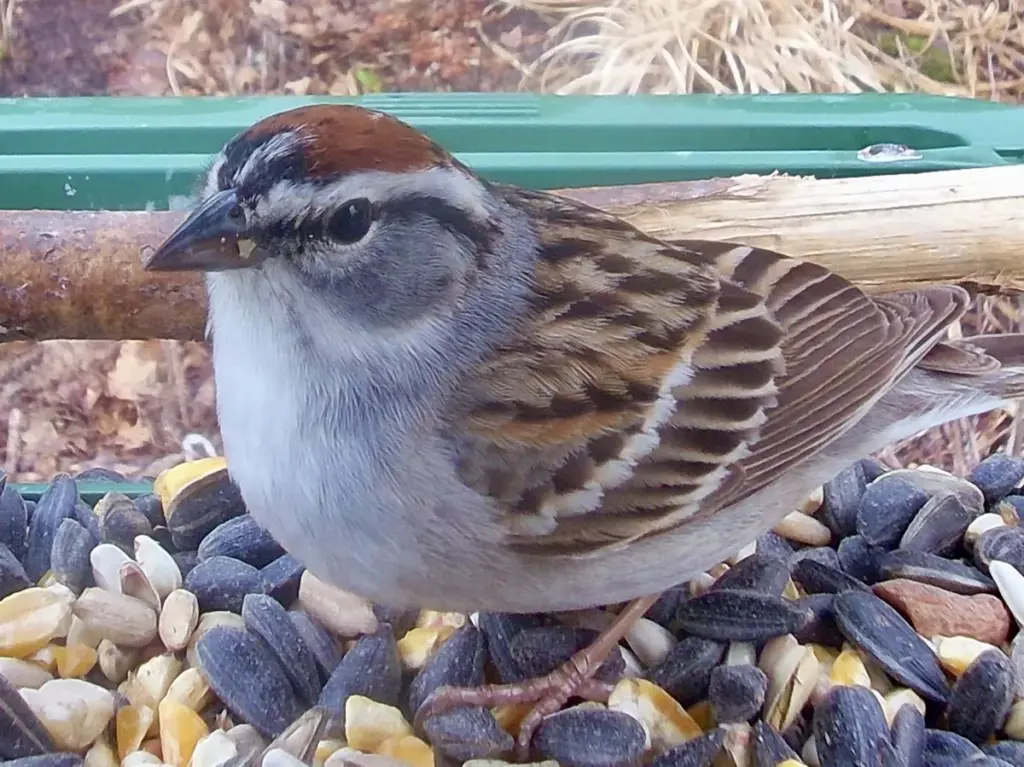
At a glance
- Favorite foods: millet, sunflower hearts, cracked corn
- Best feeders: ground tray, platform feeder
- Plants: native grasses, shrubs and evergreens
- Habitat: lawns, open woods and edges
- Nesting: in a small cup in a shrub or evergreen, and does not use birdhouses
- Seasonality: spring to fall; winters in the South
Best foods
Millet, sunflower hearts, cracked corn.
Best feeders
Try ground tray, platform feeder.
Plants that attract
Native grasses, shrubs and evergreens.
Water and habitat
Offer a birdbath with fresh water, and change it often.
Nesting and shelter
In a small cup in a shrub or evergreen, and does not use birdhouses.
Seasonal tips
Spring to fall; winters in the South.
One practical tip
Scatter seed near a shrub or evergreen so it has cover close by.
Fun fact
Chipping Sparrows often line their nests with fine hair, and long ago that was horsehair.
Shop this bird
Feeder and food picks for the Chipping Sparrow will go here once Sara adds her links.
As an Amazon Associate, QT Bird earns from qualifying purchases.
Quick checklist
- Millet
- A ground tray
- Native grasses
- Fresh water
QT Bird · qtbird.com/backyard-birds/
Sparrows & juncos
Dark-eyed Junco
Junco hyemalis
A small gray bird that visits Michigan yards in winter.
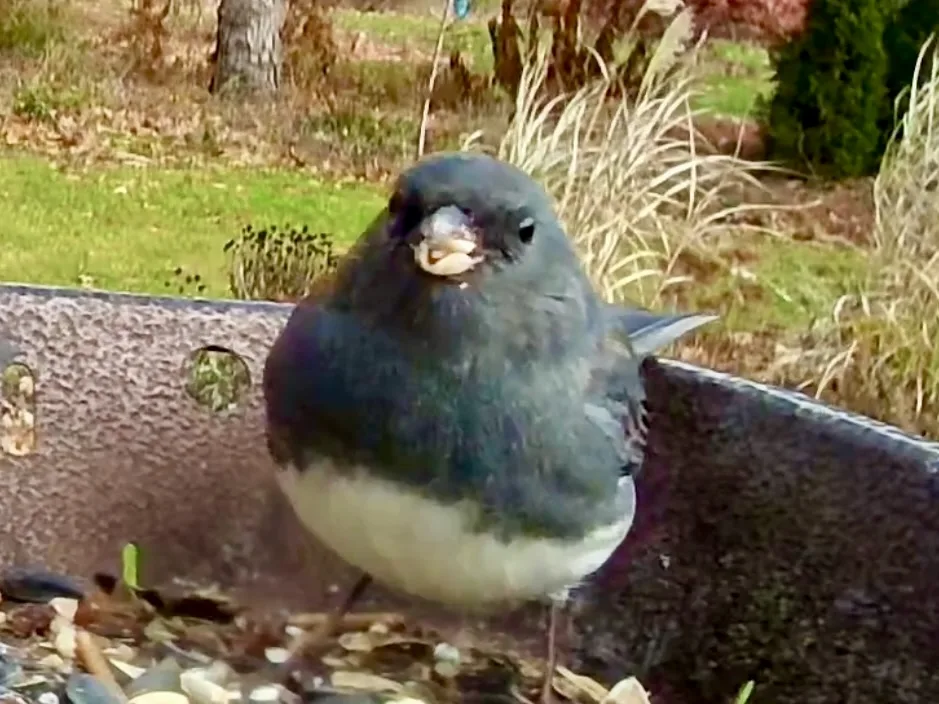
About the Dark-eyed Junco
When the first gray little birds start hopping under the feeder, winter isn't far behind. That's why so many people call juncos "snowbirds." In the East they're slate gray on top with a white belly, and they flash white outer tail feathers when they fly. Out West they come in several color forms, some with dark hoods and rusty sides.
Juncos are ground birds. They hop and scratch through leaves and snow for seeds, and they'd rather pick up what falls from the feeder than perch on it. In winter, weed and grass seeds make up most of what they eat.
At a glance
- Favorite foods: millet, small seeds, sunflower hearts
- Best feeders: ground tray, platform feeder
- Plants: native grasses and weeds that hold seed
- Habitat: brushy edges and yards with cover
- Nesting: on the ground, mostly farther north
- Seasonality: winter visitor in much of Michigan
Best foods
Juncos eat small seeds. Offer millet and sunflower hearts, and scatter seed on the ground.
Best feeders
Use a ground tray or a platform feeder. Juncos feed on the ground and under feeders.
Plants that attract
Leave native grasses and seed heads standing, and keep a brush pile or shrubs for cover.
Water and habitat
Keep a shallow dish of fresh water, and keep it from freezing with a heated birdbath if you can.
Nesting and shelter
Juncos nest on the ground, usually north of most Michigan yards. In winter, they need cover from shrubs and brush piles.
Seasonal tips
Juncos arrive in fall and leave in spring. Keep seed on the ground after snowfall.
One practical tip
Shovel a patch of ground and scatter seed on it after a snow. Juncos find it quickly.
Fun fact
The white outer tail feathers flash when a junco flies, which looks like a quick flash of white.
Shop this bird
HiBird smart feeder
My Amazon shop
As an Amazon Associate, QT Bird earns from qualifying purchases.
Quick checklist
- Millet or sunflower hearts
- A ground tray or platform feeder
- Shrubs or a brush pile
- Water that stays unfrozen
Facts checked against the National Audubon Society field guide.
QT Bird · qtbird.com/backyard-birds/
Sparrows & juncos
Eastern Towhee
Pipilo erythrophthalmus
A black, white and rusty-orange bird that scratches in the leaves.
Sara’s own photo of the Eastern Towhee will go here.
At a glance
- Favorite foods: black oil sunflower seed, cracked corn, millet
- Best feeders: ground tray
- Plants: dense shrubs, thickets and leaf litter
- Habitat: brushy edges and young woods
- Nesting: on or near the ground under shrubs
- Seasonality: year-round in the South, spring to fall in the north
Best foods
Black oil sunflower seed, cracked corn, millet.
Best feeders
Try ground tray.
Plants that attract
Dense shrubs, thickets and leaf litter.
Water and habitat
Offer a birdbath with fresh water, and change it often.
Nesting and shelter
On or near the ground under shrubs.
Seasonal tips
Year-round in the South, spring to fall in the north.
One practical tip
Leave leaf litter under shrubs, where towhees scratch for food.
Fun fact
The towhee song sounds like “drink your tea.”
Shop this bird
Feeder and food picks for the Eastern Towhee will go here once Sara adds her links.
As an Amazon Associate, QT Bird earns from qualifying purchases.
Quick checklist
- Black oil sunflower seed
- A ground tray
- Dense shrubs
- Fresh water
QT Bird · qtbird.com/backyard-birds/
Sparrows & juncos
Fox Sparrow
Passerella iliaca
A big, rusty-red sparrow that scratches in leaf litter.
Sara’s own photo of the Fox Sparrow will go here.
At a glance
- Favorite foods: millet, sunflower seed, cracked corn
- Best feeders: ground tray
- Plants: dense shrubs and brush piles
- Habitat: brushy thickets and woodland edges
- Nesting: on or near the ground, mostly in the far north
- Seasonality: winter in most of the country
Best foods
Millet, sunflower seed, cracked corn.
Best feeders
Try ground tray.
Plants that attract
Dense shrubs and brush piles.
Water and habitat
Offer a birdbath with fresh water, and change it often.
Nesting and shelter
On or near the ground, mostly in the far north.
Seasonal tips
Winter in most of the country.
One practical tip
Leave leaf litter and a brush pile where it can scratch and hide.
Fun fact
Fox Sparrows scratch the leaves with both feet at once.
Shop this bird
Feeder and food picks for the Fox Sparrow will go here once Sara adds her links.
As an Amazon Associate, QT Bird earns from qualifying purchases.
Quick checklist
- Millet
- A ground tray
- Dense shrubs and brush piles
- Fresh water
QT Bird · qtbird.com/backyard-birds/
Sparrows & juncos
Golden-crowned Sparrow
Zonotrichia atricapilla
A sparrow with a yellow patch on a dark crown, along the Pacific coast.
Sara’s own photo of the Golden-crowned Sparrow will go here.
At a glance
- Favorite foods: millet, sunflower seed, cracked corn
- Best feeders: ground tray, platform feeder
- Plants: native shrubs and brush
- Habitat: shrubby thickets and gardens
- Nesting: far to the north in Alaska and Canada
- Seasonality: fall to spring
Best foods
Millet, sunflower seed, cracked corn.
Best feeders
Try ground tray, platform feeder.
Plants that attract
Native shrubs and brush.
Water and habitat
Offer a birdbath with fresh water, and change it often.
Nesting and shelter
Far to the north in Alaska and Canada.
Seasonal tips
Fall to spring.
One practical tip
Scatter seed near shrubs so it can dart for cover.
Fun fact
Its slow, sad-sounding song is sometimes written as “oh dear me.”
Shop this bird
Feeder and food picks for the Golden-crowned Sparrow will go here once Sara adds her links.
As an Amazon Associate, QT Bird earns from qualifying purchases.
Quick checklist
- Millet
- A ground tray
- Native shrubs and brush
- Fresh water
QT Bird · qtbird.com/backyard-birds/
Sparrows & juncos
Harris’s Sparrow
Zonotrichia querula
A big sparrow with a black bib and a pink bill that visits the Plains in winter.
Sara’s own photo of the Harris’s Sparrow will go here.
At a glance
- Favorite foods: millet, sunflower seed, cracked corn
- Best feeders: ground tray, platform feeder
- Plants: native grasses, shrubs and brush
- Habitat: brushy edges and hedgerows
- Nesting: far to the north in Canada
- Seasonality: winter only
Best foods
Millet, sunflower seed, cracked corn.
Best feeders
Try ground tray, platform feeder.
Plants that attract
Native grasses, shrubs and brush.
Water and habitat
Offer a birdbath with fresh water, and change it often.
Nesting and shelter
Far to the north in Canada.
Seasonal tips
Winter only.
One practical tip
Offer seed near hedges and shrubs.
Fun fact
Harris’s Sparrow is the only bird that nests only in Canada.
Shop this bird
Feeder and food picks for the Harris’s Sparrow will go here once Sara adds her links.
As an Amazon Associate, QT Bird earns from qualifying purchases.
Quick checklist
- Millet
- A ground tray
- Native grasses
- Fresh water
QT Bird · qtbird.com/backyard-birds/
Sparrows & juncos
House Sparrow
Passer domesticus
A common small brown bird of towns and yards, not native to North America.
Sara’s own photo of the House Sparrow will go here.
At a glance
- Favorite foods: cracked corn, millet, sunflower seed, bread crumbs
- Best feeders: hopper, platform, tube, ground
- Plants: grasses and shrubs near buildings
- Habitat: towns, farms and yards
- Nesting: in cavities and nest boxes
- Seasonality: year-round
Best foods
House Sparrows eat cracked corn, millet and sunflower seed. They often crowd feeders.
Best feeders
They use almost any feeder. A feeder with a small perch or a cage can make it harder for them to take over.
Plants that attract
Grasses and shrubs near buildings. They are not fussy.
Water and habitat
Offer a birdbath with fresh water.
Nesting and shelter
House Sparrows nest in cavities and boxes, and can take over a bluebird box.
Seasonal tips
They are around all year, and they may crowd feeders in winter.
One practical tip
To keep House Sparrows from crowding other birds, offer less cracked corn and millet, and more safflower.
Fun fact
House Sparrows were brought to North America from Europe in the 1850s.
Shop this bird
Feeder and food picks for the House Sparrow will go here once Sara adds her links.
As an Amazon Associate, QT Bird earns from qualifying purchases.
Quick checklist
- Seed in a hopper or platform feeder
- Safflower to favor other birds
- A birdbath
- A clean feeder
QT Bird · qtbird.com/backyard-birds/
Sparrows & juncos
Lark Sparrow
Chondestes grammacus
A big sparrow with a bold, harlequin-like face pattern.
Sara’s own photo of the Lark Sparrow will go here.
At a glance
- Favorite foods: millet, sunflower seed, small grains
- Best feeders: ground tray
- Plants: native grasses and open brush
- Habitat: open grasslands and fields with scattered trees
- Nesting: on the ground or low in a shrub
- Seasonality: spring to fall; winters in the South
Best foods
Millet, sunflower seed, small grains.
Best feeders
Try ground tray.
Plants that attract
Native grasses and open brush.
Water and habitat
Offer a birdbath with fresh water, and change it often.
Nesting and shelter
On the ground or low in a shrub.
Seasonal tips
Spring to fall; winters in the South.
One practical tip
Scatter seed on the ground in an open area near shrubs.
Fun fact
The Lark Sparrow has a striking chestnut and black harlequin face.
Shop this bird
Feeder and food picks for the Lark Sparrow will go here once Sara adds her links.
As an Amazon Associate, QT Bird earns from qualifying purchases.
Quick checklist
- Millet
- A ground tray
- Native grasses and open brush
- Fresh water
QT Bird · qtbird.com/backyard-birds/
Sparrows & juncos
Song Sparrow
Melospiza melodia
A streaky brown sparrow with a bright, cheerful song.
Sara’s own photo of the Song Sparrow will go here.
At a glance
- Favorite foods: millet, black oil sunflower seed, cracked corn
- Best feeders: ground tray, platform
- Plants: shrubs, brush and native grasses
- Habitat: brushy edges and wet areas
- Nesting: on or near the ground in dense cover
- Seasonality: year-round in much of the region
Best foods
Song Sparrows eat small seeds. Offer millet, sunflower seed and cracked corn.
Best feeders
A ground tray or a platform feeder works best, near shrubs.
Plants that attract
Shrubs, brush piles and native grasses.
Water and habitat
A shallow birdbath at ground level.
Nesting and shelter
Song Sparrows nest low in dense cover. They do not use birdhouses.
Seasonal tips
They stay all year in much of the region, but many go south in the far north.
One practical tip
Keep a brush pile or dense shrubs near the feeder so they can hide.
Fun fact
Each male Song Sparrow knows several different songs.
Shop this bird
Feeder and food picks for the Song Sparrow will go here once Sara adds her links.
As an Amazon Associate, QT Bird earns from qualifying purchases.
Quick checklist
- Millet or sunflower seed
- A ground tray or platform feeder
- Brush pile or dense shrubs
- Water
QT Bird · qtbird.com/backyard-birds/
Sparrows & juncos
Spotted Towhee
Pipilo maculatus
A black, white and rusty-orange ground feeder with spotted wings.
Sara’s own photo of the Spotted Towhee will go here.
At a glance
- Favorite foods: millet, black oil sunflower seed, cracked corn
- Best feeders: ground tray
- Plants: dense shrubs and leaf litter
- Habitat: brushy thickets and woodland edges
- Nesting: on or near the ground under shrubs
- Seasonality: year-round in much of the West
Best foods
Towhees eat seed off the ground. Offer millet, sunflower seed and cracked corn.
Best feeders
A ground tray, or seed scattered under shrubs, works best.
Plants that attract
Dense shrubs, and leaf litter under them for scratching.
Water and habitat
A shallow dish of water on the ground.
Nesting and shelter
Spotted Towhees nest on or near the ground under shrubs.
Seasonal tips
They stay all year in much of the West.
One practical tip
Leave leaf litter under shrubs. Towhees scratch through it for food.
Fun fact
Towhees scratch the ground with a quick double-hop, kicking leaves backward.
Shop this bird
Feeder and food picks for the Spotted Towhee will go here once Sara adds her links.
As an Amazon Associate, QT Bird earns from qualifying purchases.
Quick checklist
- Millet or sunflower seed
- A ground tray
- Dense shrubs
- Leaf litter
QT Bird · qtbird.com/backyard-birds/
Sparrows & juncos
White-crowned Sparrow
Zonotrichia leucophrys
A sparrow with bold black and white stripes on its head.
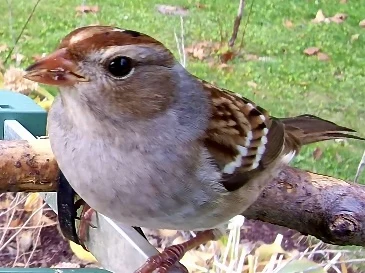
At a glance
- Favorite foods: millet, black oil sunflower seed, cracked corn
- Best feeders: ground tray, platform
- Plants: shrubs, grasses and brush
- Habitat: brushy edges and open areas
- Nesting: on or near the ground
- Seasonality: year-round on the Pacific coast, winter visitor in much of the West
Best foods
White-crowned Sparrows eat seed off the ground. Offer millet, sunflower seed and cracked corn.
Best feeders
A ground tray or platform feeder, near shrubs.
Plants that attract
Native shrubs and grasses, and a brush pile for cover.
Water and habitat
A shallow birdbath at ground level.
Nesting and shelter
White-crowned Sparrows nest on or near the ground, in shrubs and grass.
Seasonal tips
In winter, flocks visit yards and feeders.
One practical tip
Scatter seed near shrubs, so they have cover close by.
Fun fact
White-crowned Sparrows sing in local dialects that differ from place to place.
Shop this bird
Feeder and food picks for the White-crowned Sparrow will go here once Sara adds her links.
As an Amazon Associate, QT Bird earns from qualifying purchases.
Quick checklist
- Millet or sunflower seed
- A ground tray or platform feeder
- Shrubs or a brush pile
- Water
QT Bird · qtbird.com/backyard-birds/
Sparrows & juncos
White-throated Sparrow
Zonotrichia albicollis
A sparrow with a white throat and yellow spots that visits in winter.
Sara’s own photo of the White-throated Sparrow will go here.
At a glance
- Favorite foods: millet, black oil sunflower seed, cracked corn
- Best feeders: ground tray, platform feeder
- Plants: native shrubs, brush and fruiting plants
- Habitat: brushy edges and thickets
- Nesting: on or near the ground, mostly farther north
- Seasonality: winter visitor in much of the region
Best foods
White-throated Sparrows eat seed off the ground. Offer millet, black oil sunflower seed and cracked corn.
Best feeders
A ground tray or a platform feeder works best, close to a shrub or brush pile.
Plants that attract
Native shrubs and brushy tangles. Leave some leaf litter, where they scratch for seeds.
Water and habitat
Offer a shallow birdbath, and keep a brush pile or thicket nearby for cover.
Nesting and shelter
White-throated Sparrows nest on or near the ground, mostly north of most yards in the region. In winter they need brushy cover.
Seasonal tips
They arrive in fall and leave in spring. Scatter seed on the ground near cover.
One practical tip
Leave a little leaf litter under shrubs. White-throated Sparrows scratch the ground, towhee-style, to find seeds.
Fun fact
The song is often described as “Old Sam Peabody, Peabody, Peabody.”
Shop this bird
Feeder and food picks for the White-throated Sparrow will go here once Sara adds her links.
As an Amazon Associate, QT Bird earns from qualifying purchases.
Quick checklist
- Millet or sunflower seed
- A ground tray or platform feeder
- Brush pile or shrubs
- A shallow water dish
QT Bird · qtbird.com/backyard-birds/
Owls
Barn Owl
Tyto alba
A pale owl with a heart-shaped face that nests in barns and nest boxes.
Sara’s own photo of the Barn Owl will go here.
At a glance
- Favorite foods: mice and voles (it does not use feeders)
- Best feeders: none; offer a nest box
- Plants: open fields and rough grass
- Habitat: open fields, farms and edges
- Nesting: in a barn, silo or a large nest box
- Seasonality: year-round
Best foods
Mice and voles (it does not use feeders).
Best feeders
This bird does not use feeders. Offer a nest box instead.
Plants that attract
Open fields and rough grass.
Water and habitat
Offer a birdbath with fresh water, and change it often.
Nesting and shelter
In a barn, silo or a large nest box.
Seasonal tips
Year-round.
One practical tip
Put up a barn owl box in a quiet barn or on a pole near open fields.
Fun fact
A Barn Owl can find a mouse in the dark by sound alone.
Shop this bird
Feeder and food picks for the Barn Owl will go here once Sara adds her links.
As an Amazon Associate, QT Bird earns from qualifying purchases.
Quick checklist
- Open fields and rough grass
- A nest box of the right size
- No pesticides
- Fresh water
QT Bird · qtbird.com/backyard-birds/
Owls
Barred Owl
Strix varia
A big, round-headed owl with dark eyes and a call that sounds like “who cooks for you?”
Sara’s own photo of the Barred Owl will go here.
At a glance
- Favorite foods: mice, small mammals, frogs (it does not use feeders)
- Best feeders: none; offer big trees, and maybe a large nest box
- Plants: large mature trees, especially near water
- Habitat: mature woods and wooded neighborhoods
- Nesting: in a large tree cavity or a large nest box
- Seasonality: year-round
Best foods
Mice, small mammals, frogs (it does not use feeders).
Best feeders
This bird does not use feeders. Offer big trees, and maybe a large nest box instead.
Plants that attract
Large mature trees, especially near water.
Water and habitat
Offer a birdbath with fresh water, and change it often.
Nesting and shelter
In a large tree cavity or a large nest box.
Seasonal tips
Year-round.
One practical tip
Leave big trees, including dead ones, where it is safe.
Fun fact
The Barred Owl’s call sounds like “who cooks for you, who cooks for you all?”
Shop this bird
Feeder and food picks for the Barred Owl will go here once Sara adds her links.
As an Amazon Associate, QT Bird earns from qualifying purchases.
Quick checklist
- Large mature trees
- A nest box of the right size
- No pesticides
- Fresh water
QT Bird · qtbird.com/backyard-birds/
Owls
Burrowing Owl
Athene cunicularia
A small, long-legged owl that lives in burrows in open ground.
Sara’s own photo of the Burrowing Owl will go here.
At a glance
- Favorite foods: insects and small animals (it does not use feeders)
- Best feeders: none; offer open ground and burrows
- Plants: open, short grassland with burrows
- Habitat: open prairies, deserts and fields
- Nesting: in an underground burrow, often dug by another animal
- Seasonality: year-round in the south and West, summer farther north
Best foods
Insects and small animals (it does not use feeders).
Best feeders
This bird does not use feeders. Offer open ground and burrows instead.
Plants that attract
Open, short grassland with burrows.
Water and habitat
Offer a birdbath with fresh water, and change it often.
Nesting and shelter
In an underground burrow, often dug by another animal.
Seasonal tips
Year-round in the south and West, summer farther north.
One practical tip
Leave open ground with burrows if you have the space.
Fun fact
The Burrowing Owl is active in daytime and nests underground.
Shop this bird
Feeder and food picks for the Burrowing Owl will go here once Sara adds her links.
As an Amazon Associate, QT Bird earns from qualifying purchases.
Quick checklist
- Open
- Open ground with burrows
- No pesticides
- Fresh water
QT Bird · qtbird.com/backyard-birds/
Owls
Eastern Screech-Owl
Megascops asio
A small owl that does not use feeders, but may use a nest box.
Sara’s own photo of the Eastern Screech-Owl will go here.
At a glance
- Favorite foods: insects, small mammals and birds (it does not use feeders)
- Best feeders: none
- Plants: mature trees with cavities
- Habitat: woods and wooded yards
- Nesting: tree cavities and large nest boxes
- Seasonality: year-round
Best foods
Screech-owls do not eat birdseed. They hunt insects, small mammals and small birds at night.
Best feeders
Owls do not use feeders. Skip the feeders and offer a nest box and a birdbath instead.
Plants that attract
Mature trees, especially those with natural cavities, give screech-owls a place to rest during the day.
Water and habitat
A birdbath with fresh water helps. Screech-owls will bathe and drink, and a few trees nearby give them cover.
Nesting and shelter
Screech-owls use tree cavities and nest boxes. A nest box needs an entrance hole about 3 inches wide. Check the Cornell Lab plans for the right size and height.
Seasonal tips
Screech-owls are around all year and nest in early spring.
One practical tip
Leave dead trees standing when it is safe, and put up a nest box in late winter, before the nesting season.
Fun fact
Screech-owls come in two color forms, a gray one and a reddish one, even within the same family.
Shop this bird
Feeder and food picks for the Eastern Screech-Owl will go here once Sara adds her links.
As an Amazon Associate, QT Bird earns from qualifying purchases.
Quick checklist
- Mature trees with cavities
- No pesticides
- Fresh water
QT Bird · qtbird.com/backyard-birds/
Owls
Great Horned Owl
Bubo virginianus
A big owl with feather tufts that look like horns and a deep hoot.
Sara’s own photo of the Great Horned Owl will go here.
At a glance
- Favorite foods: rabbits, rodents, birds (it does not use feeders)
- Best feeders: none; offer tall trees and quiet
- Plants: mature trees, including conifers
- Habitat: woods, farms, parks and yards
- Nesting: in an old hawk, crow or heron nest, or a tree cavity
- Seasonality: year-round; nests in winter
Best foods
Rabbits, rodents, birds (it does not use feeders).
Best feeders
This bird does not use feeders. Offer tall trees and quiet instead.
Plants that attract
Mature trees, including conifers.
Water and habitat
Offer a birdbath with fresh water, and change it often.
Nesting and shelter
In an old hawk, crow or heron nest, or a tree cavity.
Seasonal tips
Year-round; nests in winter.
One practical tip
Leave tall trees, and keep small pets inside at night.
Fun fact
The “horns” of a Great Horned Owl are tufts of feathers, not ears or horns.
Shop this bird
Feeder and food picks for the Great Horned Owl will go here once Sara adds her links.
As an Amazon Associate, QT Bird earns from qualifying purchases.
Quick checklist
- Mature trees
- No pesticides
- Fresh water
QT Bird · qtbird.com/backyard-birds/
Owls
Northern Saw-whet Owl
Aegolius acadicus
A tiny owl, about the size of a robin, that hides in dense evergreens.
Sara’s own photo of the Northern Saw-whet Owl will go here.
At a glance
- Favorite foods: mice and other small animals (it does not use feeders)
- Best feeders: none; offer a nest box
- Plants: dense evergreens and mixed woods
- Habitat: forests with dense conifers
- Nesting: in a tree cavity or a nest box
- Seasonality: year-round in the north, winter in the south
Best foods
Mice and other small animals (it does not use feeders).
Best feeders
This bird does not use feeders. Offer a nest box instead.
Plants that attract
Dense evergreens and mixed woods.
Water and habitat
Offer a birdbath with fresh water, and change it often.
Nesting and shelter
In a tree cavity or a nest box.
Seasonal tips
Year-round in the north, winter in the south.
One practical tip
Leave dense evergreens in a quiet corner.
Fun fact
The Northern Saw-whet Owl is named for its call, which sounds like a saw being sharpened.
Shop this bird
Feeder and food picks for the Northern Saw-whet Owl will go here once Sara adds her links.
As an Amazon Associate, QT Bird earns from qualifying purchases.
Quick checklist
- Dense evergreens and mixed woods
- A nest box of the right size
- No pesticides
- Fresh water
QT Bird · qtbird.com/backyard-birds/
Owls
Western Screech-Owl
Megascops kennicottii
A small, gray owl with ear tufts, found in the West.
Sara’s own photo of the Western Screech-Owl will go here.
At a glance
- Favorite foods: insects, small mammals and birds (it does not use feeders)
- Best feeders: none; offer a nest box
- Plants: oaks, cottonwoods and trees with cavities
- Habitat: woods, streamsides and wooded yards
- Nesting: in a tree cavity or a nest box
- Seasonality: year-round
Best foods
Insects, small mammals and birds (it does not use feeders).
Best feeders
This bird does not use feeders. Offer a nest box instead.
Plants that attract
Oaks, cottonwoods and trees with cavities.
Water and habitat
Offer a birdbath with fresh water, and change it often.
Nesting and shelter
In a tree cavity or a nest box.
Seasonal tips
Year-round.
One practical tip
Put up a nest box with the right hole size, and leave dead trees where it is safe.
Fun fact
The Western Screech-Owl’s call sounds like a bouncing ball that speeds up.
Shop this bird
Feeder and food picks for the Western Screech-Owl will go here once Sara adds her links.
As an Amazon Associate, QT Bird earns from qualifying purchases.
Quick checklist
- Oaks
- A nest box of the right size
- No pesticides
- Fresh water
QT Bird · qtbird.com/backyard-birds/
Wrens
Bewick’s Wren
Thryomanes bewickii
A slim wren with a bold white eyebrow and a long, flicking tail.
Sara’s own photo of the Bewick’s Wren will go here.
At a glance
- Favorite foods: insects, plus suet and mealworms
- Best feeders: suet feeder
- Plants: dense shrubs and brush piles
- Habitat: brushy areas and gardens
- Nesting: in cavities, nest boxes and brush
- Seasonality: year-round
Best foods
Insects, plus suet and mealworms.
Best feeders
Try suet feeder.
Plants that attract
Dense shrubs and brush piles.
Water and habitat
Offer a birdbath with fresh water, and change it often.
Nesting and shelter
In cavities, nest boxes and brush.
Seasonal tips
Year-round.
One practical tip
Leave a brush pile and a few thick shrubs.
Fun fact
Bewick’s Wrens often flick their tails from side to side.
Shop this bird
Feeder and food picks for the Bewick’s Wren will go here once Sara adds her links.
As an Amazon Associate, QT Bird earns from qualifying purchases.
Quick checklist
- Insects
- A suet feeder
- Dense shrubs and brush piles
- Fresh water
QT Bird · qtbird.com/backyard-birds/
Wrens
Cactus Wren
Campylorhynchus brunneicapillus
The big, spotted wren of the desert Southwest.
Sara’s own photo of the Cactus Wren will go here.
At a glance
- Favorite foods: insects, plus suet and mealworms
- Best feeders: suet feeder
- Plants: cholla, prickly pear and other desert plants
- Habitat: desert scrub and desert yards
- Nesting: in a large nest in a cholla or other spiny plant
- Seasonality: year-round
Best foods
Insects, plus suet and mealworms.
Best feeders
Try suet feeder.
Plants that attract
Cholla, prickly pear and other desert plants.
Water and habitat
Offer a birdbath with fresh water, and change it often.
Nesting and shelter
In a large nest in a cholla or other spiny plant.
Seasonal tips
Year-round.
One practical tip
Keep desert plants, and offer a small dish of water.
Fun fact
The Cactus Wren is the state bird of Arizona.
Shop this bird
Feeder and food picks for the Cactus Wren will go here once Sara adds her links.
As an Amazon Associate, QT Bird earns from qualifying purchases.
Quick checklist
- Insects
- A suet feeder
- Cholla
- Fresh water
QT Bird · qtbird.com/backyard-birds/
Wrens
Carolina Wren
Thryothorus ludovicianus
A small, round, rusty bird with a very loud song.
Sara’s own photo of the Carolina Wren will go here.
At a glance
- Favorite foods: suet, mealworms, peanut bits
- Best feeders: suet feeder, platform feeder
- Plants: dense shrubs, vines and brush piles
- Habitat: tangles, brush and woodland edges
- Nesting: nooks and crannies, even flowerpots and mailboxes
- Seasonality: year-round, but not common in the far north
Best foods
Carolina Wrens mostly eat insects. Suet, mealworms and peanut bits are good choices.
Best feeders
A suet feeder or a platform feeder works well. Keep it low and close to cover.
Plants that attract
Dense shrubs, vines and a brush pile give wrens places to hunt and hide.
Water and habitat
Offer a shallow birdbath with fresh water, and keep a tangle of shrubs or brush nearby.
Nesting and shelter
Carolina Wrens nest in odd places such as flowerpots, mailboxes and porch shelves. A sheltered nest box or a quiet nook will do.
Seasonal tips
Very cold winters are hard on Carolina Wrens, so suet and mealworms help on the coldest days.
One practical tip
Leave a brush pile in a corner of the yard, and check porches and sheds before nesting season.
Fun fact
The Carolina Wren is only about 5 inches long, but its song is surprisingly loud.
Shop this bird
Feeder and food picks for the Carolina Wren will go here once Sara adds her links.
As an Amazon Associate, QT Bird earns from qualifying purchases.
Quick checklist
- Suet or mealworms
- A suet or platform feeder near cover
- A brush pile or dense shrubs
- A sheltered nesting nook
QT Bird · qtbird.com/backyard-birds/
Wrens
House Wren
Troglodytes aedon
A small brown wren with a bubbly song that loves a nest box.
Sara’s own photo of the House Wren will go here.
At a glance
- Favorite foods: insects, plus suet and mealworms
- Best feeders: suet feeder, nest box
- Plants: shrubs, brush and trees with cavities
- Habitat: yards, gardens and woodland edges
- Nesting: in a nest box with a 1 1/8 inch hole, or any cavity
- Seasonality: spring to fall; winters in the South
Best foods
Insects, plus suet and mealworms.
Best feeders
Try suet feeder, nest box.
Plants that attract
Shrubs, brush and trees with cavities.
Water and habitat
Offer a birdbath with fresh water, and change it often.
Nesting and shelter
In a nest box with a 1 1/8 inch hole, or any cavity.
Seasonal tips
Spring to fall; winters in the South.
One practical tip
Put up a nest box with a small hole, away from other boxes.
Fun fact
A male House Wren stuffs several cavities with sticks, and the female picks one for the nest.
Shop this bird
Feeder and food picks for the House Wren will go here once Sara adds her links.
As an Amazon Associate, QT Bird earns from qualifying purchases.
Quick checklist
- Insects
- A suet feeder
- Shrubs
- Fresh water
QT Bird · qtbird.com/backyard-birds/
Mockingbirds & thrashers
Brown Thrasher
Toxostoma rufum
A rusty-brown bird that scratches in leaf litter and sings from the treetops.
Sara’s own photo of the Brown Thrasher will go here.
At a glance
- Favorite foods: insects, fruit, cracked corn, sunflower seed
- Best feeders: ground tray, platform feeder
- Plants: dense shrubs, berry plants and thickets
- Habitat: thickets and brushy edges
- Nesting: low in dense shrubs
- Seasonality: year-round in the Southeast, spring to fall farther north
Best foods
Brown Thrashers eat insects and fruit, and will also take cracked corn and sunflower seed from the ground.
Best feeders
A ground tray or a low platform feeder works well, close to shrubs.
Plants that attract
Dense shrubs, berry plants and thickets. Leave some leaf litter under shrubs.
Water and habitat
Offer a shallow birdbath at ground level, and keep a thicket or brush pile nearby.
Nesting and shelter
Brown Thrashers nest low in dense shrubs and thickets, so they do not use birdhouses.
Seasonal tips
In summer they sing from high perches. In the north they leave in fall.
One practical tip
Keep a dense shrub corner and a bit of leaf litter, and place seed near it.
Fun fact
The Brown Thrasher has one of the biggest song repertoires of any North American bird, with more than a thousand song types.
Shop this bird
Feeder and food picks for the Brown Thrasher will go here once Sara adds her links.
As an Amazon Associate, QT Bird earns from qualifying purchases.
Quick checklist
- Cracked corn, sunflower seed or fruit
- A ground tray or low platform feeder
- Dense shrubs
- Fresh water
QT Bird · qtbird.com/backyard-birds/
Mockingbirds & thrashers
Curve-billed Thrasher
Toxostoma curvirostre
A big gray desert thrasher with a long, curved bill.
Sara’s own photo of the Curve-billed Thrasher will go here.
At a glance
- Favorite foods: seeds, fruit, insects
- Best feeders: platform feeder, ground tray
- Plants: cholla, prickly pear and other cactus
- Habitat: desert scrub and desert yards
- Nesting: in a large nest in a cholla or other spiny plant
- Seasonality: year-round
Best foods
Seeds, fruit, insects.
Best feeders
Try platform feeder, ground tray.
Plants that attract
Cholla, prickly pear and other cactus.
Water and habitat
Offer a birdbath with fresh water, and change it often.
Nesting and shelter
In a large nest in a cholla or other spiny plant.
Seasonal tips
Year-round.
One practical tip
Offer seed and fruit on a low platform, near cactus.
Fun fact
Curve-billed Thrashers often nest in cholla cactus.
Shop this bird
Feeder and food picks for the Curve-billed Thrasher will go here once Sara adds her links.
As an Amazon Associate, QT Bird earns from qualifying purchases.
Quick checklist
- Seeds
- A platform feeder
- Cholla
- Fresh water
QT Bird · qtbird.com/backyard-birds/
Mockingbirds & thrashers
Gray Catbird
Dumetella carolinensis
A slate-gray bird that mews like a cat from dense shrubs.
Sara’s own photo of the Gray Catbird will go here.
At a glance
- Favorite foods: fruit, grape jelly, mealworms, suet
- Best feeders: open platform, suet feeder
- Plants: dense shrubs, brambles and berry plants
- Habitat: thickets and shrubby yards
- Nesting: in a cup in dense shrubs
- Seasonality: spring to fall; some stay in the South in winter
Best foods
Fruit, grape jelly, mealworms, suet.
Best feeders
Try open platform, suet feeder.
Plants that attract
Dense shrubs, brambles and berry plants.
Water and habitat
Offer a birdbath with fresh water, and change it often.
Nesting and shelter
In a cup in dense shrubs.
Seasonal tips
Spring to fall; some stay in the South in winter.
One practical tip
Plant a berry shrub and leave a thick tangle for cover.
Fun fact
The catbird’s call sounds like a cat mewing.
Shop this bird
Feeder and food picks for the Gray Catbird will go here once Sara adds her links.
As an Amazon Associate, QT Bird earns from qualifying purchases.
Quick checklist
- Fruit
- A open platform
- Dense shrubs
- Fresh water
QT Bird · qtbird.com/backyard-birds/
Mockingbirds & thrashers
Northern Mockingbird
Mimus polyglottos
A gray bird with white wing patches and a song borrowed from other birds.
Sara’s own photo of the Northern Mockingbird will go here.
At a glance
- Favorite foods: fruit, berries, suet, mealworms
- Best feeders: platform feeder, suet feeder
- Plants: native berry shrubs such as holly and hawthorn
- Habitat: open areas with shrubs and short grass
- Nesting: dense shrubs and small trees
- Seasonality: year-round
Best foods
Mockingbirds mostly eat insects and fruit. Offer raisins, chopped fruit, mealworms and suet.
Best feeders
Use an open platform feeder or a suet feeder. Mockingbirds are not seed eaters.
Plants that attract
Native berry shrubs such as holly, hawthorn and dogwood.
Water and habitat
Offer a birdbath with fresh water, and keep dense shrubs nearby for nesting.
Nesting and shelter
Mockingbirds nest in dense shrubs and small trees, so they do not use birdhouses.
Seasonal tips
In winter, a mockingbird may guard a berry bush or a feeder from other birds.
One practical tip
Plant a berry shrub. Mockingbirds often claim one and sing from it.
Fun fact
A Northern Mockingbird borrows songs from other birds, and one male can learn many different songs.
Shop this bird
Feeder and food picks for the Northern Mockingbird will go here once Sara adds her links.
As an Amazon Associate, QT Bird earns from qualifying purchases.
Quick checklist
- Fruit, mealworms or suet
- A platform or suet feeder
- Berry shrubs
- Fresh water
QT Bird · qtbird.com/backyard-birds/
Warblers
Lucy’s Warbler
Leiothlypis luciae
A small gray warbler of desert streamsides that nests in tree cavities.
Sara’s own photo of the Lucy’s Warbler will go here.
At a glance
- Favorite foods: tiny insects (it does not use feeders)
- Best feeders: none; offer a shallow water dish
- Plants: mesquite and desert trees along streams
- Habitat: desert streamsides
- Nesting: in a hole in a tree or behind loose bark
- Seasonality: spring to summer; winters in Mexico
Best foods
Tiny insects (it does not use feeders).
Best feeders
This bird does not use feeders. Offer a shallow water dish instead.
Plants that attract
Mesquite and desert trees along streams.
Water and habitat
Offer a birdbath with fresh water, and change it often.
Nesting and shelter
In a hole in a tree or behind loose bark.
Seasonal tips
Spring to summer; winters in Mexico.
One practical tip
Skip pesticides, and offer a shallow dish of water.
Fun fact
Lucy’s Warbler is one of the few warblers that nests in a cavity.
Shop this bird
Feeder and food picks for the Lucy’s Warbler will go here once Sara adds her links.
As an Amazon Associate, QT Bird earns from qualifying purchases.
Quick checklist
- Mesquite and desert trees along streams
- No pesticides
- Fresh water
QT Bird · qtbird.com/backyard-birds/
Warblers
Northern Parula
Setophaga americana
A tiny blue-gray and yellow warbler that sings from high in the trees.
Sara’s own photo of the Northern Parula will go here.
At a glance
- Favorite foods: tiny insects (it does not use feeders)
- Best feeders: none; offer a shallow water dish
- Plants: mature trees with hanging moss or lichen
- Habitat: woods near water
- Nesting: in hanging moss or lichen
- Seasonality: spring to fall; winters in the tropics
Best foods
Tiny insects (it does not use feeders).
Best feeders
This bird does not use feeders. Offer a shallow water dish instead.
Plants that attract
Mature trees with hanging moss or lichen.
Water and habitat
Offer a birdbath with fresh water, and change it often.
Nesting and shelter
In hanging moss or lichen.
Seasonal tips
Spring to fall; winters in the tropics.
One practical tip
Skip pesticides, and keep tall trees.
Fun fact
The Northern Parula often builds its nest inside hanging Spanish moss or lichen.
Shop this bird
Feeder and food picks for the Northern Parula will go here once Sara adds her links.
As an Amazon Associate, QT Bird earns from qualifying purchases.
Quick checklist
- Mature trees with hanging moss or lichen
- No pesticides
- Fresh water
QT Bird · qtbird.com/backyard-birds/
Warblers
Orange-crowned Warbler
Leiothlypis celata
A plain, yellowish-green warbler that will visit suet and orange halves.
Sara’s own photo of the Orange-crowned Warbler will go here.
At a glance
- Favorite foods: insects, nectar, suet, fruit
- Best feeders: suet feeder, nectar feeder, open platform
- Plants: shrubs that bring insects, and flowering plants
- Habitat: brushy thickets and woodland edges
- Nesting: on or near the ground in a shrub
- Seasonality: winter in the South and West, summer in the north
Best foods
Insects, nectar, suet, fruit.
Best feeders
Try suet feeder, nectar feeder, open platform.
Plants that attract
Shrubs that bring insects, and flowering plants.
Water and habitat
Offer a birdbath with fresh water, and change it often.
Nesting and shelter
On or near the ground in a shrub.
Seasonal tips
Winter in the South and West, summer in the north.
One practical tip
Offer suet and orange halves in winter.
Fun fact
The orange crown of the Orange-crowned Warbler is rarely seen.
Shop this bird
Feeder and food picks for the Orange-crowned Warbler will go here once Sara adds her links.
As an Amazon Associate, QT Bird earns from qualifying purchases.
Quick checklist
- Insects
- A suet feeder
- Shrubs that bring insects
- Fresh water
QT Bird · qtbird.com/backyard-birds/
Warblers
Pine Warbler
Setophaga pinus
A yellow warbler that lives in pine woods, and one of few that will visit a feeder.
Sara’s own photo of the Pine Warbler will go here.
At a glance
- Favorite foods: suet, sunflower hearts, insects
- Best feeders: suet feeder, platform feeder
- Plants: pine trees
- Habitat: pine woods and pine yards
- Nesting: high in pine trees
- Seasonality: year-round in much of the Southeast, spring to fall farther north
Best foods
Pine Warblers eat insects, but also take suet and sunflower hearts at feeders.
Best feeders
A suet feeder or a platform feeder works well, close to pine trees.
Plants that attract
Pine trees are the best plant for Pine Warblers.
Water and habitat
Offer a shallow birdbath with fresh water, and keep some pines nearby.
Nesting and shelter
Pine Warblers nest high in pine trees, so they do not use birdhouses.
Seasonal tips
In the Southeast, Pine Warblers stay for winter and visit suet feeders more then.
One practical tip
Put out suet near pines in winter. Pine Warblers are often among the first warblers to show up in spring.
Fun fact
Pine Warblers are among the few warblers that eat seeds, which is why they visit feeders.
Shop this bird
Feeder and food picks for the Pine Warbler will go here once Sara adds her links.
As an Amazon Associate, QT Bird earns from qualifying purchases.
Quick checklist
- Suet or sunflower hearts
- A suet or platform feeder
- Pine trees nearby
- Fresh water
QT Bird · qtbird.com/backyard-birds/
Warblers
Townsend’s Warbler
Setophaga townsendi
A black and yellow warbler of western evergreen forests.
Sara’s own photo of the Townsend’s Warbler will go here.
At a glance
- Favorite foods: insects, suet
- Best feeders: suet feeder
- Plants: evergreens and native shrubs
- Habitat: evergreen forests
- Nesting: high in an evergreen tree
- Seasonality: spring to fall in the north, winter on the coast
Best foods
Insects, suet.
Best feeders
Try suet feeder.
Plants that attract
Evergreens and native shrubs.
Water and habitat
Offer a birdbath with fresh water, and change it often.
Nesting and shelter
High in an evergreen tree.
Seasonal tips
Spring to fall in the north, winter on the coast.
One practical tip
Offer suet near evergreens in winter.
Fun fact
The Townsend’s Warbler has a bright yellow face with a black mask.
Shop this bird
Feeder and food picks for the Townsend’s Warbler will go here once Sara adds her links.
As an Amazon Associate, QT Bird earns from qualifying purchases.
Quick checklist
- Insects
- A suet feeder
- Evergreens and native shrubs
- Fresh water
QT Bird · qtbird.com/backyard-birds/
Warblers
Yellow-rumped Warbler
Setophaga coronata
A warbler with a bright yellow patch on the rump, and one of the few that stays in winter.
Sara’s own photo of the Yellow-rumped Warbler will go here.
At a glance
- Favorite foods: suet, mealworms, fruit and berries
- Best feeders: suet feeder, open platform
- Plants: bayberry, wax myrtle, juniper and other berry plants
- Habitat: woods, edges and shrubby yards
- Nesting: high in an evergreen, far north
- Seasonality: fall to spring in most of the country
Best foods
Suet, mealworms, fruit and berries.
Best feeders
Try suet feeder, open platform.
Plants that attract
Bayberry, wax myrtle, juniper and other berry plants.
Water and habitat
Offer a birdbath with fresh water, and change it often.
Nesting and shelter
High in an evergreen, far north.
Seasonal tips
Fall to spring in most of the country.
One practical tip
Plant bayberry or juniper, and offer suet in winter.
Fun fact
Yellow-rumped Warblers can digest the wax on bayberries, which most birds cannot.
Shop this bird
Feeder and food picks for the Yellow-rumped Warbler will go here once Sara adds her links.
As an Amazon Associate, QT Bird earns from qualifying purchases.
Quick checklist
- Suet
- A suet feeder
- Bayberry
- Fresh water
QT Bird · qtbird.com/backyard-birds/
Hummingbirds
Allen’s Hummingbird
Selasphorus sasin
A small, orange-and-green hummingbird of the Pacific coast.
Sara’s own photo of the Allen’s Hummingbird will go here.
At a glance
- Favorite foods: nectar from flowers and feeders
- Best feeders: nectar feeder
- Plants: salvia, monkeyflower, fuchsia and other tubular flowers
- Habitat: coastal scrub and gardens
- Nesting: in a tiny cup on a branch
- Seasonality: spring to summer on the coast
Best foods
Nectar from flowers and feeders.
Best feeders
Try nectar feeder.
Plants that attract
Salvia, monkeyflower, fuchsia and other tubular flowers.
Water and habitat
Offer a birdbath with fresh water, and change it often.
Nesting and shelter
In a tiny cup on a branch.
Seasonal tips
Spring to summer on the coast.
One practical tip
Make nectar with 1 part white sugar to 4 parts water, and clean the feeder often.
Fun fact
Allen’s Hummingbirds are among the first hummingbirds to head south, sometimes as early as summer.
Shop this bird
Feeder and food picks for the Allen’s Hummingbird will go here once Sara adds her links.
As an Amazon Associate, QT Bird earns from qualifying purchases.
Quick checklist
- Nectar from flowers and feeders
- A nectar feeder
- Salvia
- Fresh water
QT Bird · qtbird.com/backyard-birds/
Hummingbirds
Anna’s Hummingbird
Calypte anna
A hummingbird with a rosy-red throat that stays all year along the Pacific coast.
Sara’s own photo of the Anna’s Hummingbird will go here.
At a glance
- Favorite foods: nectar from flowers and feeders, plus tiny insects
- Best feeders: nectar (hummingbird) feeder
- Plants: fuchsia, salvia, manzanita, red-flowering currant
- Habitat: gardens and coastal scrub
- Nesting: a tiny cup on a branch
- Seasonality: year-round along much of the Pacific coast
Best foods
Make nectar with 1 part plain white sugar to 4 parts water. Do not add red dye or honey.
Best feeders
Use a hummingbird feeder with feeding ports, and clean it each time you refill it. Change the nectar every few days, and more often in hot weather.
Plants that attract
Fuchsia, salvia, manzanita and red-flowering currant give nectar, and some bloom in winter.
Water and habitat
A fine mist or a shallow fountain is a favorite. Skip pesticides, since they also eat tiny insects.
Nesting and shelter
Anna’s Hummingbirds build a tiny cup nest on a branch. They do not use birdhouses.
Seasonal tips
Because they stay all year in many places, keep the feeder up in winter too, and keep it from freezing.
One practical tip
Hang the feeder in light shade, and clean it often.
Fun fact
A male Anna’s makes a sharp chirp with his tail feathers when he dives during his courtship display.
Shop this bird
Feeder and food picks for the Anna’s Hummingbird will go here once Sara adds her links.
As an Amazon Associate, QT Bird earns from qualifying purchases.
Quick checklist
- Fresh nectar: 1 part sugar to 4 parts water
- A clean hummingbird feeder
- Winter-blooming flowers
- No pesticides
QT Bird · qtbird.com/backyard-birds/
Hummingbirds
Black-chinned Hummingbird
Archilochus alexandri
A hummingbird of the dry West with a black throat.
Sara’s own photo of the Black-chinned Hummingbird will go here.
At a glance
- Favorite foods: nectar from flowers and feeders
- Best feeders: nectar feeder
- Plants: salvia, penstemon and other tubular flowers
- Habitat: dry canyons, gardens and woodland edges
- Nesting: in a tiny cup on a branch
- Seasonality: spring to early fall
Best foods
Nectar from flowers and feeders.
Best feeders
Try nectar feeder.
Plants that attract
Salvia, penstemon and other tubular flowers.
Water and habitat
Offer a birdbath with fresh water, and change it often.
Nesting and shelter
In a tiny cup on a branch.
Seasonal tips
Spring to early fall.
One practical tip
Make nectar with 1 part white sugar to 4 parts water, and clean the feeder often.
Fun fact
Black-chinned Hummingbirds have a thin purple band under the black throat that shows only in good light.
Shop this bird
Feeder and food picks for the Black-chinned Hummingbird will go here once Sara adds her links.
As an Amazon Associate, QT Bird earns from qualifying purchases.
Quick checklist
- Nectar from flowers and feeders
- A nectar feeder
- Salvia
- Fresh water
QT Bird · qtbird.com/backyard-birds/
Hummingbirds
Broad-billed Hummingbird
Cynanthus latirostris
A deep blue-green hummingbird with a red bill, found in southern Arizona and New Mexico.
Sara’s own photo of the Broad-billed Hummingbird will go here.
At a glance
- Favorite foods: nectar from flowers and feeders
- Best feeders: nectar feeder
- Plants: salvia, penstemon and other tubular flowers
- Habitat: canyons and desert gardens
- Nesting: a tiny cup in a shrub or tree
- Seasonality: spring to fall, some stay in winter
Best foods
Nectar from flowers and feeders.
Best feeders
Try nectar feeder.
Plants that attract
Salvia, penstemon and other tubular flowers.
Water and habitat
Offer a birdbath with fresh water, and change it often.
Nesting and shelter
A tiny cup in a shrub or tree.
Seasonal tips
Spring to fall, some stay in winter.
One practical tip
Make nectar with 1 part white sugar to 4 parts water, and clean the feeder often.
Fun fact
The Broad-billed Hummingbird has a bright red bill with a black tip.
Shop this bird
Feeder and food picks for the Broad-billed Hummingbird will go here once Sara adds her links.
As an Amazon Associate, QT Bird earns from qualifying purchases.
Quick checklist
- Nectar from flowers and feeders
- A nectar feeder
- Salvia
- Fresh water
QT Bird · qtbird.com/backyard-birds/
Hummingbirds
Broad-tailed Hummingbird
Selasphorus platycercus
A mountain hummingbird whose wings make a trill in flight.
Sara’s own photo of the Broad-tailed Hummingbird will go here.
At a glance
- Favorite foods: nectar from flowers and feeders
- Best feeders: nectar feeder
- Plants: columbine, penstemon and other mountain flowers
- Habitat: mountain meadows and woodland edges
- Nesting: in a tiny cup on a branch
- Seasonality: spring to late summer
Best foods
Nectar from flowers and feeders.
Best feeders
Try nectar feeder.
Plants that attract
Columbine, penstemon and other mountain flowers.
Water and habitat
Offer a birdbath with fresh water, and change it often.
Nesting and shelter
In a tiny cup on a branch.
Seasonal tips
Spring to late summer.
One practical tip
Make nectar with 1 part white sugar to 4 parts water, and clean the feeder often.
Fun fact
The male Broad-tailed Hummingbird’s wings make a cricket-like trill in flight.
Shop this bird
Feeder and food picks for the Broad-tailed Hummingbird will go here once Sara adds her links.
As an Amazon Associate, QT Bird earns from qualifying purchases.
Quick checklist
- Nectar from flowers and feeders
- A nectar feeder
- Columbine
- Fresh water
QT Bird · qtbird.com/backyard-birds/
Hummingbirds
Ruby-throated Hummingbird
Archilochus colubris
A tiny summer visitor that drinks nectar and loves red flowers.
Sara’s own photo of the Ruby-throated Hummingbird will go here.
At a glance
- Favorite foods: nectar from flowers and feeders, plus tiny insects
- Best feeders: nectar (hummingbird) feeder
- Plants: bee balm, cardinal flower, trumpet vine, salvia
- Habitat: gardens and woodland edges
- Nesting: a tiny cup of plant down on a branch
- Seasonality: spring to early fall; winters far to the south
Best foods
Make nectar with 1 part plain white sugar to 4 parts water. Do not add red dye or honey, and do not use sugar substitutes.
Best feeders
Use a hummingbird feeder with feeding ports, and clean it each time you refill it. Change the nectar every few days, and more often in hot weather.
Plants that attract
Bee balm, cardinal flower, trumpet vine and salvia give hummingbirds nectar. Flowers that are red or orange and tubular are favorites.
Water and habitat
A fine mist or a shallow fountain is a favorite. Hummingbirds also eat tiny insects, so skip pesticides.
Nesting and shelter
Ruby-throated Hummingbirds build a tiny cup nest, about the size of a walnut, on a branch. They do not use birdhouses.
Seasonal tips
Put your feeder out when hummingbirds return in spring, and leave it up a couple of weeks after you see the last one in fall.
One practical tip
Hang the feeder in light shade, and put it near flowers they already visit.
Fun fact
A hummingbird’s wings beat about 50 times a second.
Shop this bird
Feeder and food picks for the Ruby-throated Hummingbird will go here once Sara adds her links.
As an Amazon Associate, QT Bird earns from qualifying purchases.
Quick checklist
- Fresh nectar: 1 part sugar to 4 parts water
- A clean hummingbird feeder
- Red and orange tubular flowers
- No pesticides
QT Bird · qtbird.com/backyard-birds/
Hummingbirds
Rufous Hummingbird
Selasphorus rufus
A feisty, orange-brown hummingbird that nests in the Northwest and migrates far.
Sara’s own photo of the Rufous Hummingbird will go here.
At a glance
- Favorite foods: nectar from flowers and feeders, plus tiny insects
- Best feeders: nectar (hummingbird) feeder
- Plants: red-flowering currant, salvia, columbine, penstemon
- Habitat: mountain meadows, gardens and forest edges
- Nesting: a tiny cup in a tree or shrub
- Seasonality: spring to late summer; winters in Mexico
Best foods
Make nectar with 1 part plain white sugar to 4 parts water. Do not add red dye or honey.
Best feeders
Use a hummingbird feeder with feeding ports, and clean it each time you refill it.
Plants that attract
Red-flowering currant, salvia, columbine and penstemon.
Water and habitat
A fine mist or a shallow fountain is a favorite.
Nesting and shelter
Rufous Hummingbirds build a tiny cup nest in trees and shrubs. They do not use birdhouses.
Seasonal tips
They pass through in spring and again in late summer. Put the feeder up early and leave it up for late migrants.
One practical tip
Put several feeders out of sight of each other. Rufous Hummingbirds are very territorial.
Fun fact
The Rufous Hummingbird makes one of the longest migrations of any bird for its size.
Shop this bird
Feeder and food picks for the Rufous Hummingbird will go here once Sara adds her links.
As an Amazon Associate, QT Bird earns from qualifying purchases.
Quick checklist
- Fresh nectar: 1 part sugar to 4 parts water
- A clean hummingbird feeder
- Red and orange tubular flowers
- No pesticides
QT Bird · qtbird.com/backyard-birds/
Orioles & blackbirds
Baltimore Oriole
Icterus galbula
A bright orange and black bird that loves oranges and grape jelly.
Sara’s own photo of the Baltimore Oriole will go here.
At a glance
- Favorite foods: orange halves, grape jelly, nectar, fruit and insects
- Best feeders: oriole nectar feeder, open platform or fruit feeder
- Plants: mulberry, serviceberry, cherry, tall shade trees
- Habitat: open woods and tall trees near yards
- Nesting: a woven hanging pouch high in a tree
- Seasonality: spring to late summer
Best foods
Orioles like halved oranges, grape jelly and nectar. They also eat fruit such as mulberries and cherries, and insects.
Best feeders
Use an oriole feeder with larger ports, or an open platform with orange halves and a small dish of jelly. Keep jelly and nectar fresh.
Plants that attract
Mulberry, serviceberry and cherry trees give fruit. Tall shade trees give a place to hang a nest.
Water and habitat
Orioles will visit a birdbath, and moving water is a favorite.
Nesting and shelter
Orioles weave a hanging pouch nest, high in a tall tree. They do not use birdhouses.
Seasonal tips
Put out oranges as soon as orioles return in spring, usually in May in Michigan. They come for only a few months.
One practical tip
Spear orange halves on a feeder or nail them to a post, and put out only a spoonful or two of jelly at a time.
Fun fact
The Baltimore Oriole weaves a hanging, sock-shaped nest.
Shop this bird
Feeder and food picks for the Baltimore Oriole will go here once Sara adds her links.
As an Amazon Associate, QT Bird earns from qualifying purchases.
Quick checklist
- Orange halves, jelly or nectar
- An oriole feeder or open tray
- Tall trees nearby
- Fresh water
QT Bird · qtbird.com/backyard-birds/
Orioles & blackbirds
Brewer’s Blackbird
Euphagus cyanocephalus
A glossy blackbird with a pale yellow eye on the male.
Sara’s own photo of the Brewer’s Blackbird will go here.
At a glance
- Favorite foods: cracked corn, millet, sunflower seed
- Best feeders: ground tray, platform feeder
- Plants: open lawns and fields
- Habitat: open ground, parks and farms
- Nesting: in a loose group in shrubs or trees
- Seasonality: year-round in much of the West
Best foods
Cracked corn, millet, sunflower seed.
Best feeders
Try ground tray, platform feeder.
Plants that attract
Open lawns and fields.
Water and habitat
Offer a birdbath with fresh water, and change it often.
Nesting and shelter
In a loose group in shrubs or trees.
Seasonal tips
Year-round in much of the West.
One practical tip
If blackbirds crowd your feeders, offer only a little seed at a time.
Fun fact
The male Brewer’s Blackbird has a pale yellow eye, and the female’s is dark.
Shop this bird
Feeder and food picks for the Brewer’s Blackbird will go here once Sara adds her links.
As an Amazon Associate, QT Bird earns from qualifying purchases.
Quick checklist
- Cracked corn
- A ground tray
- Open lawns and fields
- Fresh water
QT Bird · qtbird.com/backyard-birds/
Orioles & blackbirds
Brown-headed Cowbird
Molothrus ater
A small blackbird with a brown head that lays eggs in other birds’ nests.
Sara’s own photo of the Brown-headed Cowbird will go here.
At a glance
- Favorite foods: millet, cracked corn, sunflower seed
- Best feeders: ground tray, platform feeder
- Plants: open fields and edges
- Habitat: fields, edges and yards
- Nesting: in other birds’ nests, not its own
- Seasonality: year-round in the South, spring to fall in the north
Best foods
Millet, cracked corn, sunflower seed.
Best feeders
Try ground tray, platform feeder.
Plants that attract
Open fields and edges.
Water and habitat
Offer a birdbath with fresh water, and change it often.
Nesting and shelter
In other birds’ nests, not its own.
Seasonal tips
Year-round in the South, spring to fall in the north.
One practical tip
If you do not want cowbirds, skip millet and cracked corn, and offer sunflower or safflower.
Fun fact
A female cowbird lays eggs in other birds’ nests and leaves them to raise her young.
Shop this bird
Feeder and food picks for the Brown-headed Cowbird will go here once Sara adds her links.
As an Amazon Associate, QT Bird earns from qualifying purchases.
Quick checklist
- Millet
- A ground tray
- Open fields and edges
- Fresh water
QT Bird · qtbird.com/backyard-birds/
Orioles & blackbirds
Bullock’s Oriole
Icterus bullockii
The western oriole, bright orange with a black cap.
Sara’s own photo of the Bullock’s Oriole will go here.
At a glance
- Favorite foods: orange halves, grape jelly, nectar
- Best feeders: oriole feeder, open platform
- Plants: cottonwoods, willows and fruit trees
- Habitat: streamside woods and open country
- Nesting: in a hanging woven pouch high in a tree
- Seasonality: spring to late summer
Best foods
Orange halves, grape jelly, nectar.
Best feeders
Try oriole feeder, open platform.
Plants that attract
Cottonwoods, willows and fruit trees.
Water and habitat
Offer a birdbath with fresh water, and change it often.
Nesting and shelter
In a hanging woven pouch high in a tree.
Seasonal tips
Spring to late summer.
One practical tip
Put out oranges as soon as orioles return in spring.
Fun fact
Bullock’s Oriole weaves a hanging, sock-shaped nest.
Shop this bird
Feeder and food picks for the Bullock’s Oriole will go here once Sara adds her links.
As an Amazon Associate, QT Bird earns from qualifying purchases.
Quick checklist
- Orange halves
- A oriole feeder
- Cottonwoods
- Fresh water
QT Bird · qtbird.com/backyard-birds/
Orioles & blackbirds
Common Grackle
Quiscalus quiscula
A large, glossy blackbird with a long tail and a pale eye.
Sara’s own photo of the Common Grackle will go here.
At a glance
- Favorite foods: cracked corn, sunflower seed, suet, insects
- Best feeders: platform, ground tray, hopper
- Plants: tall conifers and wetland plants
- Habitat: open fields, parks and wet areas
- Nesting: in trees, often evergreens
- Seasonality: spring to fall; some stay in winter
Best foods
Common Grackles eat cracked corn, sunflower seed and suet, plus many insects.
Best feeders
A platform feeder, ground tray or hopper feeder works well.
Plants that attract
Tall conifers for nesting, and wetland plants.
Water and habitat
A birdbath with fresh water; grackles often dunk their food.
Nesting and shelter
Common Grackles nest in trees, often in evergreens, and sometimes in small colonies.
Seasonal tips
Grackles arrive in flocks in spring.
One practical tip
If grackles crowd your feeders, switch to safflower, which most of them skip.
Fun fact
A Common Grackle’s glossy head can look purple, blue or green, depending on the light.
Shop this bird
Feeder and food picks for the Common Grackle will go here once Sara adds her links.
As an Amazon Associate, QT Bird earns from qualifying purchases.
Quick checklist
- Cracked corn or sunflower seed
- A platform or ground feeder
- Tall evergreens
- Fresh water
QT Bird · qtbird.com/backyard-birds/
Orioles & blackbirds
Eastern Meadowlark
Sturnella magna
A yellow-breasted bird of grassy fields with a clear, whistled song.
Sara’s own photo of the Eastern Meadowlark will go here.
At a glance
- Favorite foods: insects and seeds; sometimes cracked corn
- Best feeders: ground tray
- Plants: native grasses and meadow flowers
- Habitat: open fields and large lawns
- Nesting: on the ground in tall grass, in a domed nest
- Seasonality: year-round in the South, spring to fall in the north
Best foods
Insects and seeds; sometimes cracked corn.
Best feeders
Try ground tray.
Plants that attract
Native grasses and meadow flowers.
Water and habitat
Offer a birdbath with fresh water, and change it often.
Nesting and shelter
On the ground in tall grass, in a domed nest.
Seasonal tips
Year-round in the South, spring to fall in the north.
One practical tip
Leave a patch of tall grass or meadow if you have the space.
Fun fact
The meadowlark is not a lark. It is related to blackbirds and orioles.
Shop this bird
Feeder and food picks for the Eastern Meadowlark will go here once Sara adds her links.
As an Amazon Associate, QT Bird earns from qualifying purchases.
Quick checklist
- Insects and seeds; sometimes cracked corn
- A ground tray
- Native grasses and meadow flowers
- Fresh water
QT Bird · qtbird.com/backyard-birds/
Orioles & blackbirds
Great-tailed Grackle
Quiscalus mexicanus
A big, long-tailed grackle that is common around towns in the South and Southwest.
Sara’s own photo of the Great-tailed Grackle will go here.
At a glance
- Favorite foods: cracked corn, sunflower seed, suet
- Best feeders: platform feeder, ground tray
- Plants: trees for roosting, and open lawns
- Habitat: towns, parks and farms
- Nesting: in trees or tall shrubs near water
- Seasonality: year-round
Best foods
Cracked corn, sunflower seed, suet.
Best feeders
Try platform feeder, ground tray.
Plants that attract
Trees for roosting, and open lawns.
Water and habitat
Offer a birdbath with fresh water, and change it often.
Nesting and shelter
In trees or tall shrubs near water.
Seasonal tips
Year-round.
One practical tip
If they crowd your feeders, offer safflower, which most grackles skip.
Fun fact
The male’s tail is long and shaped like a keel.
Shop this bird
Feeder and food picks for the Great-tailed Grackle will go here once Sara adds her links.
As an Amazon Associate, QT Bird earns from qualifying purchases.
Quick checklist
- Cracked corn
- A platform feeder
- Trees for roosting
- Fresh water
QT Bird · qtbird.com/backyard-birds/
Orioles & blackbirds
Orchard Oriole
Icterus spurius
A small, chestnut-and-black oriole of the East.
Sara’s own photo of the Orchard Oriole will go here.
At a glance
- Favorite foods: orange halves, grape jelly, nectar
- Best feeders: oriole feeder, open platform
- Plants: mulberry, cherry and fruiting trees
- Habitat: open woods, orchards and yards
- Nesting: in a woven hanging pouch
- Seasonality: spring to late summer
Best foods
Orange halves, grape jelly, nectar.
Best feeders
Try oriole feeder, open platform.
Plants that attract
Mulberry, cherry and fruiting trees.
Water and habitat
Offer a birdbath with fresh water, and change it often.
Nesting and shelter
In a woven hanging pouch.
Seasonal tips
Spring to late summer.
One practical tip
Put out oranges and nectar when orioles return in spring.
Fun fact
The Orchard Oriole is the smallest oriole in North America.
Shop this bird
Feeder and food picks for the Orchard Oriole will go here once Sara adds her links.
As an Amazon Associate, QT Bird earns from qualifying purchases.
Quick checklist
- Orange halves
- A oriole feeder
- Mulberry
- Fresh water
QT Bird · qtbird.com/backyard-birds/
Orioles & blackbirds
Red-winged Blackbird
Agelaius phoeniceus
A glossy black bird with red and yellow shoulder patches.
Sara’s own photo of the Red-winged Blackbird will go here.
At a glance
- Favorite foods: cracked corn, black oil sunflower seed, insects
- Best feeders: platform, ground tray, hopper
- Plants: cattails, native grasses and wetland plants
- Habitat: marshes, ponds and wet fields
- Nesting: in cattails and tall grass
- Seasonality: spring to fall in the north; some stay in winter
Best foods
Red-winged Blackbirds eat cracked corn and sunflower seed at feeders, and many insects.
Best feeders
A platform feeder, ground tray or hopper feeder works well.
Plants that attract
Cattails and native wetland grasses.
Water and habitat
A pond or wet area is the best draw. A birdbath works too.
Nesting and shelter
Red-winged Blackbirds nest in cattails and tall grass near water. They do not use birdhouses.
Seasonal tips
Males arrive in early spring, often before the snow is gone.
One practical tip
If you do not want large flocks, put out only a little seed at a time.
Fun fact
A male may have several mates nesting in his marsh territory.
Shop this bird
Feeder and food picks for the Red-winged Blackbird will go here once Sara adds her links.
As an Amazon Associate, QT Bird earns from qualifying purchases.
Quick checklist
- Cracked corn or sunflower seed
- A platform or ground feeder
- Cattails or tall grass
- Water nearby
QT Bird · qtbird.com/backyard-birds/
Orioles & blackbirds
Western Meadowlark
Sturnella neglecta
A yellow-breasted bird of western grasslands with a bubbling song.
Sara’s own photo of the Western Meadowlark will go here.
At a glance
- Favorite foods: insects and seeds; sometimes cracked corn
- Best feeders: ground tray
- Plants: native grasses and meadow flowers
- Habitat: open grasslands and large fields
- Nesting: on the ground in tall grass, in a domed nest
- Seasonality: year-round in much of the West, spring to fall farther north
Best foods
Insects and seeds; sometimes cracked corn.
Best feeders
Try ground tray.
Plants that attract
Native grasses and meadow flowers.
Water and habitat
Offer a birdbath with fresh water, and change it often.
Nesting and shelter
On the ground in tall grass, in a domed nest.
Seasonal tips
Year-round in much of the West, spring to fall farther north.
One practical tip
Leave a patch of tall grass if you have the space.
Fun fact
The Western Meadowlark is the state bird of six states: Kansas, Montana, Nebraska, North Dakota, Oregon and Wyoming.
Shop this bird
Feeder and food picks for the Western Meadowlark will go here once Sara adds her links.
As an Amazon Associate, QT Bird earns from qualifying purchases.
Quick checklist
- Insects and seeds; sometimes cracked corn
- A ground tray
- Native grasses and meadow flowers
- Fresh water
QT Bird · qtbird.com/backyard-birds/
Waxwings
Cedar Waxwing
Bombycilla cedrorum
A sleek, crested bird that travels in flocks and loves berries.
Sara’s own photo of the Cedar Waxwing will go here.
At a glance
- Favorite foods: berries and other small fruit
- Best feeders: open platform with fruit
- Plants: serviceberry, juniper, dogwood, winterberry, crabapple
- Habitat: open woods and yards with fruit
- Nesting: a cup in a tree, in summer
- Seasonality: year-round in much of the region, moving to find fruit
Best foods
Cedar Waxwings eat fruit, and few seeds. Berries, grapes, raisins and chopped apple are good choices.
Best feeders
They rarely use seed feeders. A platform with fruit can attract them, but berry shrubs work best.
Plants that attract
Serviceberry, juniper, dogwood, winterberry and crabapple are favorites.
Water and habitat
A birdbath with fresh water, especially a shallow one.
Nesting and shelter
Cedar Waxwings nest late in summer, when fruit ripens, in a cup in a tree.
Seasonal tips
Waxwings roam in flocks in fall and winter, looking for berries.
One practical tip
Plant berry shrubs and leave the fruit on over winter.
Fun fact
Cedar Waxwings sometimes pass a berry from bird to bird along a line.
Shop this bird
Feeder and food picks for the Cedar Waxwing will go here once Sara adds her links.
As an Amazon Associate, QT Bird earns from qualifying purchases.
Quick checklist
- Berry shrubs
- Fruit on a platform
- A shallow birdbath
- Trees for perching
QT Bird · qtbird.com/backyard-birds/
Crows
American Crow
Corvus brachyrhynchos
A big, smart black bird that visits many yards.
Sara’s own photo of the American Crow will go here.
At a glance
- Favorite foods: peanuts, cracked corn, scraps, insects
- Best feeders: platform, ground
- Plants: tall trees for roosting
- Habitat: almost anywhere
- Nesting: in tall trees
- Seasonality: year-round
Best foods
Crows eat almost anything. Peanuts in the shell and cracked corn are favorites.
Best feeders
A platform feeder or the ground works well. Crows are large and wary, so give them room.
Plants that attract
Tall trees, especially conifers and oaks.
Water and habitat
A large, shallow birdbath.
Nesting and shelter
Crows build large stick nests high in trees. They do not use birdhouses.
Seasonal tips
Crows stay all year and may roost in big groups in winter.
One practical tip
Put peanuts out at the same time each day. Crows learn the routine quickly.
Fun fact
Crows can learn to recognize individual people’s faces.
Shop this bird
Feeder and food picks for the American Crow will go here once Sara adds her links.
As an Amazon Associate, QT Bird earns from qualifying purchases.
Quick checklist
- Peanuts in the shell
- A platform feeder or ground tray
- Tall trees
- A large birdbath
QT Bird · qtbird.com/backyard-birds/
Crows
Black-billed Magpie
Pica hudsonia
A black and white bird with a very long tail, common in the interior West.
Sara’s own photo of the Black-billed Magpie will go here.
At a glance
- Favorite foods: peanuts, suet, scraps, cracked corn
- Best feeders: platform feeder, ground tray
- Plants: cottonwoods, willows and shrubs
- Habitat: open country with trees
- Nesting: a large domed nest of sticks in a tree
- Seasonality: year-round
Best foods
Peanuts, suet, scraps, cracked corn.
Best feeders
Try platform feeder, ground tray.
Plants that attract
Cottonwoods, willows and shrubs.
Water and habitat
Offer a birdbath with fresh water, and change it often.
Nesting and shelter
A large domed nest of sticks in a tree.
Seasonal tips
Year-round.
One practical tip
Offer peanuts in the shell on a sturdy platform.
Fun fact
Magpies build large, domed stick nests.
Shop this bird
Feeder and food picks for the Black-billed Magpie will go here once Sara adds her links.
As an Amazon Associate, QT Bird earns from qualifying purchases.
Quick checklist
- Peanuts
- A platform feeder
- Cottonwoods
- Fresh water
QT Bird · qtbird.com/backyard-birds/
Crows
Common Raven
Corvus corax
A big, glossy black bird, bigger than a crow, with a deep croak.
Sara’s own photo of the Common Raven will go here.
At a glance
- Favorite foods: peanuts, scraps, cracked corn
- Best feeders: platform feeder, ground
- Plants: tall trees and cliffs for nesting
- Habitat: nearly every habitat, from forest to desert
- Nesting: a large nest of sticks on a cliff or a tall tree
- Seasonality: year-round
Best foods
Peanuts, scraps, cracked corn.
Best feeders
Try platform feeder, ground.
Plants that attract
Tall trees and cliffs for nesting.
Water and habitat
Offer a birdbath with fresh water, and change it often.
Nesting and shelter
A large nest of sticks on a cliff or a tall tree.
Seasonal tips
Year-round.
One practical tip
Offer peanuts on a sturdy platform, if you want to attract one.
Fun fact
Ravens are very smart and can mimic many sounds.
Shop this bird
Feeder and food picks for the Common Raven will go here once Sara adds her links.
As an Amazon Associate, QT Bird earns from qualifying purchases.
Quick checklist
- Peanuts
- A platform feeder
- Tall trees and cliffs for nesting
- Fresh water
QT Bird · qtbird.com/backyard-birds/
Starlings
Common Myna
Acridotheres tristis
A brown, noisy bird with yellow eye patches, common around Hawaiian towns.
Sara’s own photo of the Common Myna will go here.
At a glance
- Favorite foods: fruit, cracked corn, scraps, insects
- Best feeders: ground tray, platform feeder
- Plants: trees and lawns
- Habitat: towns, parks and farms
- Nesting: in cavities and buildings
- Seasonality: year-round
Best foods
Fruit, cracked corn, scraps, insects.
Best feeders
Try ground tray, platform feeder.
Plants that attract
Trees and lawns.
Water and habitat
Offer a birdbath with fresh water, and change it often.
Nesting and shelter
In cavities and buildings.
Seasonal tips
Year-round.
One practical tip
Offer fruit on a tray.
Fun fact
The Common Myna came from Asia and was brought to Hawaii in the 1800s.
Shop this bird
Feeder and food picks for the Common Myna will go here once Sara adds her links.
As an Amazon Associate, QT Bird earns from qualifying purchases.
Quick checklist
- Fruit
- A ground tray
- Trees and lawns
- Fresh water
QT Bird · qtbird.com/backyard-birds/
Starlings
European Starling
Sturnus vulgaris
A glossy, speckled bird that was brought here from Europe.
Sara’s own photo of the European Starling will go here.
At a glance
- Favorite foods: suet, cracked corn, fruit, insects
- Best feeders: suet, platform
- Plants: lawns with insects, fruiting trees
- Habitat: towns, farms and yards
- Nesting: in cavities
- Seasonality: year-round
Best foods
Starlings eat suet, cracked corn, fruit and many insects.
Best feeders
They use suet and platform feeders, and often arrive in groups and empty them fast.
Plants that attract
Fruiting trees and lawns with insects.
Water and habitat
A birdbath with fresh water. Starlings love to bathe.
Nesting and shelter
Starlings nest in cavities and can take over woodpecker holes and nest boxes.
Seasonal tips
Starlings flock in fall and winter.
One practical tip
To make life harder for starlings, use feeders that need clinging, such as upside-down suet feeders, and offer less cracked corn.
Fun fact
Starlings were released in New York City in 1890, and now live across North America.
Shop this bird
Feeder and food picks for the European Starling will go here once Sara adds her links.
As an Amazon Associate, QT Bird earns from qualifying purchases.
Quick checklist
- A suet or platform feeder
- A clean feeder
- A birdbath
- Fewer cracked-corn offerings if starlings take over
QT Bird · qtbird.com/backyard-birds/
Quail & turkeys
California Quail
Callipepla californica
A plump, plumed quail that travels in coveys.
Sara’s own photo of the California Quail will go here.
At a glance
- Favorite foods: seeds, millet, cracked corn
- Best feeders: ground tray
- Plants: native shrubs and grasses
- Habitat: shrubby slopes, gardens and edges
- Nesting: on the ground under shrubs
- Seasonality: year-round
Best foods
Seeds, millet, cracked corn.
Best feeders
Try ground tray.
Plants that attract
Native shrubs and grasses.
Water and habitat
Offer a birdbath with fresh water, and change it often.
Nesting and shelter
On the ground under shrubs.
Seasonal tips
Year-round.
One practical tip
Offer seed on the ground near shrubs where they can hide.
Fun fact
The California Quail is the state bird of California.
Shop this bird
Feeder and food picks for the California Quail will go here once Sara adds her links.
As an Amazon Associate, QT Bird earns from qualifying purchases.
Quick checklist
- Seeds
- A ground tray
- Native shrubs and grasses
- Fresh water
QT Bird · qtbird.com/backyard-birds/
Quail & turkeys
Gambel’s Quail
Callipepla gambelii
A plump desert quail with a bobbing, teardrop-shaped plume.
Sara’s own photo of the Gambel’s Quail will go here.
At a glance
- Favorite foods: seeds, millet, cracked corn
- Best feeders: ground tray
- Plants: mesquite, desert shrubs and grasses
- Habitat: desert scrub and desert yards
- Nesting: on the ground under a shrub
- Seasonality: year-round
Best foods
Seeds, millet, cracked corn.
Best feeders
Try ground tray.
Plants that attract
Mesquite, desert shrubs and grasses.
Water and habitat
Offer a birdbath with fresh water, and change it often.
Nesting and shelter
On the ground under a shrub.
Seasonal tips
Year-round.
One practical tip
Offer seed and shallow water on the ground, near shrubs.
Fun fact
Gambel’s Quail have a forward-curving plume on the head.
Shop this bird
Feeder and food picks for the Gambel’s Quail will go here once Sara adds her links.
As an Amazon Associate, QT Bird earns from qualifying purchases.
Quick checklist
- Seeds
- A ground tray
- Mesquite
- Fresh water
QT Bird · qtbird.com/backyard-birds/
Quail & turkeys
Wild Turkey
Meleagris gallopavo
A huge ground bird that wanders in from woods and fields.
Sara’s own photo of the Wild Turkey will go here.
At a glance
- Favorite foods: acorns, seeds, cracked corn
- Best feeders: ground tray, or seed scattered on the ground
- Plants: oaks, beeches and other nut trees
- Habitat: woods and fields
- Nesting: on the ground in leaves
- Seasonality: year-round
Best foods
Acorns, seeds, cracked corn.
Best feeders
Try ground tray, or seed scattered on the ground.
Plants that attract
Oaks, beeches and other nut trees.
Water and habitat
Offer a birdbath with fresh water, and change it often.
Nesting and shelter
On the ground in leaves.
Seasonal tips
Year-round.
One practical tip
Keep feeding spots clean and consider feeding only when you have the space.
Fun fact
Wild Turkeys fly up into trees to roost at night.
Shop this bird
Feeder and food picks for the Wild Turkey will go here once Sara adds her links.
As an Amazon Associate, QT Bird earns from qualifying purchases.
Quick checklist
- Acorns
- A ground tray
- Oaks
- Fresh water
QT Bird · qtbird.com/backyard-birds/
Tanagers
Saffron Finch
Sicalis flaveola
A bright yellow finch with an orange crown, from South America.
Sara’s own photo of the Saffron Finch will go here.
At a glance
- Favorite foods: small seeds, millet, cracked corn
- Best feeders: ground tray, platform feeder
- Plants: grasses and weeds that go to seed
- Habitat: lawns, fields and open ground
- Nesting: in a cavity or nest box
- Seasonality: year-round
Best foods
Small seeds, millet, cracked corn.
Best feeders
Try ground tray, platform feeder.
Plants that attract
Grasses and weeds that go to seed.
Water and habitat
Offer a birdbath with fresh water, and change it often.
Nesting and shelter
In a cavity or nest box.
Seasonal tips
Year-round.
One practical tip
Offer small seed on the ground or on a platform.
Fun fact
The Saffron Finch is bright yellow with an orange tint on its head.
Shop this bird
Feeder and food picks for the Saffron Finch will go here once Sara adds her links.
As an Amazon Associate, QT Bird earns from qualifying purchases.
Quick checklist
- Small seeds
- A ground tray
- Grasses and weeds that go to seed
- Fresh water
QT Bird · qtbird.com/backyard-birds/
Tanagers
Summer Tanager
Piranga rubra
A rose-red bird of southern woods that visits in summer.
Sara’s own photo of the Summer Tanager will go here.
At a glance
- Favorite foods: orange halves, fruit, mealworms
- Best feeders: open platform
- Plants: oaks and fruiting trees
- Habitat: open woods and yards
- Nesting: a loose cup on a branch
- Seasonality: spring to early fall
Best foods
Orange halves, fruit, mealworms.
Best feeders
Try open platform.
Plants that attract
Oaks and fruiting trees.
Water and habitat
Offer a birdbath with fresh water, and change it often.
Nesting and shelter
A loose cup on a branch.
Seasonal tips
Spring to early fall.
One practical tip
Offer fruit or mealworms on an open tray.
Fun fact
The male Summer Tanager is the only bird in North America that is red all over.
Shop this bird
Feeder and food picks for the Summer Tanager will go here once Sara adds her links.
As an Amazon Associate, QT Bird earns from qualifying purchases.
Quick checklist
- Orange halves
- A open platform
- Oaks and fruiting trees
- Fresh water
QT Bird · qtbird.com/backyard-birds/
Tanagers
Western Tanager
Piranga ludoviciana
A yellow bird with a red face and black wings, a summer visitor.
Sara’s own photo of the Western Tanager will go here.
At a glance
- Favorite foods: orange halves, fruit, suet
- Best feeders: open platform, suet feeder
- Plants: evergreens and fruit shrubs
- Habitat: evergreen and mixed forests
- Nesting: a loose cup in an evergreen branch
- Seasonality: spring to late summer
Best foods
Orange halves, fruit, suet.
Best feeders
Try open platform, suet feeder.
Plants that attract
Evergreens and fruit shrubs.
Water and habitat
Offer a birdbath with fresh water, and change it often.
Nesting and shelter
A loose cup in an evergreen branch.
Seasonal tips
Spring to late summer.
One practical tip
Put out oranges on a platform in spring.
Fun fact
The red on a Western Tanager’s face comes from a rare pigment that it gets from its food.
Shop this bird
Feeder and food picks for the Western Tanager will go here once Sara adds her links.
As an Amazon Associate, QT Bird earns from qualifying purchases.
Quick checklist
- Orange halves
- A open platform
- Evergreens and fruit shrubs
- Fresh water
QT Bird · qtbird.com/backyard-birds/
Swallows & martins
Barn Swallow
Hirundo rustica
A graceful swallow with a deeply forked tail that nests on porches and barns.
Sara’s own photo of the Barn Swallow will go here.
At a glance
- Favorite foods: flying insects (it does not use feeders)
- Best feeders: none; offer a nest shelf
- Plants: open fields, ponds and water for mud
- Habitat: open fields, farms and barns
- Nesting: a cup of mud on a beam or ledge in a barn or porch
- Seasonality: spring to fall
Best foods
Flying insects (it does not use feeders).
Best feeders
This bird does not use feeders. Offer a nest shelf instead.
Plants that attract
Open fields, ponds and water for mud.
Water and habitat
Offer a birdbath with fresh water, and change it often.
Nesting and shelter
A cup of mud on a beam or ledge in a barn or porch.
Seasonal tips
Spring to fall.
One practical tip
Leave old nests in place, and offer a nest shelf under a roof edge.
Fun fact
Barn Swallows build their nests out of mud pellets.
Shop this bird
Feeder and food picks for the Barn Swallow will go here once Sara adds her links.
As an Amazon Associate, QT Bird earns from qualifying purchases.
Quick checklist
- Open fields
- A nest shelf under an eave
- No pesticides
- Fresh water
QT Bird · qtbird.com/backyard-birds/
Swallows & martins
Purple Martin
Progne subis
The largest swallow in North America, which nests in colonies in houses and gourds.
Sara’s own photo of the Purple Martin will go here.
At a glance
- Favorite foods: flying insects (it does not use feeders)
- Best feeders: none; offer a martin house or gourds
- Plants: open lawns and fields
- Habitat: open areas near water, with a martin house
- Nesting: in a multi-room martin house or hanging gourds
- Seasonality: spring to late summer
Best foods
Flying insects (it does not use feeders).
Best feeders
This bird does not use feeders. Offer a martin house or gourds instead.
Plants that attract
Open lawns and fields.
Water and habitat
Offer a birdbath with fresh water, and change it often.
Nesting and shelter
In a multi-room martin house or hanging gourds.
Seasonal tips
Spring to late summer.
One practical tip
Put up a martin house in an open area, and watch for them in spring.
Fun fact
In the East, Purple Martins nest almost only in houses and gourds that people put up.
Shop this bird
Feeder and food picks for the Purple Martin will go here once Sara adds her links.
As an Amazon Associate, QT Bird earns from qualifying purchases.
Quick checklist
- Open lawns and fields
- A martin house or gourds
- No pesticides
- Fresh water
QT Bird · qtbird.com/backyard-birds/
Swallows & martins
Tree Swallow
Tachycineta bicolor
A bright blue-green swallow that readily uses nest boxes.
Sara’s own photo of the Tree Swallow will go here.
At a glance
- Favorite foods: flying insects (it does not use feeders)
- Best feeders: none; offer a nest box
- Plants: open fields and ponds with insects
- Habitat: open fields, meadows and wetlands
- Nesting: in a nest box with a 1 1/2 inch hole, or an old woodpecker hole
- Seasonality: spring to fall in the north, winter in the South
Best foods
Flying insects (it does not use feeders).
Best feeders
This bird does not use feeders. Offer a nest box instead.
Plants that attract
Open fields and ponds with insects.
Water and habitat
Offer a birdbath with fresh water, and change it often.
Nesting and shelter
In a nest box with a 1 1/2 inch hole, or an old woodpecker hole.
Seasonal tips
Spring to fall in the north, winter in the South.
One practical tip
Put the nest box on a pole in an open area, near water if you can.
Fun fact
Tree Swallows can survive cold snaps by eating berries when insects are scarce.
Shop this bird
Feeder and food picks for the Tree Swallow will go here once Sara adds her links.
As an Amazon Associate, QT Bird earns from qualifying purchases.
Quick checklist
- Open fields and ponds with insects
- A nest box of the right size
- No pesticides
- Fresh water
QT Bird · qtbird.com/backyard-birds/
Swallows & martins
Violet-green Swallow
Tachycineta thalassina
A small swallow with a shiny green and violet back.
Sara’s own photo of the Violet-green Swallow will go here.
At a glance
- Favorite foods: flying insects (it does not use feeders)
- Best feeders: none; offer a nest box
- Plants: open areas and woodland edges with insects
- Habitat: woodlands and mountain slopes
- Nesting: in a woodpecker hole or a nest box with a 1 1/2 inch hole
- Seasonality: spring to fall
Best foods
Flying insects (it does not use feeders).
Best feeders
This bird does not use feeders. Offer a nest box instead.
Plants that attract
Open areas and woodland edges with insects.
Water and habitat
Offer a birdbath with fresh water, and change it often.
Nesting and shelter
In a woodpecker hole or a nest box with a 1 1/2 inch hole.
Seasonal tips
Spring to fall.
One practical tip
Put a nest box on a pole in an open area.
Fun fact
The Violet-green Swallow’s back shines with green and violet iridescence.
Shop this bird
Feeder and food picks for the Violet-green Swallow will go here once Sara adds her links.
As an Amazon Associate, QT Bird earns from qualifying purchases.
Quick checklist
- Open areas and woodland edges with insects
- A nest box of the right size
- No pesticides
- Fresh water
QT Bird · qtbird.com/backyard-birds/
Flycatchers
Black Phoebe
Sayornis nigricans
A black and white flycatcher that perches low near water.
Sara’s own photo of the Black Phoebe will go here.
At a glance
- Favorite foods: flying insects (it does not use feeders)
- Best feeders: none; offer a nest shelf
- Plants: ponds, streams and damp mud for nest-building
- Habitat: near water, in yards and parks
- Nesting: a cup of mud on a ledge under an eave or bridge
- Seasonality: year-round
Best foods
Flying insects (it does not use feeders).
Best feeders
This bird does not use feeders. Offer a nest shelf instead.
Plants that attract
Ponds, streams and damp mud for nest-building.
Water and habitat
Offer a birdbath with fresh water, and change it often.
Nesting and shelter
A cup of mud on a ledge under an eave or bridge.
Seasonal tips
Year-round.
One practical tip
Keep a pond or a mud puddle, and offer a nest shelf under an eave.
Fun fact
The Black Phoebe hunts from a low perch and returns to the same spot after each catch.
Shop this bird
Feeder and food picks for the Black Phoebe will go here once Sara adds her links.
As an Amazon Associate, QT Bird earns from qualifying purchases.
Quick checklist
- Ponds
- A nest shelf under an eave
- No pesticides
- Fresh water
QT Bird · qtbird.com/backyard-birds/
Flycatchers
Eastern Phoebe
Sayornis phoebe
A small gray-brown flycatcher that wags its tail and likes porches and bridges.
Sara’s own photo of the Eastern Phoebe will go here.
At a glance
- Favorite foods: flying insects (it does not use feeders)
- Best feeders: none; offer a nest shelf
- Plants: native shrubs and trees that bring insects
- Habitat: woods edges, streams and yards
- Nesting: on a ledge under an eave, a bridge or a nest shelf
- Seasonality: spring to fall; winters in the South
Best foods
Flying insects (it does not use feeders).
Best feeders
This bird does not use feeders. Offer a nest shelf instead.
Plants that attract
Native shrubs and trees that bring insects.
Water and habitat
Offer a birdbath with fresh water, and change it often.
Nesting and shelter
On a ledge under an eave, a bridge or a nest shelf.
Seasonal tips
Spring to fall; winters in the South.
One practical tip
Put up a nest shelf under an eave, near a yard with insects.
Fun fact
The Eastern Phoebe wags its tail up and down while it perches.
Shop this bird
Feeder and food picks for the Eastern Phoebe will go here once Sara adds her links.
As an Amazon Associate, QT Bird earns from qualifying purchases.
Quick checklist
- Native shrubs and trees that bring insects
- A nest shelf under an eave
- No pesticides
- Fresh water
QT Bird · qtbird.com/backyard-birds/
Flycatchers
Great Crested Flycatcher
Myiarchus crinitus
A bright-voiced flycatcher with a yellow belly that nests in cavities.
Sara’s own photo of the Great Crested Flycatcher will go here.
At a glance
- Favorite foods: flying insects (it does not use feeders)
- Best feeders: none; offer a nest box
- Plants: mature trees with cavities
- Habitat: open woods and wooded yards
- Nesting: in a tree cavity or a nest box with a 1 1/2 inch hole
- Seasonality: spring to fall; winters in the south
Best foods
Flying insects (it does not use feeders).
Best feeders
This bird does not use feeders. Offer a nest box instead.
Plants that attract
Mature trees with cavities.
Water and habitat
Offer a birdbath with fresh water, and change it often.
Nesting and shelter
In a tree cavity or a nest box with a 1 1/2 inch hole.
Seasonal tips
Spring to fall; winters in the south.
One practical tip
Put up a nest box in a mature tree.
Fun fact
The Great Crested Flycatcher often puts a piece of shed snakeskin in its nest.
Shop this bird
Feeder and food picks for the Great Crested Flycatcher will go here once Sara adds her links.
As an Amazon Associate, QT Bird earns from qualifying purchases.
Quick checklist
- Mature trees with cavities
- A nest box of the right size
- No pesticides
- Fresh water
QT Bird · qtbird.com/backyard-birds/
Flycatchers
Say’s Phoebe
Sayornis saya
A pale, rusty-bellied flycatcher of open, dry country.
Sara’s own photo of the Say’s Phoebe will go here.
At a glance
- Favorite foods: flying insects (it does not use feeders)
- Best feeders: none; offer a nest shelf
- Plants: open country and ranch buildings
- Habitat: dry, open country
- Nesting: on a ledge or in a sheltered nook on a building
- Seasonality: year-round in the south, spring to fall farther north
Best foods
Flying insects (it does not use feeders).
Best feeders
This bird does not use feeders. Offer a nest shelf instead.
Plants that attract
Open country and ranch buildings.
Water and habitat
Offer a birdbath with fresh water, and change it often.
Nesting and shelter
On a ledge or in a sheltered nook on a building.
Seasonal tips
Year-round in the south, spring to fall farther north.
One practical tip
Offer a nest shelf under an eave.
Fun fact
Say’s Phoebe is named for Thomas Say, an early American naturalist.
Shop this bird
Feeder and food picks for the Say’s Phoebe will go here once Sara adds her links.
As an Amazon Associate, QT Bird earns from qualifying purchases.
Quick checklist
- Open country and ranch buildings
- A nest shelf under an eave
- No pesticides
- Fresh water
QT Bird · qtbird.com/backyard-birds/
Flycatchers
Scissor-tailed Flycatcher
Tyrannus forficatus
A pale gray flycatcher with an extremely long, forked tail.
Sara’s own photo of the Scissor-tailed Flycatcher will go here.
At a glance
- Favorite foods: flying insects (it does not use feeders)
- Best feeders: none; offer a perch and open lawn
- Plants: open fields with scattered trees
- Habitat: open country and ranch land
- Nesting: in a cup in a tree
- Seasonality: spring to fall; winters farther south
Best foods
Flying insects (it does not use feeders).
Best feeders
This bird does not use feeders. Offer a perch and open lawn instead.
Plants that attract
Open fields with scattered trees.
Water and habitat
Offer a birdbath with fresh water, and change it often.
Nesting and shelter
In a cup in a tree.
Seasonal tips
Spring to fall; winters farther south.
One practical tip
Leave tall trees and fence posts for perches.
Fun fact
The Scissor-tailed Flycatcher is the state bird of Oklahoma.
Shop this bird
Feeder and food picks for the Scissor-tailed Flycatcher will go here once Sara adds her links.
As an Amazon Associate, QT Bird earns from qualifying purchases.
Quick checklist
- Open fields with scattered trees
- No pesticides
- Fresh water
QT Bird · qtbird.com/backyard-birds/
Flycatchers
Vermilion Flycatcher
Pyrocephalus rubinus
A brilliant red flycatcher of desert streamsides and ponds.
Sara’s own photo of the Vermilion Flycatcher will go here.
At a glance
- Favorite foods: flying insects (it does not use feeders)
- Best feeders: none; offer a nearby pond and perches
- Plants: cottonwoods and willows near water
- Habitat: open country near water
- Nesting: in a cup in a tree fork
- Seasonality: year-round in the south, spring to fall farther north
Best foods
Flying insects (it does not use feeders).
Best feeders
This bird does not use feeders. Offer a nearby pond and perches instead.
Plants that attract
Cottonwoods and willows near water.
Water and habitat
Offer a birdbath with fresh water, and change it often.
Nesting and shelter
In a cup in a tree fork.
Seasonal tips
Year-round in the south, spring to fall farther north.
One practical tip
Keep a pond or water feature with perches nearby.
Fun fact
The male Vermilion Flycatcher is bright red from head to belly.
Shop this bird
Feeder and food picks for the Vermilion Flycatcher will go here once Sara adds her links.
As an Amazon Associate, QT Bird earns from qualifying purchases.
Quick checklist
- Cottonwoods and willows near water
- No pesticides
- Fresh water
QT Bird · qtbird.com/backyard-birds/
Kinglets & gnatcatchers
Blue-gray Gnatcatcher
Polioptila caerulea
A tiny, blue-gray bird with a long tail that flicks as it hunts insects.
Sara’s own photo of the Blue-gray Gnatcatcher will go here.
At a glance
- Favorite foods: tiny insects (sometimes suet)
- Best feeders: suet feeder
- Plants: oaks and native shrubs that host insects
- Habitat: open woods and thickets
- Nesting: a small cup covered with lichen on a branch
- Seasonality: spring to fall; winters in the South
Best foods
Tiny insects (sometimes suet).
Best feeders
Try suet feeder.
Plants that attract
Oaks and native shrubs that host insects.
Water and habitat
Offer a birdbath with fresh water, and change it often.
Nesting and shelter
A small cup covered with lichen on a branch.
Seasonal tips
Spring to fall; winters in the South.
One practical tip
Skip pesticides so there are tiny insects for it to eat.
Fun fact
The Blue-gray Gnatcatcher covers its tiny nest with lichen so it blends in with the branch.
Shop this bird
Feeder and food picks for the Blue-gray Gnatcatcher will go here once Sara adds her links.
As an Amazon Associate, QT Bird earns from qualifying purchases.
Quick checklist
- Tiny insects (sometimes suet)
- A suet feeder
- Oaks and native shrubs that host insects
- Fresh water
QT Bird · qtbird.com/backyard-birds/
Kinglets & gnatcatchers
Ruby-crowned Kinglet
Corthylio calendula
A tiny, olive-green bird that flicks its wings and hides a ruby crown.
Sara’s own photo of the Ruby-crowned Kinglet will go here.
At a glance
- Favorite foods: tiny insects, suet
- Best feeders: suet feeder
- Plants: evergreens and native shrubs
- Habitat: woods and thickets
- Nesting: high in an evergreen, far north
- Seasonality: winter in most of the country
Best foods
Tiny insects, suet.
Best feeders
Try suet feeder.
Plants that attract
Evergreens and native shrubs.
Water and habitat
Offer a birdbath with fresh water, and change it often.
Nesting and shelter
High in an evergreen, far north.
Seasonal tips
Winter in most of the country.
One practical tip
Offer suet and keep a few shrubs and evergreens.
Fun fact
The male Ruby-crowned Kinglet shows his red crown only when he is excited.
Shop this bird
Feeder and food picks for the Ruby-crowned Kinglet will go here once Sara adds her links.
As an Amazon Associate, QT Bird earns from qualifying purchases.
Quick checklist
- Tiny insects
- A suet feeder
- Evergreens and native shrubs
- Fresh water
QT Bird · qtbird.com/backyard-birds/
More backyard birds
Common Waxbill
Estrilda astrild
A tiny, barred finch with a bright red bill, seen in small flocks.
Sara’s own photo of the Common Waxbill will go here.
At a glance
- Favorite foods: small seeds, millet, nyjer
- Best feeders: ground tray, nyjer feeder
- Plants: grasses and weeds that go to seed
- Habitat: grassy fields and brushy edges
- Nesting: in a ball of grass on the ground or low in grass
- Seasonality: year-round
Best foods
Small seeds, millet, nyjer.
Best feeders
Try ground tray, nyjer feeder.
Plants that attract
Grasses and weeds that go to seed.
Water and habitat
Offer a birdbath with fresh water, and change it often.
Nesting and shelter
In a ball of grass on the ground or low in grass.
Seasonal tips
Year-round.
One practical tip
Offer small seed on the ground, and leave some grass seed heads.
Fun fact
The Common Waxbill is named for its waxy-looking red bill.
Shop this bird
Feeder and food picks for the Common Waxbill will go here once Sara adds her links.
As an Amazon Associate, QT Bird earns from qualifying purchases.
Quick checklist
- Small seeds
- A ground tray
- Grasses and weeds that go to seed
- Fresh water
QT Bird · qtbird.com/backyard-birds/
More backyard birds
Greater Roadrunner
Geococcyx californianus
A long-tailed bird of the Southwest that runs across the ground and hunts lizards and snakes.
Sara’s own photo of the Greater Roadrunner will go here.
At a glance
- Favorite foods: lizards, insects, snakes and small animals (it rarely visits feeders)
- Best feeders: none; offer water, rock piles and desert plants
- Plants: cactus, mesquite and desert shrubs
- Habitat: desert scrub, dry brush and desert yards
- Nesting: in a bulky nest of sticks in a cactus or low shrub
- Seasonality: year-round
Best foods
Lizards, insects, snakes and small animals (it rarely visits feeders).
Best feeders
This bird does not use feeders. Offer water, rock piles and desert plants instead.
Plants that attract
Cactus, mesquite and desert shrubs.
Water and habitat
Offer a birdbath with fresh water, and change it often.
Nesting and shelter
In a bulky nest of sticks in a cactus or low shrub.
Seasonal tips
Year-round.
One practical tip
Offer a shallow dish of water, and leave rock piles and brush for lizards.
Fun fact
The Greater Roadrunner is the state bird of New Mexico, and it can run about 20 miles an hour.
Shop this bird
Feeder and food picks for the Greater Roadrunner will go here once Sara adds her links.
As an Amazon Associate, QT Bird earns from qualifying purchases.
Quick checklist
- Cactus
- No pesticides
- Fresh water
QT Bird · qtbird.com/backyard-birds/
More backyard birds
Java Sparrow
Padda oryzivora
A gray finch with a big pink bill and white cheeks.
Sara’s own photo of the Java Sparrow will go here.
At a glance
- Favorite foods: rice, millet, small seeds
- Best feeders: ground tray, platform feeder
- Plants: grasses and grain plants
- Habitat: towns, parks and open ground
- Nesting: in a hole in a tree or building
- Seasonality: year-round
Best foods
Rice, millet, small seeds.
Best feeders
Try ground tray, platform feeder.
Plants that attract
Grasses and grain plants.
Water and habitat
Offer a birdbath with fresh water, and change it often.
Nesting and shelter
In a hole in a tree or building.
Seasonal tips
Year-round.
One practical tip
Offer millet on a ground tray.
Fun fact
The Java Sparrow came from Indonesia and is often kept as a pet.
Shop this bird
Feeder and food picks for the Java Sparrow will go here once Sara adds her links.
As an Amazon Associate, QT Bird earns from qualifying purchases.
Quick checklist
- Rice
- A ground tray
- Grasses and grain plants
- Fresh water
QT Bird · qtbird.com/backyard-birds/
More backyard birds
Killdeer
Charadrius vociferus
A shorebird that lives on open lawns, parking lots and fields.
Sara’s own photo of the Killdeer will go here.
At a glance
- Favorite foods: insects on open ground (it does not use feeders)
- Best feeders: none; offer open ground
- Plants: open gravel, lawns and fields
- Habitat: open ground near water, lawns and gravel
- Nesting: on bare ground, in a shallow scrape
- Seasonality: year-round in the south, spring to fall in the north
Best foods
Insects on open ground (it does not use feeders).
Best feeders
This bird does not use feeders. Offer open ground instead.
Plants that attract
Open gravel, lawns and fields.
Water and habitat
Offer a birdbath with fresh water, and change it often.
Nesting and shelter
On bare ground, in a shallow scrape.
Seasonal tips
Year-round in the south, spring to fall in the north.
One practical tip
Leave a bare patch or gravel area, and keep pets away from nests.
Fun fact
A Killdeer pretends to have a broken wing to lead predators away from its nest.
Shop this bird
Feeder and food picks for the Killdeer will go here once Sara adds her links.
As an Amazon Associate, QT Bird earns from qualifying purchases.
Quick checklist
- Open gravel
- No pesticides
- Fresh water
QT Bird · qtbird.com/backyard-birds/
More backyard birds
Phainopepla
Phainopepla nitens
A sleek, black bird with a crest and red eyes, found in the desert Southwest and California.
Sara’s own photo of the Phainopepla will go here.
At a glance
- Favorite foods: mistletoe berries and insects
- Best feeders: none; offer berry plants
- Plants: desert mistletoe, and berry shrubs
- Habitat: desert scrub and oak woods
- Nesting: in a loose cup in a shrub or tree
- Seasonality: year-round in much of its range
Best foods
Mistletoe berries and insects.
Best feeders
This bird does not use feeders. Offer berry plants instead.
Plants that attract
Desert mistletoe, and berry shrubs.
Water and habitat
Offer a birdbath with fresh water, and change it often.
Nesting and shelter
In a loose cup in a shrub or tree.
Seasonal tips
Year-round in much of its range.
One practical tip
Leave mistletoe on desert trees, if it is already there.
Fun fact
The Phainopepla eats mistletoe berries and spreads the seeds.
Shop this bird
Feeder and food picks for the Phainopepla will go here once Sara adds her links.
As an Amazon Associate, QT Bird earns from qualifying purchases.
Quick checklist
- Desert mistletoe
- No pesticides
- Fresh water
QT Bird · qtbird.com/backyard-birds/
More backyard birds
Red-vented Bulbul
Pycnonotus cafer
A dark, crested bird with a red patch under the tail.
Sara’s own photo of the Red-vented Bulbul will go here.
At a glance
- Favorite foods: fruit and berries
- Best feeders: open platform with fruit
- Plants: fruiting trees and shrubs
- Habitat: gardens, parks and edges
- Nesting: in a cup in a shrub or tree
- Seasonality: year-round
Best foods
Fruit and berries.
Best feeders
Try open platform with fruit.
Plants that attract
Fruiting trees and shrubs.
Water and habitat
Offer a birdbath with fresh water, and change it often.
Nesting and shelter
In a cup in a shrub or tree.
Seasonal tips
Year-round.
One practical tip
Offer papaya or banana on a platform.
Fun fact
The Red-vented Bulbul came from India and Asia.
Shop this bird
Feeder and food picks for the Red-vented Bulbul will go here once Sara adds her links.
As an Amazon Associate, QT Bird earns from qualifying purchases.
Quick checklist
- Fruit and berries
- A open platform with fruit
- Fruiting trees and shrubs
- Fresh water
QT Bird · qtbird.com/backyard-birds/
More backyard birds
Red-whiskered Bulbul
Pycnonotus jocosus
A crested bulbul with a red patch behind the eye.
Sara’s own photo of the Red-whiskered Bulbul will go here.
At a glance
- Favorite foods: fruit and berries
- Best feeders: open platform with fruit
- Plants: fruiting trees and shrubs
- Habitat: gardens, parks and edges
- Nesting: in a cup in a shrub or tree
- Seasonality: year-round
Best foods
Fruit and berries.
Best feeders
Try open platform with fruit.
Plants that attract
Fruiting trees and shrubs.
Water and habitat
Offer a birdbath with fresh water, and change it often.
Nesting and shelter
In a cup in a shrub or tree.
Seasonal tips
Year-round.
One practical tip
Offer papaya or banana on a platform.
Fun fact
The Red-whiskered Bulbul has a tall black crest and a red patch behind the eye.
Shop this bird
Feeder and food picks for the Red-whiskered Bulbul will go here once Sara adds her links.
As an Amazon Associate, QT Bird earns from qualifying purchases.
Quick checklist
- Fruit and berries
- A open platform with fruit
- Fruiting trees and shrubs
- Fresh water
QT Bird · qtbird.com/backyard-birds/
More backyard birds
Scaly-breasted Munia
Lonchura punctulata
A small brown finch with a scaly-looking breast.
Sara’s own photo of the Scaly-breasted Munia will go here.
At a glance
- Favorite foods: small seeds, millet, nyjer
- Best feeders: ground tray, nyjer feeder
- Plants: grasses and weeds that go to seed
- Habitat: grassy fields and edges
- Nesting: in a ball of grass in a shrub
- Seasonality: year-round
Best foods
Small seeds, millet, nyjer.
Best feeders
Try ground tray, nyjer feeder.
Plants that attract
Grasses and weeds that go to seed.
Water and habitat
Offer a birdbath with fresh water, and change it often.
Nesting and shelter
In a ball of grass in a shrub.
Seasonal tips
Year-round.
One practical tip
Offer millet and nyjer seed.
Fun fact
The Scaly-breasted Munia gets its name from the scale-like pattern on its chest.
Shop this bird
Feeder and food picks for the Scaly-breasted Munia will go here once Sara adds her links.
As an Amazon Associate, QT Bird earns from qualifying purchases.
Quick checklist
- Small seeds
- A ground tray
- Grasses and weeds that go to seed
- Fresh water
QT Bird · qtbird.com/backyard-birds/
More backyard birds
Warbling White-eye
Zosterops japonicus
A small, olive-green bird with a white ring around each eye, very common in Hawaii.
Sara’s own photo of the Warbling White-eye will go here.
At a glance
- Favorite foods: nectar, fruit, insects
- Best feeders: nectar feeder, open platform with fruit
- Plants: flowering trees and shrubs
- Habitat: woods, gardens and parks
- Nesting: in a small cup on a branch
- Seasonality: year-round
Best foods
Nectar, fruit, insects.
Best feeders
Try nectar feeder, open platform with fruit.
Plants that attract
Flowering trees and shrubs.
Water and habitat
Offer a birdbath with fresh water, and change it often.
Nesting and shelter
In a small cup on a branch.
Seasonal tips
Year-round.
One practical tip
Offer nectar and orange halves.
Fun fact
The white-eye was brought to Hawaii from Asia in 1929.
Shop this bird
Feeder and food picks for the Warbling White-eye will go here once Sara adds her links.
As an Amazon Associate, QT Bird earns from qualifying purchases.
Quick checklist
- Nectar
- A nectar feeder
- Flowering trees and shrubs
- Fresh water
QT Bird · qtbird.com/backyard-birds/
More backyard birds
White-rumped Shama
Copsychus malabaricus
A black and chestnut bird with a long tail and a beautiful song.
Sara’s own photo of the White-rumped Shama will go here.
At a glance
- Favorite foods: insects, mealworms, fruit
- Best feeders: open platform with mealworms
- Plants: native and shady forest trees
- Habitat: shady woods
- Nesting: in a cavity or a nest box
- Seasonality: year-round
Best foods
Insects, mealworms, fruit.
Best feeders
Try open platform with mealworms.
Plants that attract
Native and shady forest trees.
Water and habitat
Offer a birdbath with fresh water, and change it often.
Nesting and shelter
In a cavity or a nest box.
Seasonal tips
Year-round.
One practical tip
Offer mealworms on a platform in shady woods.
Fun fact
The White-rumped Shama came from Asia and is known for its rich song.
Shop this bird
Feeder and food picks for the White-rumped Shama will go here once Sara adds her links.
As an Amazon Associate, QT Bird earns from qualifying purchases.
Quick checklist
- Insects
- A open platform with mealworms
- Native and shady forest trees
- Fresh water
QT Bird · qtbird.com/backyard-birds/
More backyard birds
Wrentit
Chamaea fasciata
A shy, brown bird that lives its whole life in dense coastal shrubs.
Sara’s own photo of the Wrentit will go here.
At a glance
- Favorite foods: insects and berries (rarely at feeders)
- Best feeders: none; offer dense shrubs and water
- Plants: coyote brush, sage and other dense coastal shrubs
- Habitat: coastal chaparral and thickets
- Nesting: in a tight cup low in a dense shrub
- Seasonality: year-round
Best foods
Insects and berries (rarely at feeders).
Best feeders
This bird does not use feeders. Offer dense shrubs and water instead.
Plants that attract
Coyote brush, sage and other dense coastal shrubs.
Water and habitat
Offer a birdbath with fresh water, and change it often.
Nesting and shelter
In a tight cup low in a dense shrub.
Seasonal tips
Year-round.
One practical tip
Keep dense native shrubs, and a dish of water.
Fun fact
A pair of Wrentits stays together on the same territory for life.
Shop this bird
Feeder and food picks for the Wrentit will go here once Sara adds her links.
As an Amazon Associate, QT Bird earns from qualifying purchases.
Quick checklist
- Coyote brush
- No pesticides
- Fresh water
QT Bird · qtbird.com/backyard-birds/
Hawks & falcons
American Kestrel
Falco sparverius
A small, colorful falcon that hovers over fields and uses nest boxes.
Sara’s own photo of the American Kestrel will go here.
At a glance
- Favorite foods: insects, mice and small birds (it does not use feeders)
- Best feeders: none; offer a nest box
- Plants: open fields with perches and some tall trees
- Habitat: open fields, farms and edges
- Nesting: in a tree cavity or a nest box with a 3 inch hole
- Seasonality: year-round in much of the country, spring to fall in the north
Best foods
Insects, mice and small birds (it does not use feeders).
Best feeders
This bird does not use feeders. Offer a nest box instead.
Plants that attract
Open fields with perches and some tall trees.
Water and habitat
Offer a birdbath with fresh water, and change it often.
Nesting and shelter
In a tree cavity or a nest box with a 3 inch hole.
Seasonal tips
Year-round in much of the country, spring to fall in the north.
One practical tip
Put the nest box on a pole at the edge of an open field.
Fun fact
The American Kestrel is the smallest falcon in North America.
Shop this bird
Feeder and food picks for the American Kestrel will go here once Sara adds her links.
As an Amazon Associate, QT Bird earns from qualifying purchases.
Quick checklist
- Open fields with perches and some tall trees
- A nest box of the right size
- No pesticides
- Fresh water
QT Bird · qtbird.com/backyard-birds/
Hawks & falcons
Bald Eagle
Haliaeetus leucocephalus
Our national bird, which may pass over yards near lakes, rivers and coasts.
Sara’s own photo of the Bald Eagle will go here.
At a glance
- Favorite foods: fish, waterfowl and carrion (it does not use feeders)
- Best feeders: none; offer tall trees near water, and distance
- Plants: tall, mature trees near water
- Habitat: lakes, rivers, coasts and nearby woods
- Nesting: in a huge stick nest in a tall tree near water
- Seasonality: year-round in many places, winter visitor in others
Best foods
Fish, waterfowl and carrion (it does not use feeders).
Best feeders
This bird does not use feeders. Offer tall trees near water, and distance instead.
Plants that attract
Tall, mature trees near water.
Water and habitat
Offer a birdbath with fresh water, and change it often.
Nesting and shelter
In a huge stick nest in a tall tree near water.
Seasonal tips
Year-round in many places, winter visitor in others.
One practical tip
Enjoy it from a distance, and never approach a nest. Eagles are protected by federal law.
Fun fact
A Bald Eagle nest can weigh more than a ton.
Shop this bird
Feeder and food picks for the Bald Eagle will go here once Sara adds her links.
As an Amazon Associate, QT Bird earns from qualifying purchases.
Quick checklist
- Tall
- No pesticides
- Fresh water
QT Bird · qtbird.com/backyard-birds/
Hawks & falcons
Cooper’s Hawk
Accipiter cooperii
A medium hawk that hunts birds through trees, and sometimes visits yards with feeders.
Sara’s own photo of the Cooper’s Hawk will go here.
At a glance
- Favorite foods: small birds (it does not eat seed, but it hunts at feeders)
- Best feeders: it visits feeders to hunt; offer cover near them
- Plants: dense shrubs and thickets close to feeders, for small birds to dive into
- Habitat: woods, towns and yards
- Nesting: in a stick nest high in a tree
- Seasonality: year-round
Best foods
Small birds, which is why it visits yards with feeders. It does not eat seed.
Best feeders
It does visit feeders, but to hunt the birds that gather there, not to eat seed. Place feeders near dense shrubs or evergreens so small birds can dive into cover.
Plants that attract
Dense shrubs and thickets close to feeders, for small birds to dive into.
Water and habitat
Offer a birdbath with fresh water, and change it often.
Nesting and shelter
In a stick nest high in a tree.
Seasonal tips
Year-round.
One practical tip
If a hawk visits, keep feeders near dense shrubs so small birds can hide. Hawks are protected by law, and the visits are natural.
Fun fact
A female Cooper’s Hawk is noticeably larger than the male.
Shop this bird
Feeder and food picks for the Cooper’s Hawk will go here once Sara adds her links.
As an Amazon Associate, QT Bird earns from qualifying purchases.
Quick checklist
- Dense shrubs and thickets close to feeders
- No pesticides
- Fresh water
QT Bird · qtbird.com/backyard-birds/
Hawks & falcons
Golden Eagle
Aquila chrysaetos
A huge, dark brown eagle of open country and mountains, with golden feathers on the back of the head.
Sara’s own photo of the Golden Eagle will go here.
At a glance
- Favorite foods: rabbits, ground squirrels and other animals (it does not use feeders)
- Best feeders: none; offer open country and distance
- Plants: open country, cliffs and mountains
- Habitat: mountains, canyons and open country
- Nesting: on a cliff ledge or in a tall tree
- Seasonality: year-round in the West
Best foods
Rabbits, ground squirrels and other animals (it does not use feeders).
Best feeders
This bird does not use feeders. Offer open country and distance instead.
Plants that attract
Open country, cliffs and mountains.
Water and habitat
Offer a birdbath with fresh water, and change it often.
Nesting and shelter
On a cliff ledge or in a tall tree.
Seasonal tips
Year-round in the West.
One practical tip
Enjoy it from a distance. Eagles are protected by federal law.
Fun fact
A Golden Eagle can dive at well over 100 miles an hour.
Shop this bird
Feeder and food picks for the Golden Eagle will go here once Sara adds her links.
As an Amazon Associate, QT Bird earns from qualifying purchases.
Quick checklist
- Open country
- No pesticides
- Fresh water
QT Bird · qtbird.com/backyard-birds/
Hawks & falcons
Red-shouldered Hawk
Buteo lineatus
A hawk of wet woods with rusty-red shoulders and a loud, repeated call.
Sara’s own photo of the Red-shouldered Hawk will go here.
At a glance
- Favorite foods: frogs, snakes, small mammals and birds (it does not use feeders)
- Best feeders: none; offer big trees near water
- Plants: mature trees near water
- Habitat: wet woods and wooded neighborhoods
- Nesting: in a stick nest high in a large tree
- Seasonality: year-round
Best foods
Frogs, snakes, small mammals and birds (it does not use feeders).
Best feeders
This bird does not use feeders. Offer big trees near water instead.
Plants that attract
Mature trees near water.
Water and habitat
Offer a birdbath with fresh water, and change it often.
Nesting and shelter
In a stick nest high in a large tree.
Seasonal tips
Year-round.
One practical tip
Leave big trees near any water on the property. Hawks are protected by law.
Fun fact
Blue Jays can copy the call of a Red-shouldered Hawk.
Shop this bird
Feeder and food picks for the Red-shouldered Hawk will go here once Sara adds her links.
As an Amazon Associate, QT Bird earns from qualifying purchases.
Quick checklist
- Mature trees near water
- No pesticides
- Fresh water
QT Bird · qtbird.com/backyard-birds/
Hawks & falcons
Red-tailed Hawk
Buteo jamaicensis
A big hawk that sits on poles and trees and hunts rodents in open country.
Sara’s own photo of the Red-tailed Hawk will go here.
At a glance
- Favorite foods: rodents, rabbits and other small animals (it does not use feeders)
- Best feeders: none; offer tall trees and open fields
- Plants: tall trees for nesting and perching
- Habitat: open country, edges and farms
- Nesting: in a large stick nest high in a tall tree or on a cliff
- Seasonality: year-round
Best foods
Rodents, rabbits and other small animals (it does not use feeders).
Best feeders
This bird does not use feeders. Offer tall trees and open fields instead.
Plants that attract
Tall trees for nesting and perching.
Water and habitat
Offer a birdbath with fresh water, and change it often.
Nesting and shelter
In a large stick nest high in a tall tree or on a cliff.
Seasonal tips
Year-round.
One practical tip
Leave tall trees for perching and nesting. Hawks are protected by law.
Fun fact
The loud scream that movies use for eagles is usually a Red-tailed Hawk.
Shop this bird
Feeder and food picks for the Red-tailed Hawk will go here once Sara adds her links.
As an Amazon Associate, QT Bird earns from qualifying purchases.
Quick checklist
- Tall trees for nesting and perching
- No pesticides
- Fresh water
QT Bird · qtbird.com/backyard-birds/
Hawks & falcons
Sharp-shinned Hawk
Accipiter striatus
A small, quick hawk that hunts songbirds, often in winter around feeders.
Sara’s own photo of the Sharp-shinned Hawk will go here.
At a glance
- Favorite foods: small birds (it does not eat seed)
- Best feeders: it visits feeders to hunt; offer cover near them
- Plants: dense shrubs and evergreens near feeders
- Habitat: woods, edges and yards
- Nesting: in a stick nest high in a conifer
- Seasonality: year-round in much of the country, winter visitor in the south
Best foods
Small birds, which is why it visits yards with feeders. It does not eat seed.
Best feeders
It does visit feeders, but to hunt the birds that gather there, not to eat seed. Place feeders near dense shrubs or evergreens so small birds can dive into cover.
Plants that attract
Dense shrubs and evergreens near feeders.
Water and habitat
Offer a birdbath with fresh water, and change it often.
Nesting and shelter
In a stick nest high in a conifer.
Seasonal tips
Year-round in much of the country, winter visitor in the south.
One practical tip
Place feeders near dense shrubs so small birds can dart into cover. Hawks are protected by law.
Fun fact
The Sharp-shinned Hawk is the smallest of the bird-hunting hawks in North America.
Shop this bird
Feeder and food picks for the Sharp-shinned Hawk will go here once Sara adds her links.
As an Amazon Associate, QT Bird earns from qualifying purchases.
Quick checklist
- Dense shrubs and evergreens near feeders
- No pesticides
- Fresh water
QT Bird · qtbird.com/backyard-birds/